Tag Archives: non-fiction

#BookReview ‘Wildwood’ by Roger Deakin #trees #nature

Wildwood: A Journey Through Trees is the first nature book by Roger Deakin I’ve read, now I want to read more. I’ve always loved trees, in nature, in art, the timber, wooden objects. As we know, it is beneficial to lose ourselves outside in nature, breathing in the fresh air, absorbing the quiet, acknowledging the trees and flowers, and so I found the experience of reading this book. It will make you want to camp outside in the woods. Roger DeakinThe first half of this book is a journey through the woods of Suffolk around Deakin’s home, talking to woodlanders and slipping in literature, poetry, woodworking and science. The second half is travel writing… about trees. Deakin travels to Kazakhstan in search of wild apple groves, the founding trees on which all our domesticated apples are based. In complete contrast are the chapters about Australia. Deakin lives and travels with local people in both places, enthusiasts and specialists in their subject, and this comes through in his writing. Both parts of this book are fascinating, just different. In the UK he talks to artists, woodcarvers, naturalists and thatchers in East Anglia, the New Forest, Wye and the Forest of Dean. His memories of schoolboy camping trips to the New Forest analysing and chronicling a small part of woodland show how young minds can find a fascination that lasts a lifetime.
At times quite dense with detail, I read this in short bursts rather than in one long reading session. Deakin inhabits his book with real people, he describes what they look like and how they speak, their cabins [often rough shacks in woodland], their tools, the timber they grow, manage and work with. Many are scientists others are artists. It is a homogeneous read in that everyone featured loves trees.
A delightful read. I was particularly pleased to read about artist David Nash, whose work I saw at Yorkshire Sculpture Park and instantly fell in love with.

If you like this, try:-
Underland’ by Robert Macfarlane
Woods etc’ by Alice Oswald
Fiends Fell’ by Tom Pickard

And if you’d like to tweet a link to THIS post, here’s my suggested tweet:
#BookReview WILDWOOD by Roger Deakin #trees #nature https://wp.me/p5gEM4-40D via @SandraDanby
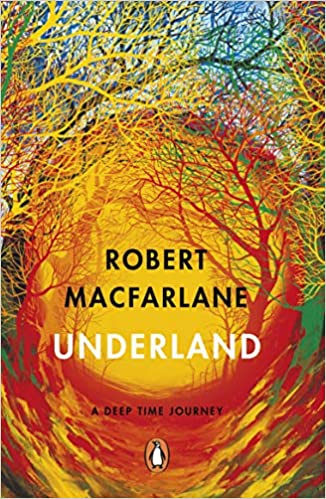
#BookReview ‘Underland’ by @RobGMacfarlane #nature #science #travel

Robert Macfarlane is a nature writer who gives you so much more – science, geology, landscape, history, folklore, myth, environment, oral history. Tempted by the amazing cover – a detail of ‘Nether’ by Stanley Donwood – I bought Underland and was hooked from the first sentence. ‘The way into the underland is through the riven trunk of an old ash tree’. Robert MacfarlaneMacfarlane goes underground – into the catacombs of Paris, remote Arctic sea caves, down moulins in Greenland glaciers, follows underground rivers through the Karst in Slovenia, ending in Finland where a tomb is being constructed to house nuclear waste – discovering stories about our ancestors and the world they lived in. A wide-ranging book, informative as well as interesting, Macfarlane writes with a feeling for language that locks into your emotions. As the chapters progress – each setting is underground, extreme and challenging – Macfarlane consults experts and explores inaccessible places. Juxtaposed with the examination of nature and science, he writes a travel story involving caving, mountaineering, exploration and survival skills. He writes of places the reader is unlikely ever to visit. Such as the calving face of the Knud Rasmussen glacier in Greenland, ‘Birds gather on the silt blooms, feeding on their richness. They are the only scale-givers at this distance, and they are as small as flies.’
Definitely one for re-reading. Some chapters I expected to enjoy, others I was less sure about – but I enjoyed them all, some new territory for me. Such as ‘The Understorey’ about the ‘wood wide web’ of tree-fungus mutualism underground. Macfarlane weaves a story of multiple stories, asking the question – what sort of ancestors will we be?
Fascinating. A non-fiction book to be dwelled upon, rather than rushed.
CLICK HERE TO READ MORE ABOUT THIS BOOK AT AMAZON

If you like this, try:-
Wildwood: A Journey Through Trees’ by Roger Deakin
English Pastoral’ by James Rebanks 
The Wild Silence’ by Raynor Winn 

And if you’d like to tweet a link to THIS post, here’s my suggested tweet:
#BookReview UNDERLAND by @RobGMacfarlane https://wp.me/p5gEM4-4St via @SandraDanby

#BookReview ‘Jane Austen A Life’ by Claire Tomalin #books #writerslife

As a lifelong Jane Austen fan, how I wish I had read this biography years ago. So many details from Jane’s life, her observations in letters to sister Cassandra and comments about Jane by her own relatives shed a spotlight on characterisations and situations portrayed in her novels. Jane Austen: A Life by Claire Tomalin was first published in 1997. Claire TomalinLimited by the destruction of so many of Jane’s own letters, Tomalin builds a picture of Jane’s life from the accounts of her family and acquaintances, and of life at that time in Georgian England. The amount of research done must be formidable but Tomalin sets her story of Jane Austen’s daily life against her literary progress, including the times when she was unable to write. She is revealed as having a sparkling and at times dry wit, perhaps more Lizzie Bennet than Emma Woodhouse.  Also interesting is the account of first her father then her brother Henry at getting her books published. On Jane’s death, Cassandra was sole proprietor of Jane’s copyright though Henry continued to negotiate with publishers.
Any writer will be familiar with the reactions of one’s closest relatives to the publication of a new book. The excitement from some quarters, the bemusement from others, and Jane Austen experienced exactly the same. Mrs Austen described Fanny in Mansfield Park as ‘inspid’. It also made me pause to realise that by the age of twenty five, Austen had already written Northanger Abbey, Sense and Sensibility and Pride and Prejudice. But this was followed by a ten year pause in which she wrote nothing. Only in 1809 did she return to her former pattern of working. What happened to cause this creative halt? Jane’s father retired and so the family were forced to leave the rectory at Steventon; Jane and Cassandra moved with their parents to Bath. Many letters from this difficult time are missing. Tomalin suggests Jane became depressed. She also lacked the physical space and time to write; their lodgings in Bath, frequent outings to the Devon and Dorset coast, and attendance expected at social events, all prevented Jane from writing.
Such is the detail in this wonderful biography that it is difficult to choose highlights. It has made me determined to re-read Austen’s novels now, in the order in which they were written.

Try the #FirstPara of PRIDE AND PREJUDICE here and learn about the first edition of PRIDE AND PREJUDICE, first published in 1813.

If you’re a Jane Austen fan, try these two ‘extension’ novels by Molly Greeley:-
THE CLERGYMAN’S WIFE
THE HEIRESS

If you like this, try:-
Charlotte Bronte: A Life’ by Claire Harman
Howard’s End is on the Landing’ by Susan Hill
An Education’ by Lynn Barber

And if you’d like to tweet a link to THIS post, here’s my suggested tweet:
#BookReview JANE AUSTEN A LIFE by Claire Tomalin https://wp.me/p5gEM4-4k9 via @SandraDanby