Tag Archives: Seasonal Quartet

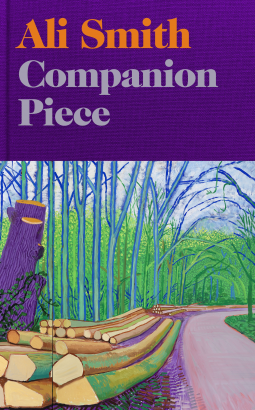
#BookReview ‘Companion Piece’ by Ali Smith #SeasonalQuartet #contemporary

Companion Piece by Ali Smith is about truth, the telling of stories, real stories, fake stories, fairy stories, perceived truth and real truth, and how language and data can be used and abused. Smith tackles some of the biggest issues facing society today, not so much providing answers but making us ask questions about life and the modern concept of ‘truth.’ A ‘companion’ novella to Smith’s lockdown-themed Seasonal Quartet, Companion Piece sings from the beginning. Ali Smith Twining together present and past stories, two motifs run throughout. ‘Curfew,’ the idea of restriction of physical movement, on access and egress, the feeling of being constrained and the invasion of our space. And ‘curlew’, the freedom of nature, the bird’s odd-shaped bill, a reminder that there is room in nature for things that don’t quite fit the norm, the ever presence of wildlife whatever happens in the human world, the familiar pattern of a bird’s day, of nature’s life cycle and therefore also of ours.
Artist Sandy is struggling during lockdown to distance-visit her sick father who is in hospital. She must stay isolated and free of the virus so she doesn’t prejudice his health and is accompanied only by Shep, her father’s dog. Into this closed world comes Martina, an acquaintance from university many decades since, who telephones with an odd tale concerning an incident at border control when she recently returned to the UK with the Boothby lock (a medieval artefact for which Martina is responsible). Held in an immigration detention room, she hears (or imagine she hears) a mysterious message – ‘Curlew or curfew.’ Martina wants Sandy’s advice to decipher the message, as Sandy is good at words. Sandy, who barely remembers Martina, tries to help while simultaneously trying to end the call. There are flashbacks to their university days, to Sandy’s childhood.
Then Sandy’s peaceful isolation is shattered by the arrival on her doorstep of Martina’s twin daughters, Lea and Eden, whose speech is littered with text-speak abbreviations. They dismiss Sandy’s concerns about covid distancing and accuse her of upsetting their mother who is acting strangely and is changing information about historical artefacts in the digital database at work.
The second story (whether it is told by Sandy is unclear, like many things in this book) set in another pandemic, this time the Black Death. An unnamed young girl, a blacksmith’s apprentice, is lying in a ditch after being attacked by men. There she meets a curlew chick, an ungainly beautiful bird she begins to care for. As people around her die of plague, she remembers the stories told to her by the blacksmith Ann Shaklock and these help her to survive.
Any novel by such an experimental writer as Smith needs to be read with a loosening of expectations, acceptance of the abandonment of normal commercial fiction norms. Passages are beautifully written but incomprehensible, others are simple and sweet, some made me laugh out loud. Punctuation, speech marks, forget about them all and sink into the story of Sandy the artist who paints words layered on top of words.
Don’t expect answers at the end. As Sandy says, ‘A story is never an answer. A story is always a question.’ It is a plea for us all to ask more questions, to not simply believe what we are told but to analyse and strip back stories in order to separate fact from fiction, fake news from truth.

Click the title to read my reviews of other books by Ali Smith:-
AUTUMN #1SeasonalQuartet
WINTER #2SeasonalQuartet
SPRING #3SeasonalQuartet
SUMMER #4SeasonalQuartet
HOW TO BE BOTH

If you like this, try:-
‘In the Midst of Winter’ by Isabel Allende
‘Blow Your House Down’ by Pat Barker
New Boy’ by Tracy Chevalier

And if you’d like to tweet a link to THIS post, here’s my suggested tweet:
#BookReview COMPANION PIECE by Ali Smith https://wp.me/p5gEM4-5PB via @SandraDanby
#BookReview ‘Summer’ by Ali Smith #SeasonalQuartet #contemporary

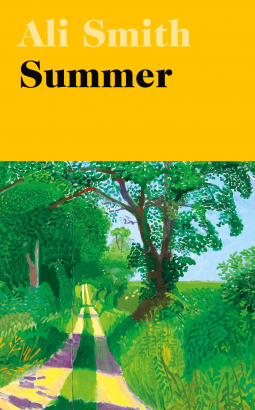
And so Ali Smith’s Seasonal Quartet comes full circle with Summer. What a journey these four books have been – experimental fiction at its best written in the moment at a time of political and social upheaval. Challenging, sometimes grating, often uplifting, so many of the loose threads left dangling in the first three books are reconnected in this finale. Ali SmithAli Smith is a challenging author to read. You get comfortable with one story and a couple of characters who she then abandons to tell you about someone else who seems completely disconnected. At times there are passages which seem to belong to no character, where the authorial voice shows through. It can feel as if the manuscripts for two or three novels have been thrown in the air and landed randomly on your Kindle. But then, as you come close to the end of this fourth book, all the disparate stories start to connect. Read Summer, the last in Smith’s Seasonal Quartet, when your brain is in full gear otherwise you will miss so much.
The story starts in Brighton with Sacha and Robert Greenlaw, teenage siblings, precocious, curious, competitive, committed and awkward. Following a trick Robert plays on his sister, two strangers visit the home where they live with their mum Grace. The strangers, Charlotte and Arthur, are the first characters from previous books to reappear. And so begins a journey to Norfolk, inspired by Einstein, motivated by a promise, towards answers, towards mystery, no one seems to really know.
Smith says summer is ‘heading towards both light and dark. Because summer isn’t just a merry tale. Because there’s no merry tale without darkness.’ Smith’s tales always feature darkness and here it is the wartime stories of Daniel Gluck and his father interned on the Isle of Man and of Daniel’s sister in France. How, I wondered as I read, will Smith connect the Greenlaws, Charlotte, Arthur and the Glucks? That is what kept me reading, to discover the meaning of summer in this story and to these particular characters. Smith says ‘summer’s surely really all about an imagined end. We head for it instinctually like it must mean something.’ There is so much depth in her exploration of theme – paralleling The Winter’s Tale, for example, and her own summer tale via the remembered summer of Grace when a young Shakespearean actress – more than I can explain here. You have to read it for yourself.
I do wish for old-fashioned punctuation, speech marks and clearly delineated changes of voice, the lack of which interrupts the flow of my reading and takes me away from the story – surely that can’t be the conscious objective of any author.
I will re-read this quartet back-to-back, without pause, hoping to gain more understanding and nuance. Individually, the novels are challenging and at times mystifying. Collectively, they become something else entirely. I suspect in years to come I will see a different interpretation.

Click the title to read my reviews of other books by Ali Smith:-
AUTUMN #1SeasonalQuartet
WINTER #2SeasonalQuartet
SPRING #3SeasonalQuartet
COMPANION PIECE #5SeasonalQuartet
HOW TO BE BOTH

If you like this, try:-
The Only Story’ by Julian Barnes
Amnesia’ by Peter Carey
The Testimony of Taliesin Jones’ by Rhidian Brook

And if you’d like to tweet a link to THIS post, here’s my suggested tweet:
#BookReview SUMMER by Ali Smith https://wp.me/p5gEM4-4Qi via @SandraDanby

#BookReview ‘Winter’ by Ali Smith #SeasonalQuartet #contemporary

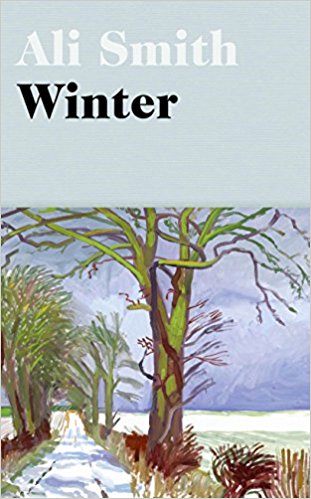
Winter by Ali Smith is second in her Seasonal Quartet but unconnected to its predecessor Autumn in terms of character and location. Ali SmithLike all Smith’s novels, it pays to read with patience. The story is at times choppy and sections seem unrelated; but have faith, it will make sense, connections will link up, characters will coincide and small details laid down early will connect to something much later. And simmering beneath the words is Smith’s anger at our unjust messed-up modern world where we don’t notice what’s going on around us and don’t seem to care.
So much fiction today looks back at our history, Smith’s Seasonal Quartet is so modern if feels as if she is writing a page ahead of the one I am reading. First we meet two sisters, Sophia and Iris who are as unalike as sisters can be. Art, Sophia’s son, has had his Twitter identity stolen by his angry girlfriend. Charlotte is posting incorrect tweets about Art’s ‘Art in Nature’ blog and these untruths are now trending. Art, who has committed to taking Charlotte to his mother’s house in Cornwall for Christmas, instead invites a girl he sees sitting at a bus stop. Lux, who starts off pretending to be Charlotte but then admits the deception to Sophia, is a catalyst in the wintry household. It is Lux who encourages Sophia to eat, Lux who discovers an outbuilding full of old stock from Sophia’s retail business, Lux who insists Art call his Aunt Iris. And so these four mis-matched, total and almost strangers, spend Christmas together.
As in Autumn there are some passages which made me laugh out loud. This time it was Sophia’s eye test at the optician after having seen a disembodied head floating in her peripheral vision; and the incident with her Individual Personal Advisor at the bank who was unable to give her advice. There is the grumpiness of growing old, observing a youth obsessed by irrelevances while forgetting the basic things that matter, and things that don’t work. There is the dislike of big business selling us stuff we don’t need in the guise that it’s essential, un-missable, while re-making new stuff so it looks like more valuable old stuff. “But now the world trusts a search engines without a thought. The canniest door-to-door salesman ever invented. Never mind foot in the door. Already right at the heart of the house.” The theme of winter runs throughout; the death of autumn, the decay that comes from lack of care and effort, the decline of relationships, the winter of ageing, nuclear threat and political division.
If you like a linear story and loose ends tied, then perhaps Ali Smith is not for you. If you are prepared to relax into a story, trust the author and wait to see what happens, then try her. She is experimental, quirky, not afraid to try something different.

Click the title to read my reviews of other books by Ali Smith:-
AUTUMN #1SeasonalQuartet
SPRING #3SeasonalQuartet
SUMMER #4SeasonalQuartet
COMPANION PIECE #5SeasonalQuartet
HOW TO BE BOTH

If you like this, try:-
‘Barkskins’ by Annie Proulx
‘In Another Life’ by Julie Christine Johnson
‘The House at the Edge of the World’ by Julia Rochester

And if you’d like to tweet a link to THIS post, here’s my suggested tweet:
#BookReview WINTER by Ali Smith https://wp.me/p5gEM4-3eb via @SandraDanby