Tag Archives: short story

#BookReview ‘Staying Afloat’ by @SueWilsea #shortstories

Staying Afloat, the first anthology of short stories by Hull-based writer Sue Wilsea, has as its sub-text her experience teaching English in schools, colleges, prisons, libraries and community centres and this breathes life into her stories. She writes about lost children, bereaved children, struggling parents and struggling teachers with sincerity and a touch of humour. Sue WilseaI’ve chosen three of the 19 stories in Staying Afloat. You can read more of Wilsea’s stories in her second anthology, Raw Materials.
‘Shapes. Colours’ is the story of Stephen who loves his teacher Miss Anderson dearly but avoids her gaze every morning when she points to the thermometer chart and asks how everyone is feeling today. Stephen has a Worry that started “as just a tiny spider of anxiety, scuttling around in his head at night when he couldn’t sleep.” To avoid attention in class, Stephen usually chooses yellow or orange rather than a dark colour.
In ‘Two Ophelias and Me’, first published in QWF magazine, an unnamed narrator thinks of two friends, Lin and Lyndsey, who jumped off the Humber Bridge. “I like to think of their hair and clothes streaming out like twin Ophelias (the three of us went to see Hamlet once. I thought I wouldn’t understand a word and actually I didn’t, but it was brilliant all the same) as they drift down deep, deep onto the riverbed.”
‘Lost’ is a heart breaking story about loss and memory. It starts “I’d lost my mother and was therefore in somewhat of a tizz.” When her mother is not in her room at her care home or wandering around the garden, Alice takes to the streets to check her mother’s haunts. It is a short, poignant story with an unexpected ending.
The settings for Wilsea’s tales are primarily the North of England and East Yorkshire, her characters including a vicar who discovers his true vocation in his forties; and a schoolteacher whose mischievous and disruptive pupil uncannily echoes her own son. ‘Paper Flowers’ won a BBC radio competition and was read on air by Judi Dench.

If you like this, try these:-
‘The Story’ ed. Victoria Hislop
Scratched Enamel Heart’ by Amanda Huggins
‘Last Stories’ by William Trevor

And if you’d like to tweet a link to THIS post, here’s my suggested tweet:
#BookReview STAYING AFLOAT by @SueWilsea #shortstories https://wp.me/p5gEM4-3gu via @SandraDanby

#GuestPost ‘Short Story Talk’ by Amanda Huggins @troutiemcfish #shortstories #amwriting

A warm Yorkshire welcome today to my blog to short story writer Amanda Huggins, a 2018 Costa Short Story Award runner-up, who has clear ideas about writing the short form. Welcome Amanda! Amanda Huggins“There’s been talk in recent years of a short story renaissance. In January 2018The Bookseller magazine reported that sales of short story collections were up 50%, reaching their highest level in seven years. However, this turned out to be largely due to a single book — Uncommon Type by Tom Hanks. This January the news was all about poetry — sales were up 12% in 2018, for the second year in a row.

“It’s great to see a renewed interest in both forms — certainly a couple of independent bookshops I’ve talked to this week have confirmed that short story sales are up — and more collections are being featured in review columns. There was also the buzz around Kristen Roupenian’s short story, ‘Cat Person’, published in the New Yorker at the end of 2017, which really resonated with a younger audience. Whatever you thought of that story, it was all good publicity for the short form.”

Amanda Huggins

Four books on Amanda’s ‘To Read’ pile

“As a writer, I know that crafting a two thousand word story requires a different set of skills to novel writing, and the former should never be seen as practice for the latter — a short story isn’t a miniature novel any more than a novel is a protracted short story. Although short fiction is suited to the pace and attention span of the modern world, some readers say they don’t read shorts because they can’t lose themselves in the story the way they can in a novel. It is true that they demand your fine-tuned focus, they seek to be read straight through, and every sentence weighs in heavy because it has to earn its place. Yet all these things bring their own rewards. A cracking story will repay your time and attention by leaving you with something to think about for days after you’ve read it.

“When I’ve finished reading a novel I often pass it on, however I usually keep short story collections and return to them over the years in the same way that I do with poetry. I have countless favourites, many by established authors, but also a growing number by emerging short story writers. The collections on my shelves include books by William Trevor, Tessa Hadley, Helen Simpson, Helen Dunmore, Raymond Carver, AL Kennedy, Wells Tower, Stuart Evers, Miranda July, Yoko Ogawa, KJ Orr, Ernest Hemingway, Taeko Kono, Haruki Murakami, Richard Ford, Alice Munro, Flannery O’Connor, Anton Chekhov, Nikolai Gogol, Annie Proulx, Isaac Babel, Angela Readman, and AM Homes.”

Amanda Huggins

Amanda’s laden bookshelf

“Stylistically, Hemingway’s short stories are near the top of my list — his concise, declarative sentences; his restricted choice of words and sparing use of adjectives; the cadence, the deliberate repetition — all deceptively simple. He summed it up perfectly himself: “If a writer of prose knows enough about what he is writing about, he may omit things that he knows and the reader, if the writer is writing truly enough, will have a feeling of those things as strongly as though the writer had stated them.”

“For fresh contemporary writing, I really like Miranda July. Her stories are unsettling, quirky, alternately grounded and surreal, oddball, off-beat, skewed. Yet they betray vulnerability, and are both raw and poignant.

“I’m also a huge fan of Japanese writing — novels, novellas and short stories. Japanese literature is often poetic, quiet, unhurried, and that way of writing suits the short story form. Sparing and effective use of language, subtlety and nuance, a certain elusiveness, all demand that the stories are read slowly, and that they are re-read and savoured. These are the qualities that draw me back again and again, and the tales of yearning and loss, of not quite belonging, all resonate with the themes I explore in my own fiction. I admire Murakami’s short stories, and really enjoyed his recent collection, Men Without Women. Murakami is renowned for his surreal writing, yet I prefer his stories when he writes of single men and smoky bars, lonely hearts and enigmatic women. I also love the short stories and novels of Yoko Ogawa. Like Murakami, her writing is often surreal, and can be unsettling and even grotesque. She is adept at self-observation and dissecting women’s roles in Japanese society. Taeko Kono explored women’s roles too, burrowing deep beneath the routines of daily life to reveal a disturbing underbelly — and who could resist a collection called Toddler Hunting and Other Stories?

“One of the funniest scenes I’ve ever come across in a short story is in Kazuo Ishiguro’s ‘Come Rain or Come Shine’, from his collection, Five Nocturnes. The description of the protagonist pretending to be a dog in order to cover up the accidental damage he has caused in his friend’s apartment made me cry laughing. I’ve only read the story once — I think I’m frightened something will be lost if I read it again, that the humour was somehow magnified by my particular mood at the time I read it!

“To conclude, I’d like to talk a little about my favourite collection from last year, which was Helen Dunmore’s Girl Balancing. I’m a big fan of Dunmore’s writing and The Siege is one of my all time favourite books. My favourite stories in this final collection of her short fiction are in the first section, ‘The Nina Stories’— and in particular I love the title story, ‘Girl Balancing’. These stories are almost notes for a novel-in-waiting; a sequence of vignettes centred around a girl called Nina, set in the 60s/70s. They are painstakingly intense; attention is paid to Nina’s every moment and action, and there are some lovely period details that evoke a strong sense of place. The writing turns the mundane into something beautiful, and the final story soars. Seventeen-year-old Nina is left alone on Christmas Day in a house at the seaside. She goes roller skating along the seafront with her friend, Mal, and when the mood turns, she must outwit him. I’ll leave you to find out for yourself if she succeeds.”

Amanda’s Bio
Amanda Huggins is the author of the short story collection, Separated From the Sea (Retreat West Books), and the flash fiction collection, Brightly Coloured Horses (Chapeltown Books). She was a runner-up in the 2018 Costa Short Story Award, and has been shortlisted and placed in numerous other competitions, including the Colm Toibin International Short Story Award and the Bath, Bridport, and Fish flash fiction prizes. She is also a published poet and award-winning travel writer, currently shortlisted for this year’s Bradt New Travel Writer of the Year Award. Amanda grew up on the North Yorkshire coast, moved to London in the 1990s and now lives in West Yorkshire. She works full-time in engineering and is writing her debut novella.

Amanda’s Links
Blog
Twitter @troutiemcfish
Retreat West Books
Chapeltown Books 

Amanda’s books
Amanda Huggins
Read my reviews of Separated from the Sea
Amazon

Amanda Huggins… and Brightly Coloured Horses.
Amazon

And if you’d like to tweet a link to THIS post, here’s my suggested tweet:
Talking #shortstories with prizewinner @troutiemcfish #amwriting https://wp.me/p5gEM4-3Qu via @SandraDanby

My ‘Porridge & Cream’ read: Judith Field

Today I am pleased to welcome short story writer, Judith Field to share her ‘Porridge & Cream’ read.

“My book is Anybody can do Anything by Betty Macdonald. I’d read her books The Egg and I (which, like the Curate’s egg, is good in parts) and The Plague and I (which I love), so when I saw Anybody in a second hand bookshop in 1981 for only 25p, I grabbed it. I re-read this funny and uplifting boot, with its brilliant character descriptions. when I need picking up, but I leave it long enough between reading that I can’t remember the text word for word. When I do read it, I feel a thrill of recognition, like meeting an old friend. Judith FieldPublished in 1945, it’s a memoir of life in Seattle during the Depression, in the early to mid nineteen thirties. Betty leaves an unhappy marriage and, with her two small daughters, goes back to live with her quirky, warm, and supportive family of four sisters and a brother headed by Mother, who “with one folding chair and a plumber’s candle, could make the North Pole homey.”  Betty says “It’s a wonderful thing to know that you can come home any time from anywhere and just open the door and belong”.  The title comes from the positive attitude of Betty’s sister, Mary, who spends her time finding jobs for her sisters (especially Betty), and Betty often winds up in uncomfortable, and sometimes dangerous, work situations.

The character descriptions are wonderful. The book is often contemplative, for example when the electricity is cut off because they can’t afford to pay the bill, but it’s never miserable or preachy. The final sentence, of Mary’s, is wonderful. Betty has just had her first book accepted and tells Mary about her “strange, enchanted feeling”. Mary says “You just feel successful, but imagine how I feel. All of a sudden my big lies have started coming true!”

About The Book of Judith by Judith Field [Rampant Loon Press]
Judith FieldThe Book of Judith is a collection of 16 short stories: sometimes funny, sometimes poignant; sometimes whimsical and fantastic; sometimes romantic, and sometimes disturbing, and sometimes both in the same story!

There’s no better endorsement than that from a reader. One Amazon customer said: “A collection of tales of the fantastic that manage to be sweet, poignant and laugh out loud funny all at the same time.”

Judith Field’s Bio
Judith Field lives in London, UK. She is the daughter of writers and learned how to agonize over fiction submissions at her mother and father’s knees. She’s a pharmacist, medical writer, editor and indexer, and in 2009 she made a New Year resolution to start writing fiction and get published within the year. Pretty soon she realized how unrealistic that was but, in fact, it sort of worked: she got a slot to write a weekly column in a local paper shortly before Christmas of 2009 and that ran for a several years. She still writes occasional feature articles for the paper. She has two daughters, a son, a granddaughter and a grandson. Her fiction, mainly speculative, has appeared in a variety of publications, mainly in the USA. When she’s not working or writing, she swims and sings, not always at the same time. She speaks five languages and can say, “Please publish this story” in all of them.

Judith Field’s links
Luna Station Quarterly blog
The Mill Hillbillies blog
Buy The Book of Judith here.
For more about Judith’s publisher, Rampant Loon Press and its Stupefying Stories series, click here.

porridge_and_cream__rainyday_111_long


What is a ‘Porridge & Cream’ book? It’s the book you turn to when you need a familiar read, when you are tired, ill, or out-of-sorts, where you know the story and love it. Where reading it is like slipping on your oldest, scruffiest slippers after walking for miles. Where does the name ‘Porridge & Cream’ come from? Cat Deerborn is a character in Susan Hill’s ‘Simon Serrailler’ detective series. Cat is a hard-worked GP, a widow with two children and she struggles from day-to-day. One night, after a particularly difficult day, she needs something familiar to read. From her bookshelf she selects ‘Love in A Cold Climate’ by Nancy Mitford. Do you have a favourite read which you return to again and again? If so, please send me a message via the contact form here.


Discover the ‘Porridge & Cream’ books of these authors:-
Sue Moorcroft
Claire Dyer
Lisa Devaney

Judith Field


‘Anybody Can Do Anything’ by Betty Macdonald [UK: University of Washington Press] 

And if you’d like to tweet a link to THIS post, here’s my suggested tweet:
Why does author Judith Field love love ANYBODY CAN DO ANYTHING by Betty Macdonald? #books via @SandraDanby http://wp.me/p5gEM4-1MU

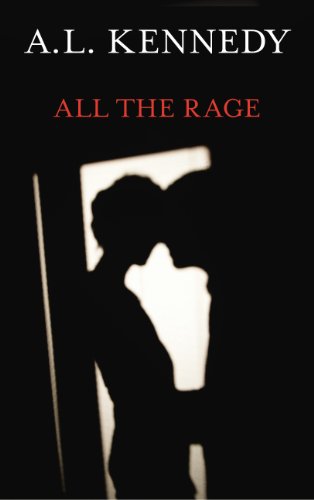
#BookReview ‘All the Rage’ by AL Kennedy #shortstories

What a treat is All the Rage. Twelve stories about love by the inimitable AL Kennedy. Love:  looking for it, losing it, exploring what love is. Instead of describing the stories, I want to celebrate her writing. The way she tells us so much in just one or two sentences. AL Kennedy‘Late in Life’ features  an older couple waiting. They are waiting in a queue at the building society, waiting for him to pay off her mortgage, in a coming-together of two lives. She provocatively eats a fig, being sexy for him “to pass the time.” Despite his hatred of public show, he watches her, “he is now-and-then watching.” He gives her “the quiet rise of what would be a smile if he allowed it. She knows this because she knows him and his habits and the way the colour in his eyes can deepen when he’s glad, can be nearly purple with feeling glad when nothing else about him shows a heat of any kind.”
In ‘The Practice of Mercy’, Dorothy is lost, alone and approaching old age and contemplating her relationship. “She realised once more, kept realising, as if the information wouldn’t stick, realised again how likely it was that someone you’d given the opening of leaving, someone you’d said was free to go, that someone might not discover a way to come back.”
‘All the Rage’ is set on a train platform. A couple are delayed, travelling home from Wales, stuck waiting for a train that never comes. Kennedy tells us everything about their relationship by describing their suitcase. “Inside it, their belongings didn’t mix – his shirts and underpants in a tangle, Pauline’s laundry compressed into subsidiary containments. They had separate sponge bags too. Got to keep those toothbrushes apart.”
Simon, the narrator of ‘Run Catch Run’, considers his unnamed dog, he is at once a child teaching his puppy and also an adult with a mature awareness of inevitability. “His dad had suggested she could be called Pat, which was a joke: Pat the dog. Simon didn’t want to make his dog a joke.”
She shows us so much, in so few sentences.

And click the title to read my reviews of these other AL Kennedy books:-
DAY
SERIOUS SWEET

If you like this, try:-
The Story’ ed. Victoria Hislop
An Unfamiliar Landscape’ by Amanda Huggins
Last Stories’ by William Trevor

And if you’d like to tweet a link to THIS post, here’s my suggested tweet:
#BookReview ALL THE RAGE by AL Kennedy http://wp.me/p5gEM4-NL via @SandraDanby