Yearly Archives: 2013

#BookReview ‘The Hen who Dreamed she could Fly’ by Sun-Mi Hwang #historical #birds

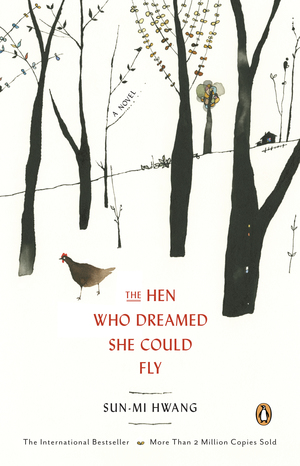
The Hen who Dreamed she could Fly by Sun-Mi Hwang is definitely a book that you will want to buy spare copies of to give to your friends. Sun-Mi HwangA South Korean fable, it tells the story of Sprout, a hen whose sole purpose in life is to lay eggs. She is an egg machine. From her coop she watches the hens and ducks in the yard with their babies, and longs for a chick of her own, to cuddle it and take care of it, sleeping safely in the warm barn at night. Then one day she realises she will never have her own chick because the farmer takes all her eggs. Her motivation to eat disappears, she becomes eggless, scrawny and weak and so is culled from the coop.
I loved Sprout, she is a brave female heroine who shows the bullies that they cannot beat her. Like all fables, there is a message. This story warns against watching what others have and thinking they have it better than you do. Sprout longs for the greener grass, but when she finds herself living in that green grass she learns the realities. It is about being brave, about being proactive, about getting out there and making something of your life even if people tell you it will never happen.  Along the way it also deals with motherhood, adoption, racism, prejudice and rejection, but it is a simple story to read. She is, after all, a hen.
Suitable for all ages, it’s one of those books that has a narrative for children and adults alike. The line drawings, which illustrate each new chapter, are beautiful too. A gem of a little book.

If you like this, try:-
‘The Choice’ by Claire Wade
‘Paper Cup’ by Karen Campbell
‘Doppler’ by Erlend Loe

And if you’d like to tweet a link to THIS post, here’s my suggested tweet:
#BookReview THE HEN WHO DREAMED SHE COULD FLY by Sun-Mi Hwang http://wp.me/p5gEM4-JB via @SandraDanby
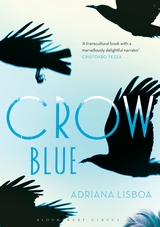
#BookReview ‘Crow Blue’ by Adriana Lisboa #contemporary

Crow Blue by Adriana Lisboa is a story of a teenage girl unravelling the mysteries of her identity. Vanja is 13, newly arrived in Colorado from Brazil, living with a man called Fernando about whom we know nothing. “I was 13. Being 13 is like being in the middle of nowhere. Which was accentuated by the fact that I was in the middle of nowhere.” Vanja’s mother dies and she leaves behind the ‘crow blue’ shells of Copacabana beach for the USA. Adriana LisboaHer voice grabbed me from the beginning and, although at times I was a little lost with the narrative drive of her story with lots of side roads telling Fernando’s history as a freedom fighter in Brazil, Vanja’s voice kept me reading. I wanted to know the answers to the questions she was chasing on her road trip from Colorado to New Mexico.
She is on the cusp of womanhood and this gives her some nice observations of American society, words from the mouth of an innocent who is starting to see the world and people around her in a more adult way. “A woman passing my chair as she returned from the pool said I had a nice tan. When she smiled, her eyes disappeared into the folds of fat that covered her face. She looks like a feather pillow, I thought.” To Vanja, swimming pools in Colorado mean large bikinis and full-piece bathing suits; swimming pools at Copacabana, where she grew up, meant butt cheeks.
The sections on guerrilla warfare left me cold, I’m afraid. I had no idea of the history of Brazil at this time, which probably would have helped me, and I didn’t identify with the characters and their confusing code names. These sections were an intrusion into Vanja’s story.
As the road trip comes to a close and Vanja approaches her 14th birthday, she considers what it will mean to become an adult. “Fourteen was at least a nose in the adult world. And I had to unlearn all the codes I had learned to make way for others. Curiosity, for example: children had a gift for curiosity. Adults kept it chained up.  In adults, curiosity shook paws, fetched balls and played dead.”
Lisboa was named on Granta’s list of ‘Best of Young Brazilian Novelists’ in 2012, she has written numerous novels and won prizes. But her name is relatively unknown here. To be fair, this book is set in the USA and is as much a comment on American society as Brazilian. It reflects our modern multi-cultural world and is a hopeful tale about finding your place in the world, finding your identity, and making a home wherever you are.
CLICK HERE TO READ MORE ABOUT THIS BOOK AT AMAZON

If you like this, try:-
‘Freya’ by Anthony Quinn
‘Angel’ by Elizabeth Taylor
‘Girl Runner’ by Carrie Snyder

And if you’d like to tweet a link to THIS post, here’s my suggested tweet:
#BookReview CROW BLUE by Adriana Lisboa via @SandraDanby http://wp.me/p5gEM4-DN

#BookReview ‘The Signature of all Things’ by @GilbertLiz #historical

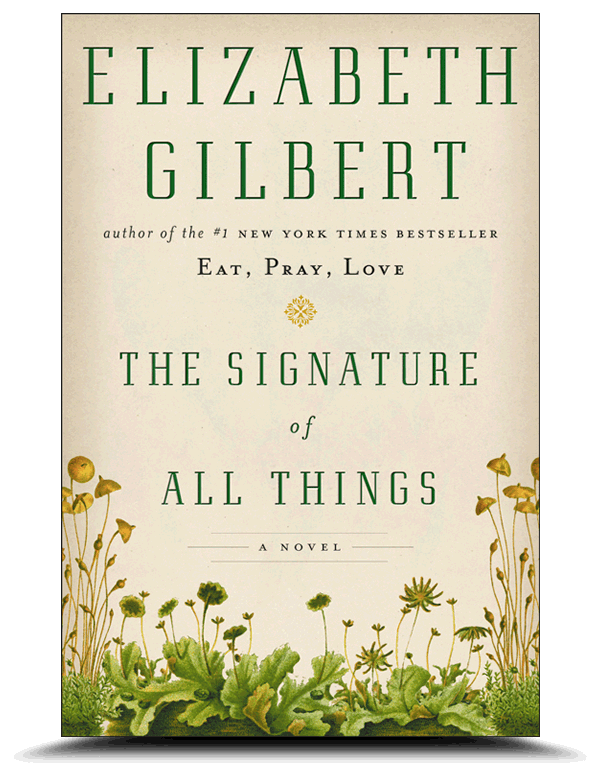
I’ve never read Eat Pray Love, never seen the film, and didn’t know what to expect from The Signature of all Things by Elizabeth Gilbert, not having read any reviews. I don’t know why, but I half expected not to like it. Very unfair of me, and completely wrong. Elizabeth GilbertFirst it’s a historical novel, not what I anticipated at all, starting with 18th century luckster, thief and botanist Henry Whittaker and later moving onto his daughter Alma. Born near Kew Gardens in London, son of a poor horticulturalist, Henry lifts himself out of poverty thanks to Jesuit’s bark, the newly-discovered treatment for malaria. He makes one fortune at home in Kew, stealing plants from Kew Gardens and selling them to wealthy protectors, he makes another fortune in the Far East by commercially cultivating Jesuit’s bark, and makes a third fortune in America where he imports medicinal plants from around the world, then raises native American plants and exports them abroad, so the holds of his ships never sail empty.
The opening paragraph of the book tells us of the birth of Henry’s daughter Alma, and then she is not mentioned again until part two. Alma is born to Henry and his Dutch wife Beatrix when they are settled into Philadelphia, he becomes the richest man in town and the third richest in the western hemisphere. The Dutch connection is important, but how important is not discovered until much later in the book. The Whittakers do not have much time for society and society doesn’t much like them, finding their manners a little coarse and their pedigree poor.
Alma grows up, encouraged to question everything, note everything down, and at an early age she will not let go of a question until she has an answer. “She wanted to understand the world, and she made a habit of chasing down information to its last hiding place, as though the fate of nations were at stake in every instance. She demanded to know why a pony was not a baby horse. She demanded to know why sparks were born when she drew her hand across her sheets on a hot summer’s night.” Henry encourages this precociousness, Beatrix schools her in Dutch pragmatism.
Plants are the background to the story of this family, plants are their life, their business, and fill their appreciation every day. As a nine-year old, Alma learns one summer to tell the time by the opening and closing of the flowers. At 7am the dandelions bloom, at 3pm they fold. She must be home with her hands washed when the globeflower closes and the evening primrose begins to open.
Alma is the heart and soul of this novel, a pragmatic and at times challenging woman. Despite this, I quickly warmed to her and her life’s investigation of mosses. Moss, and Alma’s inability to stop asking questions, leads her around the globe in a story that entranced me. I didn’t know where it would lead next.

If you like this, try:-
Barkskins’ by Annie Proulx
A Sudden Light’ by Garth Stein
Summertime’ by Vanessa Lafaye

And if you’d like to tweet a link to THIS post, here’s my suggested tweet:
#BookReview THE SIGNATURE OF ALL THINGS by @GilbertLiz via @SandraDanby http://wp.me/p5gEM4-DG

#BookReview ‘A Long Long Way’ by Sebastian Barry #Irishhistory #WW1

A Long Long Way by Sebastian Barry is the story of Willie Dunne, an innocent, who goes away to war not understanding fully what is involved but determined to do his bit. Written in 2005 and nominated for the Booker Prize, it is the tender tale of a young Irish man who volunteers for the British army and ends up in Belgium. Sebastian Barry Set against the background of the Easter Rising, Willie does not fully understand the political implications of what is happening around him. He is born in Dublin, as a baby “he was like the thin upper arm of a beggar with a few meagre bones shot through him, provisional and bare.” Barry’s language throughout is a delight, something I didn’t expect when the book is about the worst of trench warfare. Barry does not spare punches, at times the action and conditions he describes brought me close to tears, but I read on, pulled forwards by Willie’s life force.
He travels to new places, “ravished by the simple joy of seeing new places of the earth.” This joy unravels when arrives at the trenches. “The biggest thing there was the roaring of Death and the smallest thing was a man. Bombs not so far off distressed the earth of Belgium, disgorged great heaps of it, and did everything except kill him immediately, as he half-expected them to do.” And all the time he longs from Gretta, his girl at home. “He was in love with Gretta like a poor swan was in love with the Liffey and cannot leave it.”
I will be reading more by Sebastian Barry.

Read my reviews of these books also by Sebastian Barry:
A THOUSAND MOONS
DAYS WITHOUT END
OLD GOD’S TIME
THE WHEREABOUTS OF ENEAS MCNULTY

If you like this, try:-
The Lie’ by Helen Dunmore
Life Class’ by Pat Barker
Wake’ by Anna Hope

And if you’d like to tweet a link to THIS post, here’s my suggested tweet:
#BookReview A LONG LONG WAY by Sebastian Barry http://wp.me/p5gEM4-Bx via @SandraDanby

#BookReview ‘An Officer and a Spy’ by @Robert_Harris #thriller

Robert Harris is a master storyteller. Whether he turns his attention to a volcano exploding, ghost writing the memoirs of a questionable politician, the deathly politics of Rome’s Senate, or the Nazis winning the Second World War, you know you can rely on him to tell a rollicking tale based on sound handling of the historical facts. An Officer and a Spy has so many echoes of today it is uncanny. Robert HarrisThe true story on which this novel is based too place in 1895. Don’t let the historical basis of the story deter you; this is a good old-fashioned spy story complete with forgeries, eavesdropping, surveillance and murder.The spy of the title is Captain Alfred Dreyfus, convicted as a military spy and sent to Devil’s Island. The captain is Georges Picquart, who witnesses the humiliation of Dreyfus in front of a baying mob. Picquart, who after this opening scene is promoted to run the Statistical Section of France’s Ministry of War, discovers evidence that puts Dreyfus’ conviction in doubt. His superiors dismiss his concerns and tell him to forget them. He doesn’t forget, instead undertaking his own investigations which uncover evidence of a new spy. His efforts lead him to a prison cell.
Aghast at the army’s willingness to accept a miscarriage of justice rather than the upset of a retrial, Dreyfus doesn’t stop fighting for justice. “For the first time in my life I carry hatred inside me. It is an almost physical thing, like a concealed knife. Sometimes, when I am alone, I like to take it out and run my thumb along its cold, sharp blade.”
Underlying the spy story is the fact that Dreyfus is a Jew. The anti-semitism in the French army portrayed by Harris is deeply disturbing in the light of rising right-wing extremism in Europe today against minorities.
The cause of Dreyfus is taken up by luminaries of the time, including the novelist Emile Zola, who uses the power of the press in the fight to bring Dreyfus home for re-trial. To Picquart , the army’s refusal to admit its mistake “really, it is beyond hypocrisy; it is beyond even lying; it has become a psychosis.”

Read my reviews of these other thrillers, also by Robert Harris:-
MUNICH
V2

If you like this, try:-
‘The Ways of the World’ by Robert Goddard
‘Homeland’ by Clare Francis
‘Dominion’ by CJ Sansom

And if you’d like to tweet a link to THIS post, here’s my suggested tweet:
#BookReview AN OFFICER AND A SPY by @Robert_Harris via @SandraDanby http://wp.me/p5gEM4-Cm

#Books Great opening paragraph 46… ‘After You’d Gone’ #amreading #FirstPara

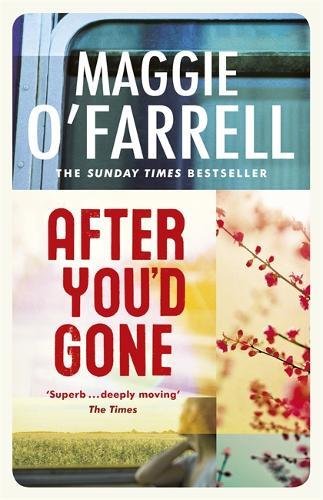
“The day she would try to kill herself, she realised winter was coming again. She had been lying on her side, her knees drawn up; she’d sighed. And the heat of her breath had vaporised in the cold air of the bedroom. She pushed the air out of her lungs again, watching. Then she did it again, and again. Then she wrenched back the covers and got up. Alice hated winter.” Maggie O’FarrellFrom ‘After You’d Gone’ by Maggie O’Farrell

Here’s my review of THE DISTANCE BETWEEN US also by Maggie O’Farrell

Try one of these #FirstParas & discover a new author:-
‘The Collector’ by John Fowles 
The Sense of an Ending’ by Julian Barnes 
The God of Small Things’ by Arundhati Roy 

And if you’d like to tweet a link to THIS post, here’s my suggested tweet:
#Books #FirstPara AFTER YOU’D GONE by Maggie O’Farrell http://wp.me/p5gEM4-mP via @SandraDanby

#BookReview ‘The Cheesemaker’s House’ by @JaneCable #contemporary #romance

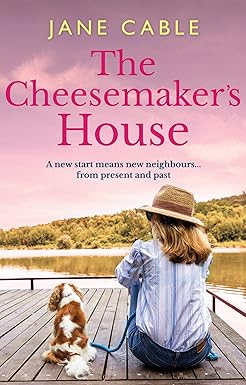
The Cheesemaker’s House, the debut novel by Jane Cable, starts with a mystery and turns into a ghost story. After her divorce, Alice moves with her dog William to a village in North Yorkshire. Newly-arrived, she walks the dog beside the River Swale and sees a naked swimmer. She watches, feeling like a voyeur but unable to leave. Then suddenly he disappears. Jane CableFeeling guilty that she didn’t search, or call for help, she drives into town where she goes into a coffee shop down a side street. And is served by the mysterious swimmer. Disturbed by his presence and at the same time attracted to him, she cannot work out how he left the river without her seeing or how he got to town before her.
This first mystery is followed by others, competently handled by this first-time author who draws a fond picture of life in rural North Yorkshire. My only minor quibble would be that for three-quarters of the book, the meaning of the book’s title was lost on me.

Read my reviews of these other novels by Jane Cable:-
ANOTHER YOU
ENDLESS SKIES

Also by Jane Cable, writing as Eva Glyn:-
THE COLLABORATOR’S DAUGHTER
THE CROATIAN ISLAND LIBRARY
THE MISSING PIECES OF US

If you like this, try:-
‘The House at the Edge of the World’ by Julia Rochester
‘Butterfly Barn’ by Karen Power
‘Somewhere Inside of Happy’ by Anna McPartlin

And if you’d like to tweet a link to THIS post, here’s my suggested tweet:
#BookReview THE CHEESEMAKER’S HOUSE by @JaneCable https://wp.me/p2ZHJe-4bw via @SandraDanby

Great opening paragraph 45… ‘The Secret Agent’ #amreading #FirstPara

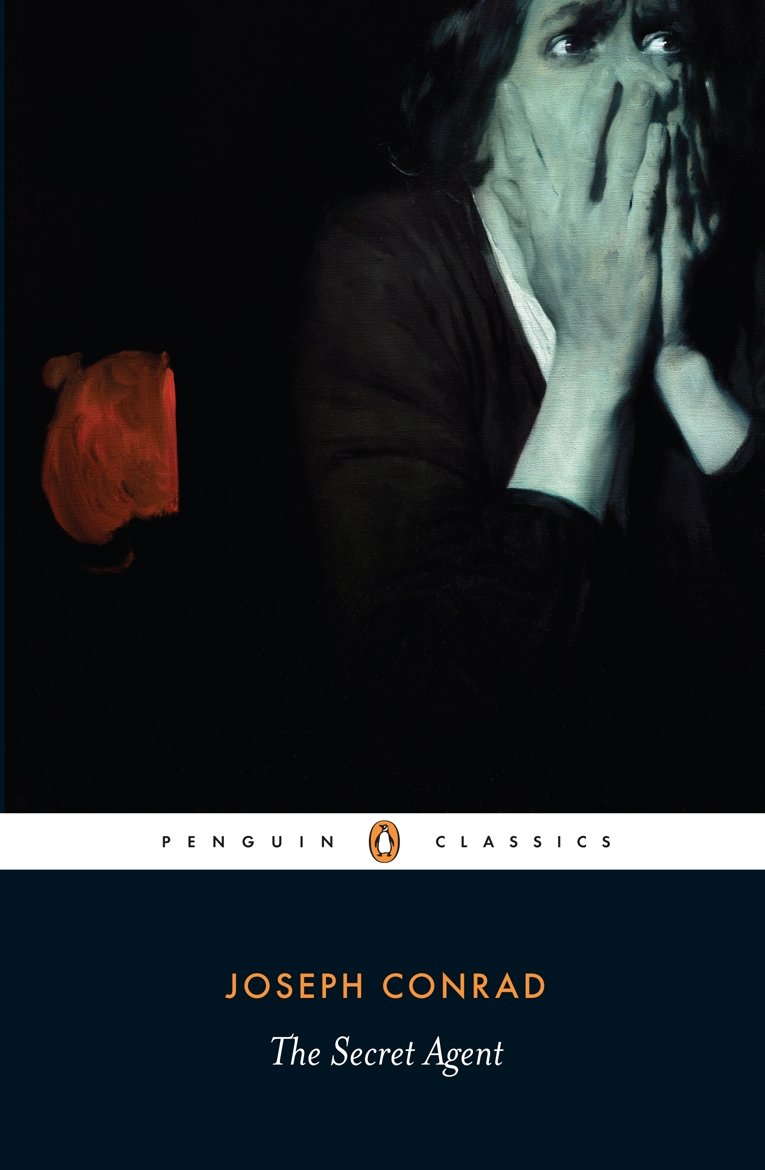
“Mr Verloc, going out in the morning, left his shop nominally in charge of his brother-in-law. It could be done, because there was very little business at any time, and practically none at all before the evening. Mr Verloc cared but little about his ostensible business. And moreover, his wife was in charge of his brother-in-law.”
Joseph Conrad From ‘The Secret Agent’ by Joseph Conrad 

Here’s the #FirstPara of LORD JIM, also by Joseph Conrad.

Try one of these #FirstParas & discover a new author:-
‘Jack Maggs’ by Peter Carey
‘Original Sin’ by PD James
‘The Heart is a Lonely Hunter’ by Carson McCullers

And if you’d like to tweet a link to THIS post, here’s my suggested tweet:
#Books #FirstPara THE SECRET AGENT by Joseph Conrad http://wp.me/p5gEM4-eE via @SandraDanby

Great opening paragraph…45

The Secret Agent - OP
“Mr Verloc, going out in the morning, left his shop nominally in charge of his brother-in-law. It could be done, because there was very little business at any time, and practically none at all before the evening. Mr Verloc cared but little about his ostensible business. And moreover, his wife was in charge of his brother-in-law.”
‘The Secret Agent’ by Joseph Conrad

#Books Great opening paragraph 44… ‘The Hunger Games’ #amreading #FirstPara

“When I wake up, the other side of the bed is cold. My fingers stretch out, seeking Prim’s warmth but finding only the rough canvas cover of the mattress. She must have had bad dreams and climbed in with our mother. Of course she did. This is the day of the reaping.” Suzanne CollinsFrom ‘The Hunger Games’ by Suzanne Collins

Read my reviews of the five books of the Underland Chronicles, also by Suzanne Collins:-
GREGOR THE OVERLANDER #1UNDERLANDCHRONICLES
GREGOR AND THE PROPHECY OF BANE #2UNDERLANDCHRONICLES
GREGOR AND THE CURSE OF THE WARMBLOODS #3UNDERLANDCHRONICLES
GREGOR AND THE MARKS OF SECRET BY SUZANNE COLLINS #4THEUNDERLANDCHRONICLES
GREGOR AND THE CODE OF CLAW #5UNDERLANDCHRONICLES

Try one of these #FirstParas & discover a new author:-
‘Brighton Rock’ by Graham Greene
‘The Last Tycoon’ by F Scott Fitzgerald
‘Tipping the Velvet’ by Sarah Waters

And if you’d like to tweet a link to THIS post, here’s my suggested tweet:
#Books #FirstPara THE HUNGER GAMES by Suzanne Collins https://wp.me/p2ZHJe-4bk via @SandraDanby