Monthly Archives: September 2014

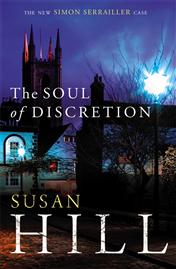
#BookReview ‘The Soul of Discretion’ by @susanhillwriter #crime

Lafferton, England. A naked child wanders down a street. A woman is raped at a black tie Freemansons’ Dinner. This is the beginning of The Soul of Discretion by Susan Hill. Detective Simon Serrailler is coming to terms with his girlfriend moving into his flat which now seems very small and confined, no longer his own private space. His widowed sister is struggling for money and must decide what to do about it. His stepmother is struggling to deal with the detective’s increasingly irritable and irascible father. Serrailler’s girlfriend feels like the lodger in her boyfriend’s flat. And then Serrailler is posted undercover. Susan HillThis is the eighth novel about detective Simon Serrailler and as far as I’m concerned, Susan Hill can continue writing them until kingdom comes. I have read them all over the years, but this is the first I have reviewed [something I will remedy over the coming year]. Serrailler is a thoughtful, solitary-minded detective, surrounded by a family which, in The Soul of Discretion, has its own crises. But the central thread of the book, which kept me reading late into the night, was Serrailler going undercover. In this book, you wonder if he will live or die. I read this book in 24 hours, including a night’s sleep. The subject matter is difficult, the nastiest child abuse, and to go undercover Serrailler must know his subject, be able to act the part of a ‘nonce,’ he must look as if he likes the nasty stuff.
Susan Hill doesn’t show us the unpleasantness, she lets us imagine it by showing us Serrailler’s reaction. He becomes Johnno Miles and we take every step with him as he goes to prison, the aim to get close to a prisoner who it is hoped holds the key to unlocking a prolific child abuse ring. With him is a James Bond-style watch with coded buttons to send messages to HQ, except it is a cheap black plastic watch, not a Rolex. There are a lot of heart-in-mouth passages, Hill’s writing makes you turn page after page. And just when you get to a key bit, the chapter ends and the attention switches – to Cat who is trying to decide whether to work for a hospice or a GP practice, or his stepmother Judith on holiday in France with his father, or Serrailler’s girlfriend Rachel who is opening a bookshop – and you get an emotional breather from the tension. But all the stories are linked, in the end.

Read my reviews of the other novels in the series:-
THE VARIOUS HAUNTS OF MEN #1SIMONSERRAILLER
THE PURE IN HEART #2SIMONSERRAILLER
THE RISK OF DARKNESS #3SIMONSERRAILLER
THE VOWS OF SILENCE #4SIMONSERRAILLER
THE SHADOWS IN THE STREET #5SIMONSERRAILLER
THE BETRAYAL OF TRUST #6SIMONSERRAILLER
A QUESTION OF IDENTITY #7SIMONSERRAILLER
THE COMFORTS OF HOME #9SIMONSERRAILLER
THE BENEFIT OF HINDSIGHT #10SIMONSERRAILLER
A CHANGE OF CIRCUMSTANCE #11SIMONSERRAILLER

And also by Susan Hill, HOWARD’S END IS ON THE LANDING

If you like this, try:-
‘Referendum’ by Campbell Hart #3ARBOGAST
The Silent Twin’ by Caroline Mitchell
Agatha Raisin and the Quiche of Death’ by MC Beaton #1AGATHARAISIN

And if you’d like to tweet a link to THIS post, here’s my suggested tweet:
#BookReview THE SOUL OF DISCRETION by @susanhillwriter via @SandraDanby http://wp.me/p5gEM4-1dD

#BookReview ‘The Sunrise’ by Victoria Hislop @VicHislop #Cyprus #historical

I’m a big fan of Victoria Hislop’s previous three novels, The Thread, The Return, and The Island so was expecting a lot from the new one, The Sunrise. I was a little disappointed and it’s difficult to pin down why. Victoria HislopThe Cyprus setting is great, the historical setting is stirring, the characters… I didn’t connect as well with them as I did with Alexis and Eleni in The Island. Finally, I decided that the difference between The Sunrise and the Hislop’s earlier books is that it wears its history a little too heavily. That said, it is a fascinating period and one I knew little about, except a memory of a distant cousin who lived near Kyrenia at the time. He and his family were forced to flee their house, empty-handed, running across open countryside towards a cave, dodging bullets being fired from an airplane
The Sunrise tells the story of three families in Famagusta from the sunny days of 1972 when tourism brings riches to Cyprus, to 1974 when a Greek coup forces the island into chaos. Greek Cypriots flee in one direction, Turkish Cypriots flee in the other, and the Turkish army invades to protect the Turkish Cypriot minority. The city of Famagusta empties as people run for their lives. Today, 40 years later, the city is still empty. This is the setting for Hislop’s novel.
Two of the families in The Sunrise – the Georgious and the Ozkans – remain behind in Famagusta, hiding, scavenging for food, keeping silent to avoid capture. One is Greek Cypriot, the other Turkish Cypriot. Initially suspicious of everyone, the families are brought together by the two mothers and encouraged to support each other. This is a story of survival on the edge of war, of starvation, ingenuity, bravery and fear. Sons disappear, the city is bombed, soldiers patrol the streets, and a baby is born. The third family – the Papacostas, owners of the sparkling new hotel The Sunrise – flee to their apartment in Nicosia, locking up their stronghold hotel and leaving valuables in its safe, but taking the danger and emotional attachments with them.
Though the book at times drifts towards impersonal reportage and can feel a little like reading a history book or newspaper report, the accuracy of the complicated political and social situation is clearly explained. The island is heft in two and its population uprooted with possessions, without warning. They are attacked, raped, killed, simply for being ‘the other kind’. Finally they settle into North and South, either side of the east-west dividing line.
Victoria Hislop always writes about places she knows well and that knowledge shines off the page in every sound, smell and touch she conjures up. She was not able to go to Famagusta, the city is still closed off, and had to be content with looking through the wire fence. In The Sunrise she has tackled a hugely complex political and emotional subject. For me, the story took off in 1974 once the Georgious and Ozkans were trapped in the city and fighting to survive. I found Savvas and Aphroditi Papacosta less sympathetic, I’m afraid, perhaps because the story starts in 1972 when they develop their luxury hotel, two years before the Cypriot coup takes place. Perhaps that’s just me, impatient for the action to start.

Read my reviews of other these books by Victoria Hislop:-
THE FIGURINE
THE STORY
THOSE WHO ARE LOVED

If you like this, try:-
‘The Ballroom’ by Anna Hope
‘Mrs Sinclair’s Suitcase’ by Louise Walters
The Lightning Tree’ by Emily Woof

And if you’d like to tweet a link to THIS post, here’s my suggested tweet:
#BookReview THE SUNRISE by Victoria Hislop @VicHislop http://wp.me/p5gEM4-1dx via @SandraDanby 

A poem to read in the bath… ‘Not Waving but Drowning’

I remember the title of today’s poem from my schooldays but have no strong memory of reading the poem until many years later. But it always made me smile, then feel guilty for smiling.

[photo: poetryfoundation.org]

[photo: poetryfoundation.org]

Because of copyright restrictions I am unable to reproduce the poem in full, but please search it out in an anthology or at your local library.

‘Not Waving but Drowning’
Nobody heard him, the dead man,
But still he lay moaning:
I was much further out than you thought
And not waving but drowning.

Stevie Smith [1902-1971] was born in Hull, East Yorkshire, and knowing that made a big impression on me: born in East Yorkshire, 1960. The fact that her family moved to London when she was three didn’t stop me seeing her as a Yorkshire role model. Her poetry never seemed to fit a label and she seems to have been rather overlooked. I love her rather dry wit. My copy of Selected Poems was bought in October 1981, I know this as I have written my name and the date on the inside front cover. The green cover design [below] is still a favourite of mine. Selected poems by stevie smith 19-6-14aTo watch a 1950s seaside film as Stevie Smith recites ‘Not Waving But Drowning’, click here.
To read Stevie Smith’s biography at The Poetry Foundation, click here.
Selected poems by stevie smith - new cover 19-6-14


‘Selected Poems’ by Stevie Smith [Penguin Classics]

#BookReview ‘One Step Too Far’ by @tinaseskis #contemporary #mystery

I became aware of One Step Too Far by Tina Seskis by word of mouth, often the best kind of recommendation. It is certainly a page turner. I sat down to read it one hot sunny day and raced through it. Tina SeskisThe theme is running away. What place a woman has to be in to leave everything behind, the desperation, the guilt, the expectations for a new life, the logistics of running. Emily runs, and runs one step too far. The reason for her running is dangled in front of the reader like a carrot, hints, deceptions, and this is why you keep reading. Is it something she did, or something done to her? Is it criminal or emotional? The story of Emily’s escape, and the story of the reason for her escape, are told in parallel. I had my suspicions about her reason, and I was almost right. Almost, but not quite.
One of the intriguing things in the narrative mix is that Emily is a twin, and the two twin sisters do not get on. This added welcome spice to the tale of Emily’s childhood in Manchester, and her reinvention in London. The twin thing enables some convenient misunderstandings, doppel-gangers and threat of discovery.
A great holiday read.
CLICK HERE TO READ MORE ABOUT THIS BOOK AT AMAZON

If you like this, try:-
‘The Ivy Tree’ by Mary Stewart
‘Please Release Me’ by Rhoda Baxter
The House at the Edge of the World’ by Julia Rochester

And if you’d like to tweet a link to THIS post, here’s my suggested tweet:
#BookReview ONE STEP TOO FAR by @tinaseskis via @SandraDanby http://wp.me/p5gEM4-1ca

Great opening paragraph 59… ‘The Unlikely Pilgrimage of Harold Fry’ #amreading #FirstPara

“The letter that would change everything arrived on a Tuesday. It was an ordinary morning in mid-April that smelt of clean washing and grass cuttings. Harold Fry sat at the breakfast table, freshly shaved, in a clean shirt and tie, with  slice of toast that he wasn’t eating. He gazed beyond the kitchen window at the clipped lawn, which was spiked in the middle by Maureen’s telescopic washing line, and trapped on all three sides by the neighbours’ closeboard fencing.”
Rachel JoyceFrom ‘The Unlikely Pilgrimage of Harold Fry’ by Rachel Joyce

Read my reviews of these novels by Rachel Joyce:-
MAUREEN FRY AND THE ANGEL OF THE NORTH
MISS BENSON’S BEETLE
PERFECT
THE LOVE SONG OF MISS QUEENIE HENNESSY

Try one of these #FirstParas & discover a new author:-
‘Perfume’ by Patrick Suskind
‘Original Sin’ by PD James
‘Illywhacker’ by Peter Carey

And if you’d like to tweet a link to THIS post, here’s my suggested tweet:
#Books #FirstPara THE UNLIKELY PILGRIMAGE OF HAROLD FRY by Rachel Joyce http://wp.me/p5gEM4-kt via @SandraDanby

Great opening paragraph… 59

the unlikely pilgrimage of harold fry - GOP 5-6-13
“The letter that would change everything arrived on a Tuesday. It was an ordinary morning in mid-April that smelt of clean washing and grass cuttings. Harold Fry sat at the breakfast table, freshly shaved, in a clean shirt and tie, with  slice of toast that he wasn’t eating. He gazed beyond the kitchen window at the clipped lawn, which was spiked in the middle by Maureen’s telescopic washing line, and trapped on all three sides by the neighbours’ closeboard fencing.”
‘The Unlikely Pilgrimage of Harold Fry’ by Rachel Joyce

#BookReview ‘Found’ by Harlan Coben @HarlanCoben #crime #YA

September. A sunny day in Paris and I needed a book to read on the Eurostar train home. I needed a page turner. I searched my Kindle. What was required was Harlan Coben. I started to read Found, Coben’s latest UK release, which I thought was the new Myron Bolitar story. Except, it isn’t. Harlan CobenFound is the third in the Mickey Bolitar YA [young adult] series. I didn’t know this series existed. Mickey Bolitar is Myron’s nephew.  I guess the two M’s got me confused… oh well. Found may be a YA novel but that doesn’t stop the story from being gripping, in true Coben fashion this really rattled along. Ideal for a train journey.
Mickey is Myron Bolitar’s nephew who, surprise surprise, is a basketball player and amateur detective. This is story three in the series, and I did need to know the back story. But Mr Coben is very efficient at filling that in without stopping the story moving forward.
Two storylines are woven together. On Mickey’s basketball team, one player moves away suddenly, another is dropped from the team for taking steroids. Mickey investigates. Meanwhile, continued from book two in the series, one of Mickey’s friends is in hospital after an adventure when the four friends – Mickey, Spoon, Ema and Rachel – solve a mystery. It appears now though that this mystery is not completely solved.
The quartet combines to track down a missing teen and discover the truth of what happened to Mickey’s father. In true thriller fashion, it starts out with the two stories being completely separate but in the end they overlap. I knew the overlap was coming, but couldn’t see where.

Read my review of a Myron Bolitar novel by Harlan Coben:-
ONE FALSE MOVE #5MYRONBOLITAR

If you like this, try:-
‘Wilderness’ by Campbell Hart #1ARBOGAST
Snow White Must Die’ by Nele Heuhaus
Nightfall’ by Stephen Leather #1JACK NIGHTINGALE

And if you’d like to tweet a link to THIS post, here’s my suggested tweet:
#BookReview FOUND by Harlan Coben @HarlanCoben https://wp.me/p2ZHJe-1ds via @SandraDanby

#BookReview ‘A History of Loneliness’ by @JohnBoyneBooks #historical #priesthood

The History of Loneliness is a depressing title – it has to be about loneliness, doesn’t it? Yes, but it’s about so much more. This novel by John Boyne is about the soul of a boy growing up in 1960s Ireland and becoming a priest, it’s about guilt and responsibility and honesty [with oneself, with others]. And, given its setting and time, it is about the Catholic church in Ireland and child abuse. John BoyneBut it is not a depressing novel. It is the story of Odran Yates’s journey from childhood to seminary to adulthood, via Rome where he serves tea to two Popes, back to Ireland where he watches from the sidelines as one then another trusted Irish priest is convicted of child abuse.
It is an unexpected page turner. Boyne drops hints at ‘things that happened,’ enough to make you want to know what. He maintains the suspense by telling Odran’s story in disparate chunks – the first four chapters move from 2001 to 2006, 1964 to 1980 – answering some questions and asking new ones, and weaving in the story of Odran’s sister Hannah and her family. Some bits made me chuckle, some made me laugh out loud, others brought a lump to my throat. A favourite was the discussion with Katherine Summers, a neighbour of the Yates who cycles by wearing short skirts to the horror of all the Catholic mothers, about the naughty bits in The Godfather.
Most of all, this book tells the story of the priesthood from the 1960s when the word of the priest was God, to 2008 when a stranger spits in Odran’s face because he is a priest wearing a black suit and a white plastic collar.

Read my reviews of these other novels by John Boyne:-
A LADDER TO THE SKY
A TRAVELLER AT THE GATES OF WISDOM
ALL THE BROKEN PLACES
STAY WHERE YOU ARE AND THEN LEAVE
THE HEART’S INVISIBLE FURIES… Curious? Read the first paragraph of THE HEART’S INVISIBLE FURIES here.
WATER #1ELEMENTS
EARTH #2ELEMENTS

If you like this, try:-
Brooklyn’ by Colm Tóibín
Himself’ by Jess Kidd
The Pull of the Stars’ by Emma Donoghue

And if you’d like to tweet a link to THIS post, here’s my suggested tweet:
#BookReview A HISTORY OF LONELINESS by @JohnBoyneBooks via @SandraDanby http://wp.me/p5gEM4-1dm

A poem to read in the bath… ‘Cloughton Wyke 1’

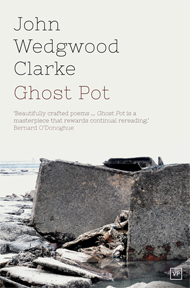
John Wedgwood Clarke writes about the edges of North Yorkshire, the forgotten bits, the ugly bits, the hidden bits. He is a new discovery for me. His latest pamphlet, In Between, was written for the York Curiouser Festival, and is inspired by the snickets and alleys of old York.

[photo: valleypressuk.com]

[photo: valleypressuk.com]

Because of copyright restrictions I am unable to reproduce the poem in full, but please search it out in an anthology or at your local library.

‘Cloughton Wyke 1’
Iron light. Fulmar and kittiwake
laugh in Anglo-Saxon,
ripple quick shadows
over the beach.

It transports me instantly to the North Yorkshire cliffs where I grew up, and the constant presence of seabirds. Cloughton Wyke [below] was one of many destinations for the Danby family explorations on Sundays, sandwiches wrapped in foil, trifle in colour-coded Tupperware bowls, orange squash.

I cannot read this poem enough.

[photo: whitbyseaanglers.co.uk]

[photo: whitbyseaanglers.co.uk]

For John Wedgwood Clarke’s blog, click here.
To find John Wedgwood Clarke’s poems around York as part of the York Curiouser Festival, click here for a map.
To listen to John Wedgwood Clarke read his poem ‘Castle Headland’, click here.
For more poetry published by Valley Press, including In Between, click here.

ghost pot - cover 15-7-14


‘Ghost Pot’ by John Wedgwood Clarke [Valley Press]

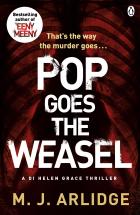
#BookReview ‘Pop Goes the Weasel’ by @mjarlidge #crimefiction

Fog creeps up the Solent and into the city from the sea, casting a shroud over the streets, driving the population indoors at the end of the day and pulling the streetwalkers out into their night domain. This is the beginning of Pop Goes the Weasel by MJ Arlidge. Empty backstreets, dirty abandoned industrial estates, overgrown riverbanks. Murder will take place this night. MJ ArlidgeThis is second in the Helen Grace detective series and a great follow-up by Arlidge to his first novel about the Southampton-based detective inspector. But please read Eeny Meeny first or you will be a bit baffled by the back story. These two books tick a lot of boxes: gritty realistic drama, lead female detective with a raw damaged personality, in fact a lot of female characters, set in Southampton [not London, not Edinburgh] with flawed heroes and damaged villains. Arlidge is an accomplished TV writer and author; whether he is writing about police procedure, or the nasty druggy backstreets of a port city where the population rises and falls with the tide, I believe him.
The murder scenes are graphic and anatomical, a bit too much for me, so I admit to skipping a few paragraphs. I don’t like blood and gore, but I do like Helen Grace and DC Charlie Brooks. I didn’t take to Emilia Garanita , the reporter from the local paper, or the new Detective Superintendent Ceri Harwood. Woven through the chase to find the hooker who kills her victims are stories continued from Eeny Meeny: why is Helen Grace driving to Aldershot to spy on a boy, what happened to Helen’s sister, can Charlie have a baby and stay in the force, and how does Garanita always know where Grace is?
Helen Grace’s story will run and run.

Read my reviews of the following books in this series:-
EENY MEENY #1HELENGRACE
THE DOLL’S HOUSE #3HELENGRACE
LIAR LIAR #4HELENGRACE
LITTLE BOY BLUE #5HELENGRACE
HIDE AND SEEK #6HELENGRACE
LOVE ME NOT #7HELENGRACE
DOWN TO THE WOODS #8 HELENGRACE

If you like this, try:-
Jellyfish’ by Lev D Lewis
Due Diligence’ by DJ Harrison
Lord John and the Private Matter’ by Diana Gabaldon

And if you’d like to tweet a link to THIS post, here’s my suggested tweet:
#BookReview POP GOES THE WEASEL by @mjarlidge http://wp.me/p5gEM4-1d5 via @SandraDanby