Yearly Archives: 2014

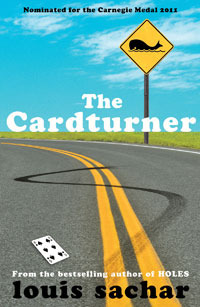
#BookReview ‘The Cardturner’ by Louis Sachar #YA #family

The Cardturner by Louis Sachar is a book about bridge. The card game. And it’s also about relationships. Alton, a seventeen-year-old is tasked by his mother of ‘keeping in’ with his rich blind uncle Lester Trapp by driving him to bridge club in the hope that Trapp will remember their family in his will. What starts as an arduous weekly task becomes a new hobby for Alton as he is caught up by the game of bridge, his uncle and the mysteries of his life. Louis SacharIt is a story about friendship between the generations, all brought together by the game of bridge. Alton doesn’t care about his uncle’s will, he just wants to play bridge better. And get to know his cousin Toni better too. Alton is his uncle’s cardturner, he sits beside him at the bridge table and plays the cards his uncle tells him to.
I am not a card player and I have to say I skipped some bits, but Louis Sachar allows you to do this: he bookends ‘bridge technique’ sections with a line drawing of a whale so you know you are safe to skip a bit and won’t miss the plot. For this reason, this novel is more suitable for older teens than the younger teens who like Holes.
Like Sachar’s Holes, it is a charming book. It shows that your assumptions about things you do not know can be way wrong; Alton soon finds out that bridge is not a game played just by old people. He also discovers that old people can be cool, that they were young once and had their own romances and challenges. Just when Alton starts to understand Trapp, to appreciate him, and to get better at bridge, the plot takes a twist which forces Alton and Toni to make a choice.
CLICK HERE TO READ MORE ABOUT THIS BOOK

Read my review of HOLES, also by Louis Sachar.

If you like this, try:-
Divergent’ by Veronica Roth #1DIVERGENT
La Belle Sauvage’ by Philip Pullman #1THE BOOK OF DUST
The Queen of the Tearling’ by Erika Johansen #1TEARLING

And if you’d like to tweet a link to THIS post, here’s my suggested tweet:
#BookReview THE CARDTURNER by Louis Sachar via @SandraDanby http://wp.me/p5gEM4-11l

#BookReview ‘Love and Eskimo Snow’ by Sarah Holt @sarahholt01 #romance

Love and Eskimo Snow by Sarah Holt is a novel about the nature of love and its different forms. It begins with death. Bea Bridges is killed in a car crash. Sarah Holt tells the story of Bea’s childhood retrospectively, interwoven with the love lives of three other women – Missy, Claire and Elizabeth – from childhood crush to first kiss, friendship, first love and lust. Sarah HoltI waited for the women’s’ lives to connect, were they all connected with the car crash? When the strands did combine, it wasn’t what I expected. It is an interesting study of the different types of love. Bea: the unqualified, un-questioning love of a child for her parents. Missy: a nurturing love for her boyfriend Lee who is a trifle chauvinistic about her needs and his needs. Elizabeth: who meets fellow student Joey and loves him as a brother and best friend. Claire: sexual attraction, masquerading as love.
Holt has written a cleverly structured debut novel with an intriguing title. The Sami Eskimos have around 200 different words for snow: wet snow, slippery snow, icy snow. Holt doesn’t find 200 meanings of love, but she does examine how love varies from relationship to relationship, person to person and context to context. How do we learn to love? From watching our parents’ relationship? From our peers? And do we ever learn to recognise the type of love we are feeling at a particular moment?
There are some poignant moments. Bea as a child had nightmares of being buried alive, so her father gives her a silver-coloured plastic key which she keeps in her bedside drawer. As an adult she still has that key, but it is not put into her coffin.
The loose ends of the story are connected by Bea’s mother as she reads her daughter’s journal after the funeral. And then wishes she hadn’t.  A reminder that there are no convenient answers and this is not a ‘happy ever after’ ending. The novel defines a genre label. It has romance, yes; relationships, yes; but is it a romance novel? Not quite, there is a deeper message to the plotting.

If you like this, try:-
‘The Audacious Mendacity of Lily Green’ by Shelley Weiner
Butterfly Barn’ by Karen Power
‘My Name is Lucy Barton’ by Elizabeth Strout

And if you’d like to tweet a link to THIS post, here’s my suggested tweet:
#BookReview LOVE AND ESKIMO SNOW by Sarah Holt @sarahholt01 via @SandraDanby http://wp.me/p5gEM4-1au

#BookReview ‘The Ignorance of Blood’ by @RobWilsonwriter #crime #Spain

A car accident. Millions of euros. A Russian gangster drinking champagne in the middle of nowhere. The opening scene of The Ignorance of Blood, fourth in the quartet of books by Robert Wilson featuring Seville detective Javier Falcón, does not disappoint. Robert Wilson The intricate plotting is spot-on. I read this book voraciously as Falcón struggles to get to the whole truth, admiring the way the author weaves together the story strands from the preceding three books so that at the end you understand though you did not guess.
I did not get the ending right, I expected something different. There are moments when you wonder if Javier can continue, will he step over to the dark side, will his emotional strength desert him? This is the most international of the four books, with Javier travelling to London and Morocco but Seville retains its hot sultry presence. I can smell the dusty heat of the evening where the detectives seem to exist on coffee and cruelty lays just out of sight.
I’m sorry this is a short review, I can’t write more without giving away the plot. There were moments when I wanted to shout ‘don’t do it’ and others when I thought with sad acceptance ‘yes, that’s the only thing you can do’. At the end, I wanted to start reading the series all over again.

Here are my reviews of the other books in the Javier Falcón series:-
THE BLIND MAN OF SEVILLE #1FALCÓN
THE SILENT AND THE DAMNED #2FALCÓN
THE HIDDEN ASSASSINS #3FALCÓN

If you like this, try:-
The Blood Detective’ by Dan Waddell #1NigelBarnes
Hiding the Past’ by Nathan Dylan Goodwin #1MortonFarrier
The Guest List’ by Lucy Foley

And if you’d like to tweet a link to THIS post, here’s my suggested tweet:
#BookReview THE IGNORANCE OF BLOOD by @RobWilsonwriter via @SandraDanby http://wp.me/p5gEM4-18j

#BookReview ‘Ghost Moth’ by Michèle Forbes #romance #Belfast

Ghost Moth by Michèle Forbes opens with a woman, Katherine, who when swimming out of her depth encounters a seal. What begins as an encounter with nature becomes something more chilling, hinting at the depths of the story about to be told. “…it is his eyes – the eyes of this wild animal – that terrify Katherine the most; huge, opaque and overbold, they hold on her like the lustrous black-egged eyes of a ruined man.” Katherine’s fear when encountering the seal is a mystery until much later in the book, when we understand the memories it disturbed. Michèle ForbesThis is the story of Katherine and George, the beginnings of their love in 1949 and its endurance until death in 1969. The setting is Belfast: in 1949, post-War when Katherine sings Carmen in a local opera production and meets Tom, the tailor who sews her costume and flirts with her. Tom, who forces Katherine to examine the nature of her feelings for boyfriend George. Tom, who tempts her so she can never forget him. And Belfast, wrought by The Troubles in 1969 when even Katherine’s small children are challenged on the street for being of the ‘wrong’ religion. Katherine cannot forget Tom.
The novel examines the nature of love set against a city in 1969 where hatred is demonstrated every day on the streets with burning buses and ransacked shops. Can love ever be forgotten? Should young love be allowed to affect a marriage, years later? And is it better to tell the truth when the truth hurts, or protect your loved one by remaining silent?
In 1949, Katherine and Tom share quiet moments together as he makes her Carmen costume. Katherine forgets her new fiancé, George, in the eroticism of Tom taking a measuring-tape to her body. He describes to her how he will construct her dress. “I’ll insert the bone through the aperture of the casing, sliding it firmly upward all the way to the top of the seam. I’ll draw the bone back just a little, if I need to, so that it won’t force the material. The spring of the bone must always be right.” Compared with this sensuality, volunteer fireman George is a pale alternative.
But one night, before the night’s performance of Carmen begins, something happens which changes the lives of this love triangle.
The title of the book refers to the pale moths [below] which Katherine’s father told her: “…that some people believed that ghost moths were the souls of the dead waiting to be caught, and some people believed that they were only moths.” For me, the double symbolism of the romantic moths and chilling seal was too much. Just one of them would suffice. I think I prefer the seal.

If you like this, try:-
On a Night Like This’ by Barbara Freethy #1Callaways
The Last Day’ by Claire Dyer
You’ll Never See Me Again’ by Lesley Pearse

And if you’d like to tweet a link to THIS post, here’s my suggested tweet:
#BookReview GHOST MOTH by Michèle Forbes http://wp.me/p5gEM4-1br via @SandraDanby

#BookReview ‘The Seventh Miss Hatfield’ @caltabiano_anna #mystery #suspense

The Seventh Miss Hatfield by Anna Caltabiano opens with the auction of a painting in 1887 and then switches to 1954 as a girl sits on a doorstep. Cynthia is 11 and aware of her mother’s demands for good behaviour combined with initiative, knowing she is a disappointment. So when a parcel is wrongly delivered, she shows independence by taking it to the house opposite. There she meets a new neighbour, Rebecca Hatfield. Cynthia doesn’t go home again. Anna Caltabiano This is a tale of immortality and time travel. Where immortality means you can still die, of illness or accident, and time travel comes via a large mysterious clock owned by Miss Hatfield. Cynthia – and it is key that we are told her original name only a few times – drinks a glass of lemonade containing a drop of a mysterious substance and everything changes. “I felt as if I was slipping away into some strange dimension where I recognized nothing – not my surroundings, or my feelings, but most terrifyingly of all, not even myself.” Miss Hatfield has a task for Cynthia to do, a task which involves theft and time travel. The task, of course, does not go to plan.
The fine detail is excellent but I found the bigger picture lacking, as if the author was carried away by Cynthia/Margaret’s flirtation with Henley and lost sight of the where this fit into the flow of the narrative. I was impatient for the mystery to move on. Cynthia/Margaret is a girl things happen to, rather than her being a proactive heroine. She spends quite a lot of time waiting for the time to be right, waiting for things to settle down, before she can complete her task. I just wanted her to get on with it. She accepts her new life with minimal heartache or disbelief, demonstrates little longing for her parents and the life she left in 1954 and no cynicism about what Miss Hatfield tells her. She ages instantly from teenager to adult, but we are shown none of the insight this would bring as so ably demonstrated in the film Big. Then I did a bit of Googling and found out that Anna Caltabiano is 17, and I understood. When I read a book for review, I read with a notebook and pen by my side and quite early on I wrote down ‘feels like a young author?’ Despite the ‘literary’ front cover, this is a book written by a teenager for teenagers about young love. If I had known, I would not have chosen to read it and I became a bit more forgiving of the writing style. Another example of a cover design being misleading.
That this novel was written by a 17-year old is admirable and explains the style: lots of explanation of the action of the ‘I understood Henley did this because…’ style. Lots of re-stating the obvious, which should have been edited out. It is clear that Caltabiano was in love with Henley.
This is the first novel of a trilogy. I think I’m too old to read the others, it’s a long time since I was a teenager. But if you know one who likes stories about puppy love combined with time travel, they’ll probably love this. Caltabiano is a talented writer and I will watch out for future novels, but in a few years’ time.

If you like this, try:-
The Quick’ by Lauren Owen
An Appetite for Violets’ by Martine Bailey
Ferney’ by James Long

And if you’d like to tweet a link to THIS post, here’s my suggested tweet:
#BookReview THE SEVENTH MISS HATFIELD @caltabiano_anna via @SandraDanby http://wp.me/p5gEM4-1af

#BookReview ‘The Corners of the Globe’ by Robert Goddard #WW2 #thriller

The Corners of the Globe is a very fast-moving sequel by Robert Goddard, second in his Wide World series. There’s a Scotland to London train chase complete with spies, a captured German warship, murder, kidnapping, secret codes and jumping on and off trains which would rival The 39 Steps [which Goddard playfully has one of his characters read in the restaurant car of one of the trains]. Robert GoddardGreat War flying hero James Maxted is in London, convinced that the death of his father [in the first book] is not as simple as it appeared. His investigations take him further into danger, into the dark and deadly preview of the Second World War. You really do need to read book one first [see the link below for my review] although there is a little exposition at the beginning in the form of a Secret Service report, but to be honest it functions more as a recap for the reader who has read the first book than as an introduction for a newcomer.
I failed to guess the ending of the first book, did I guess the ending of this one correctly? No.

Read my reviews of Goddard’s other books:-
THE WAYS OF THE WORLD #1 THE WIDE WORLD TRILOGY
THE ENDS OF THE EARTH #3 THE WIDE WORLD TRILOGY
PANIC ROOM
THE FINE ART OF INVISIBLE DETECTION #1UMIKOWADA
THIS IS THE NIGHT THEY COME FOR YOU #1SUPERINTENDENTTALEB

If you like this, try:-
Corpus’ by Rory Clements
The Second Midnight’ by Andrew Taylor
Noonday’ by Pat Barker

And if you’d like to tweet a link to THIS post, here’s my suggested tweet:
#BookReview THE CORNERS OF THE GLOBE by Robert Goddard via @SandraDanby http://wp.me/p5gEM4-19H

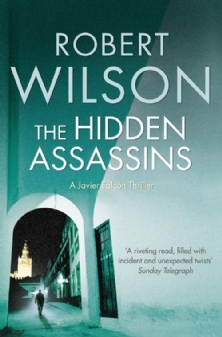
#BookReview ‘The Hidden Assassins’ by @RobWilsonwriter #crime #Spain

The pace of The Hidden Assassins by Robert Wilson does not stop. The setting: Seville, Spain. The beginning: a mutilated corpse is found on a rubbish dump. The first turning point: an explosion at a block of flats turns out to be a terrorism attack on the mosque in the basement. Or is it? Detective Javier Falcón is swept along by the media circus and political panic as fear of a widescale attack on Andalucía grips Spain. Robert WilsonThis is the third of Robert Wilson’s four-book series about Falcón and the story twists and turns relentlessly. The plotting is excellent, I challenge you to work out the answers. As Javier unravels the knots you don’t know what to believe and neither does he.
I am fascinated by the insight into Falcón’s life provided by glimpses of his cooking. His housekeeper leaves his food in the fridge for him to prepare in the evening. He is something of a cook. “Encarnación had left him some fresh pork fillet. He made a salad and sliced up some potatoes and the meat. He smashed up some cloves of garlic, threw them into the frying pan with the pork fillet and chips. He dashed some cheap whisky on top and let it catch fire from the gas flame. He ate without thinking about the food and drank a glass of red rioja to loosen up his mind.” And then he goes out to work again. It is 10pm.
I will not give away the plot details, but there are sub-plots too involving characters who featured in books one and two: Javier’s ex-wife Inés and her husband the judge Esteban Calderón, his ex-girlfriend Consuelo, his sister Manuela.
As always, Seville is an additional character. Its streets, the heat, the lifestyle. It makes me want to go there now.

Here are my reviews of the other books in the Javier Falcón series:-
THE BLIND MAN OF SEVILLE #1FALCÓN
THE SILENT AND THE DAMNED #2FALCÓN
THE IGNORANCE OF BLOOD #4FALCÓN

If you like this, try:-
‘Liar Liar’ by MJ Arlidge #4HelenGrace
Lord John and the Private Matter’ by Diana Gabaldon
The Various Haunts of Men’ by Susan Hill #1Simon Serrailler

And if you’d like to tweet a link to THIS post, here’s my suggested tweet:
#BookReview THE HIDDEN ASSASSINS by @RobWilsonwriter via @SandraDanby http://wp.me/p5gEM4-Zq

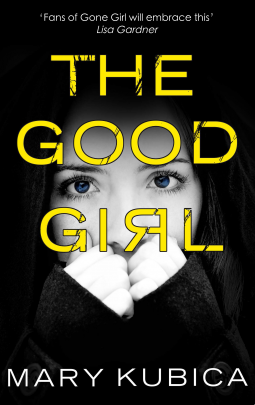
#BookReview ‘The Good Girl’ by @MaryKubica #suspense

The Good Girl by Mary Kubica starts with a missing girl, woman really, though we first hear the news of the disappearance of Mia Dennett from her mother’s point of view. And to her mother, Mia is still a girl though she is a schoolteacher. Detective Gabe Hoffman is bemused that Mia’s parents don’t seem to visit their daughter’s apartment. And then, the time shifts and it is after Mia’s return and we are with Mia and her parents on the way to psychiatrist. Amnesia. Mia cannot remember what happened. Mary KubicaAnd so the story is pieced together. Mia’s kidnap is told from multiple viewpoints; before, during and after the event over a winter in Chicago. Everyone in this dysfunctional family seems to have their own agenda. But Mia cannot remember what happened in that cabin where she was held captive by a man called Owen for three months.
The setting of the Minnesota cabin in winter is so clearly drawn I could be there, a mixture of beautiful, intimidating and claustrophobic. The eerie quiet, the ice fishing, the extreme cold. The feeling of being trapped, in more ways than one. Mary Kubica handles the transition of the kidnap relationship so well, two people sharing an intimate space for so long, and how the emotions and stresses play out.
Kubica has plotted a page-turning story, sort of a kidnap version of Gone Girl, though she may hate the comparison.
CLICK HERE TO READ MORE ABOUT THIS BOOK AT AMAZON

Read my reviews of two other novels by Mary Kubica:-
DON’T YOU CRY
PRETTY BABY

If you like this, try:-
An Uncertain Place’ by Fred Vargas
The Blood Detective’ by Dan Waddell
The Accident’ by CL Taylor

And if you’d like to tweet a link to THIS post, here’s my suggested tweet:
#BookReview THE GOOD GIRL by @MaryKubica via @SandraDanby http://wp.me/p5gEM4-1a6

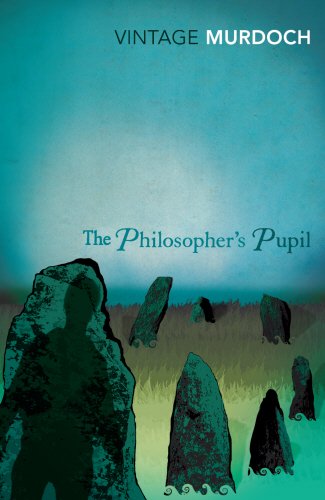
Great opening paragraph 57… ‘The Philosopher’s Pupil’ #amreading #FirstPara

“A few minutes before his brainstorm, or whatever it was, took place, George McCaffrey was having a quarrel with his wife. It was eleven o’clock on a rainy March evening. They had been visiting George’s mother. Now George was driving along the quayside, taking the short-cut along the canal past the iron foot-bridge. It was raining hard. The malignant rain rattled on the car like shot. Propelled in oblique flurries, it assaulted the windscreen, obliterating in a second the frenetic strivings of the windscreen wipers. Little demonic faces composed of racing raindrops appeared and vanished. The intermittent yellow light of the street lamps, illuminating the grey atoms of the storm, fractured in sudden stars upon the rain-swarmed glass. Bumping on cobbles the car hummed and drummed.”
Iris MurdochFrom ‘The Philosopher’s Pupil’ by Iris Murdoch

Read these other #FirstParas by Iris Murdoch:-
A Severed Head’ 
The Sea The Sea’ 

Try one of these #FirstParas & discover a new author:-
‘Couples’ by John Updike
‘Spies’ by Michael Frayn
‘The Collector’ by John Fowles

And if you’d like to tweet a link to THIS post, here’s my suggested tweet:
#Books #FirstPara THE PHILOSOPHER’S PUPIL by Iris Murdoch http://wp.me/p5gEM4-mf via @SandraDanby

Great opening paragraph… 57

iris murdoch - the philosopher's pupil 10-6-13“A few minutes before his brainstorm, or whatever it was, took place, George McCaffrey was having a quarrel with his wife. It was eleven o’clock on a rainy March evening. They had been visiting George’s mother. Now George was driving along the quayside, taking the short-cut along the canal past the iron foot-bridge. It was raining hard. The malignant rain rattled on the car like shot. Propelled in oblique flurries, it assaulted the windscreen, obliterating in a second the frenetic strivings of the windscreen wipers. Little demonic faces composed of racing raindrops appeared and vanished. The intermittent yellow light of the street lamps, illuminating the grey atoms of the storm, fractured in sudden stars upon the rain-swarmed glass. Bumping on cobbles the car hummed and drummed.”
‘The Philosopher’s Pupil’ by Iris Murdoch