Yearly Archives: 2016

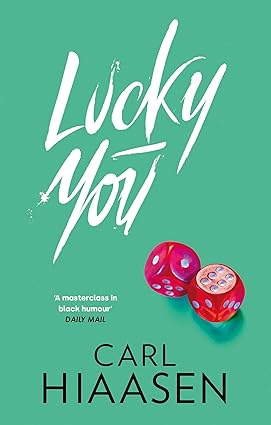
Great Opening Paragraph 84… ‘Lucky You’ #amreading #FirstPara

“On the afternoon of November 25, a woman named JoLayne Lucks drove to the Grab N’Go minimart in Grange, Florida, and purchased spearmint Certs, unwaxed dental floss and one ticket for the state Lotto.
JoLayne Lucks played the same numbers she’d played every Saturday for five years: 17-19-22-14-27-30.”
Carl Hiaasen From ‘Lucky You’ by Carl Hiaasen

Try one of these #FirstParas & discover a new author:-
‘These Foolish Things’ by Deborah Moggach
‘Super-Cannes’ by JG Ballard
‘Herzog’ by Saul Bellow

And if you’d like to tweet a link to THIS post, here’s my suggested tweet:
#Books #FirstPara LUCKY YOU by Carl Hiaasen https://wp.me/p5gEM4-1Uw via @SandraDanby

A poem to read in the bath… ‘The Dead’ by Billy Collins #poetry

A popular American poet, Billy Collins [below] was praised by John Updike for writing “lovely poems…Limpid, gently and consistently startling, more serious than they seem, they describe all the worlds that are and were and some others besides.” He has been Poet Laureate twice: the US Poet Laureate from 2001-2003, and New York State Poet Laureate from 2004-2006. I like his idea here of the dead looking down on those they’ve left behind, keeping an eye on us.

Billy Collins

[photo: poetryfoundation.org]

Because of copyright restrictions I am unable to reproduce the poem in full, but please search it out in an anthology or at your local library.

‘The Dead’
The dead are always looking down on us, they say,
While we are putting on our shoes or making a sandwich,
They are looking down through the glass-bottom boats of heaven
As they row themselves slowly through eternity.

I am new to Billy Collins, and found this poem in a Bloodaxe anthology. I ordered his first collection, Taking Off Emily Dickinson’s Clothes and was immediately won over by the endorsement by Carol Ann Duffy on the cover: “Billy Collins is one of my favourite poets in the world”. That’ll do for me then.
Here’s a Ted video of Billy Collins talking about what dogs think, probably. The second poem is hilarious.
Why have I not discovered him sooner?
CLICK HERE TO READ MORE ABOUT THIS BOOK

Read these other excerpts and find a new poet to love:-
‘Japanese Maple’ by Clive James
‘Digging’ by Seamus Heaney
‘Not Waving but Drowning’ by Stevie Smith

And if you’d like to tweet a link to THIS post, here’s my suggested tweet:
A #poem to read in the bath: ‘The Dead’ by Billy Collins http://wp.me/p5gEM4-1Mk  via @SandraDanby

SaveSave

SaveSave

#BookReview ‘Hiding the Past’ by Nathan Dylan Goodwin #familyhistory #crime #genealogy

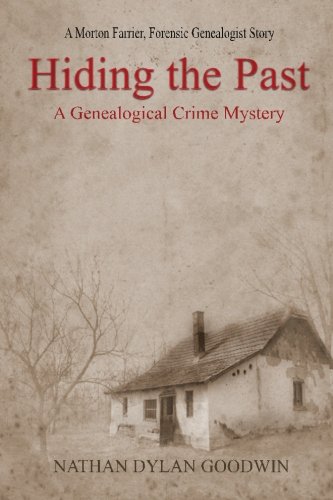
An unusual hybrid of genealogy and record checking plus amateur detective stuff makes Hiding the Past by Nathan Dylan Goodwin a worthy page turner for a holiday week. Anyone who loves family tree research, and a good crime novel, will like this with its narrative stretching from World War Two to present-day politicians. Nathan Dylan GoodwinWithin days of taking on a new client, genealogist Morton Farrier knows this case is different: one, his client pays a fee of £50,000 straight into his bank account; two, the client shoots himself in the head. Or does he? Helped by his girlfriend Police Community Support Officer Juliette, Farrier studies the background of his, now dead, client, Peter Coldrick, a study which leads him to two key years: 1944 and 1987. Official records for Coldrick’s descendants have mysteriously disappeared, Morton is being followed by a glossy black 4×4, and it may be his imagination but a usually helpful archives officer is proving difficult to pin down.
Morton is an interesting character, adopted, rubbing along awkwardly with his widowed adoptive father and soldier brother, quick with a sharp word whilst knowing he should be kinder and hating himself for it. I also liked the clear drawing of his setting around the Kent & Sussex towns and villages of Sedelscombe, Rye, Tenterden and Lewes, an area I lived in and loved, Goodwin makes them feel real on the page. This is the first of, at the time of writing, four Morton Farrier novels, so expect to read more about Morton’s own adoption story in future books.

Read my reviews of the next books in the Morton Farrier series:-
THE LOST ANCESTOR #2MORTONFARRIER
THE ORANGE LILIES #3MORTONFARRIER
THE AMERICA GROUND #4MORTONFARRIER

If you like this, try:-
‘In the Blood’ by Steve Robinson
‘Mrs Sinclair’s Suitcase’ by Louise Walters
‘The Knife with the Ivory Handle’ by Cynthia Bruchman

And if you’d like to tweet a link to THIS post, here’s my suggested tweet:
#BookReview HIDING THE PAST by Nathan Dylan Goodwin http://wp.me/p5gEM4-1U3 via @SandraDanby

#BookReview ‘The Murder Room’ by PD James #crime

Written in 2003 The Murder Room, the 12th in the Adam Dalgliesh crime fiction series by PD James, is preceded by an excerpt from TS Eliot’s poem ‘Burnt Norton’:
‘Time present and time past
Are both perhaps present in time future,
And time future contained in time past.’ PD James Time is a theme layered throughout this book. Its setting is the Dupayne Museum on Hampstead Heath, so historical time is represented by the exhibits at the museum. Time, recently passed, is examined and re-examined as part of the murder investigation. Time future, is represented by the theme of Adam Dalgliesh’s love for Emma and his courtship of her, a path not easy or untroubled.
Like all Dalgliesh novels, murder happens within a tight community. The Dupayne Museum has a small community of owners, staff and visitors. At first glance the victims are not clearly attached to the museum, but this is a James novel: of course they are, we just don’t know how yet.
The murder doesn’t happen for quite a while as James takes her time introducing us to the circle of potential victims and criminals, their connection to the museum and their life outside it. There is an air of the past about it, as if it was written in the thirties, an antidote to modern fast-paced modern crime novels so in itself representing a portrait of changing crime fiction. Time is given to characterization, setting, motivation, and not to dramatic action scenes: more Christie and Sayers than James or Rankin.
In the course of reading The Murder Room, I considered why I enjoy reading detective novels and what I take from them. I like the mystery, the tension of the chase, the fitting together of disparate elements. I do not like violence, graphic sex or language. But most of all, I like the examination of human nature, the contradictions, the surprises, the privacy of the mind laid bare. PD James excels at all of this; she remains my favourite author of crime fiction, and Adam Dalgliesh my favourite detective.
CLICK HERE TO READ MORE ABOUT THIS BOOK

Click the title to sample the first paragraph of THE MURDER ROOM.

Read my reviews of the other Adam Dalgliesh mysteries:-
COVER HER FACE [#1 ADAM DALGLIESH]
A MIND TO MURDER [#2 ADAM DALGLIESH]
UNNATURAL CAUSES [#3 ADAM DALGLIESH]
SHROUD FOR A NIGHTINGALE [#4 ADAM DALGLIESH]
THE BLACK TOWER [#5 ADAM DALGLIESH]
DEATH OF AN EXPERT WITNESS [#6 ADAM DALGLIESH]
A TASTE FOR DEATH [#7 ADAM DALGLIESH]
DEVICES AND DESIRES [#8 ADAM DALGLIESH]
ORIGINAL SIN [#9 ADAM DALGLIESH] … read the first paragraph HERE
A CERTAIN JUSTICE [#10 ADAM DALGLIESH]
DEATH IN HOLY ORDERS [#11 ADAM DALGLIESH]
THE LIGHTHOUSE [#13 ADAM DALGLIESH]
THE PRIVATE PATIENT [#14 ADAM DALGLIESH]

Here are my reviews of the two Cordelia Gray mysteries:-
AN UNSUITABLE JOB FOR A WOMAN #CGRAY1
THE SKULL BENEATH THE SKIN #CGRAY2

And two other books by PD James:-
INNOCENT BLOOD
TIME TO BE IN EARNEST

If you like this, try:-
‘The Shadows in the Street’ by Susan Hill
‘Due Diligence’ by DJ Harrison
‘The Truth Will Out’ by Jane Isaac 

And if you’d like to tweet a link to THIS post, here’s my suggested tweet:
#BookReview THE MURDER ROOM by PD James via @SandraDanby http://wp.me/p5gEM4-1QP

#BookReview ‘Dead Simple’ by Peter James @PeterJamesUK #crime #Brighton

A plot that twists and turns, a dramatic beginning, a likeable detective in Roy Grace and a cleverly-drawn setting. Brighton is full of potential for a crime writer looking for a setting and it is clear Peter James knows and loves the Sussex seaside city. Dead Simple is a page-turner with clever ideas and a couple of twists I didn’t see coming. Peter JamesThe story opens with a stag night which does not go to plan, a missing groom, a car crash, an absent best man and a frantic bride. As the horrible realities of the situation become clear, with no witnesses and no clues, the police struggle to find the missing groom before the wedding on Saturday. But a few things do not ring true and that, coupled with Detective Superintendent Roy Grace’s controversial use of a medium, bring fresh, if confusing, clues.
Peter James has created an authentic police community which feels real from page one, this is not the first in a series where the first novel is about setting the scene and the context. James hits the ground running with a believable detective. Roy Grace is a maverick, and I like him. James spends a day a week with the Sussex Police Force and this experience is evident on every page without shouting ‘research’.
I’ve found a new favourite crime writer. This is a long-running series.

And here’s my review of THE HOUSE ON COLD HILL, also by Peter James.

If you like this, try:-
‘Nightfall’ by Steven Leather #1JACK NIGHTINGALE
‘Unnatural Causes’ by PD James #3ADAMDALGLIESH
‘The Vows of Silence’ by Susan Hill #4SIMONSERRAILLER

And if you’d like to tweet a link to THIS post, here’s my suggested tweet:
#BookReview DEAD SIMPLE by Peter James @PeterJamesUK http://wp.me/p5gEM4-1QB via @SandraDanby

#BookReview ‘The Killing of Polly Carter’ by Robert Thorogood #crime

The Killing of Polly Carter is second in the ‘Death in Paradise’ series by Robert Thorogood, and the first that I have read. I picked it up, unaware of the TV series of the same name, so I am playing catch-up. Robert Thorogood My first reaction was that it seemed lightweight, but the story and the characters pulled me in. This definitely fits into the comfort crime category so effectively occupied by MC Beaton. Detective Inspector Richard Poole is a man out of place. An English policeman on a tiny Caribbean island, he is a proper chap who persists in wearing leather shoes and woollen suits even at the height of the summer heat. His team is small and their resources are limited, which makes this more of an old-fashioned tale as they put together clue after clue. The setting is luscious.
Supermodel Polly Carter is dead, is it suicide or murder? In the true Agatha Christie fashion, of whom Thorogood is a childhood fan, this is a ‘closed room’ mystery where few people have the opportunity and motive. One by one, each of Polly’s family and friends are suspected, cleared then suspected again. In true Christie fashion, when the culprit is unveiled I thought ‘oh of course’ without actually guessing the identity correctly.
The book covers are beautiful.

Here’s my review of THE MARLOW MURDER CLUB #1MARLOWMURDERCLUB by the same author.

If you like this, try:-
‘An Uncertain Place’ by Fred Vargas
‘No Other Darkness’ by Sarah Hilary
‘Business as Usual’ by EL Lindley

And if you’d like to tweet a link to THIS post, here’s my suggested tweet:
#BookReview THE KILLING OF POLLY CARTER by Robert Thorogood http://wp.me/p5gEM4-1Tj via @SandraDanby

#BookReview ‘The Little Red Chairs’ by Edna O’Brien #war

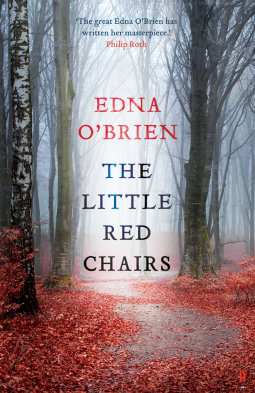
The Little Red Chairs by Edna O’Brien is a fictional portrait, a ‘what if’ scenario: what if a war criminal, a Balkan war lord, was on the run and pitched up in a small town in the West of Ireland. What if the locals took him at face value. What if one woman saw him as a way to bring a child into her childless marriage. What if his true identity was revealed. What then… would happen to the woman. This is the story of Fidelma, to reveal more about her would be to giveaway the drama of the book. She is a sad character, unsatisfied with her lot, reaching for the unattainable and ultimately suffering for her need. Edna O’BrienThis book has attracted some outstanding reviews, but I hesitated. It sat for a while on my Kindle before I read it, I think because the subject matter is depressing and intimidating. O’Brien’s writing is at times flowing and lyrical especially when describing nature, at times her structure is a little wavy and the story a little flabby. Some passages are horrifying in their brutality, the war flashbacks are vivid. I find violence, when left to the imagination, more effective than violence written on the page or acted on stage.
I never really settled into reading this book. It is split into three parts, each with a different personality. The portrayal of small town life in Ireland in the first half was so full of sketchy characters I got confused. I longed for a simpler format to allow the moral dilemma to come through. In part two, Fidelma is in London, searching for healing, and for answers. She cleans a City tower block, and works in a kennel for abandoned greyhounds. At The Centre, where Fidelma goes for support, we hear the stories of abused refugees and asylum seekers, they are victims of war, genocide and physical assault and sexual abuse. For me, their stories sit uncomfortably alongside Fidelma’s own self-created dilemma and, I think because of this, I was left oddly untouched. In part three, Fidelma goes to see Vlad in The Hague at the war crimes tribunal. I admit to not understanding her motivation in going there, but it is a conversation in a bar with a victim of genocide which finally prompts Fidelma to complete the circle and return to Ireland to see the other victim in all this – her husband.
The power of O’Brien’s topic is undeniable. Is it a comment on our gullibility, how we can all be taken in by appearances; or a comment on how we avoid confrontation, not wanting to be the person to say the difficult thing, the one thing which afterwards people say ‘I thought that too.’ It is also a comment on a society which punishes and isolates the victim.

If you like this, try:-
‘Dominion’ by CJ Sansom
‘The Aftermath’ by Rhidian Brook
‘A Long Long Way’ by Sebastian Barry

And if you’d like to tweet a link to THIS post, here’s my suggested tweet:
#BookReview THE LITTLE RED CHAIRS by Edna O’Brien via @SandraDanby http://wp.me/p5gEM4-1TY

#BookReview ‘The Silent Twin’ by Caroline Mitchell @Caroline_writes #crime

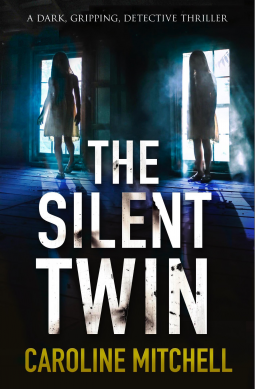
Blackwater Farm, an isolated farmhouse outside the town of Haven, is a creepy place: things move, are thrown and rattle, and not just because of the wind. In The Silent Twin by Caroline Mitchell, the new owners of the farm, a young couple with identical twin daughters, have plans to convert the place. But all is not well. Caroline MitchellWhen nine-year old Abigail goes missing, the cracks become ravines. Detective Constable Jennifer Knight is a policewoman, a Family Liaison Officer with an unusual skill. This is the third book in the Knight series by Caroline Mitchell and the first I have read, so it was a while before I realized she is a psychic. Jennifer is not an unreliable narrator as such, but her ‘take’ on things for me at times conflicted with what I expected from a police investigation. Is she a psychic first or a police officer?
Everyone has something to hide and at one point I suspected each member of the family and their inner circle as the murderer. The story is told from three main viewpoints – Joanna, the young mother; Jennifer, who seems rather mysterious; and diary entries by an unknown person – and so starts the guessing game. Whose diary is it, whose viewpoint can be trusted?
If you often read crime fiction, then Jennifer will not seem a reliable narrator of a murder investigation. She belongs to a specialist team often on the periphery of the main case. In The Silent Twin, her commanding officer often seems to be operating to another agenda. But it is an interesting premise, a detective story that is just a little bit different.
CLICK HERE TO READ MORE ABOUT THIS BOOK

If you like this, try:-
‘Eeny Meeny’ by MJ Arlidge
‘A Death in the Dales’ by Frances Brody
‘Business as Usual’ by EL Lindley

And if you’d like to tweet a link to THIS post, here’s my suggested tweet:
#BookReview THE SILENT TWIN by @Caroline_writes via @SandraDanby http://wp.me/p5gEM4-1WI

#BookReview ‘Death in Holy Orders’ by PD James #crime

A sandy cliff collapses, a theology student dies and his father suspects foul play. And so Adam Dalgliesh returns to St Anselm’s, the theological college which he visited as a boy. And so Death in Holy Orders, eleventh in the detective series by PD James, is cut through with Dalgiesh’s memories. PD James“When secrets are unspoken and unwritten they are lodged safely in the mind, but writing them down seems to let them loose and give them the power to spread like pollen on the air and enter into other minds.” So writes college housekeeper Margaret Munroe in her diary. She found Ronald’s body and was advised by Father Martin, a priest at St Anselm’s, to write about her experience as a way of coming to terms with what happened. Does she know a secret and write it in her diary?
Ronald’s death is declared accidental, a second staff member dies naturally. But then there is a third death and Dalgliesh is put in charge of the case. His familiar team of Kate Miskin and Piers Tarrant are accepted uneasily into this closed community which is secretly worried the building houses a murderer, but outwardly tries to behave as normal. Included in the mix of clergy, teachers and students are several guests including a convalescing detective, a researcher and a university lecturer. At the heart of the mystery is the future of St Anselm’s and, if it is to close, who will inherit the building and its riches.
The motives are various, the suspects numerous. PD James plots with skill to keep us guessing, whilst layering the story with poetry, nature, art, theology and her observations of human nature.
Excellent.
CLICK HERE TO READ MORE ABOUT THIS BOOK

Read my reviews of the other Adam Dalgliesh mysteries:-
COVER HER FACE [#1 ADAM DALGLIESH]
A MIND TO MURDER [#2 ADAM DALGLIESH]
UNNATURAL CAUSES [#3 ADAM DALGLIESH]
SHROUD FOR A NIGHTINGALE [#4 ADAM DALGLIESH]
THE BLACK TOWER [#5 ADAM DALGLIESH]
DEATH OF AN EXPERT WITNESS [#6 ADAM DALGLIESH]
A TASTE FOR DEATH [#7 ADAM DALGLIESH]
DEVICES AND DESIRES [#8 ADAM DALGLIESH]
ORIGINAL SIN [#9 ADAM DALGLIESH] … read the first paragraph HERE
A CERTAIN JUSTICE [#10 ADAM DALGLIESH]
THE MURDER ROOM [#12 ADAM DALGLIESH]… read the first paragraph HERE
THE LIGHTHOUSE [#13 ADAM DALGLIESH]
THE PRIVATE PATIENT [#14 ADAM DALGLIESH]

Here are my reviews of the two Cordelia Gray mysteries:-
AN UNSUITABLE JOB FOR A WOMAN #CGRAY1
THE SKULL BENEATH THE SKIN #CGRAY2

And two other books by PD James:-
INNOCENT BLOOD
TIME TO BE IN EARNEST

If you like this, try:-
‘The Various Haunts of Men’ by Susan Hill
‘The Quarry’ by Iain Banks
‘Wilderness’ by Campbell Hart

And if you’d like to tweet a link to THIS post, here’s my suggested tweet:
#BookReview DEATH IN HOLY ORDERS by PD James http://wp.me/p5gEM4-1ND via @SandraDanby

#BookReview ‘Freya’ by Anthony Quinn #historical

When I finished reading Freya I wanted to shout out to everyone around me to read it. Why? It is a story of friendship and love, truth and honesty, loyalty and betrayal. Anthony Quinn captures Freya immaculately – he seems to intuit so much women’s stuff so well – so much better than other male novelists recently writing from a female point of view. It is such a refreshing read, I hope it sells loads and wins loads. It deserves it. If you can, read it next. Anthony QuinnFreya is the story of Freya Wyley from VE Day to the 1960s via Oxford, Nuremberg, Italy and mostly London. Recently demobbed from the Wrens, at which she achieved a senior position as bomb plotter in a world with few men, she goes up to Oxford unsure if she is too ‘old’ at the age of 21 to return to study. There she finds that pre-war expectations of women re-apply again and with her customary cussedness she fights against it. With the glimmer of an opportunity, she sets out to get a break as a journalist by interviewing a reclusive war reporter who will be attending the Nuremberg war trials. She calls in a favour from her father, lies, manipulates and bravely goes forth, setting foot into the ruins of the bombed city where she is later told she should not have ventured. But that is Freya: undaunted. She is strong, true, speaks without thinking and gets into trouble because of it. Of course it is the few times in which she is not honest, either with herself or with her best friend Nancy – who she met on the night of VE day when they got ‘stinko’ together – that make the most fascinating reading.
It is a joy to read a female character who is not nice all the time, who feels real, and who I can identify with more than some sugar-sweet modern protagonists. This book fairly fizzes along, read in two days on holiday, I found myself irritated when my Kindle’s battery died because I ignored the ‘battery low’ warning.
Quinn’s sense of time is perfect, he moves seamlessly from wartime to the Sixties. All his characters have depth, flaws and are believable, and his balance of action, contemplation and setting is exact. He covers a wide variety of subjects of the time – morality and art, homosexuality offences, celebrity, political rigour – by simply allowing Freya to investigate and report. The technique of covering Freya’s investigation of an article, followed by the published article, acts as a semi-colon before the next segment of her life.

Click the title below to read my reviews of other books by Anthony Quinn:-
CURTAIN CALL
HALF OF THE HUMAN RACE
MOLLY & THE CAPTAIN
OUR FRIENDS IN BERLIN
THE RESCUE MAN
THE STREETS

If you like this, try:-
Sweet Caress’ by William Boyd
The Secrets We Kept’ by Lara Prescott
Fatal inheritance’ by Rachel Rhys

And if you’d like to tweet a link to THIS post, here’s my suggested tweet:
#BookReview FREYA by Anthony Quinn https://wp.me/p2ZHJe-1TV via @SandraDanby