
A timeslip novel that slips effortlessly between now and 1605, The Winter Garden by Nicola Cornick is an intriguing mixture of the Gunpowder Plot, garden history, archaeology and spookiness. 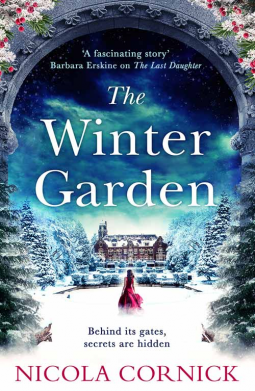 Lucy, recovering from a viral illness that has forced her to give up her career as a professional violinist, is recuperating at Gunpowder Cottage, home of her absent Aunt Verity. Verity has commissioned a garden archaeologist to investigate links to the original house on the land, said to have belonged to Robert Catesby, one of the Gunpowder plotters, and his wife Catherine. Lucy, weak and depressed, is upset to find her bolthole is not as isolated as she expected. But she soon becomes pulled into the mystery of the garden and the story of the Catesbys. When Lucy gets the chills and sees the figure of a woman in a cloak and the outline of a beautiful winter garden full of snow and frost, she’s unsure if she is hallucinating and on medication that doesn’t agree with her. As Finn, the architect, and Johnny his assistant, explain more about their discoveries, Lucy finds herself pulled into the mystery and becomes a researcher of historical documents. More visions, and a dead bouquet left threateningly in her kitchen, add to the tension.
In both time narratives there is personal grief, loss and the togetherness of family and friends. Lucy is in limbo, emotional and full of indecision. Just like Catherine Catesby. Following the clues, Lucy regains her emotional strength as she asks difficult questions, faces opposition and rediscovers her bravery.
In 1605, Anne Catesby must pick up the pieces after the sudden deaths of her husband William, daughter-in-law Catherine and eldest grandson William. Her grieving son Robert, always a flighty, strong-willed boy, leaves his youngest son Robbie with his mother and disappears to London. Anne, already short of money because of fines imposed on Catholic families such as the Catesbys by King James I, struggles to live from day to day. And in the background is Anne’s brooding brother-in-law Thomas Tresham, Robert’s godfather, who is involved in the mysterious Order of the Knights Hospitallers of St John of Jerusalem. There are hints of lost treasure, which may, or may not, be buried in the garden.
I found the clues at times sketchy and unrealistic and the names of the various houses and estates added to this confusion, though Cornick is constrained at times by historical fact.
An unusual story which kept me returning to the book to read more. There’s a particularly strong cast of supporting characters including Lucy’s sister Cleo, Finn the architect with his dog Geoffrey, and brooding siblings Gabriel and Persis. The two timelines melt into each other as the mystery progresses and I didn’t, as is often the case with dual narrative novels, prefer one story to the other. Cornick is a wonderful novelist who tells a good fictional story built on strong historical foundations and doesn’t allow her historical knowledge to bully its way into the reader’s mind.
Read my reviews of these other novels by Nicola Cornick:-
THE FORGOTTEN SISTER
THE LAST DAUGHTER
THE OTHER GWYN GIRL
If you like this, try:-
‘Plague Land’ by SD Sykes #1OswalddeLacy
‘The Lady of the Ravens’ by Joanna Hickson #1QueensoftheTower
‘The French Lesson’ by Hallie Rubenhold
And if you’d like to tweet a link to THIS post, here’s my suggested tweet:
#BookReview THE WINTER GARDEN by @NicolaCornick https://wp.me/p2ZHJe-6w1 via @SandraDanby
COMING SOON… THE NEXT BOOK I REVIEW WILL BE:- 
 SANDRA DANBY'S BOOK REVIEWS
Pingback: #BookReview ‘The Other Gwyn Girl’ by @NicolaCornick #historical | SANDRA DANBY'S BOOK REVIEWS
Pingback: #BookReview ‘The Forgotten Sister’ by @NicolaCornick #historical | SANDRA DANBY'S BOOK REVIEWS
Pingback: #BookReview ‘The Last Daughter’ by @NicolaCornick #historical | SANDRA DANBY'S BOOK REVIEWS
Pingback: #BookReview ‘The Last Protector’ by @AndrewJRTaylor #Historical | SANDRA DANBY'S BOOK REVIEWS