Author Archives: sandradan1

Unknown's avatar

About sandradan1

Novelist. I blog about writing, reading and everything to do with books and writing them at http://www.sandradanby.com/. Come and visit me!

#BookReview ‘Molly & the Captain’ by Anthony Quinn #historical #art

Three timelines, three studies of artist families. Molly & the Captain by Anthony Quinn is the story of one painting via three families across three centuries. It starts in Georgian Bath with the artist William Merrymount and his two daughters. His portrait of the two girls, ‘Molly & the Captain,’ intrigues through the centuries and ends up in North London in the current time. Anthony QuinnEach of the three parts stands alone, the connections revealing themselves in the final pages. In 1758, Merrymount is a renowned artist. His elder daughter Laura is a promising student and it is she who tells the family’s story through letters to her cousin. When her emotionally brittle sister Molly falls in love with the man Laura had thought to marry, their lives change. Things are not as they appear, secrets are well-hidden even within their household and Laura discovers facts she perhaps would prefer to remain unknown.
In 1889, artist Paul Stransom makes a living painting pictures of his local area, preferring to paint landscapes in parks rather than portraits. Tempted to venture abroad, perhaps to Normandy where colleagues are having success, his plans change when in Kensington Gardens he sees a mother and two young daughters, all dressed in white. When he approaches them, they disappear. Meanwhile his sister Maggie is faced with choosing to marry a man with the means to support her, or the poor man she loves.
In modern-day North London, artist Nell is preparing for an exhibition, a retrospective of her work which should bring long-overdue recognition. Her actress daughter Billie meets a young musician who she is to work with in a film. Horrified by the squat where Robbie lives, Billie suggests her mother take him into her house to replace the lodgers currently moving out of her loft. The consequences impact on all their lives.
This is a book about families, love and loyalty, about how creativity impinges on the privacy of family members and how the conflicts of success are just as difficult to deal with now as in Georgian times. Life – romance, loyalty, self-sacrifice, betrayal, opportunities, failure – always seem to get in the way.
It took me longer to read than I expected although it is not a particularly long book. The pace is slow, Quinn takes times to describe his settings with characteristic care of detail. Essentially this is a gentle mystery, a question runs throughout the three sections: what happened to the painting ‘Molly & the Captain’?
The ending has a wonderful, but gentle, twist. A thoughtful read and one I expect to gain more from on re-reading.
CLICK HERE TO READ MORE ABOUT THIS BOOK

Read my reviews of these other novels also by Anthony Quinn:-
CURTAIN CALL
FREYA
HALF OF THE HUMAN RACE
OUR FRIENDS IN BERLIN
THE RESCUE MAN
THE STREETS

If you like this, try:-
‘The Doll Factory’ by Elizabeth Macneal
The Mermaid and Mrs Hancock’ by Imogen Hermes Gowar
The Ballroom’ by Anna Hope

And if you’d like to tweet a link to THIS post, here’s my suggested tweet:
MOLLY & THE CAPTAIN by Anthony Quinn #BookReview https://wp.me/p2ZHJe-6if via @SandraDanby

COMING SOON… THE NEXT BOOK I REVIEW WILL BE:- Renita D'Silva

#BookReview ‘The Whereabouts of Eneas McNulty’ by Sebastian Barry #historical

Written in 1998, The Whereabouts of Eneas McNulty is the earliest of the books by Irish writer Sebastian Barry I’ve read so far. I came to him with A Long Long Way, shortlisted for the 2005 Booker Prize. What I didn’t realise until recently is that many of his novels are connected by their characters, all related distantly to each other. Sebastian BarryThe Whereabouts of Eneas McNulty is the sad story of a dislocated young man forced to leave Sligo, threatened with murder, blacklisted because he worked as a police officer for the Royal Irish Constabulary. When Irish independence occurs at around 100 pages, Eneas realises that following the murders he witnessed, murders by Irishmen of Irishmen in the cause of this independence, he must be either an outcast or a wanderer. And wherever he goes, he must go alone without the girl he loves. Viv, the enigmatic, beautiful, carefree girl he met on the beach.
Eneas is a simple man who makes his own way in life, looking for support from no one, but naïve in the decisions he takes and friends he makes. His banishment is symbolic of the ferocious Irish political turmoil of the early 20th century. Periodically he tries to return to his family – his parents, two brothers and sister – hoping time has healed the political separations but finding his name is still on a kill list. So he drifts, finding for work, not proud, turning his hand to what is available. “And he thinks back a little over his life and where he was born and he wonders did he make such a hames and a hash of it after all? Didn’t he just live the life given him and no more side to him than a field-mouse as God’s plough bears down to crush his nest?”
The timeline stutters through events in Eneas’ life, taking a long time over small passages of time but flashing through momentous landmarks. Wars start and end. Decades pass with barely a mention. But the language is a delight.
Eneas, an innocent in the world of early 20th century Irish politics, is afraid. There is ‘no aspirin for his fear.’ The novel is suffused in Irish history with mentions of Irish warrior hero Cú Chulainn and local Sligo landmarks such as Maeve’s Cairn at the peak of Knocknarea.
This is a novel to be read slowly and absorbed. Race through it and you will miss its beauty.

Read my reviews of these other novels by Sebastian Barry:-
A LONG LONG WAY
DAYS WITHOUT END #1DAYSWITHOUTEND
A THOUSAND MOONS #2DAYSWITHOUTEND
OLD GOD’S TIME

If you like this, try:-
The Irish Inheritance’ by MJ Lee
Love is Blind’ by William Boyd
The Heart’s Invisible Furies’ by John Boyne

And if you’d like to tweet a link to THIS post, here’s my suggested tweet:
#BookReview THE WHEREABOUTS OF ENEAS MCNULTY by Sebastian Barry https://wp.me/p2ZHJe-6aU via @SandraDanby

COMING SOON… THE NEXT BOOK I REVIEW WILL BE:- Anthony Quinn

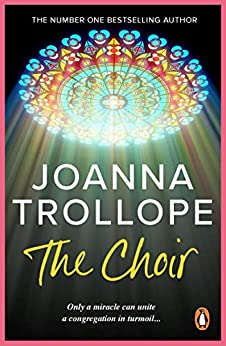
#BookReview ‘The Choir’ by Joanna Trollope #familysaga #rereading

The Choir was the first book by Joanna Trollope that I read, in 1988, and the first published under her own name. Prior to that, she had written historical novels as Caroline Harvey. After reading and enjoying Mum & Dad in 2020, I decided to revisit my old Trollope paperbacks. Joanna TrollopeI never liked the phrase ‘aga saga,’ coined to describe Trollope’s style of novel – community-based, middle class, family trauma, forbidden romance – finding it over-simplistic and belittling of Trollope’s work. The Choir is about a limited time period in the life of a small community, the cathedral and choir school at Aldminster, and what happens when the stonework begins to crumble. Money must be found or saved, cuts must be made, unthinkable changes are considered. This is a story of small-world politics, the interaction of personalities domineering, clever, manipulative, naïve, well-meaning, defeated.
When the Dean of Aldminster Cathedral investigates the building’s dodgy lighting system, he finds stone erosion that will cost a fortune to fix. He first considers sell the headmaster’s magnificent listed house to the council for use as a community centre. There are social divisions within the town and the cathedral’s quarter is seen by some as superior and unwelcoming, a new social centre may help redress the balance. When the true cost of the renovation becomes apparent, Dean Hugh Cavendish considers closing the cathedral’s choir. The latter idea is abhorrent to headmaster Alexander Troy and organist Leo Beckford. Personalities ally themselves to one side of the argument or the other. Caught in the middle is chorister Henry Ashworth whose absent father lives in Saudi Arabia and whose mother Sally is dallying on the edge of an affair. Trollope is excellent at drawing this cast of characters, each fully rounded, each of which is engaging even when they are being awful. Like Ianthe, the Dean’s rebellious daughter, who fancies herself in love with Leo despite a lack of encouragement from him.
When a money-raising scheme is suggested that involves some of the Cathedral Close’s most unlikely characters, it is expected to fail. Henry becomes an unexpected star. One event leads to another, decisions must be made, marriages falter and professional courtesies are forgotten. In this small community, they all know each other’s business, politics becomes all-consuming; the finances of the cathedral, its place in the town, the accessibility of the choir to children from less advantaged families, and the rivalry around the town council boardroom table.

Joanna Trollope

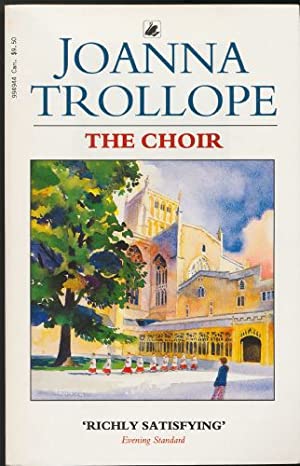
My original copy of ‘The Choir’

This novel is 35 years old but that doesn’t matter. I enjoyed it immensely.

Read my reviews of other novels by Joanna Trollope:-
A PASSIONATE MAN
A VILLAGE AFFAIR
MUM & DAD
THE RECTOR’S WIFE

If you like this, try:-
A Single Thread’ by Tracy Chevalier
The Gustav Sonata’ by Rose Tremain
We Are Water’ by Wally Lamb

And if you’d like to tweet a link to THIS post, here’s my suggested tweet:
#BookReview THE CHOIR by Joanna Trollope https://wp.me/p2ZHJe-68K via @SandraDanby

COMING SOON… THE NEXT BOOK I REVIEW WILL BE:- Sebastian Barry
#BookReview ‘A Mansion for Murder’ by Frances Brody @FrancesBrody #cosycrime

A Mansion for Murder, thirteenth in the Kate Shackleton 1930s crime series by Frances Brody, centres on an unlucky Yorkshire mansion. Intrigued when she receives a letter from a stranger, Kate visits the Milner Field estate, near the mill town of Saltaire, to meet the letter writer. But Ronnie Cresswell, who promised to tell a ‘story from the past,’ has drowned. Can Kate discover this story for herself? Frances BrodyMilner Field has an unhappy reputation for bad luck, failure and death. Everyone around the mansion, and nearby Salt Mills, is hiding something. At the mill, a new contract may be lost because an employee is selling sensitive commercial information. And now Ronnie is dead. Some secrets relate to the present day, others are anchored in the past. So many secrets mean lots of red herrings hiding the truth. Ronnie’s death happens at the beginning of the story and a lot of characters are introduced together. Some are just names and I struggled to separate them in my mind, appearing briefly and not seen again.
Brody tells this story in two timelines, Kate in 1930 and a child in the past; the year isn’t specified, the chapters are simply headed ‘Long Ago’. Ronnie Cresswell works for the maintenance department at Salt Mills. His family are deeply connected with the local area. He lives with his parents at The Lodge on the Milner Field estate, which is now for sale. Ronnie’s parents, father [confusingly also called Ronald] is head gardener. His mother is housekeeper and there are three siblings, Stephen, Mark and Nancy. Ronnie, it emerges, is courting Pamela Whittaker, daughter of the Salt Mills owner. Not everyone is happy with their relationship.
The events of the past and present are thinly connected but they contribute to the eerie atmosphere of the once grand house and explain how local legends and rumour take root. I was left feeling that the creepiness of the house and its grounds was under-exploited. A number of sub-plots jog along, some of which amount to nothing much. But the story of Rosie and Jim Sykes is a good one. The most affecting storyline belongs to Miss Mason, the schoolteacher.
Not as tightly written as Brody’s previous Kate Shackleton novels perhaps, as seems to be the case with a number of recently-released novels, it was written during lockdown. Overall this is a good inter-war series with a thoroughbred lead character in Kate Shackleton. Set in a period of social change, Kate’s character and job reflect the alteration in women’s lives, the widening of their opportunities and ambitions, and the old-fashioned obstacles they must still bear.

Read my reviews of these other Kate Shackleton novels:-
DYING IN THE WOOL #1KATESHACKLETON … and read the #FirstPara HERE
A DEATH IN THE DALES #7KATESHACKLETON
A SNAPSHOT OF MURDER #10KATESHACKLETON
DEATH AND THE BREWERY QUEEN #12KATESHACKLETON

If you like this, try:-
I Refuse’ by Per Petterson
An Uncertain Place’ by Fred Vargas #8COMMISSAIREADAMSBERG
Or the Bull Kills You’ by Jason Webster #1MAXCAMARA

And if you’d like to tweet a link to THIS post, here’s my suggested tweet:
#BookReview A MANSION FOR MURDER by Frances Brody @FrancesBrody https://wp.me/p2ZHJe-67i via @SandraDanby

COMING SOON… THE NEXT BOOK I REVIEW WILL BE:-
Joanna Trollope

#BookReview ‘Lucy by the Sea’ by Elizabeth Strout @LizStrout #contemporary

Elizabeth Strout never writes a bad novel. When I started to read Lucy by the Sea, her latest, I was taken aback to find it is set during the pandemic; something I have avoided. But I was soon immersed in the life of Lucy Barton and her relocation from New York to a small seaside town in Maine. Elizabeth StroutMy misgivings about lockdown were reduced because this is a Strout novel. She doesn’t write about the pandemic – apart from occasional mentions of masks and vaccines – she writes about people. This is a finely-judged story about ageing, about grief [new and long-lived], about secrets within families and self-denial of difficult truths. Lucy moves into a large house outside the town of Crosby, not because she planned it, but because her ex-husband William persuades her it will be safer than the city. There they discover new and old acquaintances and reacquaint themselves with each other. William is recently separated; Lucy was widowed a year earlier. Both feel their age and are anxious about the subtle changes, but don’t like admitting it to themselves or anyone else.
Through Lucy’s eyes as she reflects on her own life, and that of her children and family, we see how childhood poverty never leaves you even if you leave that poverty behind. How marriage turbulence is sometimes negotiable, and sometimes terminal. How education saved her but didn’t save her sister or brother, and how she was for years blind to that inequality. It is thought-provoking stuff. Honest. Painful. It makes you consider your own life and how you see it through blinkers gained through your personal experience.
Strout’s novels are all inter-twined through character and place, but always with a light touch. If this is the first Strout book you pick up, please read it. This is not a series, there is no first and last book to be read in order. It is an ensemble. If it were theatrical, it would be a repertory company. The pandemic-forced move to Crosby takes Lucy out of her comfort zone, away from friends, and she rubs shoulders with people she wouldn’t normally meet. As we see Lucy age from novel to novel, Lucy by the Sea highlights her new vulnerability and anxiety as she and William work out how to handle the awkward elements of getting old.
This is a more political novel than any of Strout’s previous work. The pandemic setting makes this inevitable. There is a shadow of mask v anti-mask, resident v incomer, plus brief mentions of George Floyd and storming of the Capitol on January 6. But this is not overt and always put into Lucy’s context. Strout places her characters in a time of disruption, fear and death. For everyone who lived through it, the surreal isolation forced by pandemic lockdown was an opportunity for consideration, re-evaluation and truth. A gift for a novelist with the powers of Elizabeth Strout.
Excellent.

Read my reviews of these other books by Elizabeth Strout:-
AMY & ISABELLE
ANYTHING IS POSSIBLE
MY NAME IS LUCY BARTON
OH WILLIAM!
OLIVE KITTERIDGE
OLIVE, AGAIN
TELL ME EVERYTHING

If you like this, try:-
Curtain Call’ by Anthony Quinn
A Traveller at the Gates of Wisdom’ by John Boyne
Shrines of Gaiety’ by Kate Atkinson

And if you’d like to tweet a link to THIS post, here’s my suggested tweet:
#BookReview LUCY BY THE SEA by Elizabeth Strout @LizStrout https://wp.me/p2ZHJe-65D via @SandraDanby

COMING SOON… THE NEXT BOOK I REVIEW WILL BE:- Frances Brody

#BookReview ‘Stone Blind’ by Natalie Haynes @officialnhaynes #mythology

Stone Blind is the first novel by Natalie Haynes I’ve read and I came to it without expectations or pre-conceived ideas. Billed as the story of Medusa, the mortal raped by a god and turned into a Gorgon with a writhing head of snakes, this is in fact a much broader tale of Greek gods, goddesses and myths. Medusa is featured but is not prominent until the final third. A fleeting appearance and a disappointment I didn’t recover from. Natalie HaynesA story of the abuse of power and privilege, of trickery and arrogance, mostly of men against women, this heaviness is leavened with wit and a modern feminist voice. It is the tale of assorted women, goddesses and mortals and their places in their worlds alongside men. In a complex weaving of many stories and narrators, this is a novel to read with your full attention. I felt it drag in the middle, perhaps my concentration wavered, perhaps the thin presence of Medusa began to weigh on me. Oh how I wanted more about Medusa and her Gorgon sisters, Euryale and Stheno, and less squabbles, battles and jealousies of so many immortals and their offspring.
Haynes examines the question, what makes a monster and who decides. She updates the relevance of Medusa and Perseus and questions the very idea that the Gorgons were monstrous. So, an ambitious tale in breadth – perhaps too ambitious – but with some feminist lines to remember. ‘So to mortal men, we are monsters. Because of our teeth, our flight, our strength. They fear us, so they call us monsters.’
There are so many books out there that are fictionalised re-tellings of the Greek myths that we’re spoilt for choice. Will I read another by Haynes? I’m not sure, not for a while.

If you like this, try:-
The Silence of the Girls’ by Pat Barker
The Women of Troy’ by Pat Barker
‘House of Names’ by Colm Tóibín

And if you’d like to tweet a link to THIS post here’s my suggested tweet:
#BookReview STONE BLIND by Natalie Haynes @officialnhaynes https://wp.me/p2ZHJe-64w via @SandraDanby

COMING SOON… THE NEXT BOOK I REVIEW WILL BE:-

#BookReview ‘The Cornish Wedding Murder’ by Fiona Leitch #crime #cosycrime

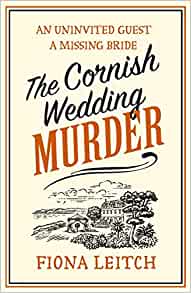
Jodie ‘Nosey’ Parker, former Metropolitan Police officer, has moved home to Cornwall with daughter Daisy. When she agrees to do the catering for an ex-boyfriend’s wedding, she doesn’t expect to find herself involved a murder investigation. The Cornish Wedding Murder is first in the Nosey Parker cosy crime series by Fiona Leitch. A while ago I stumbled on the second book in this series and enjoyed it so much I decided to start at the beginning. Fiona LeitchDoes Jodie find murder and mayhem, or does trouble find her? When Tony Penhaligon’s fiancé disappears on the eve of their wedding, and his ex-wife is found dead in the grounds, he is arrested. Jodie, who has taken an instant dislike to the flashy bride-to-be Cheryl, becomes peacemaker as Mel, Tony’s ex, publicly accuses her successor of marrying him for his money. Never one to stand on the sidelines, Jodie steps in to calm the situation.
This is an enjoyable, easy read. Perfect for when you want something to sink into and forget the world outside. Yes, it’s a murder story. But it’s also funny, full of twists, turns and a main character who is impossible not to like. Jodie is the sort of friend everyone wants. Meddling, well-meaning, gung-ho and giggly, she has a sensitive nose for wrongdoing and a clear idea of what’s right and wrong. Aided by an adopted fluffy white dog and loaded down with leftover wedding food that must be eaten, Jodie is determined to uphold the concept of ‘innocent until proven guilty.’
A well-written mystery that introduces the setting and characters of the future books. Jodie is likeable. Flawed, but in a nice way that makes her seem a real person. Ably supported by her Mum and daughter Daisy, everywhere Jodie turns in the village someone remembers her as the daughter of respected and much-missed Chief Inspector Eddie Parker. That’s quite a reputation to live up to. Looking for a peaceful life, a new start with her daughter away from London, she manages to find trouble around every corner. She pursues every clue she finds, instead of telling local detective DCI Withers who despairs [or pretends to] at her interference.
Close to the end, I was still guessing the identity of the murderer. The conclusion of the romantic sub-plot is also unsure. A nice mixture of amateur sleuthing and romance. You’ll finish it wanting to read more.

Here are my reviews of other books in the Nosey Parker series:-
THE CORNISH VILLAGE MURDER #2NOSEYPARKER
THE PERFECT CORNISH MURDER #3NOSEYPARKER
A CORNISH CHRISTMAS MURDER #4NOSEYPARKER
A CORNISH RECIPE FOR MURDER #5NOSEYPARKER
A CORNISH SEASIDE MURDER #6NOSEYPARKER
THE CORNISH CAMPSITE MURDER #7NOSEYPARKER

If you like this, try:-
Murder at Catmmando Mountain’ by Anna Celeste Burke
The Art of the Imperfect’ by Kate Evans #1SCARBOROUGHMYSTERIES
Magpie Murders’ by Anthony Horowitz #1SUSANRYELAND

And if you’d like to tweet a link to THIS post, here’s my suggested tweet:
#BookReview THE CORNISH WEDDING MURDER by Fiona Leitch https://wp.me/p2ZHJe-64h via @SandraDanby

COMING SOON… THE NEXT BOOK I REVIEW WILL BE:-
Natalie Haynes

#BookReview ‘All the Broken Places’ by @JohnBoyneBooks #WW2

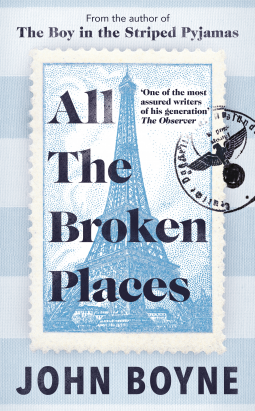
John Boyne is a fine writer. All the Broken Places, his sequel to The Boy in the Striped Pyjamas, examines the nature of grief and guilt, of living a long life of secrets. Its some years since I read The Boy in the Striped Pyjamas but All the Broken Places stands on its own and can be read independently. John BoyneGretel Fernsby is ninety-one. It is London 2022 as she nervously awaits the new neighbours expected to move into the downstairs flat. She likes familiarity, routine, being anonymous. Gretel carries the guilt of something that happened in the war and which she has hidden, and lived with, for eighty years. The opening sentence sets up the story succinctly. ‘If every man is guilty of all the good he did not do, as Voltaire suggested, then I have spent a lifetime convincing myself that I am innocent of all the bad.’ Boyne explores the concepts of individual and collective guilt, of the sin of inaction, of the culpability of children and the offence of looking away.
Gretel’s younger brother was The Boy in the Striped Pyjamas, their father commandant at Auschwitz. She buried all memories of her brother, unable to speak his name or say it silently in her own head, but is unable to forget him. We follow her life after the war, to France and Australia and finally to England. Always, she lives a life of secrets. Until the past comes bursting forth when nine-year old Henry moves in downstairs and Gretel sees his tears, his bruises, his silences. The memories come flooding back. As she considers whether to step in and defend Henry, she must risk revealing what she has hidden for eighty years. Will Gretel find a kind of peace?
It’s the best book I’ve read so far in 2023. There are surprises at the end, some beautiful detail. Emotional but never sentimental, Boyne doesn’t shy away from the horror of the Holocaust. Powerful and uncomfortable.

Click the title to read my reviews of these other novels by John Boyne:-
A HISTORY OF LONELINESS
A LADDER TO THE SKY
A TRAVELLER AT THE GATES OF WISDOM
STAY WHERE YOU ARE AND THEN LEAVE
THE HEART’S INVISIBLE FURIES… Curious? Read the first paragraph of THE HEART’S INVISIBLE FURIES here.
WATER #1ELEMENTS
EARTH #2ELEMENTS

If you like this, try:-
‘The Aftermath’ by Rhidian Brook
Inflicted’ by Ria Frances
The Bird in the Bamboo Cage’ by Hazel Gaynor

And if you’d like to tweet a link to THIS post, here’s my suggested tweet:
#BookReview ALL THE BROKEN PLACES by @JohnBoyneBooks https://wp.me/p2ZHJe-646 via @SandraDanby

COMING SOON… THE NEXT BOOK I REVIEW WILL BE:-
Fiona Leitch

#BookReview ‘Listening Still’ by Anne Griffin #Irish #contemporary

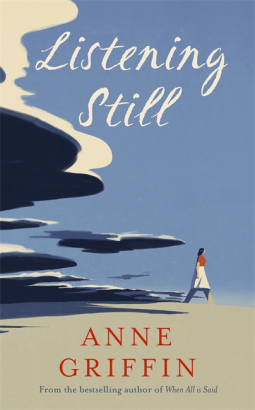
When All is Said the debut novel by Anne Griffin was one of my favourite books of 2019. Listening Still is Irish writer Griffin’s second novel. It focusses on Jeanie Masterson, an undertaker who can hear the last words of the newly deceased. She finds herself a juggler of truth, obfuscations and lies as she tries to balance her commitment to the dead person to pass on a message to the ones left behind, with her own emotional need to soften harsh words that may hurt the recipient. This shaky balance of truth and lies is the theme of the book set in the small community of Kilcross. Anne GriffinIt took me a while to get into this book, to care. Unlike Maurice Hannigan in When All is Said who is a character whose head and being I immediately slipped into, I found Jeanie more difficult to reach and less sympathetic. Starting with the shock announcement by Jeanie’s parents that they are retiring and leaving her and husband Niall to run the family undertakers, the novel quickly widens out to encompass Jeanie’s childhood and teenage years and how she came to terms with her unusual gift. This return to the past became frustrating as I wanted to hear more about the voices of the dead and their stories, rather than the ups and downs of Jeanie’s love life. My fault, I was hoping for a community ensemble story in the style of Marilynne Robinson and Elizabeth Strout.
Jeanie’s difficulties with taking over the family firm are inextricably linked to her relationship with her husband. In order to move forward, something has to give. But what? As she seeks the answers, Jeanie’s travels take her to London, Norway and France. I particularly enjoyed the section with Marielle and Lucien. Seventy-five year old Marielle can also hear the dead. Her neighbour and boyfriend Lucien digs graves for Marielle’s clients while rescuing the pieces of furniture she rejects, he stashes them in a shed knowing that she will regret throwing them away.
After the brilliance of When All is Said, perhaps my expectations of a second novel were unrealistically high. Yes I was disappointed but this is still is a well-written, enjoyable novel by an author who is on my to-watch list. And it left me thinking of that old chestnut – can a well-meant lie hurt more than the difficult truth?

Read my review of WHEN ALL IS SAID, also by Anne Griffin.

If you like this, try:-
Unsettled Ground’ by Claire Fuller
Elizabeth is Missing’ by Emma Healey
Something to Hide’ by Deborah Moggach

And if you’d like to tweet a link to THIS post, here’s my suggested tweet:
#BookReview LISTENING STILL by Anne Griffin #bookreview https://wp.me/p2ZHJe-67w via @SandraDanby

#BookReview ‘The Queen’s Lady’ by @joannahickson #historical

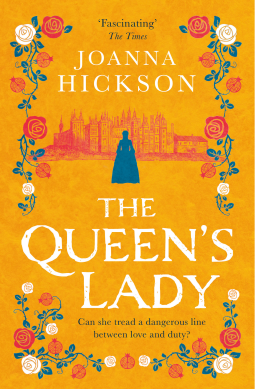
The Queen’s Lady by Joanna Hickson is a delightful read about a key woman behind the scenes of the Tudor crown, trusted and loved by two queens. Second in the ‘Queens of the Tower’ series, it follows Lady Joan Guildford nee Vaux who we first met in The Lady of the Ravens. Joan is now lady-in-waiting to Queen Elizabeth, wife of Henry VII and mother of Prince Arthur and Prince Henry. Joanna HicksonIt is 1502 and the story starts as Arthur, Prince of Wales, marries Princess Katherine of Aragon. There are worries for Arthur’s health and when a messenger knocks on the door late one night, he brings a request that ‘Mother Guildford’ should rush to the side of the Queen. Loyalties change overnight and friendships disappear. The storyline of the Tudors is well-known but this book shows the history from the point of view of courtiers, the way the court worked and the fragility of such positions in the gift of the king. After Arthur’s death, followed quickly by that of his queen, Henry VII becomes insular and paranoid, he listens to new advisors and fears those closest to him are treacherous. Joan’s husband Richard is accused of fraud and, despite Joan’s history as governess to countless princes and princesses, the family lose their position at court.
When reading some historical novels, I find myself questioning the history and noticing the heavy use of historical fact. Hickson’s writing is a delight, she conjures the period with a light touch. Joan is present at a series of critical events of the period – the meeting with the French king at the Field of the Cloth of Gold, the coronation of Henry VIII and marriage to Katherine of Aragon, Princess Mary’s journey to Scotland and marriage to King James, and the journey to France with Princess Margaret to marry Louis XII.
There is romance, hardship, fear, grief and new love. The ravens are still there but are not central to this story, as they were the first. It’s not clear if this is simply the sequel to the first Joan Vaux book, or whether Hickson will continue with a third.
Joan Guildford died in 1538 at the age of 75, eighteen years after the ending of this novel. So plenty more years for Hickson to imagine the life of this fascinating woman.
Don’t miss it.

Click the title to read my review of THE LADY OF THE RAVENS, first in the Queens of the Tower series.

If you like this, try:-
Winter Pilgrims’ by Toby Clements
The Forgotten Sister’ by Nicola Cornick
Cecily’ by Annie Garthwaite

And if you’d like to tweet a link to THIS post, here’s my suggested tweet:
#BookReview THE QUEEN’S LADY by @joannahickson https://wp.me/p2ZHJe-63w via @SandraDanby