Category Archives: book reviews

#BookReview ‘Rush Oh!’ by Shirley Barrett #historical #whaling

I didn’t know what to expect from Rush Oh! Whaling is frowned on these days and somewhat gory. But I am so pleased I read it. Shirley Barrett has drawn a setting which comes alive. Shirley Barrett Australia, New South Wales, 1908. It is the story of Mary Davidson, the daughter of a whaler, it is her memoir of one year in her family’s rural life at Eden. It is not simply a story about whaling.
The historical context is so rich, so believable. The first page introduces the vivid setting: Mary’s home with its scent of boiling blubber for five months of the year, the rib cage of a 90ft blue whale sits in the front garden surrounded by jonquils, and a footpath laid with the pulverised vertebrae of whales. In this house in Eden lives Mary with siblings and their widowed father, the famous whaler George Davidson. During the whaling season her father’s whaling crew also live with the family and Mary and her sister cook meals and do the laundry. It is a hard life, harder when the whales do not appear in the bay and the general store will not further extend the credit line. Into this scene walks John Beck, former Methodist minister, offering his services as an oarsman. So this is a family story, a whaling/nature story, and a tale of teenage love.
George Davidson is a true character, his exploits were recorded in the local newspapers of the time and whale skeletons are on display at the Eden Killer Whale Museum. The ‘Author’s Note’ explains how Barrett combined history with invention in the writing of Mary’s memoir. As it is a memoir we know Mary is writing it years after the events she depicts, and there are hints of what may befall Mary and her family after the book has finished. The last two chapters are set later in her life and fill in some of the gaps.
I don’t like gory stories and don’t like whaling, but I found the story fascinating. Man v Beast fighting for survival, with an added twist: the whaling crew is aided in its hunt of the right whales by a group of Killer whales. Any catch is shared between men and killers. Again, factually correct. So, a story of Man + Beast interacting for the benefit of both.
Oh, and I loved the illustrations too. An unusual novel, but definitely worth a try.

If you like this, try:-
All the Birds, Singing’ by Evie Wyld
A Woman Made of Snow’ by Elizabeth Gifford
The Quick’ by Lauren Owen

And if you’d like to tweet a link to THIS post, here’s my suggested tweet:
#BookReview RUSH OH! by Shirley Barrett http://wp.me/p5gEM4-1TH via @SandraDanby
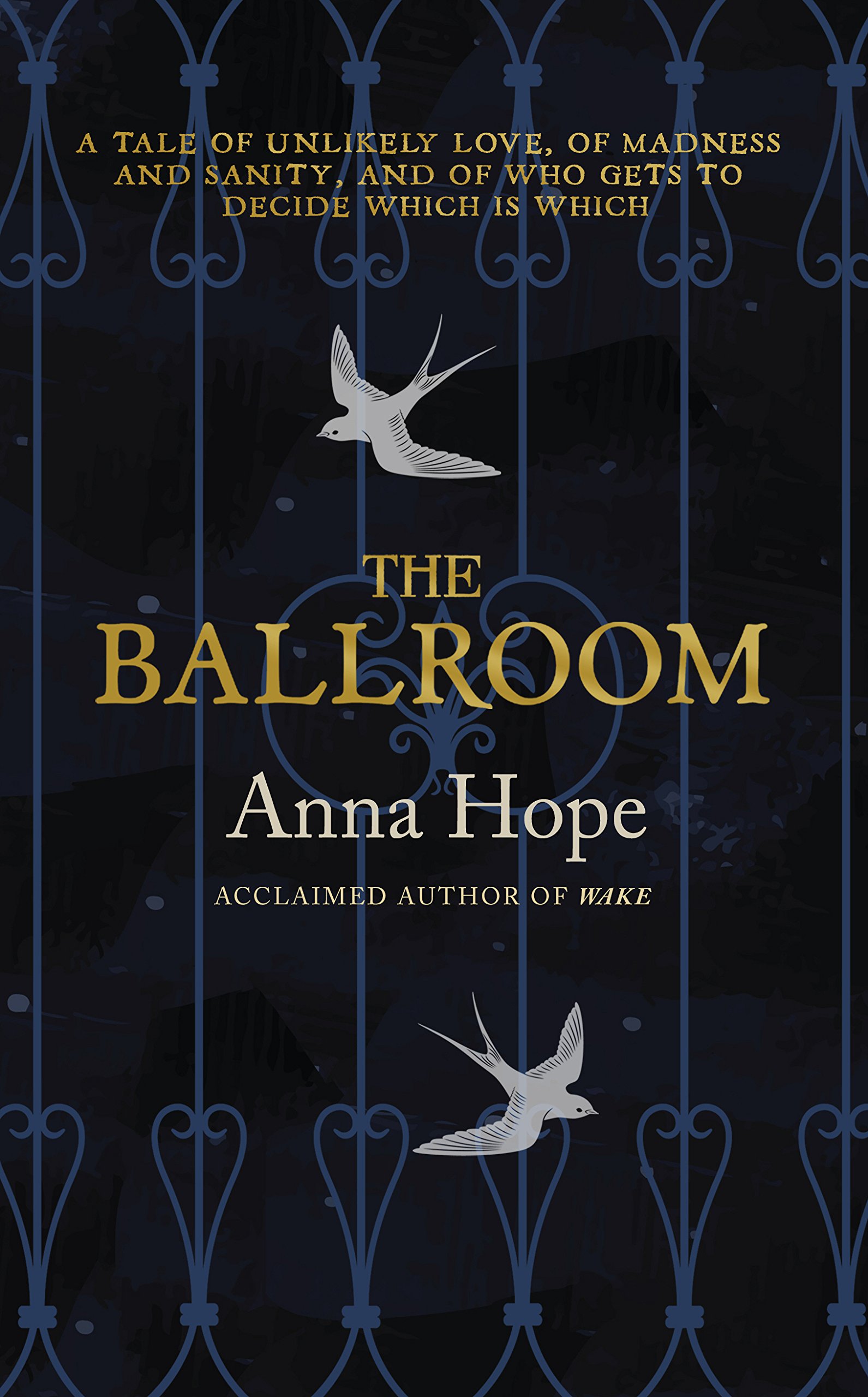
#BookReview ‘The Ballroom’ by Anna Hope #historical

It is 1911 at the end of the Edwardian era. At an asylum on the edge of the Yorkshire moors, a new patient sees an opportunity to run and takes it. As Ella runs across a field, she sees men digging a deep hole in the earth. She stumbles and one of the men reaches to help her. This is her first sight of John, and The Ballroom by Anna Hope is their story. Anna HopeElla is admitted to the asylum because she broke a window at the mill where she works. It is a mystery why John is there. Their story is told slowly as they get glimpses of each other, rare, as the men and women are kept separate apart from the Friday night dance in the ballroom. The asylum is a magnificent Victorian building and the ballroom is designed to inspire its inhabitants, to improve their spirits, with its stained glass pictures of birds and brambles, painted walls and stage for musicians. Their story is also told by Dr Charles Fuller, his interest in eugenics sets their plight into context with the times. At first he enthusiastically organises a musical programme designed to lift the spirits of the imprisoned men and women – incidentally the men work outdoors, the women shut indoors – until an experimentation with new music changes everything.
The background is a boiling hot summer, spirits and tempers run high. Hope draws such a clear picture of the asylum and the moors – helped, I think, by the fact she used a real building as her inspiration – that I can see it. This is a story of love, rather than a romance; the setting and context sometimes make for a difficult read, but throughout I was willing Ella on. You can’t but help admire the guts and determination described.

Read my review of WAKE, also by Anna Hope.

If you like this, try:-
‘The Quick’ by Lauren Owen
‘All the Birds, Singing’ by Evie Wyld
‘Burial Rites’ by Hannah Kent

And if you’d like to tweet a link to THIS post, here’s my suggested tweet:
#BookReview THE BALLROOM by Anna Hope via @SandraDanby http://wp.me/p5gEM4-1TD

#BookReview ‘The Farm’ by @tomrobsmith #thriller #mystery

The Farm by Tom Rob Smith is the best thriller I’ve read this year, one of those ‘who do I believe?’ scenarios. It’s an ordinary day for Daniel until his mobile rings. It’s his father. “Your mother’s sick… She’s not well… She’s been imagining things.” His mother is in hospital, he says, she’s been committed. As Daniel prepares to fly to Sweden where his parents live, his father calls again; his mother is missing. Tom Rob SmithHis mobile rings again, it is his mother. She says his father is lying. Who to believe?
And so starts The Farm, a book which questions the parent/sibling relationship, lies told within the family, and how far a family can be stretched before it breaks. It is a story of a Swedish woman and her English husband retiring to a farm in rural Sweden, looking for a new start, an active retirement, anticipating being part of a close-knit community.
Tilde arrives in London and tells Daniel that his father is lying. She is not ill, she is in danger, she has discovered crimes, lies, irregularities. At all times she carries an old leather satchel which she says is full of evidence.
Who to believe?
Life on the farm is not as they hoped. Tilde says they have no money, the neighbours are brusque and cold, and the behaviour of her husband Chris has changed. Tilde becomes concerned for the adopted daughter of a neighbour, Håkan, a powerful man both physically and locally in the community, who becomes a new friend for Chris. Crimes have been committed, Tilde says. The community is keeping secrets, and she feels threatened. Her husband seems to be conspiring with Håkan. Tilde is afraid.
Chris tells Daniel that his mother has suffered a psychotic episode, that her behaviour has changed, that she may turn violent. That she is imagining things.
Daniel does not know who to believe. His reaction to his mother and father’s stories are coloured by the fact that he too has lied to them, by withholding from them the truth of his sexuality and his current relationship.
CLICK HERE TO READ MORE ABOUT THIS BOOK AT AMAZON

If you like this, try:-
‘The Accident’ by Chris Pavone
‘Slow Horses’ by Mick Herron #1SloughHouse
I Refuse’ by Per Petterson

And if you’d like to tweet a link to THIS post, here’s my suggested tweet:
#BookReview THE FARM by @tomrobsmith via @SandraDanby http://wp.me/p5gEM4-1IR

#BookReview ‘The Children Act’ by Ian McEwan #contemporary #family

The first page of this book by Ian McEwan is a classic, an intense study of Fiona Maye, High Court judge, a family law specialist, married, childless. The Children Act is the story of a slice of her life and how an upset with her husband coincides with a particular case. Each event impacts on the other and I was left considering how our legal system expects consistent wisdom from its judges when they have human frailties. Ian McEwan Before the story starts, there is a quotation from the Children Act, the piece of law according to which Judge Maye must compose her judgements: ‘When a court determines any question with respect to… the upbringing of a child… the child’s welfare shall be the court’s paramount consideration.’ But for Fiona Maye, her involvement with this case goes beyond the courtroom.
Adam is a teenager whose religious upbringing prevents him having a blood transfusion as part of his treatment for leukaemia. Fiona Maye routinely moves from one case to the next, digesting complicated information in an efficient, calm and clinical manner, but something about Adam’s situation is different. Her judgement will effectively decide if Adam shall live or die. She doesn’t know it, but it will also have implications for her own life. Is her decision affected by the fact that, nearing sixty, she is starting to feel her childlessness? As she hides from the stress of her husband’s departure in search of sexual adventure, she buries herself in her documents, in Adam’s case. Does personal judgement combine with her judicial process? Doesn’t it always?
This is a slim book about a difficult subject. McEwan writes without a spare word but his prose is more emotional and intense because of that. He concentrates on the two storylines – Adam’s medical situation, and Fiona’s separation from her husband – without extraneous detail about Fiona’s life. The legal case is set out somewhat drily, but then the law is dry. This is not a John Grisham legal thriller, it is a considered fictional examination of what it is like for a lawmaker to sit in judgement while at the same time retaining the humanity which qualified the judge for the job in the first place.
This cover is my hardback version, a Christmas 2014 gift which has been languishing on my shelf until a friend asked me for my opinion. Why did I wait so long to pick it up?

Read the first paragraph of THE CHILDREN ACT here

Try these reviews of other McEwan novels:-
MACHINES LIKE ME
NUTSHELL

If you like this, try:-
‘A Little Life’ by Hanya Yanagihara
‘The Signature of All Things’ by Elizabeth Gilbert
‘The House at the Edge of the World’ by Julia Rochester

And if you’d like to tweet a link to THIS post, here’s my suggested tweet:
#BookReview THE CHILDREN ACT by IAN MCEWAN via @SandraDanby http://wp.me/p5gEM4-1RB

#BookReview ‘A Certain Justice’ by PD James #crime

I have read A Certain Justice before, many years ago, my paperback is old. Reading an Adam Dalgliesh story is like slipping into a favourite pair of old jeans. It’s that feeling you get with an assured author: you are in safe hands. It is mutual trust. The author trusts the reader to make connections and ‘get’ references without having to spell everything out, the reader trusts the author to deliver a satisfying story without distractions of blind alleys. This applies, especially I think, to crime fiction. PD JamesI remembered the character of Venetia Aldridge, the murder victim, and of course know detective Adam Dalgliesh, but I had forgotten the identity of the killer. One of the pleasures of a PD James novel for me is the cultural background and the depth of knowledge she demonstrates. Dalgliesh is a poet, he is fond of architecture, of music, of the countryside. The murder of Venetia Aldridge, a barrister, takes place in her Chambers, and so as the reader I became involved in the world of law, of trial by jury, of guilty v not guilty, of revenge, of abandonment, hate and lingering resentment.
James takes her time to establish the characters involved, Venetia Aldridge herself, but also everyone around her, the other lawyers, her colleagues in Chambers, her daughter, and the people involved in her recent trials. A PD James crime novel is not short, but each character sketch is a potential murderer, accomplice, witness or, another murder victim. So it pays for the reader to pay attention. James is a master storyteller.

Read my reviews of the other Adam Dalgliesh mysteries:-
COVER HER FACE #1ADAMDALGLIESH
A MIND TO MURDER #2ADAMDALGLIESH
UNNATURAL CAUSES #3ADAMDALGLIESH
SHROUD FOR A NIGHTINGALE #4ADAMDALGLIESH
THE BLACK TOWER #5ADAMDALGLIESH
DEATH OF AN EXPERT WITNESS #6ADAMDALGLIESH
A TASTE FOR DEATH #7ADAMDALGLIESH
DEVICES AND DESIRES #8ADAMDALGLIESH
ORIGINAL SIN #9ADAMDALGLIESH … read the first paragraph HERE
DEATH IN HOLY ORDERS #11ADAMDALGLIESH
THE MURDER ROOM #12ADAMDALGLIESH … read the first paragraph HERE
THE LIGHTHOUSE #13ADAMDALGLIESH
THE PRIVATE PATIENT #14 ADAMDALGLIESH

Here are my reviews of the two Cordelia Gray mysteries:-
AN UNSUITABLE JOB FOR A WOMAN #CGRAY1
THE SKULL BENEATH THE SKIN #CGRAY2

And two other books by PD James:-
INNOCENT BLOOD
TIME TO BE IN EARNEST

If you like this, try:-
‘The Pure in Heart’ by Susan Hill #2SIMONSERRAILLER
‘Homeland’ by Clare Francis
‘Stolen Child’ by Laura Elliot

And if you’d like to tweet a link to THIS post, here’s my suggested tweet:
#BookReview A CERTAIN JUSTICE by PD James via @SandraDanby https://wp.me/p2ZHJe-4cQ

#BookReview ‘Time Will Darken It’ by William Maxwell #historical #classic

Two families, the one from the South visits the one in the North. America before the Great War, class divides, manners, family duty, the race question and, beneath the politeness, love is turbulent. This is the world of Time Will Darken It. I don’t know why I have never discovered William Maxwell before now, but I will certainly seek out his other books. William Maxwell Draperville, Illinois, is the setting for this observation of manners which at times reminded me of Austen. Draperville is based on Maxwell’s own hometown of Lincoln, Illinois. In 1912, the Potter family from Mississippi visit the family of their foster son. Austin King, lawyer in Draperville, struggles to live up to the reputation of his father Judge King. The interaction and resulting effects of the King and Potter families over four weeks and three days, is detailed in a way reminiscent of Austen. And the detail is fascinating. The interaction between the generations, the expectations of the men and women, norms of behaviour and what happens when those norms are broken. This pre-war period teeters on the verge of war, and all the changes that will soon be brought about.
This is a wise book about relationships and how one’s own self-perspective, and that of your parents, changes over time and with experience. “…the history of one’s parents has to be pieced together from fragments, their motives and character guessed at, and the truth about them remains deeply buried, like a boulder that projects one small surface above the level of smooth lawn, and when you come to dig around it, proves to be too large ever to move, though each year’s frost forces it up a little higher.”

Try my reviews of these other novels by William Maxwell:-
BRIGHT CENTER OF HEAVEN
THE FOLDED LEAF
THEY CAME LIKE SWALLOWS

And read the first paragraphs of TIME WILL DARKEN IT and THE CHATEAU.

If you like this, try:-
Some Luck by Jane Smiley
A Spool of Blue Thread by Anne Tyler
‘Summertime’ by Vanessa Lafaye

And if you’d like to tweet a link to THIS post, here’s my suggested tweet:
#BookReview TIME WILL DARKEN IT by William Maxwell via @SandraDanby http://wp.me/p5gEM4-1I1

My Porridge & Cream read: Jane Cable

My guest today at ‘Porridge & Cream’ is novelist Jane Cable.

“If I say that my Porridge & Cream book is Long Summer Day very few people will recognise the title. If I say it’s the first volume of RF Delderfield’s Horseman Riding By trilogy most readers will know exactly the book I mean.  jane cable
In all honesty this book has been with me so long I can’t remember the first time I read it. What I do know is it was after the BBC made the TV series in 1978, which I didn’t watch, being far more interested in punk music. At a guess it was while I was studying for my A-levels or my degree. I’m pretty sure it was a library copy, but I asked my father to buy me the whole trilogy for Christmas. The reason they don’t match in the photograph [below] is because I lost Long Summer Day in a house move and my father replaced it for Christmas in 1988.

I don’t often read books twice but A Horseman Riding By comes out if ever I’m ill. The last time was Christmas a few years ago when I caught flu and was too poorly to travel to my mother’s house. It was the first festive season my husband and I had actually been in our home and we spent it curled up with our noses in our books. Jane CableThe main thing which draws me to this book (okay, these books) is the setting. The trilogy charts the life of Paul Craddock from the moment he arrives in “the valley” in South Devon in 1902 until his death in 1965. But it’s not only his life and loves, but those of his family, his tenants and his neighbours woven into a wonderful tapestry which bridges the generations as English country life changes forever.”

Jane Cable’s Bio
Jane Cable is the author of the multi-award winning romantic suspense novel, The Cheesemaker’s House. In 2015 the book won Jane the accolade of Words for the Wounded Independent Novelist of the Year and she was signed by Felicity Trew at the Caroline Sheldon Literary Agency.

Jane’s latest book is The Faerie Tree, a second chance novel about Robin and Izzie who meet again twenty years after their brief affair and realise that their memories of it are completely different. But how can that be? And which one of them is right?

Jane Cable


About The Faerie Tree by Jane Cable
How can a memory so vivid be wrong? In the summer of 1986 Robin and Izzie hold hands under the faerie tree and wish for a future together. Within hours tragedy rips their dreams apart. In the winter of 2006, each carrying their own burden of grief, they stumble back into each other’s lives and try to create a second chance. But why are their memories of 1986 so different? And which one of them is right? With strong themes of paganism, love and grief, The Faerie Tree is a story that will resonate with fans of romance, suspense, and folklore.

Read my reviews of Jane’s two novels The Cheesemaker’s House and The Faerie Tree


Jane Cable’s links
Follow on Twitter, through her Facebook page or at her website.

porridge_and_cream__rainyday_111_long

What is a ‘Porridge & Cream’ book? It’s the book you turn to when you need a familiar read, when you are tired, ill, or out-of-sorts, where you know the story and love it. Where reading it is like slipping on your oldest, scruffiest slippers after walking for miles. Where does the name ‘Porridge & Cream’ come from? Cat Deerborn is a character in Susan Hill’s ‘Simon Serrailler’ detective series. Cat is a hard-worked GP, a widow with two children and she struggles from day-to-day. One night, after a particularly difficult day, she needs something familiar to read. From her bookshelf she selects ‘Love in A Cold Climate’ by Nancy Mitford. Do you have a favourite read which you return to again and again? If so, please send me a message via the contact form here.

Discover the ‘Porridge & Cream’ books of these authors:-
Claire Dyer
Shelley Weiner
Lisa Devaney

Jane Cable


‘Long Summer Day’ by RF Delderfield [UK: Hodder] 

And if you’d like to tweet a link to THIS post, here’s my suggested tweet:
LONG SUMMER DAY by RF Delderfield is the comfort read of @JaneCable http://wp.me/p5gEM4-23Z via @SandraDanby #books

#BookReview ‘My Name is Lucy Barton’ by Elizabeth Strout @LizStrout #contemporary

My Name is Lucy Barton is a gem of a little novel by Elizabeth Strout. I read it in one sitting on a winter’s afternoon, drawn into the life of Lucy Barton. Lucy looks back, ostensibly telling the story of her nine-week stay in hospital and an unexpected visit by her mother, when in fact she tells the story of her life. Mothers and daughters, no two relationships are alike and no woman can make assumptions about another’s experience as either mother or daughter. Stranded in her hospital bed, Lucy remembers her childhood and tries to make sense of it. Elizabeth StroutEconomically [208 pages] and beautifully written, this is the first of Elizabeth Strout’s novels I have read. I have of course heard of Olive Kitteridge but did not realize it is a Pulitzer winner, and so have the treat awaiting me. Strout writes about the everday, the ordinary, the normal [and not-so-normal] and sees the truth behind what is and isn’t said.
Lucy is a kind of everywoman. Through her Strout examines the mother-daughter relationship with an acute eye which will make you examine your own relationships. Lucy tells the story of her hospital visit and her mother’s appearance with the benefit of hindsight, looking back at her childhood, her daughters and female friendships. Sometimes she is baffled, other times she joins the dots and makes acute observations while her mother remembers their life in extreme poverty. There are hints to things in the past which are never confirmed, this is a book as much about what is not said as about what is. In revisiting her childhood, trying, and mostly failing, to get her mother to talk about it, Lucy learns that although your upbringing shapes who you are, that shaping continues throughout your life.
I thought about this book for days afterwards.

Read my reviews of these other books by Elizabeth Strout:-
AMY & ISABELLE
ANYTHING IS POSSIBLE
LUCY BY THE SEA
OH WILLIAM!
OLIVE KITTERIDGE
OLIVE, AGAIN
TELL ME EVERYTHING

If you like this, try:-
The Language of Others’ by Clare Morrall
A Spool of Blue Thread’ by Anne Tyler
How to Belong’ by Sarah Franklin

And if you’d like to tweet a link to THIS post, here’s my suggested tweet:
#BookReview MY NAME IS LUCY BARTON by Elizabeth Strout @LizStrout http://wp.me/p5gEM4-1SL via @SandraDanby

#BookReview ‘Exposure’ by Helen Dunmore #thriller #spy

Exposure is a powerful novel by Helen Dunmore about the effect of the Cold War on one family, thrilling yet subtle. One night in 1960, Simon Callington’s colleague falls and breaks a leg. He rings Simon and asks him to go to his flat, retrieve a document he had taken home from work, and return it to their office. And so begins a tale of official secrets, spies, cover-ups, all told through the prism of this one family, the Callingtons. Helen DunmoreThis is not a traditional spy novel, there are no car chases or killings, but it is taut with tension and threat felt within the routine domesticity of Callingtons’ home. The impact of Giles’s plea for help, and Simon’s subsequent actions, changes everyone’s lives. They are living in a time of secrets and suspicion. Lily, Simon’s wife, is a German Jew brought to England by her mother before the Second World War. As a child, Lily was taught by her mother to fit in with the English, to hide her foreignness. Her life is one of secrets and covering up, when suddenly it becomes real; her husband is accused of espionage, of passing secrets to the Russians. Lily is convinced he is innocent but her instinct is to protect her children, even though she is unsure who the enemy is.
The story unfolds quickly, alternating between Simon and Lily’s viewpoints while from Giles we learn secrets of which Lily is unaware. And all the time, the three Callington children see and listen and understand more than their mother can expect.
Excellent. Helen Dunmore is a go-to author for me, whose hardback books I buy to keep and re-read.

Read my reviews of two other novels by Helen Dunmore:-
BIRDCAGE WALK
THE LIE

If you like this, try:-
The Diamond Eye’ by Kate Quinn
‘The Aftermath’ by Rhidian Brooke
‘After the Bombing’ by Clare Morrall

And if you’d like to tweet a link to THIS post, here’s my suggested tweet:
#BookReview EXPOSURE by Helen Dunmore http://wp.me/p5gEM4-1SI via @SandraDanby

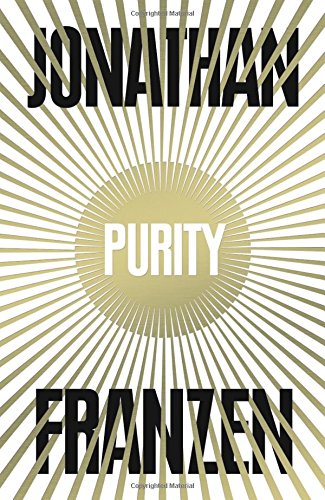
#BookReview ‘Purity’ by Jonathan Franzen #mystery #contemporary

I admit to feeling disappointed by Purity by Jonathan Franzen. The root of this disaffection is partly my high expectations, having loved The Corrections and Freedom, and partly the subject matter. Unlike his previous two novels, which focussed on an extended family, the central narrative of Purity is a young woman’s search for her father, a search which brings her into contact with some seriously dodgy people. Jonathan FranzenA large chunk of the novel is about Andreas Wolfe whose Sunlight Project brings light to the world by leaking secrets. His backstory as a young man in East Germany as the Wall crumbles is historically interesting but I found his character unpleasant. On his first foray into West Berlin, Wolfe meets a young American journalist, Tom Aberant, who becomes another constant throughout the book. Great chunks of the book are dedicated to Wolfe and Aberant’s relationships with, respectively Annagret and Annabel, who confusingly merged together in my mind.
So what kept me reading? Pip, the Purity of the title, a young woman burdened by student debt and a curiosity about the identity of her father, is lured to Bolivia to work for the Sunlight Project, in the belief that she will find out the name of her father. Pip’s story inevitably becomes entwined with Wolfe and Aberant but at times it seemed as if Franzen was writing two separate novels, I wanted to skip the Wolfe parts and get back to Pip.
Purity is not just Pip’s real name, it is the big theme. Purity in terms of information freedom, in terms of intentions and objectives, and old-fashioned secrets and lies; and there are a lot of the latter two. All the characters are hiding something, or avoiding someone, or longing for someone, or seeking something unattainable; and all must consider whether, in seeking the truth, they actually want to hear it when they find it.
This is not a bad book, Franzen couldn’t write one, and parts of it are written beautifully. He has a wonderful economy of phrase sometimes which encapsulates a big observation in a few well-chosen words. Unfortunately for me, other parts of it were stodgy and over-long and I skipped over some paragraphs.
Is it an epic book? It is certainly big [576 pages, but not the 736 pages of Hanya Yanagihara’s A Little Life] but that is not in itself a problem, I like reading big books – big in terms of length, and subject matter. My real problem was that I didn’t engage with the characters, I didn’t care about them and found them at times over-the-top, verging on hysterical. I don’t need to like them, but I do need to care about them.
A full-fat novel with extra sugar and extra caffeine.

Read the #FirstParas of these two novels by Jonathan Franzen:-
FREEDOM
THE CORRECTIONS

If you like this, try:-
‘A Little Life’ by Hanya Yanagihara
‘A Spool of Blue Thread’ by Anne Tyler
‘Some Luck’ by Jane Smiley

And if you’d like to tweet a link to THIS post, here’s my suggested tweet:
#BookReview PURITY by Jonathan Franzen via @SandraDanby http://wp.me/p5gEM4-1Sq