#BookReview ‘Summer House with Swimming Pool’ by Herman Koch #mystery #suspense

In Summer House with Swimming Pool by Herman Koch, Dr Marc Schlosser is popular with his patients because he doesn’t tell them they smoke too much or drink too much, he doesn’t tell them to lose weight, he doesn’t lecture them. So he becomes a popular general practitioner amongst the arty set. They invite him to their premieres, he doesn’t want to go. Herman KochBasically, he takes the easy way out; if a patient presents with a symptom he doesn’t recognise or is disgusting, he refers the patient to a specialist. Except Ralph Meier, the famous actor. Although Marc doesn’t like Ralph, he is sucked into the actor’s entourage.
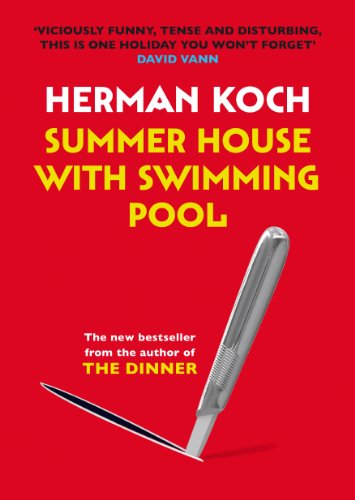
This is the story of one summer when Marc’s family stays at the summer villa rented by Ralph. Throw their wives into the mix, two teenage Meier sons and two teenage Schlosser daughters, plus a film director and his decorative girlfriend, summer heat, a swimming pool and a beach, and you can see trouble looming. It’s how Marc reacts to that trouble that makes the story. I found myself thinking ‘he’s not really going to do that is he? Oh, he has.’
Marc is a very unreliable narrator, skilfully handled by Koch. I didn’t trust him, I didn’t like him, but he made me laugh. His intolerances and lack of patience struck a chord with me [which should get me worried!]. Is it a story of medical incompetence or murder, I will let you decide. It is certainly a story of misunderstandings. The people are unlikeable, but the story draws you on. It is an excellent book to throw into the discussion about why all characters in fiction must be nice: we are not all nice, we all have light and dark in us, we all have habits we would rather keep to ourselves. So fiction should be populated by realistic characters.
But I am pleased Dr Marc Schlosser is not my doctor.

If you like this, try:-
The Bear’ by Claire Cameron
Stolen Child’ by Laura Elliot
Whistle in the Dark’ by Emma Healey

And if you’d like to tweet a link to THIS post, here’s my suggested tweet:
#BookReview SUMMER HOUSE WITH SWIMMING POOL by Herman Koch via @SandraDanby http://wp.me/p5gEM4-11c

#BookReview ‘In Ark’ by Lisa Devaney #clifi #climatechange #scifi

It is 2044 and New Yorkers are living through The Change. This is the world of In Ark, by Lisa Devaney. Food is mostly artificial or fresh and prohibitively expensive, a cab costs $600 and they cannot go outside in summer without protective clothing. Lisa DevaneyThis is the life Mya Brand leads, until she is abducted and taken to The Ark, an eco-survivalist commune. Once there, she must face the demons of her past life and make a difficult decision about her future. Should she stay and be safe, but not see her family and friends ever again? Or should she walk away from the commune and risk a difficult life and an early death as the climate worsens?
In Ark is part of the cli-fi, or climate fiction, genre featuring titles such as Solar by Ian McEwan and State of Fear by Michael Crichton. This is the first of three cli-fi novels about The Ark planned by this American indie author. The context is fascinating and I can see it working well as a movie. Devaney writes with precision about climate change and the effect this has on day-to-day life, as well as on society as a whole. It is clear that Devaney is an enthusiast for her genre. I would have liked The Ark to be more sinister, perhaps that will come in Book Two. It reminded me a little of the world created by Veronica Roth in Divergent, though I must point out that In Ark is most definitely an adult book rather than YA. There are a couple of vividly-written drug-fuelled sex scenes which are the sort that teenage readers would read and re-read, and some adults too.
Overall the concept of the trilogy is very different from anything else I have read, the plotting did seem a trifle slow but that is partly because the society needs to be explained so the story in Book Two and Book Three can progress.
If you like science fiction, fantasy or dystopian fiction, then try cli-fi.

If you like this, try:-
Divergent’ by Veronica Roth #1DIVERGENT
The Magicians’ by Lev Grossman #1THEMAGICIANS
The Queen of the Tearling’ by Erika Johansen #1TEARLING

And if you’d like to tweet a link to THIS post, here’s my suggested tweet:
#BookReview IN ARK by Lisa Devaney http://wp.me/p5gEM4-15H via @SandraDanby

A poem to read in the bath… ‘Lost Acres’

I often read poetry, often in the bath, so this is the first of an occasional series sharing with you my discoveries. I often read them aloud, which for some reason seems to aid my understanding and stress the rhythm of the language.

My first poem is by Robert Graves [1895-1985] a writer known in the UK for his First World War poems and his war memoir Goodbye to All That. His novel I, Claudius won literary prizes and has been turned into numerous television series and films. Graves [below] was Professor of Poetry at Oxford from 1961-1966. robert graves 13-6-14My favourite is ‘Lost Acres’. Because of copyright restrictions I am unable to reproduce the poem in full, but please search it out in an anthology or at your local library.

‘Lost Acres’
These acres, always again lost
By every new ordnance-survey
And searched for at exhausting cost
Of time and thought, are still away.

This makes me think of rural Yorkshire where I grew up in The Sixties, roaming the fields free to explore, never thinking about lines on a map or county boundaries.

For more about this collection of Graves’ poems, click here.

selected poems by robert graves 13-6-14


‘Selected Poems’ by Robert Graves [faber and faber]

#BookReview ‘The Silent and the Damned’ by @RobWilsonwriter #crime #Spain

The Silent and the Damned is second in the Javier Falcón series by Robert Wilson. Santa Clara is a wealthy neighbourhood of Seville where people stay inside their elegant air-conditioned homes and don’t mix much with their neighbours. Very un-Spanish. And then people start dying. Robert WilsonFirst, a husband and wife. Was it one murder and a suicide, or a double-murder? Falcón investigates only to find, living opposite the murdered couple, the wife of his last murder victim [in The Blind Man of Seville]. And this is how Robert Wilson neatly intertwines the back story from the first novel, bringing forward the things a new reader needs to know. Falcón has moved on since then, gone are the formal suits, now he wears a shirt and chinos and seems more relaxed, more at peace with himself. But this is a detective novel, and detectives are traditionally troubled souls so it is not long before the cracks appear.
The deaths keeping coming in the 40° heat, Falcón must deal with the impending marriage of his ex-wife plus the growing suspicion that all is not well at police headquarters. There are links to characters in the first book, dodgy characters, further crimes are hinted at. Will he be allowed to continue his investigation, or will higher powers decree his case unviable? And does Javier Falcón have the mental energy left to care?
An excellent follow-up to The Blind Man of Seville. 

Here are my reviews of the other books in the Javier Falcón series:-
THE BLIND MAN OF SEVILLE #1FALCÓN
THE HIDDEN ASSASSINS #3FALCÓN
THE IGNORANCE OF BLOOD #4FALCÓN

If you like this, try:-
The Killing Lessons’ by Saul Black
The Returned’ by Jason Mott
Wolf’ by Mo Hayder

And if you’d like to tweet a link to THIS post, here’s my suggested tweet:
#BookReview THE SILENT AND THE DAMNED by @RobWilsonwriter http://wp.me/p5gEM4-OY via @SandraDanby

#BookReview ‘The Unfinished Symphony of You and Me’ by Lucy Robinson #romance

The Unfinished Symphony of You and Me by Lucy Robinson is about Sally Howlett, wardrobe mistress at the Royal Opera House, who sings opera… in the wardrobe. Lucy RobinsonSally grows up on a council estate in Stourbridge, decidedly not a centre of opera appreciation. Playing on the radio she hears an aria from Madame Butterfly and is entranced. It is the beginning of a lifelong obsession which leads to her not singing opera at the Royal Opera House but there working as a wardrobe mistress. The story of Sally’s life story is told by weaving together the strands of her childhood with her emotionally-repressed family, her life as a wardrobe mistress, a short visit to New York to work costumes for a production at The Met, and now as Sally begins to study opera. I found the combination of chick-lit and girl-about-town bad language and the opera strand to be rather strange. What kept me reading? The storyline, I wanted to know what happens in New York to make Sally study opera at the RCM when she can’t get beyond singing in the wardrobe.
What are the big themes trying to get out? A few life lessons. That helping others is all well and good, but you must do things for yourself and not simply to please someone else. That family loyalty is important, but you also owe a duty to yourself. To never give up. And finally, Sally learns that it is not just her that struggles for self-belief, everyone does. When she understands this, she becomes an adult and an opera singer.
A page-turning read for your summer holiday suitcase.
CLICK HERE TO READ MORE ABOUT THIS BOOK AT AMAZON

If you like this, try:-
The Audacious Mendacity of Lily Green’ by Shelley Weiner
‘The Art of Baking Blind’ by Sarah Vaughan
Butterfly Barn’ by Karen Power

And if you’d like to tweet a link to THIS post, here’s my suggested tweet:
#BookReview THE UNFINISHED SYMPHONY OF YOU AND ME by Lucy Robinson via @SandraDanby http://wp.me/p5gEM4-13g

#BookReview ‘Elizabeth is Missing’ by Emma Healey #crime #dementia

Can there be a more unreliable narrator than an 81-year old woman with dementia? Elizabeth is Missing by Emma Healey is a brilliant debut. Emma HealeyMaud lives on her own, she has carers visiting, they leave prepared food for her and tell her not to use the cooker. But she does love toast. There is a rebelliousness about Maud which immediately made me connect with her. She reminded me of my mother, who suffered from dementia. I was impressed with the way Maud’s condition is portrayed, in convincing detail, slowly deteriorating as the story progresses. Maud writes herself notes, as memory prompts, and keeps them in her pockets and around the house. The note she re-reads most often is ‘Elizabeth is missing’. Elizabeth is Maud’s friend, and she is not at her house. The story has a cyclical motion as Maud finds the note, goes out to hunt for Elizabeth, and then is told by someone that Elisabeth is not missing, that she is fine. And then Maud finds the note again, and the cycle re-starts.
Interwoven with Maud’s search for Elizabeth, is a narrative strand set in 1946 when she lives with her parents and lodger Douglas. People are displaced as a population comes to terms with the end of the conflict, a poor economy, returning soldiers who are not the husbands they were when they went away to fight. Post-war rationing makes meals difficult, people grow vegetables, forage for fruit, make their own clothes. Maud’s older sister Sukey is good at dressmaking and she gives Maud items to wear. The sisters are close. And then Sukey disappears, no-one knows where she has gone, including her husband Frank.
I am a little unsure how a reader will react if they have no experience of dementia. Maud’s thought processes are, by the nature of her illness, repetitive. But her memories are key to understanding the mystery of Sukey’s disappearance. You, I, the reader, is the detective. It is up to us to sift through the clues, keeping them and discarding them.
In the background, throughout the novel, is the attitude of people towards dementia sufferers. The impatience, the lack of empathy, the unwillingness to understand someone obviously not in their full senses, and also the kindness, gentleness, the fondness, the helpfulness of strangers. For example the police sergeant who repeatedly takes down the information when Maud reports Elizabeth as missing.
“‘Same as usual?’ he says, his voice sounding metallic through the speakers.
‘Usual?’ I say.
‘Elizabeth, is it?’ He nods, as if encouraging me to say a line in a play.
‘Elizabeth, yes,’ I say, amazed. Of course, that’s what I’ve come for. I’ve come for her.”
It is a nice touch that he appears at the end of the story, closing the circle.

And read my review of WHISTLE IN THE DARK, also by Emma Healey.

If you like this, try:-
‘Etta and Otto and Russell and James’ by Emma Hooper
‘Yuki Chan in Bronte Country’ by Mick Jackson
The Girls’ by Lisa Jewell

And if you’d like to tweet a link to THIS post, here’s my suggested tweet:
#BookReview ELIZABETH IS MISSING by Emma Healey http://wp.me/p5gEM4-11S via @SandraDanby

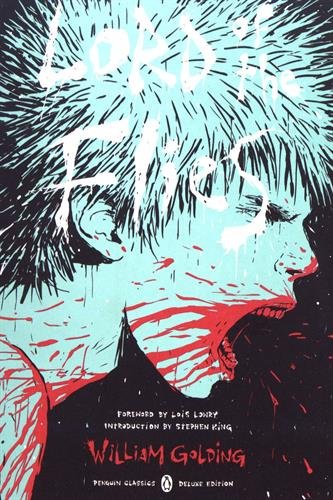
Great opening paragraph 56… ‘Lord of the Flies’ #amreading #FirstPara

“The boy with the fair hair lowered himself down the last few feet of rock and began to pick his way towards the lagoon. Though he had taken off his school sweater and trailed it now from one hand, his grey shirt stuck to him and his hair was plastered to his forehead. All round him the long scar smashed into the jungle was a bath of heat. He was clambering heavily among the creepers and the broken trunks when a bird, a vision of red and yellow, flashed upwards with a witch-like cry; and this cry was echoed by another.”
William GoldingFrom ‘Lord of the Flies’ by William Golding

Try one of these #FirstParas & discover a new author:-
‘Death in Summer’ by William Trevor
‘Fair Exchange’ by Michele Forbes
‘Herzog’ by Saul Bellow

And if you’d like to tweet a link to THIS post, here’s my suggested tweet:
#Books #FirstPara LORD OF THE FLIES by William Golding http://wp.me/p5gEM4-7Z via @SandraDanby

Great opening paragraph…56

Lord of the Flies“The boy with the fair hair lowered himself down the last few feet of rock and began to pick his way towards the lagoon. Though he had taken off his school sweater and trailed it now from one hand, his grey shirt stuck to him and his hair was plastered to his forehead. All round him the long scar smashed into the jungle was a bath of heat. He was clambering heavily among the creepers and the broken trunks when a bird, a vision of red and yellow, flashed upwards with a witch-like cry; and this cry was echoed by another.”

‘Lord of the Flies’ by William Golding

#BookReview ‘The Awakening of Miss Prim’ by Natalia Sanmartin Fenollera #contemporary

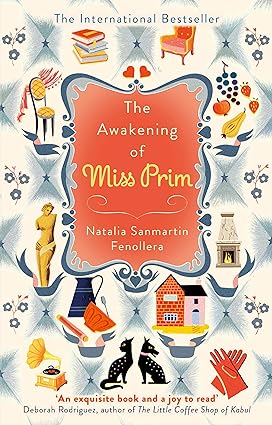
The title, The Awakening of Miss Prim, gives away the storyline of this charming tale by Spanish journalist Natalia Sanmartin Fenollera. Miss Prim is to be awakened. The assumption is that the catalyst for this awakening is love. But that is to over-simplify a thoughtful tale of self-knowledge, or maturing as an adult, about making the leap from intellectual maturity to emotional maturity. Natalia Sanmartin FenolleraPrudencia Prim is a librarian who begins a new job in a private house in the village of San Ireneo de Arnois, in an un-named country. Even when I had finished the book I was still unclear in which country it is set, though this does not affect the storytelling at all. Miss Prim is to catalogue the private library of a man who is never named, but is known simply as The Man in the Wingchair.
San Ireneo is an unusual village, it feels as if you are taking a step back in time. “That morning she urgently needed to buy notebooks and labels. The day before, she had had a small disagreement with her employer, the fifth since her arrival at the house. He’d come into the library and declared that he didn’t want her to use a computer to catalogue the books.” So, a computer, it is a contemporary tale then.
The discussions beside the fireplace between Miss Prim and The Man in the Wingchair range widely, from literature and philosophy to the quality of life in the village. And the neighbours, who all have wonderfully exotic names such as Herminia and Hortensia. The women seem to run the village, and have formed a club to support each other and they tackle problems together. Their meetings are always characterised by cake, tea and toast. Miss Prim finds this inclusiveness difficult to handle, she resents interference and in the beginning finds the atmosphere claustrophobic. She is an independent, well-qualified young woman, who knows her own mind. She does not need anyone else and is not looking for love. Of course not!
This is a delightful tale which ranges from classical literature to art to the philosophy of education. One of my favourite scenes is when Miss Prim takes The Man in the Wingchair to task for not including Little Women in his library, lamenting the loss of his nieces in not being able to read the story of the Meg, Jo, Beth and Amy.
CLICK HERE TO READ MORE ABOUT THIS BOOK AT AMAZON

If you like this, try:-
Paper Cup’ by Karen Campbell
The Perfect Affair’ by Claire Dyer
The Language of Others’ by Clare Morrall

And if you’d like to tweet a link to THIS post, here’s my suggested tweet:
#BookReview THE AWAKENING OF MISS PRIM by Natalia Sanmartin Fenollera http://wp.me/p5gEM4-11v via @SandraDanby

#BookReview ‘Blood Med’ by @Jwebsterwriter #crime #Spain

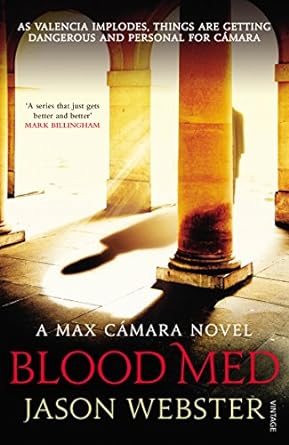
Page one, Spain waits, the king lies dying. There is the feeling of a nation on the edge. In Valencia, there are homeless on the street, immigrants are being harassed, the police department faces cutbacks despite rumblings of public unrest, and there are not enough drugs for the sick. Blood Med is the fourth in the Cámara Valencia-based detective series by Jason Webster. Jason WebsterThere are two deaths and Cámara and his colleague Torres are given one case each, the hidden agenda is that one of the two men must be made redundant. One death is suspected suicide, the other a brutal murder. In the way of crime fiction, you know there will be a connection but that connection is of course invisible at the beginning.
The detective, orphaned young and raised by his grandfather, now lives in Valencia with elderly Hilario plus Max’s girlfriend, journalist Alicia. Both Hilario and Alicia have key roles in this story. Hilario is a huge influence on Max’s approach to life, and he often recalls his grandfather’s fondness for proverbs when he finds himself in a sticky situation. ‘Visteme despacio que tengo prisa’ he tells himself when he feels the investigation is being rushed. It translates as ‘Dress me slowly, I’m in a rush.’ He feels the investigation has tunnel vision; that it is being rushed and would benefit from a step back. ‘If he could have his way he would send everyone home for the rest of the day to switch off. Go to the beach, go wherever. And have sex – with someone else if possible. If not, whatever. If helped clear the mind.’
This is the most accomplished Cámara novel so far, the setting in Valencia is so strong and the political background feels very real. The ‘corralito’ described [the government decree to close the banks] feels very real.
CLICK HERE TO READ MORE ABOUT THIS BOOK AT AMAZON

Read my reviews of other books in Webster’s Spanish detective series:-
OR THE BULL KILLS YOU #1MAXCÁMARA
A DEATH IN VALENCIA #2MAXCÁMARA
THE ANARCHIST DETECTIVE #3MAXCÁMARA

If you like this, try:-
The Long Drop’ by Denise Mina
Snow White Must Die’ by Nele Neuhaus
An Uncertain Place’ by Fred Vargas #8CommissaireAdamsberg

And if you’d like to tweet a link to THIS post, here’s my suggested tweet:
#BookReview BLOOD MED by @Jwebsterwriter via @SandraDanby http://wp.me/p5gEM4-10N