First Edition ‘It’ by @StephenKing #oldbooks #bookcovers

Published in 1986, It was Stephen King’s 22nd book and the 17th written under his name. His first published novel, Carrie, appeared in 1973 though it was actually the fourth he wrote, on a a portable typewriter belonging to his wife. It tells of seven children as they are terrorized by an evil entity that exploits the fears of its victims to disguise itself while hunting its prey. I have read it once, in my twenties, and it terrified me. I was unable to sleep for days afterwards and have not seen the films, though I still own the paperback.

Stephen King

My copy, the New English Library 1987 edition

My paperback [above] is the 1987 New English Library edition with the cover line ‘The Terrifying New Bestseller’.

The first edition [above left] was first published in the USA by Viking on September 15, 1986. King first thought of the story in 1978 and began writing it in 1981. His original concept was that the title character would live in the local sewer system, inspired by the Norwegian folk tale Three Billy Goats Gruff, who lived beneath a bridge.

Stephen King

It by Stephen King – the current edition by Hodder

The current UK edition [above] is published by Hodder.
BUY THE BOOK

The story
During a heavy rainstorm, six-year-old Georgie Denbrough sails a paper boat – made for him by his brother – along the rainy streets before it washed into a storm drain. Peering into the drain, George sees a pair of glowing yellow eyes. It is an eccentric clown who introduces himself as Mr Bob Gray, or Pennywise the Dancing Clown. Georgie declines a balloon but is enticed by Pennywise to reach into the drain and retrieve his boat,. The clown rips off the child’s arm and leaves Georgie to die.

Other editions

Films

Stephen King

It, the DVD 2017

Watch the trailers for the 1990 two-part mini-television series and the 2017 film [above]
BUY THE DVD

If you like old books, check out these:-
Couples’ by John Updike
The Moonstone’ by Wilkie Collins
Lord of the Flies’ by William Golding

And if you’d like to tweet a link to THIS post, here’s my suggested tweet:
First Edition IT by @StephenKing #oldbooks #bookcovers https://wp.me/p5gEM4-4ak via @SandraDanby

My Porridge & Cream read… Jessie Cahalin @BooksInHandbag #books

Today I’m delighted to welcome romance novelist Jessie Cahalin. Her ‘Porridge & Cream’ read is Wuthering Heights by Emily Bronte.

Wuthering Heights appeared in my life when I was eleven years old in 1983.  Following my English teacher’s recommendation, I saved pocket money to buy the novel.

‘The air made me shiver through every limb’ as I entered Heathcliff’s kitchen and lost myself in the language. This was my first taste of one of ‘the important authors’ and she was a Yorkshire lass to boot. I still remember the picture of the withering tree on the front cover and the delicious new smell of the fine pages.

Jessie Cahalin

Jessie’s vintage copy

“The tiny writing meant I had to concentrate and there were delicious new words to savour. Even then, the rhythms of the language and the powerful setting captured me, and I read them aloud. I stood on t’top of t’world with my new book.

Bronte inspired me to enjoy the power of words, and I would spend hours painting my own scenes with language. I marked pages in Wuthering Heights and would re-read them constantly. My parents took me to Howarth to visit the parsonage, and I knew Jessie had gone home.

Wuthering Heights was my trusty companion on the train when I departed from Yorkshire to commence my first teaching job down south. Can you imagine my delight when I was asked to teach Wuthering Heights to my first A Level class? I passed on my joy of Bronte to some of the students who read English in Leeds and York.

I have not managed to return to live in Yorkshire, so I still read Bronte to get my fix of the rugged landscape. Alas, my original copy gave up the ghost a long time ago. I have the book on my kindle, which is always at hand in my handbag.”

Jessie Cahalin

Wuthering Heights by Emily Bronte – Penguin Clothbound Classics

BUY THE BOOK

Jessie’s Bio
Jessie is a Yorkshire author living in Cardiff, Wales. Wales and words have a special place in her heart. She loves to entertain and challenge readers with her contemporary fiction and wants everyone to meet the characters who’ve been hassling her for years. Set in Wales, You Can’t Go It Alone is ‘a novel with a warm heart’ and is the first book in a family saga. Jessie is also the innovator of the popular ‘Books in Handbag’ Blog. Besides writing, Jessie adores walking, talking, cooking and procrastinating. Walking helps her to sort out tangles in her narratives or articles. She searches for happy endings, where possible, and needs great coffee, food and music to give her inspiration.

Jessie’s links
Website
Facebook 
Twitter 

Jessie’s latest book
Jessie CahalinCan’t Go It Alone… Love, music and secrets are woven together in this poignant, heart-warming narrative. Set in a Welsh village, the story explores the contrast in attitudes and opportunities between different generations of women. As the characters confront their secrets and fears, they discover truths about themselves and their relationships. The reader is invited to laugh and cry, with the characters, and find joy in the simple things in life. Listen to the music and enjoy the food, as you peek inside the world of the inhabitants of Delfryn. Let Sophie show you that no one can go it alone. Who knows, you may find some friends with big hearts
BUY THE BOOK

What is a ‘Porridge & Cream’ book? It’s the book you turn to when you need a familiar read, when you are tired, ill, or out-of-sorts, where you know the story and love it. Where reading it is like slipping on your oldest, scruffiest slippers after walking for miles. Where does the name ‘Porridge & Cream’ come from? Cat Deerborn is a character in Susan Hill’s ‘Simon Serrailler’ detective series. Cat is a hard-worked GP, a widow with two children and she struggles from day-to-day. One night, after a particularly difficult day, she needs something familiar to read. From her bookshelf she selects ‘Love in A Cold Climate’ by Nancy Mitford. Do you have a favourite read which you return to again and again? If so, please send me a message.

Discover the ‘Porridge & Cream’ books of these authors:-
Rhoda Baxter’s choice is ‘The Night Watch’ by Terry Pratchett
Chantelle Atkins chooses ‘The Catcher in the Rye’ by JD Salinger
Camellia’ by Lesley Pearse is chosen by Helen J Christmas

And if you’d like to tweet a link to THIS post, here’s my suggested tweet:
Why does Jessie Cahalin @BooksInHandbag re-read WUTHERING HEIGHTS by Emily Bronte #books https://wp.me/p5gEM4-4t7 via @SandraDanby

A poem to read in the bath… ‘Out Chasing Boys’ by Amanda Huggins #poetry

Recently published is this small poetry chapbook, The Collective Nouns for Birds by Amanda Huggins, with 24 poems. Huggins is an award-winning writer of flash fiction and short stories, so knowing her skill with the short form I looked forward to this first poetry chapbook with anticipation. And I wasn’t disappointed. I’ve chosen the first poem in the book as it struck a chord from my own childhood. I can smell the salt in the breeze, hear the lapping of the summer waves on the shore and taste the tang of vinegar as I lick my fingers after eating haddock and chips. Amanda HugginsThis poem is subject to copyright restrictions. Please search for the full poem in an anthology or at your local library. A ‘poetry chapbook’ is a slim pamphlet of poems, usually no more than 40 pages.

‘Out Chasing Boys’
We spent summer on the seafront,
two stranded mermaids
killing time.
We rolled up our jeans,
carried our shoes,
blew kisses at the camera
in the photo booth.
Always out, chasing boys,
as if we had forever.

Read my reviews of other work by Amanda Huggins:-
Novellas
ALL OUR SQUANDERED BEAUTY
CROSSING THE LINES
THE BLUE OF YOU
Short stories
AN UNFAMILIAR LANDSCAPE
BRIGHTLY COLOURED HORSES
EACH OF US A PETAL
SCRATCHED ENAMEL HEART
SEPARATED FROM THE SEA

Read these other excerpts and find a new poet to love:-
A Thousand Years You Said’ by Lady Heguri
The Cinnamon Peeler’ by Michael Ondaatje
‘After a Row’ by Tom Pickard

And if you’d like to tweet a link to THIS post, here’s my suggested tweet:
#Poetry ‘Out Chasing Boys’ by Amanda Huggins @troutiemcfish https://wp.me/p5gEM4-4v6 via @SandraDanby

#BookReview ‘Home’ by Marilynne Robinson #classic #Americanwriters

Home by Marilynne Robinson is the story of two adult children who return home, coincidentally at the same time, who feel the shame of not living up to the standards set by their minister father, Reverend Robert Boughton. It is a profoundly sad book; the slow winding tale towards the inevitable ending is curiously addictive. It is a three-hander, concentrating on father, son and daughter. Marilynne RobinsonGlory and Jack Boughton grew up in a clerical family home in Gilead, Iowa. We learn of their country childhoods, quite different as siblings go, from their conversations and the memories prompted by visits from neighbours Reverend John Ames, his wife Lila and son. The story is told from Glory’s viewpoint. Jack takes lots of ‘dark nights of the soul’, long solitary walks in the dark to which we are not privy, and his true thoughts remain a mystery to the end. Just when you think you have worked him out, he confounds you.
Robinson draws a picture of rural America at a time of great change. There are demonstrations in Montgomery, but Gilead seems insulated from the outside apart from occasional telephone calls to their father by Glory and Jack’s siblings, and news reports of violence. Jack is drawn to the news coverage; his father dismissive. Jack is a contradiction; he struggles to believe yet knows his Bible backwards, plays hymns on the piano, and quotes scripture at Ames.
Slowly, piece by piece, we find out the details of Glory’s shame. Why she really came home, why she is no longer teaching. But Jack is more opaque, hiding his past, unable to share, he is spiky when offered help and understanding. Does he feel unworthy? He is spiritually isolated from his family, unable to connect though at times he longs to, other times he kicks out. A to-and-fro battle proceeds as Jack opens up a little to Glory, then slamming shut again when faced with his father’s well meaning but blunt questions. There are parallels between the siblings; Glory is recovering from a failed relationship with an unscrupulous man who sounds rather like Jack, while Jack mourns the loss of a good woman who sounds rather like Glory. This book tells the story of how the brother and sister come to understand themselves, and each other, more clearly, but based on fractured pieces of the truth.
As the book progresses, Boughton grows weaker as death approaches. He is one moment gentle towards Jack; the next, angry. Does he think that in striving for achievement for his children he also failed them, by channelling them towards a path they might not otherwise have followed, by not allowing them to develop naturally. I’m not sure Boughton sees it like that. They all live within the constraints of a family entwined in the strait-jacket of belief.
Robinson is best at the detail of ordinary life, the garden, the fruit and vegetables, the weather, the faded house, drawing pictures as clearly as Leonardo da Vinci drew pencil sketches of hands. “Glory made up a batch of bread dough. Brown bread was her father’s preference. Something to lift the spirits of the household, she thought. The grocer brought her a roasting hen. She opened the windows to cool the kitchen and air out the dining room a little, and the breezes that came in were mild, earthy, grassy, with a feel of sunlight about them.”
How many adults can return to visit their parents in the family home in which they grew up and find that home unchanged? “It was in fact a relief to have someone else in the house. And it was interesting to watch how this man, gone so long, noticed one thing and another, as if mildly startled, even a little affronted, by all the utter sameness. She saw him put his hand on the shoulder of their other’s chair, touch the fringe on a lampshade, as if to confirm for himself that the uncanny persistence of half-forgotten objects, all in their old places, was not some trick of the mind. Nothing about that house ever did change, except to fade or scar or wear.” The unchanging nature of the family house mirrors the unchanging nature of the family that lives in it; the patriarch with his rules and expectations, the children trying to please him but falling short and feeling guilty. Each not wanting to worry the other, protective of the myth of their family, sensitive to their father’s opinion, fearful of striking out on their own again away from Gilead and what they know. Wanting to leave, wanting to stay.
Home will stay with you a long time after reading, whether you have faith or none. It is a companion to Gilead which won the Pulitzer Prize.
CLICK HERE TO READ MORE ABOUT THIS BOOK

Read my reviews of Robinson’s other novels:-
GILEAD
HOUSEKEEPING
JACK

Try the #FirstPara of GILEAD here.

If you like this, try:-
‘A Little Life’ by Hanya Yanagihara
‘The Witchfinder’s Sister’ by Beth Underdown
‘Skin Deep’ by Laura Wilkinson

And if you’d like to tweet a link to THIS post, here’s my suggested tweet:
#BookReview HOME by Marilynne Robinson https://wp.me/p5gEM4-3gf via @SandraDanby

#BookReview ‘59 Memory Lane’ by @CeliaAnderson1 #romance #contemporary

59 Memory Lane by Celia Anderson has a cozy tone reminding me immediately of MC Beaton’s Agatha Raisin series, but without the crime. Anderson has created the sort of feelgood destination you long to live in, to get away from it all. Pengelly is an isolated seaside village in Cornwall with an infrequent bus service. Celia AndersonWhen a local do-gooder starts an Adopt-a-Granny scheme pairing people together, 110-year old May Rosevere is paired with her eighty year old neighbour Julia. Except unbeknown to everyone else, these two women harbour a long held grudge against each other.
The central premise of the novel is that May’s long life – and she is free of the medical complaints experienced by other older characters in the book – is thanks to her magical ability to collect other people’s memories and extract energy from them; this is described as a kind of frission, naughtiness, a buzz. May, determined to reach her 111th birthday, steps up her ‘thought harvesting’ and so is delighted to learn that Julia has discovered a large collection of family letters going back decades.
This book has two major storylines spliced together – the feelgood seaside life in Pengelly and the adventures of the community, the romances, the illnesses, the community spirit; and the flip side, the unexplored darkness of May’s theft of other people’s memories. I found the latter quite difficult. It feels as if May is basically stealing other people’s lives; when she takes Julia’s letters, Julia becomes forgetful, vague and weak. May’s ‘thought harvesting’ is not clearly defined, described variously as a power, skill, ability, talent. May’s father tells her, as a child, about her ‘power’ but we see her doing nothing positive with it. It is not a force for good, she simply uses it for a feeling of well-being. In the beginning she gets her buzz from handling secondhand possessions at fairs and sales and by picking up rubbish and forgotten objects. But when did the stealing start?
The community at Pengelly is large and so the first half of the novel includes lots of scene setting and explanation of who is who. For this reason, this feels like the first novel in a series. The story really took off for me in the second half when May’s ‘talent’ comes back to bite her and she starts to feel guilty at taking people’s memories from them when it clearly causes damage. Anderson does an excellent job in creating the world of Pengelly, the community spirit for a village often cut-off, its residents have become supportive and innovative. There is romance for young and old, and support and friendship for everyone when illness strikes.
At the end I would have liked more explanations; to the mystery of Julia’s letters, the death of May’s husband, the mysterious Will who went off to be a priest, or the meaning of the missing ring. I can’t help but think this is a missed opportunity to turn this novel into something more than a Cornish village romance. Pengelly is definitely an escapist village with its beach walks, barbecues, cake, biscuits and mugs of hot chocolate, and it was good to see a cast of characters across the age spectrum, from six-year old Tamsin to 110 year-old May and lots of 50-80+, all getting along together. But I was left feeling I had been led, by the cover design, to expect one novel but got another.

If you like this, try:-
The Lost Letters of William Woolf’ by Helen Cullen
On a Night Like This’ by Barbara Freethy
Butterfly Barn’ by Karen Power

And if you’d like to tweet a link to THIS post, here’s my suggested tweet:
#BookReview 59 MEMORY LANE by @CeliaAnderson1 https://wp.me/p5gEM4-46l via @SandraDanby

#BookReview ‘The Moon Sister’ by Lucinda Riley #romance

Fifth in the Seven Sisters series by Lucinda Riley, The Moon Sister is the story of Tiggy, wildlife conservationist and warm-hearted introvert. Each of the D’Apliese sisters is different with diverse skills, interests and hugely varying birth stories. Tiggy’s story alternates between a Highland estate where she is managing the rewilding of Scottish wildcats, and the flamenco world in Spain during the 1930s. Lucinda RileyThe Kinnaird Estate is a beautiful, isolated, wild place. The four wild cats move into their custom-built enclosure and Tiggy moves into a shared estate cottage with fellow worker Cal. Riley builds the Kinnaird community quickly and skilfully from new Laird Charlie to housekeeper Beryl and old retainer Chilly. It is Chilly – speaking in a muddled mixture of English, Spanish and Romani – who introduces the first hints of premonition, seeing and herbal remedies. He tells Tiggy she has healing hands. Caught up in the twists and turns of the Kinnaird family, the frictions in Charlie and Ulrika’s marriage and their tempestuous daughter Zara, Tiggy grieves for Pa Salt and is curious about her own birth family. In his farewell letter, Pa Salt tells her she comes from a gifted line of seers. She must go to Granada in Spain, to the gypsy area called Sacromonte, where she must knock on a blue door and ask for Angelina. Tiggy delays, unsure of the truth, attracted to Charlie. But when she is injured in a poaching incident on the estate, Tiggy feels upset, confused and wronged. She flies to Granada. This is a quick reminder that Tiggy, who lives the most normal, ordinary life of the sisters so far, is far from a normal girl and when times get tough, the D’Apliese wealth is ever-present.
The second storyline is that of Lucia, Tiggy’s grandmother, who rises from a tiny girl living in deepest poverty in Sacromonte to a world-famous flamenco dancer. Though Tiggy’s character and situation is appealing, I found Lucia a more difficult character. By nature energetic and stubborn, Lucia turns into a selfish, spoiled woman who rides roughshod over others. Exploited by her feckless father who keeps control of her money and career, Lucia’s few moments of caring for others were not enough for me to warm to her. But the world in which she lives, the Sacromonte community, the gypsy brujas, and the violence and depravities of the Spanish Civil War were fascinating to read. As with the stories of the other sisters, Riley concentrates most of the birth family story on a generation further back than the birth parents and there were times when I longed for less flamenco and more bruja. I also wanted to know Chilly’s story and how he came to work on a Scottish estate.
There are more teasers in this book about the truth of Pa Salt’s identity and death, but nothing concrete. There is also the reappearance of Zed Eszu, who can only be described as a sleazy millionaire cad, who first appeared in Maia’s story. What lies behind his fascination with the six D’Apliese sisters. And is Pa Salt really dead?

Read my reviews of some of the other novels in Lucinda Riley’s ‘Seven Sisters’ series:-
THE SEVEN SISTERS #1SEVENSISTERS
THE STORM SISTER #2SEVENSISTERS
THE SHADOW SISTER #3SEVENSISTERS
THE PEARL SISTER #4SEVENSISTERS
THE SUN SISTER #6SEVENSISTERS
THE MISSING SISTER #7SEVENSISTERS

… plus my reviews of these standalone novels, also by Lucinda Riley:-
THE BUTTERFLY ROOM
THE GIRL ON THE CLIFF
THE LOVE LETTER

If you like this, try:-
The Bear and the Nightingale’ by Katherine Arden
The Penny Heart’ by Martine Bailey
Rush-Oh!’ by Shirley Barrett

And if you’d like to tweet a link to THIS post, here’s my suggested tweet:
#BookReview THE MOON SISTER by Lucinda Riley https://wp.me/p5gEM4-46t via @SandraDanby

Great Opening Paragraph 123… ‘The Ashes of London’ #amreading #FirstPara

“The noise was the worst. Not the crackling of the flames, not the explosions and the clatter of falling buildings, not the shouting and the endless beating of drums and the groans and cries of the crowd: it was the howling of the fire. It roared its rage. It was the voice of the Great Beast itself.”
Andrew TaylorFrom ‘The Ashes of London’ by Andrew Taylor #1FIREOFLONDON

Read my reviews of the books in this series:
THE ASHES OF LONDON #1FIREOFLONDON
THE FIRE COURT #2FIREOFLONDON
THE KING’S EVIL #3FIREOFLONDON
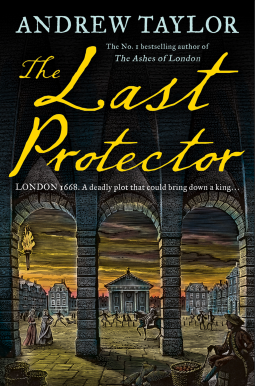
THE LAST PROTECTOR #4FIREOFLONDON
THE ROYAL SECRET #5FIREOFLONDON
THE SHADOWS OF LONDON #6FIREOFLONDON

And a World War Two novel by the same author:-
THE SECOND MIDNIGHT

Try one of these #FirstParas & discover a new author:-
‘Personal’ by Lee Child
Back When We Were Grown Ups’ by Anne Tyler 
The Sense of an Ending’ by Julian Barnes 

And if you’d like to tweet a link to THIS post, here’s my suggested tweet:
#Books #FirstPara THE ASHES OF LONDON by @AndrewJRTaylor https://wp.me/p5gEM4-3Jn via @SandraDanby

#BookReview ‘The Museum of Broken Promises’ by @elizabethbuchan #thriller #spy

The Museum of Broken Promises by Elizabeth Buchan is a disjointed story of Cold War romance and its lingering after-effects decades later. Promises are made and broken, by everyone. The title is misleading, as the sections at the museum in present day in Paris act as bookends to the crucial story in Eighties story in Czechoslovakia. Elizabeth BuchanIt is 1985, Prague. After the death of her father, student Laure takes a job as an au pair in Paris moving to Prague with her employers. It is the Cold War and the once beautiful city is shabby and grey, an unsettling place to live where the threat of imprisonment or violence always lingers. Laure cares for two small children while their father Petr works, he is an official at a pharmaceuticals company and in a privileged position enabling him to bring a foreigner to work in the country, and their mother Eva is ill. Gradually Laure explores the streets and finds a marionette theatre. There she is enchanted by the folklore tales of the puppets; and she meets Tomas, lead singer in a rock band.
Resistance against the repressive regime in Czechoslovakia is low key, expressed through the arts. In this way, the book reminded me of Tom Stoppard’s play Rock and Roll which tells the story of rock band The Plastic People of the Universe. The Museum of Broken Promises is a story of a young student who falls in love with a bad boy who describes himself as a ‘rock soldier making war on the party’. But these words – soldier, war – are used in a student resistance sense, not actual war. This is quiet resistance rather than terrorism, but is none the weaker for this. Songs and marionettes can spread important messages of defiance, as Laure finds  when she goes to a rock concert. Singing and dancing can be subversive. As someone says, it is ‘giving into forbidden yearning and loyalties. Tasting resistance like wine on the tongue’. Laure’s time in Prague echoes throughout her later life and leads her to open her museum in Paris, inviting mementoes from strangers, objects that represent broken promises.
The Museum of Broken Promises is a slow moving contemplative story, without the pace of a thriller despite its Cold War setting and the constant threat to anyone who speaks or behaves out of turn. This lack of propulsion makes it seem a longer book than it is and I wanted it to have some bite. The story moves back and forth from Prague to Paris and more than once I wasn’t sure where Laure was. This adds to the sense that nothing is what it seems.
Laure is an innocent who is sometimes stupidly naïve, unknowingly putting other people in danger. It is an example of the idealism and irreverence of youth ignoring advice. As she is warned on her arrival in Prague, don’t ask questions, don’t answer questions.

If you like this, try:-
‘If I Knew You Were Going to be This Beautiful, I Never Would Have Let You Go’ by Judy Chicurel
The Bone Church’ by Victoria Dougherty
Hangover Square’ by Patrick Hamilton

And if you’d like to tweet a link to THIS post, here’s my suggested tweet:
#BookReview THE MUSEUM OF BROKEN PROMISES by @elizabethbuchan https://wp.me/p5gEM4-4sA via @SandraDanby

#BookReview ‘Mudlarking’ by Lara Maiklem @LondonMudlark #Thames #archaeology

Lara Maiklem is a mudlark. She can be found at low tide walking the beaches and mud of the River Thames, foraging, searching, collecting bits and pieces. And in the course of her memoir Mudlarking, she tells the history of the river. This is a personal history, not a novel. Lara MaiklemStarting at the tidal head near Teddington and heading east to the Thames Estuary, Maiklem has written an anecdotal guide to London’s river, the treasures which can be found buried in the mud, and tells the stories of the people [real and imagined] who once lived there. From the discarded Doves Type to broken clay pipes and glass bottle stoppers, she describes the objects she has found, their place in her collection, her methods of cleaning and preserving them. Along the way she consults experts and historians and forages with fellow mudlarks who each have their favourite places, their specialist objects to collect.
‘Modern mudlarks fall into two distinct categories,’ she explains. ‘Hunters and gatherers. I am one of the latter. I find objects using just my eyes to spot what is lying on the surface. Eyes-only foragers like me generally enjoy the searching as much as the finding, and derive pleasure from the simplest of objects: an unusually shaped stone, a colourful shard of pottery or a random blob of lead. There is an element of meditation to what we do, and as far as I’m concerned the time I spend looking is as important if not more so, that the objects I take home with me.’
At times the pace seemed a little slow – lots of descriptions of mud – but the nature of mudlarking itself is slow and contemplative. I enjoyed the insights into the river’s history, the anecdotes and fascinating detail not normally heard. A book to be enjoyed at a leisurely pace.
CLICK HERE TO READ MORE ABOUT THIS BOOK

If you like this, try:-
The Ashes of London’ by Andrew Taylor
Dissolution’ by CJ Sansom
The Walworth Beauty’ by Michèle Roberts

And if you’d like to tweet a link to THIS post, here’s my suggested tweet:
#BookReview MUDLARKING by @LondonMudlark https://wp.me/p5gEM4-4ft via @SandraDanby

My Porridge & Cream read Rosemary J Kind @therealalfiedog #books

Today I’m delighted to welcome historical novelist Rosemary J Kind. Her ‘Porridge & Cream’ read is Under Milk Wood  by Dylan Thomas.

“I was brought up on books. Both my mother and grandfather were great readers of literature and our house was full of books. I don’t know if I first fell in love with Under Milk Wood by Dylan Thomas, reading it myself or on one of our family holidays, boating on the River Thames, when we’d all curl up in the evening and Mum would read to us all. Many of the passages we knew by heart and would quote them to each other, adding lines where the other finished. To this day my favourite scene is the one in Butcher Beynon’s kitchen. The humour is so dry and so cleverly done that it never fails to make me laugh.”

Rosemary J Kind

Rosemary with her copy of Under Milk Wood

“I must have read it for myself at about the age of ten, and when stuck at home a couple of years later with glandular fever, listened to the Richard Burton recording of the book over and over. It is a book in which poetry and prose intertwine like lovers. Where the musicality of the language coupled with the keen observations of humanity deliver humour, narrative and dialogue to the reader in a way that can always satisfy me. My mother’s copy was a beautiful hardback with a light blue dust jacket. Many many years later I was lucky enough to be given a present by my husband of my very own first edition of the book, signed by the author’s niece. It is one of my most treasured possessions.”
Rosemary J Kind BUY THE BOOK

Rosemary’s Bio
Rosemary J Kind writes because she has to. You could take almost anything away from her except her pen and paper. Failing to stop after the book that everyone has in them, she has gone on to publish books in both non-fiction and fiction, the latter including novels, humour, short stories and poetry. She also regularly produces magazine articles in a number of areas and writes regularly for the dog press.
As a child she was desolate when at the age of 10 her then teacher would not believe that her poem based on Stig of the Dump was her own work and she stopped writing poetry for several years as a result. She was persuaded to continue by the invitation to earn a little extra pocket money by ‘assisting’ others to produce the required poems for English homework!
Always one to spot an opportunity, she started school newspapers and went on to begin providing paid copy to her local newspaper at the age of sixteen. For twenty years she followed a traditional business career, before seeing the error of her ways and leaving it all behind to pursue her writing full-time.
She spends her life discussing her plots with the characters in her head and her faithful dogs, who always put the opposing arguments when there are choices to be made. Always willing to take on challenges that sensible people regard as impossible, she established and ran the short story download site Alfie Dog Fiction for six years building it to become one of the largest in the world, representing over 300 authors and carrying over 1600 short stories. She closed it in order to focus on her own writing.
Her hobby is developing the Entlebucher Mountain Dog in the UK and when she brought her beloved Alfie back from Belgium he was only the tenth in the country. She started writing ‘Alfie’s Diary’ as an Internet blog the day Alfie arrived to live with her, intending to continue for a year or two. Thirteen years later it goes from strength to strength and has been repeatedly named as one of the top ten pet blogs in the UK.

Rosemary’s links
Twitter
Facebook
Website 
Blog 

Rosemary’s latest book
Rosemary J Kind 1866. Daniel Flynn and Molly Reilly’s lives have been dogged by hardship since their orphan days on the streets of New York. Finally, the future is looking bright and Indiana is the place they call home. Now they can focus on making Cochrane’s Farm a success.
The Civil War might have ended but the battle for Cochrane’s Farm has only just begun. The Reese brothers are incensed that land, once part of their family farm, has been transferred to the ownership of young Molly. No matter that their Daddy had sold it years previously, jealousy and revenge have no regard for right. Women should know their place and this one clearly doesn’t.
Times are changing and a woman’s place is changing with it. How far will Daniel and Molly go to fight injustice and is it a price worth paying?
BUY THE BOOK
What is a ‘Porridge & Cream’ book? It’s the book you turn to when you need a familiar read, when you are tired, ill, or out-of-sorts, where you know the story and love it. Where reading it is like slipping on your oldest, scruffiest slippers after walking for miles. Where does the name ‘Porridge & Cream’ come from? Cat Deerborn is a character in Susan Hill’s ‘Simon Serrailler’ detective series. Cat is a hard-worked GP, a widow with two children and she struggles from day-to-day. One night, after a particularly difficult day, she needs something familiar to read. From her bookshelf she selects ‘Love in A Cold Climate’ by Nancy Mitford. Do you have a favourite read which you return to again and again? If so, please send me a message.

Discover the ‘Porridge & Cream’ books of these authors:-
Julia Thum’s choice is ‘The Little White Horse’ by Elizabeth Goudge
Ivy Logan chooses ‘Reckless’ by Cornelia Funke
It Shouldn’t Happen to a Vet by James Herriot is chosen by Mary Grand

And if you’d like to tweet a link to THIS post, here’s my suggested tweet:
Why does Rosemary J Kind @therealalfiedog re-read UNDER MILK WOOD  by Dylan Thomas? #books https://wp.me/p5gEM4-4a3 via @SandraDanby