#BookReview ‘The Vanished Bride’ by Bella Ellis #historical #crime

Yorkshire, 1845. A woman disappears overnight from her home. Her husband is distraught. All that remains of her is copious amounts of blood on the bed. The local police are inept. The Vanished Bride by Bella Ellis [also writing as Rowan Coleman] is the first in the ‘Bronte Mysteries series about the three Bronte sisters, amateur sleuths. Bella EllisI loved this book from the beginning. Bronte fans will love it but anyone new to Bronte will find it an engaging introduction to the three clever and inspirational sisters. What a fresh idea to involve Charlotte, Emily and Anne in an occupation that suits their imaginations, attention to detail and energy. Anne says, ‘It is truly terrible that I am a little thrilled to think of us as three invisible lady detectors seeking out the truth? I believe we could be quite the only such creatures in all existence.’
Their characters are clearly drawn and their engagements with other characters – brother Branwell, father Patrick, cook Tabby and maid Martha – are all convincing. The case of the vanished bride comes to their attention because the governess to the two small children of the missing woman is none other than Matilda French, a former schoolfriend of Charlotte and Emily at Cowan Bridge school.
As they track down clues and bravely confront strangers to ask questions, the three sisters must learn to manage the wilder leaps of their imagination and use judgement to analyse clues, sifting, comparing, discarding. At first their naivety while charming, is a problem, as they tend to believe everything they hear. But they soon wise up to the disreputable agendas of others and become adept at setting trick questions, analysing body language, and basically not believing everything they are told. Stepping outside their comfort zone at Haworth, they venture into worlds not usually frequented alone by unmarried women. Though obviously a fictional not historical account, it is an interesting picture of the real world limitations they faced.
Owing not a little to the gothic, their detecting involves folklore and supernatural elements, a wonderful journey to the seaside at Scarborough to find a witness, and thrilling night time excursions involving a little breaking and entering. Throughout it all, their clergyman father is ignorant of their ‘detecting’ and the risks they take, and they become adept at soothing his concerns at their odd behaviour.
The author has been a Bronte fan since childhood and this is demonstrated in her knowledge of character, setting and historical context. In the Author’s Note, she explains her choice of August 1845 for this first novel. Charlotte has returned home from Brussels to join Emily while Branwell and Anne are home again from employment at Thorp Grange. It is the first time for several months the four are under the same roof. The characters, the settings, are pure Bronte; the detective story is Ellis’s own.
To set the timing of The Vanished Bride within the context of the Brontes’ real life, it takes place a year before their first publication – of Poems by Currer, Ellis and Acton Bell – in 1846. In 1847, Charlotte’s Jane Eyre, Emily’s Wuthering Heights, and Anne’s Agnes Grey, were published.
Excellent, one of the most enjoyable books I’ve read this year.

Click the title below to read my reviews of these other Bella Ellis novels:-
THE DIABOLICAL BONES #2BRONTEMYSTERIES
THE RED MONARCH #3BRONTEMYSTERIES
A GIFT OF POISON #4BRONTEMYSTERIES

And one by Rowan Coleman [aka Bella Ellis]:-
THE GIRL AT THE WINDOW 

If you like this, try:-
The Dream Weavers’ by Barbara Erskine
Yuki Chan in Bronte Country’ by Mick Jackson
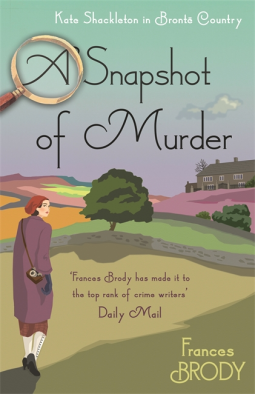
A Snapshot of Murder’ by Frances Brody 

And if you’d like to tweet a link to THIS post, here’s my suggested tweet:
#BookReview THE VANISHED BRIDE by Bella Ellis https://wp.me/p5gEM4-4uY via @SandraDanby

Great Opening Paragraph 125… ‘Beloved’ #amreading #FirstPara

“124 was spiteful. Full of a baby’s venom. The women in the house knew it and so did the children. For years each put up with the spite in his own way, but by 1873 Sethe and her daughter Denver were its only victims. The grandmother, Baby Suggs, was dead, and the sons, Howard and Buglar, had runaway by the time they were thirteen years old – as soon as merely looking in a mirror shattered it (that was the signal for Buglar); as soon as two tiny hand prints appeared in the cake (that was it for Howard). Neither boy waited to see more; another kettleful of chickpeas smoking in a heap on the floor; soda crackers crumbled and strewn in a line next to the doorsill.”
Toni MorrisonFrom ‘Beloved’ by Toni Morrison

Try one of these #FirstParas & discover a new author:-
The Ashes of London’ by Andrew Taylor 
The Garden of Evening Mists’ by Tan Twan Eng 
Queen Camilla’ by Sue Townsend

And if you’d like to tweet a link to THIS post, here’s my suggested tweet:
#Books #FirstPara BELOVED by Toni Morrison https://wp.me/p5gEM4-4ec via @SandraDanby

#BookReview ‘A Snapshot of Murder’ by Frances Brody @FrancesBrody #cosycrime

In 1928, a Photography Society outing to Haworth to see the opening of the new Bronte Parsonage Museum has an unexpected outcome. One of the group does not go home alive. A Snapshot of Murder by Frances Brody is tenth in the Kate Shackleton 1920s detective series, a satisfying story about jealousy, long lost love and betrayal. Frances BrodyKate’s friend Carine Murchison runs a photographic studio with her boorish husband Tobias. Derek, friend of Kate’s niece Harriet, has a theory that Tobias wants his wife dead so he can inherit the studio. But the story is so much more complicated. Throw in a long lost lover returned, the wonderfully scratchy mother and daughter landladies of Ponden Hall near Haworth where the Photography Society stays, the flamboyant Rita who dresses in Indian silks and works in a pharmacy, and a London policeman and former love of Kate who arrives to investigate the murder, and there are plenty of options for arguments, jealousy, upsets and both rejected and reciprocated love. The echoes of the Brontes are welcome too, but Brody never allows this to dominate her story.
This is a character-led crime drama. Kate’s world is created with skill by Brody, I particularly enjoyed Mrs Sugden, Mr Sykes and the addition of Sergeant Dog who plays a key role. Kate investigates with a combination of skill learned from watching her policeman father and a sense of human nature of which Miss Marple would be proud.
The shadow of the Great War hangs over the story with everyone touched in some way by the conflict. Brody twists and turns our emotions, and her reveal of the facts, so our sympathy and dislike of characters is always in flow and the true stories of victim and perpetrator are never simple.

Read my reviews of these other Kate Shackleton novels:-
DYING IN THE WOOL #1KATESHACKLETON … and read the #FirstPara HERE
A DEATH IN THE DALES #7KATESHACKLETON
DEATH AND THE BREWERY QUEEN #12KATESHACKLETON
A MANSION FOR MURDER #13KATESHACKLETON

If you like this, try:-
Hiding the Past’ by Nathan Dylan Goodwin #1MORTONFARRIER
After the Party’ by Cressida Connolly
Blood-Tied’ by Wendy Percival #1ESMEQUENTIN

And if you’d like to tweet a link to THIS post, here’s my suggested tweet:
#BookReview A SNAPSHOT OF MURDER by Frances Brody @FrancesBrody https://wp.me/p5gEM4-4u9 via @SandraDanby

#Bookreview ‘The Lady of the Ravens’ by @joannahickson #Historical

It is England, just after the War of the Roses. The Lady of The Ravens by Joanna Hickson starts with the new Tudor King Henry VII on the throne and the country awaiting his marriage rumoured to be to Elizabeth of York, older sister of the Princes in the Tower. The marriage is intended to heal divisions between the two warring factions after Henry’s defeat of King Richard III at Bosworth Field, so allowing peace to settle on the land. But of course it is not that simple. Joanna HicksonTwenty-four year old Joan Vaux is a servant to the princess and follows her to court on her marriage to the king. Watching the childbirth experiences of Queen Elizabeth, her own sister and other women of the court marry and bear children – some dying in the process – Joan develops a phobia of childbirth. But the king requires his courtiers to be married and a husband for Joan is proposed, but the situation is complicated as while she dithers a proposal is received from an unexpected source. Joan must make her choice, a decision which echoes throughout her life.
Joan has an affinity with the ravens, starting from when as a child she first saw the ravens at the Tower of London. Their presence there is said to herald a continued royal reign; their absence means trouble. And so the birds become a bellweather for the state of the nation in a politically turbulent time in Europe. Now living in luxurious married quarters at the Tower, the adult Joan admires these clever glossy black birds; but someone does not share her view. Their nest boxes are destroyed and set on fire. Her new husband refuses to give credence to her suspicions.
Meanwhile the country’s political future is vulnerable as the Yorkist threat to regain the throne from the usurper Henry has not disappeared. As heir, young Prince Arthur grows and his betrothal to the Spanish princess approaches but this is threatened as a Yorkist pretender to the throne gains support from England’s enemies. Joan is an observer at the highest level of the court, privy to secrets, defender of ravens, confidante of the queen.
Occasional modern phraseology – toddler, doggy treats – wrenched me out of the period and off the page but the character of Joan drew me straight back. A novel for lovers of Tudor historical mysteries this is the story of one woman, her family, choices, strengths and vulnerabilities in a country riven by war but where peace is fragile and the wrong choice can mean banishment, poverty or death.
After I finished reading it, I learned that The Lady of the Ravens is the first in the Queen of the Tower series. Good!

And here’s my review of the second book in the series:-
THE QUEEN’S LADY #2QUEENSOFTHETOWER

If you like this, try:-
Girl in Hyacinth Blue’ by Diana Vreeland
The Last Hours’ by Minette Walters
The French Lesson’ by Hallie Rubenhold

And if you’d like to tweet a link to THIS post, here’s my suggested tweet:
#BookReview THE LADY OF THE RAVENS by @joannahickson https://wp.me/p5gEM4-4tP via @SandraDanby

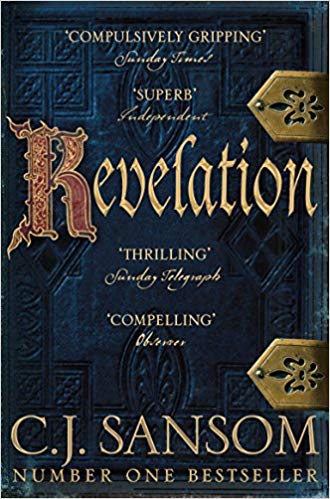
#BookReview ‘Revelation’ by CJ Sansom #Tudor #detective

I’m sorry if I’m beginning to sound like a cracked record, but I continue to love the Matthew Shardlake Tudor detective series by CJ Sansom. Fourth in the series, Revelation, is a roller-coaster ride of killings motivated by the Book of Revelation’s fire and damnation. Shardlake and his assistant Barak race around London struggling to second-guess the murderer’s motivations and identify his next likely target. CJ SansomSansom achieves a difficult feat for a historical novelist, he balances world-building – the Tudor toxic politics and Tudor gossip-mongering – will Lady Catherine Parr say yes to the King’s proposal – with Shardlake’s legal world and the fascinating detail and colour which brings London in Spring 1543 to life. Once again we see Shardlake’s vulnerability – when an old friend is murdered in mystifying and frightening circumstances – and his moral strength as he faces the dangers of investigation. These dangers do not threaten only his life but of those around him; they also threaten his position and future, as he is drawn unwillingly again into the circle of the Tudor court where queens, and courtiers, often last only a short time. These are the only historical novels I have read which are truly page-turners in its meaning of ‘one more chapter before I turn out the light’.
Set at a time of radical religious reform, when saying the wrong thing may find you shamed, hanged or burned, Matthew is working on the case of a teenage boy sent to Bedlam hospital. Is he mad, or possessed by the devil? Is he safer in Bedlam or with his parents where he might escape and be burned as a heretic. When Matthew’s friend is found dead in bizarre circumstances he is charged with solving the crime by Archbishop Cranmer. Guy of Malton, former apothecary monk from Dissolution, the first book in the series, is now a doctor and has a theory that excludes God and religion. Could a serial killer be at loose?
If you want to lose yourself in book, to travel to another world and time, then try this series. I am already anticipating the loss when I have read the last book. But the Shardlake books have so much detail and depth with recurring characters who become familiar,  I know I will be re-reading them soon.
CLICK HERE TO READ MORE ABOUT THIS BOOK AT AMAZON

And here are my reviews of other novels by CJ Sansom:-
DOMINION
DISSOLUTION #1SHARDLAKE
DARK FIRE #2SHARDLAKE
SOVEREIGN #3SHARDLAKE
HEARTSTONE #5SHARDLAKE
LAMENTATION #6SHARDLAKE

If you like this, try:-
Orphans of the Carnival’ by Carol Birch
The Lady of the Rivers’ by Philippa Gregory
The Cursed Wife’ by Pamela Hartshorne

And if you’d like to tweet a link to THIS post, here’s my suggested tweet:
#BookReview REVELATION by CJ Sansom #Tudor #detective https://wp.me/p5gEM4-4fU via @SandraDanby

A poem to read in the bath… ‘Valediction’ by Seamus Heaney #poetry #love

The poems that touch me are those that distil a feeling, an experience, an emotion, into a simple few lines. Seamus Heaney was a master of this technique. In Valediction, from the 1966 collection Death of a Naturalist, the absence of a woman is felt keenly. It is a love poem, short and honest, longing for the return of his love.

Seamus Heaney

[photo: thepoetryfoundation.org]

Because of copyright restrictions I am unable to reproduce the poem in full, but please search it out in an anthology or at your local library.

‘Valediction’

Lady, with the frilled blouse
And simple tartan skirt,
Since you left the house
Its emptiness has hurt
All thought.

Seamus HeaneyBUY THE BOOK

Read these other excerpts and find a new poet to love:-
Happiness’ by Stephen Dunn
May-Day Song for North Oxford’ by John Betjeman
I Loved Her Like the Leaves’ by Kakinonoto Hitomaro

And if you’d like to tweet a link to THIS post, here’s my suggested tweet:
A #poem to read in the bath: ‘Valediction’ by Seamus Heaney https://wp.me/p5gEM4-4bN via @SandraDanby

#BookReview ‘The Secret Commonwealth’ by Philip Pullman @PhilipPullman #BookofDust #Lyra #fantasy

Oddly The Secret Commonwealth by Philip Pullman feels like the first of a trilogy rather than the second in The Book of Dust. Don’t get me wrong, I loved the book but the first half is taken up with world-building and the introduction of new characters, relationships and enmities. But this is the first time we see Lyra as a young woman ten or eleven years after we left her at the end of The Amber Spyglass, so much has changed. Oxford seems more modern, Lyra is surrounded by old friends and potential new enemies and, crucially, she is not getting on with her daemon Pan. Philip PullmanThis latter fact, at first unthinkable, is the power driving the narrative. When Pan despairs of Lyra, who he thinks has changed unrecognisably, he sets out to recover the thing he fears she has lost. Her imagination. And Lyra, being Lyra, charges off in pursuit. Except she doesn’t know where Pan is going. Both are driven by love.
Add to this a changing political landscape with a new generation of scholars, scientists, politicians, priests and criminals and it soon becomes clear that Lyra and Pan are separated from each other in an increasingly toxic and dangerous world. Meanwhile the farmers of roses and makers of rose oil are being persecuted across Asia. Prices are rising as rose farms are burned and those who make their living from the flowers are destitute. A new rose oil with powerful and mysterious properties has been discovered in the East, and the Magisterium wants it all.
There is a sense of inevitability that Lyra will embark on a new quest taking her to strange lands. Quite how everything connects together is not clear and that is Pullman’s magic, he tells us just enough to puzzle us, to keep the curiosity burning and the pages turning, without allowing us to become bored or impatient.
What an enjoyment to encounter old friends from His Dark Materials and some new ones made in La Belle Sauvage, the previous book in this second trilogy. I won’t name these friends as I don’t want to deprive you of the joy of meeting them again. As ever, this is a brilliantly imagined, intricately plotted world from Pullman with a modern story of refugees seeking safety from an oppressive and unforgiving regime. The refugees are fleeing the places through which Lyra and Pan are travelling. Will they be safe? Or will they be outwitted by old and new enemies.
Excellent.

Read my review of LA BELLE SAUVAGE, first in ‘The Book of Dust’ trilogy.

If you like this, try these:-
The Bear and the Nightingale’ by Katherine Arden #1WINTERNIGHT
‘The Queen of the Tearling’ by Erika Johansen #1TEARLING
‘Divergent’ by Veronica Roth #1DIVERGENT

And if you’d like to tweet a link to THIS post, here’s my suggested tweet:
#BookReview THE SECRET COMMONWEALTH by Philip Pullman @PhilipPullman https://wp.me/p5gEM4-4tn via @Sandra Danby

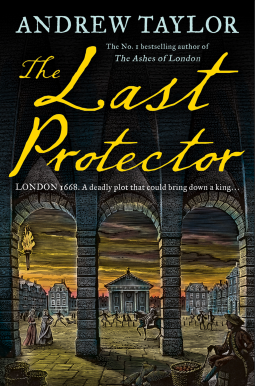
#BookReview ‘The Last Protector’ by @AndrewJRTaylor #Historical

Fourth in the 17th century crime series by Andrew Taylor, The Last Protector sees the return to London of Richard, Oliver Cromwell’s son, and last Protector of England before the restoration of the king in 1660. And it also heralds the central plot return of Cat Lovett. Ever since the first book in the series, I have waited for Cat to have a key role in the plot again. Andrew TaylorThe story begins as James Marwood, clerk to the Under secretary of State to Lord Arlington, is sent to secretly observe a duel between two lords. Meanwhile Cat, now Mistress Hakesby and married to a frail elderly architect, meets a childhood acquaintance in the street. This is Elizabeth Cromwell, daughter of Richard. Remembering their friendship as a fleeting thing, Cat is confused by Elizabeth’s eagerness to rekindle their relationship. Until, visiting Elizabeth at her godmother’s house, she is introduced to a fellow guest John Cranmore. But a peculiar habit of tapping a finger on the table brings back memories for Cat, to the time when she and her father moved in elevated political circles, and she realizes Cranmore is a false name. Elizabeth, it becomes clear, is seeking a precious object hidden by her grandmother. The object is hidden in the Whitehall sewers beneath The Cockpit, site of the cockfighting pit, theatre and jumble of additional buildings. The Hakesbys have the architectural drawings and Elizabeth needs Cat’s help to instigate her search.
In the bigger picture, Easter holiday riots attacking brothels seem to be politically motivated. Holidays are notorious times for brawls by apprentices, but these riots by the Levellers seem encouraged by bawdy newssheets of questionable origin. The Levellers shout ‘we have been servants, but we will be masters now’. Marwood is attacked and chased around the back alleys of the City while Cat, helping Elizabeth retrieve the mysterious package, is chased and escapes with the help of Ferrus, a mazer scourer, the lowest of the low who clears blockages in the sewers.
Marwood and Cat share little page time but their separate stories and chases become entwined as the troublesome history of Cat’s dissenter father puts her in grave danger. And affecting everything are the political machinations and arguments between crown and government.
An excellent page-turner.
CLICK HERE TO READ MORE ABOUT THIS BOOK AT AMAZON

Read my reviews of the other books in this series:
THE ASHES OF LONDON #FIREOFLONDON1… and try the first paragraph of THE ASHES OF LONDON.
THE FIRE COURT #FIREOFLONDON2
THE KING’S EVIL #FIREOFLONDON3
THE ROYAL SECRET #FIREOFLONDON5
THE SHADOWS OF LONDON #FIREOFLONDON6

And a World War Two novel by the same author:-
THE SECOND MIDNIGHT

If you like this, try:-
The Wicked Cometh’ by Laura Carlin
The Mermaid and Mrs Hancock’ by Imogen Hermes Gowar
‘The Winter Garden’ by Nicola Cornick

And if you’d like to tweet a link to THIS post, here’s my suggested tweet:
#BookReview THE LAST PROTECTOR by @AndrewJRTaylor https://wp.me/p5gEM4-4tI via @SandraDanby

#BookReview ‘The Benefit of Hindsight’ by @susanhillwriter #crime

The Benefit of Hindsight is the tenth book in the Simon Serrailler series by Susan Hill and she covers a lot of ground. At the book’s heart, as with its predecessors, is the town of Lafferton and the Serrailler family. Crime, when it happens, affects so many people and Hill shows this effectively as more and more people are drawn into the aftermath. Susan HillThe themes of this book are post-traumatic-stress-disorder, pre-natal premonition and post-natal depression, art robbery and private v public healthcare. Written in a list it can seem clinical, but Hill is expert at winding together the personal lives of ordinary people so that you care about them. The continuity of the Serrailler family throughout the series adds the familiarity of real family issues that are not crime-related, just ordinary family stuff. Simon is struggling with the aftermath of his injury, not physically, but with panic attacks. His sister Cat has settled into her job with private GP service Concierge and it is Cat who meets two people central to the story; pregnant mum Carrie who unshakingly believes her baby will be born damaged; and Cindy, wife of businessman and charity supporter, Declan McDermid.
When a lonely house is burgled in a professionally assessed and organised operation, Simon’s team consults art and antique experts. A second burglary goes wrong, with far-reaching consequences for Simon. The meaning of the novel’s title is key to the plot affecting brother and sister, as Cat’s patient Carrie remains convinced the doctors are unable to diagnose the hidden disease of her newborn baby. As Carrie’s sense of despair deepens, her introverted husband Colin – who she fears would rather spend his time staring at his computer screen trading money, than talking to her – paces around the room ‘like a zoo animal’. The meaning of the book’s title is an indication that Hill is interested as much in the aftermath of a crime, as in the modus operandi of the crime itself. One of the reasons I enjoy this character-led series is the lack of gratuitous violence, I don’t need to skip paragraphs of gory description or violence. That is not to say the books are not thrilling, but they are deeper explorations of the motives, fears and reactions of everyone affected by crime. Importantly, Simon Serrailler is not a perfect policeman, a perfect man; occasionally he allows his own life and emotions to affect his decision-making and must face the consequences.
Susan Hill delivers yet another Serrailler book that does what it says on the tin. Well-written and plotted, familiar but with an unexpected twist, with Simon being strong and mysterious yet vulnerable.

Read my reviews of the other novels in the series:-
THE VARIOUS HAUNTS OF MEN #1SIMONSERRAILLER
THE PURE IN HEART #2SIMONSERRAILLER
THE RISK OF DARKNESS #3SIMONSERRAILLER
THE VOWS OF SILENCE #4SIMONSERRAILLER
THE SHADOWS IN THE STREET #5SIMONSERRAILLER
THE BETRAYAL OF TRUST #6SIMONSERRAILLER
A QUESTION OF IDENTITY #7SIMONSERRAILLER
THE SOUL OF DISCRETION #8SIMONSERRAILLER
THE COMFORTS OF HOME #9SIMONSERRAILLER
A CHANGE OF CIRCUMSTANCE #11SIMONSERRAILLER

And also by Susan Hill, HOWARD’S END IS ON THE LANDING

If you like this, try:-
‘A Rising Man’ by Abir Mukherjee #1WYNDHAM&BANERJEE
Elizabeth is Missing’ by Emma Healey
The Mystery of Three Quarters’ by Sophie Hannah #3POIROT

And if you’d like to tweet a link to THIS post, here’s my suggested tweet:
#BookReview THE BENEFIT OF HINDSIGHT by @susanhillwriter https://wp.me/p5gEM4-46A via @SandraDanby

#BookReview ‘The Secrets We Kept’ by @laraprescott #Cold War #Pasternak

The Secrets We Kept by Lara Prescott is a mixture of Cold War thriller, romance and the true story of the publication of Dr Zhivago by Boris Pasternak. Set in the 1950s, this novel is about the power of the written word. So powerful that two nations try to outwit the other as a big new novel is set to be published; neither has any regard for the effects of their plans on the author. Lara PrescottThe two worlds are radically different, Prescott builds both convincingly. I can see Pasternak’s vegetable garden at his dacha, I can hear the typewriters in the Typing Pool at The Agency on National Mall in Washington DC. It is important to note that this is a blend of real events, real people and total fiction.
Irina is American, a first generation Russian-American, her father left behind in the Soviet Union as his pregnant wife departed for a new life in America. Irina’s Mama is a dressmaker, speaking Russian to Irina at home while making elaborate dresses for Russian immigrants. Irina never meets her father. Always an outsider, when she goes for a job interview in a typing pool Marla wears a skirt made for her by Mama. She gets the job in the Typing Pool at The Agency (the CIA) because she has something different to offer; she is trained for extra duties in the evening, acting as a messenger and learning tradecraft to avoid detection. Her job is at The Agency’s Soviet Russia Division, the ‘SR’.
In Moscow, Boris Pasternak is writing a novel and reading it aloud to his lover, Olga. One day Pasternak, deemed a threat by the authorities, is sent a warning: Olga is sent to a work camp for three years. When she returns home, his novel is finished. It is Dr Zhivago.
The Secrets We Kept is a fascinating read, a glimpse into the true story of Dr Zhivago’s publication and the role of the CIA in disseminating it to Soviet citizens. Structurally the pace did not hold up and slowed each time the story moved to Boris and Olga. But some interesting areas are covered – the treatment of homosexuals in the workplace and sexual manipulation between the ranks, the assimilation of first generation Americans, and the American obsession with communism.
Set at the time of Sputnik, Prescott is good at the contemporary culture, politics and the atmosphere of rivalry and impending threat of the Soviet Union. The clothes, the food, the films, the parties. The typists see and hear but don’t repeat, but are as capable of analysing and doing the jobs that the men are doing.
The ending fizzled out, perhaps because the book tries to do so much, possibly too much.
CLICK HERE TO READ MORE ABOUT THIS BOOK

If you like this, try:-
An Officer and a Spy’ by Robert Harris
‘The Translation of Love’ by Lynne Kutsukake
The Museum of Broken Promises’ by Elizabeth Buchan

And if you’d like to tweet a link to THIS post, here’s my suggested tweet:
#BookReview THE SECRETS WE KEPT by Lara Prescott https://wp.me/p5gEM4-4tg via @SandraDanby