Tag Archives: Ali Smith

#BookReview ‘Companion Piece’ by Ali Smith #SeasonalQuartet #contemporary

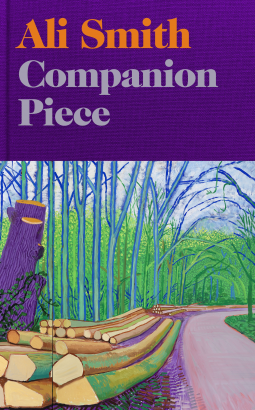
Companion Piece by Ali Smith is about truth, the telling of stories, real stories, fake stories, fairy stories, perceived truth and real truth, and how language and data can be used and abused. Smith tackles some of the biggest issues facing society today, not so much providing answers but making us ask questions about life and the modern concept of ‘truth.’ A ‘companion’ novella to Smith’s lockdown-themed Seasonal Quartet, Companion Piece sings from the beginning. Ali Smith Twining together present and past stories, two motifs run throughout. ‘Curfew,’ the idea of restriction of physical movement, on access and egress, the feeling of being constrained and the invasion of our space. And ‘curlew’, the freedom of nature, the bird’s odd-shaped bill, a reminder that there is room in nature for things that don’t quite fit the norm, the ever presence of wildlife whatever happens in the human world, the familiar pattern of a bird’s day, of nature’s life cycle and therefore also of ours.
Artist Sandy is struggling during lockdown to distance-visit her sick father who is in hospital. She must stay isolated and free of the virus so she doesn’t prejudice his health and is accompanied only by Shep, her father’s dog. Into this closed world comes Martina, an acquaintance from university many decades since, who telephones with an odd tale concerning an incident at border control when she recently returned to the UK with the Boothby lock (a medieval artefact for which Martina is responsible). Held in an immigration detention room, she hears (or imagine she hears) a mysterious message – ‘Curlew or curfew.’ Martina wants Sandy’s advice to decipher the message, as Sandy is good at words. Sandy, who barely remembers Martina, tries to help while simultaneously trying to end the call. There are flashbacks to their university days, to Sandy’s childhood.
Then Sandy’s peaceful isolation is shattered by the arrival on her doorstep of Martina’s twin daughters, Lea and Eden, whose speech is littered with text-speak abbreviations. They dismiss Sandy’s concerns about covid distancing and accuse her of upsetting their mother who is acting strangely and is changing information about historical artefacts in the digital database at work.
The second story (whether it is told by Sandy is unclear, like many things in this book) set in another pandemic, this time the Black Death. An unnamed young girl, a blacksmith’s apprentice, is lying in a ditch after being attacked by men. There she meets a curlew chick, an ungainly beautiful bird she begins to care for. As people around her die of plague, she remembers the stories told to her by the blacksmith Ann Shaklock and these help her to survive.
Any novel by such an experimental writer as Smith needs to be read with a loosening of expectations, acceptance of the abandonment of normal commercial fiction norms. Passages are beautifully written but incomprehensible, others are simple and sweet, some made me laugh out loud. Punctuation, speech marks, forget about them all and sink into the story of Sandy the artist who paints words layered on top of words.
Don’t expect answers at the end. As Sandy says, ‘A story is never an answer. A story is always a question.’ It is a plea for us all to ask more questions, to not simply believe what we are told but to analyse and strip back stories in order to separate fact from fiction, fake news from truth.

Click the title to read my reviews of other books by Ali Smith:-
AUTUMN #1SeasonalQuartet
WINTER #2SeasonalQuartet
SPRING #3SeasonalQuartet
SUMMER #4SeasonalQuartet
HOW TO BE BOTH

If you like this, try:-
‘In the Midst of Winter’ by Isabel Allende
‘Blow Your House Down’ by Pat Barker
New Boy’ by Tracy Chevalier

And if you’d like to tweet a link to THIS post, here’s my suggested tweet:
#BookReview COMPANION PIECE by Ali Smith https://wp.me/p5gEM4-5PB via @SandraDanby
#BookReview ‘Summer’ by Ali Smith #SeasonalQuartet #contemporary

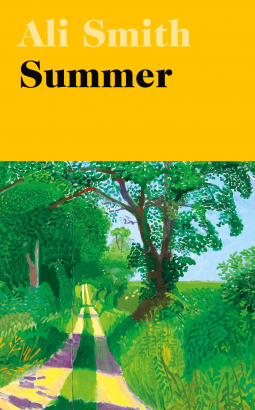
And so Ali Smith’s Seasonal Quartet comes full circle with Summer. What a journey these four books have been – experimental fiction at its best written in the moment at a time of political and social upheaval. Challenging, sometimes grating, often uplifting, so many of the loose threads left dangling in the first three books are reconnected in this finale. Ali SmithAli Smith is a challenging author to read. You get comfortable with one story and a couple of characters who she then abandons to tell you about someone else who seems completely disconnected. At times there are passages which seem to belong to no character, where the authorial voice shows through. It can feel as if the manuscripts for two or three novels have been thrown in the air and landed randomly on your Kindle. But then, as you come close to the end of this fourth book, all the disparate stories start to connect. Read Summer, the last in Smith’s Seasonal Quartet, when your brain is in full gear otherwise you will miss so much.
The story starts in Brighton with Sacha and Robert Greenlaw, teenage siblings, precocious, curious, competitive, committed and awkward. Following a trick Robert plays on his sister, two strangers visit the home where they live with their mum Grace. The strangers, Charlotte and Arthur, are the first characters from previous books to reappear. And so begins a journey to Norfolk, inspired by Einstein, motivated by a promise, towards answers, towards mystery, no one seems to really know.
Smith says summer is ‘heading towards both light and dark. Because summer isn’t just a merry tale. Because there’s no merry tale without darkness.’ Smith’s tales always feature darkness and here it is the wartime stories of Daniel Gluck and his father interned on the Isle of Man and of Daniel’s sister in France. How, I wondered as I read, will Smith connect the Greenlaws, Charlotte, Arthur and the Glucks? That is what kept me reading, to discover the meaning of summer in this story and to these particular characters. Smith says ‘summer’s surely really all about an imagined end. We head for it instinctually like it must mean something.’ There is so much depth in her exploration of theme – paralleling The Winter’s Tale, for example, and her own summer tale via the remembered summer of Grace when a young Shakespearean actress – more than I can explain here. You have to read it for yourself.
I do wish for old-fashioned punctuation, speech marks and clearly delineated changes of voice, the lack of which interrupts the flow of my reading and takes me away from the story – surely that can’t be the conscious objective of any author.
I will re-read this quartet back-to-back, without pause, hoping to gain more understanding and nuance. Individually, the novels are challenging and at times mystifying. Collectively, they become something else entirely. I suspect in years to come I will see a different interpretation.

Click the title to read my reviews of other books by Ali Smith:-
AUTUMN #1SeasonalQuartet
WINTER #2SeasonalQuartet
SPRING #3SeasonalQuartet
COMPANION PIECE #5SeasonalQuartet
HOW TO BE BOTH

If you like this, try:-
The Only Story’ by Julian Barnes
Amnesia’ by Peter Carey
The Testimony of Taliesin Jones’ by Rhidian Brook

And if you’d like to tweet a link to THIS post, here’s my suggested tweet:
#BookReview SUMMER by Ali Smith https://wp.me/p5gEM4-4Qi via @SandraDanby

#BookReview ‘Spring’ by Ali Smith #SeasonalQuartet #contemporary

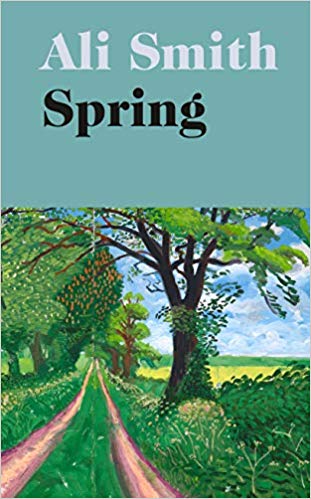
Spring is the third in the Seasons quartet by Ali Smith and the most experimental of the books so far. Set in today’s disorientating, chaotic times, Spring is at times both disorientating and chaotic. The most political of the three, it felt at times like the author was shouting. It left me feeling rather flat, which I didn’t expect as I am an Ali Smith fan. Ali SmithThe book is rather difficult to summarize, partly because so soon after reading it the story disappeared from my mind. Two story strands start off independently, inevitably merging and impacting on each other. In between are passages of social media language, phrases listed, nasty, full of bile and hatred; I can imagine Smith trawling Twitter, pencil in hand, making notes.
Richard Lease, a film producer, is contracted to make a film about Katharine Mansfield and Rainer Maria Rilke, but is struggling with the script. He holds imaginary conversations with his – professional, and sometime romantic – partner Paddy who died recently. Richard also holds conversations with an imaginary daughter. Both women test him with awkward questions about his behaviour.
Brittany is an officer at an SA4A immigrant detention centre, a predictable, challenging job in a depressing place. And then she meets Florence, a kind of wonder child. Florence is 12 years old. She achieves mythical status, of a kind with Greta Thunberg, by persuading the centre director to steam clean all the toilets. No one knows where she came from; is she a detainee, did she blag her way into the building? Brit and Florence go on a road trip to Scotland where they meet Richard Lease and Alda, driver of a coffee van, possibly member of an underground movement to rescue detainees from immigrant detention centres, possibly Florence’s mother. These four key characters meet in Edinburgh and agree to go to Culloden.
I was left feeling that Smith’s political message would be stronger if it wasn’t so confusing. She vents her anger and the words on the page read as if they poured from her mind without sub-editing. This interrupts the flow of Richard and Brittany’s stories, taking my mind off the page and away from the book. I didn’t feel close to any of the characters and consequently didn’t care about them.
Ali Smith is one of the freshest, experimental voices we have today; reading one of her novels is not an easy read for the beach, they need concentration. So I will re-read Spring and hope for a smoother read. I await Summer, wondering if it will bring enlightenment on Spring’s storyline but not expecting it. To date, each novel is completely independent of each other. The only context for calling it a quartet are the titles, the seasonal themes. It is a difficult thing Smith is doing with this quartet; writing about a country in the process of cataclysmic political change – the anger, the depression, the fear – and writing quickly without the usual gap of years between writing and publication which allow a book to mellow. For me, Spring does not quite work. But I do love the Hockney cover art.

Click the title to read my reviews of other books by Ali Smith:-
AUTUMN #1SeasonalQuartet
WINTER #2SeasonalQuartet
SUMMER #4SeasonalQuartet
COMPANION PIECE #5SeasonalQuartet
HOW TO BE BOTH

If you like this, try:-
A Sudden Light’ by Garth Stein
A Thousand Acres’ by Jane Smiley
All My Puny Sorrows’ by Miriam Toews

And if you’d like to tweet a link to THIS post, here’s my suggested tweet:
#BookReview SPRING by Ali Smith https://wp.me/p5gEM4-44W via @SandraDanby

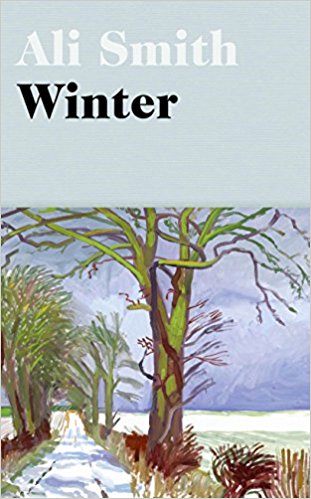
#BookReview ‘Winter’ by Ali Smith #SeasonalQuartet #contemporary

Winter by Ali Smith is second in her Seasonal Quartet but unconnected to its predecessor Autumn in terms of character and location. Ali SmithLike all Smith’s novels, it pays to read with patience. The story is at times choppy and sections seem unrelated; but have faith, it will make sense, connections will link up, characters will coincide and small details laid down early will connect to something much later. And simmering beneath the words is Smith’s anger at our unjust messed-up modern world where we don’t notice what’s going on around us and don’t seem to care.
So much fiction today looks back at our history, Smith’s Seasonal Quartet is so modern if feels as if she is writing a page ahead of the one I am reading. First we meet two sisters, Sophia and Iris who are as unalike as sisters can be. Art, Sophia’s son, has had his Twitter identity stolen by his angry girlfriend. Charlotte is posting incorrect tweets about Art’s ‘Art in Nature’ blog and these untruths are now trending. Art, who has committed to taking Charlotte to his mother’s house in Cornwall for Christmas, instead invites a girl he sees sitting at a bus stop. Lux, who starts off pretending to be Charlotte but then admits the deception to Sophia, is a catalyst in the wintry household. It is Lux who encourages Sophia to eat, Lux who discovers an outbuilding full of old stock from Sophia’s retail business, Lux who insists Art call his Aunt Iris. And so these four mis-matched, total and almost strangers, spend Christmas together.
As in Autumn there are some passages which made me laugh out loud. This time it was Sophia’s eye test at the optician after having seen a disembodied head floating in her peripheral vision; and the incident with her Individual Personal Advisor at the bank who was unable to give her advice. There is the grumpiness of growing old, observing a youth obsessed by irrelevances while forgetting the basic things that matter, and things that don’t work. There is the dislike of big business selling us stuff we don’t need in the guise that it’s essential, un-missable, while re-making new stuff so it looks like more valuable old stuff. “But now the world trusts a search engines without a thought. The canniest door-to-door salesman ever invented. Never mind foot in the door. Already right at the heart of the house.” The theme of winter runs throughout; the death of autumn, the decay that comes from lack of care and effort, the decline of relationships, the winter of ageing, nuclear threat and political division.
If you like a linear story and loose ends tied, then perhaps Ali Smith is not for you. If you are prepared to relax into a story, trust the author and wait to see what happens, then try her. She is experimental, quirky, not afraid to try something different.

Click the title to read my reviews of other books by Ali Smith:-
AUTUMN #1SeasonalQuartet
SPRING #3SeasonalQuartet
SUMMER #4SeasonalQuartet
COMPANION PIECE #5SeasonalQuartet
HOW TO BE BOTH

If you like this, try:-
‘Barkskins’ by Annie Proulx
‘In Another Life’ by Julie Christine Johnson
‘The House at the Edge of the World’ by Julia Rochester

And if you’d like to tweet a link to THIS post, here’s my suggested tweet:
#BookReview WINTER by Ali Smith https://wp.me/p5gEM4-3eb via @SandraDanby

#BookReview ‘Autumn’ by Ali Smith #SeasonalQuartet #contemporary

Uplifting, enlightening, funny, clever, depressing, sad and heartwarming. The mischievous Autumn by Ali Smith is an ingenious novel, the first of the ‘Seasonal Quartet’ telling the story of the UK fragmented after the post-Brexit vote in 2016, when ugliness and prejudice rose to the surface setting brother against sister, friend against friend, dividing streets, neighbourhoods and towns, a binary split with each side convinced it is right and the other, wrong. Ali SmithDaniel Gluck is 101 years old and in a nursing home, we see from his wonderful lyrical dreams that he teeters on the edge of death. Smith builds her world around Mr Gluck and Elisabeth Demand who, with her mother Wendy, lived next door to Daniel when Elisabeth was a child. Their relationship starts in 1993. Elisabeth, aged eight, must interview a neighbour for a homework project. Her mother is not keen and tries to bribe her to invent a neighbour instead. The following day Elisabeth meets Mr Gluck and, despite her mother’s misgivings (single man, dodgy, must be gay, might be unsafe etc) they become firm friends. Now he is 101 and she tells a lie to the nursing home – yes, she is his grand-daughter – in order to gain a visitor’s pass. She sits by his bed and reads Brave New World.
Smith compares and contrasts modern life with past times in the twentieth-century, we see modern life through Elisabeth’s storyline countered by Daniel’s memories and dreams, and his interpretations of books, art and song for the child Elisabeth. The story wings its way through contemporary references from television antiques programmes and passport applications to celebrity Christine Keeler, sculptor Barbara Hepworth and pop artist Pauline Boty.
This is all very interesting but, with the lightest of hands, Smith gives a warning about the danger of nationalism, populism and the easy appeal of accepting political lies rather than asking difficult questions of the politicians and ourselves. One passage in particular underlines it all: Daniel’s younger sister Hannah is captured in Nice, France, in 1943 despite carrying papers which identify her as Adrienne Albert.
Running throughout are the themes of truth v lies [juxtaposed often, with lies often being throwaway and easy whilst truth can be awkward and difficult to say] and identity. There is a hilarious passage where Elisabeth tries to renew her passport application at the Post Office, an all-too-believable portrayal of officialdom. Some of the historical sections, particularly about Keeler and Boty, seemed rushed and I would have liked more of Daniel’s songwriting background which was mentioned fleetingly.
Short, at 272 pages, Autumn can be read in one sitting. It is a joy to read. Next in the quartet comes Winter.
Autumn was shortlisted for the 2017 Booker Prize.

Click the title to read my reviews of other books by Ali Smith:-
WINTER #2SeasonalQuartet
SPRING #3SeasonalQuartet
SUMMER #4SeasonalQuartet
COMPANION PIECE #5SeasonalQuartet
HOW TO BE BOTH

If you like this, try:-
‘Moon Tiger’ by Penelope Lively
‘Darktown’ by Thomas Mullen
‘Shelter’ by Sarah Franklin

And if you’d like to tweet a link to THIS post, here’s my suggested tweet:
#BookReview AUTUMN by Ali Smith http://wp.me/p5gEM4-2SX via @SandraDanby

#BookReview ‘How to be Both’ by Ali Smith #art #historical

I admire Ali Smith, own quite a few of her books, so it was without hesitation that I stared to read How to be Both knowing it is an ‘experimental’ novel, a twisting, spiralling tale which has been shortlisted, longlisted, and won awards up the ying-yang. Ali SmithI wasn’t prepared for the first 20-30 pages [it’s difficult to be accurate on a Kindle] which completely lost me. Complete non-sequiturs, verse, stream of consciousness. Rambling, with little context. If it had been an unknown author I would have run out of patience, but it’s Ali Smith so I stuck with it and fell into the story of Francescho. The writing is beautiful, atmospheric, still a little short on fact for me: a child [boy or girl?] with artistic talent, whose father is a skilled brickmaker. The story of the child Francescho twists and twirls with that of the adult Francescho, a Renaissance painter of frescoes, who in his own quiet way challenges the status quo.
If you love books about artists, you will enjoy this one. In a brothel, Franchescho paints the women rather than laying with them, and becomes known for this. As he paints, he remembers the words of ‘the great Alberti’. “The great Alberti says that when we paint the dead, the dead man should be dead in every part of him all the way to the toe and finger nails, which are both living and dead at once : he says that when we paint the alive the alive must be alive to the very smallest part, each hair on the head or the arm of an alive person being itself alive : painting, Alberti says, is a kind of opposite to death…”
Just at the point when you wonder where Francescho’s story is going, Part Two starts. And what a contrast. 21st century. George is a modern-day teenager, grieving for her mother, remembers a visit they made to Italy because her mother was drawn to see a fresco by an unknown artist. There, they discover elements of the fresco which we saw Franchescho paint, their modern-deay interpretation, and Franchescho’s reason for painting them.
Through George’s eyes, and through her conversations with Mrs Rock, the school counsellor, we see the binary nature of the world: boy/girl, truth/lies. Is this the ‘both’ of the title? Mrs Rock says a truth teller is “usually someone with no power, no social status to speak of, who’d take it upon themselves to stand up to the highest authority when the authority was unjust or wrong, and would express out loud the most uncomfortable truths, even though by doing this they would probably even be risking their life.”
This is a book to read and read again. Complex, challenging and beautiful, this is not an easy read, it demands concentration, but it is worth it.

Click the title to read my reviews of other books by Ali Smith:-
AUTUMN #1SeasonalQuartet
WINTER #2SeasonalQuartet
SPRING #3SeasonalQuartet
SUMMER #4SeasonalQuartet
COMPANION PIECE #5SeasonalQuartet

If you like this, try:-
The Miniaturist by Jessie Burton
The Signature of All Things by Elizabeth Gilbert
‘Girl in Hyacinth Blue’ by Susan Vreeland

And if you’d like to tweet a link to THIS post, here’s my suggested tweet:
#BookReview HOW TO BE BOTH by Ali Smith http://wp.me/p5gEM4-1HE via @SandraDanby