Tag Archives: art

#BookReview ‘The Hidden Girl’ by Lucinda Riley & Harry Whittaker #suspense #mystery

The Hidden Girl by Lucinda Riley & Harry Whittaker is a story of family secrets across the generations, love and shame, jealousy and courage. Sweeping from the wild and beautiful Yorkshire moors to the horrors of occupied Poland in World War Two, it covers huge themes. Lucinda Riley & Harry WhittakerTwo teenage girls grow up as neighbours on the wild Yorkshire moors. Fifteen when the story begins, Leah Thompson is quiet and shy. She loves the moors, the Brontës, the wildness and doesn’t realise how beautiful she is. Desperate to help her mother Doreen support her father, who is crippled by arthritis and unable to work, Leah helps out at the nearby farmhouse where Rose Delancey is attempting to restart her career as an artist. Rose has two children. Miles, a dark-haired loner who haunts the moors with his camera when he’s home from university. His adopted younger sister Miranda, who is at school with Leah, is brash but vulnerable, and longs to escape the boring moors. Into this rural world, Rose’s nephew Brett arrives for the summer holidays. Travelling from his school at Eton, Miles and Miranda are unaware of their cousin’s existence. They’ve never met his father David Cooper, Rose’s estranged brother, who is a wealthy businessman. Teenage hormones become entangled and hearts are broken.
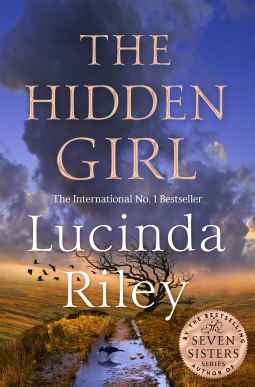
When a chance encounter catapults Leah into the glamorous international world of modelling, Miranda is determined to find wealth and success too. Ironically both women find themselves the focus of controlling, possessive men; a disturbing theme throughout the book. The story sweeps from Yorkshire to the South of France, New York to Milan, taking in the worlds of international modelling, photography and art. This is a story of the misuse of power, abuse, betrayal and violence that travels across the generations to the modern day. Told through the eyes of Leah and Miranda, and of brother and sister David and Rosa in World War Two Poland, this is an immersive novel to sink into. It reminded me of Penny Vincenzi’s doorstop-sized novels which lock you into the world of the characters so you can’t stop turning the pages. Except this has a harder edge.
The first Lucinda novel I’ve read since her death, The Hidden Girl is a rewrite by her son Harry of an earlier Lucinda novel. It has the clear identity of a Lucinda book, her voice is clear throughout. There is though more looseness in storyline with some of the most important action reported rather than shown directly, which makes it feel rushed and at a distance. The themes are familiar from the Seven Sisters series: truth in relationships, abuse of power, family secrets, hidden pasts and repressed violence. With myriad twists, turns, misunderstandings and betrayals, it filled an entire weekend’s reading.

Read my reviews of the first seven novels in Lucinda Riley’s ‘Seven Sisters’ series:-
THE SEVEN SISTERS #1SEVENSISTERS
THE STORM SISTER #2SEVENSISTERS
THE SHADOW SISTER #3SEVENSISTERS
THE PEARL SISTER #4SEVENSISTERS
THE MOON SISTER #5SEVENSISTERS
THE SUN SISTER #6SEVENSISTERS
THE MISSING SISTER #7SEVENSISTERS

… plus my reviews of these standalone novels, also by Lucinda Riley:-
THE BUTTERFLY ROOM
THE LOVE LETTER
THE GIRL ON THE CLIFF

If you like this, try:-
Inheritance’ by Nora Roberts #1LOSTBRIDETRILOGY
‘Water’ by John Boyne #1ELEMENTS
‘Nutshell’ by Ian McEwan

And if you’d like to tweet a link to THIS post, here’s my suggested tweet:
#BookReview THE HIDDEN GIRL by Lucinda Riley & Harry Whittaker https://wp.me/p2ZHJe-8ya via @SandraDanby

COMING SOON… THE NEXT BOOK I REVIEW WILL BE:- Susanna Kearsley

#BookReview ‘Disobedient’ by Elizabeth Fremantle #historical #art

Knowing little of the life of seventeenth-century Italian painter Artemisia Gentileschi, reading a fictionalised account of her life in Disobedient by Elizabeth Fremantle was a delight. Elizabeth FremantleIt is an absorbing read. In Rome, 1511, Fremantle creates a fierce world in which teenager Artemisia lives with her father and three brothers. Expected to accept her fate as a lesser person – she is not taught to read and write, must defer to her drunken father and isn’t consulted about decisions that affect her life – she must assist her [lesser talented] artist father while secretly painting her own work.
When her friend Piero assess a work-in-progress and says ‘Apparently, you know more than you think you do about men’s desires,’ Artemisia replies, ‘I watch. And I listen.’ Her skill, her dedication to her art, her confidence and simple difference from other subservient women, is her strength and her weakness. Men feel threatened by her or attracted to her. When her father Orazio begins a search for a husband for her, he courts Agostino Tassi in the hope that as a painter he will allow Arti to continue to paint after marriage. But Tassi is not all he seems. Arti finds herself trapped in a nightmare. Fighting against the restrictions placed on women, her only rebellion is on canvas. She paints the most disturbing, violent, incisive art that has been seen, by a man let alone by a woman. Desperate to be free of Tassi, she has two options. Marriage, or the law court.
Disobedient is an unflinching portrayal of life for women in seventeenth-century Italy, and a portrayal of one artist who refused to submit. Artemisia Gentileschi was a real person, she painted the pictures depicted in Fremantle’s novel, she was raped and tried by torture. Around the historical facts, Fremantle has constructed a compelling, emotional, heart-rending story that is uplifting and at the same time difficult to read.
Excellent. The anger and sense of injustice pours off the page.

If you like this, try:-
The Silence of the Girls’ by Pat Barker
How to be Both’ by Ali Smith
Girl in Hyacinth Blue’ by Susan Vreeland

And if you’d like to tweet a link to THIS post, here’s my suggested tweet:
#BookReview DISOBEDIENT by Elizabeth Fremantle https://wp.me/p2ZHJe-7qz via @SandraDanby

COMING SOON… THE NEXT BOOK I REVIEW WILL BE:- Fiona Leitch

#BookReview ‘Nat Tate: An American Artist 1928-1960’ by William Boyd #historical #art

A fictitious biography of a non-existent artist, this is an entertaining novella which I read in one sitting. Nat Tate: an American Artist 1928-1960 by William Boyd‪ has been on my to-read list forever. William Boyd‪What a stir it caused when it was published in 1998. The New York art world soon realised it had been set-up. The first edition appeared with endorsements from Gore Vidal and David Bowie but with hindsight the clues are there. Logan Mountstuart features as a friend of Tate and regular Boyd readers will recognise the protagonist of Boyd’s novel Any Human Heart published in 2002. So, a piece of mischief.
If you’ve read any art biography, or one of those weighty ‘exhibition books’ that accompany major art shows, the tone of this story will be familiar to you. Lots of references to famous artists, the process, the tortured creativity, the successes and setbacks – shown here by Tate’s reverence for American poet Hart Crane – the mentors, financial backers and agents. But there never was an artist called Nat Tate. The book features Tate’s art and photographs from his life but which originate for Boyd whose satire asks questions about the morals and values of the art world, as topical today as in 1998.
An enjoyable novella, beautifully-written in the style of the ‘art biography,’ a confirmation of Boyd’s flexibility and skill as a writer. A convincing hoax. Something different.

Here are my reviews of other books by William Boyd:-
ANY HUMAN HEART
LOVE IS BLIND
ORDINARY THUNDERSTORMS
SWEET CARESS
THE BLUE AFTERNOON
THE DREAMS OF BETHANY MELLMOTH
TRIO
WAITING FOR SUNRISE

… and try the first paragraph of ARMADILLO.

If you like this, try these:-
How to be Both’ by Ali Smith
The Girl in the Painting’ by Renita d’Silva
Life Class’ by Pat Barker

And if you’d like to tweet a link to THIS post, here’s my suggested tweet:
#BookReview NAT TATE: AN AMERICAN ARTIST 1928-1960 by William Boydhttps://wp.me/p2ZHJe-6tQ via @SandraDanby

COMING SOON… THE NEXT BOOK I REVIEW WILL BE:- Suzanne Collins

#BookReview ‘Stanley and Elsie’ by @nicolaupsonbook #art #historical

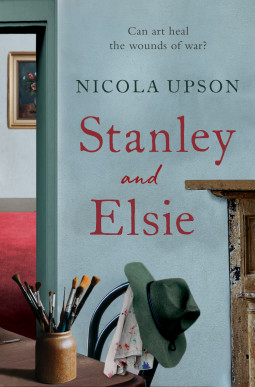
My knowledge of English artist Stanley Spencer was sketchy to say the least when I started reading Stanley and Elsie by Nicola Upson. This is a biographical novel that walks a difficult line between true fact and imagined conversation and walks it with skill, delicacy and drama. Definitely a novel for anyone who loves art. Nicola UpsonUpson takes us into the Spencer household at Chapel View, Burghclere after the Great War when Elsie Munday starts work as a housemaid. Stanley Spencer has been commissioned to paint the inside of a chapel; his wife Hilda, also a painter, minds their young daughter Shirin. Through Elsie’s eyes we see the lives of this family, their ups and downs, the artistic differences, the selfishnesses of Stanley and Hilda, smoothed by the tact, diplomacy and efficiency of Elsie. The title could make some people assume Stanley and Elsie were romantically attached but theirs is a master/servant relationship that deepened into mutual respect and friendship. Stanley, selfish, focussed, is a difficult master, a difficult husband, and Elsie finds herself caught in the middle of disputes between husband and wife. Often she is exasperated with both of them. Instead she becomes indispensable to the household.
Upson gives us an insight into the lives of this family, their daily tasks, the squabbles, the unexpected joys. She combines small inconsequential details of painting with, through Elsie’s growing appreciation of art, the big picture destruction, grief and lasting devastation of war on Stanley’s generation of men. Upson is excellent at portraying place; the Spencers move between Burghclere, Cookham and Hampstead Heath as their marriage disintegrates, a separation complicated by Stanley’s obsession with another woman. No one could have forseen the consequences of this obsession. Stanley is selfish and self-absorbed, Hilda also but to a lesser degree; both can be loving with their children one minute and dismissive the next. At times, neither are particularly likeable; Elsie is the one who picks up the pieces.
Elsie is the core of this story. As narrator we not only see the Spencers through her eyes, we also see her grow from young girl to competent, confident young woman.
The ending was under-whelming but I see it must have been difficult to know how and when to end the novel.
A delightful read. I particularly enjoyed picturing the paintings in my mind as I turned the pages. Reading Stanley and Elsie makes me want to visit Sandham Memorial Chapel near Newbury, Hampshire, now a National Trust property, and also to explore Upson’s other novels.
CLICK HERE TO READ MORE ABOUT THIS BOOK AT AMAZON

Read my review of AN EXPERT IN MURDER #1JosephineTey, also by Nicola Upson.

If you like this, try:-
The Gustav Sonata’ by Rose Tremain
The Goldfinch’ by Donna Tartt
Life Class’ by Pat Barker

And if you’d like to tweet a link to THIS post, here’s my suggested tweet:
#BookReview STANLEY AND ELSIE by @nicolaupsonbook https://wp.me/p5gEM4-3Zx via @SandraDanby

#BookReview ‘Toby’s Room’ by Pat Barker #WW1 #historical

As the second book of a trilogy by Pat Barker, Toby’s Room can be read also as a standalone novel. The Toby of the title is the brother art student Elinor Brooke, whose story is told in Life Class. This story starts further back in time with a secret shared by the siblings, something not hinted at in the first book. In fact this whole book is about secrets, things hidden for shame, war too horrible to talk about, fear and emotions to be ashamed of, and things simply not spoken. Society was very different then, pragmatism coloured everyday lives, people did what they had to and tried to forget the bad things. Pat BarkerToby is reported ‘Missing, Believed Killed’, a parcel of his belongings is returned. Elinor believes the true story is being hidden and enlists fellow art student Paul Tarrant – who returned from Ypres injured and is now an official war artist – to help. She believes another war artist, Kit Neville, who served with Toby, must know the truth but refuses to say. Kit suffered a horrific face injury and is being treated at Queen Mary’s Hospital in Sidcup. Visiting Kit there they find not only Kit but Henry Tonks, their intimidating professor at the Slade School of Art.
The facial reconstructions at Sidcup are well documented, not least by the medical drawings of patients by Tonks and his team. Once again, Barker uses a true story and seamlessly inserts her fictional characters. And yet again, Barker combines a study of individuals at war while considering the role of art in conflict. As official war artists, Kit and Paul struggle with the limitations they are given, the portrayal of reality is forbidden. As I read every page of this book, the image which stayed in my mind was Paul Nash’s ‘We Are Making a New World’ (see below).

Paul Nash

(c) Tate; Supplied by The Public Catalogue Foundation

For my reviews of other Pat Barker novels, click the title below:-
ANOTHER WORLD
BLOW YOUR HOUSE DOWN
DOUBLE VISION
LIFE CLASS #1LIFECLASS
NOONDAY #3LIFECLASS
THE SILENCE OF THE GIRLS
THE WOMEN OF TROY
UNION STREET

If you like this, try:-
‘Stay Where You Are and Then Leave’ by John Boyne
The Inheritance of Solomon Farthing’ by Mary Paulson-Ellis
‘The Ways of the World’ by Robert Goddard

And if you’d like to tweet a link to THIS post, here’s my suggested tweet:
#BookReview TOBY’S ROOM by Pat Barker via @SandraDanby http://wp.me/p5gEM4-1Qx

#BookReview ‘Life Class’ by Pat Barker #WW1 #historical

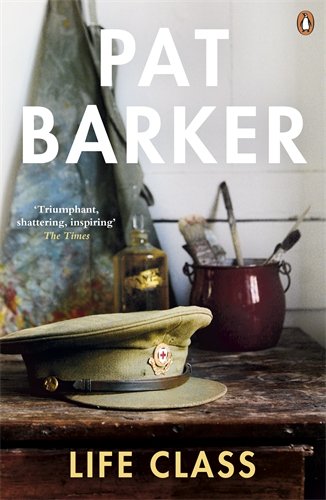
Pat Barker is one of my top five novelists. She writes sparingly with not a word wasted, but creates a world so real with detail and characterization. Life Class is the first of her #LifeClass trilogy of novels which tell the story of brother and sister Elinor and Toby, and Elinor’s fellow art students Paul and Kit, through the Great War. I first read this book when it was published in 2007 and devoured it. I have re-read it now to refresh my memory of the story and characters, before I read the newly published third volume of the trilogy, Noonday. Pat BarkerThe story starts in 1914 in a life-drawing class at the Slade School of Art in London. The class is taken by Professor Henry Tonks, a real-life character, artist and surgeon. Barker weaves her fictional story around the true story of Tonks, the Slade, and the outbreak of the Great War. For student Paul Tarrant, the presence of Tonks is intimidating, as he struggles to find his identity as an artist. This is a novel about young people and their journey from youth to maturity via art and love, brutally influenced by the horrors of war. Interwoven with Paul’s story – he volunteers as an ambulance driver and goes to Ypres, working in a hospital – is that of Elinor Brooke, fellow art student. Elinor’s journey to adulthood is different, given that she is a woman at a time when middle-class women are not expected to have a career. She remains in London, continues to paint and mixes with the society group of Lady Ottoline Morrell, another true character, mixing with pacifists, conscientious objectors and the Bloomsbury Group.
Essentially, this is a triangular love story set into the structure of war. As the students struggle to define themselves as artists, their safe world collapses around them and the abnormal becomes normal. As Paul undertakes gruesome nursing tasks, he questions the purpose of war art and what it can achieve. As his life becomes surreal, so he is cast adrift from his former life without context to judge either his ability as an artist, or his humanity in the face of war. Are some things simply too horrific to paint?

For my reviews of other Pat Barker novels, click the title below:-
ANOTHER WORLD
BLOW YOUR HOUSE DOWN
DOUBLE VISION
TOBY’S ROOM #2LIFECLASS
NOONDAY #3LIFECLASS
THE SILENCE OF THE GIRLS
THE WOMEN OF TROY
UNION STREET

If you like this, try:-
‘A Long Long Way’ by Sebastian Barry
‘The Lie’ by Helen Dunmore
‘Wake’ by Anna Hope

And if you’d like to tweet a link to THIS post, here’s my suggested tweet:
#BookReview LIFE CLASS by Pat Barker http://wp.me/p5gEM4-1Q3 via @SandraDanby

#BookReview ‘How to be Both’ by Ali Smith #art #historical

I admire Ali Smith, own quite a few of her books, so it was without hesitation that I stared to read How to be Both knowing it is an ‘experimental’ novel, a twisting, spiralling tale which has been shortlisted, longlisted, and won awards up the ying-yang. Ali SmithI wasn’t prepared for the first 20-30 pages [it’s difficult to be accurate on a Kindle] which completely lost me. Complete non-sequiturs, verse, stream of consciousness. Rambling, with little context. If it had been an unknown author I would have run out of patience, but it’s Ali Smith so I stuck with it and fell into the story of Francescho. The writing is beautiful, atmospheric, still a little short on fact for me: a child [boy or girl?] with artistic talent, whose father is a skilled brickmaker. The story of the child Francescho twists and twirls with that of the adult Francescho, a Renaissance painter of frescoes, who in his own quiet way challenges the status quo.
If you love books about artists, you will enjoy this one. In a brothel, Franchescho paints the women rather than laying with them, and becomes known for this. As he paints, he remembers the words of ‘the great Alberti’. “The great Alberti says that when we paint the dead, the dead man should be dead in every part of him all the way to the toe and finger nails, which are both living and dead at once : he says that when we paint the alive the alive must be alive to the very smallest part, each hair on the head or the arm of an alive person being itself alive : painting, Alberti says, is a kind of opposite to death…”
Just at the point when you wonder where Francescho’s story is going, Part Two starts. And what a contrast. 21st century. George is a modern-day teenager, grieving for her mother, remembers a visit they made to Italy because her mother was drawn to see a fresco by an unknown artist. There, they discover elements of the fresco which we saw Franchescho paint, their modern-deay interpretation, and Franchescho’s reason for painting them.
Through George’s eyes, and through her conversations with Mrs Rock, the school counsellor, we see the binary nature of the world: boy/girl, truth/lies. Is this the ‘both’ of the title? Mrs Rock says a truth teller is “usually someone with no power, no social status to speak of, who’d take it upon themselves to stand up to the highest authority when the authority was unjust or wrong, and would express out loud the most uncomfortable truths, even though by doing this they would probably even be risking their life.”
This is a book to read and read again. Complex, challenging and beautiful, this is not an easy read, it demands concentration, but it is worth it.

Click the title to read my reviews of other books by Ali Smith:-
AUTUMN #1SeasonalQuartet
WINTER #2SeasonalQuartet
SPRING #3SeasonalQuartet
SUMMER #4SeasonalQuartet
COMPANION PIECE #5SeasonalQuartet

If you like this, try:-
The Miniaturist by Jessie Burton
The Signature of All Things by Elizabeth Gilbert
‘Girl in Hyacinth Blue’ by Susan Vreeland

And if you’d like to tweet a link to THIS post, here’s my suggested tweet:
#BookReview HOW TO BE BOTH by Ali Smith http://wp.me/p5gEM4-1HE via @SandraDanby

#BookReview ‘Girl in Hyacinth Blue by Susan Vreeland #historical #art

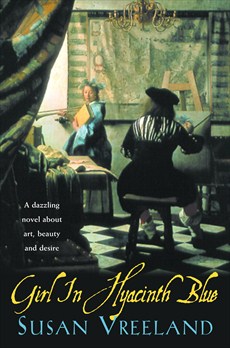
‘The front cover of Girl in Hyacinth Blue by Susan Vreeland features a painting by Dutch master Jan Vermeer called ‘The Painter in his Studio’. In it we see the back of a painter, brush in hand, studying a young girl in blue, holding a book, who stands by a window.  This real painting was the inspiration for Vreeland’s novel. Susan VreelandScene-by-scene  the story takes you back in time, following through the centuries the owners of the painting which author Susan Vreeland imagines Vermeer was painting . First, we meet a maths master who has a secret. A painting, inherited from his father, which came to him in the Second World War. The painting is passed from owner to owner, sometimes as an inheritance or gift, sometimes as payment of a debt, sometimes stolen. Vreeland tells us the story of each owner, what the painting meant to them and how it affected their lives: for some it means quick money, or guilt, or beauty, or a hidden secret. Effectively this is a series of short stories, linked by the painting.
It is a charming tale, set mostly in the Holland of dykes, poverty and farms. The painting illuminates the lives of everyone who owns it, no matter how briefly. A charming story about how a painting is viewed differently by everyone who sees it, starting with the artist’s intentions as he conceives and executes it. Vermeer says: “A man has time for only a certain number of paintings in his lifetime… He’d better choose them prudently.”
If you enjoyed Tracy Chevalier’s Girl with a Pearl Earring or Jessie Burton’s The Miniaturist, you will enjoy this.

If you like this, try:-
‘The Glassmaker’ by Tracy Chevalier
Disobedient’ by Elizabeth Fremantle
The Figurine’ by Victoria Hislop

And if you’d like to tweet a link to THIS post, here’s my suggested tweet:
#BookReview GIRL IN HYACINTH BLUE by Susan Vreeland http://wp.me/p5gEM4-1mi via @SandraDanby

#BookReview ‘The Goldfinch’ by Donna Tartt #contemporaryfiction

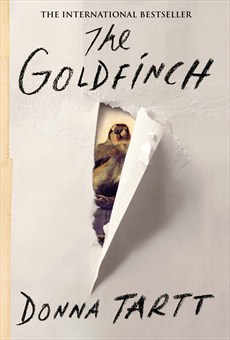
I knew it from the first page, The Goldfinch by Donna Tartt is the rare sort of book that you want to go on forever and when you finish it you want to start reading all over again for the first time. It is a book I will keep and re-read and re-read. Donna Tartt Three main reasons why I loved it. I liked Theo, it is his story and Tartt lets him tell it all the way through. No other viewpoint. It is about art and antiques, or specifically one painting and the effect it has on Theo’s life. The possession of it, the responsibility, the guilt, the value. The meaning of the painting itself, the tiny bird shackled by a chain at its ankle. And the painter, Carel Fabritius, student of Rembrandt, died too young in the Delft gunpowder explosion of 1654 when he was 32. And lastly, it’s one of those wide-ranging American novels – New York to Las Vegas to Amsterdam – that the Americans seem to do so well and the English are rubbish at [if you can think of a modern English novel that does do it, please let me know because I’d love to read it]. Tartt says she carries a notebook everywhere and is always jotting down ideas and facts. It shows. Each page is crammed with information. I have to admit early on I was wondering if 13-year old Theo would really remember details of a painter called Egbert van de Poel, but it is the adult Theo telling the child’s story so I cut her some slack.
It is about art, fate, the things life throws at us, love and friendship. It takes in alcoholism, drug addiction, art fraud, post-traumatic stress disorder, grief, unrequited love. At the heart of it is a mystery. As Theo’s feckless father, who gambles according to astrology, says: “sometimes you have to lose to win.” And it is chock full with popular references, from Boris referring to reading the ‘Dragon Tattoo’ books to Pippa’s Hunter wellies.
Of the peripheral characters, I loved Hobie, loved Boris. Pippa remains enigmatic to the end. Tartt’s characters are alive, her places are real. She makes you smell the dust. I’ve been to Las Vegas and have ventured beyond the Strip, but not to the outer edges where the desert reclaims the streets and where the teenage Theo and Boris meet. And I’ve been to New York, walked the streets Theo walks, been to the Met [thank goodness, un-bombed], and been to Amsterdam too with its circular canals. And that brings me to the first chapter, and the ending. I was so intrigued by that first chapter, why is Theo in the hotel room, anxiously scanning the Dutch television news. What has he done? What I imagined it to be… I was wrong, but I had to read almost to the end before I realised I was wrong. That’s really good going for a book that is 771 pages long. There is anticipation, numerous twists in the tale, and there is a little over-intellectualising [often the over-serious way of ‘the big American novel’] but nothing that stopped me reading on. For me, the book went on slightly too long, past its natural finishing point. I would have stopped at the end of the chapter where Theo and Hobie meet post-Christmas, post-Amsterdam.
It is a literary success, and a page-turner. A deserved winner of the Pulitzer, for me.

Read the #FirstPara of THE SECRET HISTORY also by Donna Tartt.

If you like this, try:-
A Little Life’ by Hanya Yanagihara
Purity’ by Jonathan Franzen
A Spool of Blue Thread’ by Anne Tyler

And if you’d like to tweet a link to THIS post, here’s my suggested tweet:
#BookReview THE GOLDFINCH by Donna Tartt http://wp.me/p5gEM4-1cm via @SandraDanby