Tag Archives: book review

#BookReview ‘Gregor and the Code of Claw’ by Suzanne Collins #fantasy #adventure

Gregor and the Code of Claw is the fifth and final book in the Underland Chronicles by Suzanne Collins. From the first page there is no preamble, no explanation of the back story. If you’ve got this far in the series, you know who Gregor is, where he is, and you know that what happens next may kill him. If you don’t know what I mean, start at the beginning with Gregor the Overlander. Suzanne CollinsGregor could turn his back on the Underland, ignore his destiny and return safe to the New York streets above. He could, but will he? Of course not. An army of rats is closing on Regalia, deep beneath the New York streets, and Gregor cannot abandon his friends. This is the war to end all wars. Central to the defence of Regalia – where the humans have put aside generational divisions to join with their allies; bats, mice, spiders, cockroaches and Ripred the rebel rat – is breaking the rats’ version of the Enigma code. If the humans can unlock the Code of Claw and read the rats’ military messages, they believe they can win the war. According to a prophecy the Princess, who everyone says is Gregor’s youngest sister Boots, will unlock the code. But Boots is causing chaos in the code room until Lizzie, Gregor’s other sister, arrives.
This is a fast-moving story of war and it doesn’t all go Gregor’s way. He’s struggling to be what everyone expects him to be, the Warrior who will save Regalia. At last he has achieved some level of competency at echolocation, useful when fighting in the dark, but he is deemed a limited fighter as he only uses his right hand. His relationship with his bonded bat, Ares, another outsider in Regalia, is close and touching. So is his growing closeness with Luxa. There is also the verbal jousting with Ripred to enjoy.
The final battle is, inevitably, Gregor versus the Bane. The white baby rat which made its appearance in the second book in the series is now a mad giant. How can Gregor defeat him?
Collins doesn’t shy away from the brutality of war, or sad endings, and some favourite characters are lost. There are spies, traitors and resistance fighters, lots of blood and strange animal fluids, and some pretty gruesome injuries. And like life, the ending does not have neat conclusions.
An inventive series that brings adult themes of war, death and betrayal plus love, loyalty, bravery and friendship, to a tweens audience. Well written and thought-provoking.

Here are my reviews of the first four books in the series:-
GREGOR THE OVERLANDER #1UNDERLANDCHRONICLES
GREGOR AND THE PROPHECY OF BANE #2UNDERLANDCHRONICLES
GREGOR AND THE CURSE OF THE WARMBLOODS #3UNDERLANDCHRONICLES
GREGOR AND THE MARKS OF SECRET BY SUZANNE COLLINS #4THEUNDERLANDCHRONICLES

And try the first paragraph of THE HUNGER GAMES, also by Suzanne Collins.

If you like this, try:-
Viper’s Daughter’ by Michelle Paver #7WOLFBROTHER
Dark Earth’ by Rebecca Stott
The Bear and the Nightingale’ by Katherine Arden #1WINTERNIGHT

And if you’d like to tweet a link to THIS post, here’s my suggested tweet:
#BookReview GREGOR AND THE CODE OF CLAW by Suzanne Collins https://wp.me/p2ZHJe-7zj via @SandraDanby

COMING SOON… THE NEXT BOOK I REVIEW WILL BE:- Heather Morris

#BookReview ‘Mystery by the Sea’ by @BrightVerity #cosymystery #crime

Lady Eleanor Swift, who has been a ‘lady’ for less than a year, is going on an elegant seaside holiday but is more used to travelling by bicycle in foreign climes. She doesn’t know what to pack. One thing is certain; Ellie will encounter another murder which simply must be solved. Mystery by the Sea by Verity Bright is fifth in this 1920s cosy historical mystery series. Verity BrightEleanor, accompanied by her household staff, visits the seaside at Brighton [though the real thing has a pebble beach, not sandy]. Such a glamorous destination in the Twenties, the tourists visit The Royal Pavilion, the Grand and Metropole Hotels, drink cocktails, eat fish and chips and gourmet food, and generally let their hair down. But Eleanor, and butler Clifford, have kept a secret from their cook, housekeeper and maid. There has been a murder at their hotel, the Grand [the three staff and Gladstone the dog are staying nearby], and the victim is none other than Eleanor’s husband. Who died six years earlier.
The hunt for the truth is a race through clues and tangled suspicions, a disagreeable local policeman, dodgy suspects who all seem to have something to hide and a femme fatale who seems preoccupied with Eleanor, all wrapped up in Eleanor’s grief and confusion at the news about her husband. How did Hilary, shot dead by firing squad in South Africa, come to be in Brighton in 1921? Complicated by the presence of a certain Detective Chief Inspector, on holiday from his usual beat in Oxford and London. With Eleanor’s emotions in a spin, she tries to make connections between the Hilary she knew and loved, with the danger and threats surrounding her in such a glamorous place.
The best of the series so far, if a little edgier. It’s becoming addictive.

Read my reviews of other books in the Lady Eleanor Swift series:-
A VERY ENGLISH MURDER #1LADYELEANORSWIFT
DEATH AT THE DANCE #2LADYELEANORSWIFT
A WITNESS TO MURDER #3LADYELEANORSWIFT
MURDER IN THE SNOW #4LADYELEANORSWIFT
MURDER AT THE FAIR #6LADYELEANORSWIFT
A LESSON IN MURDER #7LADYELEANORSWIFT
DEATH ON A WINTER’S DAY #8LADYELEANORSWIFT

If you like this, try:-
The Cornish Wedding Murder’ by Fiona Leitch #1NoseyParker
Elizabeth is Missing’ by Emma Healey
‘The Killings at Kingfisher Hill’ by Sophie Hannah #4Poirot

And if you’d like to tweet a link to THIS post, here’s my suggested tweet:
#BookReview MYSTERY BY THE SEA by @BrightVerity https://wp.me/p2ZHJe-70r via @SandraDanby

COMING SOON… THE NEXT BOOK I REVIEW WILL BE:- Suzanne Collins

#BookReview ‘Dying in the Wool’ by @FrancesBrody #cosycrime

I’ve gone back to the beginning to read Dying in the Wool, first in the 1920s Kate Shackleton crime series by Frances Brody. What a joy it is to meet Kate for the first time, as the author intended. I read this novel quickly over a weekend, jealous of distractions that drew me away from my library book. frances brodyUnlike most first books in what become long-running series, Dying in the Wool starts quickly and gets to the point. A man disappeared seven years ago and his soon-to-be-wed daughter, convinced he ran away to start a new life, asks former VAD colleague Kate to discover his whereabouts so he can walk her down the aisle at her wedding. Widow Kate, her husband Gerald died in the Great War, has become accomplished at solving the mysteries of missing soldiers. But Joshua Braithwaite is the wealthy owner and master of a Yorkshire mill, not a man lost in the horror of battle. Staying with the Braithwaite family, and meeting Joshua’s colleagues and workforce at the mill, present Kate with new challenges and new investigative territory. This is not simply a matter of telling a wife or daughter that a man was killed in action, this is possibly about family secrets, fraud and murder. Kate soon finds herself the subject of gossip in Bridgestead village, and begins to start at moving shadows.
Brody cleverly tells us Kate’s background with Gerald in parallel to her investigations in the Braithwaite case, avoiding the ‘exposition dumps’ that can happen in the first of a series. Already familiar with some of the later books, I was pleased to meet for the first time Kate’s housekeeper Mrs Sugden and private detective Mr Sykes. Seeing Mrs Sugden fussing over Kate’s meals, and Kate encouraging Mr Sykes to get behind the wheel of her motor car for the first time, made me smile. The final quarter of the book moves quickly and, with only a few pages, left there are further twists and turns to challenge Kate’s working theory.
A well-researched and written novel that made me want to start the second book in the series straight away. The textile industry is a fertile setting for a murder mystery and Brody cleverly uses the mill and its workforce, management and working class, the weaving techniques and business finances to good effect. Kate, a wealthy young woman with her own motor car, is noticed by everyone in the mill village where workers and their bosses know everyone and there are few secrets. Or are there?
Enjoyable.

Try the #FirstPara of DYING IN THE WOOL.

Read my reviews of these other Kate Shackleton novels:-
A DEATH IN THE DALES #7KATESHACKLETON
A SNAPSHOT OF MURDER #10KATESHACKLETON
DEATH AND THE BREWERY QUEEN #12KATESHACKLETON
A MANSION FOR MURDER #13KATESHACKLETON

If you like this, try:-
An Unsuitable Job for a Woman’ by PD James
Fortune Favours the Dead’ by Stephen Spotswood
The Blind Man of Seville’ by Robert Wilson

And if you’d like to tweet a link to THIS post, here’s my suggested tweet:
#BookReview DYING IN THE WOOL by @FrancesBrody https://wp.me/p2ZHJe-7y6 via @SandraDanby

COMING SOON… THE NEXT BOOK I REVIEW WILL BE:- Verity Bright

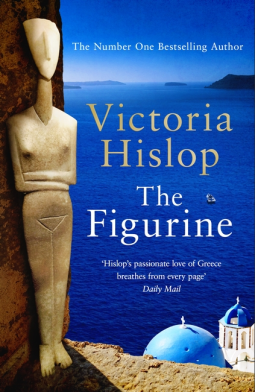
#BookReview ‘The Figurine’ by Victoria Hislop @VicHislop #Greece #historical

It’s a rare occurrence for me to abandon a book, but I almost gave up on The Figurine by Victoria Hislop. I persevered through the glacial pacing of the first half and at 55% on my Kindle the story kickstarts. A story about archaeological mysteries is melded with dark truths about a family’s wartime history. Victoria HislopHelena McCloud is half-Greek and from the age of eight is sent every summer to Athens to spend time with her maternal grandparents in their wealthy apartment. Her mother Mary never accompanies her and doesn’t explain why. Helena sees much she doesn’t understand. When as an adult she returns to Athens, she becomes involved in uncovering a criminal gang exploiting precious Greek statues and treasures. Now her childhood recollections of those long-ago visits begin to make sense.
I struggled to connect with this story for a long time and by the end I wished it had been told in a different order and was a third shorter. Lacking a close personal perspective – admittedly, telling a story through the eyes of a child has to be one of the biggest challenges for an author – it was at times like reading at distance through binoculars.
The figurine of the title is the turning point in the story, bringing with her admiration, awe and suspicion. Helena, head over heels in love with fellow student Nick, is at first too enamoured to acknowledge what is going on around her. Gradually the story focusses on the theft of archaeological antiquities in Greece, predominantly at digs on isolated, little-populated islands, and run by criminal gangs in Athens. Helena assumes that her grandfather, a figure of imposing military force, benefitted in trade from stolen antiquities. Along with an intrepid brother and sister who are antique specialists, and a new group of Athenian friends, she digs deeper into her painful family past. This is when the story begins to buzz.
Not Hislop’s best, which for me remains The Island. The small figurine is the large heart of the story. ‘With her head tilted towards the heavens, the figurine seems proud. With her arms folded, she seems relaxed. With her diminutive ears, she seems to listen. With her pale eyes, she seems to be aware of the crowd.’

Read my reviews of other these books by Victoria Hislop:-
THE STORY
THE SUNRISE
THOSE WHO ARE LOVED

If you like this, try:-
My Brother Michael’ by Mary Stewart
The Miniaturist’ by Jessie Burton
The Animals at Lockwood Manor’ by Jane Healey

And if you’d like to tweet a link to THIS post, here’s my suggested tweet:
#BookReview THE FIGURINE by Victoria Hislop @VicHislop https://wp.me/p2ZHJe-7xL via @SandraDanby 

COMING SOON… THE NEXT BOOK I REVIEW WILL BE:- frances brody
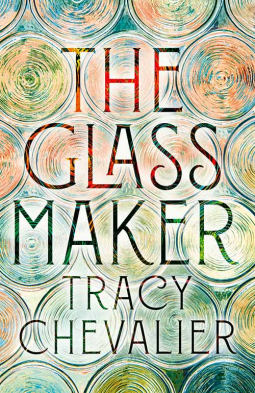
#BookReview ‘The Glassmaker’ by @Tracy_Chevalier #historical #Venice

Enthralling from the first page to the last, The Glassmaker by Tracy Chevalier is by far the best novel I’ve read so far this year. It’s a heady mixture of beautiful glass, Venice in rich times and poor, passion, jealousy and intense competition, focusing on Orsola Rosso and her glass-making family on Murano island within the Venice lagoon through the centuries to the present day. Tracy ChevalierChevalier introduces us to the idea of time-skipping in her brief introduction. ‘The City of Water runs by its own clock. Venice and its neighbouring islands have always felt frozen in time – and perhaps they are.’ And so we follow the same family across six hundred years. In the first chapter in 1494 we meet nine-year old Orsola; this is her story, told in leaps and skips across the centuries. The second instalment of Orsola’s life is in 1574 when she is eighteen years old. Those close to her have aged similarly, only Venice is at once the same and different. Its an ingenious way to tell the story of the Rosso family, the ups and downs of the glassmaking business, their loves and losses, the wars and disease, all set within the framework of Venice and of Murano glass.
When Maestro Lorenzo Rosso dies, Orsola’s eldest brother Marco must take charge of the family business but he is impulsive and designs flamboyant impractical pieces. When contracts are lost and Marco is in his cups, Orsola learns the art of glass bead making. The business of glassmaking is always kept within the immediate family, different families have different specialities, and so matches are made for the sons and daughters of maestros according to the skill or wealth of the incomer. Orsola knows she must marry one day. Her mother and brother’s selection of the man to be her husband is pragmatic, it turns the direction of the story and influences everything that follows.
Life is lived in a bubble on Murano island; loyalties are intense but so is hatred and rivalry. While most women are mutually supportive, others are jealous and ambitious. Murano families rarely go to Venice, Venetians don’t go to Murano. None of them go to the mainland, terraferma. Above all for these families who live close to the bread line, security of employment and supply of food for the family is the primary concern. We follow the Rossos through feast and famine, war, plague, flood and Covid.
So many of Chevalier’s novels are based upon a specific craft or skill – art in The Girl with a Pearl Earring, embroidery in A Single Thread, tapestry weaving in The Lady and the Unicorn, fossil-hunting in Remarkable Creatures. The Glassmaker is another homage to skilled craftsmen who create beautiful objects that last across time.
A magical story, beautifully written. And what a gorgeous cover!

Read my reviews of other novels by Tracy Chevalier:-
A SINGLE THREAD
AT THE EDGE OF THE ORCHARD
NEW BOY
THE LAST RUNAWAY

If you like this, try:-
Disobedient’ by Elizabeth Fremantle
How to be Both’ by Ali Smith
Nat Tate: an American Artist 1928-1960’ by William Boyd

And if you’d like to tweet a link to THIS post, here’s my suggested tweet:
#BookReview THE GLASSMAKER by @Tracy_Chevalier https://wp.me/p2ZHJe-7xg via @SandraDanby

COMING SOON… THE NEXT BOOK I REVIEW WILL BE:- Victoria Hislop
#BookReview ‘Murder in the Snow’ by @BrightVerity #cosymystery #crime

Christmas is coming to Henley Hall and Lady Eleanor Swift is hosting a party for the entire village. Gifts, food and drink, games and a cross-country fun run around the grounds of the Hall. When one runner fails to finish the course, Eleanor’s Christmas turns into another detective adventure. Murder in the Snow by Verity Bright is fourth in this fun atmospheric series. Verity BrightWhen Conrad Canning, coalman to the Hall, dies at the snowy finish line, Eleanor suspects foul play but Detective Chief Inspector Seldon believes it was a heart attack. Until traces of digitalis are discovered. This has uncomfortable connotations for Eleanor and her loyal butler Clifford as it mirrors the unexplained death of Eleanor’s Uncle Byron. Each book features the core characters with the addition of new faces for each murder mystery, but which will be suspects, witnesses, victim and villain. Some resentments are not forgotten with the passage of time, but burn brighter.
The food is sumptuous, as are the homemade alcohol beverages. But this time, both are examined for evidence of cause of death. As Christmas approaches New Year, the beautiful house is covered in snow and the village is cut off from the outside. Clifford deems it dangerous to drive the Rolls along the country lanes having previously ended up in a ditch, and Seldon is stranded in a pub. In pursuit of more evidence, Eleanor and Clifford set off across country wearing snow shoes.
The continuation of Eleanor’s romantic entanglements continues slowly in this story, one step at a time, glances are exchanged and there is some gentle teasing. Like the truth about Uncle Byron, Eleanor’s pursuit of love is a subject developed a little further in each book. I also love the asides about Eleanor’s previous life, exploring routes for travel companies in exotic countries, travelling alone and having all sorts of adventures. Such as her wonderful reply to a retired seaman who caustically refers to what he assumes is Eleanor’s sheltered and privileged life, ‘Ever been halfway over a mountain range with the snow and night closing in, with no prospect of food or shelter and not another human being within a hundred square miles?’
I whizz through these books. They’re such a relaxing read, a great escape from the world outside and a glimpse into the glamorous country house life in the 1920s. With murder thrown in.

Read my reviews of other books in the Lady Eleanor Swift series:-
A VERY ENGLISH MURDER #1LADYELEANORSWIFT
DEATH AT THE DANCE #2LADYELEANORSWIFT
A WITNESS TO MURDER #3LADYELEANORSWIFT
MYSTERY BY THE SEA #5LADYELEANORSWIFT
MURDER AT THE FAIR #6LADYELEANORSWIFT
A LESSON IN MURDER #7LADYELEANORSWIFT
DEATH ON A WINTER’S DAY #8LADYELEANORSWIFT

If you like this, try:-
‘Fortune Favours the Dead’ by Stephen Spotswood #1Pentecost&Parker
Or The Bull Kills You’ by Jason Webster #1MaxCamara
The Seven Deaths of Evelyn Hardcastle’ by Stuart Turton

And if you’d like to tweet a link to THIS post, here’s my suggested tweet:
#BookReview MURDER IN THE SNOW by @BrightVerity https://wp.me/p2ZHJe-701 via @SandraDanby

COMING SOON… THE NEXT BOOK I REVIEW WILL BE:- Tracy Chevalier

#BookReview ‘Restless Dolly Maunder’ by Kate Grenville #historical

Restless Dolly Maunder by Kate Grenville tells the life story of a poor white girl who wants to be a teacher in late 19th century Australia. Dolly Maunder must gain her father’s approval to take the pupil teacher test and is determined to ask though she knows he will refuse. This beginning sums up the story of Dolly’s life which Grenville recounts until her end in 1945. Kate GrenvilleA melding of fiction with family history, memoir and feminist study, we follow the restless heroine who always wants more. At the beginning I was sympathetic with Dolly’s lot, cornered into marriage, her dreams crushed, taken to live on a windswept isolated farm. This is a portrayal of a woman who rubs against her parents, their narrow expectations, the drudgery and lack of emotion and who as a parent herself struggles with the same constraints. But when life improves and there is money, Dolly still struggles to connect with those around her.
This constant searching for something new is a classic case of grass being greener on the other side of the fence. Sometimes Dolly’s plans work out financially for the family but sometimes end in struggle and hardship. And each time her three children are uprooted, taken somewhere unfamiliar where they must start again.
Dolly was born too early, struggling for her right to be a woman in a man’s world where every legal document must be signed by a man. From farm to shop to hotel and bar, Dolly and husband Bert Russell move on as the 20th century passes from the Great War and Great Depression to the approach of the Second World war. She is a tough woman living in tough times, unwilling to reshape her ambitions and accept the good of what she has achieved, unable to soften herself to allow others to love her.
At the end of the novel the position of women in society is contextualised, viewed across three generations comparing Dolly’s life with that of her mother and her own daughter Nancy. ‘She thought of all the women she’d ever known, and all their mothers before them, and the mothers before those mothers, locked in a place where they couldn’t move.’ Dolly’s own generation, she decides, is like a hinge allowing a door to be opened, slowly at first, painful inch by painful inch, for the women who follow.
A linear story which I read quite quickly, at times admiring Dolly’s determination and sheer strength of will, but struggling with her inability to connect emotionally with anyone around her. Don’t miss the Author’s Note at the end which adds context to the story.
A sad, depressing story.

Read my review of A ROOM MADE OF LEAVES, also by Kate Grenville

If you like this, try:-
Barkskins’ by Annie Proulx
At the Edge of the Orchard’ by Tracy Chevalier
My Name is Yip’ by Paddy Crewe

And if you’d like to tweet a link to THIS post, here’s my suggested tweet:
#BookReview RESTLESS DOLLY MAUNDER by Kate Grenville https://wp.me/p2ZHJe-7wJ via @SandraDanby

COMING SOON… THE NEXT BOOK I REVIEW WILL BE:- Verity Bright

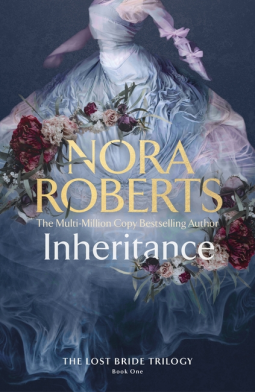
#BookReview ‘Inheritance’ by Nora Roberts #contemporary #gothic #suspense

I’m a newcomer to Nora Roberts and didn’t know what to expect from Inheritance, first in her Lost Bride trilogy. This amazing, page-turning, gothic slash romance slash suspense story had me grabbing every spare minute to read another couple of pages. I’m a Nora Roberts convert, are all her books like this? Nora RobertsInheritance ticks all the gothic romance boxes. An unexpected inheritance. A haunted house. A conflicted heroine who faces challenges in her life. Ghosts with personality. And a handsome hero. Sonya MacTavish’s wedding plans take a U-turn thanks to her cheating fiancé, so when she discovers the hidden truth of her father’s birth and has an opportunity to change her life, she grabs it. Sonya inherits not only a mansion but the money to run it and a support network of local lawyers and tradespeople.
Surprising herself by loving the lonely seafront mansion and the small town nearby, city girl Sonya soon hears bumps in the night – and the day – and discovers Lost Bride mansion (its nickname locally) has other residents besides herself. Sonya, who prefers to call a spade a spade and refuses to be intimidated by the unknown, gets herself a rescue dog, learns to cook pot roast and wins new clients for her freelance graphic design business. There are new family members to meet, her lawyer and his relatives, the man who cuts logs and sweeps snow from the drive and a chef in town who shares her recipes.
Sonya loves her new life and refuses to be cowed by the slamming doors and weeping in the night, a decision which means she must confront the ghosts and solve a mystery to lift the curse.
A bit silly in places, funny, heartwarming and spine tingly. Loved it. And what a great ending, beware, it’s a cliffhanger. Bring on number two, The Mirror.
CLICK HERE TO READ MORE ABOUT THIS BOOK AT AMAZON

If you like this, try:-
A Sudden Light’ by Garth Stein
The Bear’ by Claire Cameron
The Invitation’ by Lucy Foley

And if you’d like to tweet a link to THIS post, here’s my suggested tweet:
#BookReview INHERITANCE by Nora Roberts https://wp.me/p2ZHJe-7ws via @SandraDanby

COMING SOON… THE NEXT BOOK I REVIEW WILL BE:- Kate Grenville
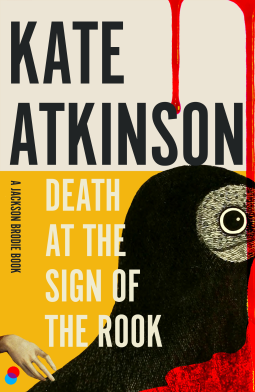
#BookReview ‘Death at the Sign of the Rook’ by Kate Atkinson #crime

Oh what a treat, a new Jackson Brodie book from Kate Atkinson. Death at the Sign of the Rook is sixth in this fast-moving, witty character-led crime series. This time, Jackson is on the trail of a stolen painting. Or perhaps it hasn’t been stolen after all. Kate AtkinsonNew grandfather Jackson, in the midst of a mid-life crisis and driving a huge new Land Rover Defender, takes on the case of a missing painting belonging to the recently deceased mother of the most boring brother and sister. As he investigates Dorothy Padgett’s carer Melanie Hope, who disappeared at the same time as ‘The Woman with a Weasel,’ Brodie finds other unsolved cases involving stolen paintings. Could they be linked? Jackson is reunited with police officer Reggie Chase who helps – checking things on the police computer, despite her misgivings – and the duo become pulled into a surreal world of a dual reality.
Burton Makepeace, a rundown Yorkshire country mansion, has also lost a painting, in this case by JMW Turner. Now partly converted into a hotel, Burton Makepeace is hosting a Murder Mystery Weekend and as the snowfall turns into waist-high drifts, travellers are stranded and the murders begin. Truth and fiction become entangled as a group of actors are let loose in the large country house with endless rooms, hidden stairs and dangerous battlements. Local vicar Simon, who has recently lost his voice, gets lost in the snow and stumbles into the Murder Mystery, immediately to be confused by the amateur sleuths as the fictional vicar on their cast list. At times I read in a haze of confusion as real people and actors merged; a social comment on today’s perception of truth, sort-of-truth and fake truth perpetuated by social media. How do we know what is really true and who to believe. Jackson, with the help of Reggie, has to sort out truth from lies and work out who’s who. The cast of characters is a combination of Agatha Christie and Cluedo.
Told at breakneck speed, so many laughs, what a wonderful book. Only Kate Atkinson could write this story, wonderful craftsmanship, tension, farce, wicked humour and dark threat. It starts off racing from the first page and doesn’t stop until the last.

Read my reviews of these other novels by Kate Atkinson:-
A GOD IN RUINS
LIFE AFTER LIFE
NORMAL RULES DON’T APPLY
SHRINES OF GAIETY
TRANSCRIPTION
BIG SKY #5JACKSONBRODIE

If you like this, try:-
‘The Vanished Bride’ by Bella Ellis #1BronteMysteries
‘Elizabeth is Missing’ by Emma Healey
Cover Her Face’ by PD James #1AdamDalgliesh

And if you’d like to tweet a link to THIS post, here’s my suggested tweet:
#BookReview DEATH AT THE SIGN OF THE ROOK by Kate Atkinson https://wp.me/p2ZHJe-7w6 via @SandraDanby

COMING SOON… THE NEXT BOOK I REVIEW WILL BE:- Nora Roberts
#BookReview ‘Night Train to Marrakech’ by @DinahJefferies #mystery #Morocco

Night Train to Marrakech is last in the ‘Daughters of War’ trilogy by Dinah Jefferies and it, sort of, squares the circle. Its two years since I read the first, Daughters of War, and I was a little rusty on the three sisters, Hélène, Élise and Florence, who lived in the Dordogne during World War Two. Night Train to Marrakech is set in Morocco in 1966 and tells the story of fashion student Vicky Baudin, daughter of Élise, as she travels on the night train to meet her previously unknown grandmother. Oh, and to meet Yves St Laurent. Dinah JefferiesWhen Vicky arrives at the Kasbah du Paradis in the Atlas mountains she is puzzled by the cool welcome she receives from her grandmother Clemence. Determined to meet her fashion guru, and dismissing Clemence’s warnings to be wary of trouble, Vicky heads for the night lights. Morocco is politically unstable and while various factions fight, and foreign powers spy on the fighting, the Marrakech beautiful set including Yves St Laurent, John Paul Getty and Tabitha Pol seem to float above reality. Vicky soon sees the horrifying reality for herself and becomes entangled in situations she doesn’t understand.
Yes, Vicky and Bea, her cousin, are annoyingly naïve at times but their impulsive decisions drive the plot along and take the reader through the twists and knots of Clemence’s past and the mysteries of Vicky’s family. Reference to Victor, Vicky’s father, relate back to the first book in the trilogy. Although its possible to read Night Train to Marrakech as a standalone novel, many back references will be missed. A foreword explaining the trilogy, including summary of action and list of characters, would help.
I admit to being more fascinated by the life of Clemence than Vicky, and wish there had been more focus on her story. The second half of the novel went quicker for me, partly because of the number of secrets revealed. Marrakech is colourfully described and the Kasbah reminded me of Mary Stewart’s The Gabriel Hounds, set in a rundown Lebanese palace.
I enjoyed Daughters of War most of the trilogy, perhaps a case of one good novel being stretched too far. The three books are at heart about family, the visible and hidden connections that link relatives together, and how that familial link survives through war, distress and violence. Incidentally, and disappointingly, the train of the title features only on the front cover and in the Prologue of Night Train to Marrakech. The Kasbah du Paradis and Marrakech city have more importance to the story than the train and neither Vicky nor Clemence stand in sand dunes.

Click the title to read my reviews of the first two books in this trilogy:-
DAUGHTERS OF WAR #1DAUGHTERSOFWAR
THE HIDDEN PALACE #2DAUGHTERSOFWAR

And here are my reviews of other novels by Dinah Jefferies:-
THE TEA PLANTER’S WIFE
THE SAPPHIRE WIDOW
THE TUSCAN CONTESSA

If you like this, try:-
The Gabriel Hounds’ by Mary Stewart
The Photographer’s Wife’ by Suzanne Joinson
Summertime’ by Vanessa Lafaye

And if you’d like to tweet a link to THIS post, here’s my suggested tweet:
#BookReview NIGHT TRAIN TO MARRAKECH by @DinahJefferies https://wp.me/p2ZHJe-7uT via @SandraDanby

COMING SOON… THE NEXT BOOK I REVIEW WILL BE:- Kate Atkinson