Tag Archives: book review

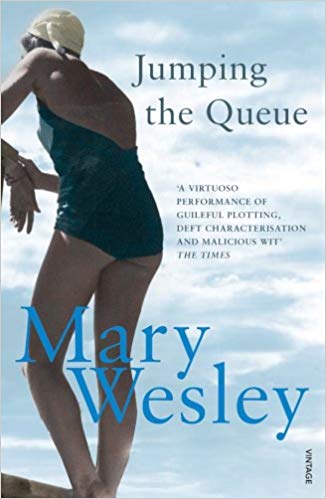
#BookReview ‘Jumping the Queue’ by Mary Wesley #contemporary

Jumping the Queue is a must-read for fans of Mary Wesley’s writing. It is a slim volume about a deadly serious topic. Widow Matilda Poliport prepares to commit suicide. She cleans the house, organises her papers, destroys anything incriminating and gives away her pets. On the day she judges the tide to be favourable, she makes a picnic and takes a bottle of wine to the beach. She plans to wade into the sea and drown. What happens changes the course of Matilda’s death, and life. Mary Wesley This is a quirky mixture of a book with heavy topics which, as you get older, become more familiar and understandable, with dark humour and a touch of forbidden romance. There is also betrayal, all kinds of betrayal actually – between husband and wife, between parents and children, between friends. As Matilda contemplates suicide, she thinks, ‘I am the great betrayer… That is my sin. I am not a sticker. I betray from laziness, fear and lack of interest.’
The story is told from Matilda’s point of view, at times despairing, at times wickedly funny and lusty. It’s hard to believe Jumping the Queue was Mary Wesley’s first adult novel, published in 1983 when she was seventy; its topics are as pertinent today, as then.
Matilda and her husband Tom made a pact, to end it all when they were old and no longer enjoying life. But when Tom dies suddenly in Paris, Matilda is left alone in an isolated West Country house, rarely visited by her four children. The villagers pretty much leave her alone except for her neighbour Mr Jones, who carries a not-so-secret torch for Matilda. But not everything is as it seems. What was Tom really doing in Paris, why don’t the children visit, and does Mr Jones really see UFOs?
When Matilda’s plan at the beach is interrupted by a group of holidaymakers, she retreats to the town to wait. There she meets The Matricide, a man on-the-run, wanted for killing his mother and whose face is in all the newspapers. Matilda is anything but conventional and she doesn’t fear for her safety. The Matricide, whose name is Hugh Warner, checks she understands who he is and that he killed his mother. ‘Of course’, says Matilda. ‘Lots of people long to. You just did it.’
At first glance, this could be a depressing novel about getting older and longing to be out of it. But in fact it is a tale of loyalty, love and trust; just in unexpected places. Thought provoking, sad and uplifting, all at the same

Here’s my review of THE CAMOMILE LAWN, also by Wesley, or read its #FirstPara.

If you like this, try:-
Whistle in the Dark’ by Emma Healey
The Hoarder’ by Jess Kidd
‘The Carer’ by Deborah Moggach

And if you’d like to tweet a link to THIS post, here’s my suggested tweet:
#BookReview JUMPING THE QUEUE by Mary Wesley https://wp.me/p5gEM4-4jF via @SandraDanby

#BookReview ‘Shrines of Gaiety’ by Kate Atkinson #historical

Shrines of Gaiety by Kate Atkinson is a sparkling portrayal of London in the 1920s, a heady mixture of madly-themed nightclubs, teenage runaways and the Bright Young Things. It is 1926 and the generation most damaged by the War to End All Wars is dancing to forget. But 1920s London is not as glittering it seems. Though the nightclubs sparkle by night, they are dank and dowdy in daylight. London has a dark, dangerous underbelly. Kate AtkinsonWhen veteran gangland boss Ma Coker is released from Holloway prison, a train of events is set in place. Her six children jostle for her attention, approval and power. The police at Bow Street station are either in her pay or are trying to convict her. Meanwhile, others are plotting the takeover of her rich kingdom – the five nightclubs the Amethyst, the Sphinx, the Crystal Cup, the Pixie and the Foxhole. Each is carefully targetted at specific clientele, each is managed by one of her five eldest children. The Amethyst is the jewel in the crown but Nellie, post-prison, is acting oddly and has taken to sitting alone in the immaculate, unoccupied, pink-decorated flat above the Cup. Is she losing it?
Two young women arrive in the closed world of the Coker family and will change things forever. Fourteen-year-old Freda Murgatroyd has run away from York with her bovine friend Florence, desperate to dance on the stage in London. Gwendolen Kelling, a former librarian and also from York, follows them to London with the aim of returning them to their families. Though Gwendolen’s tweed skirt and plain cardigan may suggest timidity, she is not what she seems.
What a wonderful read this is, this hybrid part-historical, part-literary, part-mystery novel. Atkinson juggles a huge cast and given this it takes a while to settle into the story, but as the pages turn the parties become more hysterical and people begin to die. There are three main viewpoints – Nellie Coker, Gwendolen and Freda – supplemented by Inspector John Frobisher and Nellie’s three eldest children Edith, Niven and Ramsay. But always Atkinson reminds us of the dark side. The Bright Young Things dazzle at the beginning of the evening in beautiful extravagant costumes, but their syringes and drugs become visible at twilight. Meanwhile, Nellie seems to be losing her iron grip on the clubs. When Gwendolen is recruited by Frobisher to visit the Amethyst undercover one night, with a policeman as her dance partner, things spin out of control. There is no sign of Flora or Florence, Gwendolen’s dance partner disappears, a fight breaks out and her beautiful dress from Liberty is covered in blood. The identity of her saviour is unexpected.
The story has been described as Dickensian and I can see why. Atkinson never wastes a sentence and, with a sure hand, she directs this complicated plot full of richly-drawn characters, criminal gangs, two-faced policemen and blotto partygoers. The historical detail stretches from the richest to the poorest, plus there’s a touch of romance and plenty of wry and witty anecdotes to make you chuckle. Some of the minor characters are classics to delight in, particularly Vanda and Duncan aka The Knits.
Excellent.

Click the title to read my reviews of these other books by Kate Atkinson:-
A GOD IN RUINS
BIG SKY #5JACKSONBRODIE
DEATH AT THE SIGN OF THE ROOK #6JACKSONBRODIE
LIFE AFTER LIFE
NORMAL RULES DON’T APPLY
TRANSCRIPTION
… and try the #FirstPara of EMOTIONALLY WEIRD

If you like this, try:-
‘Fatal Inheritance’ by Rachel Rhys
Freya’ by Anthony Quinn
The Light Years’ by Elizabeth Jane Howard #1CazaletChronicles

And if you’d like to tweet a link to THIS post, here’s my suggested tweet:
#BookReview SHRINES OF GAIETY by Kate Atkinson https://wp.me/p5gEM4-5PO via @SandraDanby

#BookReview ‘One Moonlit Night’ by Rachel Hore @Rachelhore #WW2

Life can turn on a sixpence and that’s what happens to Maddie and her two small daughters in the Blitz. One Moonlit Night by Rachel Hore doesn’t start with a glimpse of the main character’s ordinary life before the change happens. It starts with a shock… a family made homeless by a bomb. Rachel HoreAlone in the midst of chaos, her husband Philip has been missing for ten months since the British army’s retreat from Dunkirk, Maddie takes Sarah and Alice to Knyghton in Norfolk to stay with Philip’s elderly Aunt Gussie. Maddie is caught in limbo, unable to grieve for Philip, unable to make decisions, not accepting his probable death, while living in an isolated country house – where Philip spent his childhood – which is the focus of long-held rumour and superstition in the nearby village.
Trying to make a living as a book illustrator, Maddie is seldom without a pencil and paper. But when she draws the face of an unfamiliar young girl, enigmatic, mysterious, she doesn’t know where her inspiration came from. Instinctively she keeps her drawing secret, not wanting to upset the fragile atmosphere at Knyghton. A secret is being kept, by Aunt Gussie, Philip’s cousin Lyle who runs the Knyghton farm, by family retainers, the Fleggs, and Maddie is sure it surrounds this mysterious young woman.
Bookended by a Prologue and Epilogue both set in 1977, Hore tells the stories of Maddie and Philip during World War Two with a flashback to their meeting in 1934. Many of the book’s themes are established in this pre-war section. Wild animals, painted by Maddie, but shot by Philip; children raised while parents are absent; the sharing of some secrets and the keeping of others. It is a complex, emotional story as Maddie, who flees to Knyghton seeking sanctuary instead finds unexplained silences, whispers and rumours she fears are aimed at Philip. Meanwhile Philip, having survived a massacre of British troops by the German army, attempts to find a way home. Philip’s sections are tense, forlorn and at times hopeless, a vivid portrayal of soldiers fleeing through Occupied and Vichy France.
This is a slow-burning story which rewards the reader’s perseverance as tension in the final third picks up and Maddie finally finds some answers. It’s a book which rewards further reading as layers of information, missed on first reading, become significant.

Click the title to read my reviews of two other books by Rachel Hore:-
A BEAUTIFUL SPY
A WEEK IN PARIS
THE HIDDEN YEARS
THE LOVE CHILD

If you like this, try:-
‘The Book of Lies’ by Mary Horlock
The Tuscan Secret’ by Angela Petch
The Skylark’s Secret’ by Fiona Valpy

And if you’d like to tweet a link to THIS post, here’s my suggested tweet:
#BookReview ONE MOONLIT NIGHT by Rachel Hore @Rachelhore https://wp.me/p5gEM4-5PJ via @SandraDanby

#BookReview ‘Wildwood’ by Roger Deakin #trees #nature

Wildwood: A Journey Through Trees is the first nature book by Roger Deakin I’ve read, now I want to read more. I’ve always loved trees, in nature, in art, the timber, wooden objects. As we know, it is beneficial to lose ourselves outside in nature, breathing in the fresh air, absorbing the quiet, acknowledging the trees and flowers, and so I found the experience of reading this book. It will make you want to camp outside in the woods. Roger DeakinThe first half of this book is a journey through the woods of Suffolk around Deakin’s home, talking to woodlanders and slipping in literature, poetry, woodworking and science. The second half is travel writing… about trees. Deakin travels to Kazakhstan in search of wild apple groves, the founding trees on which all our domesticated apples are based. In complete contrast are the chapters about Australia. Deakin lives and travels with local people in both places, enthusiasts and specialists in their subject, and this comes through in his writing. Both parts of this book are fascinating, just different. In the UK he talks to artists, woodcarvers, naturalists and thatchers in East Anglia, the New Forest, Wye and the Forest of Dean. His memories of schoolboy camping trips to the New Forest analysing and chronicling a small part of woodland show how young minds can find a fascination that lasts a lifetime.
At times quite dense with detail, I read this in short bursts rather than in one long reading session. Deakin inhabits his book with real people, he describes what they look like and how they speak, their cabins [often rough shacks in woodland], their tools, the timber they grow, manage and work with. Many are scientists others are artists. It is a homogeneous read in that everyone featured loves trees.
A delightful read. I was particularly pleased to read about artist David Nash, whose work I saw at Yorkshire Sculpture Park and instantly fell in love with.

If you like this, try:-
Underland’ by Robert Macfarlane
Woods etc’ by Alice Oswald
Fiends Fell’ by Tom Pickard

And if you’d like to tweet a link to THIS post, here’s my suggested tweet:
#BookReview WILDWOOD by Roger Deakin #trees #nature https://wp.me/p5gEM4-40D via @SandraDanby

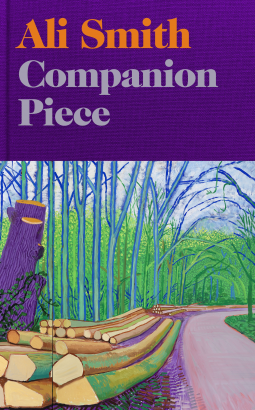
#BookReview ‘Companion Piece’ by Ali Smith #SeasonalQuartet #contemporary

Companion Piece by Ali Smith is about truth, the telling of stories, real stories, fake stories, fairy stories, perceived truth and real truth, and how language and data can be used and abused. Smith tackles some of the biggest issues facing society today, not so much providing answers but making us ask questions about life and the modern concept of ‘truth.’ A ‘companion’ novella to Smith’s lockdown-themed Seasonal Quartet, Companion Piece sings from the beginning. Ali Smith Twining together present and past stories, two motifs run throughout. ‘Curfew,’ the idea of restriction of physical movement, on access and egress, the feeling of being constrained and the invasion of our space. And ‘curlew’, the freedom of nature, the bird’s odd-shaped bill, a reminder that there is room in nature for things that don’t quite fit the norm, the ever presence of wildlife whatever happens in the human world, the familiar pattern of a bird’s day, of nature’s life cycle and therefore also of ours.
Artist Sandy is struggling during lockdown to distance-visit her sick father who is in hospital. She must stay isolated and free of the virus so she doesn’t prejudice his health and is accompanied only by Shep, her father’s dog. Into this closed world comes Martina, an acquaintance from university many decades since, who telephones with an odd tale concerning an incident at border control when she recently returned to the UK with the Boothby lock (a medieval artefact for which Martina is responsible). Held in an immigration detention room, she hears (or imagine she hears) a mysterious message – ‘Curlew or curfew.’ Martina wants Sandy’s advice to decipher the message, as Sandy is good at words. Sandy, who barely remembers Martina, tries to help while simultaneously trying to end the call. There are flashbacks to their university days, to Sandy’s childhood.
Then Sandy’s peaceful isolation is shattered by the arrival on her doorstep of Martina’s twin daughters, Lea and Eden, whose speech is littered with text-speak abbreviations. They dismiss Sandy’s concerns about covid distancing and accuse her of upsetting their mother who is acting strangely and is changing information about historical artefacts in the digital database at work.
The second story (whether it is told by Sandy is unclear, like many things in this book) set in another pandemic, this time the Black Death. An unnamed young girl, a blacksmith’s apprentice, is lying in a ditch after being attacked by men. There she meets a curlew chick, an ungainly beautiful bird she begins to care for. As people around her die of plague, she remembers the stories told to her by the blacksmith Ann Shaklock and these help her to survive.
Any novel by such an experimental writer as Smith needs to be read with a loosening of expectations, acceptance of the abandonment of normal commercial fiction norms. Passages are beautifully written but incomprehensible, others are simple and sweet, some made me laugh out loud. Punctuation, speech marks, forget about them all and sink into the story of Sandy the artist who paints words layered on top of words.
Don’t expect answers at the end. As Sandy says, ‘A story is never an answer. A story is always a question.’ It is a plea for us all to ask more questions, to not simply believe what we are told but to analyse and strip back stories in order to separate fact from fiction, fake news from truth.

Click the title to read my reviews of other books by Ali Smith:-
AUTUMN #1SeasonalQuartet
WINTER #2SeasonalQuartet
SPRING #3SeasonalQuartet
SUMMER #4SeasonalQuartet
HOW TO BE BOTH

If you like this, try:-
‘In the Midst of Winter’ by Isabel Allende
‘Blow Your House Down’ by Pat Barker
New Boy’ by Tracy Chevalier

And if you’d like to tweet a link to THIS post, here’s my suggested tweet:
#BookReview COMPANION PIECE by Ali Smith https://wp.me/p5gEM4-5PB via @SandraDanby

#BookReview ‘This is the Night They Come for You’ by Robert Goddard #thriller

Robert Goddard is a thriller writer with a particular skill at writing mysteries where the past remains entangled with today. This is the Night They Come for You features Algerian police Superintendent Mouloud Taleb; believable, likeable, he’s the type of character you instantly root for. Robert GoddardThe story starts today in Algiers as Taleb, sweating in his dingy un-air-conditioned office, considers approaching retirement. But when Wassim Zarbi, a former agent convicted of corruption, is released from prison and then disappears, it is feared he is reuniting with old colleague Nadir Laloul. Events in Paris in 1961 come alive again and Taleb is pulled into the dangerous search for Laloul, Zarbi and the truth of a cold case murder.The history and peoples of Algeria and France are entwined and Goddard puts at the heart of his story a shadowy organisation in Algeria named ‘hizb franca’, the ‘party of France’, dedicated to undermining the success of the fledgling Algerian republic. A small practical note, it would have been helpful to have the Glossary at the front of the Kindle edition rather than at the back. And, for a novice at Algerian politics as I am, a short historical context would also be useful. As a character in the book says, ‘No one learns anything from history in Algeria. They just keep repeating it in ever more exaggerated forms.’
There are two strands to the story and I admit to temporary confusion about who is who, on which side, in the first half of the book. But Goddard portrays a situation and politics disrupted, with truths sewn together by deception. I trusted Goddard to make it all clear, and he does. The various allegiances become aligned as the story progresses, until the twists occur.
Taleb finds himself assigned to work with Souad Hidouchi, an agent from the Algerian secret service. Neither trusts the other, unsure of their unstated objectives. It is a delight to watch the development of their relationship, their suspicions, the small details of friendship, the willingness to take a risk on placing trust. In comparison, the second strand featuring Stephen Gray and Suzette Fontaine, is less dynamic. Stephen has dedicated his life to uncovering the truth about his sister Harriet who disappeared in Paris in 1961. Suzette meanwhile has received a strange call from a Swiss solicitor. A document, claimed to be a memoir written in Algeria by her bookseller father, Nigel Dalby, tells the truth of what happened in Paris in 1961.
As Goddard alternates the viewpoints with excerpts from Dalby’s typewritten manuscript, at times the reader knows more than the characters. But the characters are not all telling the truth, motivations and secrets are hidden, and Goddard juggles the tensions and unveilings like a master.
A thoroughly enjoyable historical thriller. Knowing little of Algerian politics, it’s so good to read fiction that makes me turn the pages while teaching me something new. A small design note, I hated the cover which trivialises the subject matter of the novel and is befitting a young adult title.

Read my reviews of Robert Goddard’s other books:-
PANIC ROOM
THE FINE ART OF INVISIBLE DETECTION #1UMIKOWADA
THE WAYS OF THE WORLD #1WIDEWORLD
THE CORNERS OF THE GLOBE #2WIDEWORLD
THE ENDS OF THE EARTH #3WIDEWORLD

If you like this, try:-
Waiting for Sunrise’ by William Boyd
The Museum of Broken Promises’ by Elizabeth Buchan
Exposure’ by Helen Dunmore

And if you’d like to tweet a link to THIS post, here’s my suggested tweet:-
#BookReview THIS IS THE NIGHT THEY COME FOR YOU by Robert Goddard https://wp.me/p5gEM4-5Pq via @SandraDanby

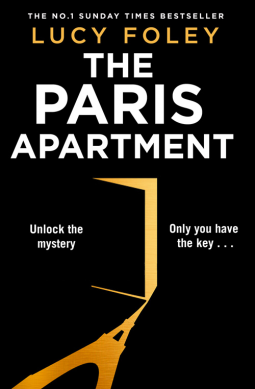
#BookReview ‘The Paris Apartment’ by Lucy Foley #thriller

I read The Paris Apartment, the latest thriller by Lucy Foley, in two sittings. It kept me guessing nearly to the end, with some unexpected twists along the way. Lucy FoleyWhen penniless Jess arrives in Paris to spend some time with her half-brother, he has disappeared. What follows is a page-turning story of the apartment block where Ben has been living, its inhabitants and the confusing discoveries Jess makes as she tries to find him. It makes her question if she really knows her brother and why he has been so distant from her. This is a book about secrets, small ones, shameful ones, old and new secrets. And one huge one. Jess, at times vulnerable at times recklessly brave, attempts to be pleasant to Ben’s neighbours in this surprisingly elegant old Parisian apartment block. The snobbish couple in the penthouse, the two young women sharing on the fourth floor, a thug and his wife, the silent concierge plus Ben’s old university friend, Nick. The viewpoint swaps quickly between Jess and the other residents as Foley pushes the action quickly from event to event. The chapters are short and snappy and this makes it easy to read just one more, and one more. As Jess struggles to make a connection with these neighbours, she doesn’t know who to trust; and neither did I. I didn’t like any of them and Jess herself is difficult to connect with. But the mystery led me on.
The apartment block offers a kind of ‘closed room’ setting, well-used in crime stories, and it does its job well. It is grand yet mysterious with hidden doors and stairs, spooky attic and cellar, a cranky old lift and a C-shaped construction around a courtyard allowing residents to observe each other. I had a clear picture of it in my head.
Where is Ben? Did someone see him leave? Why hasn’t he answered his phone? And why is he living in Paris anyway? Nick offered him the flatshare but the two men haven’t been in touch for years. Given we don’t see Ben’s viewpoint except a brief Prologue, some things are hidden until the very end. The lines between current time and flashbacks at times seemed blurred and I got a little irritated with Jess’s naivety. A couple of scenarios I thought might be possible turned out to be wrong, but it was fun guessing.
Lucy Foley uses glamorous Paris alongside the sinister apartment building, riots on the streets, juxtaposing Parisian elegance with the seedier side streets and alleys, clubs and bars. As Jess considers each of her neighbours, trying to work out who knows what, shuffling up and down stairs trying to eavesdrop, she inevitably lands in trouble.
A satisfying fast read, helped by short chapters in different viewpoints which gradually construct the mystery like layers of filo pastry.

Click the title to read my reviews of two other novels by Lucy Foley:-
THE GUEST LIST
THE INVITATION

If you like this, try:-
These Dividing Walls’ by Fran Cooper
Smash All the Windows’ by Jane Davis
The Quarry’ by Iain Banks

And if you’d like to tweet a link to THIS post, here’s my suggested tweet:
#BookReview THE PARIS APARTMENT by Lucy Foley https://wp.me/p5gEM4-5Pk via @SandraDanby

#BookReview ‘Love in a Time of War’ by @adriennechinn #WW1

Love in a Time of War by Adrienne Chinn is the story of three sisters during wartime, how the inconveniences of war can shatter dreams and promises, disguise lies, hide secrets and offer opportunities previously unimagined. Adrienne ChinnIn 1913, Cecilia Fry, eldest of the three Fry sisters, is nineteen when this story starts. She has fallen in love with her young German teacher and must decide whether to spend the summer with Max in Germany or in London working for the suffragist movement. Eighteen-year old Jessie is studying at nursing school and has been offered an amazing opportunity of which her mother disapproves. Jessie’s twin Etta visits the Summer Exhibition at the Royal Academy of Arts where she meets an Italian artist. All three sisters have dreams for the future, but those dreams are to be thrown into disarray by the Great War.
Love in a Time of War starts with a Prologue set in Italy in 1891. A young Englishwoman called Christina, visiting her Italian family on the island of Capri, falls in love with a young tourist. What happens during this Italian summer reaches through every page of this novel with its themes of the life of women at the dawn of the twentieth century, the new possibilities for women, promising independence, a voice and freedom of expression, weighed down by society’s traditional expectations of their role and behaviour. This is a view of a prosperous middle-class family, though the plight of working-class women is glimpsed via Milly, the Fry’s maid of all work who leaves to work in a munitions factory, and Jessie’s nursing friend Ivy. The three sisters choose completely contrasting paths in life and their stories are followed as war is declared and the family separates. Each in turn faces a difficult choice and then must learn to live the life they have chosen. Little do they realise how their own decisions echo the choices their mother also faced at a similar age.
Towards the end there are number of coincidences which enable the tying up of loose ends, these felt awkward and abrupt. But the Acknowledgements at the end explains how the novel was inspired by the author’s own three great-aunts and grandmother who lived in Britain, Canada and Egypt. So perhaps real life does provide coincidences that are presumed good, or bad, luck.
A gentle, romantic war story, ideal for reading on holiday. As the first book in a family saga series, ‘The Three Fry Sisters’, this book ends as life after war begins and the sisters face the new lives they have chosen. Book Two will cover the Twenties and Thirties, while Book Three will span World War Two into the Seventies.

If you like this, try:-
Waiting for Sunrise’ by William Boyd
The Inheritance of Solomon Farthing’ by Mary Paulson-Ellis
My Dear, I Wanted to Tell You’ by Louisa Young

And if you’d like to tweet a link to THIS post, here’s my suggested tweet:
#BookReview LOVE IN A TIME OF WAR by @adriennechinn https://wp.me/p5gEM4-5Pd via @SandraDanby

#BookReview ‘The Leviathan’ by Rosie Andrews #historical 

Soldier Thomas Treadwater returns home on leave from the army, summoned to Norfolk by a pleading letter from his sister Esther. ‘Our home is under attack by a great and ungodly evil’, she writes. The Leviathan by Rosie Andrews is a tale of religious extremism and intolerance, fear of witches, superstition and the power of evil. Rosie Andrews The atmosphere at all times is full of foreboding. As Thomas approaches his father’s farm at dawn, he sees dead animals in the field. This is 17th century Norfolk when England is riven by civil war. The story of Thomas and Esther, narrated by Thomas in two timelines – 1643 and 1703 – is ultimately a slow one. The beginning is excellent, ‘She is awake,’ and moves quickly as Thomas investigates the strange goings-on. When this moves from witchcraft to theology and the meaning of evil, the pace slows. The explanation of the title is remarkably late in arriving and I was distracted by trying to fit ‘the leviathan’ into the domestic story of the Treadwater family.
According to Esther, their religious father has been corrupted by their servant Chrissa Moore who is with child. Richard Treadwater is now insensible after suffering a stroke and cannot explain. Chrissa, since accused of witchcraft and imprisoned, denies she is pregnant. When Esther must give evidence in front of the Justice of the Peace, Sir Christopher Manyon, and his assistant John Rutherford, Thomas realises Esther herself may be charged as a deviant. Struggling to understand what is happening, he turns to his former tutor John Milton, for help. It was only after finishing The Leviathan that I made the connection with the real poet and author of Paradise Lost.
Steeped in historical detail and the superstitions of the time, the early mystery of the unexplained deaths and the accusations of witchcraft are well written but this momentum is lost as the story transitions to one about possession and evil. All of it is a metaphor for the cruel and intolerant acts of war when sensible men behave without reason.
I struggled for an emotional connection to the story and wonder if a second viewpoint – perhaps of Mary – may help, also sharper transitions between the three phases of story which seem oddly disconnected. But the early passage of Thomas walking home with his horse Ben is particularly lovely. I finished it not knowing what to think, wanting to like it more, in awe of the scope of subject matter and the intensity of writing.

If you like this, try:-
The Almanack’ by Martine Bailey
The Witchfinder’s Sister’ by Beth Underdown
Rush Oh!’ by Shirley Barrett

And if you’d like to tweet a link to THIS post, here’s my suggested tweet:
#BookReview THE LEVIATHAN by Rosie Andrews https://wp.me/p5gEM4-5OQ via @SandraDanby

#BookReview ‘Spook Street’ by Mick Herron #spy #thriller

Read in entirety on a train journey, Spook Street by Mick Herron is an absorbing tale of 21st century spies and terrorists combined with old-school tactics of indoctrination. The story, fourth in Herron’s ‘Slough House’ spy series, opens straight into the action with a flash mob bomb attack unsuspected by the security services. Mick HerronWhen the ‘OB’ – the elderly former-spy grandfather of slow horse employee River Cartwright – says stoats are on his trail, his claims are dismissed as advancing senility. Until a man is shot at the OB’s house and the old man disappears. This a story with a tight timeline, everything takes place within a couple of days of the first page. This brings an urgency to the danger and also makes the pages turn quickly. For Slough House fans, there are a couple of new characters to adjust to – Moira Tregorian has taken over the administrator’s desk previously occupied by Catherine Standish, and River now shares an office with the silent, hoody-wearing JK Coe. No one is sure why the latter is there, ie what he has done wrong to deserve being sent to Slough House, or the nature of his particular skill. Jackson Lamb may be a sarcastic, shabby, foul-mouthed drunk but he is also a skilled and wily operative. So when one of his team is threatened, he leaves no stone unturned.
Witty, sharp and fast-paced, this bunch of passed-over has-beens once again demonstrates that the compulsory tradecraft training required of all new recruits to the security services is never forgotten. There are less of the political jibes which were a feature of the earlier books but the darkly funny ping-pong sparring between office colleagues continues. Slough House is a place of painfully slow boring work, digital paper shuffling, of dirty coffee cups and closely-defended territories [desks], it’s a place where even the radiators work slowly. But when one of the slow horses is threatened, everyone leaps into action grabbing whatever unlikely weapons that are to hand.
The storylines are unpredictable, the characters are oddities who somehow manage to work together, and the humour is wicked. Excellent.

Click the title to read my reviews of the other books in the Slough House series:-
SLOW HORSES #1SLOUGHHOUSE
DEAD LIONS #2SLOUGHHOUSE
REAL TIGERS #3SLOUGHHOUSE
LONDON RULES #5SLOUGHHOUSE
JOE COUNTRY #6SLOUGHHOUSE
SLOUGH HOUSE #7SLOUGHHOUSE
BAD ACTORS #8SLOUGHHOUSE

If you like this, try:-
The Farm’ by Tom Rob Smith
The Second Midnight’ by Andrew Taylor
Panic Room’ by Robert Goddard

And if you’d like to tweet a link to THIS post, here’s my suggested tweet:-
#BookReview SPOOK STREET by Mick Herron https://wp.me/p5gEM4-5Nu via @SandraDanby