Tag Archives: book review

#BookReview ‘The Silver Wolf’ by JC Harvey @JCollissHarvey #historical

The Silver Wolf by JC Harvey is first in the Fiskardo’s War series set in 17th century Europe during the Thirty Years War. If, like me, your history is a little hazy, the author’s note at the beginning is helpful. This was a time of sprawling wars and disputes, religious, political and national plus local personal grudges being settled. Into this soup of battle, Harvey has inserted the story of Jack Fiskardo. And what a story this is. JC HarveyYoung Jack is an orphan, surviving on his wits in the Amsterdam docklands. Around his neck he wears a silver token of a wolf. He knows neither its provenance nor its meaning. People who meet him and recognise it, look at him askance. Jack is a brilliant hero. Feisty, brave yet considered, he has a fondness for the bullied and those weaker than himself. And he is also something of a horse whisperer.
This is a long book – 560 pages, though not as long as Ken Follett’s The Pillars of the Earth – and slowly we pick up hints about the relevance of Jack’s wolf necklace. There is a huge cast of characters, but a limited number in each place that Jack tarries awhile. All of the time, he is on the move, looking for answers to the mysterious deaths of his parents, seeking the murderer. He slips quietly into each new community, clearly different, attracting curious glances but earning respect and affection. And all the time, war is raging somewhere in Europe. Troops are on the move, battles are won and lost, soldiers must be fed and watered, billets found. Around the troop movements, a village of suppliers grows; food, alcohol, whores, horses, munitions. Jack slips in and out of groups, sometimes changing his name.
Once I stopped worrying about the true historical context and relaxed into Jack’s story, the pages turned easily despite the occasional lull in pace. There are occasional flashbacks to Jack’s childhood in the seaside village of Belle-Dame, near Rochelle in France. Some names are similar and therefore confusing – I constantly got Bronheim and Bertholt confused – others have names and nicknames.
Excellent. Such an ambitious novel for a debut. The research and world-building is extensive, but the real star is Jack. The series can only get better.

Here are my reviews of other books the Jack Fiskardo series:-
THE DEAD MEN #2FISKARDO’SWAR
PEACE AND LOVE #3FISKARDO’SWAR

If you like this, try:-
The Burning Chambers’ by Kate Mosse #1JOUBERT
The Evening and the Morning’ by Ken Follett #PREQUELKINGSBRIDGE
Winter Pilgrims’ by Toby Clements #1KINGMAKER

And if you’d like to tweet a link to THIS post, here’s my suggested tweet:
#BookReview THE SILVER WOLF by JC Harvey @JCollissHarvey https://wp.me/p5gEM4-5Lo via @SandraDanby
#BookReview ‘Pod’ by @LalinePaull #contemporary

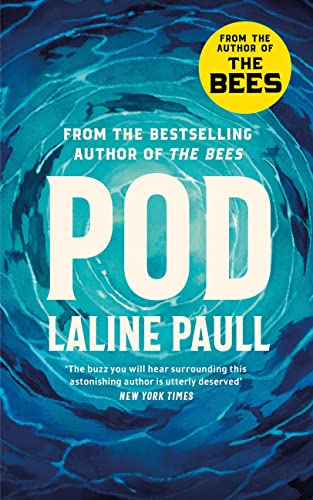
Pod by Laline Paull is an environmental allegory for the ocean today, for the state of the world, the climate and for humanity. The topics are huge. Man’s misuse of the ocean and its creatures. Migration and our treatment of refugees who are different from us. Violence against women. Drug addiction. Selfishness and the betrayal of trust and respect for others. The connections of family and the meaning of home. It reminded me of Watership Down, not read since childhood but which made a lasting impression on me. Laline PaullThere are several narratives. The main voice is Ea, a spinner longi dolphin whose inability to hear the music of the ocean prevents her from spinning beautifully. Unable to take part in the annual Exodus ritual, she feels a failure. When tragedy happens in her small pod, she flees and finds herself alone in the ‘vast’. When she joins a huge pod of bigger bottlenose tursiops dolphins, Ea finds a society completely alien to the world she knows. The First Alliance is ruled by lord Ku who, with his second in command lord Split, maintains a strict structure of order using the vira military officers. Devi, first wife and head of Ku’s harem, is a bully who enjoys her power and the hold she has over the co-wives. She plots against rivals and controls the harem’s access to sarpa, the small fish which when eaten have a calming, hallucinogenic effect.
Other voices in Pod include a misplaced humphead wrasse, separated from his kind, who switches gender. A refugee fugu fish who re-starts her cleaning station business in a new unfamiliar home. A prophetic rorqual baleen whale who sings a warning of doom. Google, a dolphin trained, exploited and mis-treated by the military, used by humans as an attack weapon.
And hovering above them all are the anthrops, the humans, recognisable by the noise from their boats and the plastic pollution which the dolphins call ‘moult’. The brutality and cruelty, sometimes unthinking sometimes conscious and glorifying, of man to animals in this book is shaming. Paull doesn’t withhold the brutality of nature, the fights, the sex, the survival of the fittest, the expulsion of the weak who it is assumed will soon die. But there is hope too, the idea that through adaptation, a group can fight to survive. That the oppressed can gain power and strength by combining together.
Quickly read, this book is emotional, shocking and the parallels with the human race are thought-provoking. It has stayed with me long since finishing it.

Read my review of Laline Paull’s climate change thriller, THE ICE.

If you like this, try:-
The Horseman’ by Tim Pears #1WESTCOUNTRYTRILOGY
‘A Dangerous Business’ by Jane Smiley
The Hen Who Dreamed She Could Fly’ by Sun-Mi Hwang

And if you’d like to tweet a link to THIS post, here’s my suggested tweet:
#BookReview POD by @LalinePaull https://wp.me/p5gEM4-5Dv via @SandraDanby

#BookReview ‘A Woman Made of Snow’ by Elisabeth Gifford #historical

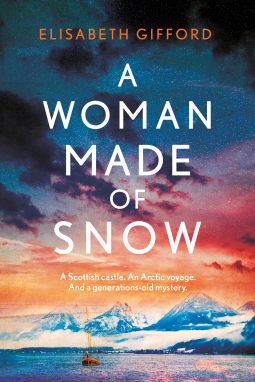
A Woman Made of Snow by Elisabeth Gifford is a historical mystery moving between post-World War Two Scotland and the Arctic in the nineteenth century. Elisabeth GiffordThis is an ambitious, well-researched dual timeline story encompassing exploitation of the Inuit people, the whaling industry, racial prejudice, the maintenance of sprawling country estates and the iron will of a mother for her son to marry the woman she prefers rather than the woman he loves. In 1949, Caro moves to Kelly Castle near Dundee with husband Alasdair and new baby Felicity, to live with his mother Martha. As the two women scratch along together, Martha asks Caro to organise the family records which have fallen into confusion. Sorting the piles of documents, Caro finds an intriguing photograph of Oliver Gillan, Alasdair’s great-grandfather, and two unknown young women. As she sets out to identify the strangers, workmen on the estate uncover bones of a woman in an unmarked grave. Caro jumps to the assumption that the bones might belong to one of the women in the photograph.
This 1949 storyline is alternated with that a century earlier of Oliver, a medical student, who grew up at Kelly Castle. Gifford lays clues for the reader – could Caro’s mysterious bones be those of one of two girls befriended by his family when he was growing up? And are these the girls in the mystery photo? He is keen on Louisa, her sister Charlotte is keen on Oliver; his mother is keen on neither girl. Oliver leaves home to study medicine in Edinburgh but finds himself instead in Dundee as medical officer on a whaling ship, the Narwhal, bound for the Arctic.
I finished the book with mixed feelings. I loved the Arctic sections and wanted more. The 1949 sections left me feeling curiously flat and wonder if the viewpoint affected my response. I so wanted to hear Yarat’s voice directly, instead we see her only through Oliver’s diary and Caro’s imagination.
This was a slow read for me, I delayed picking it up again which surprised me as I loved Gifford’s The Lost Lights of St Kilda. Erratic shifts between chapters didn’t help, the jerky changes of subject took me away from the page and the mystery interested me less than the story of Oliver’s life. I most enjoyed reading about the Arctic and the emotional upheaval of falling in love with a woman so alien to your own home and the repercussions that must be faced.

Read my 5* review of THE LOST LIGHTS OF ST KILDA also by Elizabeth Gifford

If you like this, try:-
The Surfacing’ by Cormac James
Dark Matter’ by Michelle Paver
Rush Oh!’ by Shirley Barrett

And if you’d like to tweet a link to THIS post, here’s my suggested tweet:
#BookReview A WOMAN MADE OF SNOW by Elisabeth Gifford @elisabeth04liz  https://wp.me/p5gEM4-5Hc via @SandraDanby

#BookReview ‘Broken Faith’ by Toby Clements #historical #WarsoftheRoses

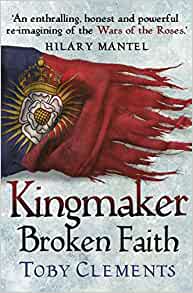
Broken Faith, second in the Kingmaker series by Toby Clements, takes place in the lull after the 1461 battle of Towton and 1464 when Edward IV marries Elizabeth Woodville. The history of these intervening years is subject to much confusion, guesswork and mystery, wonderful territory for an imaginative novelist. Toby Clements Clements gives Katherine and Thomas, who we first met in Winter Pilgrims, a secret which if revealed will change the succession to the throne of England. Exactly what the Yorkists and Lancastrians are fighting about.
The battles are bloodthirsty, the battlefield surgery by Kit [aka Katherine in disguise] is gruesome but surprisingly modernistic, the betrayals of self-seeking lords are countless and amongst it all shine the people of genuine morals, driven by belief in what is right, with humble and generous natures. That brave and endearing pair Thomas and Kit are separated, not sure if the other is alive, and forced to do what is necessary to survive. Life in the 15th century was tough enough without living through war, Clements describes the life of a common soldier, the weapons, the methods of fighting, the battle tactics, the food, the smells. Although the detail is fascinating, Clements doesn’t leave the story languishing. Thomas and Katherine move north from one castle to another, one battle to another, as soldiers run from the battlefield and lords turn their coats. Thomas and Katherine though cannot turn back until a lost book is found and a lord is killed.
Mostly set in the north, while reading the northern scenes I pictured the Northumbrian castles of Alnwick and Bamburgh which makes the adventure come alive. An enthralling chapter in this War of the Roses story which at times, like the real history, is a tad confusing. Just go with the flow and enjoy it!

Read my review of the first in this series:-
WINTER PILGRIMS #1KINGMAKER

And also by Toby Clements:-
A GOOD DELIVERANCE

If you like this, try:-
Cecily’ by Annie Garthwaite
The Pillars of the Earth’ by Ken Follett #1KINGSBRIDGE
Gone are the Leaves’ by Anne Donovan

And if you’d like to tweet a link to THIS post, here’s my suggested tweet:
#BookReview BROKEN FAITH by Toby Clements https://wp.me/p5gEM4-5yE via @SandraDanby

#BookReview ‘This Rough Magic’ by Mary Stewart #romance #suspense

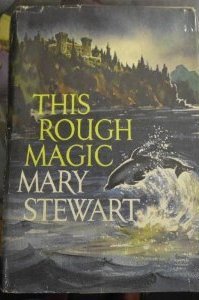
Until re-visiting Mary Stewart again I’d forgotten the exoticism of her settings and so, inspired by The Gabriel Hounds which is set in Lebanon, I quickly moved onto This Rough Magic. I remember being enchanted by this book when I read it as a teenager. The magic of Corfu, the beating heat, the warm dust, the blue sky. My memories didn’t let me down. Mary StewartSet in Greece, this is another fantastic romantic suspense novel from Mary Stewart which to be honest is more adventure story than romance. Difficult to believe it was first published in 1964 [here’s the cover of the Hodder & Stoughton first edition]. More moody and atmospheric than the disappointingly generic front cover of the current edition. Mary StewartWhen young actress Lucy Waring goes to stay with her sister Phyl in Corfu, she meets the neighbour living at the adjacent mysterious Castello dei Fiori. None other than Shakespearean master Sir Julian Gale. Although Sir Julian is flattering, sharing his theory that Shakespeare based The Tempest on Corfu and that Prospero’s cave is nearby, his son Max is cool and unwelcoming. So later, when Lucy is on the nearby beach where she meets a tame local dolphin, shots ring out that nearly hit her, she automatically suspects Max.
This is a story of passing encounters, mysterious deaths, enigmatic locals with classical Greek names, a somewhat naïve but plucky heroine and a Shakespearean ‘sir’ who in my mind I pictured as Sir Ralph Richardson.
Read it for the sultry heat, the mysterious Castello… and the dolphin. Re-reading it is like meeting an old friend.
CLICK HERE TO READ MORE ABOUT THIS BOOK AT AMAZON

Click the title to read my reviews of other Mary Stewart novels:-
MY BROTHER MICHAEL
THE GABRIEL HOUNDS
THE IVY TREE
THORNYHOLD
TOUCH NOT THE CAT

If you like this, try these:-
The Forgotten Sister’ by Nicola Cornick
The Animals at Lockwood Manor’ by Jane Healey
The Seventh Miss Hatfield’ by Anna Caltabiano

And if you’d like to tweet a link to THIS post, here’s my suggested tweet:
#BookReview THIS ROUGH MAGIC by Mary Stewart https://wp.me/p5gEM4-5A2 via @SandraDanby

#BookReview ‘Real Tigers’ by Mick Herron #spy #thriller

When recovering alcoholic and slow horse Catherine Standish goes missing, alarm bells ring at Slough House. Real Tigers by Mick Herron is third in his series about the unfashionable not-quite-up-to-it spies who have been sent to MI5’s version of Coventry. After an intriguing start, I found myself immersed in the tortuous twists and turns of Regents Park v politicians, all playing I-can-betray-you-better-than-you-can-betray-me, when I wanted more Standish. Mick HerronStandish, who has been kidnapped, seems the most unlikely target for attack. But this is Herron’s take on London’s spy-stitching-up-another-spy-for-promotion world where power and accountability don’t go together. Add in slimy Home Secretary Peter Judd and I lost track of the double-crossing. Thankfully Jackson Lamb who, despite disgusting personal habits and an apparent ‘don’t care’ attitude, was an operative during the Cold War and so can still cut through the lies. When Slough House is the focus of a surprise assessment, and it becomes clear that Standish is not coming back, Lamb’s Cold War trickery comes in handy.
After a soggy middle, the pace picks up in the final third. The real tigers of the title are of course the slow horses who find their claws at last. The action scene in the underground data centre, hidden beneath a shabby industrial estate, is snappy though confusing to keep up with who is where and who is shooting at who. Marcus particularly excels, I loved the detail about his hat, while Shirley finds that being a real spy is a bigger hit than drugs and computer nerd Roderick Ho drives a London bus.
Not as addictive a read as the first two books but this is a gritty series with characters who you want to fight back.

Click the title to read my reviews of the other books in the Slough House series:-
SLOW HORSES #1SLOUGHHOUSE
DEAD LIONS #2SLOUGHHOUSE
SPOOK STREET #4 SLOUGH HOUSE
LONDON RULES #5 SLOUGH HOUSE
JOE COUNTRY #6 SLOUGH HOUSE
SLOUGH HOUSE #7SLOUGHHOUSE
BAD ACTORS #8SLOUGHHOUSE

If you like this, try:-
The Partisan’ by Patrick Worrall
‘The Fine Art of Invisible Detection’ by Robert Goddard #1UMIKOWADA
‘Gabriel’s Moon’ by William Boyd #1GabrielDax

And if you’d like to tweet a link to THIS post, here’s my suggested tweet:
#BookReview REAL TIGERS by Mick Herron https://wp.me/p5gEM4-5xE  via @SandraDanby

#BookReview ‘Devotion’ by @HannahFKent #historical #emigration

In Prussia, 1836, fourteen-year-old Hanne lives in a world-within-a-world, a strict religious group where worship must be kept secret and hidden from the sight of neighbours. Devotion by Hannah Kent is the story of Hanne’s persecuted community. They live in fear of expulsion or worse. But when a new family arrives Hanne meets another outsider, Thea, and her life is changed forever. Hannah Kent Kent takes her time with the first half. This is a slow start, a painstaking building of the relationship between Hanne and Thea, drawing the world in which neither fits. As Hanne reaches womanhood, her life is changing in small ways. Her mother increasingly separates her from twin brother Matthias as they are prepared for different adult lives. Hanne simply longs to be free to be in the woods, to listen to the sounds of nature alive. But in times of fear or uncertainty, when she bristles against the strict confines set by her mother, the unshakeable belief of her father, she cleaves to her twin. The glimpse of a different world offered by Thea’s family, the more open way they behave with each other, makes Hanne’s mild dissatisfaction with her life become an acute fear of being trapped.
When the offer of safe passage to Australia comes from a helpful member of their congregation, a new life where they will be able to worship without fear becomes possible. ‘Without my father’s devotion to that Bible I would not be here. Without that Bible, nothing would have happened.’
The story is told in three parts, or ‘days’, and the event occurring at the end of the first day is perhaps not surprising but what follows is. To explain, is to tell too much of the plot. The second part, when the travellers settle in the Adelaide Hills, is slow paced. After the sections in Prussia and onboard ship, the indulgence of the writing in what is already a slow-paced novel begins to drag a little.
Kent’s writing is strongest when describing Hanne’s visceral connections with land and sea, with nature, with animals. She seems to directly commune with living creatures, to hear their voices. There is a magical element – magic or witchcraft – threaded throughout the story which is both a benefit and a curse, a source of division within the Lutherans but a form of communication with the native Peramangk community who live on the land the Lutherans claim for their settlement of Heiligendorf.
The theme of devotion, and love, runs throughout. The love shared by Hanne and Thea, but also Hanne’s love for her brother, her friend Hans and her parents. The devotion both to their shared faith and to each other. It is Hanne alone who feels the connection to nature and her devotion to every living creature, and this sets her apart.
At times the beautiful prose dominates the storyline and I lost track of the moment where the action paused. I admit to skipping chunks. No matter the beauty, the tenderness of the writing, a strong narrative is essential to stop the reader floundering and continue reading.
Basically, this is a love story, of love unobtainable and out of reach, but a love all-consuming.

Read my reviews of Hannah Kent’s two other novels:-
BURIAL RITES
THE GOOD PEOPLE

If you like this, try:-
The Wonder’ by Emma Donoghue
At the Edge of the Orchard’ by Tracy Chevalier
The Ninth Child’ by Sally Magnusson

And if you’d like to tweet a link to THIS post, here’s my suggested tweet:
#BookReview DEVOTION by @HannahFKent https://wp.me/p5gEM4-5wS via @SandraDanby

#BookReview ‘A Fatal Crossing’ by @TomHindle3 #crime

‘When amateurs are involved… mistakes are made,’ says the detective. It is 1924 when a suspicious death occurs on board a transatlantic liner bound for New York with 2000 passengers.  A Fatal Crossing by Tom Hindle is set up as a classic closed room murder mystery. The detective has four days to find the murderer before the ship docks in New York. Tom HindleKey elements are mixed together. An elderly gentleman travelling under a false name is found dead, a key witness disappears, a painting is stolen, the captain wants an easy final voyage before retirement, while a Scotland Yard detective James Temple won’t say why he’s travelling to America. The captain, who is desperate to believe the death was accidental, permits Temple to investigate the crime only if accompanied by ship’s officer Timothy Birch. They are a mis-matched pair. Grumpy Temple is irritated by Birch’s interference. Birch, whose unspecified grief makes him an outsider amongst the crew, is intimidated by Temple. They begin to interview witnesses. Soon, Birch receives a death threat.
The story is told through the first-person narrative of Birch which is limiting and repetitive. It is a feature of crime novels to use more telling – not showing – than other genres, but here the options were reviewed again and again. I struggled to trust either Birch or Temple, but trust is a major theme of the book… trust tested under duress and grief, loyalty to someone hardly known, debts owed, and the sifting of truth from lies. The classic closed room setting of a ship should add to the tension but the nautical setting was under-used in terms of adding atmosphere, claustrophobia and the countdown of days as time runs out. As the story unfolds, we realise that information is being hidden by everyone and there are two mysteries to be solved. I started to long for a second voice as an alternative to Birch, to add perspective on the mysteries and bring a change of tone.
This is a novel featuring a soul-searching protagonist that also involves a crime, rather than a fast-paced crime novel with a single focus. Neither Birch nor Temple seems to be telling the truth. When a huge twist is revealed at the end, I was left not knowing what to believe.

If you like this, try:-
Death and the Brewery Queen’ by Frances Brody #12KATESHACKLETON
The Mystery of Three Quarters’ by Sophie Hannah #3POIROT
The Secrets of Gaslight Lane’ by MRC Kasasian #4GOWERDETECTIVE

And if you’d like to tweet a link to THIS post, here’s my suggested tweet:
#BookReview A FATAL CROSSING by @TomHindle3 https://wp.me/p5gEM4-5xi via @SandraDanby

#BookReview ‘The Key in the Lock’ by Beth Underdown #historical

Two unrelated deaths, thirty years apart, set in motion a chain of cause and effect. Decades later, so many answers remain unspoken. The Key in the Lock by Beth Underdown is an unusual multiple timeline historical mystery set in Cornwall, rather like Mary Stewart mysteries but darker. Beth Underdown Ivy Boscowen has known two deaths in her life. In 1918 she is mourning the death in the Great War of her son, Tim. The exact circumstances of his death cannot be confirmed and this haunts her, she becomes afraid that her reluctance for him to enlist actually forced him to go and so feels responsible for his death. At night she dreams of Tim when he was a child, hiding beneath a bed. This dream morphs into the memory of another young death; when Ivy was nineteen, young William Tremain died in a house fire at the nearby Polneath. He was found asphyxiated beneath a bed. The two deaths are unconnected in terms of circumstances and cause, but are forever connected in Ivy’s mind because of decisions taken.
When she was a teenager, Ivy was sweet on Edward Tremain, son of ‘Old’ Tremain, owner of Polneath and the gunpowder works. Appropriately, at the heart of this novel are two fires plus explosive secrets hidden for decades. Ivy is a rambling, unreliable narrator who makes inconsistent statements, assumptions and rash decisions, and I found it difficult to warm to her.
The echo in the opening sentence of Daphne du Maurier’s first sentence of Rebecca felt unnecessary and heavy-handed. Yes, this novel is also set in Cornwall, but tone and style are different. This is more a character piece than a mystery and I didn’t find it particularly gothic. Some events are mentioned in advance so there is no mystery when they happen, others are simply disorientating rather than curious. The timeline switches between the two main timelines – 1888 and 1918 – plus flashbacks to Tim’s childhood and 1919, and it’s not always clear when things are happening.
I finished the book in two minds. I prefer the 1888 storyline but can’t help thinking there is a clearer, stronger story buried within, hidden by unnecessary plot complications and red herrings.

Read my review of THE WITCHFINDER’S SISTER, Beth Underdown’s debut novel.

If you like this, try:-
The Animals at Lockwood Manor’ by Jane Healey
Touch Not the Cat’ by Mary Stewart
The Vanishing of Audrey Wild’ by Eve Chase

And if you’d like to tweet a link to THIS post, here’s my suggested tweet:
#BookReview THE KEY IN THE LOCK by Beth Underdown https://wp.me/p5gEM4-5×7 via @SandraDanby

#BookReview ‘Tea for Two at the Little Cornish Kitchen’ by @janelinfoot #romance

I’m not a great reader of novels described as ‘heartwarming’, particularly with cheerful pastel-coloured covers. But as an impulse read for a winter day when I was feeling under the weather and in need of comfort, Tea for Two at the Little Cornish Kitchen by Jane Linfoot proved to be a bit of a surprise. Jane LinfootSecond in the Little Cornish Kitchen series, I hesitate to call this a ‘cosy romance’ but it is fun, flirty and funny. Novels set in Cornwall are almost a genre of their own and the fictional seaside village of St Aidan with its pastel-coloured houses set on steep windy streets leading to the beach is ideal for a ‘community’ novel with a strong list of characters.
There are lots of alliterations, hashtags and cute names starting with Cressida Cupcake, the social media name for hit online baker Cressy Hobson. Dog and apartment-sitting for her brother Charlie [owner of the Little Cornish Kitchen Cafe and star of the first book in Linfoot’s series, one of a collection set in St Aidan] Cressy will be at Seaspray Cottage for six weeks. She’s glad to escape London and the embarrassing fallout after an online baking disaster. She’s trending on social media as #CrappyCupcake, her book deal has fallen through, her blog sponsors have disappeared and she is short of cash. But when confronted with her sister-in-law’s circle of best friends, she hides the truth and is determined to work things out on her own.
Inevitably she is soon pulled into the community and joins the fundraising plans for the financially-struggling Kittiwake Court community care home. Cressy’s private baking parties take off, as do her sales of bake boxes via the local Facebook group. Add in a meeting with her handsome teenage crush, assorted sheep to be fed and eggs to be collected, a collection of adorable cats and dogs, various cute children and babies, and the scene is set for Cressy to lurch from disaster to triumph to embarrassment and disaster again and again. There are serious themes too – miscarriage and infertility being the main two – but in general there’s a light hand when it comes to the reality of seaside living, seasonal unemployment, online hate, poverty and the struggles of an ageing population. This is romantic comedy, a getaway from the real world. In this pastel-coloured village, reality is pushed firmly to one side.
Not my normal reading but great for the time when a Bakewell tart blondie is preferable to a single digestive. Oh, and if you enjoy baking there are some great recipes at the end.
CLICK HERE TO READ MORE ABOUT THIS BOOK AT AMAZON

If you like this, try:-
Girl in Trouble’ by Rhoda Baxter
Butterfly Barn’ by Karen Power
59 Memory Lane’ by Celia Anderson

And if you’d like to tweet a link to THIS post, here’s my suggested tweet:
#BookReview TEA FOR TWO AT THE LITTLE CORNISH KITCHEN by @janelinfoot https://wp.me/p5gEM4-5wE via @SandraDanby