Tag Archives: book review

#BookReview ‘AfterLight’ by Alex Scarrow #thriller #dystopian #adventure

The setting for Afterlight by Alex Scarrow is the UK, ten years after the oil ran out. It is a sequel to Last Light but can be read as a standalone novel. Like the first, it is a moreish thriller with the touch of frightening reality. Alex Scarrow After the oil crash in Last Light, there were riots, looting, murder and rape. Beacon communities were established, safe zones which eventually became unsafe. Now, only two remain. This is the story of what happens to them as survival and recovery phases into rebuilding and re-establishment of democratic government.
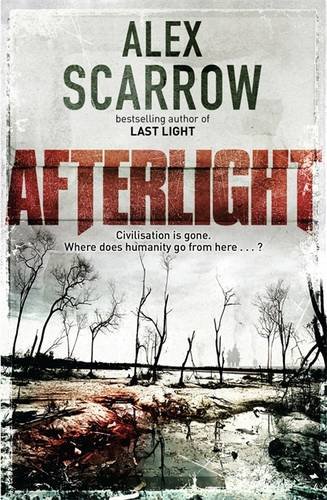
Scarrow recalls some of the main characters from the first novel – Jenny Sutherland and her two children – and introduces new people. There are flashbacks to the oil crisis which shows events from different viewpoints. Ultimately, this is a story of Them and Us which does at times seem stereotyped. Jenny now runs a community of 400+ living on an abandoned oil and gas rig in the North Sea off the Norfolk coast. There are rumblings of discontent with the strict rules, then a mysterious Belgian stranger arrives and a young girl goes missing. This story is interwoven with that of Adam Brooks, a former RAF officer, who was sent to secure London’s o2 Arena as a safe zone. Run by a civil servant and policed by a gang of teenagers with guns, it is far from safe. This segment of the story is the least satisfying. The link between the two places is Jenny’s children, Leona and Jacob, who set off for London. Jacob longs to see city lights, which he barely remembers, and Leona wants to return to the family home to die alone.
There are some big subjects tackled here. The functioning of the group dynamic in far-from-ordinary circumstances, the management of resources and long-term planning, and how to handle a crowd which hasn’t realized the food really is going to run out. These pressures challenge what it is that makes us human, in our preferences, tolerances, sacrifices and beliefs.
I confess to picking this up one weary weekend when I had re-read a chapter of a more worthy book. Afterlight was just the tonic. I read it in two days, curled up on the sofa on a snowy afternoon. I returned later to the worthy book, and enjoyed it too.

And here’s my review of the first book, LAST LIGHT #LASTLIGHT1

If you like this, try:-
‘Midnight in Europe’ by Alan Furst
‘The Returned’ by Jason Mott
‘The Farm’ by Tom Rob Smith

And if you’d like to tweet a link to THIS post, here’s my suggested tweet:
#BookReview AFTERLIGHT by Alex Scarrow via @SandraDanby http://wp.me/p5gEM4-2nG

#BookReview ‘Blood-Tied’ by Wendy Percival #genealogy #mystery

A mysterious beginning with an invalid, threatened by a stranger. Just who is this woman and what is her connection to Esme Quentin? BloodTied by Wendy Percival is the first of the Esme Quentin series of genealogical mysteries. Wendy PercivalEsme’s older sister Elizabeth is attacked and in hospital in a coma. Why was she in a town forty miles from home? Did she fall, or was she pushed? And who are the two people in photographs hidden in Elizabeth’s treasured locket? At the start of this story, Esme knows who her family is but once she starts to dig into Elizabeth’s odd accident/attack she uncovers a complicated family history which had me confused at times. This genealogical mystery involves a long-ago family argument, a derelict canal and a feisty elderly lady in a residential home. Esme is a bit like a dog with a bone, she won’t give up despite getting the jitters in the dark of the night.
Two things would have made my reading experience easier. Esme’s history – scar, widow, background as investigative journalist – was thinly drawn so it felt as if I was reading part two of a two-book series. The family twists and turns were such that I was often lost, perhaps because so much was told as Esme discovered paperwork, rather than seeing the action on the page by the characters concerned. That said, the menace builds nicely though I read to the end to find out what happened to Polly, the feisty lady.

Here’s my review of the next book in the Esme Quentin series, THE INDELIBLE STAIN.

If you like this, try:-
‘Pale as the Dead’ by Fiona Mountain
‘Blood Atonement’ by Dan Waddell
‘Hiding the Past’ by Nathan Dylan Goodwin

And if you’d like to tweet a link to THIS post, here’s my suggested tweet:
#BookReview BLOOD-TIED by Wendy Percival via @SandraDanby http://wp.me/p5gEM4-2bP

#BookReview ‘The Lie’ by @callytaylor #thriller

The title implies this story hinges on one big lie, but actually there are a number of lies told. The Lie by CL Taylor is an examination of the group dynamic between four girlfriends who go on holiday together, seeking catharsis and finding horror. CL Taylor Before, during and after the holiday there is friction and bitching but once in Nepal they find betrayal, lies, bullying, intimidation and violence. Then five years later, the past threatens again.
The story is told in parallel – now, as Jane, who works at an animal rescue centre, receives a mysterious letter; and five years earlier, when Jane [then called Emma] went to a yoga retreat in Nepal with her friends, Daisy, Al and Leanne. When Emma starts to be suspicious of the retreat and the people who run it, it is too late to escape.
Unfortunately I didn’t connect emotionally with Jane or her three friends. I found them unsympathetic at the beginning and inter-changeable, which meant it was longer before I ‘got’ the book. The age of the friends, and their partying, made this feel more like a chick-lit book than CL Taylor’s debut, The Accident. A yoga retreat in Nepal seemed an expensive place for the four of them to go, and when they arrive it is shabby and short of food: all things which set my alarm bells ringing.
It will make you never want to go on a yoga holiday.
CLICK HERE TO READ MORE ABOUT THIS BOOK AT AMAZON

Read my reviews of these other thrillers by CL Taylor:-
THE ACCIDENT
THE ESCAPE

If you like this, try:-
‘Stolen Child’ by Laura Elliot
‘Gone Girl’ by Gillian Flynn
‘The Fine Art of Invisible Detection’ by Robert Goddard

And if you’d like to tweet a link to THIS post, here’s my suggested tweet:
#BookReview THE LIE by @callytaylor http://wp.me/p5gEM4-24L via @SandraDanby

#BookReview ‘The Fate of the Tearling’ by Erika Johansen #fantasy #Tearling

The Fate of the Tearling is the third of the fantasy trilogy by Erika Johansen so do not read this without first reading the other two. It is unpredictable with storylines and time strands which come and go and inter-link, at times incorporating fantasy, sci-fi, time-travel and magic. Erika JohansenThis trilogy is a very different sort of fantasy tale and in that difference lies its awkwardness. There are gaps in the storyline, the timeline, and some thinly sketched characters turn out to be pivotal. Sometimes I had the feeling the author should have written one long book rather than two, or two rather than a trilogy – are authors encouraged to write trilogies with film rights in mind? The first book was the best, the second was intriguing but left me with many questions, the third has left me undecided. I struggled with the first half and would have appreciated a list of characters from the previous two books, but then in the second half the story came alive for me and I finished it one Saturday afternoon.
At the end of the second book, Queen Kelsea surrendered herself to the Red Queen in order to save her kingdom. The third book opens as Kelsea is imprisoned in a Mort dungeon, while her right-hand man, the Mace, has returned to Tearling to run the country. Kelsea is still having visions, now of a teenager called Katie who lives in the Town, the first settlement when the ship arrived at the island. Meanwhile in New London, the Mace is facing an attack by the Church. There are many new characters added here, some of which seem to go nowhere while others turn out to be key to the ending. Katie’s storyline connects with that of New Town now in the time of the Kelsea. Both struggle as William Tear’s vision of an ideal world, the society he wanted to create, fractures amidst suspicion, fear, jealousy, avarice and the rise of religion.
This trilogy will reward re-reading. I finished it with the feeling that I needed to read all three, back-to-back, to understand them better. But some things will remain unexplained.
CLICK HERE TO READ MORE ABOUT THIS BOOK

Click the title to read my reviews of the other Tearling books by Erika Johansen:-
BENEATH THE KEEP [#PREQUEL TEARLING]
THE QUEEN OF THE TEARLING [#1 TEARLING]
THE INVASION OF THE TEARLING [#2 TEARLING]

If you like this, try:-
‘The Bear and the Nightingale’ by Katherine Arden #1WinternightTrilogy
‘The Magician King’ by Lev Grossman #2TheMagiciansTrilogy
‘Gregor the Overlander’ by Suzanne Collins #1 Underland Chronicles

And if you’d like to tweet a link to THIS post, here’s my suggested tweet:
#BookReview THE FATE OF THE TEARLING by Erika Johansen via @SandraDanby http://wp.me/p5gEM4-2k6

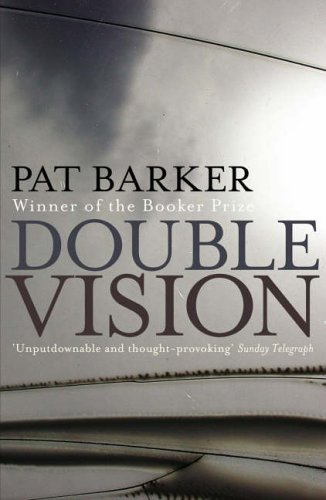
#BookReview ‘Double Vision’ by Pat Barker #war #contemporary

This is different from a lot of the war fiction by Pat Barker in that it deals with the aftermath of war rather than life during war. Double Vision is set in Barker’s NE England, with both countryside and city drawn clearly. Pat BarkerWar reporter Stephen Sharkey returns to the NE to stay in his brother’s isolated holiday cottage, he has resigned his job and plans to write a book. It seems idyllic, peaceful, but his dreams are full of war memories, particularly the body of a girl discovered in a Sarajevo ruin, raped and murdered. Kate Frobisher, widow of Sharkey’s war photographer colleague Ben, is a sculptor. She is struggling too, with being alone, and with injuries sustained in a car accident. Kate’s progress with the sculpture of a man, with the deadline looming, forms the spine of this novel.
This is not a love story in that there is no romance but it is a story about the love of family, of community, of responsibility. And it is also about the opposite of love: hate, as done to the girl in that Sarajevo ruin. The horrors that man does to man, in wartime and ordinary time, and whether forgiveness and love can redeem those horrors.
Barker populates her story with a tightly-drawn circle of characters, puts them into relationships, then mixes things up. Kate cannot physically cope with the work required to sculpt and so hires a man to do the heavy lifting, a man recommended by the local vicar Alec. Justine, the sister of the local vicar, is a part-time nanny for Sharkey’s nephew, she and Sharkey become lovers. Then there is Stephen’s brother Robert and his wife Beth, on the outside their life in a beautiful country house seems beautiful. But is it? And who is Peter, the gardener/labourer who becomes Kate’s assistant, who seems to lurk quietly in the background.
There is a tension underlying this story but it is not a thriller, there is not a murderer lurking in the shadows, but Barker makes you want to read on, to find out what happens to these people. I love Pat Barker’s writing, she has a minimal style which reminds me of Hemingway. She seems incapable of writing an unnecessary word. Here’s one small example: ‘His sleep was threadbare, like cheap curtains letting in too much light.’ I know just what she means.

For my reviews of other Pat Barker novels, click the title below:-
ANOTHER WORLD
BLOW YOUR HOUSE DOWN
LIFE CLASS #1LIFECLASS
TOBY’S ROOM #2LIFECLASS
NOONDAY #3LIFECLASS
UNION STREET
THE SILENCE OF THE GIRLS
THE WOMEN OF TROY

If you like this, try:-
‘Casting Off’ by Elizabeth Jane Howard
‘The Aftermath’ by Rhidian Brook
‘The Little Red Chairs’ by Edna O’Brien

And if you’d like to tweet a link to THIS post, here’s my suggested tweet:
#BookReview DOUBLE VISION by Pat Barker http://wp.me/p5gEM4-1VJ by @SandraDanby

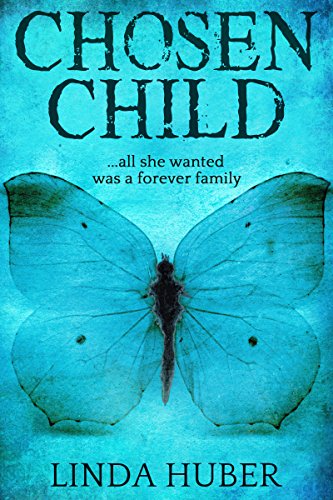
#BookReview ‘Chosen Child’ by Linda Huber @LindaHuber19 #suspense #thriller

This is a thriller which starts at a stroll and ends like a train. In Chosen Child by Linda Huber, the lives of two married women crash together. Linda HuberThe story starts starts with a childless couple who are part-way through the adoption procedure. Ella is desperate for a child, any child. Her husband Rick wants a baby boy. The first crack appears at an adoption party – where approved adoptive parents mingle with available children and their carers – when Ella makes an instant connection with a feisty six-year-old girl. Meanwhile Amanda’s pregnancy test shows the blue line but she doesn’t know if the father is her husband or her lover. I worked out the connection between the two women pretty quickly, but there is so much more to the story. The lies get more complicated, decisions are made then regretted, time cannot be turned back. And all the while six-year-old Soraya starts to wonder if Ella and Rick really are her forever family.
This is a thoughtful thriller about adoption, promises and the reasons for having children. This is Linda Huber’s fourth novel, now I want to read the others.

If you like this, try:-
‘Stolen Child’ by Laura Elliot
‘Pretty Baby’ by Mary Kubica
‘Before the Fall’ by Noah Hawley

And if you’d like to tweet a link to THIS post, here’s my suggested tweet:
#BookReview CHOSEN CHILD by Linda Huber @LindaHuber19 via @SandraDanby http://wp.me/p5gEM4-2bI

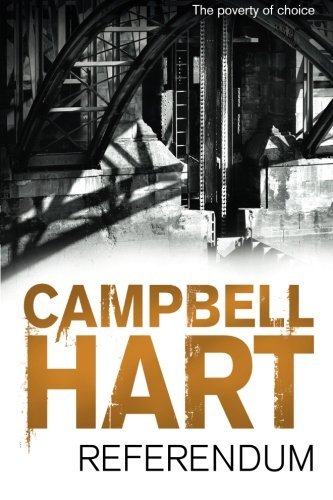
#BookReview ‘Referendum’ by Campbell Hart ‪@elharto #crime

Scottish politics and policing offer a fertile source for fictional plots, and former journalist Campbell Hart makes the most of it. Referendum is the third in his series about Glasgow Detective Inspector John Arbogast. Campbell HartThe heft of this series is developing nicely, as the characters and setting gain depth with each book and the plots are layered with threads from the previous books. Arbogast and his police colleagues are familiar now and Hart chooses his political setting, in the run-up to the Scottish Referendum for Independence, with care. Throw in a bent copper, an Irish thug, a BBC reporter, a family struggling with debt, and a nationalist determined to have his moment of propaganda, and there are many narrative threads to follow.
A man dies beneath a bridge, suicide or murder? But then a debt collector calls on his wife, which kickstarts a chain of events involving Arbogast. As well as chasing down a missing teenager, he takes a secret trip to Belfast to research the background of a fellow officer. What he finds there leads straight back to Glasgow and a deadly climax at the partly-constructed new police headquarters building, a sparkling transparent glass and steel building. Is Glasgow’s policing as transparent as its new HQ?

Read my reviews of other Arbogast novels by Campbell Hart:-
WILDERNESS #1ARBOGAST
THE NATIONALIST #2ARBOGAST

If you like this, try:-
‘Business as Usual’ by EL Lindley
‘The Silent Twin’ by Caroline Mitchell
‘Snow White Must Die’ by Nele Neuhaus

And if you’d like to tweet a link to THIS post, here’s my suggested tweet:
#BookReview REFERENDUM by Campbell Hart @elharto http://wp.me/p5gEM4-225 via @SandraDanby

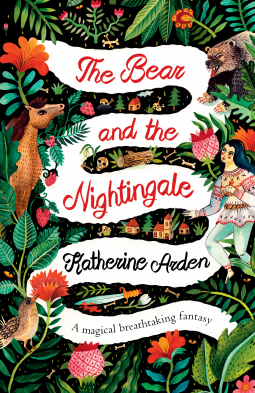
#BookReview ‘The Bear and the Nightingale’ by Katherine Arden @arden_katherine #folklore #fantasy

An entrancing, bewildering debut. The Bear and the Nightingale by Katherine Arden is heavily-influenced by Russian fairytales and steeped in winter. Snow, ice and frost are the everyday reality for the Vladimirovich family in medieval northern Russia where winter lasts many months of the year. It is a land of legend, folklore and fairytales where the people pay homage to the gods of the forest. Katherine ArdenThis is the story of Vasya, a wild child who sees the gods of the forests and the spirits of the house. Then one day a priest arrives from the city to challenge the superstitions and traditions of the country folk. It is a story of winter/summer, girl/boy, countryside/city but most of all, old magic versus the church. Is Vasya a free spirit, or is she a witch? Is her behaviour refreshing and engaging, or wicked? She alone can talk to the horses which teach her to ride like a Steppe boy, exhilarating and dashing but inappropriate for a young girl.
The only other person who can see the demons is Anna, Vasya’s stepmother, but whereas Vasya understands the demons, Anna fears them. She begs the priest, Father Konstantin, for prayers to banish them. But Konstantin becomes distracted as God starts speaking to him directly. Various attempts are made to tame Vasya. Her father wonders if a man will ever want to marry a girl who spends her time in the woods rather than sewing and cooking, her stepmother plots to get rid of her, her brothers protect her. Then a winter arrives which threatens to be the worst of all, many will die, and Pyotr Vladimirovich’s family will never be the same again.
In this book you will scarcely know where the fairy tales end and real life begins, indeed the book begins with the telling of a fairy tale. Arden has packed her novel with sumptuous description, colourful characters and layers on layers of myth, so many names and stories that you will struggle to keep track of them. It is a moody read, atmospheric, with beautiful description. But it is not a quick read, so relax into it and immerse yourself in Vasya’s life. You will be drawn into this unfamiliar world so you feel the hardships of the family, their fears, their dreams and dilemmas.
The Bear and the Nightingale is not an easy read, but it is rewarding. The Russian diminutives added to my confusion in the first few chapters when so many characters are introduced. Also the line between fairy tale and the story of Pyotr Vladimirovich’s family is often blurred. But stick with it, this book rewards perseverance.

Read my reviews of the other books in this trilogy:-
THE GIRL IN THE TOWER #2WINTERNIGHT
THE WINTER OF THE WITCH #3WINTERNIGHT

And also by Katherine Arden:
THE WARM HANDS OF GHOSTS

If you like this, try:-
‘The Queen of the Tearling’ by Erika Johansen #1TEARLING
‘The Seventh Miss Hatfield’ by Anna Caltabiano
‘The Magicians’ by Lev Grossman #1THEMAGICIANS

And if you’d like to tweet a link to THIS post, here’s my suggested tweet:
#BookReview THE BEAR AND THE NIGHTINGALE by Katherine Arden @arden_katherine via @SandraDanby http://wp.me/p5gEM4-2j9

#BookReview ‘Little Deaths’ by Emma Flint #mystery #suspense

This is another of those novels which is an uncomfortable read. What kept me reading? The characters. I wanted to know what really happened. But of course this is fiction and characters don’t always tell the truth, only their version of the truth. Little Deaths by Emma Flint is an accomplished debut, as I read I could tell she had got under the skin of her characters. Emma FlintThere is an intriguing set-up, we first hear Ruth’s voice. She is in prison. We don’t know why, but she compares her life now with her life before. When she was a single mum with two small children. As I read, I felt a shiver down my back: where are her children now? Starting the story with Ruth in prison surely gives away the ending, doesn’t it? Not really. This is a nuanced tale of trial by jury in 1960s America [though until the Sixties were mentioned, it seemed to be set in a curiously non-time specific period] where prejudices about women could wrongly influence outcomes, where social pre-conceptions coloured witness statements, and hearsay evidence seemed admissible if the accused was disliked. It is a tale of presumed guilt, and it should make all readers stop and think.
Ruth, separated from her husband Frank, works as a cocktail waitress to support her children. It is a hard life when Frank’s support cheques bounce and the children don’t want to eat the only food she has to feed them. Ruth puts on a persona when she leaves the house, it is her way of coping. She is a proud woman, who doesn’t want to admit her struggles or to ask for help. She is attractive and uses make-up and tight clothes to attract boyfriends who give her cash, cash which helps her to survive. And then one morning when she goes to the children’s bedroom, Cindy and Frank Junior are not there. The police questioning starts, and the make-up, short skirts and lack of friendly neighbours come back to haunt her.
We are told Ruth’s story, first by Ruth herself, and also by Pete Wonicke, a young journalist who reports on the case. As the months go on and no-one is arrested we see Ruth’s anger and helplessness in the face of police who wait to convict her rather than investigate other clues. Meanwhile, Pete becomes obsessed with Ruth and with proving her innocence.
This novel stayed with me for days afterwards. It made me question how quick we are to judge others by what we see on the outside, how easy it is to allow our prejudices to dominate our views on life. Sometimes the guilty-looking person will be guilty. But sometimes they won’t.
You will have to read right to the end to find out if Ruth is guilty or not guilty.
The novel was inspired by a real life case, read more about this in The Alice Crimmins Case by Kenneth Gross.

If you this, try:-
‘Stolen Child’ by Laura Elliot
‘The Girls’ by Lisa Jewell
‘Disclaimer’ by Renee Knight

And if you’d like to tweet a link to THIS post, here’s my suggested tweet:
#BookReview LITTLE DEATHS by Emma Flint http://wp.me/p5gEM4-2iW via @SandraDanby 

#BookReview ‘The Lost Ancestor’ by Nathan Dylan Goodwin #familyhistory #crime #genealogy

When forensic genealogist Morton Farrier is asked by a dying client to find out what happened to his great aunt, who disappeared in 1911, Morton doesn’t expect to find his own life threatened. The Lost Ancestor by Nathan Dylan Goodwin is a moreish combination of mystery, history about the pre-Great War period, and family history research. Nathan Dylan GoodwinIf you like Downton Abbey, you will identify with the 1911 sections about Morton’s great aunt Mary Mercer. In an effort to escape her rough, unemployed father and unpleasant mother, Mary takes a job as third housemaid at Blackfriars, a great house at Winchelsea in East Sussex. Little does she realize the love and heartache she finds there will shape her life. A dreamer who imagines she is the lady of the house, Mary has a rude awakening on her first day at work. She had no idea what the job of a chambermaid entailed. But the presence of her cousin Edward makes life easier to bear. When her parents fall ill, Mary gives them all her wages and so loses her chances of escaping to a better life.
Goodwin knows the Winchelsea and Rye area so well that I immediately felt I was there. His descriptions of Rye, where Morton lives and work, feel real: the streets, the old houses, and the Mermaid Inn are described with a light pen.
The story is told in two strands. Morton searches online and at local archives, and visits the real Blackfriars house, now open to the public. This story alternates with Mary’s in 1911. Goodwin weaves the two tales together so as we get nearer to the truth of Mary’s disappearance and why her mentions in all official records stop – did she die, was she killed, did she change her name and run away to Scotland, or emigrate – the threats on Morton’s life, and that of his partner Juliette, get serious. The mystery in both strands build as the family connections between past and present are revealed. I did not forsee the ingenious ending.
The Morton Farrier books are excellent. Although the cover designs are a little old-fashioned, don’t let this put you off reading them.

Read my reviews of the next books in the Morton Farrier series:-
HIDING THE PAST #1MORTONFARRIER
THE ORANGE LILIES #3MORTONFARRIER
THE AMERICA GROUND #4MORTONFARRIER

If you like this, try:-
Fred’s Funeral’ by Sandy Day
‘Deadly Descent’ by Charlotte Hinger
‘The Marriage Certificate’ by Stephen Molyneux

And if you’d like to tweet a link to THIS post, here’s my suggested tweet:
#BookReview THE LOST ANCESTOR by Nathan Dylan Goodwin http://wp.me/p5gEM4-2iM via @SandraDanby