Tag Archives: book review

#BookReview ‘Our Friends in Berlin’ by Anthony Quinn #WW2

Our Friends in Berlin by Anthony Quinn tells a story of London in World War Two seldom told. It is a spy novel but not a thriller. It focuses on the individuals concerned and has a deceptive pace which means the threats, when they come, are more startling. Jack Hoste is not who he seems to be. He is not a tax inspector; he is not looking for a wife. He is a special agent who tracks down Nazi spies. And at night he is an ARP warden. Anthony Quinn The juxtaposition of Hoste’s life of secrets is set nicely against that of Amy Strallen who works at the Quartermaine Marriage Bureau. Ordinary life does go on in London during the Luftwaffe bombing and Amy must match clients together, a matter of instinct rather than calculation. In order to be matched with the right person, clients are asked to tell the truth about what they are seeking, truths which may have been disguised or hidden until now. Client requests include ‘a lady with capital preferred’ and ‘not American’. Then one day she meets a new client who seems oddly reluctant to explain what he is looking for. The client is Jack Hoste and he doesn’t want a wife, he is searching for Marita Pardoe, a suspected Nazi sympathiser and friend of Amy in the Thirties. What unfolds is a story of spying, gentle romance, betrayal, fanaticism and the life of living in a bombed city.
Jack and Amy seem to run on parallel tracks, veering towards and then away from each other, both romantically unsure, both allow the real world to get in the way. And get in the way it does, in the shape of Marita. Quinn is excellent at building characters, he makes you care for them and that’s what keeps you reading. In a time of war, decisions are often made recklessly but Jack and Amy draw back from doing this. Both are people of honour, making the secrets they must keep and the lies they must tell all the more pertinent. The nature of truth is a theme wriggling its way through every page.
Anthony Quinn is a favourite author of mine, his novels are each quite different and I will read everything he writes. I read this one quickly.

Read my reviews of these other novels also by Anthony Quinn:-
CURTAIN CALL
FREYA
HALF OF THE HUMAN RACE
MOLLY & THE CAPTAIN
THE MILLIONAIRE WALTZ
THE RESCUE MAN
THE STREETS

If you like this, try:-
‘Mrs Sinclair’s Suitcase’ by Louise Walters
‘The Paying Guests’ by Sarah Waters
‘The Heat of the Day’ by Elizabeth Bowen

And if you’d like to tweet a link to THIS post, here’s my suggested tweet:
#BookReview OUR FRIENDS IN BERLIN by Anthony Quinn https://wp.me/p5gEM4-3pl via @SandraDanby

#BookReview ‘Tulip Fever’ by Deborah Moggach #historical

Amsterdam in the 17th century was a time when commerce was king and the sale of tulip bulbs made some people very rich and others bankrupt. This is the setting for Tulip Fever by Deborah Moggach, when Rembrandt and Vermeer painted some of the most-recognised art of our time. Sophia’s husband Cornelis is rich, thanks to tulips, and he celebrates his wealth by commissioning a joint portrait to be painted. It is a decision which changes their lives. Deborah MoggachThe deft switching of viewpoints – and each chapter is a single voice, Sophia, Cornelis, Jan [the painter], Maria [their servant] and Willem [Maria’s lover] – allows for a new take on each situation. The plot moves quickly, things are hinted at and passed over but relevant later. It is the sort of novel which seems simple but has hidden depths. The language can be so sensual. “Jacob van Loos is not painting the old man’s mouth. He is painting Sophia’s lips. He mixes pink on his palette – ochre, grey and carmine – and strokes the paint lovingly on the canvas. She is gazing at him. For a moment, when the old man was talking, her lips curved into a smile – a smile of complicity. He paints the ghost of this, though it is now gone.”
The reader must remain vigilant to catch everything. After four chapters I realised the significance of the quotation at the head of each chapter, and went back to the beginning again. They shed fresh light on the story being told. For example, “‘Trust not to appearances.’ Jacob Cats, Moral Emblems, 1632.” And, another chapter heading, by the same author, ‘Stolen waters are sweet, and bread eaten in secret places is pleasant.’
In places, Moggach’s description echoes Dutch paintings of the period: “Sophia stands at the window. She is reading the letter. Through the glass, sunlight streams on to her face. Her hair is pulled back from her brow. Tiny pearls nestle in her headband; they catch the light, winking at the severity of her coiffure. She wears a black bodice, shot with lines of velvet and silver. Her dress is violet silk; its pewtery sheen catches the light.” Certainly an understanding of art of the period will help a reader get more from the text.

Read my review of these other novels by Deborah Moggach:-
SOMETHING TO HIDE
THE BLACK DRESS
THE CARER

Read the first paragraph of THESE FOOLISH THINGS [now THE BEST EXOTIC MARIGOLD HOTEL] here.

If you like this, try:-
‘The Miniaturist’ by Jessie Burton
‘An Appetite for Violets’ by Martine Bailey
‘Girl in Hyacinth Blue’ by Susan Vreeland

And if you’d like to tweet a link to THIS post, here’s my suggested tweet:
#BookReview TULIP FEVER by Deborah Moggach via @SandraDanby http://wp.me/p5gEM4-2sv

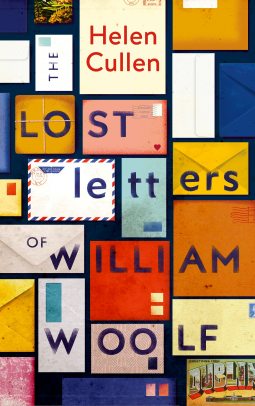
#BookReview ‘The Lost Letters of William Woolf’ by Helen Cullen @wordsofhelen #romance

I admit to loving the premise of this book when I first heard about it. A Dead Letter Depot where researchers reunite lost letters with senders and recipients. The Lost Letters of William Woolf by Helen Cullen left me wishing for more. It promised to be a novel about letters and mystery and turned into one focussed on a struggling marriage, which was not what I expected. Helen CullenWilliam’s marriage to Clare has gone stale and to avoid confronting what must change, he becomes obsessed by his work at the Dead Letter Depot and in particular the letters from someone called Winter addressed to ‘My Great Love’. In his vulnerable state, William begins to imagine that he may be that person and sets out to find her. Interspersed with this task we see William correctly fulfil his role, taking a lost fossil to the correct museum for example.
I switched between liking the character of William with being frustrated at his unrealistic romanticism, and could understand Clare’s frustrations. Ditto, she seemed impatient and too inclined to throw stones in a glasshouse. Clearly they were not communicating, ironic in a book about writing letters, and neither completely held my sympathy.
So what kept me reading? The lost letters, the mystery of Winter’s identity and to whom she was writing. And there lies one disappointment: the solution to Winter’s was such an anti-climax I had to flick back through the book to find an earlier reference in order to appreciate the revelation. I had two other disappointments. As much as I loved the concept of the Dead Letter Depot, a small voice in my head kept saying: it isn’t real, it wouldn’t get funding, it should be one man at a desk not a department with enough staff or budget for a Fancy Dress Fundraiser, and shouldn’t the lost letters be old not recently posted. I was also unclear of the timeline of the story. William and Clare feel like a 21st century couple living in the 1980s, pre-mobiles, pre-tablets. Something jarred and it would not go away.
This novel could have been so much more if there was less about the fragile relationship between William and Clare and more about the Dead Letter Depot, William’s fellow workers and the cases they worked on. But it is nicely written and if you are looking for an easy-to-read romance for your holiday, you will probably love it.

If you like this, try:-
‘Butterfly Barn’ by Karen Power
‘Forever Fredless’ by Suzy Turner
‘Girl in Trouble’ by Rhoda Baxter

And if you’d like to tweet a link to THIS post, here’s my suggested tweet:
#BookReview THE LOST LETTERS OF WILLIAM WOOLF by Helen Cullen @wordsofhelen https://wp.me/p5gEM4-3oH via @SandraDanby

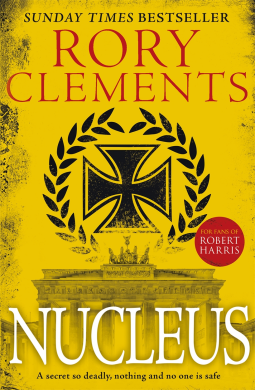
#BookReview ‘Nucleus’ by Rory Clements #thriller #WW2

Summer 1939. Germany has invaded Czechoslovakia. Jews desperate to flee Nazi persecution queue outside embassies in Berlin in the hope of getting a visa, while sending their children on Kindertransport to Britain. In the UK, the IRA’s bombing campaign continues. Scientists in Europe and America are researching atomic fission, and also at the Cavendish Laboratory in Cambridge. It is a vulnerable, combustible time. This is the setting for Nucleus by Rory Clements, second in his trilogy of history professor and amateur spy, Tom Wilde. Rory ClementsIn the first book in the series, Corpus, Tom Wilde was more amateur detective than spy. In Nucleus, the stakes are higher, war is imminent, spies are everywhere and so are traitors. The problem is, they look like friends. Asked by none other than the US president Franklin D Roosevelt to be a ‘clear and unbiased voice’ for him on research at the Cavendish, Wilde is drawn into a world of American millionaires, a Hollywood actress, champagne, tennis parties and horseracing. And then one of the Cavendish physicists, a withdrawn, complicated genius due to move to the USA to work with Oppenheimer, is found drowned in the River Cam. Was he killed because he had unlocked the answer to converting atomic fission into a bomb capable of destroying a city?
Meanwhile, Wilde’s girlfriend and neighbour, Lydia Morris, goes to Berlin on a mercy mission to search for the disappeared eight-year old son of Jewish scientist, Eva Haas, now in England. Could Albert have been kidnapped by the Gestapo to put pressure on his mother? And who is the mysterious German, Baumgarten, who helps Eva and her uncle, physicist Arnold Lindberg, escape to Austria. Tom Wilde, a specialist on Francis Walsingham, spymaster to Queen Elizabeth I, is an interesting protagonist; at times reckless but capable of analysis and leaps of faith.
Corpus was a slow read, at times lightly plotted, but Nucleus an emotional rollercoaster that continues until the last page. Clements avidly recreates the atmosphere of Britain on the brink of war; a summer where parties abound, people approach life with a reckless abandonment, where fear and paranoia combine with a ‘let’s get on with it’ attitude. I enjoyed Corpus but Nucleus is better. The plot twists and turns with all disparate elements connected together by the end. This is a compelling read which I devoured on a plane, sitting up to read it while others slept around me.

Click the title to read my reviews of the other books in the Tom Wilde series:-
CORPUS #1TOMWILDE
NEMESIS #3TOMWILDE
HITLER’S SECRET #4TOMWILDE

A PRINCE AND A SPY #5TOMWILDE
THE MAN IN THE BUNKER #6TOMWILDE
THE ENGLISH FUHRER #7TOMWILDE
A COLD WIND FROM MOSCOW #8TOMWILDE

And from the Sebastian Wolff series:-
MUNICH WOLF #1SEBASTIANWOLFF
EVIL IN HIGH PLACES #2SEBASTIANWOLFF
INVITATION FROM A DICTATOR #3SEBASTIANWOLFF

If you like this, try:-
‘The Farm’ by Tom Rob Smith
‘Last Light’ by Alex Scarrow #1LASTLIGHT
‘Dominion’ by CJ Sansom

And if you’d like to tweet a link to THIS post, here’s my suggested tweet:
#BookReview NUCLEUS by Rory Clements https://wp.me/p5gEM4-3iZ via @SandraDanby

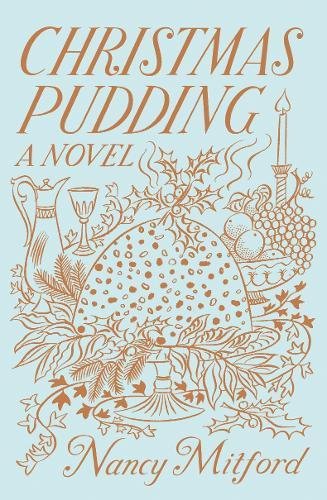
#BookReview ‘Christmas Pudding’ by Nancy Mitford #satire #historical

Christmas Pudding is another between-the-wars comedy of manners by Nancy Mitford. With scathing observation at times as sharp as Jane Austen, Mitford introduces a new character, Lord Lewes: ‘He was tall, very correctly dressed in a style indicating the presence of money rather than of imagination, and had a mournful, thin, eighteenth-century face.’ This is her second novel and features some of the personalities featured in her first, Highland Fling, though familiarity with the first is not essential for enjoyment. Nancy MitfordThe action takes place over one month around Christmas, the pudding of the title refers to Mitford’s mixture of personalities in two house parties in the Cotswold countryside. Paul Fotheringay, whose debut literary novel has been heralded as a comic farce, is desperate to escape London and find inspiration for his next book. Wanting to be taken seriously as an author, he settles on a biography of Victorian poet, Lady Maria Bobbin. When he is refused access to the diaries by the current Lady Bobbin he conjures a plot with her teenage son Bobby to masquerade as Bobby’s tutor over the Christmas holidays and so gain secret access to the diaries. And so Paul becomes part of a love triangle at the Bobbin’s home Compton Bobbin, involving Bobby’s sister Philadelphia and the honest, boring but reliable Lord Michael Lewes. The second house party, at the rather kitsch over-furnished Mulberrie Farm, is held by former prostitute and now society lady Amabelle Fortescue. Mitford’s characters move in the same overlapping social circles so it is inevitable that Amabelle and her guests Sally and Walter Monteath will socialize with some of the guests at Compton Bobbin.
Love is the central theme, true love, idealised love, upper-class arranged marriage and marriage for pragmatic facing-old-age reasons. As has always occurred in aristocratic circles, marriage is approached with a healthy dose of pragmatism making romantic love seem frothier and more idealised than ever.
This is light-hearted fiction and limited in its observation of characters; there is no upstairs/downstairs contrast here, which would enrich the social commentary. But the old and young are perfectly capable of condemning themselves out of their own mouths. Reading this novel will not change your life, but it will amuse you and the ending is not the easy way-out you may expect. My one criticism is that there are slightly too many peripheral characters with their own strings of plot.

Read my reviews of these other novels by Nancy Mitford:-
HIGHLAND FLING
LOVE IN A COLD CLIMATE
PIGEON PIE
THE BLESSING
THE PURSUIT OF LOVE
WIGS ON THE GREEN

Read the first paragraph of THE PURSUIT OF LOVE here.

If you like this, try these:-
‘Sweet Caress’ by William Boyd
‘A Death in the Dales’ by Frances Brody
‘Mothering Sunday’ by Graham Swift

And if you’d like to tweet a link to THIS post, here’s my suggested tweet:
#BookReview CHRISTMAS PUDDING by Nancy Mitford http://wp.me/p5gEM4-2UO via @SandraDanby

My Porridge & Cream read: Jackie Baldwin

Today I’m delighted to welcome Scottish crime writer Jackie Baldwin. Her ‘Porridge & Cream’ read is Little Women by Louisa May Alcott.

“The book that has never failed to delight and soothe me over the years is Little Women by Louisa May Alcott. I must have been in my early teens when I first read it and so embarking on a turbulent adolescence of my own alongside those of the March girls. At a girls school and with no brothers, the world of boys was something of a mystery to me too so I loved the character of Laurie and the subtle shifts and turns in his relationships with all the girls over the scope of the novels. Jackie Baldwin“I have had many copies of the book over the years but this one [above] is my favourite as it contains all three books in the series. Part of its enduring appeal for me is the characters who are all just flawed enough to make them endearingly frail and human. My favourite character is Jo who is unruly and tempestuous and rails against the confines of poverty and the expectation that women should conform to the domestic role expected of them rather than pursue any ambitions of their own. There is also a small broken piece of my heart that will forever be in thrall to Beth who shows just how much a small life can matter and influence those around it.

“I have read it a few times over the years and the types of things that might encourage me to pick it up are if life feels a bit too overheated and I want to escape for a while into another gentler time where courage and strength of character always triumph over adversity.

“If I had to sell Little Women in an elevator pitch it would run something along these lines. ‘The story of a family who are in poverty but not impoverished and rise to meet adversity with an outstretched hand and a warm smile.’

“Thanks for reminding me how much I love this book, Sandra! In fact, now that it’s off the shelf, I think it might be time to meet up with some old friends again…”

Jackie Baldwin’s Bio
Jackie Baldwin is a Scottish crime writer. Her debut crime novel Dead Man’s Prayer was published by Killer Reads, Harper Collins on 2ndSeptember 2016. The second in the series, Perfect Dead was published on 15thJune 2018. For most of her working life, she has been a solicitor specialising in Family and Criminal Law. However, she now practices in Dumfries as a hypnotherapist which is where her novels are set. Married, with two grown up children, she has filled her empty nest with Golden Retrievers. She can often be found in a forest walking the dogs, covered in mud and with twigs in her hair.

Jackie Baldwin’s links
Facebook
Twitter

Jackie Baldwin’s latest book
Each murder brings him one step closer to the perfect death. Ex-priest, DI Farrell is called on to investigate a gruesome death in rural Scotland. All evidence points to suicide, except for one loose end: every light in the cottage was switched off. Why would he kill himself in the dark?

The question sparks a murder investigation that leads to the mysterious Ivy House, home of ‘The Collective,’ a sinister commune of artists who will do anything to keep their twisted secrets hidden.

And when the remains of a young girl are uncovered on a barren stretch of coastline, Farrell realises that there is something rotten in this tight-knit community. Now he must track down a ruthless killer before another person dies, this time much closer to home…

‘Perfect Dead’ by Jackie Baldwin, #2 DI Frank Farrell [UK: Killer Reads]


What is a ‘Porridge & Cream’ book? It’s the book you turn to when you need a familiar read, when you are tired, ill, or out-of-sorts, where you know the story and love it. Where reading it is like slipping on your oldest, scruffiest slippers after walking for miles. Where does the name ‘Porridge & Cream’ come from? Cat Deerborn is a character in Susan Hill’s ‘Simon Serrailler’ detective series. Cat is a hard-worked GP, a widow with two children and she struggles from day-to-day. One night, after a particularly difficult day, she needs something familiar to read. From her bookshelf she selects ‘Love in A Cold Climate’ by Nancy Mitford. Do you have a favourite read which you return to again and again? If so, please send me a message.
Jackie Baldwin

‘Little Women’ by Louisa May Alcott [UK: Penguin English Library]

Discover the ‘Porridge & Cream’ books of these authors:-
Lisa Devaney chooses Do Androids Dream of Electric Sheep by Philip K Dick

Tracey Sinclair chooses Dangerous Liaisons by Choderlos de Laclos 

Helen J Christmas chooses Camellia by Lesley Pearse

And if you’d like to tweet a link to THIS post, here’s my suggested tweet:
Why does Scottish crime writer @JackieMBaldwin1 re-read LITTLE WOMEN by Louisa May Alcott? #books https://wp.me/p5gEM4-3v1 via @SandraDanby

#BookReview ‘Whistle in the Dark’ by Emma Healey #mystery #suspense

Whistle in the Dark by Emma Healey begins with an ending; a sixteen-year old girl, lost in the Peak District, has been found and is in hospital with her parents. Healey tells the story of the aftermath as Jen, Lana’s mother, tries desperately to unravel the truth of what happened to her daughter. In the face of Lana’s reluctance to speak, Jen’s desperation evolves into obsession and the story circles into myth, obfuscation and misunderstanding. For the reader, there is a lot to unravel. Emma HealeyTold entirely from Jen’s POV, by halfway through I was beginning to question Jen’s state of mind and whether she was an unreliable narrator. There is a lot of smoke and shadows in the telling of this story, interwoven with the crystals of Jen’s friend Grace, the fibs of Lana’s schoolfriend Bethany, the pragmatic questioning and Instagram comments by Jen’s mother Lily, and Jen’s fertile imagination. There were times when it felt a little like being whizzed around in a washing machine. But through it all shines Healey’s ability to draw pictures with words, “The heavy summer foliage that lined the motorway seemed to have taken on its own light, as if the sun had splintered into a thousand pieces and hung, glowing, on the trees. The whites of things, of dresses and china cups and tablecloths, was dazzling.”
I admit there were times in the final third when I just wanted the story to get on with it, to find out where Lana had been for those four missing days. I became as mystified as Jen and could understand her distraction, her inability to judge the truth of what was happening around her as Healey loads on the mysteries. Did Lana return home with an invisible friend? Or a ghost? Jen reads speculation online that something mystical had happened to Lana; she was abducted by aliens, had taken the stairs down to Hell, or stepped into a time circle. This was coupled with my feeling of indulgence on the part of the author, that some short anecdotes were included because they were interesting rather than essential. And then comes a wonderful snippy sentence that brings you back to the heart of everything; for example, when Jen is driving north, “Well, if she cried enough, Jen thought, at least she might not need to wee again for another forty miles.”
An interesting read. A study of the parental difficulties caring for a troubled teenager, where the line stands between caring and invasion of privacy, of how and when to trust a troubled adolescent and when to step in. A veritable minefield. Lana has a history of cutting and an overdose attempt before the disappearance; post-disappearance, Jen alternates between anger and frustration, and treading on eggshells. The online stalking, the shadowing on the walk to school, the listening at the bedroom door, all reinforce the lesson that a snooper often finds something unexpected, something worse, something that should remain private until revealed. A reminder that often the most simple explanation is true.
An interesting read and competent second novel, but not a compelling page-turner like Healey’s wonderful debut Elizabeth is Missing. 

And read my review of ELIZABETH IS MISSING, also by Emma Healey.

If you like this, try:-
‘Reservoir 13’ by Jon McGregor
‘Himself’ by Jess Kidd
‘Doppler’ by Erlend Loe

And if you’d like to tweet a link to THIS post, here’s my suggested tweet:
#BookReview WHISTLE IN THE DARK by Emma Healey https://wp.me/p5gEM4-3hx via @SandraDanby

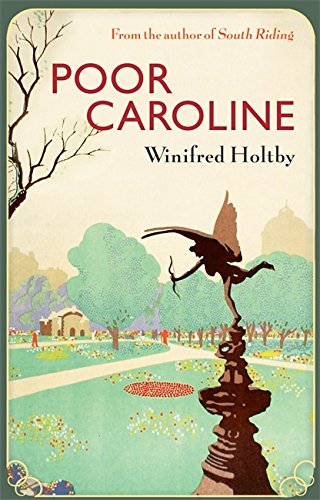
#BookReview ‘Poor Caroline’ by Winifred Holtby #historical

I can’t help but think this novel would be helped by a better title. Poor Caroline is such a negative sounding title for this, the fourth novel by Yorkshire author Winifred Holtby. From the first page, it is clear this is a fond but sharp satire of the inter-war years showing how the expectations of people can on the surface appear aligned but in reality are self-serving. Winifred HoltbyCaroline Denton-Smyth, honorary secretary of the Christian Cinema Company, works hard in the belief that her company is doing good. But the people on the board of directors each have their own reason for being involved with the company, reasons that are not admitted and which diverge hugely from Caroline’s intentions. One hopes to leverage connections with the chairman to gain entrance for his son to Eton. Another wishes to sell his new type of film. Caroline has so many ideas but little success. At the age of 72 she has no money and is dependent on loans from long-suffering relatives. But she is always hopeful. This is the story of Caroline, her fellow directors, and the Christian Cinema Company. Holtby tells the story of each person in turn so the full picture, and the extent of Caroline’s folly, becomes evident. You can’t help but feel simultaneously sorry for her and exasperated with her inability to see the truth.
It is a while before we meet the eponymous heroine. First we learn of her death, as some distant relatives return from her funeral. In her will, Caroline left bequests of money she didn’t have. “Oh, you can’t alter people like Caroline. She always thought she knew better than anyone. She was always going to do something extraordinary.”
Two scenes in particular stayed with me. The description of the odious Clifton Roderick Johnson’s screenwriting class is a classic. He spits instructions to his paltry four students. ‘They did not know, and indeed Mr Johnson hardly knew, that their lecturer who spoke so confidently of technique, cuts, drama and royalties had himself been able to sell for performance only one scenario and a set of captions.’ And the storm at film inventor Hugh Macafee’s derelict warehouse when he continues to work despite the efforts of two fellow directors to evacuate him before a wall collapses.
This novel requires patience, to allow the author time to draw the full scenario so the true manipulations, fraud, dissembling and love, can unfold.

Click the title to read my review of ANDERBY WOLD, also by Winifred Holtby.

If you like this, try:-
‘Miss Pettigrew Lives for a Day’ by Winifred Watson
‘Curtain Call’ by Anthony Quinn
‘Highland Fling’ by Nancy Mitford

And if you’d like to tweet a link to THIS post, here’s my suggested tweet:
#BookReview POOR CAROLINE by Winifred Holtby https://wp.me/p5gEM4-3nn via @SandraDanby

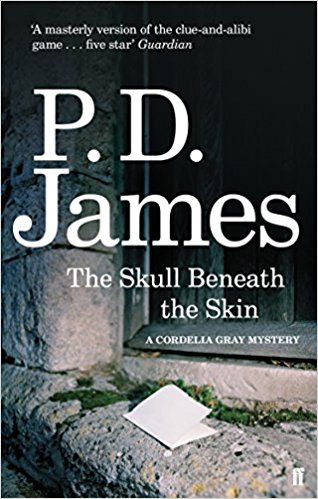
#BookReview ‘The Skull Beneath the Skin’ by PD James #crime

A classic closed room whodunit, The Skull Beneath the Skin is the second of only two Cordelia Gray private detective mysteries by PD James. I wonder why she didn’t write more? PD JamesGray’s fledgling detective agency is relying on finding missing cats when Sir George Ralston arrives unannounced to request Gray ensure the safety of his actress wife, Clarissa Lisle, at her next performance. Lisle has been receiving threatening letters and worries about freezing on stage. Sir George seems unconvinced of Clarissa’s danger. ‘The job I’m offering is a mixture of functions. You’d be part bodyguard, part private secretary, part investigator and part – well, nursemaid.’ Which sounds unpromising but the job pays well. So Cordelia leaves for Courcy Island, location of an amateur private performance of The Duchess of Malfi in which Lisle will play the starring role. As with all James’ novels, there is a delicious laying of pragmatic fact about those in attendance mixed with literary references and poetry.
Of course, Clarissa Lisle is murdered. The police arrive and Cordelia finds herself one of the suspects. There is the usual ragbag of potential murderers. The cuckolded husband; the dying former lover; the pampered stepson; the unsuccessful sister; the silent and sullen dresser; the efficient butler and his wife; the boatman and handyman; and the host of the event, arts patron and novelist Ambrose Gorringe. The setting is beautiful with hidden horror. Courcy Island, set off the Dorset coast, was the scene of nastiness and death during World War Two. Gorringe takes great delight in showing his newly-arrived guests around the island and displaying its dark past.
James writes such dense yet enlightening paragraphs that kindle curiosity. For example, at the end of chapter four, ‘He was discovering that even hatred died a little at the end. But it still lasted longer than desire, longer even than love. Walking slowly in the sunshine and thinking of the weekend ahead, he smiled at the realization that what was most alive in him now was the capacity for mischief.’  James, as always early in her novels, sets the scene with much hinting, veiling of the truth and making her own mischief.

Here’s my review of the first Cordelia Gray mystery:-
AN UNSUITABLE JOB FOR A WOMAN #1CORDELIAGRAY

Read my reviews of the Adam Dalgliesh mysteries:-
COVER HER FACE #1ADAMDALGLIESH
A MIND TO MURDER #2ADAMDALGLIESH
UNNATURAL CAUSES #3ADAMDALGLIESH
SHROUD FOR A NIGHTINGALE #4ADAMDALGLIESH
THE BLACK TOWER #5ADAMDALGLIESH
DEATH OF AN EXPERT WITNESS #6ADAMDALGLIESH
A TASTE FOR DEATH #7ADAMDALGLIESH
DEVICES AND DESIRES #8ADAMDALGLIESH
ORIGINAL SIN #9ADAMDALGLIESH … read the first paragraph HERE
A CERTAIN JUSTICE #10ADAMDALGLIESH
DEATH IN HOLY ORDERS #11ADAMDALGLIESH
THE MURDER ROOM #12ADAMDALGLIESH … read the first paragraph HERE
THE LIGHTHOUSE #13ADAMDALGLIESH
THE PRIVATE PATIENT #14ADAMDALGLIESH

And two other books by PD James:-
INNOCENT BLOOD

If you like this, try:-
‘The Doll Funeral’ by Kate Hamer
‘Due Diligence’ by DJ Harrison #1JENNYPARKER
‘Good Me Bad Me’ by Ali Land

And if you’d like to tweet a link to THIS post, here’s my suggested tweet:
#BookReview THE SKULL BENEATH THE SKIN by PD James https://wp.me/p5gEM4-3n8 via @SandraDanby

#BookReview ‘Corpus’ by Rory Clements #thriller #WW2

It is 1936. The Spanish civil war is in full swing. A constitutional crisis looms as Edward VIII considers abdicating in order to marry the woman he loves. Corpus by Rory Clements starts in Berlin as a young Englishwoman slips away from a friend to deliver a secret package to an unnamed man. Soon after, Nancy Hereward is dead. Rory ClementsIt is Nancy’s death which makes Cambridge history professor Tom Wilde ask questions, awkward questions which lead him to uncover conspiracy, lies, and pre-war positioning by Stalin and Hitler.
Wilde makes an interesting amateur detective. For one, he is American with a different reading of human nature; he sits on the fence and observes. For another, he is a professor of history; he analyses and looks for proof rather than opinion. And third, he has a cool motorcycle that he uses to cross the fens and investigate isolated country houses. The story starts rather slowly as Clements fleshes out various groups involved without letting the reader know how these people are connected, and who is traitorous. There is one out-and-out baddie, another who looks like a baddie but possibly isn’t, and a journalist who may or not be a spy or a traitor. The reader’s confusion reflects Tom Wilde’s muddle as he and Nancy’s friend Lydia, both disillusioned with official efforts to explain Nancy’s death, unite to investigate. I particularly enjoyed the description of Cambridge in the 1930s, college life, the city and surrounding fens. The portrayal of Cambridge dons is rather polarised, they all seem to be either fascists or communists, reflecting the political jockeying that went on pre-war.
The plot features twist upon twist as Wilde, and the reader, doesn’t know who to trust: is that policeman really honest, or in the pay of the fascists or communists? Perhaps there is one twist too many as Clements manipulates history to fit his plotline. I have a few minor quibbles, knowing that this is the first book of a series. Some of the loose ends were tied off conveniently at the end with minimal or no explanation. The gold plot was lightly sketched and lacked significance. And the budding romance seemed rather one-sided.
A good read, not a great read, but it left me liking Tom Wilde and anticipating the next novel in this spy series.

Click the title to read my reviews of the other books in the Tom Wilde series:-
NUCLEUS #2TOMWILDE
NEMESIS #3TOMWILDE
HITLER’S SECRET #4TOMWILDE

A PRINCE AND A SPY #5TOMWILDE
THE MAN IN THE BUNKER #6TOMWILDE
THE ENGLISH FUHRER #7TOMWILDE
A COLD WIND FROM MOSCOW #8TOMWILDE

And from the Sebastian Wolff series:-
MUNICH WOLF #1SEBASTIANWOLFF
EVIL IN HIGH PLACES #2SEBASTIANWOLFF
INVITATION FROM A DICTATOR #3SEBASTIANWOLFF

If you like this, try:-
‘An Officer and a Spy’ by Robert Harris
‘The Ways of the World’ by Robert Goddard #1WIDEWORLD
‘The Bone Church’ by Victoria Dougherty

And if you’d like to tweet a link to THIS post, here’s my suggested tweet:
#BookReview CORPUS by Rory Clements https://wp.me/p5gEM4-3cu via @SandraDanby