Tag Archives: book review

Great opening paragraph 59… ‘The Unlikely Pilgrimage of Harold Fry’ #amreading #FirstPara

“The letter that would change everything arrived on a Tuesday. It was an ordinary morning in mid-April that smelt of clean washing and grass cuttings. Harold Fry sat at the breakfast table, freshly shaved, in a clean shirt and tie, with  slice of toast that he wasn’t eating. He gazed beyond the kitchen window at the clipped lawn, which was spiked in the middle by Maureen’s telescopic washing line, and trapped on all three sides by the neighbours’ closeboard fencing.”
Rachel JoyceFrom ‘The Unlikely Pilgrimage of Harold Fry’ by Rachel Joyce

Read my reviews of these novels by Rachel Joyce:-
MAUREEN FRY AND THE ANGEL OF THE NORTH
MISS BENSON’S BEETLE
PERFECT
THE LOVE SONG OF MISS QUEENIE HENNESSY

Try one of these #FirstParas & discover a new author:-
‘Perfume’ by Patrick Suskind
‘Original Sin’ by PD James
‘Illywhacker’ by Peter Carey

And if you’d like to tweet a link to THIS post, here’s my suggested tweet:
#Books #FirstPara THE UNLIKELY PILGRIMAGE OF HAROLD FRY by Rachel Joyce http://wp.me/p5gEM4-kt via @SandraDanby

#BookReview ‘Found’ by Harlan Coben @HarlanCoben #crime #YA

September. A sunny day in Paris and I needed a book to read on the Eurostar train home. I needed a page turner. I searched my Kindle. What was required was Harlan Coben. I started to read Found, Coben’s latest UK release, which I thought was the new Myron Bolitar story. Except, it isn’t. Harlan CobenFound is the third in the Mickey Bolitar YA [young adult] series. I didn’t know this series existed. Mickey Bolitar is Myron’s nephew.  I guess the two M’s got me confused… oh well. Found may be a YA novel but that doesn’t stop the story from being gripping, in true Coben fashion this really rattled along. Ideal for a train journey.
Mickey is Myron Bolitar’s nephew who, surprise surprise, is a basketball player and amateur detective. This is story three in the series, and I did need to know the back story. But Mr Coben is very efficient at filling that in without stopping the story moving forward.
Two storylines are woven together. On Mickey’s basketball team, one player moves away suddenly, another is dropped from the team for taking steroids. Mickey investigates. Meanwhile, continued from book two in the series, one of Mickey’s friends is in hospital after an adventure when the four friends – Mickey, Spoon, Ema and Rachel – solve a mystery. It appears now though that this mystery is not completely solved.
The quartet combines to track down a missing teen and discover the truth of what happened to Mickey’s father. In true thriller fashion, it starts out with the two stories being completely separate but in the end they overlap. I knew the overlap was coming, but couldn’t see where.

Read my review of a Myron Bolitar novel by Harlan Coben:-
ONE FALSE MOVE #5MYRONBOLITAR

If you like this, try:-
‘Wilderness’ by Campbell Hart #1ARBOGAST
Snow White Must Die’ by Nele Heuhaus
Nightfall’ by Stephen Leather #1JACK NIGHTINGALE

And if you’d like to tweet a link to THIS post, here’s my suggested tweet:
#BookReview FOUND by Harlan Coben @HarlanCoben https://wp.me/p2ZHJe-1ds via @SandraDanby

#BookReview ‘A History of Loneliness’ by @JohnBoyneBooks #historical #priesthood

The History of Loneliness is a depressing title – it has to be about loneliness, doesn’t it? Yes, but it’s about so much more. This novel by John Boyne is about the soul of a boy growing up in 1960s Ireland and becoming a priest, it’s about guilt and responsibility and honesty [with oneself, with others]. And, given its setting and time, it is about the Catholic church in Ireland and child abuse. John BoyneBut it is not a depressing novel. It is the story of Odran Yates’s journey from childhood to seminary to adulthood, via Rome where he serves tea to two Popes, back to Ireland where he watches from the sidelines as one then another trusted Irish priest is convicted of child abuse.
It is an unexpected page turner. Boyne drops hints at ‘things that happened,’ enough to make you want to know what. He maintains the suspense by telling Odran’s story in disparate chunks – the first four chapters move from 2001 to 2006, 1964 to 1980 – answering some questions and asking new ones, and weaving in the story of Odran’s sister Hannah and her family. Some bits made me chuckle, some made me laugh out loud, others brought a lump to my throat. A favourite was the discussion with Katherine Summers, a neighbour of the Yates who cycles by wearing short skirts to the horror of all the Catholic mothers, about the naughty bits in The Godfather.
Most of all, this book tells the story of the priesthood from the 1960s when the word of the priest was God, to 2008 when a stranger spits in Odran’s face because he is a priest wearing a black suit and a white plastic collar.

Read my reviews of these other novels by John Boyne:-
A LADDER TO THE SKY
A TRAVELLER AT THE GATES OF WISDOM
ALL THE BROKEN PLACES
STAY WHERE YOU ARE AND THEN LEAVE
THE HEART’S INVISIBLE FURIES… Curious? Read the first paragraph of THE HEART’S INVISIBLE FURIES here.
WATER #1ELEMENTS
EARTH #2ELEMENTS

If you like this, try:-
Brooklyn’ by Colm Tóibín
Himself’ by Jess Kidd
The Pull of the Stars’ by Emma Donoghue

And if you’d like to tweet a link to THIS post, here’s my suggested tweet:
#BookReview A HISTORY OF LONELINESS by @JohnBoyneBooks via @SandraDanby http://wp.me/p5gEM4-1dm

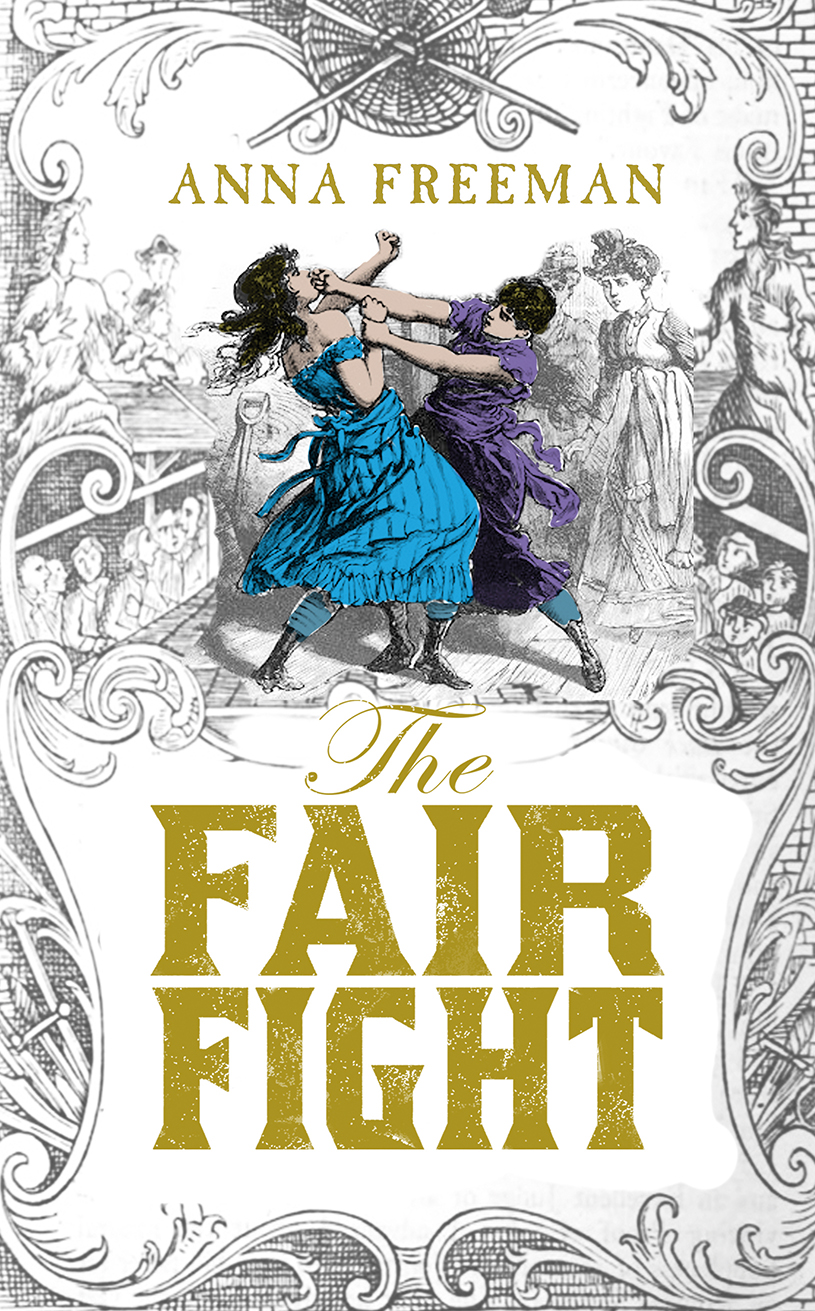
#BookReview ‘The Fair Fight’ by Anna Freeman #historical

Bristol. A brothel. The late 1700s. In The Fair Fight by Anna Freeman, two sisters squabble and scrap, watched by an interested gentlemen visitor. The older sister becomes his molly. The younger sister, Ruth, he sets to boxing professionally at a local pub The Hatchet. It changes Ruth’s life. Anna FreemanI abhor boxing, I hate to see it on television and so I hesitated over this book. I’m glad I didn’t. From page one the book is alive with late 18th century Bristol, everything about it is believable. Most of all I liked Ruth, I wanted to know her story. This meant I got a bit irritated when the story left her and transferred instead to the gentlemen who act as boxing managers and who gamble every night at fights. I had no patience with them, and turned every page wanting more of Ruth.
At the heart of this book are two women trapped by their circumstances, their birthplace, their positions in society. I wanted Ruth to better herself, to see her break away from her origins. Ruth is brothel-born, Charlotte is destined to embroider samplers. Surely they can have nothing in common? Will they meet and what will happen if they do?
To set the novel in its historical context, here are some historical landmarks. In 1789 George Washington was elected President of the United States. The French Revolution of 1789 to 1799 led into the Napoleonic Wars in 1803. In 1796 Edward Jenner administered the first smallpox vaccination, a cure which comes too late for some characters in The Fair Fight. In 1798 Samuel Taylor Coleridge wrote ‘The Rime of the Ancient Mariner’.
Freeman does not back off showing the squalor, the sordid living conditions in the brothel and the boxing injuries which can mean empty stomachs for months. She also shows the richness of the merchant houses, the profusion of liquor and sweetmeats for those who can afford them, the snobbery and bitchiness.
I read to the end to see if Charlotte revolted against the disinterest of her brother and husband, to see if Ruth would be saved by boxing or whether she would return to her roots.

Read my review of FIVE DAYS OF FOG, also by Anna Freeman.

If you like this, try:-
The Seventh Miss Hatfield’ by Anna Caltabiano
The Queen of the Tearling’ by Erika Johansen
Dark Aemilia’ by Sally O’Reilly

And if you’d like to tweet a link to THIS post, here’s my suggested tweet:
#BookReview THE FAIR FIGHT by Anna Freeman via @SandraDanby http://wp.me/p5gEM4-1d0

#BookReview ‘Or the Bull Kills You’ by @Jwebsterwriter #crime #Spain

Or the Bull Kills You is the first of a series of novels by Jason Webster about Spanish police detective Max Cámara. The setting is Valencia during Fallas, the five-day festival of fireworks and bonfires. Jason WebsterA bullfighter is murdered, a controversial bullfighter, in a city undergoing local elections and with a strong anti-taurino lobby. Webster has chosen his setting well. Valencia is a noisy, shouting, breathing presence on every page. The bullfighting is strange, a world of customs and special language, its symbolism machismo. Into the middle of all this walks the Fallas-hating, bullfight-disapproving detective Cámara who’s having a difficult time with his girlfriend. And he’s being reviewed at work for his behaviour in a previous case.
Is there one killer or two, and what about the dead bullfighter’s artist boyfriend and his very-public fiancé?
Webster keeps the page turning with ease, juggling a good detective story with authentic Spanish culture. Something different.
CLICK HERE TO READ MORE ABOUT THIS BOOK AT AMAZON

Read my reviews of other books in Webster’s Spanish detective series:-
A DEATH IN VALENCIA #2MAXCÁMARA
THE ANARCHIST DETECTIVE #3 MAXCÁMARA
BLOOD MED #4 MAXCÁMARA

If you like this, try:-
The Killing Lessons’ by Saul Black
Wolf’ by Mo Hayder
Butterfly on the Storm’ by Walter Lucius

And if you’d like to tweet a link to THIS post, here’s my suggested tweet:
#BookReview OR THE BULL KILLS YOU by @Jwebsterwriter via @SandraDanby http://wp.me/p5gEM4-10J

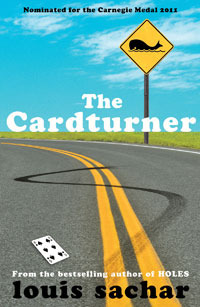
#BookReview ‘The Cardturner’ by Louis Sachar #YA #family

The Cardturner by Louis Sachar is a book about bridge. The card game. And it’s also about relationships. Alton, a seventeen-year-old is tasked by his mother of ‘keeping in’ with his rich blind uncle Lester Trapp by driving him to bridge club in the hope that Trapp will remember their family in his will. What starts as an arduous weekly task becomes a new hobby for Alton as he is caught up by the game of bridge, his uncle and the mysteries of his life. Louis SacharIt is a story about friendship between the generations, all brought together by the game of bridge. Alton doesn’t care about his uncle’s will, he just wants to play bridge better. And get to know his cousin Toni better too. Alton is his uncle’s cardturner, he sits beside him at the bridge table and plays the cards his uncle tells him to.
I am not a card player and I have to say I skipped some bits, but Louis Sachar allows you to do this: he bookends ‘bridge technique’ sections with a line drawing of a whale so you know you are safe to skip a bit and won’t miss the plot. For this reason, this novel is more suitable for older teens than the younger teens who like Holes.
Like Sachar’s Holes, it is a charming book. It shows that your assumptions about things you do not know can be way wrong; Alton soon finds out that bridge is not a game played just by old people. He also discovers that old people can be cool, that they were young once and had their own romances and challenges. Just when Alton starts to understand Trapp, to appreciate him, and to get better at bridge, the plot takes a twist which forces Alton and Toni to make a choice.
CLICK HERE TO READ MORE ABOUT THIS BOOK

Read my review of HOLES, also by Louis Sachar.

If you like this, try:-
Divergent’ by Veronica Roth #1DIVERGENT
La Belle Sauvage’ by Philip Pullman #1THE BOOK OF DUST
The Queen of the Tearling’ by Erika Johansen #1TEARLING

And if you’d like to tweet a link to THIS post, here’s my suggested tweet:
#BookReview THE CARDTURNER by Louis Sachar via @SandraDanby http://wp.me/p5gEM4-11l

#BookReview ‘Love and Eskimo Snow’ by Sarah Holt @sarahholt01 #romance

Love and Eskimo Snow by Sarah Holt is a novel about the nature of love and its different forms. It begins with death. Bea Bridges is killed in a car crash. Sarah Holt tells the story of Bea’s childhood retrospectively, interwoven with the love lives of three other women – Missy, Claire and Elizabeth – from childhood crush to first kiss, friendship, first love and lust. Sarah HoltI waited for the women’s’ lives to connect, were they all connected with the car crash? When the strands did combine, it wasn’t what I expected. It is an interesting study of the different types of love. Bea: the unqualified, un-questioning love of a child for her parents. Missy: a nurturing love for her boyfriend Lee who is a trifle chauvinistic about her needs and his needs. Elizabeth: who meets fellow student Joey and loves him as a brother and best friend. Claire: sexual attraction, masquerading as love.
Holt has written a cleverly structured debut novel with an intriguing title. The Sami Eskimos have around 200 different words for snow: wet snow, slippery snow, icy snow. Holt doesn’t find 200 meanings of love, but she does examine how love varies from relationship to relationship, person to person and context to context. How do we learn to love? From watching our parents’ relationship? From our peers? And do we ever learn to recognise the type of love we are feeling at a particular moment?
There are some poignant moments. Bea as a child had nightmares of being buried alive, so her father gives her a silver-coloured plastic key which she keeps in her bedside drawer. As an adult she still has that key, but it is not put into her coffin.
The loose ends of the story are connected by Bea’s mother as she reads her daughter’s journal after the funeral. And then wishes she hadn’t.  A reminder that there are no convenient answers and this is not a ‘happy ever after’ ending. The novel defines a genre label. It has romance, yes; relationships, yes; but is it a romance novel? Not quite, there is a deeper message to the plotting.

If you like this, try:-
‘The Audacious Mendacity of Lily Green’ by Shelley Weiner
Butterfly Barn’ by Karen Power
‘My Name is Lucy Barton’ by Elizabeth Strout

And if you’d like to tweet a link to THIS post, here’s my suggested tweet:
#BookReview LOVE AND ESKIMO SNOW by Sarah Holt @sarahholt01 via @SandraDanby http://wp.me/p5gEM4-1au

#BookReview ‘The Ignorance of Blood’ by @RobWilsonwriter #crime #Spain

A car accident. Millions of euros. A Russian gangster drinking champagne in the middle of nowhere. The opening scene of The Ignorance of Blood, fourth in the quartet of books by Robert Wilson featuring Seville detective Javier Falcón, does not disappoint. Robert Wilson The intricate plotting is spot-on. I read this book voraciously as Falcón struggles to get to the whole truth, admiring the way the author weaves together the story strands from the preceding three books so that at the end you understand though you did not guess.
I did not get the ending right, I expected something different. There are moments when you wonder if Javier can continue, will he step over to the dark side, will his emotional strength desert him? This is the most international of the four books, with Javier travelling to London and Morocco but Seville retains its hot sultry presence. I can smell the dusty heat of the evening where the detectives seem to exist on coffee and cruelty lays just out of sight.
I’m sorry this is a short review, I can’t write more without giving away the plot. There were moments when I wanted to shout ‘don’t do it’ and others when I thought with sad acceptance ‘yes, that’s the only thing you can do’. At the end, I wanted to start reading the series all over again.

Here are my reviews of the other books in the Javier Falcón series:-
THE BLIND MAN OF SEVILLE #1FALCÓN
THE SILENT AND THE DAMNED #2FALCÓN
THE HIDDEN ASSASSINS #3FALCÓN

If you like this, try:-
The Blood Detective’ by Dan Waddell #1NigelBarnes
Hiding the Past’ by Nathan Dylan Goodwin #1MortonFarrier
The Guest List’ by Lucy Foley

And if you’d like to tweet a link to THIS post, here’s my suggested tweet:
#BookReview THE IGNORANCE OF BLOOD by @RobWilsonwriter via @SandraDanby http://wp.me/p5gEM4-18j

#BookReview ‘Ghost Moth’ by Michèle Forbes #romance #Belfast

Ghost Moth by Michèle Forbes opens with a woman, Katherine, who when swimming out of her depth encounters a seal. What begins as an encounter with nature becomes something more chilling, hinting at the depths of the story about to be told. “…it is his eyes – the eyes of this wild animal – that terrify Katherine the most; huge, opaque and overbold, they hold on her like the lustrous black-egged eyes of a ruined man.” Katherine’s fear when encountering the seal is a mystery until much later in the book, when we understand the memories it disturbed. Michèle ForbesThis is the story of Katherine and George, the beginnings of their love in 1949 and its endurance until death in 1969. The setting is Belfast: in 1949, post-War when Katherine sings Carmen in a local opera production and meets Tom, the tailor who sews her costume and flirts with her. Tom, who forces Katherine to examine the nature of her feelings for boyfriend George. Tom, who tempts her so she can never forget him. And Belfast, wrought by The Troubles in 1969 when even Katherine’s small children are challenged on the street for being of the ‘wrong’ religion. Katherine cannot forget Tom.
The novel examines the nature of love set against a city in 1969 where hatred is demonstrated every day on the streets with burning buses and ransacked shops. Can love ever be forgotten? Should young love be allowed to affect a marriage, years later? And is it better to tell the truth when the truth hurts, or protect your loved one by remaining silent?
In 1949, Katherine and Tom share quiet moments together as he makes her Carmen costume. Katherine forgets her new fiancé, George, in the eroticism of Tom taking a measuring-tape to her body. He describes to her how he will construct her dress. “I’ll insert the bone through the aperture of the casing, sliding it firmly upward all the way to the top of the seam. I’ll draw the bone back just a little, if I need to, so that it won’t force the material. The spring of the bone must always be right.” Compared with this sensuality, volunteer fireman George is a pale alternative.
But one night, before the night’s performance of Carmen begins, something happens which changes the lives of this love triangle.
The title of the book refers to the pale moths [below] which Katherine’s father told her: “…that some people believed that ghost moths were the souls of the dead waiting to be caught, and some people believed that they were only moths.” For me, the double symbolism of the romantic moths and chilling seal was too much. Just one of them would suffice. I think I prefer the seal.

If you like this, try:-
On a Night Like This’ by Barbara Freethy #1Callaways
The Last Day’ by Claire Dyer
You’ll Never See Me Again’ by Lesley Pearse

And if you’d like to tweet a link to THIS post, here’s my suggested tweet:
#BookReview GHOST MOTH by Michèle Forbes http://wp.me/p5gEM4-1br via @SandraDanby

#BookReview ‘The Seventh Miss Hatfield’ @caltabiano_anna #mystery #suspense

The Seventh Miss Hatfield by Anna Caltabiano opens with the auction of a painting in 1887 and then switches to 1954 as a girl sits on a doorstep. Cynthia is 11 and aware of her mother’s demands for good behaviour combined with initiative, knowing she is a disappointment. So when a parcel is wrongly delivered, she shows independence by taking it to the house opposite. There she meets a new neighbour, Rebecca Hatfield. Cynthia doesn’t go home again. Anna Caltabiano This is a tale of immortality and time travel. Where immortality means you can still die, of illness or accident, and time travel comes via a large mysterious clock owned by Miss Hatfield. Cynthia – and it is key that we are told her original name only a few times – drinks a glass of lemonade containing a drop of a mysterious substance and everything changes. “I felt as if I was slipping away into some strange dimension where I recognized nothing – not my surroundings, or my feelings, but most terrifyingly of all, not even myself.” Miss Hatfield has a task for Cynthia to do, a task which involves theft and time travel. The task, of course, does not go to plan.
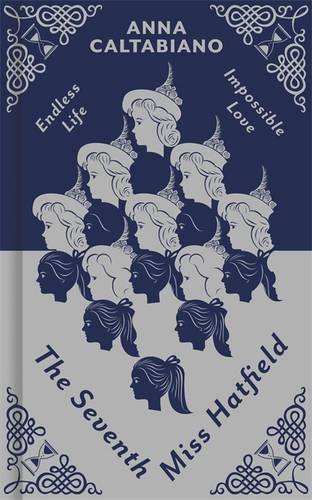
The fine detail is excellent but I found the bigger picture lacking, as if the author was carried away by Cynthia/Margaret’s flirtation with Henley and lost sight of the where this fit into the flow of the narrative. I was impatient for the mystery to move on. Cynthia/Margaret is a girl things happen to, rather than her being a proactive heroine. She spends quite a lot of time waiting for the time to be right, waiting for things to settle down, before she can complete her task. I just wanted her to get on with it. She accepts her new life with minimal heartache or disbelief, demonstrates little longing for her parents and the life she left in 1954 and no cynicism about what Miss Hatfield tells her. She ages instantly from teenager to adult, but we are shown none of the insight this would bring as so ably demonstrated in the film Big. Then I did a bit of Googling and found out that Anna Caltabiano is 17, and I understood. When I read a book for review, I read with a notebook and pen by my side and quite early on I wrote down ‘feels like a young author?’ Despite the ‘literary’ front cover, this is a book written by a teenager for teenagers about young love. If I had known, I would not have chosen to read it and I became a bit more forgiving of the writing style. Another example of a cover design being misleading.
That this novel was written by a 17-year old is admirable and explains the style: lots of explanation of the action of the ‘I understood Henley did this because…’ style. Lots of re-stating the obvious, which should have been edited out. It is clear that Caltabiano was in love with Henley.
This is the first novel of a trilogy. I think I’m too old to read the others, it’s a long time since I was a teenager. But if you know one who likes stories about puppy love combined with time travel, they’ll probably love this. Caltabiano is a talented writer and I will watch out for future novels, but in a few years’ time.

If you like this, try:-
The Quick’ by Lauren Owen
An Appetite for Violets’ by Martine Bailey
Ferney’ by James Long

And if you’d like to tweet a link to THIS post, here’s my suggested tweet:
#BookReview THE SEVENTH MISS HATFIELD @caltabiano_anna via @SandraDanby http://wp.me/p5gEM4-1af