Tag Archives: #bookreview

#BookReview ‘The House with the Golden Door’ by @Elodie_Harper #historical #Pompeii

Wow, what a ride this novel is. The House with the Golden Door by Elodie Harper, second in the Wolf Den trilogy, is set in Pompeii only a few years before the city’s destruction. Amara, no longer a slave and prostitute, is a courtesan living at the house with the golden door where food, accommodation, servants and the clothes on her back are provided by her new patron, Rufus. Elodie HarperThe door may be golden but Amara’s safety depends on Rufus continuing to be entertained by her. This is such a difficult story to read, told by Harper without sentiment. We follow Amara as she faces impossible choices in a life where it seems she cannot win. Determined to help her fellow she-wolves who still work at the brothel, she gets into debt to her worst enemy. Amara is an enigma, at one moment ruthless and determined, the next throwing her heart into lost causes. This is a thrilling story that starts out at a more leisurely pace as Amara settles into her new life, but soon begins the race towards the impossibly poignant ending.
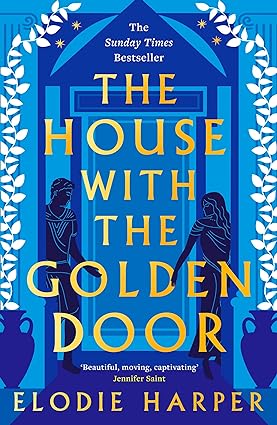
Amara builds a new life, developing her business as a money-lender to other women and selling her three musicians [with added benefits] to perform at the homes of wealthy Pompeii residents. Her life seems to be steadying. From the Wolf Den she has brought and freed Victoria, and English slave Britannica. The house with the golden door begins to feel like a home, marred only by the knowledge that the servants are employed by Rufus. A constant reminder that, although now a freedwoman and better-placed than when she was a whore, Amara’s situation is balanced on a cliff edge. When she begins to see the true character of Rufus, tension rises and the storytelling speeds up. There are moments when Amara acts with cool deliberation and courage, others when she is so impetuous you just know something bad is going to happen. As readers we travel this rollercoaster with her, wanting her to find happiness, love and security but glad she has the fighter Britannica to watch her back. When she falls in love, Amara risks everything.
There is betrayal and jealousy but also loyalty and love. I particularly loved the character development of Britannica. Felix is a great baddie, loathsome, terrifying, manipulative and creepy. And all the time, with our knowledge of historical fact, there is the brooding presence of Mount Vesuvius. It’s impossible to read these books with the descriptions of sumptuous palaces and the humbler brothels, baths and bars, all decorated in varying degrees of taste and skill with paintings, statues and fountains, and forget what it is to come.
Life in Pompeii for the she-wolves is, at its most basic, about survival, survival that is complicated when your family is threatened. The decisions one woman may take may be an anathema to another, may seem like betrayal but are understandable.
The final book in the trilogy, The Temple of Fortuna, is set in AD79. We know what happened to Pompeii then.

Here are my reviews of the other two novels in the ‘Wolf Den’ trilogy by Elodie Harper:-
THE WOLF DEN #1WOLFDEN
THE TEMPLE OF FORTUNA #3WOLFDEN

If you like this, try:-
The Silence of the Girls’ by Pat Barker
A Traveller at the Gates of Wisdom’ by John Boyne
Stone Blind’ by Natalie Haynes

And if you’d like to tweet a link to THIS post, here’s my suggested tweet:
#BookReview THE HOUSE WITH THE GOLDEN DOOR by @Elodie_Harper https://wp.me/p2ZHJe-7df via @SandraDanby

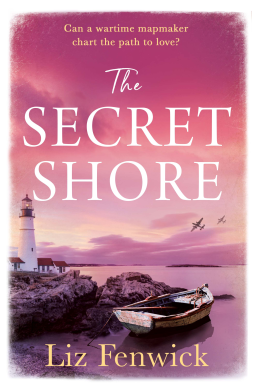
COMING SOON… THE NEXT BOOK I REVIEW WILL BE:- Liz Fenwick
#BookReview ‘World Without End’ by @KMFollett #historical #Kingsbridge

What a wonderful series this is by Ken Follett. World Without End is second in the Kingsbridge series and is intimidating purely by its size, the 1264-page paperback is like a brick. But oh so worth it. Follet has created a world to lose yourself in. I was sad when it came to an end. Ken FollettThe year is 1327. In a wood near the cathedral city of Kingsbridge, four children witness a murder. The man responsible asks for their silence and the mystery of his secret runs throughout the book. The story is a little slow to get going but throughout World Without End the lives of these four children, soon adults, are woven together, intertwined, separated and combined again. Love and ambition are at the heart of everything; sometimes aided, sometimes thwarted, by money, greed, abuse and theft. There is violence, misogyny and racism. Yes, there may be similarities in plot and character with the first book, Pillars of the Earth, but this story is set two centuries later. The historical settings make both books distinctive, in World Without End it is the coming of Black Death and Edward III’s Battle of Crécy. And of course there are similarities; Kingsbridge is the centrepiece where the cathedral, priory, bridge and annual Fleece Fair are central to everyday life. There are power struggles – between master and apprentice, prior and alderman, father and son, father and daughter, between brothers. Follett’s success with this series is the accessibility of everyday lives; we can identify with these 14th century families, their hopes and desires, jealousies, disappointments and fears.
At the heart of the story are the four children in the woods that day. Quiet, clever Merthin and his younger brother Ralph, strong and always ready for a fight. And two girls, friends; Caris, clever and confident daughter of a wool merchant, and Gwenda, the under-nourished daughter of a thief but who wants so much more from her own life. Through their daily lives, Follett shows the development of Kingsbridge into a different town. Each child faces impossible decisions, each in their own way is determined and strong. Their choices, wrong or right, govern the narrative as, too quickly, these children become adults and face one of the most traumatic times faced by England. As the Black Death creeps closer and finally reaches Kingsbridge, the villagers, monks, nuns, lords, tenant farmers and farm labourers find themselves brought equal in the shared danger.
Two more books in the series await. A Column of Fire about Kingsbridge in the 16th century, followed by The Armour of Light set at the close of the 18th century.

Click the titles to read my reviews of other Follett novels:-
THE EVENING AND THE MORNING #PREQUELKINGSBRIDGE
THE PILLARS OF THE EARTH #1KINGSBRIDGE
A COLUMN OF FIRE #3KINGSBRIDGE
THE ARMOUR OF LIGHT #4KINGSBRIDGE
NEVER

If you like this, try:-
The Last Hours’ by Minette Walters [#1 Black Death]
The Turn of Midnight’ by Minette Walters #2 Black Death
Plague Land’ by SD Sykes [#1OswalddeLacy]

And if you’d like to tweet a link to THIS post, here’s my suggested tweet:
#BookReview WORLD WITHOUT END by @KMFollett https://wp.me/p2ZHJe-6Vb via @SandraDanby

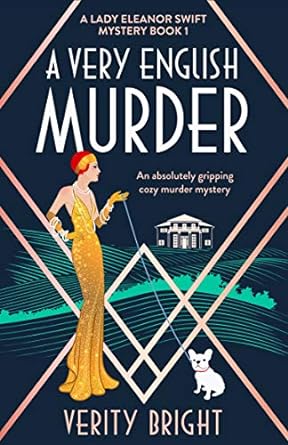
COMING SOON… THE NEXT BOOK I REVIEW WILL BE:- Verity Bright

#BookReview ‘Winter of the Heart’ by EG Parsons #historical #romance

Winter of the Heart by EG Parsons is a good old-fashioned romance about bad choices and second chances involving a heroine who is afraid to love again, a widower grieving for what he has lost and a violent husband, set in post-Civil War South Carolina. EG Parsons In 1876,Megan Connors starts a new life as a schoolteacher on a ranch at Willow Creek. Finding the children eager to learn, she hopes her dreams of a good life are coming true. Except for her boss, the rude ranch owner Charles Donavan, glamorous neighbour Alicia who expects to marry Charles, and a ghostly presence. When romance starts to blossom, Megan must admit she is not free to marry. When her former husband William arrives to claim her, Megan must leave with him and return to their home in Clearwater, Virginia.
The second half of the novel is a tale of survival. Megan plans her escape from William’s house but with winter approaching she gets lost and wanders into the mountains. Encounters with a bear, bandits and snow leave her almost dead. Meanwhile Charles realises his behaviour to Megan was harsh. He leaves his ranch and with the help of confidential investigator James Marshall, investigates Megan’s story. Marshall sends a man into the mountains to search for Megan but, growing impatient, Charles follows. Is Megan dead, or is she sheltering in one of the remote homesteads cut off by snow until spring comes.
I read this quickly on a plane and thoroughly enjoyed it.
CLICK HERE TO READ MORE ABOUT THIS BOOK

If you like this, try:-
‘Barkskins’ by Annie Proulx
The Knife with the Ivory Handle’ by Cynthia Bruchman
‘Summertime’ by Vanessa Lafaye

And if you’d like to tweet a link to THIS post, here’s my suggested tweet:
#BookReview WINTER OF THE HEART by EG Parsons https://wp.me/p5gEM4-3yz via @Sandra Danby

#BookReview ‘Things Bright and Beautiful’ by @anbara_salam #historical #adventure

How to describe Things Bright and Beautiful by Anbara Salam? It is a tale of the 1950s set on a Pacific island where the author authentically creates the sweltering heat, the humidity, the tropical jungle and the natives. It is a claustrophobic tale of differing religious beliefs where confusion, conviction and malaria bring about an unexpected ending. I wasn’t sure what to expect from this book, it was a wild card choice and I really enjoyed it. Anbara SalamBea and Max Hanlon arrive on Advent Island in the remote New Hebrides as Max takes up his post as island missionary to spread the word to the heathen natives. It is not what they expected. Bea is soon picking rat droppings from their bag of rice while Max deals with a lack of clocks making scheduling a morning service difficult. Not to mention the group praying and singing at night, this ‘dark praying’ is intended to expel dark spirits and is done outside the Mission House whilst Max and Bea attempt to sleep. The authorial tone is at first fond and humorous as Bea and Max face up to their difficulties shackled by language differences and the late arrival of their trunks. They are literally thrown in at the deep end. Bea negotiates the many taboos and starts a kitchen garden. I particularly enjoyed the description of one mysterious vegetable as ‘hedge’. But their house is their own, until the previous missionary reappears unannounced. The always-humming Marietta cannot take a hint and tramps around as if she owns the place. She is the grit on which the story takes a dark and threatening turn.
Two small criticisms. There are so many peripheral characters with island names that I ceased to remember who was who. And at times the island dominated character and plot.
If you are looking for a novel in which to lose yourself, this is it. An atmospheric, spooky and at times downright yucky tale of how religion can turn quickly into fanaticism. It is about a fight for survival in a world which starts off as a dream and ends as a nightmare. I enjoyed Bea’s journey as she adapts to her new world, makes the best of things, makes friends, ignores the silliest taboos and gets herself into trouble.
In the jungle, is it the fittest that survive or the cleverest? A highly imaginative debut.
CLICK HERE TO READ MORE ABOUT THIS BOOK AT AMAZON

If you like this, try:-
‘The Signature of All Things’ by Elizabeth Gilbert
‘How to Stop Time’ by Matt Haig
‘Then She Was Gone’ by Lisa Jewell

And if you’d like to tweet a link to THIS post, here’s my suggested tweet:
#BookReview THINGS BRIGHT AND BEAUTIFUL by @anbara_salam https://wp.me/p5gEM4-3qL via @SandraDanby

#BookReview ‘A Life Between Us’ by @Louisewalters12 #mystery

Survivor’s guilt, revenge, memory tricks, childhood friendship and rivalry are at the centre of this family drama. In A Life Between Us by Louise Walters, forty-something Tina visits the grave of twin sister Meg each week and holds conversations with her. Louise WaltersTina has buried a secret so deep even her husband doesn’t know it. Only one other person was there when Meg died, the twins’ Aunt Lucia. But this is a complicated family with so many stories of betrayal, flight, lies, secrets and denials that until the end I was waiting for someone else to appear as a witness.
The first half was a slow-burn and I longed to get to the first turning point of the story, which when it came was not a surprise. This slow-burn means this is not a psychological thriller but a study of the long-term effects on children violently bereaved, survivor guilt, misplaced memory and grief. We are told the story via multiple viewpoints: Tina, then and now; Tina’s childhood letters; Tina’s husband Keaton who loves his wife but struggles to cope with her depression and guilt; and Aunt Lucia, then and now. For me, this was too many viewpoints and too many characters, making it rather involved and at times repetitive.
Walters’ story involves a large family and perhaps the story would be stronger with less siblings. Certainly the absent Robert and jailbird Ambrose added little to Tina’s story, and her parents are virtually invisible. The device of Tina’s childhood letters to cousin Elizabeth in California became repetitive and irritating, it is so difficult to write in the voice of a child. I also found myself sympathising with Aunt Lucia who is portrayed as something of a harridan in a dysfunctional family, though she too has experienced difficult times which she has kept secret.
An at times long-winded story which, at its heart, explores something deep, difficult and sensitive.

Here’s my review of MRS SINCLAIR’S SUITCASE also by Louise Walters.

If you like this, try:-
‘Please Release Me’ by Rhoda Baxter
‘The Stars are Fire’ by Anita Shreve
‘Sometimes I Lie’ by Alice Feeney

And if you’d like to tweet a link to THIS post, here’s my suggested tweet:
#BookRreview A LIFE BETWEEN US by @LouiseWalters12 http://wp.me/p5gEM4-2Tw via @SandraDanby

#BookReview ‘Don’t You Cry’ by @MaryKubica #mystery #suspense

Don’t You Cry explores how easy it is to make assumptions and how this guesswork is so often wrong. This is the third novel by Mary Kubica, all thoughtful mysteries, carefully written and detailed. It took me longer to get into this one, but Kubica spends time drawing the characters and I was prepared to go along with her. Mary KubicaThere are two narrators. In Chicago, Quinn’s roommate disappears. After a couple of days waiting for Esther to return and wondering if she has done anything to upset her, Quinn starts to poke around looking for answers. The first things she finds are confusing, they contradict the Esther she knows, or thinks she knows. And then she starts to wonder what Esther is hiding. Quinn’s voice is alternated with Alex, a young man who lives in the small town where he grew up on the shore of Lake Michigan. He is a nice guy, who passed up on college for a boring low-paid in a rundown lakeside café so he can care for his drunken father. He takes lunch to Ingrid, a housebound elderly lady and stays to eat with her, and to play cards. One day, he goes to work and sees a girl with distinctive, ombre hair. There is something about her that captures his imagination. The girl, in his head he calls her Pearl, is watching the house next door to Ingrid, which is the office of a psychologist.
Nothing is what it seems. I raced through the last few pages as the answers came thick and fast. The twists and turns are clever but, compared with Kubica’s other two novels, this feels baggy and would benefit from an edit to improve the pace and cut repetitions.

Read my reviews of two other novels by Mary Kubica:-
PRETTY BABY
THE GOOD GIRL

If you like this, try:-
‘Pretty Is’ by Maggie Mitchell
‘The Lost Girl’ by Sangu Mandanna
‘The Accident’ by CL Taylor

And if you’d like to tweet a link to THIS post, here’s my suggested tweet:
#BookReview DON’T YOU CRY by @MaryKubica by @SandraDanby http://wp.me/p5gEM4-21l

#BookReview ‘Pretty Baby’ by @MaryKubica #mystery #suspense

Don’t be fooled by the cover photograph, this is not a thriller about trains. Pretty Baby by Mary Kubica is a psychological tale of parenting, grief, abuse, and husbands and wives who stop communicating and stop interacting. At times I had to take a gulp and accept some situations which seemed unrealistic to me, it was either that or put the book down. Mary KubicaHeidi and Chris live with their daughter Zoe in Chicago. One freezing wintery day, running for a train, Heidi spots a homeless girl with a baby. She hesitates, wondering whether to say something, and then the girl is gone. Wishing she had helped, Heidi looks out for the girl the next day… and takes her home. Zoe sees it as an invasion of her space, Chris worries about who the girl – Willow, with baby Ruby – really is, and whether she poses a threat to his family and property. Both are right to be worried.
At times I grew impatient with Heidi for indulging herself and impatient for Chris to show some intuition and see what was really going on. Unfortunately Chris is a bit of a stereotype, the hard-working banker husband who spends more time at work than home, fending off the glamorous co-worker. Zoe’s thoughts we do not hear. For me, Willow is the most interesting character and I would have liked to read more about her relationship with Matthew. Concentrating more on Willow’s story, rather than Heidi’s would make this a completely different book.
Unfairly, I think, the publisher compares Pretty Baby to Gillian Flynn and Paula Hawkins [in other words, to Gone Girl and The Girl on the Train, giants of their genre]. But they are page-turners whereas the pace of this story is slower, allowing the various threads to unfold. What kept me turning the page? What is Willow hiding? When will Chris or Zoe speak out? How far will Heidi go to help a stranger and why is she risking everything?
CLICK HERE TO READ MORE ABOUT THIS BOOK

Read my reviews of two other novels by Mary Kubica:-
DON’T YOU CRY
THE GOOD GIRL

If you like this, try novels:-
The Girl on the Train’ by Paula Hawkins
Gone Girl’ by Gillian Flynn
‘Stolen Child’ by Laura Elliot

And if you’d like to tweet a link to THIS post, here’s my suggested tweet:
#BookReview PRETTY BABY by @MaryKubica via @SandraDanby http://wp.me/p5gEM4-1T5

#BookReview ‘Disclaimer’ by Renee Knight #crime #thriller

Catherine moves house and finds a novel which she can’t remember buying. But this is no ordinary book. It pretends to be fiction, but Catherine recognises herself as one of the characters and the story discloses a secret. “A secret she has told no-one, not even her husband and son – two people who think they know her better than anyone else.” So, Disclaimer by Renee Knight includes a novel-within-a-novel. Renee KnightThis novel explores how one secret, hidden and almost forgotten, can re-emerge 20 years later to do damage. But it is also a warning about the danger of making assumptions without all the facts. The reader makes assumptions, Catherine’s husband makes assumptions, and the writer of the novel makes assumptions.
Nothing is what it seems, in the tradition of good thrillers, and this book will make you believe first one version of the truth, and then another. Which is the real one? Is Catherine a good mother, or a bad mother?
CLICK HERE TO READ MORE ABOUT THIS BOOK AT AMAZON

If you like this, try:-
‘The Returned’ by Jason Mott
‘Girl Runner’ by Carrie Snyder
‘The Lightning Tree’ by Emily Woof

And if you’d like to tweet a link to THIS post, here’s my suggested tweet:
#BookReview DISCLAIMER by Renee Knight http://wp.me/p5gEM4-1wI via @SandraDanby

#BookReview ‘The Shadows in the Street’ by @susanhillwriter #crime

After a spell of reading historical books, I needed a comfort read, something familiar. A pageturner, but well-written. So I picked up The Shadows in the Street, fifth in the Simon Serrailler detective series by Susan Hill. And I tweeted about it. Susan Hill replied with the question: “Comfort?!!” Susan HillI know what she means; a crime thriller should not be comfortable reading. I replied: “Okay, discomfort with familiar characters.” I finished the book that same day, but sat back and considered what made me feel comfortable with this series of books. Firstly, the quality of the writing. Hill’s detective Serrailler is a literary gem, he is distinctive but believable, seems ordinary but is extraordinary. And he is surrounded by a close-knit family whose stories I also follow from book to book. Hill is particularly good at creating mood – a skill also used in her ghost stories – and her description of place is minimal but so effective. For example, “It was a damp, mild October night with a thin mist drifting away over the black water of the canal like a spirit departing a dead body. The air smelled green.” And there is depth to her writing, literary and cultural references there for you to delight in recognising but which don’t matter if you don’t get them.
In Lafferton, two prostitutes are murdered. Simon Serrailler is on sabbatical leave on a remote Scottish island. A librarian takes food parcels to the prostitutes, one of whom is beaten up by her boyfriend. As usual with Hill’s books, each new chapter makes you want to devour the book in one sitting as she lays out first one possibility then another. Of course nothing is as it first seems.

Read my reviews of the other novels in the series:-
THE VARIOUS HAUNTS OF MEN #1SIMONSERRAILLER
THE PURE IN HEART #2SIMONSERRAILLER
THE RISK OF DARKNESS #3SIMONSERRAILLER
THE VOWS OF SILENCE #4SIMONSERRAILLER
THE BETRAYAL OF TRUST #6SIMONSERRAILLER
A QUESTION OF IDENTITY #7SIMONSERRAILLER
THE SOUL OF DISCRETION #8SIMONSERRAILLER
THE COMFORTS OF HOME #9SIMONSERRAILLER
THE BENEFIT OF HINDSIGHT #10SIMONSERRAILLER
A CHANGE OF CIRCUMSTANCE #11SIMONSERRAILLER

And also by Susan Hill, HOWARD’S END IS ON THE LANDING

If you like this, try:-
‘The Farm’ by Tom Rob Smith
‘Or the Bull Kills You’ by Jason Webster #1MAXCAMARA
‘Last Light’ by Alex Scarrow #1LASTLIGHT

And if you’d like to tweet a link to THIS post, here’s my suggested tweet:
#BookReview THE SHADOWS IN THE STREET by @susanhillwriter http://wp.me/p5gEM4-1z1 via @SandraDanby