
Home by Marilynne Robinson is the story of two adult children who return home, coincidentally at the same time, who feel the shame of not living up to the standards set by their minister father, Reverend Robert Boughton. It is a profoundly sad book; the slow winding tale towards the inevitable ending is curiously addictive. It is a three-hander, concentrating on father, son and daughter. 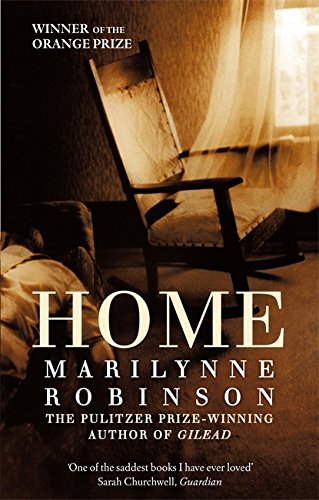 Glory and Jack Boughton grew up in a clerical family home in Gilead, Iowa. We learn of their country childhoods, quite different as siblings go, from their conversations and the memories prompted by visits from neighbours Reverend John Ames, his wife Lila and son. The story is told from Glory’s viewpoint. Jack takes lots of ‘dark nights of the soul’, long solitary walks in the dark to which we are not privy, and his true thoughts remain a mystery to the end. Just when you think you have worked him out, he confounds you.
Robinson draws a picture of rural America at a time of great change. There are demonstrations in Montgomery, but Gilead seems insulated from the outside apart from occasional telephone calls to their father by Glory and Jack’s siblings, and news reports of violence. Jack is drawn to the news coverage; his father dismissive. Jack is a contradiction; he struggles to believe yet knows his Bible backwards, plays hymns on the piano, and quotes scripture at Ames.
Slowly, piece by piece, we find out the details of Glory’s shame. Why she really came home, why she is no longer teaching. But Jack is more opaque, hiding his past, unable to share, he is spiky when offered help and understanding. Does he feel unworthy? He is spiritually isolated from his family, unable to connect though at times he longs to, other times he kicks out. A to-and-fro battle proceeds as Jack opens up a little to Glory, then slamming shut again when faced with his father’s well meaning but blunt questions. There are parallels between the siblings; Glory is recovering from a failed relationship with an unscrupulous man who sounds rather like Jack, while Jack mourns the loss of a good woman who sounds rather like Glory. This book tells the story of how the brother and sister come to understand themselves, and each other, more clearly, but based on fractured pieces of the truth.
As the book progresses, Boughton grows weaker as death approaches. He is one moment gentle towards Jack; the next, angry. Does he think that in striving for achievement for his children he also failed them, by channelling them towards a path they might not otherwise have followed, by not allowing them to develop naturally. I’m not sure Boughton sees it like that. They all live within the constraints of a family entwined in the strait-jacket of belief.
Robinson is best at the detail of ordinary life, the garden, the fruit and vegetables, the weather, the faded house, drawing pictures as clearly as Leonardo da Vinci drew pencil sketches of hands. “Glory made up a batch of bread dough. Brown bread was her father’s preference. Something to lift the spirits of the household, she thought. The grocer brought her a roasting hen. She opened the windows to cool the kitchen and air out the dining room a little, and the breezes that came in were mild, earthy, grassy, with a feel of sunlight about them.”
How many adults can return to visit their parents in the family home in which they grew up and find that home unchanged? “It was in fact a relief to have someone else in the house. And it was interesting to watch how this man, gone so long, noticed one thing and another, as if mildly startled, even a little affronted, by all the utter sameness. She saw him put his hand on the shoulder of their other’s chair, touch the fringe on a lampshade, as if to confirm for himself that the uncanny persistence of half-forgotten objects, all in their old places, was not some trick of the mind. Nothing about that house ever did change, except to fade or scar or wear.” The unchanging nature of the family house mirrors the unchanging nature of the family that lives in it; the patriarch with his rules and expectations, the children trying to please him but falling short and feeling guilty. Each not wanting to worry the other, protective of the myth of their family, sensitive to their father’s opinion, fearful of striking out on their own again away from Gilead and what they know. Wanting to leave, wanting to stay.
Home will stay with you a long time after reading, whether you have faith or none. It is a companion to Gilead which won the Pulitzer Prize.
CLICK HERE TO READ MORE ABOUT THIS BOOK
Read my reviews of Robinson’s other novels:-
GILEAD
HOUSEKEEPING
JACK
Try the #FirstPara of GILEAD here.
If you like this, try:-
‘A Little Life’ by Hanya Yanagihara
‘The Witchfinder’s Sister’ by Beth Underdown
‘Skin Deep’ by Laura Wilkinson
And if you’d like to tweet a link to THIS post, here’s my suggested tweet:
#BookReview HOME by Marilynne Robinson https://wp.me/p5gEM4-3gf via @SandraDanby
 SANDRA DANBY'S BOOK REVIEWS