Tag Archives: contemporary fiction

#BookReview ‘The Stars are Fire’ by Anita Shreve #contemporary

I haven’t read anything by Anita Shreve for a very long time and I wonder why, because I thoroughly enjoyed The Stars are Fire. It is a fine example on how to write about someone experiencing difficult times, who is trapped and feels powerless, without being depressing. Anita Shreve It is 1947 and the summer heat is blazing. Then the heat turns to drought and the drought turns to wildfire. On the coast of Maine, Grace Holland, five months pregnant, without a car and at home with her two toddlers, must run as the fire threatens to engulf her village. Her husband Gene is with other men, making a fire break. Grace, with her best friend Rosie and her children, run from the fire, taking refuge overnight at the beach. The next morning, their houses are ash, their village is burned. They are homeless, penniless and, though Rosie’s husband returns, Gene doesn’t.
Grace must cope and in doing so she finds a new world opening up. A world which she had no idea existed. She becomes decisive and brave, she finds a home, a job and learns to drive. All of this validates her worth. With her mother, they fashion themselves a new life. But it is a life with a temporary feeling about it because Grace dare not think Gene is dead. Theirs was a difficult relationship, suffocating, Gene is an emotional bully. She revels in her new freedoms until one day everything she has built, the gains she have made, are lost. Her gamble backfires.
This is a woman’s story of its time, when men were the providers and expected their wives to fulfil their wifely duties. Grace and Gene married young because she was pregnant and this sets the tone for their marriage. His mother wanted better for Gene and has never welcomed Grace. Grace’s dissatisfaction with her claustrophobic life grows. Gene is a good provider but they have little emotional connection, and so Grace envies Rosie’s close and sensual relationship with her husband Tim.
Shreve’s writing style is simple and descriptive. Gene sometimes calls Grace ‘Dove’. “She has never been Gracie. Only Grace. And then Dove, with Gene. Grace doesn’t feel like a dove, and she’s sure she doesn’t look anything like a dove, but she knows there’s a sweetness in the nickname. She wonders if it means something that she doesn’t have a fond or funny name for her husband.” The story is told, however, from Grace’s viewpoint. Gene’s thoughts are left unsaid.

If you like this, try:-
‘We Are Water’ by Wally Lamb
‘The Photographer’s Wife’ by Suzanne Joinson
‘Did You Ever Have a Family’ by Bill Clegg

And if you’d like to tweet a link to THIS post, here’s my suggested tweet:
#BookReview THE STARS ARE FIRE by Anita Shreve via @SandraDanby http://wp.me/p5gEM4-2sq
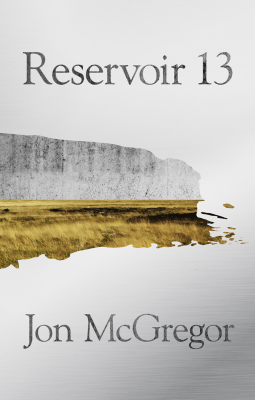
#BookReview ‘Reservoir 13’ by @jon_mcgregor #contemporary

Reservoir 13 by Jon McGregor is a thoughtful, intelligent telling of what happens to a village when a person goes missing. Told after the event, it brings a new angle of understanding to the post-event trauma of those on the outer circles of tragedy. Jon McGregorA girl goes missing in a village surrounded by moors, caves and reservoirs. ‘The girl’s name was Rebecca, or Becky, or Bex.’ At no point do we hear the viewpoint of the girl, her parents, or the investigating police. Slowly the story unfolds as we are told the life of the village through the years after it happened by an omniscient narrator, disconnected from the action.
I loved the way McGregor recounts the daily comings and goings of the village, the farmers, the vicar, the schoolchildren. The rhythm of life and nature is mesmeric, the message is ‘life goes on’. Love affairs start and end, babies are born as are lots of sheep, cows are milked, allotments tended. The village sits within the natural world of peaks, woods and rivers and, sometimes only in a single sentence, we are told of the hatching of butterflies, the unfurling of new leaves, the water running beneath the bridge. The writing style is sparse and all the more beautiful for that. The action switches from one person’s life to the next, sometimes in a simple factual sentence such as ‘this happened’. But as the action moves from one local to another, the story is slowly, painstakingly pieced together of a village which struggles to leave behind the mystery of what happened to Rebecca/Becky/Bex.
At the beginning I was unsure how the story would unfold: murder, missing person, runaway teenager, abduction? It is this not knowing which casts a shadow over everyone in the village.
CLICK HERE TO READ MORE ABOUT THIS BOOK AT AMAZON

Read my review of LEAN FALL STAND, also by Jon McGregor.

If you like this, try:-
Smash All the Windows’ by Jane Davis
‘Himself’ by Jess Kidd
‘The Museum of You’ by Carys Bray

And if you’d like to tweet a link to THIS post, here’s my suggested tweet:
#BookReview RESERVOIR 13 by @jon_mcgregor via @Sandra Danby http://wp.me/p5gEM4-2qa

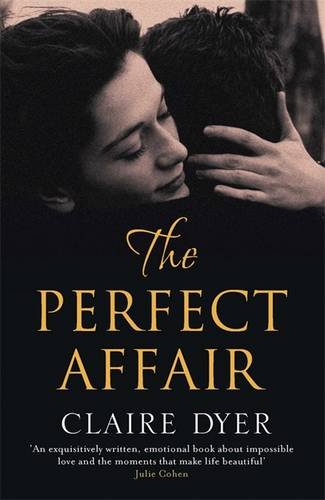
#BookReview ‘The Perfect Affair’ by @ClaireDyer1 #romance #contemporary

This is a deceptive read. It is a meandering tale of two love affairs – one today, one in the Sixties – which unfolds slowly, step-by-step, as these things do in life. The Perfect Affair by Claire Dyer is about love, how it appears and grows, and how it fades. Claire DyerRose has divided her house into two flats, she lives upstairs and rents the downstairs space to Myles, a writer of detective novels. Rose’s regular visitor, Eve, is like the grand-daughter she never had, and is a connection to Rose’s past. In the Sixties, Rose shared a house with Eve’s grandmother Verity. One day Eve and Myles meet. There is a spark of attraction which shocks them both and makes each examine the state of their own marriage. As they come to terms with what this means, Rose watches from afar. In love and seeking the perfect love affair, Rose remembers when she fell in love in the Sixties. Finally a decision must be made.
Dyer writes with a gentle hand, small details showing her understanding of the emotions involved. After meeting Eve for the first time, Myles is disorientated: ‘He’d been OK when he’d left home earlier but now he feels mostly unsettled, as though a fault line has positioned itself under his feet and he knows it’s there and it knows it’s there too.’ Alongside the sense of inevitability, danger lurks. An emotional novel, skilfully written.

Click the title to read my review of Dyer’s novel THE LAST DAY and her poetry anthology YIELD.

If you like this, try:-
‘Please Release Me’ by Rhoda Baxter
‘A Mother’s Secret’ By Renita D’Silva
‘One Step Too Far’ by Tina Seskis

And if you’d like to tweet a link to THIS post, here’s my suggested tweet:
#BookReview THE PERFECT AFFAIR by @ClaireDyer1 http://wp.me/p5gEM4-2h0 via @SandraDanby 

#BookReview ‘We Are Water’ by Wally Lamb @WallyLambAuthor #contemporary

We Are Water by American author Wally Lamb is the examination of a family riven by differences, tragedy and horrors, how they first avoid then finally admit the truths and shame, in order to face the future. It is a story about looking forwards, not back. Wally LambI loved the storyline set-up in the Prologue, elderly artist and curator Gualtiero Agnello recalls the discovery of a self-taught artist, Josephus Jones, a poor black man in the Sixties with a raw untapped gift. But then as the story develops, Jones is not centre stage. The focus is on Annie Oh, another untutored artist discovered by Agnello, who lived in the same house where Jones lived in a shed out back and where he died in a well. Murder or accident, it is never proven.
Via the Oh family, Lamb explores the imbalance of family life, its events and consequences. When she is small. Annie loses her mother in a flood which devastates the town of Three Rivers in Connecticut. This flood is based on a real-life event though the town is fictional. Growing up, Annie is subjected to abuse which remains unspecified for a long time. The reader comes to realise she was abused, but not how or why. Annie’s husband Orion knows only that she had a difficult childhood. As a psychology professor, he suspects a tough childhood but backs-off challenging her about it.
Raising her three children – Ariane, Andrew and Marissa – Annie is a strict mom who occasionally hits her son, but never her daughters. In an escape from motherhood she starts to make art in the basement of the house, using materials foraged from refuse. When a New York art agent sees her work, this is the catalyst for change. Annie leaves Orion and falls in love with her agent, Viveca. This action puts the focus on all the fissures within the Oh family and raises various issues they have denied and hidden. Andrew finds God, Marissa is a jobbing actress and an alcoholic, Ariane conceives by artificial insemination. When they gather for the wedding of Annie and Viveca, a sequence of events brings the past to life again and the secrets and horror come crashing back.
Lamb’s focus on family reminds me of the novels of Anne Tyler and Jane Smiley, although of course he is a man writing a woman’s point of view. Once I got over my disappointment at not reading more about Josephus Jones I enjoyed this, at times difficult, novel.

If you like this, try:-
‘Did You Ever Have a Family’ by Bill Clegg
‘A Little Life’ by Hanya Yanagihara
‘If I Knew You Were This Beautiful, I Never Would Have Let You Go’ by Judy Chicurel

And if you’d like to tweet a link to THIS post, here’s my suggested tweet:
#BookReview WE ARE WATER by Wally Lamb @WallyLambAuthor via @SandraDanby http://wp.me/p5gEM4-2ps

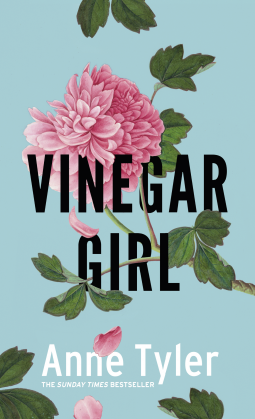
#BookReview ‘Vinegar Girl’ by Anne Tyler #Shakespeare #contemporary

I love Anne Tyler’s writing. It is so simple and under-stated. She lets you slip so easily into the head and the world of her characters. This is her re-working of Shakespeare’s The Taming of the Shrew. Generally I dislike these artificial re-writes, but I made an exception for Tyler. After this, I may try some of the others. Anne Tyler Kate is a pre-school teaching assistant and housekeeper for her distracted scientist father and teenage sister. She is dissatisfied with her life, can never seem to get things right, but doesn’t know how to change things. Admonished by her headmistress for being too frank with her young charges, she is not in the best of moods when her father introduces her to his lab assistant, Pytor. He seems a lumbering foreigner and Kate does not understand her father’s eagerness that they meet. Pytor has a problem, his work visa is about to expire and he must leave the country. Kate’s father is frantic, he simply cannot lose his irreplaceable assistant or his research project into autoimmune disorders will fail when it is so near success. What happens next is predictable except Tyler turns Shakespeare’s tale of Katherina and Petruchio into a modern tale about tolerance and freedom, without the overtones of ‘man tames untameable woman’.

Read my reviews of these other books by Anne Tyler:-
A SPOOL OF BLUE THREAD
CLOCK DANCE
FRENCH BRAID
LADDER OF YEARS
REDHEAD BY THE SIDE OF THE ROAD

And read the first paragraphs of:-
DINNER AT THE HOMESICK RESTAURANT 
BACK WHEN WE WERE GROWN UPS 

If you like this, try:-
‘Some Luck’ by Jane Smiley
‘Housekeeping’ by Marilynne Robinson
My Name is Lucy Barton’ by Elizabeth Strout

#BookReview VINEGAR GIRL by Anne Tyler via @SandraDanby http://wp.me/p5gEM4-2bj

#BookReview ‘Foxlowe’ by Eleanor Wasserberg @e_wasserberg #contemporary

‘It’s hard to resist the pull of the shoal.’ Foxlowe is a strange, sinister book by Eleanor Wasserberg about the group dynamic of adults who should know better, experienced and observed by children who learn from this parenting and either accept or rebel. If they rebel, they have the Bad inside them. Eleanor WasserbergThis is not an easy read, not so much because of the story but I found the writing style obscure. The narrator is Green, a girl who grows up as part of the Family, a cult, living in a house called Foxlowe on a deserted moor. They share everything, their way of life is steeped in the land and ley lines. They have everything they will ever need at Foxlowe, there is no need to become a Leaver. Green knows no other life, has nothing with which to compare it.
For the first 15% [I read on Kindle] I struggled with a lack of clarity, an avalanche of seemingly unconnected facts. For example, ‘The Scattering is something we learned from the Time of Crisis. Remember that the Bad had come inside the walls.’ Characters have before and after names, which added to my confusion. It seemed like an alternative world, given the double sunset at Summer Solstice, and I couldn’t help comparing it with the opening technique of dystopian novels which got me straight away. The first page of The Hunger Games, for example, which starts with an intensely personal moment which lets you into the strange world in which it is set.
Once I reached 20% of Foxlowe, I was skipping the vague bits and the lack of dialogue punctuation – a pet hate of mine – and so turned the pages quicker. It is the story of a commune, the Family, where the outside world is excluded by means of myth, abuse and scare stories. Gradually I pieced the facts together. Despite my original confusion, it is not an alternative world; they have a car and drive to the supermarket. Some are painters or craftsmen who earn money, others grow vegetables and raise animals. This then is a conscious decision on the part of the adults to be there. The children are either born there, or more sinister, appear to be stolen from outside. This is the story of Green, a girl of undefined age, and that of Blue, who arrives at Foxlowe as a babe in arms. The arrival of Blue, and a man called Kai who remembers Foxlowe in earlier times, changes everything.
There are three parts, the second told by the adult Jess/Green, sandwiched between two Green childhood sections. The third part and Epilogue are truly dark and disturbing, with the sense of inherited abuse.

If you like this, try:-
‘Crow Blue’ by Adriana Lisboa
‘A History of Loneliness’ by John Boyne
‘The Quarry’ by Iain Banks

And if you’d like to tweet a link to THIS post, here’s my suggested tweet:
#BookReview FOXLOWE by @e_wasserberg http://wp.me/p5gEM4-212 via @SandraDanby

#BookReview ‘My Name is Lucy Barton’ by Elizabeth Strout @LizStrout #contemporary

My Name is Lucy Barton is a gem of a little novel by Elizabeth Strout. I read it in one sitting on a winter’s afternoon, drawn into the life of Lucy Barton. Lucy looks back, ostensibly telling the story of her nine-week stay in hospital and an unexpected visit by her mother, when in fact she tells the story of her life. Mothers and daughters, no two relationships are alike and no woman can make assumptions about another’s experience as either mother or daughter. Stranded in her hospital bed, Lucy remembers her childhood and tries to make sense of it. Elizabeth StroutEconomically [208 pages] and beautifully written, this is the first of Elizabeth Strout’s novels I have read. I have of course heard of Olive Kitteridge but did not realize it is a Pulitzer winner, and so have the treat awaiting me. Strout writes about the everday, the ordinary, the normal [and not-so-normal] and sees the truth behind what is and isn’t said.
Lucy is a kind of everywoman. Through her Strout examines the mother-daughter relationship with an acute eye which will make you examine your own relationships. Lucy tells the story of her hospital visit and her mother’s appearance with the benefit of hindsight, looking back at her childhood, her daughters and female friendships. Sometimes she is baffled, other times she joins the dots and makes acute observations while her mother remembers their life in extreme poverty. There are hints to things in the past which are never confirmed, this is a book as much about what is not said as about what is. In revisiting her childhood, trying, and mostly failing, to get her mother to talk about it, Lucy learns that although your upbringing shapes who you are, that shaping continues throughout your life.
I thought about this book for days afterwards.

Read my reviews of these other books by Elizabeth Strout:-
AMY & ISABELLE
ANYTHING IS POSSIBLE
LUCY BY THE SEA
OH WILLIAM!
OLIVE KITTERIDGE
OLIVE, AGAIN
TELL ME EVERYTHING

If you like this, try:-
The Language of Others’ by Clare Morrall
A Spool of Blue Thread’ by Anne Tyler
How to Belong’ by Sarah Franklin

And if you’d like to tweet a link to THIS post, here’s my suggested tweet:
#BookReview MY NAME IS LUCY BARTON by Elizabeth Strout @LizStrout http://wp.me/p5gEM4-1SL via @SandraDanby

#BookReview ‘The Audacious Mendacity of Lily Green’ #romance #contemporary

The title of The Audacious Mendacity of Lily Green by Shelley Weiner suggests this tale is about telling the truth and telling lies, a clever novel of social comment which made me smile frequently at the spot-on observations. Beneath the smiles though, are layers of contradictions, degrees of untruths and some wicked humour. Shelley Weiner Lily Green is 34 and a virgin, both in terms of sexuality and deception [circumstances that seem a little unrealistic for her age, but stick with it]. Lily tells her domineering mother that she is engaged to be married, and the story takes off as Lily’s combination of innocence and intuitive reasoning kicks in. Her unsympathetic mother departs on a holiday with ‘the girls’ and once she is gone, Lily wonders who Eva really is. “… Lily had a sense of her mother in masquerade – a series of costumes in which she’d played suburban wife, then grieving widow, and now crone in glad rags. Were the outfits like onion leaves with nothing inside, or as now seemed fleetingly possible, was there someone real beneath the camouflage.”
Just as Lily doesn’t know her mother, she also doesn’t know herself. She tears cuttings from women’s magazines – how to lose weight, how to cook lobster, how to seduce a man – as if she is casting around for behaviour which will give her a clue to her own identity. So she sets off from Hatch End… to London, a journey of 18 miles, hardly a grand adventure. But that’s the point; Lily could make this journey from the house she shares with her mother, but she lacks the self-confidence and ability to assert herself. She knows neither herself, nor her mother, and therefore flounders to find a place in the world. But as she invents a life and personality for herself, she meets other people who tell the truth and tell lies: how can she distinguish between them?
A funny novel which can be read on two levels: a quick poolside read for your holiday, or a social commentary which as you read it will make you review how much you tell the truth. And do you really know your own mother?
CLICK HERE TO READ MORE ABOUT THIS BOOK AT AMAZON

If you like this, try:-
The Girls’ by Lisa Jewell
‘One Step Too Far’ by Tina Seskis
59 Memory Lane’ by Celia Anderson

And if you’d like to tweet a link to THIS post, here’s my suggested tweet:
#BookReview THE AUDACIOUS MENDACITY OF LILY GREEN by @shelleyweiner via @SandraDanby http://wp.me/p5gEM4-1Ie

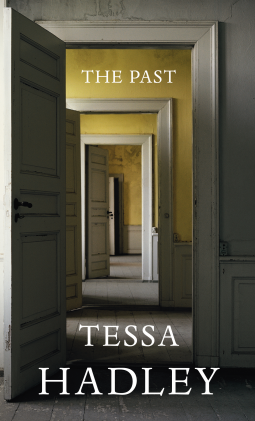
#BookReview ‘The Past’ by Tessa Hadley #contemporary

The first conclusion I reached about The Past by Tessa Hadley is that she really loves this house and the surrounding countryside, because the description is sumptuous. Hadley writes as if it is a real place, well-known, personal. I enjoy reading books where setting is atmospheric, almost like the addition of a character. Tessa HadleyThis is a story of a family reunion, four siblings – a brother and his three sisters, plus various children, partners, hangers-on – who get together for three hot summer weeks at their grandparents’ decaying house, the house they jointly inherited and must decide what to do with. Alongside this reunion we are told of the young children’s games of fantasy revolving around a dilapidated cottage in the woods, and the adolescent romance of Molly, 16 year old daughter of Roland, with Kasim the hanger-on and son of an ex-partner of Alice. Are you still with me? Unfortunately I found the characters not particularly likeable, perhaps more investigation of their pasts would have helped me with this. Instead Part Two, the only passage set in the past, belongs to Jill, mother of the four adult children and long deceased. The ramifications of Jill’s storyline on her children in the present day impacted so lightly that there was no dramatic effect, almost as if the author shied away from adding drama.
I wanted to like this book, but for me it never really got started in terms of plot. The writing is lovely, the description of house and nature is sumptuous, but it felt rather as if the author transferred her own love for the house and nature in general onto the sisters, as all three sisters at some time or another observe nature’s beauty. Unfortunately it felt a bit samey.
For me, the book was an anti-climax. Things promised but not delivered, hints leading to nothing. I admit to being baffled by the storyline involving Pilar – Roland’s Argentine wife – one of the junta’s disappeared children, now being pressurised to confirm her real identity. Pilar’s story contributes little to the family dynamic, only in that she confides her dilemma not to her husband but to her sister-in-law Harriet. Harriet subsequently mistakes Pilar’s friendship for something more.
Ultimately this is beautifully written but slow. Unlike Colm Tóibín, who also writes slow people-focussed novels of domestic detail, this left me feeling unsatisfied.

If you like this, try:-
Nora Webster’ by Colm Tóibín
‘Unsettled Ground’ by Claire Fuller
‘Chosen Child’ by Linda Huber

And if you’d like to tweet a link to THIS post, here’s my suggested tweet:
#BookReview THE PAST by Tessa Hadley http://wp.me/p5gEM4-1Jn via @Sandra Danby 

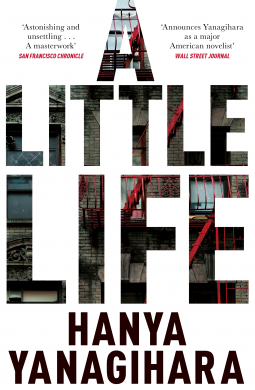
#BookReview ‘A Little Life’ by Hanya Yanagihara #contemporaryfiction

This book by Hanya Yanagihara made me cry and I feel inadequate to describe it. It opens with two friends – Jude and Willem – moving into a tiny apartment in New York. They are at the beginning of their careers and A Little Life is their story and that of their two friends Malcolm and JB. A lawyer, an actor, an artist and an architect. Hanya YanagiharaThe spine of the book is Jude’s life, his horrific childhood makes him the man he is though his friends know nothing of his early years. Yanagihara stretches out the telling of Jude’s secrets for the whole of the book – and it is a long book – to the point where my imagination went into overdrive. Gradually, we learn what he is hiding. I felt sympathy for Jude, but also irritation, impatience and admiration. This is an epic book full of love, pain, honesty, concealment and brutality.
Sometimes the brutality will shock you, it did me, although the worst of it is not expressed on the page – like the most effective of dramatic murders, it happens off stage and is left to the reader’s imagination. There is art and theatre and New York life, but mostly the novel is about the four men, their highs and lows, wins and losses, laughter and squabbles, in at times small daily detail; backed up by a sterling cast of supporters [Harold the law professor; Andy, the doctor; Lucien, the lawyer; Richard, the neighbour and artist]. Not many women, though I did not feel the absence.
The story moves forward chronologically, with darts into the past as Jude remembers. It is about abuse, cruelty and pain, so harsh that you wonder how a person could survive. The answer, is love.

If you like this, try:-
The Goldfinch’ by Donna Tartt
If I Knew You Were going to be This Beautiful’ by Judy Chicurel
A Thousand Moons’ by Sebastian Barry

And if you’d like to tweet a link to THIS post, here’s my suggested tweet:
#BookReview A LITTLE LIFE by Hanya Yanagihara via @SandraDanby http://wp.me/p5gEM4-1Hh