Tag Archives: contemporary fiction

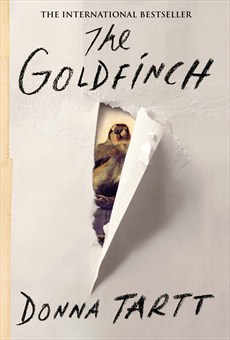
#BookReview ‘The Goldfinch’ by Donna Tartt #contemporaryfiction

I knew it from the first page, The Goldfinch by Donna Tartt is the rare sort of book that you want to go on forever and when you finish it you want to start reading all over again for the first time. It is a book I will keep and re-read and re-read. Donna Tartt Three main reasons why I loved it. I liked Theo, it is his story and Tartt lets him tell it all the way through. No other viewpoint. It is about art and antiques, or specifically one painting and the effect it has on Theo’s life. The possession of it, the responsibility, the guilt, the value. The meaning of the painting itself, the tiny bird shackled by a chain at its ankle. And the painter, Carel Fabritius, student of Rembrandt, died too young in the Delft gunpowder explosion of 1654 when he was 32. And lastly, it’s one of those wide-ranging American novels – New York to Las Vegas to Amsterdam – that the Americans seem to do so well and the English are rubbish at [if you can think of a modern English novel that does do it, please let me know because I’d love to read it]. Tartt says she carries a notebook everywhere and is always jotting down ideas and facts. It shows. Each page is crammed with information. I have to admit early on I was wondering if 13-year old Theo would really remember details of a painter called Egbert van de Poel, but it is the adult Theo telling the child’s story so I cut her some slack.
It is about art, fate, the things life throws at us, love and friendship. It takes in alcoholism, drug addiction, art fraud, post-traumatic stress disorder, grief, unrequited love. At the heart of it is a mystery. As Theo’s feckless father, who gambles according to astrology, says: “sometimes you have to lose to win.” And it is chock full with popular references, from Boris referring to reading the ‘Dragon Tattoo’ books to Pippa’s Hunter wellies.
Of the peripheral characters, I loved Hobie, loved Boris. Pippa remains enigmatic to the end. Tartt’s characters are alive, her places are real. She makes you smell the dust. I’ve been to Las Vegas and have ventured beyond the Strip, but not to the outer edges where the desert reclaims the streets and where the teenage Theo and Boris meet. And I’ve been to New York, walked the streets Theo walks, been to the Met [thank goodness, un-bombed], and been to Amsterdam too with its circular canals. And that brings me to the first chapter, and the ending. I was so intrigued by that first chapter, why is Theo in the hotel room, anxiously scanning the Dutch television news. What has he done? What I imagined it to be… I was wrong, but I had to read almost to the end before I realised I was wrong. That’s really good going for a book that is 771 pages long. There is anticipation, numerous twists in the tale, and there is a little over-intellectualising [often the over-serious way of ‘the big American novel’] but nothing that stopped me reading on. For me, the book went on slightly too long, past its natural finishing point. I would have stopped at the end of the chapter where Theo and Hobie meet post-Christmas, post-Amsterdam.
It is a literary success, and a page-turner. A deserved winner of the Pulitzer, for me.

Read the #FirstPara of THE SECRET HISTORY also by Donna Tartt.

If you like this, try:-
A Little Life’ by Hanya Yanagihara
Purity’ by Jonathan Franzen
A Spool of Blue Thread’ by Anne Tyler

And if you’d like to tweet a link to THIS post, here’s my suggested tweet:
#BookReview THE GOLDFINCH by Donna Tartt http://wp.me/p5gEM4-1cm via @SandraDanby 

#BookReview ‘One Step Too Far’ by @tinaseskis #contemporary #mystery

I became aware of One Step Too Far by Tina Seskis by word of mouth, often the best kind of recommendation. It is certainly a page turner. I sat down to read it one hot sunny day and raced through it. Tina SeskisThe theme is running away. What place a woman has to be in to leave everything behind, the desperation, the guilt, the expectations for a new life, the logistics of running. Emily runs, and runs one step too far. The reason for her running is dangled in front of the reader like a carrot, hints, deceptions, and this is why you keep reading. Is it something she did, or something done to her? Is it criminal or emotional? The story of Emily’s escape, and the story of the reason for her escape, are told in parallel. I had my suspicions about her reason, and I was almost right. Almost, but not quite.
One of the intriguing things in the narrative mix is that Emily is a twin, and the two twin sisters do not get on. This added welcome spice to the tale of Emily’s childhood in Manchester, and her reinvention in London. The twin thing enables some convenient misunderstandings, doppel-gangers and threat of discovery.
A great holiday read.
CLICK HERE TO READ MORE ABOUT THIS BOOK AT AMAZON

If you like this, try:-
‘The Ivy Tree’ by Mary Stewart
‘Please Release Me’ by Rhoda Baxter
The House at the Edge of the World’ by Julia Rochester

And if you’d like to tweet a link to THIS post, here’s my suggested tweet:
#BookReview ONE STEP TOO FAR by @tinaseskis via @SandraDanby http://wp.me/p5gEM4-1ca

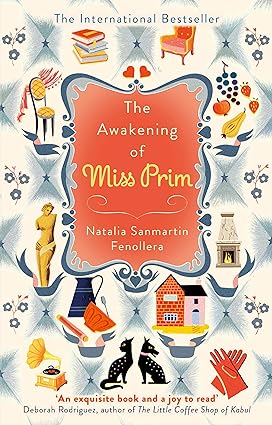
#BookReview ‘The Awakening of Miss Prim’ by Natalia Sanmartin Fenollera #contemporary

The title, The Awakening of Miss Prim, gives away the storyline of this charming tale by Spanish journalist Natalia Sanmartin Fenollera. Miss Prim is to be awakened. The assumption is that the catalyst for this awakening is love. But that is to over-simplify a thoughtful tale of self-knowledge, or maturing as an adult, about making the leap from intellectual maturity to emotional maturity. Natalia Sanmartin FenolleraPrudencia Prim is a librarian who begins a new job in a private house in the village of San Ireneo de Arnois, in an un-named country. Even when I had finished the book I was still unclear in which country it is set, though this does not affect the storytelling at all. Miss Prim is to catalogue the private library of a man who is never named, but is known simply as The Man in the Wingchair.
San Ireneo is an unusual village, it feels as if you are taking a step back in time. “That morning she urgently needed to buy notebooks and labels. The day before, she had had a small disagreement with her employer, the fifth since her arrival at the house. He’d come into the library and declared that he didn’t want her to use a computer to catalogue the books.” So, a computer, it is a contemporary tale then.
The discussions beside the fireplace between Miss Prim and The Man in the Wingchair range widely, from literature and philosophy to the quality of life in the village. And the neighbours, who all have wonderfully exotic names such as Herminia and Hortensia. The women seem to run the village, and have formed a club to support each other and they tackle problems together. Their meetings are always characterised by cake, tea and toast. Miss Prim finds this inclusiveness difficult to handle, she resents interference and in the beginning finds the atmosphere claustrophobic. She is an independent, well-qualified young woman, who knows her own mind. She does not need anyone else and is not looking for love. Of course not!
This is a delightful tale which ranges from classical literature to art to the philosophy of education. One of my favourite scenes is when Miss Prim takes The Man in the Wingchair to task for not including Little Women in his library, lamenting the loss of his nieces in not being able to read the story of the Meg, Jo, Beth and Amy.
CLICK HERE TO READ MORE ABOUT THIS BOOK AT AMAZON

If you like this, try:-
Paper Cup’ by Karen Campbell
The Perfect Affair’ by Claire Dyer
The Language of Others’ by Clare Morrall

And if you’d like to tweet a link to THIS post, here’s my suggested tweet:
#BookReview THE AWAKENING OF MISS PRIM by Natalia Sanmartin Fenollera http://wp.me/p5gEM4-11v via @SandraDanby

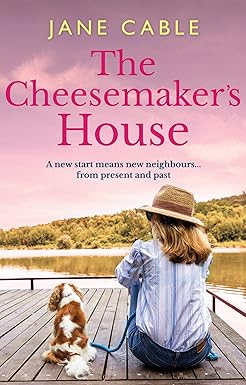
#BookReview ‘The Cheesemaker’s House’ by @JaneCable #contemporary #romance

The Cheesemaker’s House, the debut novel by Jane Cable, starts with a mystery and turns into a ghost story. After her divorce, Alice moves with her dog William to a village in North Yorkshire. Newly-arrived, she walks the dog beside the River Swale and sees a naked swimmer. She watches, feeling like a voyeur but unable to leave. Then suddenly he disappears. Jane CableFeeling guilty that she didn’t search, or call for help, she drives into town where she goes into a coffee shop down a side street. And is served by the mysterious swimmer. Disturbed by his presence and at the same time attracted to him, she cannot work out how he left the river without her seeing or how he got to town before her.
This first mystery is followed by others, competently handled by this first-time author who draws a fond picture of life in rural North Yorkshire. My only minor quibble would be that for three-quarters of the book, the meaning of the book’s title was lost on me.

Read my reviews of these other novels by Jane Cable:-
ANOTHER YOU
ENDLESS SKIES

Also by Jane Cable, writing as Eva Glyn:-
THE COLLABORATOR’S DAUGHTER
THE CROATIAN ISLAND LIBRARY
THE MISSING PIECES OF US

If you like this, try:-
‘The House at the Edge of the World’ by Julia Rochester
‘Butterfly Barn’ by Karen Power
‘Somewhere Inside of Happy’ by Anna McPartlin

And if you’d like to tweet a link to THIS post, here’s my suggested tweet:
#BookReview THE CHEESEMAKER’S HOUSE by @JaneCable https://wp.me/p2ZHJe-4bw via @SandraDanby

#BookReview ‘Doppler’ by @erlendloe #contemporary

Doppler by Erlend Loe defies description, but I’ll have a go. It’s about Doppler, a Norwegian guy who after the death of his father has an accident on his bike and subsequently turns his back on civilization to live in the forest. Erlend LoeDoppler’s sole companion is Bongo, an elk calf which he feels responsible for having shot Bongo’s mother for food. The conversations with Bongo made me smile. It’s a tale about family, grief, alienation and a gradual warming towards civilization again, or so you think. No matter how much Doppler wants to be alone, he seems to attract people around him.
It’s a charming tale with a cutting edge. Doppler is happy in the forest but is a keen observer of the society he has rejected. Forced to communicate again with his pregnant wife and two children, he struggles to cope with modern society and his responsibilities, Teletubbies add Bob the Builder included. His teenage daughter Nora, named after an Ibsen character of course, insists on talking to him in elfish. His son Gregus forgets the television and instead helps him carve a totem pole, intended as a memorial to Doppler’s father but which comes to represent the three male generations of Dopplers and Bongo.
I read it quickly and wished it was longer, a book that will yield more for re-reading I think.

If you like this, try:-
I Refuse’ by Per Petterson
Wolf Winter’ by Cecilia Eckback
Burial Rites’ by Hannah Kent

And if you’d like to tweet a link to THIS post, here’s my suggested tweet:
#BookReview DOPPLER by @erlendloe http://wp.me/p2ZHJe-yD via @SandraDanby

#BookReview ‘The Quarry’ by Iain Banks #contemporary #death

I started reading The Quarry with my emotions running high, knowing Iain Banks had completed it so near to death. But I determined to be fair, not to like it just because he died. But I did like it. A lot. The story is full of imagery: the quarry, the actual hole in the ground is the unknown faced by the two key characters: Guy, who is facing death; and his son Kit, who faces life without his father. Both stand on the edge of emptiness. Iain BanksKit is the key narrator. Described as ‘a bit odd’ and ‘socially disabled’, I liked him straight away. As often with a young narrator, the author puts words of wisdom into the words of an innocent. Perhaps Kit has more self-awareness than his elders. He is certainly an innocent who is learning quickly. The action takes place over one weekend, the limited timespan and setting in the house and edge of quarry give it the feeling of a stage play at times.
A group of friends gathers at Guy’s house, to spend time with him as he dies. But there is always a feeling that the adults want something from Kit, that no-one is being honest , that they are looking for something. This leads Kit into the quarry, the brooding threat there all the time outside the house. As they wonder whether the hole of the quarry stretches beneath the house’s foundations, and if the house will fall into it, we learn about Kit’s disputed identity. Who is his mother? The assumptions he made as a child are now being challenged, the certainty of his childhood is dug from beneath his feet just as the rock in the quarry has been extracted.
It’s impossible to read Guy’s bitterness about his own mortality and not think of Banks’s illness. But this is a tightly-written novel that I defy anyone coming to it not knowing the author to guess that the author was dying. There was only one scene where the editor’s hand was needed, Kit’s climb down into the quarry does go on a bit. But this is a minor gripe.
A fitting finale to an illustrious bibliography.

If you like this, try:-
Etta and Otto and Russell and James’ by Emma Hooper
‘The Last Days of Rabbit Hayes’ by Anna McPartlin
Blow Your House Down’ by Pat Barker

And if you’d like to tweet a link to THIS post, here’s my suggested tweet:
#BookReview THE QUARRY by Iain Banks https://wp.me/p2ZHJe-4b2 via @SandraDanby 

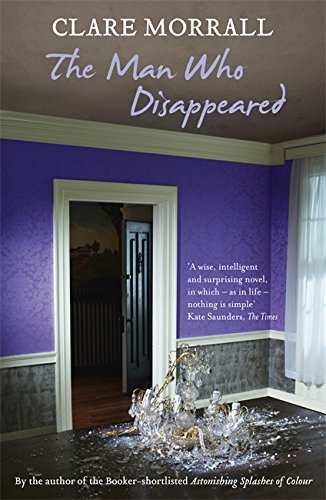
#BookReview ‘The Man Who Disappeared’ by Clare Morrall #contemporary

Felix Kendall longs for a family, as a boy he lost his own. From the first page of The Man Who Disappeared by Clare Morrall, where Felix stands in a dark street watching a family illuminated in their dining room, curtains open, you know Felix must be the ‘man who disappeared’ but you don’t know why. Clare Morrall The characters are believable and the pages turn quickly as we follow the stories of Felix, his wife Kate, son Rory and daughter Millie as they come to terms with what has happened. I expected this to be a slow indulgent read, lyrical, beautifully written, which it is, but I raced through it in the way I am accustomed to do with thrillers.
Clare Morrall is one of my favourite authors, I’ve been a fan since her first book Astonishing Splashes of Colour was shortlisted for the Booker Prize.
CLICK HERE TO READ MORE ABOUT THIS BOOK AMAZON

Click the title to read my reviews of these other novels by Clare Morrall:-
AFTER THE BOMBING
NATURAL FLIGHTS OF THE HUMAN MIND
THE LANGUAGE OF OTHERS
THE LAST OF THE GREENWOODS
THE ROUNDABOUT MAN

Read the first paragraph of ASTONISHING SPLASHES OF COLOUR here.

If you like this, try:-
‘The Love Song of Miss Queenie Hennessy’ by Rachel Joyce
‘Housekeeping’ by Marilynne Robinson
‘Ghost Moth’ by Michele Forbes

And if you’d like to tweet a link to THIS post, here’s my suggested tweet:
#BookReview THE MAN WHO DISAPPEARED by Clare Morrall via @SandraDanby https://wp.me/p2ZHJe-4aR