Tag Archives: Deborah Moggach

#BookReview ‘The Black Dress’ by Deborah Moggach #contemporary

If you like unpredictable storylines with twist after twist try The Black Dress, the latest by Deborah Moggach. Like her last, The Carer, it is much darker and less humorous than the publisher’s blurb suggests. It is difficult to pin down to a genre owing to the numerous twists, it is part-crime, part-family drama, part-romance, part-humorous though I’d didn’t find it to be a laugh-out-loud story. Deborah Moggach.Pru is 69 when her husband walks out; shedding his wife and his possessions, he goes to a silent retreat in Rutland. Pru’s friend Azra says she should’ve fought to get him back. But as Pru remembers the last few years with Greg she starts to question the veracity of her memories and wonders what he’d really been thinking. Feeling alone, son Max lives in Canada and daughter Lucy in Iceland, Pru stays on in the family home in Muswell Hill, surrounded by smug couples leading exactly the sort of life she used to enjoy. Only Pam who lives opposite, nastily nicknamed Pritt-Stick-Pam by Pru and Greg as they mock what they see as Pam’s neediness, sees Pru is struggling and tries to help. As Greg moves to their cottage in Dorset and they agree a clean break, Pru spends more time with Azra, depending on her confident ballsy outlook on life. And then Pru gets the biggest shock [so far] of her life.
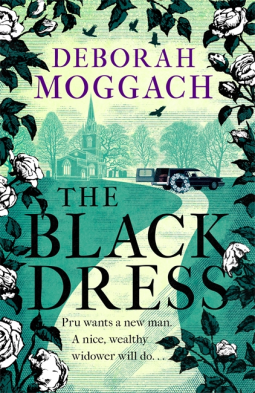
The black dress of the title introduces the next phase of the story. When Pru sees the dress, so not her, in the window of a charity shop she buys it and starts attending the funerals of strangers. What follows is a string of assignations until one day she meets Calvin in the dentist’s waiting room. Pru falls in love. To avoid plot spoilers I will simply say that nothing is what it seems in this story.
The Black Dress is about loneliness and friendship, exploitation and manipulation, the danger of not appreciating what you have and how lack of self-awareness and self-honesty will catch up with you in the end. Some of the plot twists made me gasp and want to read on, others seemed misplaced and unrealistic – because, although this is fiction, we still need it to be rooted in the real world. One word of warning in case, like me, you read fiction to escape the real world, part of the story takes place during Covid-19 lockdown.
CLICK HERE TO READ MORE ABOUT THIS BOOK

Read my review of these other novels by Deborah Moggach:-
SOMETHING TO HIDE
THE CARER
TULIP FEVER

Read the first paragraph of THESE FOOLISH THINGS [now THE BEST EXOTIC MARIGOLD HOTEL] here.

If you like this, try:-
How to Belong’ by Sarah Franklin
The Hoarder’ by Jess Kidd
Mobile Library’ by David Whitehouse

And if you’d like to tweet a link to THIS post, here’s my suggested tweet:
#BookReview THE BLACK DRESS by Deborah Moggach https://wp.me/p5gEM4-5pX via @SandraDanby
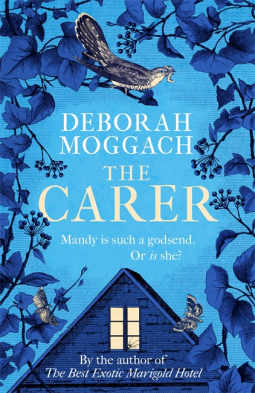
#BookReview ‘The Carer’ by Deborah Moggach #humorous #familydrama

At first I didn’t know what to make of The Carer by Deborah Moggach. She travels a fine comic line nudging towards simplistic or tasteless stereotypes. But then, as she did in These Foolish Things, the novel finds its stride. In two parts, Moggach takes her original portrayal of this family, shows it through different eyes, and turns it upside down. Deborah MoggachIn Part One we meet widower James Wentworth, OBE, 85, retired particle physicist, living downstairs in his home after breaking a hip; and his live-in carer Mandy, 50, from Solihull. ‘Mandy hummed show tunes as the kettle boiled. Blood Brothers was her favourite, about two boys separated at birth. She said she had seen it three times and blubbed like a baby.’ Mandy is fat, jolly, is a chatterer, and says it as she finds it.
Part One is told from the alternating viewpoints of James’ children. Unfulfilled artist Phoebe, 60, lives in a Welsh village in the area where she had many happy childhood holidays. Robert, 62, former City trader, is now writing a novel in his garden shed in Wimbledon, while married to a television newsreader. Our first impressions of their father, and of Mandy, are filtered through their middle class worries and prejudices. Both harbour resentments about their father’s absences when they were children when he travelled the world for work; resentments that straight-talker Mandy tells them they should have got over years ago.
Mandy is truly a catalyst of change, not just for James but for Robert and Phoebe too.
The situation is a believable one faced in today’s society as we all live longer. James in his eighties needs full-time care, his children are already retired. A succession of carers has come and gone, each unsatisfactory in one way or another. When Mandy arrives she seems an angel. Initially, Phoebe and Robert put aside the class differences as Mandy cares for their father so well. The daily walk to the nearby donkey sanctuary or trip to Lidl for pots of flavoured mousse, soon become day trips to Bicester Village and eating at Nando’s. Initially thriving under Mandy’s care with daily scratchcards and a chirping kitchen clock, James seems more forgetful so when Robert’s daughter sees the papers from James’ desk upstairs in a mess, they fear the worst. Why is Mandy looking in their father’s private documents. Can she be trusted. And what has prompted James’ sudden mental and physical decline. The twist which comes halfway through is masterful.
Part Two is James’ story, starting from his life as a young father and married to Anna. One day he attends a conference in Cardiff. What happens there affects the rest of his life, but in ways even he cannot have predicted. At the end there is one more twist, unexpected, that once again casts Robert and Phoebe’s understanding of their lives into a whirlwind.
At the heart of this novel is the question, can you ever really know someone. Whether with a stranger or a long-loved family member, don’t we all sub-consciously present different faces to different people. It is easy to assume we know someone because of the public face they present to the world, but the inner thoughts of other people, even our closest relatives – and often their marriages – are always a mystery.
Littered with throwaway quotes from Shakespeare, this is on the surface a quick, contemporary read (only 272 pages) which also casts a light on the prejudices, snobberies and problems of modern society. It is billed as a comic novel but it did not make me laugh. I was left feeling vaguely disappointed.
CLICK HERE TO READ MORE ABOUT THIS BOOK

Read my review of these other novels by Deborah Moggach:-
SOMETHING TO HIDE
THE BLACK DRESS
TULIP FEVER

Read the first paragraph of THESE FOOLISH THINGS [now THE BEST EXOTIC MARIGOLD HOTEL] here.

If you like this, try:-
Crow Blue’ by Adriana Lisboa
In the Midst of Winter’ by Isabel Allende
The Only Story’ by Julian Barnes

And if you’d like to tweet a link to THIS post, here’s my suggested tweet:
#BookReview THE CARER by Deborah Moggach https://wp.me/p5gEM4-45Q via @SandraDanby

#BookReview ‘Tulip Fever’ by Deborah Moggach #historical

Amsterdam in the 17th century was a time when commerce was king and the sale of tulip bulbs made some people very rich and others bankrupt. This is the setting for Tulip Fever by Deborah Moggach, when Rembrandt and Vermeer painted some of the most-recognised art of our time. Sophia’s husband Cornelis is rich, thanks to tulips, and he celebrates his wealth by commissioning a joint portrait to be painted. It is a decision which changes their lives. Deborah MoggachThe deft switching of viewpoints – and each chapter is a single voice, Sophia, Cornelis, Jan [the painter], Maria [their servant] and Willem [Maria’s lover] – allows for a new take on each situation. The plot moves quickly, things are hinted at and passed over but relevant later. It is the sort of novel which seems simple but has hidden depths. The language can be so sensual. “Jacob van Loos is not painting the old man’s mouth. He is painting Sophia’s lips. He mixes pink on his palette – ochre, grey and carmine – and strokes the paint lovingly on the canvas. She is gazing at him. For a moment, when the old man was talking, her lips curved into a smile – a smile of complicity. He paints the ghost of this, though it is now gone.”
The reader must remain vigilant to catch everything. After four chapters I realised the significance of the quotation at the head of each chapter, and went back to the beginning again. They shed fresh light on the story being told. For example, “‘Trust not to appearances.’ Jacob Cats, Moral Emblems, 1632.” And, another chapter heading, by the same author, ‘Stolen waters are sweet, and bread eaten in secret places is pleasant.’
In places, Moggach’s description echoes Dutch paintings of the period: “Sophia stands at the window. She is reading the letter. Through the glass, sunlight streams on to her face. Her hair is pulled back from her brow. Tiny pearls nestle in her headband; they catch the light, winking at the severity of her coiffure. She wears a black bodice, shot with lines of velvet and silver. Her dress is violet silk; its pewtery sheen catches the light.” Certainly an understanding of art of the period will help a reader get more from the text.

Read my review of these other novels by Deborah Moggach:-
SOMETHING TO HIDE
THE BLACK DRESS
THE CARER

Read the first paragraph of THESE FOOLISH THINGS [now THE BEST EXOTIC MARIGOLD HOTEL] here.

If you like this, try:-
‘The Miniaturist’ by Jessie Burton
An Appetite for Violets’ by Martine Bailey
‘Girl in Hyacinth Blue’ by Susan Vreeland

And if you’d like to tweet a link to THIS post, here’s my suggested tweet:
#BookReview TULIP FEVER by Deborah Moggach via @SandraDanby http://wp.me/p5gEM4-2sv

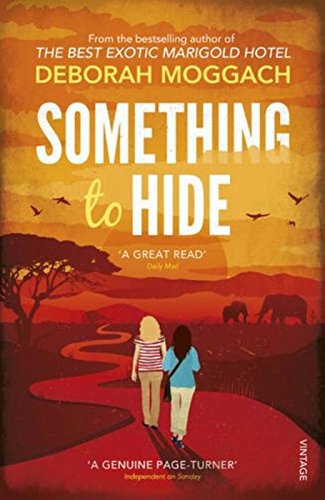
#BookReview ‘Something to Hide’ by Deborah Moggach #contemporary

The beginning of Something to Hide by Deborah Moggach introduces three characters who seem ordinary people, living everyday lives, facing challenges which we or our family/friends/neighbours are facing every day. What is there about them that could possibly be of interest to me? But Moggach draws me into their stories until I read late into the night. Deborah Moggach

The Prologue is set in Africa, the plot revolves around Africa though not always in an obvious way. Don’t read the ‘Dear Reader’ letter from Moggach at the front of the book, save it until you’ve finished reading. That way, you will turn the page, drawn into the story of each woman – Lorrie in the USA, Jing and her husband in China, Petra in London – wondering how they can possibly be connected. Their situations are universal and Moggach demonstrates how globally connected we are these days, globally similar despite our assumptions and generalizations about things we know nothing about. But at the end of the day, it is a book about those universal things: love and lies.

This is a thoughtful book, with dramatic settings. I can certainly see it as a film.

CLICK HERE TO READ MORE ABOUT THIS BOOK AT AMAZON

Read my review of these other novels by Deborah Moggach:-
THE BLACK DRESS
THE CARER
TULIP FEVER

Read the first paragraph of THESE FOOLISH THINGS [now THE BEST EXOTIC MARIGOLD HOTEL] here.

If you like this, try:-
‘All My Puny Sorrows’ by Miriam Toews
‘Angel’ by Elizabeth Taylor
‘The Lie’ by CL Taylor

And if you’d like to tweet a link to THIS post, here’s my suggested tweet:
#BookReview SOMETHING TO HIDE by Deborah Moggach via @SandraDanby http://wp.me/p5gEM4-1Fr

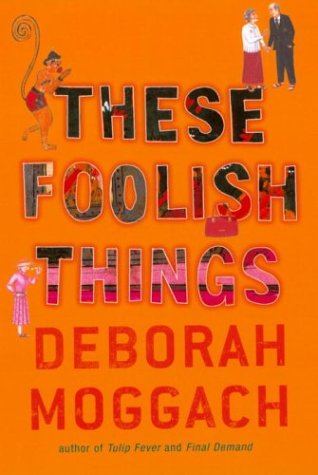
Great opening paragraph 50… ‘These Foolish Things’ #amreading #FirstPara

“Muriel Donnelly, an old girl in her seventies, was left in a hospital cubicle for forty-eight hours. She had taken a tumble in Peckham High Street and was admitted with cuts, bruises and suspected concussion. Two days she lay in A&E, untended, the blood stiffening on her clothes.” Deborah Moggach From ‘These Foolish Things’ by Deborah Moggach  [now published as ‘The Best Exotic Marigold Hotel’]

Read my review of these other novels by Deborah Moggach:-
SOMETHING TO HIDE
THE BLACK DRESS
THE CARER
TULIP FEVER

Try one of these #FirstParas & discover a new author:-
‘A Farewell to Arms’ by Ernest Hemingway
‘Back When We Were Grown Ups’ by Anne Tyler
‘Time Will Darken It’ by William Maxwell

And if you’d like to tweet a link to THIS post, here’s my suggested tweet:
#Books #FirstPara THESE FOOLISH THINGS by Deborah Moggach http://wp.me/p5gEM4-mA via @SandraDanby