Tag Archives: folklore

#BookReview ‘Dark Earth’ by @RebeccaStott64 #fantasy #folklore

Dark Earth by Rebecca Stott is rooted in the history of post-Roman Londinium, the Dark Ages of which few facts are known. It traces the fate of two sisters, both confound the expectations of the time. Isla is a smith, Blue a mystic. When their father dies they must adapt to survive. Rebecca StottSet around AD 500, these sisters have been living a self-sufficient free life with their father, a Great Smith, on a small island in the Thames. When he dies, they cannot stay. Isla finishes her father’s commission, a special ‘firetongue’ sword for the local lord and overseer Osric. Women are forbidden to work as smiths so the girls must deliver the sword without admitting their father is dead, their aim is to gain the protection of kinship. But a violent act forces the sisters abandon their plan and they flee Osric’s camp.
They hide in the Ghost City, the abandoned riverbank settlement that belonged to the Sun Kings and is now home to a secret women’s community. As the girls are hunted by Osric and his son Vort, they are torn. Should they stay or run. Stay sheltered amongst this supportive group but unable to venture beyond the walls of the Ghost City, or protect the community by leaving it and leading their attackers away. The sisters have different tasks during the day which means they see each other less and become exposed to new influences. Isla establishes a forge while Blue forages for herbs and learns about healing. Romance adds complications to their big decision, stay or go. Will the sisters remain united or, as they become adults, will they make individual decisions taking them in different directions.
In places I was overwhelmed by description with so many historical and folklore details that the setting seemed to blur and the narrative pace slowed. More a fantasy novel rooted in history than a historical novel with fantasy elements, Stott has creatively imagined the unknown time in which Isla and Blue live. The country during this period was occupied by a variety of settlers, knitted together by essential trade but separated by beliefs and violence. Little fact remains. Perhaps there would be more clarity if each group were given their historical name, ie Romans rather than Sun Kings. Trying to guess who was who distracted me from Isla and Blue’s story.
This is a story about sisters in an ancient time who grow from being inseparable to having their own motivations, desires and conflicts. Told from a modern female perspective with few rounded male characters, it is an atmospheric read, slow in the middle but which raced towards the end. An end that neatly connects the Ghost City to today.
CLICK HERE TO READ MORE ABOUT THIS BOOK AT AMAZON

If you like this, try:-
The Invasion of the Tearling’ by Erika Johansen
Children of Blood and Bone’ by Tomi Adeymi
The Silence of the Girls’ by Pat Barker

And if you’d like to tweet a link to THIS post, here’s my suggested tweet:
#BookReview DARK EARTH by @RebeccaStott64 https://wp.me/p5gEM4-5SB via @SandraDanby

#BookReview ‘The Good People’ by @HannahFKent #historical #folklore

The Good People by Hannah Kent is a powerful second novel from a writer whose debut was outstanding. It is a tale of rural people in a poor community where superstition and folklore become entangled with one woman’s grief, with tragic results. Conflicting systems of thought come into play – folklore, religion, medicine and legal – and fail to make sense of what happens to Nóra Leahy. The power of the story lies not in black versus white, or logic and education versus peasant superstition, it lies in its characters. Hannah KentCounty Kerry, Ireland, 1826. An isolated village, where gossip goes around and around, where people survive on milk and potatoes and burn turf on the fire. A place where petty grievances are not forgotten, there is no money to pay the doctor, but there are still random acts of kindness. In such a poor community, what happens when the unthinkable happens, where the doctor and priest have no explanation or solution?
The Good People is based on true events, a court case which did happen. In the same year in which her daughter died, Nóra’s husband drops dead in the field leaving her alone to care for her four-year-old grandson Micheál. He cannot walk or speak and neither the doctor nor the priest can offer hope. So Nóra keeps him hidden from the village gossips in the fear that his deformities may be an indication of fairy interference. Unable to cope alone, Nóra employs 14-year-old Mary to milk the cow and fetch the water, and principally to care for Micheál. Soon Mary hears the whispers at the well, that the unnatural child of Nóra Leahy is to blame for the poor harvest, the hens not laying, the thin milk. So Nóra asks Nance Roche for help. Nance is the wise woman of the valley, she knows the plants, the cures, and she talks to the Good People… the fairies.
When Nance suggests the screaming, fitting, feeble child is not really Micheál but a changeling left in his place by the fairies, the three women become embroiled in cures to banish ‘the fairy’. The darkness of the cures attempted on a disabled and sick child is disturbing and, ultimately tragic. The events unfold slowly through the stories of Nóra, Mary and Nance. The writing is beautiful and every page is steeped in the folklore of rural Ireland, this bleak village where poor people live at the edge of survival. It is impossible not to connect with the three women, each so different, while at the time seeing the inevitability of what is to come.
A little historical context. In 1801 the Act of Union was enacted which ended a separate parliament in Dublin with government switching to Westminster. In 1823 in Ireland, Daniel O’Connell began to set up Catholic associations around the country, seeking a repeal of the Act of Union. In 1826 an ‘old woman of very advance age’ known as Anne/Nance Roche was indicted for the wilful murder of Michael Kelliher/Leahy at the summer Tralee assizes in Co. Kerry.
A compelling read.
CLICK HERE TO READ MORE ABOUT THIS BOOK

Read my reviews of Hannah Kent’s two other novels:-
BURIAL RITES
DEVOTION

If you like this, try:-
The Western Wind’ by Samantha Harvey
‘Master of Shadows’ by Neil Oliver
All the Birds, Singing’ by Evie Wyld

And if you’d like to tweet a link to THIS post, here’s my suggested tweet:
#BookReview THE GOOD PEOPLE by @HannahFKent via @SandraDanby http://wp.me/p5gEM4-2×7

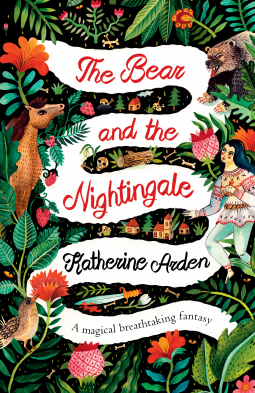
#BookReview ‘The Bear and the Nightingale’ by @arden_katherine #folklore #fantasy

An entrancing, bewildering debut. The Bear and the Nightingale by Katherine Arden is heavily-influenced by Russian fairytales and steeped in winter. Snow, ice and frost are the everyday reality for the Vladimirovich family in medieval northern Russia where winter lasts many months of the year. It is a land of legend, folklore and fairytales where the people pay homage to the gods of the forest. Katherine ArdenThis is the story of Vasya, a wild child who sees the gods of the forests and the spirits of the house. Then one day a priest arrives from the city to challenge the superstitions and traditions of the country folk. It is a story of winter/summer, girl/boy, countryside/city but most of all, old magic versus the church. Is Vasya a free spirit, or is she a witch? Is her behaviour refreshing and engaging, or wicked? She alone can talk to the horses which teach her to ride like a Steppe boy, exhilarating and dashing but inappropriate for a young girl.
The only other person who can see the demons is Anna, Vasya’s stepmother, but whereas Vasya understands the demons, Anna fears them. She begs the priest, Father Konstantin, for prayers to banish them. But Konstantin becomes distracted as God starts speaking to him directly. Various attempts are made to tame Vasya. Her father wonders if a man will ever want to marry a girl who spends her time in the woods rather than sewing and cooking, her stepmother plots to get rid of her, her brothers protect her. Then a winter arrives which threatens to be the worst of all, many will die, and Pyotr Vladimirovich’s family will never be the same again.
In this book you will scarcely know where the fairy tales end and real life begins, indeed the book begins with the telling of a fairy tale. Arden has packed her novel with sumptuous description, colourful characters and layers on layers of myth, so many names and stories that you will struggle to keep track of them. It is a moody read, atmospheric, with beautiful description. But it is not a quick read, so relax into it and immerse yourself in Vasya’s life. You will be drawn into this unfamiliar world so you feel the hardships of the family, their fears, their dreams and dilemmas.
The Bear and the Nightingale is not an easy read, but it is rewarding. The Russian diminutives added to my confusion in the first few chapters when so many characters are introduced. Also the line between fairy tale and the story of Pyotr Vladimirovich’s family is often blurred. But stick with it, this book rewards perseverance.

Read my reviews of the other books in this trilogy:-
THE GIRL IN THE TOWER [#2 WINTERNIGHT]
THE WINTER OF THE WITCH [#3 WINTERNIGHT]

If you like this, try:-
‘The Queen of the Tearling’ by Erika Johansen
‘The Seventh Miss Hatfield’ by Anna Caltabiano
‘The Magicians’ by Lev Grossman

And if you’d like to tweet a link to THIS post, here’s my suggested tweet:
#BookReview THE BEAR AND THE NIGHTINGALE by @arden_katherine via @SandraDanby http://wp.me/p5gEM4-2j9