Tag Archives: historical fiction

#BookReview ‘Peace and Love’ by JC Harvey @JCollissHarvey #historical

Peace and Love by JC Harvey is third in the Jack Fiskardo historical adventure series but is a step aside from Jack’s story. It takes place in another century, telling the tale of the grandson of one of Jack’s rogues. I didn’t know what to expect, it is charming and short; only 125 pages. JC HarveyIn Uppsala province, Sweden in 1720, Magnus, the grandson of Jack Fiskardo’s youthful ensign, Karl-Christian von Lindeborg, is high-born, rich and alone. His bones ache. He is an old soldier with no place in the world. He drifts around his empty castle as day merges into day, emotionally shuttered to those around him. And then into his life with a bang arrives a ward, a young girl, the grand-daughter of his childhood teacher, Dr Excelsior, recently deceased. Magnus, who has never interracted with children, takes Elise into his castle, tells her she is safe and then forgets about her. Elise finds a place with the staff but feels adrift. Both know the situation is unsatisfactory, neither knows how to change it. Until one night, Elise sleepwalks and the two shy, introverted people begin to talk.
When the count’s sister arrives at the remote castle for a visit, she tells him Elise needs proper parenting as she is approaching marriageable age. And so Elise returns to Uppsala with Margrit and everything changes. The count’s life is empty again, without purpose. ‘And he missed her. No sooner was he accustomed to her than she was gone. He missed her more than if he had known her all her life; precisely because she had been plucked away when he had hardly come to know her at all.’
Peace and Love is a charming, unexpected step aside from the tales of Jack Fiskardo. There is a fleeting mention of Jack, a louring portrait in a long gallery, surrounded by his fellow fighters.
Next in the series is The Wanton Road.

Here are my reviews of the Jack Fiskardo series:-
THE SILVER WOLF #1FISKARDO’SWAR
THE DEAD MEN #2FISKARDO’SWAR

If you like this, try:-
Rush Oh!’ by Shirley Barrett
Orphans of the Carnival’ by Carol Birch
‘At the Edge of the Orchard’ by Tracy Chevalier

And if you’d like to tweet a link to THIS post, here’s my suggested tweet:
#BookReview PEACE AND LOVE by JC Harvey @JCollissHarvey https://wp.me/p2ZHJe-8IH via @SandraDanby

COMING SOON… THE NEXT BOOK I REVIEW WILL BE:- Abir Mukherjee
#BookReview ‘The Indigo Ghosts’ by Alys Clare #historical #mystery

This series keeps getting better and better, The Indigo Ghosts by Alys Clare is so captivating I read it in twenty-four hours, picking it up at every opportunity. Third in the Gabriel Tavernier historical mystery series, former ship’s surgeon and now Devon doctor Gabriel faces an inexplicable case that challenges all he believes in, and all he knows to be scientifically true. Alys ClareOctober 1604. Called urgently by his old captain, Zeke Colt, to visit his former ship the Falco, now docked in Plymouth, Gabe walks into an atmosphere of fear, panic and superstition. The ship, everyone on board says, is haunted by a bad spirit, malevolent, making everyone ill. There have been deaths, visions, blue-skinned ghosts, a disgusting miasma that has overwhelmed the air.
Firmly disbelieving the ghost theory, Gabe is confident there will be a factual, scientific answer. But exploring the darkest, tiniest space in the hold – three paces by two – he discovers the source of the stink, finds a dead body, and sees a crocodile. Gabe returns to the Falco the next day with local coroner, his friend Theophilus Davey, and the body is removed for examination. Meanwhile the ship’s crew empty the barrel of waste and clean the area. More discoveries are made, nothing makes sense.
A trail of discoveries unveils an explanation both rational and wild. There is talk of spirits, possession, dark magic and cruelty impossible to imagine. In search of facts, Gabe traces the Falco’s final journey around the Caribbean and back home to Devon, and then re-reads the journals he kept when he was a young seafaring doctor sailing the Caribbean Sea. A solution suggests itself but seems too far-fetched to be possible. Assisted by the silent detection of Theo’s assistant, spiritual support and guidance from the local minister, and suggestions from his sister Celia, Gabe edges towards an answer.
A smashing book. The Indigo Ghosts is a tale of slavery, torture, fear and the worst that man can do to man. It’s about faith and what it can make a man do. And its about the goodness of Gaberiel Taverner, searching for the truth while defending his family and loved ones. This is a very readable series, a bit different from anything else out there that I’ve found.

Here are my reviews of the first two novels in this series:-
A RUSTLE OF SILK BY ALYS CLARE #1GABRIELTAVERNER
THE ANGEL IN THE GLASS #2GABRIELTAVERNER

If you like this, try:-
A Good Deliverance’ by Toby Clements
The Last Runaway’ by Tracy Chevalier
The Armour of Light’ by Ken Follett #4KINGSBRIDGE

And if you’d like to tweet a link to THIS post, here’s my suggested tweet:
#BookReview THE INDIGO GHOSTS by Alys Clare https://wp.me/p2ZHJe-8HO via @SandraDanby

COMING SOON… THE NEXT BOOK I REVIEW WILL BE:- Eva Glyn
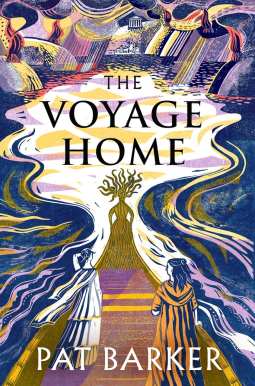
#BookReview ‘The Voyage Home’ by Pat Barker #historical #myths

A dirty, realistic, unflinching portrayal of the women taken hostage by the Greek victors at Troy, The Voyage Home by Pat Barker is unputdownable. I didn’t expect anything less having devoured the first two books in this trilogy, The Silence of the Girls and The Women of Troy.Pat BarkerProphetess Cassandra, taken as war booty by King Agamemnon, is on the boat home; to Agamemnon’s home that is, not hers. After the battle, Cassandra and her maid Ritsa sail away from Troy towards Greece. Awaiting them are Queen Clytemnestra, who has governed in her husband’s absence, and his two remaining children Orestes and Electra. The post-war story told by these three women is familiar after many conflicts. Murder, abduction, rape, abuse, torture, child killing, looting, destruction, triumphalism. All have suffered during this ten-year-long men’s war. Cassandra, the priestess daughter of Trojan king Priam, may wear silk and decorate her hair with flowers, but she is as much a slave as Ritsa who was a noblewoman before her capture. Plagued by visions of her captor’s death, and her own, Cassandra is at times emotionally disturbed, at others she is defiant. Clytemnestra, full of vengeance for her husband’s sacrifice of their daughter Iphigenia – in tribute to the gods in return for a fair wind to war – must smile and welcome his concubine to her home. But what a home; plagued by the long-dead voices, handprints and footprints of child ghosts, the palace is an unsettling place.
Witty and, in places, bloodthirsty, Barker writes about the abuse of these women with a delicacy and empathy that makes the pages turn quickly. I read this in two days. She writes with anger and disgust that seems modern, but these are age-old tales of men’s brutality. In a palace full of nightmares, murder is planned. These three women, slave and non-slave, are seeking retribution. But what is revenge? Is it a universal truth. Does it mean the same to each of these woman. Justice. Murder. Survival against the odds. Peace. The ability to rise each morning without fear. Does it mean striking the fatal blow yourself or watching someone else? I don’t see this as a feminist re-telling in which weak men receive their come-uppance. Barker shows the men are arrogant, conniving, self-seeking and brutal. The women can be strong, brutal, selfish and unlikeable too.
A brilliant end to this trilogy. Pat Barker brings mythology to life, making it relevant for life today. One to think about for days afterwards. Highly recommended.

Read my reviews of other Pat Barker novels:-
THE SILENCE OF THE GIRLS #1WOMENOFTROY
THE WOMEN OF TROY #2WOMENOFTROY
LIFE CLASS #1LIFECLASS
TOBY’S ROOM #2LIFECLASS
NOONDAY #3LIFECLASS
ANOTHER WORLD
BLOW YOUR HOUSE DOWN
DOUBLE VISION
UNION STREET

If you like this, try:-
‘House of Names’ by Colm Tóibín
‘Stone Blind’ by Natalie Haynes
Sparrow’ by James Hynes

And if you’d like to tweet a link to THIS post, here’s my suggested tweet:
#BookReview THE VOYAGE HOME by Pat Barker https://wp.me/p2ZHJe-8Gl via @SandraDanby

COMING SOON… THE NEXT BOOK I REVIEW WILL BE:- Robert Thorogood
#BookReview ‘The Story Spinner’ by Barbara Erskine @Barbaraerskine #historical

The Story Spinner by Barbara Erskine is an absorbing time-lapse story which combines the lost romance between a Welsh princess and a Roman general with a modern-day archaeological-investigation, all knitted together by mythical connections, visions and a disappearing dog. Barbara ErskineThere are two distinct storylines. Cadi, ‘the observer, the unseen diarist, the only witness. The Novelist. The story spinner,’ is a modern-day poet with a mystic sensitivity to the people who lived on the ancient site next to her Welsh cottage. Supposed to be writing poetry based on a Welsh myth, instead she finds herself free-writing prose based on visions of the life of Elen, a Welsh princess living in 382AD. Little is known of her life as she appears in few historical documents. So when Cadi imagines Elen as a teenager, she unlocks the story of her marriage to a Roman general.
Cadi has always suspected that the meadow next to her cottage is the site of an ancient army camp. When she starts to hear marching footsteps and the sounds of soldiers on the move, she calls in her druid uncle, Professor Meryn Jones. Their excitement at the potential discovery is deflated by the news that the unknown owner of the meadow is seeking planning permission for a housing development. Draft plans show houses built right up to the hedge in Cadi’s back garden. Bereft at losing her sense of peace and isolation and being unable to walk in the beautiful meadow, she throws herself into investigation. During the day she talks to town planners and archaeologists. At night she sits with pen and notebook writing the story of Elen’s life. In channelling the story of Elen, Cadi also discovers fascinating characters including Branwen, a wise woman.
The unveiling of Elen’s life as a teenage bride and young mother, a Welsh princess who must subjugate herself to the authority of her husband, develops alongside the modern-day investigation into the meadow. Complicating the issue is the re-appearance in the village of Cadi’s ex, Ifan, who throughout their relationship was bullying and threatening. Cadi is afraid he is stalking her again.
This is a tale with complicated connections that Erskine handles with skill. I enjoyed this very much though it’s a trifle long for me, there are sections towards the end that I wanted to move a little quicker. Overall an unusual, compelling read.

Here’s my review of THE DREAM WEAVERS, also by Barbara Erskine.

If you like this, try:-
The Prophet’ by Martine Bailey #2TABITHAHART
The Confessions of Frannie Langton’ by Sara Collins
The Mermaid and Mrs Hancock’ by Imogen Hermes Gowar

And if you’d like to tweet a link to THIS post, here’s my suggested tweet:
#BookReview THE STORY SPINNER by Barbara Erskine @Barbaraerskine https://wp.me/p2ZHJe-8Fb via @SandraDanby

COMING SOON… THE NEXT BOOK I REVIEW WILL BE:- Pat Barker
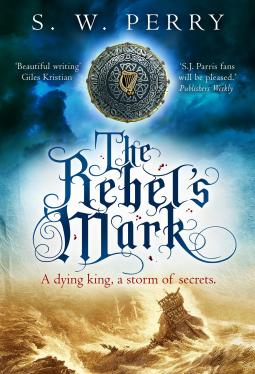
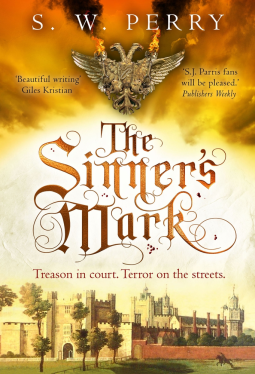
#BookReview ‘The Rebel’s Mark’ by SW Perry @swperry_history #historical #crime

The Rebel’s Mark is fifth in the addictive Jackdaw Mysteries series by SW Perry in which intrepid doctor Nicholas Shelby and his apothecary wife Bianca are sent to Ireland where Irish rebels fight the English. What an adventure it is, full of Elizabethan politics, religious division, spying, kidnapping, fighting, the cunning of some clever women and a shipwreck. SW PerryThe story starts in 1598 with the shipwreck. A Spanish ship founders on Irish rocks and most aboard are lost, if not drowned they are murdered by the English soldiers who stumble on the wreck. Two women escape. Exactly why a Spanish ship should be so far from home is a mystery.
Robert Cecil, Secretary of State to Elizabeth I, sends Nicholas to Ireland to join Robert Devereux, Earl of Essex, commander of the English army, but also as a spy. Bianca refuses to be separated from her husband and Nicholas gains permission for her to travel as part of the medical team. Their young son Bruno stays at home at the Jackdaw tavern, cared for by his mother’s landlady Rose and her husband Ned Monkton. Nicholas’ secret task is to meet with poet Edmund Spenser, he of the Faerie Queene. Spenser is annoyingly tight-lipped. There are many personality clashes which add to the divisive politics of the time. Essex hates Cecil. One of Essex’s commanders is a former admirer of Bianca and therefore sets against Nicholas. Who knows whose side Spenser is really on. How is the shipwreck connected to Anglo-Irish politics. And what of the Irish rebels, ‘men in fur pelts and broacloth gowns sit upon shaggy ponies’ led by the enigmatic Hugh O’Neill, Earl of Tyrone.
As always the story moves along at a cracking pace. Nicholas and Bianca both get into trouble and have their separate adventures while at home in Bankside, stolid Ned becomes curious about the murder of a young man and starts to ask awkward questions.
I’m loving this series. To get the most out of it, start with the first The Angel’s Mark.

Here are my reviews of the first books in the series:-
THE ANGEL’S MARK #1JACKDAWMYSTERIES
THE SERPENT’S MARK #2JACKDAWMYSTERIES
THE SARACEN’S MARK #3JACKDAWMYSTERIES
THE HERETIC’S MARK #4JACKDAWMYSTERIES

If you like this, try:-
The Lady of the Ravens’ by Joanna Hickson #1QUEENSOFTHETOWER
‘The Forgotten Sister’ by Nicola Cornick
‘The Instrumentalist’ by Harriet Constable

And if you’d like to tweet a link to THIS post, here’s my suggested tweet:
#BookReview THE REBEL’S MARK by SW Perry @swperry_history https://wp.me/p2ZHJe-8BW via @SandraDanby

COMING SOON… THE NEXT BOOK I REVIEW WILL BE:- Clown Town by Mick Herron
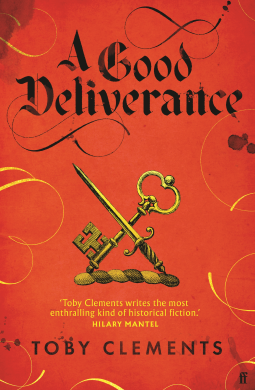
#BookReview ‘A Good Deliverance’ by Toby Clements #historicalfiction

A Good Deliverance by Toby Clements is many things, many stories. A story of one man’s life. Of the writing of a great courtly chronicle. Of wins and losses on foreign battlefields. Of the relationship of an imprisoned old man and the young boy who brings his food. Above all, it is about the power of story. Toby ClementsThe prison confession of Sir Thomas Malory, writer of Le Morte d’Arthur, husband, father, landowner, soldier, courtier, politician and hopeless romantic, is wittily told, bringing a new perspective to the Wars of the Roses. Thomas, an admirer of knightly tales, honorable battles, courtly love, is in his fifties when he is arrested and imprisoned at Newgate jail. These are times of political and civil unrest. His offence is unknown to him and while expecting the step of his lawyer bringing news of a pardon, he awaits his execution. The person he sees most frequently is the twelve year old son of the prison warder. This boy brings his food twice a day, he also brings gossip and curiosity. And so in his tales to this boy, Malory tells the story of his life.
For a story that essentially takes place within four walls, this is a dynamic book that I didn’t want to put down. Clements has created a fictional character from a real man of whom little is known. Historians have a variety of possible noblemen who may have been the real Malory and this gives Clements plenty of room to create a character full of love, of conflict, of ambition often misjudged or misplaced, and of optimism. His life has been a perilous one full of sieges and battles in foreign countries, of disputes with unworthy lords, of brushes with royalty, of falling in love, sometimes unwisely. It is in short an echo of the courtly tales of love and honour surrounding King Arthur and the Knights of the Round Table. The prison boy, desperate for Malory to get to the tale about fighting at Agincourt alongside King Henry V, is treated to retellings of tourneys and swords, of ships and duels and strange lands. He also learns his letters.
When the boy is absent at his duties, Malory’s story continues chronologically for the reader as the bits between the battles and feuds are retold. The pile of papers in his coffer demonstrates that Malory is rewriting the legends of Arthur, Lancelot etc. As he tidies, amends, obfuscates, shortens and lengthens the Arthurian myths, how, we should wonder, is he editing his own life story and why. To make it more entertaining for the boy, to gild his own legacy, to prove his innocence of whatever crime of which he is accused.
This is a funny, clever, entertaining story about a well-known period of English history, told from an unusual perspective. In Malory, Clements has created a sympathetic character who means the best but often fails to live up to his own dreams.
Engaging. Entertaining. Unusual.
PS. Despite the sudden ending, this is rumoured to be the first of two books about Thomas Malory.

Read my reviews of the first two Kingmaker novels by Toby Clements:-
WINTER PILGRIMS #1KINGMAKER
BROKEN FAITH #2KINGMAKER

If you like this, try:-
Cecily’ by Annie Garthwaite
‘A Column of Fire’ by Ken Follett #3KINGSBRIDGE
‘The King’s Messenger’ by Susanna Kearsley 

And if you’d like to tweet a link to THIS post, here’s my suggested tweet:
#BookReview A GOOD DELIVERANCE by Toby Clements https://wp.me/p2ZHJe-8Aa via @SandraDanby

COMING SOON… THE NEXT BOOK I REVIEW WILL BE:- Helena Dixon
#BookReview ‘The Instrumentalist’ by Harriet Constable #historicalfiction #Venice

18th century Venice. A baby is posted through a hole in the wall at Ospedale della Pietà, a hospital for orphaned girls. She is one of many left there, mostly by sex workers. They are fed, educated and, if they have the aptitude, they learn a musical instrument. The Instrumentalist by Harriet Constable imagines the life story of Anna Maria della Pietà. Harriet ConstableBased on a real violinist, Anna sees musical notes as colours swooping, swirling, dancing. She believes fiercely that she is special but this ferocity also makes her vulnerable. In her relationship with her music master she is looking for musical success but secretly hopes to find a father-figure. Unnamed, I assume the maestro to be Antonio Vivaldi. Little is known about the real Anna Maria and this frees Constable to imagine her life, her successes, failures, challenges and betrayals.
Anna is a precocious violinist at the age of eight, her ambition and zeal to succeed is familiar nowadays but I’m not sure how typical it was for an orphan in 18th century Venice. The language occasionally drifts into modern-day vocabulary and grammar. Understanding that her life can only be changed if she joins the figlie di coro, the ospedale‘s orchestra, Anna Maria becomes accomplished at playing the violin and in musical composition. There are riches to be gained when the orchestra performs, donations to the ospedale from wealthy donors, gifts for the performers. The stakes are high, girls who fail are quickly married off. Friends are sacrificed.
In places, the writing is indulgent; repetitive description is pretty but doesn’t move the story along. Two-thirds through is a different phase showing the real Venice and the dirt and injustice beneath the wealth and beauty. The perfume made of jasmine distilled in pig fat, used for a week before being discarded. The hand-made lace cuffs and handkerchiefs made in a sweatshop. Shimmering red silk and the red blood of a newly killed piglet. A reminder of the binary life of girls at the ospedale; gifts and benefits come with musical excellence, musical failure means housework, training in lacework, laundry or being sold into marriage.
An intense novel set within a constricted building in a city that is at once beautiful and threatening. Every baby girl left at the ospedale must find a way to survive in an unforgiving world but will always wonder if her mother will return to her. I finished The Instrumentalist wishing the story was broader, focussing equally on the three childhood friends, Anna Maria, Paulina and Agata and not just on Anna Maria.

If you like this, try:-
‘The Glassmaker’ by Tracy Chevalier
‘City of Masks’ by SD Sykes #3OSWALDDELACY
‘The Garden of Angels’ by David Hewson

And if you’d like to tweet a link to THIS post, here’s my suggested tweet:
#BookReview THE INSTRUMENTALIST by Harriet Constable https://wp.me/p2ZHJe-8v3 via @SandraDanby

COMING SOON… THE NEXT BOOK I REVIEW WILL BE:- Abir Mukherjee
#BookReview ‘Tyrant’ by Conn Iggulden #historicalfiction #RomanEmpire

Wow. Tyrant, book two of the Nero trilogy by Conn Iggulden, doesn’t disappoint. An ageing emperor who appeases his younger wife. A fatherless son, wild and untameable. His ruthless mother, single-minded, unscrupulous, determined her son should rule. This is the story of Nero’s ascent to the most powerful seat of all. Conn IgguldenIn his portrayal of Roman history, Iggulden’s writing bears his research lightly. Never once did I sense a fact included superfluously, everything was there for a reason. Where historical accounts are thin, Iggulden adds his own fictional interpretation. The result is a gripping story of political machinations not unfamiliar to today’s global governments, where ambition and dominion drive everything; loyalty is fragile, words have double meanings, while at the heart of it all are money and power.
Where Nero was the story of Agrippina, Tyrant is the story of her son Lucius, now re-named Nero. A headstrong teenager, Nero is out of control. His mother persuades her husband Emperor Claudius, and now Nero’s adoptive father, to name Nero as his heir in place of his natural son Britannicus who is the butt of Nero’s ridicule. An education is arranged at the hands of statesman and dramatist Seneca and praetorian Burrus.
A combination of political power struggles, subterfuge, a spot of teenage shoplifting and reckless charioteering, Tyrant shows Rome at its bloodiest and most dangerous. Plenty of plot twists, betrayals and plotting set against excessive wealth. I particularly enjoyed the portrayal of the naumachia, a naval battle in a flooded amphitheatre between ships crewed by prisoners of war. I was willing on Caractacus; first seen in Nero, as king of the Catuvellauni in Britain he fought the Romans many times but was captured and taken to Rome as a prisoner. He provides an interesting comparison on the nature of leadership, responsibility and power.
Conn Iggulden’s portrayal of Nero is compelling, despite the darkness, brutality and often insanity of the story. It’s a tribute to his storytelling that the writing does not descend into hyperbole. Tyrant is the story of Nero from boy to man, as he breaks free of the influence of his mother. A really entertaining read.
The final book of the trilogy is Inferno.

Read my review of NERO, first instalment of Conn Iggulden’s ‘Nero’ trilogy

If you like this, try:-
The Beasts of Paris’ by Stef Penney
The Last Hours’ by Minette Walters #1BlackDeath
‘The Lost Lights of St Kilda’ by Elisabeth Gifford

And if you’d like to tweet a link to THIS post, here’s my suggested tweet:
#BookReview TYRANT by Conn Iggulden https://wp.me/p2ZHJe-8i1 via @SandraDanby

COMING SOON… THE NEXT BOOK I REVIEW WILL BE:- William Boyd
#BookReview ‘The Angel in the Glass’ by Alys Clare #historical #mystery

Stained glass. Shameful secrets. Rumours of wolves and shadows. Dissolution. The Angel in the Glass is second in the Gabriel Tavernier historical mystery series by Alys Clare. I really enjoyed the first, A Rustle of Silk, and was looking forward to reading more about Gabe, rural doctor and amateur investigator. I wasn’t disappointed. Alys Clare
Three disconnected events occur early in the story. Two young brothers go exploring and find jewels hidden in a tangled copse on a farmer’s land; the resulting fight between the farmer and the boy’s father causes uproar. The body of a vagrant is found on the edge of the moors. And Jonathan Carew, vicar of St Luke’s church, has a strange episode in the middle of his Sunday sermon; he goes pale and stares at something that isn’t there.
Coroner Theophilius Davey calls on local doctor Gabriel Taverner to examine the corpse. Slender, fair-haired, skeletal, diseased, Gabe says the man likely died of natural causes. The body is locked in the cellar of an empty house near Theo’s house while he and his assistant Jarman Hodge investigate his identity. They make little progress apart from accumulating a collection of strange stories; a black shadow seen here, a wolf there, and servants gossip about a loiterer seen at Wrenbeare, once a fine large house but now dirty and unkempt. When Theo and Gabe ride out to Wrenbeare to interview the widow, Lady Clemence Fairlight denies there was an intruder. But her youngest daughter Denyse screams and says she saw a dead body. And she continues screaming. Who is telling the truth? What secrets lurk at Wrenbeare?
The story starts in 1604. After decades of religious change, persecution and crisis, England has settled into a fragile calm under King James I. In The Angel in the Glass, Clare explores the continuing impact of Henry VII’s Act of Legacy, foundation of the Church of England and the dissolution of the monasteries, via a return to Protestantism under Edward VI and Catholicism with Queen Mary Tudor, returning to Protestantism again with Queen Elizabeth I. The turmoil of the preceding years lies shallow beneath the soil of the village Tavy St Luke’s and at Rosewyke, the warm country house which is home to Gabe and his widowed sister Celia.
I enjoy historical mysteries but some are long and wide-ranging. In future when I need a shorter read, I will turn to Alys Clare whose books are concise but still detailed and intriguing. At 240 pages, The Angel in the Glass is a puzzling, quick read. The plot moves forward on every page, there are no wasted words, with rounded characters, twisty plot and a returning cast of villagers.
Quickly becoming a favourite series of mine. The next Gabriel Taverner book is The Indigo Ghosts.

Here are my reviews of other novels in this series:-
A RUSTLE OF SILK BY ALYS CLARE #1GABRIELTAVERNER
THE INDIGO GHOSTS #3GABRIELTAVERNER

If you like this, try:-
‘The Fair Fight’ by Anna Freeman
‘Three Sisters, Three Queens’ by Philippa Gregory
Broken Faith’ by Toby Clements #2Kingmaker

And if you’d like to tweet a link to THIS post, here’s my suggested tweet:
#BookReview THE ANGEL IN THE GLASS by Alys Clare https://wp.me/p2ZHJe-8d6 via @SandraDanby

COMING SOON… THE NEXT BOOK I REVIEW WILL BE:- Josie Ferguson
#BookReview ‘The Armour of Light’ by @KMFollett #historical #Kingsbridge

It is 1792 and a weaving revolution is taking place in Kingsbridge while across the Channel, the deadly French Revolution is well underway. The Armour of Light by Ken Follett, fifth in the Kingsbridge historical series (starting with prequel The Evening and The Morning), begins with a horrific accident. When Sal Clitheroe’s husband dies, she and her small son Kit move to Kingsbridge and so set in motion a chain of events leading to the Battle of Waterloo. Ken Follett
As the 18th century turns into the 19th, this is a story of great change as Britain industrialises and hovers on the brink of war, and both workers and ruling classes of Kingsbridge are affected. Kingsbridge, now a city so much more than simply a cathedral, is still recognisable from the earlier novels. Sal and her fellow workers at the spinning and weaving mills become embroiled in a power struggle with the mill owners, as first the spinning jenny and then other machines are introduced. Jobs are lost, hours are reduced, dissenters are flogged and strike-busting labourers are hired from Ireland.
The Armour of Light is a compelling story of the political times in England from 1792 to 1824 told through the eyes of Sal and Kit; yarn supplier’s son Amos Barrowfield; weaver David Shoveller or ‘Spade’; and alderman and mill owner Joseph Hornbeam. Adding to the tensions between the powerful and the downtrodden, war taxes raised to fund the battle against Napolean mean shortages and rocketing prices. What’s more, young men are being grabbed off the street by press gangs. Kit is a key figure, growing from a child to an inventive engineer whose talents lead him on to the battlefield, bringing a youthful vigour and freshness to the age-old battles between the city cabal of powerful men and the new friendly society which stands up for the workers.
What an epic story this is, 745 pages long but I read it in five days. Not one to over-write, Follett’s prose is never flowery but always clear and dramatic. I always wanted to read just another chapter. A great continuation of the un-matched Kingsbridge series.

Click the titles to read my reviews of other Follett novels:-
THE EVENING AND THE MORNING #prequel Kingsbridge
THE PILLARS OF THE EARTH #1Kingsbridge
WORLD WITHOUT END #2Kingsbridge
A COLUMN OF FIRE #3Kingsbridge
NEVER

If you like this, try:-
The Lady of the Ravens’ by Joanna Hickson #1QueensoftheTower
The Drowned City’ by KJ Maitland #1 Daniel Pursglove
The Warlow Experiment’ by Alix Nathan

And if you’d like to tweet a link to THIS post, here’s my suggested tweet:
#BookReview THE ARMOUR OF LIGHT by @KMFollett https://wp.me/p2ZHJe-8aQ via @SandraDanby

COMING SOON… THE NEXT BOOK I REVIEW WILL BE:- Verity Bright