Tag Archives: humorous fiction

#BookReview ‘The Funny Thing About Norman Foreman’ by Julietta Henderson @JuliettaJulia1 #contemporary

The Funny Thing About Norman Foreman by Julietta Henderson is one of those delicious books you stumble on, not sure what to expect and end up loving. The Norman of the title is almost twelve and part of a future comedy duo with a five-year plan to perform at the Edinburgh Fringe. But when his comedic partner and best friend Jax dies, Norman has to think again. Julietta HendersonThe catchy first paragraph drew me straight in although I admit to being slightly disappointed when I realised it was by Sadie, Norman’s mum, and not Norman himself. But this feeling disappeared as I settled immediately into the two voices – single mum Sadie and psoriasis sufferer Norman – distinctive, real and very funny as they tell the tale of their two-person family as they face their grief and the Jax-sized hole left in their lives.
The five-year plan – Get to the Edinburgh Fringe, baby! Get famous. Get rich – was meant for a comedy duo. Norman’s problem is that Jax was the funny one. Norman is more Ernie than Eric and Sadie fears he will fail and emulate her own father who was a not very good comedian. But when she reads Norman’s re-written plan – Look after Mum. Find Dad. Get to the Edinburgh Fringe – she is stunned. ‘Finding out Norman wanted to find his father was almost as much of a shock to me as finding out I was pregnant had been. In fact, it managed to evoke pretty much the same feelings, from what I can remember. Same order, even. Bewilderment, denial, terror, followed by how the hell did this happen.’
Aided by the never-say-die attitude of Leonard, octogenarian old soldier and part-time cleaner at the garage where Sadie works, the trio embark on a road trip to Edinburgh in Leonard’s 1971 teal Austin Maxi. The route has various detours to meet the men who may, according to Sadie’s rather hazy memory, be Norman’s father. Various adventures are had along the way, their setbacks and triumphs aided by Leonard’s widespread knowledge gained at assorted classes at Penzance Community Centre.
This is a funny, sad, emotional story about grief, love and what family really means, with lots of laugh out loud moments. It’s about how prejudices and first impressions can lead you to make judgements about people you haven’t yet met. How those old-fashioned notions of determination, plodding on, making the best of it and being brave enough to take a chance, can lead to unexpected conclusions. Ultimately, it’s about how family is less about blood and more about who you let into your life.

If you like this, try:-
The Unlikely Pilgrimage of Harold Fry’ by Rachel Joyce
The Love Song of Miss Queenie Hennessy’ by Rachel Joyce
The Hen Who Dreamed She Could Fly’ by Sun-Mi Hwang

And if you’d like to tweet a link to THIS post, here’s my suggested tweet:
#BookReview THE FUNNY THING ABOUT NORMAN FOREMAN by Julietta Henderson @JuliettaJulia1 https://wp.me/p5gEM4-5my via @SandraDanby
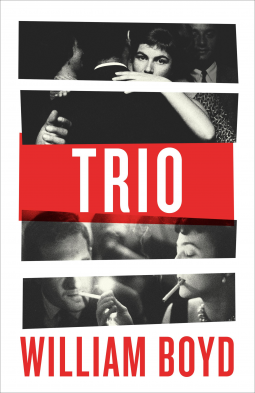
#BookReview ‘Trio’ by William Boyd #humour #Brighton

It is 1968. In Paris, students are rioting. The Vietnam war continues while in America, Robert Kennedy and Martin Luther King have been assassinated. This is the timeframe of Trio, the very readable latest novel from William Boyd. William Boyd.Set in Brighton where a film crew is shooting Emily Bracegirdle’s Extremely Useful Ladder to the Moon, the leading lady, Anny Viklund, is in bed with her co-star, pop singer Troy Blaze. The director’s wife, Elfrida Wing, is partaking of vodka from her secret stash in a Sarsons white vinegar bottle, rather than getting on with writing her next novel. The producer, Talbot Kydd, lays in his bath and tries to remember the dream he was having about a young man, pale and limber.
The story follows these three characters, each of which is living a life of pretence. Talbot has a wife in Chiswick and a secret apartment in Primrose Hill. Elfrida, once lauded as ‘the next Virginia Woolf’, writes lists of book titles but no more. Anny has an unfortunate taste in older men and when her ex-husband goes on the run, she finds herself questioned by the FBI. Day by day, Boyd weaves together the twists and turns of these three people, set against the filming of Ladder, the title of which incidentally no one understands. Sub-plots abound. When the film’s accountant warns Talbot that someone is stealing film stock, he employs an eccentric local detective. Meanwhile Elfrida, in search of the real Virginia, traces Woolf’s footsteps on the last day of her life. Anny, who cushions herself from the real world with a succession of uppers and downers, seems impossibly young. The film is the motif which unites the three but we see their individual character arcs develop in unexpected ways.
An entertaining quick read from a master of characterisation and humour who draws a recognisable picture of Brighton’s contradictions, style and sleaziness by the sea. Boyd has been a favourite of mine since A Good Man in Africa in 1981 and Trio reminds me of his early novels which showed the ability to combine a light comic touch with a darker, deeper emotional storyline.

Here are my reviews of other William Boyd books:-
ANY HUMAN HEART
LOVE IS BLIND
NAT TATE: AN AMERICAN ARTIST 1928-1960
ORDINARY THUNDERSTORMS
SWEET CARESS
THE BLUE AFTERNOON
THE DREAMS OF BETHANY MELLMOTH
WAITING FOR SUNRISE
… and try the first paragraph of ARMADILLO

If you like this, try these:-
How to Stop Time’ by Matt Haig
Wigs on the Green’ by Nancy Mitford
The Only Story’ by Julian Barnes

And if you’d like to tweet a link to THIS post, here’s my suggested tweet:
#BookReview TRIO by William Boydhttps://wp.me/p5gEM4-4XP via @SandraDanby

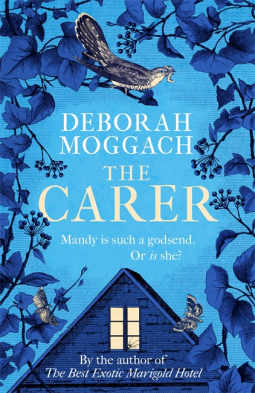
#BookReview ‘The Carer’ by Deborah Moggach #humorous #familydrama

At first I didn’t know what to make of The Carer by Deborah Moggach. She travels a fine comic line nudging towards simplistic or tasteless stereotypes. But then, as she did in These Foolish Things, the novel finds its stride. In two parts, Moggach takes her original portrayal of this family, shows it through different eyes, and turns it upside down. Deborah MoggachIn Part One we meet widower James Wentworth, OBE, 85, retired particle physicist, living downstairs in his home after breaking a hip; and his live-in carer Mandy, 50, from Solihull. ‘Mandy hummed show tunes as the kettle boiled. Blood Brothers was her favourite, about two boys separated at birth. She said she had seen it three times and blubbed like a baby.’ Mandy is fat, jolly, is a chatterer, and says it as she finds it.
Part One is told from the alternating viewpoints of James’ children. Unfulfilled artist Phoebe, 60, lives in a Welsh village in the area where she had many happy childhood holidays. Robert, 62, former City trader, is now writing a novel in his garden shed in Wimbledon, while married to a television newsreader. Our first impressions of their father, and of Mandy, are filtered through their middle class worries and prejudices. Both harbour resentments about their father’s absences when they were children when he travelled the world for work; resentments that straight-talker Mandy tells them they should have got over years ago.
Mandy is truly a catalyst of change, not just for James but for Robert and Phoebe too.
The situation is a believable one faced in today’s society as we all live longer. James in his eighties needs full-time care, his children are already retired. A succession of carers has come and gone, each unsatisfactory in one way or another. When Mandy arrives she seems an angel. Initially, Phoebe and Robert put aside the class differences as Mandy cares for their father so well. The daily walk to the nearby donkey sanctuary or trip to Lidl for pots of flavoured mousse, soon become day trips to Bicester Village and eating at Nando’s. Initially thriving under Mandy’s care with daily scratchcards and a chirping kitchen clock, James seems more forgetful so when Robert’s daughter sees the papers from James’ desk upstairs in a mess, they fear the worst. Why is Mandy looking in their father’s private documents. Can she be trusted. And what has prompted James’ sudden mental and physical decline. The twist which comes halfway through is masterful.
Part Two is James’ story, starting from his life as a young father and married to Anna. One day he attends a conference in Cardiff. What happens there affects the rest of his life, but in ways even he cannot have predicted. At the end there is one more twist, unexpected, that once again casts Robert and Phoebe’s understanding of their lives into a whirlwind.
At the heart of this novel is the question, can you ever really know someone. Whether with a stranger or a long-loved family member, don’t we all sub-consciously present different faces to different people. It is easy to assume we know someone because of the public face they present to the world, but the inner thoughts of other people, even our closest relatives – and often their marriages – are always a mystery.
Littered with throwaway quotes from Shakespeare, this is on the surface a quick, contemporary read (only 272 pages) which also casts a light on the prejudices, snobberies and problems of modern society. It is billed as a comic novel but it did not make me laugh. I was left feeling vaguely disappointed.
CLICK HERE TO READ MORE ABOUT THIS BOOK

Read my review of these other novels by Deborah Moggach:-
SOMETHING TO HIDE
THE BLACK DRESS
TULIP FEVER

Read the first paragraph of THESE FOOLISH THINGS [now THE BEST EXOTIC MARIGOLD HOTEL] here.

If you like this, try:-
Crow Blue’ by Adriana Lisboa
In the Midst of Winter’ by Isabel Allende
The Only Story’ by Julian Barnes

And if you’d like to tweet a link to THIS post, here’s my suggested tweet:
#BookReview THE CARER by Deborah Moggach https://wp.me/p5gEM4-45Q via @SandraDanby

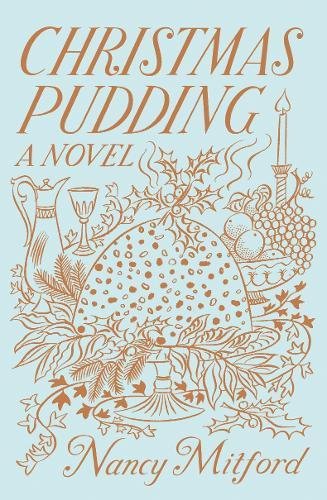
#BookReview ‘Christmas Pudding’ by Nancy Mitford #satire #historical

Christmas Pudding is another between-the-wars comedy of manners by Nancy Mitford. With scathing observation at times as sharp as Jane Austen, Mitford introduces a new character, Lord Lewes: ‘He was tall, very correctly dressed in a style indicating the presence of money rather than of imagination, and had a mournful, thin, eighteenth-century face.’ This is her second novel and features some of the personalities featured in her first, Highland Fling, though familiarity with the first is not essential for enjoyment. Nancy MitfordThe action takes place over one month around Christmas, the pudding of the title refers to Mitford’s mixture of personalities in two house parties in the Cotswold countryside. Paul Fotheringay, whose debut literary novel has been heralded as a comic farce, is desperate to escape London and find inspiration for his next book. Wanting to be taken seriously as an author, he settles on a biography of Victorian poet, Lady Maria Bobbin. When he is refused access to the diaries by the current Lady Bobbin he conjures a plot with her teenage son Bobby to masquerade as Bobby’s tutor over the Christmas holidays and so gain secret access to the diaries. And so Paul becomes part of a love triangle at the Bobbin’s home Compton Bobbin, involving Bobby’s sister Philadelphia and the honest, boring but reliable Lord Michael Lewes. The second house party, at the rather kitsch over-furnished Mulberrie Farm, is held by former prostitute and now society lady Amabelle Fortescue. Mitford’s characters move in the same overlapping social circles so it is inevitable that Amabelle and her guests Sally and Walter Monteath will socialize with some of the guests at Compton Bobbin.
Love is the central theme, true love, idealised love, upper-class arranged marriage and marriage for pragmatic facing-old-age reasons. As has always occurred in aristocratic circles, marriage is approached with a healthy dose of pragmatism making romantic love seem frothier and more idealised than ever.
This is light-hearted fiction and limited in its observation of characters; there is no upstairs/downstairs contrast here, which would enrich the social commentary. But the old and young are perfectly capable of condemning themselves out of their own mouths. Reading this novel will not change your life, but it will amuse you and the ending is not the easy way-out you may expect. My one criticism is that there are slightly too many peripheral characters with their own strings of plot.

Read my reviews of these other novels by Nancy Mitford:-
HIGHLAND FLING
LOVE IN A COLD CLIMATE
PIGEON PIE
THE BLESSING
THE PURSUIT OF LOVE
WIGS ON THE GREEN

Read the first paragraph of THE PURSUIT OF LOVE here.

If you like this, try these:-
‘Sweet Caress’ by William Boyd
‘A Death in the Dales’ by Frances Brody
‘Mothering Sunday’ by Graham Swift

And if you’d like to tweet a link to THIS post, here’s my suggested tweet:
#BookReview CHRISTMAS PUDDING by Nancy Mitford http://wp.me/p5gEM4-2UO via @SandraDanby

#BookReview ‘How To Stop Time’ by @matthaig1 #humour

How To Stop Time is another hugely inventive novel by Matt Haig with a thoughtful message about identity. Tom Hazard is a history teacher with a difference. He can talk authoritatively about the Great Fire of London, because he was there; about Shakespeare, because he met him; about witchfinders, because he was terrorised by one. Tom Hazard is 439 years old but he looks forty one. Matt HaigWhen he was thirteen, the process of ageing slowed down. Tom and his mother are protestant Huguenot refugees in England when their life falls apart; his impossibly youthful looks draw accusations of witchery. We see snapshots of Tom’s past life as he teaches history to bored teenagers in London. And all the time he struggles with the past, so much so that he is unable to live in the present. So he exists, rather than lives, changing his identity to survive and losing sight of who he is.
This is a fascinating study of humankind, our development through history and inability to learn from what went before. Tom encounters threats and suspicions in the 21st century. Is he safe? Is a sinister bio-tech company searching for albas – short for ‘albatross,’ ie. long-lived – to use for experiments? And is the mysterious Hendrich, founder of The Albatross Society, a mentor or a threat? At the core of the novel is Tom’s love for his wife Rose, a mayfly – ie. short-lived – who dies of the plague, and their daughter Marion, an alba. Where is Marion now? Will Tom become reconciled with his past enough to live his life to the full, whether it be a long life or short, and will he ever feel free enough to love again?
A philosophical novel about making the best of what you have now without dwelling on the past, which cannot be changed, or worrying about the future, which cannot be predicted.

Read my reviews of these other Matt Haig novels:-
THE HUMANS
THE MIDNIGHT LIBRARY

If you like this, try:-
‘Burial Rites’ by Hannah Kent
‘The Photographer’s Wife’ by Suzanne Joinson
‘Pod’ by Laline Paull

And if you’d like to tweet a link to THIS post, here’s my suggested tweet:
#BookReview HOW TO STOP TIME by @matthaig1 http://wp.me/p5gEM4-2Ts via @SandraDanby

#BookReview ‘The Humans’ by @matthaig1 #humour #contemporary

I irritated and intrigued by husband by my constant chuckling while reading The Humans by Matt Haig. I wish I had read it sooner, it was a breath of fresh air. I read it in two sittings over a weekend. If you feel a little jaded with your reading, this is my prescription for you. Matt HaigProfessor Andrew Martin is not feeling himself. He has been walking naked through the street and finds humans really odd-looking. That is because the real Andrew Martin is dead, and the human who looks like him is really an alien. The alien has come to earth to delete the mathematical breakthrough achieved by Professor Martin before it does damage to humankind. The alien Andrew just does not get humans, in fact his first source of information on human behaviour is from Cosmopolitan magazine.
This is a funny book with a serious message about mental health, about our acceptance of others for what they are, the expectations and selfishness of modern society. Bit by bit, the alien Andrew discovers humans are not as he has been warned; they can in fact be generous, charitable, empathetic and brave.
Here’s a small excerpt. Alien Andrew is recovering from his period of temporary insanity by watching television:
“The term ‘news’ on Earth generally meant ‘news that directly affects humans.’ There was, quite literally, nothing about the antelope or the sea-horse or the red-eared slider turtle or the other nine million species on the planet.”

Read my reviews of these other Matt Haig novels:-
HOW TO STOP TIME
THE MIDNIGHT LIBRARY

If you like this, try:-
The Diary of a Nobody’ by George & Weedon Grossmith
The Blessing’ by Nancy Mitford
Trio’ by William Boyd

And if you’d like to tweet a link to THIS post, here’s my suggested tweet:
#BookReview THE HUMANS by @matthaig1 via @SandraDanby http://wp.me/p5gEM4-1zD