Tag Archives: Marilynne Robinson

#BookReview ‘Jack’ by Marilynne Robinson #classic #Americanwriters

Jack by Marilynne Robinson is fourth in her Gilead series, following Gilead, Home and Lila and is a love story. Jack Boughton is the troubled son of Presbyterian minister, and Della, the attractive, black, high school teacher, daughter of a Methodist minister. This is a novel about the quality of love, its consequences, and whether sometimes loving someone means saying goodbye. Marilynne Robinson The story starts with such a brave scene for any author to write – a two-hander between Jack and Della as they meet accidentally at night. They are locked in a graveyard in St Louis and spend the night walking in conversation about life, their families, themselves, the world. A disreputable white man and a successful attractive black woman, in 1950s America. The conversation ebbs and flows, jumping from subject to subject as a real discussion does. They do not talk about love, but throughout the course of a number of chaste meetings, they fall in love.
It is sublime prose to sink into and absorb. Such small, familiar detail brings Jack and Della instantly to life. They are real and you care for them. The graveyard scene is long, so long I wondered if it took up the whole book.
We have heard of both these characters in the earlier Gilead books. We know Jack is a bad ‘un, as told by others. This is the first time we see into his head.
Robinson has a beautiful way of summarising truths that are easy to identify with. When Jack is with Della in the cemetery, he thinks, ‘Forever after, the thought of her would be painful, because it had been pleasant. Strange how that is.’ Jack is a mixture of insecurities, resentments, injuries and injustices brought upon himself and also by his strict religious upbringing by his pious pastor father.
Not a long book or a quick read, but absorbing. I totally understand why Jack falls for Della, wanting to save and protect her; I’m less sure why she loves him given the risks and dangers of a mixed marriage at that time. He loves his wisecracks and makes jokes at inappropriate times, misjudging the mood and causing silences. Their discussions range from Hamlet to theology, end-of-life world scenarios to poetry.
If you are new to Gilead, please don’t start with this book. Read them in order to get the most enjoyment of these complex stories of the Boughton and Ames families from Gilead, Iowa.
CLICK HERE TO READ MORE ABOUT THIS BOOK AT AMAZON

Read my reviews of Robinson’s other novels:-
GILEAD
HOME
HOUSEKEEPING
Try the #FirstPara of GILEAD here.

If you like this, try:-
Offshore’ by Penelope Fitzgerald
The Gustav Sonata’ by Rose Tremain
Time Will Darken It’ by William Maxwell

And if you’d like to tweet a link to THIS post, here’s my suggested tweet:
#BookReview JACK by Marilynne Robinson https://wp.me/p5gEM4-561 via @SandraDanby

Great Opening Paragraph 130 ‘Gilead’ #amreading #FirstPara

“I told you last night that I might be gone sometime, and you said, Where, and I said, To be with the Good Lord, and you said, Why, and I said, Because I’m old, and you said, I don’t think you’re old. And you put your hand in my hand and you said, You aren’t very old, as if that settled it. I told you you might have a very different life from mine, and from the life you’ve had with me, and that would be a wonderful thing, there are many ways to life a good life. And you said, Mama already told me that. And then you said, Don’t laugh! Because you thought I was laughing at you. You reached up and put your fingers on my lips and gave me that look I never in my life saw on any other face besides your mother’s. It’s a kind of furious pride, very passionate and stern. I’m always a little surprised to find my eyebrows singed after I’ve suffered one of those looks. I will miss them.”
Marilynne RobinsonFrom ‘Gilead’ by Marilynne Robinson

Read my reviews of these novels by Marilynne Robinson:-
GILEAD
HOME
HOUSEKEEPING
JACK

Try one of these #FirstParas & discover a new author:-
Agnes Grey’ by Anne Bronte
The Big Sleep’ by Raymond Chandler
The Collector’ by John Fowles

And if you’d like to tweet a link to THIS post, here’s my suggested tweet:
#Books #FirstPara GILEAD  by Marilynne Robinson https://wp.me/p5gEM4-4eD via @SandraDanby

#BookReview ‘Home’ by Marilynne Robinson #classic #Americanwriters

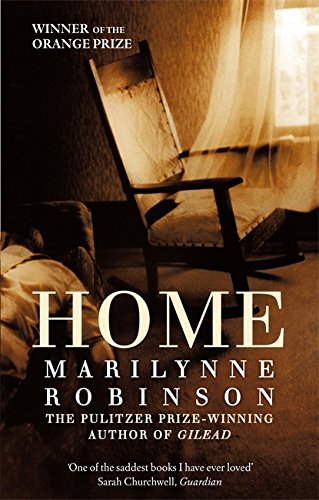
Home by Marilynne Robinson is the story of two adult children who return home, coincidentally at the same time, who feel the shame of not living up to the standards set by their minister father, Reverend Robert Boughton. It is a profoundly sad book; the slow winding tale towards the inevitable ending is curiously addictive. It is a three-hander, concentrating on father, son and daughter. Marilynne RobinsonGlory and Jack Boughton grew up in a clerical family home in Gilead, Iowa. We learn of their country childhoods, quite different as siblings go, from their conversations and the memories prompted by visits from neighbours Reverend John Ames, his wife Lila and son. The story is told from Glory’s viewpoint. Jack takes lots of ‘dark nights of the soul’, long solitary walks in the dark to which we are not privy, and his true thoughts remain a mystery to the end. Just when you think you have worked him out, he confounds you.
Robinson draws a picture of rural America at a time of great change. There are demonstrations in Montgomery, but Gilead seems insulated from the outside apart from occasional telephone calls to their father by Glory and Jack’s siblings, and news reports of violence. Jack is drawn to the news coverage; his father dismissive. Jack is a contradiction; he struggles to believe yet knows his Bible backwards, plays hymns on the piano, and quotes scripture at Ames.
Slowly, piece by piece, we find out the details of Glory’s shame. Why she really came home, why she is no longer teaching. But Jack is more opaque, hiding his past, unable to share, he is spiky when offered help and understanding. Does he feel unworthy? He is spiritually isolated from his family, unable to connect though at times he longs to, other times he kicks out. A to-and-fro battle proceeds as Jack opens up a little to Glory, then slamming shut again when faced with his father’s well meaning but blunt questions. There are parallels between the siblings; Glory is recovering from a failed relationship with an unscrupulous man who sounds rather like Jack, while Jack mourns the loss of a good woman who sounds rather like Glory. This book tells the story of how the brother and sister come to understand themselves, and each other, more clearly, but based on fractured pieces of the truth.
As the book progresses, Boughton grows weaker as death approaches. He is one moment gentle towards Jack; the next, angry. Does he think that in striving for achievement for his children he also failed them, by channelling them towards a path they might not otherwise have followed, by not allowing them to develop naturally. I’m not sure Boughton sees it like that. They all live within the constraints of a family entwined in the strait-jacket of belief.
Robinson is best at the detail of ordinary life, the garden, the fruit and vegetables, the weather, the faded house, drawing pictures as clearly as Leonardo da Vinci drew pencil sketches of hands. “Glory made up a batch of bread dough. Brown bread was her father’s preference. Something to lift the spirits of the household, she thought. The grocer brought her a roasting hen. She opened the windows to cool the kitchen and air out the dining room a little, and the breezes that came in were mild, earthy, grassy, with a feel of sunlight about them.”
How many adults can return to visit their parents in the family home in which they grew up and find that home unchanged? “It was in fact a relief to have someone else in the house. And it was interesting to watch how this man, gone so long, noticed one thing and another, as if mildly startled, even a little affronted, by all the utter sameness. She saw him put his hand on the shoulder of their other’s chair, touch the fringe on a lampshade, as if to confirm for himself that the uncanny persistence of half-forgotten objects, all in their old places, was not some trick of the mind. Nothing about that house ever did change, except to fade or scar or wear.” The unchanging nature of the family house mirrors the unchanging nature of the family that lives in it; the patriarch with his rules and expectations, the children trying to please him but falling short and feeling guilty. Each not wanting to worry the other, protective of the myth of their family, sensitive to their father’s opinion, fearful of striking out on their own again away from Gilead and what they know. Wanting to leave, wanting to stay.
Home will stay with you a long time after reading, whether you have faith or none. It is a companion to Gilead which won the Pulitzer Prize.
CLICK HERE TO READ MORE ABOUT THIS BOOK

Read my reviews of Robinson’s other novels:-
GILEAD
HOUSEKEEPING
JACK

Try the #FirstPara of GILEAD here.

If you like this, try:-
‘A Little Life’ by Hanya Yanagihara
‘The Witchfinder’s Sister’ by Beth Underdown
‘Skin Deep’ by Laura Wilkinson

And if you’d like to tweet a link to THIS post, here’s my suggested tweet:
#BookReview HOME by Marilynne Robinson https://wp.me/p5gEM4-3gf via @SandraDanby

#BookReview ‘Gilead’ by Marilynne Robinson #classic #Americanwriters

Gilead by Marilynne Robinson is a read like no other. A slow, contemplative journey through the memories of one man’s life, as he waits to die. In 1956, the Reverend John Ames writes a letter to his young son. It tugs the heartstrings. Marilynne Robinson Robinson writes with a clear unadorned style drawing heavily on biblical texts but it is not a religious tract, it is the story of a man’s life, his memories, his regrets and loves. The first few lines grabbed me and didn’t let me go. Do not start reading this book if you are feeling impatient. Some passages are easy and quick to read, others deserve more thought. It unwinds slowly like a length of thread, telling us the story of John Ames, his father and grandfather, the legacy of the Ames family which has been inherited by the Reverend’s seven-year old son.
I am not religious and some of the references will have passed me by. In the first half of the novel, I would think ‘oh no not another section about religion’, but as I read deeper into the book I became drawn into the stories of John Ames and his forebears and how their beliefs shaped their lives. I wanted to know what happened to John Ames Boughton, the troublesome son of his best friend and fellow reverend. I wanted to know how the Reverend Ames met his second wife. Some of the questions posed are not answered until the very end.
It is a peaceful novel, set against the backdrop of Fifties Iowa, which draws on local history including the Underground Railroad. Robinson draws a picture of the Gilead community, the people, their kindnesses, their grievances. She paints a clear picture. ‘We were very pious children from pious households in a fairly pious town.’
At times, the writing was so sublime I re-read. For example, ‘Sometimes I have loved the peacefulness of an ordinary Sunday. It is like standing in a newly planted garden after a warm rain. You can feel the silent and invisible life.’
Gilead, the second novel by Marilynne Robinson, won two prizes in 2005: the Pulitzer Prize for Fiction, the National Book Critics Circle Award. I came to it with trepidation, having respected the writing style of her first novel, Housekeeping but struggled with the pace of the narrative.
CLICK HERE TO READ MORE ABOUT THIS BOOK AT AMAZON
Try the #FirstPara of GILEAD here.

Read my reviews of Robinson’s other novels:-
HOME
HOUSEKEEPING
JACK

If you like this, try:-
‘Barkskins’ by Annie Proulx
‘Did You Ever Have a Family?’ by Bill Clegg
‘The Past’ by Tessa Hadley

And if you’d like to tweet a link to THIS post, here’s my suggested tweet:
#BookReview GILEAD by Marilynne Robinson via @SandraDanby http://wp.me/p5gEM4-2Cb

#BookReview ‘Housekeeping’ by Marilynne Robinson #classic #Americanwriters

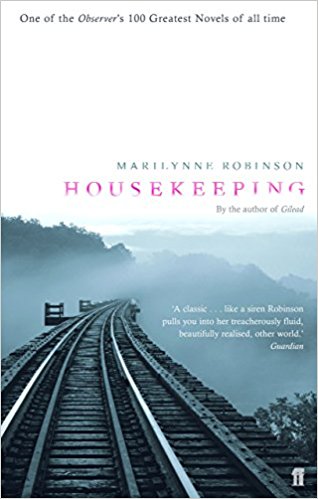
Housekeeping by Marilynne Robinson had been on my shelf for a while, bought because of reputation, and anticipated. Perhaps I expected too much of a first novel because, though it has amazing reviews, I struggled to connect with the story. The writing, however, is beautiful, poetic, elegiac. Marilynne RobinsonIt is the story of Ruth and Lucille, orphans, who grow up beside a haunting lake in the vast open countryside of mid-America. The lake dominates the life of everyone who lives around it, it floods every year, and floods the house where the two girls live, first with their grandmother and then with their Aunt Sylvie. We see Sylvie’s attempts at housekeeping dwindle as the house floods each winter, as her care for the house fails, so the two girls are uncared for. Not abused, but not clean, not sent to school, not disciplined. It is a novel about the failure of housekeeping in this house, and in the family, and it is the two who girls who suffer.
The sad story moves at a slow pace, and until halfway through I had no clear picture of how the two girls were different. It is Ruth who narrates, much of which is description of the house which lays at the heart of the story.
All the description, though, is poetic. Ruth’s grandmother in her elderly years “continued to settle and began to shrink. Her mouth bowed forward and her brow sloped back, and her skull shone pink and speckled within a mere haze of hair, which hovered about her head like the remembered shape of an altered thing.”
This is not an easy read, often obscure. There was no strong thread to pull me through the book, to keep turning the pages.
CLICK HERE TO READ MORE ABOUT THIS BOOK AT AMAZON

Read my reviews of Robinson’s other novels:-
GILEAD
HOME
JACK

Try the #FirstPara of GILEAD here.

If you like this, try:-
‘A Thousand Acres’ by Jane Smiley
‘Summertime’ by Vanessa Lafaye
‘Barkskins’ by Annie Proulx

And if you’d like to tweet a link to THIS post, here’s my suggested tweet:
#BookReview HOUSEKEEPING by Marilynne Robinson http://wp.me/p5gEM4-1zG via @SandraDanby