Tag Archives: Minette Walters

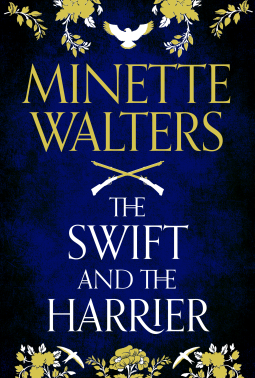
#BookReview ‘The Swift and the Harrier’ by Minette Walters #historical

The latest historical novel from former thriller writer Minette Walters is an absolute cracker. I raced through The Swift and the Harrier which is a fabulous mixture of dramatic history, medicine, family divisions and romance, all set in the English Civil War. Minette Walters Three days before the English Civil War begins in 1642, a Catholic priest is hung in Dorset for treason. Gentleman’s daughter and physician Jayne Swift is introduced to us in the public crush on Dorchester’s streets as people press to see the action. To avoid confrontation, Jayne steps into a doorway and finds herself drawn into the house by a thin-lipped elderly woman. They are strangers and in the current political unrest, all strangers must be mistrusted. This meeting is the catalyst for a narrative which takes us through the twists and turns of this war which sets brother against brother, where unpaid soldiers are ordered by superiors to loot and ransack civilian property, where small towns are attacked under siege for little gain and where men choose sides on blind belief rather than an understanding of the facts. Disguise and dissimulation are necessary to avoid the attention of whichever band of soldiers are encountered.
Jayne is a wonderful heroine. Plucky, bloody-minded, honest and fair, with a strong belief of a medic’s neutrality in time of war despite her staunchly Royalist father, she concentrates on treating the sick and wounded. This gets her into trouble numerous times. During the execution in Dorchester, Jayne encounters so many arrogant and boorish men, dismissive not just of women but of anyone whose views or experience are different to their own. She manages to evade arrest, and worse, thanks to some examples of honourable men. The role of women and the lack of freedoms is a theme running throughout the book, not just Jayne’s own medical career but a gentlewoman’s hidden proficiency as an artist, cousin Ruth’s marriage to a domineering violent man, and the bravery and efficiency of the women of Lyme Regis during its siege by Royalty forces. At the heart of it all – the war, the political and religious divide, marriage, work and family relationships and inheritance – is the right of everyone, man or woman, rich or poor, to the freedom of choice.
In the first action scene in Dorchester, Jayne is aided by William, a footman to Lady Alice Stickland, the elderly lady whose doorway in which Jayne takes shelter. And here is the first romantic thread which is stitched to the end of the book. Who is William? Why does his appearance change and why does he tell a different story every time Jayne sees him? Is he trustworthy?
A book I didn’t want to end. My knowledge of the Civil War is superficial and I particularly enjoyed the passages about the siege of Lyme Regis, a place I know.

Read my reviews of the two ‘Black Death’ historical novels, also by Minette Walters:-
THE LAST HOURS #1BLACKDEATH
THE TURN OF MIDNIGHT #2BLACKDEATH

If you like this, try:-
The Evening and the Morning’ by Ken Follett #PREQUELKINGSBRIDGE
The Pillars of the Earth’ by Ken Follett #1KINGSBRIDGE
World Without End’ by Ken Follett #2KINGSBRIDGE

And if you’d like to tweet a link to THIS post, here’s my suggested tweet:
#BookReview THE SWIFT AND THE HARRIER by Minette Walters https://wp.me/p5gEM4-5wd via @SandraDanby

#Book review ‘The Turn of Midnight’ by Minette Walters #historical

You just know when the book you’ve just started reading is going to be 5*. For me, not many are. I read lots of good 3* and 4* books. I reserve 5* sparingly for the special ones. The Turn of Midnight by Minette Walters is one of those. It ticks so many boxes. Thriller, history, surprises, great characters and a tantalising bit of love from afar; Walters is a master storyteller. Minette Walters This is a story of a grim period in British history. The Black Death. Medieval England. Gruesome detail, and yet I stayed up late to finish it. Why, because she makes me love the characters and manages that delicate balancing act of giving me just enough historical detail to be interesting but not too much that it becomes tedious.
The Turn of Midnight is the sequel to The Last Hours which tells the story of the Black Death and its impact on the small Dorsetshire demesne of Develish. After the death of her husband from the plague his widow Lady Anne quarantines the demesne, introduces cleanliness routines and organises her healthy family, servants and serfs into a self-supporting and mutually-respectful society; unheard of in 1348. Woven into this story of survival is a romantic thread as Lady Anne and Thaddeus Thirkell, an illegitimate serf born on the demesne who Lady Anne has educated over the years to a standard of education greater than anyone else in the community excepting herself. Where The Last Hours is something of a closed room story with a tight-knit cast of characters and one location, The Turn of Midnight sees Thaddeus and a group of young men venture out into Dorsetshire to assess the dangers of the plague and the survival of other villages. When they return with a story of death, desertion and dereliction, a plan is formed to buy the neighbouring demesne of Pedle Hinton and so provide a home and farmland for the Develish citizens, the number of which has grown with the number of healthy wanderers they have adopted. But outside the demesne moat there are many enemies: bandits thieving and preying on the vulnerable, Norman soldiers who hate the English serfs, English serfs who hate anyone Norman, and corrupt priests, stewards and lords who swear they are acting in the name of God.
The plan is risky. Lady Anne and Thaddeus know that, although not robbing living people, they are taking possessions and gold which is not rightly theirs. It culminates in a struggle of religion, power and prejudice. Will common sense and the right of the people triumph? Whilst Lady Anne fights a battle against prejudice of her sex where she is better educated than the men who accuse her, Thaddeus similarly fights against prejudice of his worker roots and foreign tall dark physique.
Walters lives in Dorset and this shows in her sweeping creation of medieval Dorsetshire, she writes of the countryside, nature and the seasons with such surety you know she knows it well. This is a story of the first breaths of social mobility in a time of class hierarchy that prevented starving serfs from eating food meant for their lords, even though those lords are dead or have fled. Lady Anne’s common sense approach brings survival, health, basic education and hope for the future.
Excellent.

Read my reviews of two other historical novels by Minette Walters:-
THE LAST HOURS #1BLACKDEATH
THE SWIFT AND THE HARRIER

If you like this, try:-
The French Lesson’ by Hallie Rubenhold
The Ashes of London’ by Andrew Taylor
Foxlowe’ by Eleanor Wasserberg

And if you’d like to tweet a link to THIS post, here’s my suggested tweet:
#BookReview THE TURN OF MIDNIGHT by Minette Walters https://wp.me/p5gEM4-3xR via @SandraDanby

#BookReview ‘The Last Hours’ by Minette Walters #historical

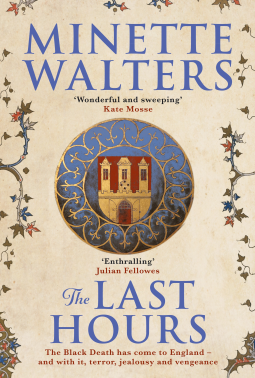
I cannot remember when I last read a novel by Minette Walters although her psychological crime thrillers occupy a considerable section of my bookshelf. As soon as I read the blurb for The Last Hours, I was fascinated. What could  Walters do with a historical drama based on the Black Death of 14th century England? I wasn’t disappointed. Minette WaltersThe Last Hours tells the story of the Develish demesne in Devon in 1348 when infectious illness spread rapidly and threatened to wipe out the 200 bonded serfs, servants and family. What did take me by surprise is that The Last Hours is only the first instalment of the story, so there is the unexpected anticipation of the next book now to enjoy.
The first character we meet, pre-infection, is Eleanor. The only daughter of Sir Richard and Lady Anne of Develish, she watches preparations for the departure of her father and his retinue as they travel to meet the neighbouring lord to whose son Eleanor is promised. Eleanor seems at once fascinated by and repelled by a serf, Thaddeus Thurkell, who she distains for his illegitimacy. As a first chapter it sets up the relationships and future action in such a detailed way, I found myself re-reading it for clues. Because, though this is a historical novel, never forget it is written by Walters, author of The Scold’s Bridle and The Ice House.
Mystery, deceit, betrayal, lies and gruesome horror are a part of the story of how Lady Anne marshalls the population of Develish, family, stewards, servants and serfs alike, to survive when infection threatens to engulf them. Thaddeus is a key character, educated, tough and inspiring, he becomes a key figure when Sir Richard’s party returns from its visit to the neighbouring Bradmayne estate. Facing disease, Lady Anne must decide how to save the lives of the majority. Her knowledge of basic medical practices and herbal remedies, gleaned for her girlhood in a nunnery, enable her to reorganise Develish for survival. Walters does not lighten her descriptions of the Black Death; its symptoms, the corpses and infection are explicitly described but not in a sensationalist way, instead they add tension to the plot. Can this group of people possibly survive when whole Devonshire villages are dead and packs of wild dogs roam the countryside? How can you protect yourself from infection when the source of the disease is unknown and there is no help from outside?
The storyline is handled with expert timing. Just at the point where I wondered where the next threat would come from, Walters splits the storyline in two. After a suspicious death of a teenage boy, Thaddeus takes a group of five youths across the moat to explore the surrounding countryside to assess the threat from bandits and disease, and search for food. Meanwhile Eleanor’s behaviour is becoming more extreme, her hatred for her mother and the serfs make daily life difficult for all in such a confined space. Indulged by her father, Eleanor has grown to be a selfish, arrogant, ungrateful young woman who believes in her own superiority and expects special treatment even in such abnormal times.
As well as a historical study of the disease, The Last Hours also examines the social changes of the time, as serfs become educated and, encouraged by Lady Anne, consider a life independent of the feudal system. Walters has written two Black Death novels, the second is The Turn of Midnight.

Read my reviews of two other historical novels by Minette Walters:-
THE TURN OF MIDNIGHT #2BLACKDEATH
THE SWIFT AND THE HARRIER

If you like this, try:-
‘Gone are the Leaves’ by Anne Donovan
‘At the Edge of the Orchard’ by Tracy Chevalier
‘The Taxidermist’s Daughter’ by Kate Mosse

And if you’d like to tweet a link to THIS post, here’s my suggested tweet:
#BookReview THE LAST HOURS by Minette Walters https://wp.me/p5gEM4-35D via @SandraDanby