
A dirty, realistic, unflinching portrayal of the women taken hostage by the Greek victors at Troy, The Voyage Home by Pat Barker is unputdownable. I didn’t expect anything less having devoured the first two books in this trilogy, The Silence of the Girls and The Women of Troy.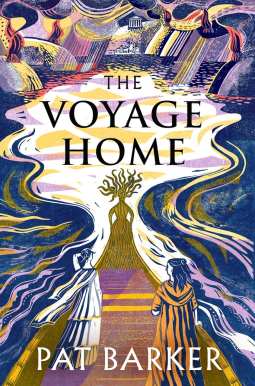 Prophetess Cassandra, taken as war booty by King Agamemnon, is on the boat home; to Agamemnon’s home that is, not hers. After the battle, Cassandra and her maid Ritsa sail away from Troy towards Greece. Awaiting them are Queen Clytemnestra, who has governed in her husband’s absence, and his two remaining children Orestes and Electra. The post-war story told by these three women is familiar after many conflicts. Murder, abduction, rape, abuse, torture, child killing, looting, destruction, triumphalism. All have suffered during this ten-year-long men’s war. Cassandra, the priestess daughter of Trojan king Priam, may wear silk and decorate her hair with flowers, but she is as much a slave as Ritsa who was a noblewoman before her capture. Plagued by visions of her captor’s death, and her own, Cassandra is at times emotionally disturbed, at others she is defiant. Clytemnestra, full of vengeance for her husband’s sacrifice of their daughter Iphigenia – in tribute to the gods in return for a fair wind to war – must smile and welcome his concubine to her home. But what a home; plagued by the long-dead voices, handprints and footprints of child ghosts, the palace is an unsettling place.
Witty and, in places, bloodthirsty, Barker writes about the abuse of these women with a delicacy and empathy that makes the pages turn quickly. I read this in two days. She writes with anger and disgust that seems modern, but these are age-old tales of men’s brutality. In a palace full of nightmares, murder is planned. These three women, slave and non-slave, are seeking retribution. But what is revenge? Is it a universal truth. Does it mean the same to each of these woman. Justice. Murder. Survival against the odds. Peace. The ability to rise each morning without fear. Does it mean striking the fatal blow yourself or watching someone else? I don’t see this as a feminist re-telling in which weak men receive their come-uppance. Barker shows the men are arrogant, conniving, self-seeking and brutal. The women can be strong, brutal, selfish and unlikeable too.
A brilliant end to this trilogy. Pat Barker brings mythology to life, making it relevant for life today. One to think about for days afterwards. Highly recommended.
Read my reviews of other Pat Barker novels:-
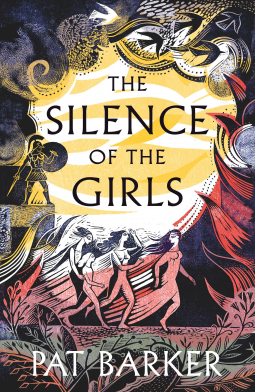
THE SILENCE OF THE GIRLS #1WOMENOFTROY
THE WOMEN OF TROY #2WOMENOFTROY
LIFE CLASS #1LIFECLASS
TOBY’S ROOM #2LIFECLASS
NOONDAY #3LIFECLASS
ANOTHER WORLD
BLOW YOUR HOUSE DOWN
DOUBLE VISION
UNION STREET
If you like this, try:-
‘House of Names’ by Colm Tóibín
‘Stone Blind’ by Natalie Haynes
‘Sparrow’ by James Hynes
And if you’d like to tweet a link to THIS post, here’s my suggested tweet:
#BookReview THE VOYAGE HOME by Pat Barker https://wp.me/p2ZHJe-8Gl via @SandraDanby
COMING SOON… THE NEXT BOOK I REVIEW WILL BE:- 


 SANDRA DANBY'S BOOK REVIEWS