Tag Archives: novels set in the 1960s

#BookReview ‘The Predicament’ by William Boyd #spy #thriller

In The Predicament by William Boyd, Gabriel Dax, writer and occasional British spy, gets involved in more suspect shenanigans, this time involving the CIA and the Americans. This book takes up his story in 1963, two years after the end of the first Dax book, Gabriel’s Moon. William BoydIn Guatemala, an election is looming. After a brief lesson in how to kill using the contents of his pockets [a notebook, wallet and keys], Gabriel is sent to South America by his MI6-handler and occasional lover Faith Green. An interview is arranged with Padre Tiago the secretive, charismatic left-wing leader who is predicted to win the forthcoming election. Tiago’s views are not universally popular. When his meeting is disappointing, Gabriel fears the trip is a waste of time. Then Padre Tiago is assassinated and Gabriel flees the ensuing riots. With his journalist’s sixth sense for the dodgy, Gabriel knows the real story is being hidden. The people he meets in Guatemala City and what happens there are important to the developing plot which later leads him to Berlin and the visit of President John F Kennedy.
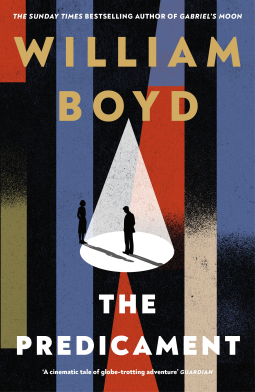
Gabriel’s spy adventures are alternated with sessions with his psychoanalyst Dr Haas, meetings with his Russian handler Varvara [Dax is still posing as the secretive London contact of an English traitor now in Moscow], and scenes as he settles into his new life in a country cottage in Sussex. These storylines are continued from Gabriel’s Moon so it is helpful to read that book first. Boyd wastes nothing, all of these slower sub-plots add to the narrative. They bring new perspective on Gabriel’s personality, his past spy missions, his longing to return full-time to travel writing, and his feelings for Faith.
When Faith sends him to Berlin to shadow a suspect, Gabriel wants to refuse but knows he can’t. Dean Furlan is one of the men he met in Guatemala, who he instinctively knew was up to no good. The second half of the book is a page-turning race through the Berlin streets, working with the CIA and Berlin police to prepare for Kennedy’s arrival, identify a possible assassin and stop an attack. Gabriel is growing in confidence, his spycraft is improving and he has an instinct for trouble. He is at the centre of the action.
Boyd writes an addictive spy novel set at a time of global insecurity. Gabriel is a likeable character with his complicated love life. He attempts to live a normal life as a writer, planning and researching chapters for his next book, but is unwittingly pulled into more spying by the women who has bewitched him. All told in Boyd’s masterful style, combining simple details with lush descriptions and gentle humour.
Excellent.

Here are my reviews of the other books in this series:-
GABRIEL’S MOON #1GABRIELDAX
COLD SUNSET #3GABRIELDAX

… and my reviews of other books by William Boyd:-
ANY HUMAN HEART
LOVE IS BLIND
NAT TATE: AN AMERICAN ARTIST 1928-1960
ORDINARY THUNDERSTORMS
SWEET CARESS
THE BLUE AFTERNOON
THE DREAMS OF BETHANY MELLMOTH
TRIO
WAITING FOR SUNRISE

… and try the #FirstPara of ARMADILLO.

If you like this, try these:-
‘Munich Wolf’ by Rory Clements #1SEBASTIANWOLFF
‘The Ways of the World’ by Robert Goddard #1WIDEWORLD
‘The Second Midnight’ by Andrew Taylor

And if you’d like to share a link:
#BookReview THE PREDICAMENT by William Boyd https://wp.me/p2ZHJe-8oZ via @SandraDanby

COMING SOON… THE NEXT BOOK I REVIEW WILL BE:- Helena Dixon
#BookReview ‘Gabriel’s Moon’ by William Boyd #spy #thriller

Gabriel’s Moon by William Boyd could actually be titled ‘The Accidental Spy’ because that’s what Gabriel Dax is. What a wonderful spy novel this is, it plays with the idea of mistaken memory, mistaken perceptions and dangerous obsession. A Sixties Cold War thriller wrapped up in stellar writing. I raced through it. William BoydTravel writer Gabriel Dax has a dream singleton’s life. A flat in Chelsea, journalistic assignments taking him around the world, he is the author of three books and has an occasional girlfriend, Lorraine, who provides fun without committment. On location in the Congo, Dax is sent by his editor to do a political interview with the country’s new prime minister. This is unfamiliar territory for Gabriel but he takes the opportunity, hoping it may lead to more work. On the flight home he is surprised, and delighted, to see a fellow passenger reading one of his books. What follows next are a series of events he later realises are not coincidences.
In London he is surprised to see the woman from the plane near his house, but she disappears before he can speak to her. Then on a cold January day he is eating a lonely plate of spaghetti in the Café Matisse when the same woman approaches his table. She introduces herself as Faith Green and says she recognises him as the author of the book she was reading on the plane from Léopoldville. Then she drops two bombshells, that Patrice Lumumba, the prime minister who Gabriel interviewed, is dead. And that she would like him to do ‘us’ a ‘small favour’ as he has done in the past for his brother Sefton, mostly delivering packages. But when Faith says ‘us,’ she means MI6.
The favours that Gabriel undertakes for Faith are always mysterious, taking him to Spain and Poland. Operating on sparse information and cryptic instructions, Gabriel quickly learns to look over his shoulder and to trust his instincts. After each job he pockets the cash and vows never to work for Faith Green again, until the next time she asks. He becomes unable to say no to her, his attraction evolves into obsession.
Woven through Gabriel’s adventures as a reluctant spy are matters closer to home. The death of his mother when he was six in a house fire, from which he escaped, has left him with insomnia and nightmares. So Gabriel starts to see Dr Katerina Haas who recommends anamnesis, the search of facts that aid the return of memory. The family strand of the story encompasses Gabriel’s relationship with his two remaining relatives. His uncle Aldous Dax, who raised Gabriel when he was orphaned, is an art dealer. Older brother Sefton does something unspecified in the Foreign Office. Boyd handles his intricate plotting with a light hand, Gabriel never really knows what is happening and neither does the reader; but it is fun guessing.
William Boyd never disappoints, from cradle to the grave stories such as Any Human Heart, the story of a young pianist in Love is Blind, and a mix of sex and spies in Waiting for Sunrise, he reliably takes you away from the modern world as you sink into the world of his story.
Excellent.

Gabriel’s Moon is first in the Gabriel Dax trilogy. Here are my reviews of the other books in this series:-
THE PREDICAMENT #2GABRIELDAX
COLD SUNSET #3GABRIELDAX

…. and my reviews of other books by William Boyd:-
ANY HUMAN HEART
LOVE IS BLIND
NAT TATE: AN AMERICAN ARTIST 1928-1960
ORDINARY THUNDERSTORMS
SWEET CARESS
THE BLUE AFTERNOON
THE DREAMS OF BETHANY MELLMOTH
TRIO
WAITING FOR SUNRISE

… and try the #FirstPara of ARMADILLO.

If you like this, try these:-
‘Nucleus’ by Rory Clements #2TOMWILDE
‘Wolf Winter’ by Cecilia Ekback
‘The Traitor’ by Ava Glass #2ALIASEMMA

And if you’d like to share a link:
#BookReview GABRIEL’S MOON by William Boyd https://wp.me/p2ZHJe-8n5 via @SandraDanby

COMING SOON… THE NEXT BOOK I REVIEW WILL BE:- William Boyd

#BookReview ‘Little Deaths’ by Emma Flint #mystery #suspense

This is another of those novels which is an uncomfortable read. What kept me reading? The characters. I wanted to know what really happened. But of course this is fiction and characters don’t always tell the truth, only their version of the truth. Little Deaths by Emma Flint is an accomplished debut, as I read I could tell she had got under the skin of her characters. Emma FlintThere is an intriguing set-up, we first hear Ruth’s voice. She is in prison. We don’t know why, but she compares her life now with her life before. When she was a single mum with two small children. As I read, I felt a shiver down my back: where are her children now? Starting the story with Ruth in prison surely gives away the ending, doesn’t it? Not really. This is a nuanced tale of trial by jury in 1960s America [though until the Sixties were mentioned, it seemed to be set in a curiously non-time specific period] where prejudices about women could wrongly influence outcomes, where social pre-conceptions coloured witness statements, and hearsay evidence seemed admissible if the accused was disliked. It is a tale of presumed guilt, and it should make all readers stop and think.
Ruth, separated from her husband Frank, works as a cocktail waitress to support her children. It is a hard life when Frank’s support cheques bounce and the children don’t want to eat the only food she has to feed them. Ruth puts on a persona when she leaves the house, it is her way of coping. She is a proud woman, who doesn’t want to admit her struggles or to ask for help. She is attractive and uses make-up and tight clothes to attract boyfriends who give her cash, cash which helps her to survive. And then one morning when she goes to the children’s bedroom, Cindy and Frank Junior are not there. The police questioning starts, and the make-up, short skirts and lack of friendly neighbours come back to haunt her.
We are told Ruth’s story, first by Ruth herself, and also by Pete Wonicke, a young journalist who reports on the case. As the months go on and no-one is arrested we see Ruth’s anger and helplessness in the face of police who wait to convict her rather than investigate other clues. Meanwhile, Pete becomes obsessed with Ruth and with proving her innocence.
This novel stayed with me for days afterwards. It made me question how quick we are to judge others by what we see on the outside, how easy it is to allow our prejudices to dominate our views on life. Sometimes the guilty-looking person will be guilty. But sometimes they won’t.
You will have to read right to the end to find out if Ruth is guilty or not guilty.
The novel was inspired by a real life case, read more about this in The Alice Crimmins Case by Kenneth Gross.

If you this, try:-
‘Stolen Child’ by Laura Elliot
‘The Girls’ by Lisa Jewell
‘Disclaimer’ by Renee Knight

And if you’d like to share a link:
#BookReview LITTLE DEATHS by Emma Flint http://wp.me/p5gEM4-2iW via @SandraDanby