Tag Archives: psychological thriller

#BookReview ‘The Snakes’ by Sadie Jones #thriller #suspense

Bea and Dan come from completely different places. He is a mixed race boy from Peckham, South London, trying to make it as an artist but working as an estate agent. She is the daughter of parents with multiple homes, multiple cars, who travel in private jets and stay in luxurious hotels. Dan knows Bea dislikes her parents and their wealth, and applauds Bea’s decision to live an ordinary life with him in a scruffy flat. But Bea hasn’t been honest with him, she is an heiress to billions. Welcome to the Adamson family in The Snakes by Sadie Jones. Sadie JonesBilled as a psychological thriller, to me The Snakes is more a story of 360° snobbishness where characters make assumptions about the lives of others based on prejudice; it is about greed and excessive consumption; moral superiority in all quarters, a conviction of being right; racism; and unfamiliar police procedures, all wrapped up in the story of a seriously messed up family. The setting in rural France is beautifully written. One of the best, creepiest scenes is early on when Bea walks alone across the fields in the summer heat and takes a dip in a nearby stream. This early action suggests that Bea is emotional, an unreliable witness; should we believe her assessment of threat and safety? And if you query her judgement in a small situation, does it follow that she is unreliable as the horrible story progresses? Should we trust her, should we like her?
Most of the action takes place at the country house in Burgundy run by Bea’s brother Alex. Bea and Dan take time off work for a summer road trip, intending to stay with Alex at Paligny briefly before heading to the South of France. But Bea’s concern for Alex, his drinking and drug use, and the strange set-up at Paligny, lead them to stay. Alex fears snakes are in the house, he sets traps and dreams they are in the attic. And then Bea and Alex’s parents – Liv and Griff – arrive, bringing with them money, privilege and expectations. Griff sends Alex on an errand, and Alex is never seen again.
I went through phases of disliking every character, distrusting every character. Dan, though loyal to Bea, cannot help be intrigued by her bombastic father who sprays money around in a way Dan has never seen. Bea is self-righteous, something of a prig, lacking in confidence in the face of her bullying father and good-looking husband. Liv is indescribable; I had no feeling for her character except for understanding the hatred she triggers in Bea. Griff is a self-made man, a bully, unaware of the effect his behaviour has on his children. Everyone is selfish.
I was left with the feeling a different novel was trying to be heard. It is an odd ending, over-milked for every dramatic moment but oddly unthrilling. Difficult to figure out, this novel is like a Russian doll splitting with too many ideas. Perhaps the issue is that everyone seems to be lying, to each other and themselves.

If you like this, try:-
‘The House on Cold Hill’ by Peter James
‘The Girls’ by Lisa Jewell
‘The Ice’ by Laline Paull

And if you’d like to tweet a link to THIS post, here’s my suggested tweet:
#BookReview THE SNAKES by Sadie Jones https://wp.me/p5gEM4-41G  via @SandraDanby
#BookReview ‘The Doll Factory’ by Elizabeth Macneal @esmacneal #historical #thriller

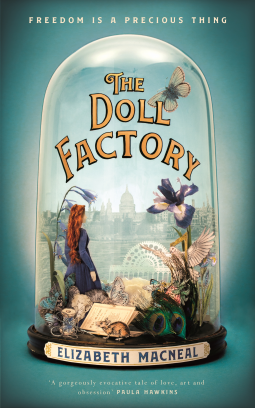
What a creepy tale is The Doll Factory by Elizabeth Macneal. It is a strange and compelling mixture of creepy taxidermy, the painting of doll’s faces and the Pre-Raphaelite Brotherhood artists, combined with stalking and kidnapping. I finished it not sure whether I liked it or not. Some parts are beautiful, some are horrifying. Elizabeth Macneal It is London 1850. Queen Victoria is on the throne, the Great Exhibition is being built in Hyde Park and a team of men are searching for wonders to display. Iris and her sister Rose work at The Doll Factory shop, painting personalised faces onto dolls, and sleeping in the attic. They survive but can only dream of having enough money to open their own shop. Iris is desperate to be a real artist. Silas Reed’s Shop of Curiosities Antique and New is popular with Victorian ladies buying dried butterflies and artists wanting stuffed mammals and rodents that can be copied and incorporated into their art. Silas and Iris are linked by Arnie, a young boy who scratches a living by sewing dolls clothes for The Doll Factory, and sourcing recently dead animals for Silas to stuff. When Iris meets Louis Frost, PRB artist, the circle is complete and the threat becomes darker. A two-headed dog, Silas’s most prized handiwork, is selected for display at the Great Exhibition. Meanwhile Iris leaves The Doll Factory to model for Louis, receiving free art lessons from him in lieu of payment. Albie suspects Silas of unnatural interest in Iris and tries to warn her but she doesn’t take him seriously.
I could have done with more of the art, less of the taxidermy and dead animals; but’s that’s just me. It was a long build up to the attack, which made me wonder if this started life as a historical novel about Victorian artists with the distinctly modern psychological thriller narrative layered on top at a later date. But it is a thought-provoking book about the unfairness of poverty and the blithe lifestyle of the rich; about women’s rights and lack of opportunities; and about the power of love and how obsession can turn into possession. The beautiful cover does not hint at the darkness and often gruesome writing inside.

If you like this, try these:-
‘Blackberry and Wild Rose’ by Sonia Velton
‘The Mermaid and Mrs Hancock’ by Imogen Hermes Gowar
‘The Fair Fight’ by Anna Freeman

And if you’d like to share a link:
#BookReview THE DOLL FACTORY by Elizabeth Macneal @esmacneal https://wp.me/p5gEM4-3WM via @SandraDanby

#BookReview ‘The Escape’ by CL Taylor @callytaylor #thriller

The Escape by CL Taylor fairly gallops along without time to take a deep breath. It is a tale of escape, pursuit, lies, vulnerability, long-hidden secrets and selfishness. At times I didn’t know which character to believe and I didn’t particularly like any of them. I wanted to sit them down at the kitchen table with a mug of tea and a plate of biscuits, and bang their heads together. There appear to be so many lies it is difficult to sift out the truth, which became a little frustrating after a while. In the end, there are many types of escape. CL TaylorJo and Max have a toddler daughter Elise. Max, an investigative journalist, has just completed a long-running story which resulted in a conviction, and he is jubilant. Jo, who became agoraphobic after the loss of their first child Henry, lives from day to day, her small world surrounding Elise. Jo feels Max is less sympathetic to her condition than he used to be. Max tries to be patient but is finding it increasingly difficult. Into this fragile world steps Paula, a stranger, who threatens Jo and Elise. The first crack appears as Max doubts Jo’s judgement of the threat. Is she panicking again, exaggerating it, imagining it?
Faced with danger to her child, Jo runs. That is the escape of the title. The agoraphobia which made it a trial to take her daughter to nursery every day fades as, driven by her maternal defence mechanism, she packs Elise into her car and flees to Ireland. Ireland, we know vaguely, is where her mother came from years ago but of which she will not speak. More mystery. As she runs, Jo appears more unbalanced, sees threats on all sides and is forever planning escape routes. But where is the danger actually coming from? Is she seeing clearly, could it be that some of the lies which frighten her are actually the truth? And vice-versa. Is she a reliable witness? The need for flight seems to over-ride all historic connections of love and trust, she runs from the people who try to help her. So, is she misguided, confused? Or correct? And in escaping with Elise, in all good intentions to protect her daughter, is she putting her two-year-old daughter in further danger of her life?
This is a psychological thriller which asks some difficult questions. About how we react to stress, how our judgement of others can be influenced, and when to trust your own deep-seated instincts.

Read my reviews of these other thrillers by CL Taylor:-
THE ACCIDENT
THE LIE

If you like this, try:-
‘One Step Too Far’ by Tina Seskis
‘The Accident’ by Chris Pavone
‘The Last of Us’ by Rob Ewing

And if you’d like to tweet a link to THIS post, here’s my suggested tweet:
#BookReview THE ESCAPE by CL Taylor @callytaylor http://wp.me/p5gEM4-2Tj via @SandraDanby

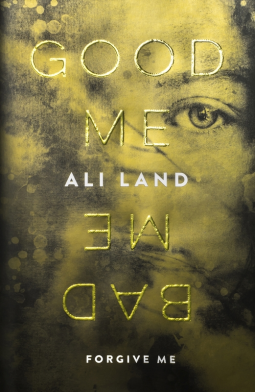
#BookReview ‘Good Me Bad Me’ by Ali Land @byAliLand #thriller

Good Me Bad Me by Ali Land is a difficult book to review without giving anything away. It is compulsive, difficult reading, and though I raced through it I can’t honestly say I enjoyed it. Ali LandTeenager Annie is living with a foster family whilst waiting to give evidence at her mother’s trial. Her mother is accused of being a serial killer of children, Annie turned her in to the police. As she waits for the trial, Annie [now called Milly] is coached by her foster father on how to handle being in court and giving evidence under cross-examination. For Milly, there is no escaping her horrible childhood. As Mike tells her, the only way out is through. But Milly isn’t telling Mike everything.
Milly’s identity is secret, her name false, her reason for being fostered is fabricated. In this world of officially-approved lies, Milly must face her memories of what happened: what is real, and not-real. What did her mother really do? What did Milly do? At times of stress – and there are many as she fits into a foster family with an unwelcoming teenage daughter – Milly hears the voice of her mother in her head, encouraging her to be controlling, to be nasty. This is the ‘good me, bad me’ of the title. Of course every person is a mixture of light and dark, what matters is the decisions we make. Will Milly be able to let go of her past and make a new life?
Covering the few tense weeks in the run-up to the trial, Good Me Bad Me is a turbulent emotional read. One minute I thought ‘please don’t do that, Milly’, the next I was indignant on Milly’s behalf at some of her foul treatment at the hands of school friends. The picture of teenagers, girls selfish and taunting, boys over-sexualised, is not an easy-read. You will make up your own mind whether to like Milly and whether to believe her.

If you like this, try:-
‘Wolf’ by Mo Hayder
‘The Girls’ by Lisa Jewell
‘Taunting the Dead’ by Mel Sherratt

And if you’d like to tweet a link to THIS post, here’s my suggested tweet:
#BookReview GOOD ME BAD ME by Ali Land @byAliLand http://wp.me/p5gEM4-2ip via @SandraDanby

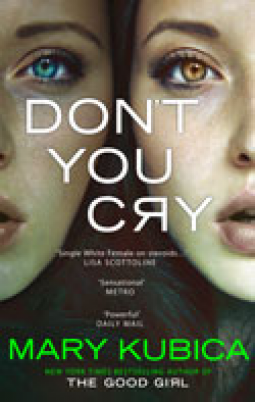
#BookReview ‘Don’t You Cry’ by Mary Kubica @MaryKubica #mystery #suspense

Don’t You Cry explores how easy it is to make assumptions and how this guesswork is so often wrong. This is the third novel by Mary Kubica, all thoughtful mysteries, carefully written and detailed. It took me longer to get into this one, but Kubica spends time drawing the characters and I was prepared to go along with her. Mary KubicaThere are two narrators. In Chicago, Quinn’s roommate disappears. After a couple of days waiting for Esther to return and wondering if she has done anything to upset her, Quinn starts to poke around looking for answers. The first things she finds are confusing, they contradict the Esther she knows, or thinks she knows. And then she starts to wonder what Esther is hiding. Quinn’s voice is alternated with Alex, a young man who lives in the small town where he grew up on the shore of Lake Michigan. He is a nice guy, who passed up on college for a boring low-paid in a rundown lakeside café so he can care for his drunken father. He takes lunch to Ingrid, a housebound elderly lady and stays to eat with her, and to play cards. One day, he goes to work and sees a girl with distinctive, ombre hair. There is something about her that captures his imagination. The girl, in his head he calls her Pearl, is watching the house next door to Ingrid, which is the office of a psychologist.
Nothing is what it seems. I raced through the last few pages as the answers came thick and fast. The twists and turns are clever but, compared with Kubica’s other two novels, this feels baggy and would benefit from an edit to improve the pace and cut repetitions.

Read my reviews of two other novels by Mary Kubica:-
PRETTY BABY
THE GOOD GIRL

If you like this, try:-
‘Pretty Is’ by Maggie Mitchell
‘The Lost Girl’ by Sangu Mandanna
‘The Accident’ by CL Taylor

And if you’d like to tweet a link to THIS post, here’s my suggested tweet:
#BookReview DON’T YOU CRY by Mary Kubica @MaryKubica by @SandraDanby http://wp.me/p5gEM4-21l

#BookReview ‘Pretty Baby’ by Mary Kubica @MaryKubica #mystery #suspense

Don’t be fooled by the cover photograph, this is not a thriller about trains. Pretty Baby by Mary Kubica is a psychological tale of parenting, grief, abuse, and husbands and wives who stop communicating and stop interacting. At times I had to take a gulp and accept some situations which seemed unrealistic to me, it was either that or put the book down. Mary KubicaHeidi and Chris live with their daughter Zoe in Chicago. One freezing wintery day, running for a train, Heidi spots a homeless girl with a baby. She hesitates, wondering whether to say something, and then the girl is gone. Wishing she had helped, Heidi looks out for the girl the next day… and takes her home. Zoe sees it as an invasion of her space, Chris worries about who the girl – Willow, with baby Ruby – really is, and whether she poses a threat to his family and property. Both are right to be worried.
At times I grew impatient with Heidi for indulging herself and impatient for Chris to show some intuition and see what was really going on. Unfortunately Chris is a bit of a stereotype, the hard-working banker husband who spends more time at work than home, fending off the glamorous co-worker. Zoe’s thoughts we do not hear. For me, Willow is the most interesting character and I would have liked to read more about her relationship with Matthew. Concentrating more on Willow’s story, rather than Heidi’s would make this a completely different book.
Unfairly, I think, the publisher compares Pretty Baby to Gillian Flynn and Paula Hawkins [in other words, to Gone Girl and The Girl on the Train, giants of their genre]. But they are page-turners whereas the pace of this story is slower, allowing the various threads to unfold. What kept me turning the page? What is Willow hiding? When will Chris or Zoe speak out? How far will Heidi go to help a stranger and why is she risking everything?

Read my reviews of two other novels by Mary Kubica:-
DON’T YOU CRY
THE GOOD GIRL

If you like this, try novels:-
‘The Girl on the Train’ by Paula Hawkins
‘Gone Girl’ by Gillian Flynn
‘Stolen Child’ by Laura Elliot

And if you’d like to tweet a link to THIS post, here’s my suggested tweet:
#BookReview PRETTY BABY by Mary Kubica @MaryKubica via @SandraDanby http://wp.me/p5gEM4-1T5