Tag Archives: Sandra Danby

A poem to read in the bath… ‘Winter Song’

I came first to the war poets when I studied English Literature at university in London. We read them all: Owen, Sassoon, Graves, Brooke. I think it’s fair to say that in my early twenties I didn’t ‘get them’, not really. Wilfred Owen [below] composed his war poems between January 1917 when he was first sent to the Western Front, and November 1918 when he was killed. Only four of his poems were published during his lifetime. He is agreed to be the finest of the English poets writing about the First World War.

[photo: poetryfoundation.org]

[photo: poetryfoundation.org]

Instead of his most famous poems, ‘Dulce et Decorum Est’ and ‘Anthem for Doomed Youth’, I have chosen ‘Winter Song’. Written in October 1917, it immediately conjures up for me a Paul Nash painting [below] called ‘We are Making a New World’, painted in 1918 and on display in London at the Imperial War Museum. Paul Nash - We are Making a New World 19-6-14‘Winter Song’
The browns, the olives, and the yellows died,
And were swept up to heaven; where they glowed
Each dawn and set of sun till Christmastide,
And when the land lay pale for them, pale-snowed,
Fell back, and down the snow-drifts flamed and flowed.

From off your face, into the winds of winter,
The sun-brown and the summer-gold are blowing;
But they shall gleam again with spiritual glinter,
When paler beauty on your brows falls snowing,
And through those snows my looks shall be soft-going.

A quick search on Amazon revealed that a new copy of my edition of The Collected Poems of Wilfred Owen would cost me £110, a used one £0.01.

For an interesting review by the BBC of the role poetry plays in our view of the First World War, click here.
To read The Poetry Foundation’s biography of Owen, click here.

the collected poems of wilfred owen 19-6-14a


‘The Collected Poems of Wilfred Owen’ [Chatto & Windus]

Great opening paragraph…60

Lord Jim - OP
“He was an inch, perhaps two, under six feet, powerfully built, and he advanced straight at you with a slight stoop of the shoulders, head forward, and a fixed from-under stare which made you think of a charging bull. His voice was deep, loud, and his manner displayed a kind of dogged self-assertion which had nothing aggressive in it. It seemed a necessity, and it was directed apparently as much at himself as at anybody else. He was spotlessly neat, apparelled in immaculate white from shoes to hat, and in the various Eastern ports where he got his living as ship-chandler’s water-clerk he was very popular.”
‘Lord Jim’ by Joseph Conrad

A poem to read in the bath… ‘Not Waving but Drowning’

I remember the title of today’s poem from my schooldays but have no strong memory of reading the poem until many years later. But it always made me smile, then feel guilty for smiling.

[photo: poetryfoundation.org]

[photo: poetryfoundation.org]

Because of copyright restrictions I am unable to reproduce the poem in full, but please search it out in an anthology or at your local library.

‘Not Waving but Drowning’
Nobody heard him, the dead man,
But still he lay moaning:
I was much further out than you thought
And not waving but drowning.

Stevie Smith [1902-1971] was born in Hull, East Yorkshire, and knowing that made a big impression on me: born in East Yorkshire, 1960. The fact that her family moved to London when she was three didn’t stop me seeing her as a Yorkshire role model. Her poetry never seemed to fit a label and she seems to have been rather overlooked. I love her rather dry wit. My copy of Selected Poems was bought in October 1981, I know this as I have written my name and the date on the inside front cover. The green cover design [below] is still a favourite of mine. Selected poems by stevie smith 19-6-14aTo watch a 1950s seaside film as Stevie Smith recites ‘Not Waving But Drowning’, click here.
To read Stevie Smith’s biography at The Poetry Foundation, click here.
Selected poems by stevie smith - new cover 19-6-14


‘Selected Poems’ by Stevie Smith [Penguin Classics]

Great opening paragraph… 59

the unlikely pilgrimage of harold fry - GOP 5-6-13
“The letter that would change everything arrived on a Tuesday. It was an ordinary morning in mid-April that smelt of clean washing and grass cuttings. Harold Fry sat at the breakfast table, freshly shaved, in a clean shirt and tie, with  slice of toast that he wasn’t eating. He gazed beyond the kitchen window at the clipped lawn, which was spiked in the middle by Maureen’s telescopic washing line, and trapped on all three sides by the neighbours’ closeboard fencing.”
‘The Unlikely Pilgrimage of Harold Fry’ by Rachel Joyce

A poem to read in the bath… ‘Cloughton Wyke 1’

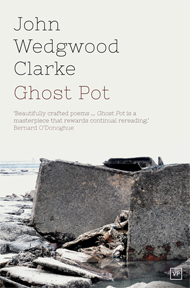
John Wedgwood Clarke writes about the edges of North Yorkshire, the forgotten bits, the ugly bits, the hidden bits. He is a new discovery for me. His latest pamphlet, In Between, was written for the York Curiouser Festival, and is inspired by the snickets and alleys of old York.

[photo: valleypressuk.com]

[photo: valleypressuk.com]

Because of copyright restrictions I am unable to reproduce the poem in full, but please search it out in an anthology or at your local library.

‘Cloughton Wyke 1’
Iron light. Fulmar and kittiwake
laugh in Anglo-Saxon,
ripple quick shadows
over the beach.

It transports me instantly to the North Yorkshire cliffs where I grew up, and the constant presence of seabirds. Cloughton Wyke [below] was one of many destinations for the Danby family explorations on Sundays, sandwiches wrapped in foil, trifle in colour-coded Tupperware bowls, orange squash.

I cannot read this poem enough.

[photo: whitbyseaanglers.co.uk]

[photo: whitbyseaanglers.co.uk]

For John Wedgwood Clarke’s blog, click here.
To find John Wedgwood Clarke’s poems around York as part of the York Curiouser Festival, click here for a map.
To listen to John Wedgwood Clarke read his poem ‘Castle Headland’, click here.
For more poetry published by Valley Press, including In Between, click here.

ghost pot - cover 15-7-14


‘Ghost Pot’ by John Wedgwood Clarke [Valley Press]

Great opening paragraph… 57

iris murdoch - the philosopher's pupil 10-6-13“A few minutes before his brainstorm, or whatever it was, took place, George McCaffrey was having a quarrel with his wife. It was eleven o’clock on a rainy March evening. They had been visiting George’s mother. Now George was driving along the quayside, taking the short-cut along the canal past the iron foot-bridge. It was raining hard. The malignant rain rattled on the car like shot. Propelled in oblique flurries, it assaulted the windscreen, obliterating in a second the frenetic strivings of the windscreen wipers. Little demonic faces composed of racing raindrops appeared and vanished. The intermittent yellow light of the street lamps, illuminating the grey atoms of the storm, fractured in sudden stars upon the rain-swarmed glass. Bumping on cobbles the car hummed and drummed.”
‘The Philosopher’s Pupil’ by Iris Murdoch

A poem to read in the bath… ‘Elegy’

Today’s poem to read in your bath is about timeless love that persists beyond death. ‘Elegy’ by Carol Ann Duffy is from her anthology Rapture, published in 2005, before she was appointed Poet Laureate in 2009. Her poetry is at once instantly accessible, and bears deep consideration.

[photo: Picador]

[photo: Picador]

Because of copyright restrictions I am unable to reproduce the poem in full, but please search it out in an anthology or at your local library.

‘Elegy’
Who’ll know then, when they walk by the grave
where your bones will be brittle things – this bone here
that swoops away from your throat, and this,
which perfectly fits the scoop of my palm, and these
which I count with my lips, and your skull,
which blooms on the pillow now, and your fingers,
beautiful in their little rings – that love, which wanders history,
singled you out in your time?

The love, the longing, the wistfulness, brings tears to my eyes.

Click here to visit Carol Ann Duffy’s website.
Listen here to Carol Ann Duffy interviewed by The Guardian after her appointment as Poet Laureate.

Rapture by Carol Ann Duffy 16-6-14


‘Rapture’ by Carol Ann Duffy [Picador]

A poem to read in the bath… ‘Digging’

Today’s poem is about the gulf between two generations, father and son. In our upwardly-mobile society today, we should all take a moment to consider our origins and those of our parents and grandparents: what were they doing when they were the age we are now, where were they living, what was their daily routine?

[photo: thepoetryfoundation.org]

[photo: thepoetryfoundation.org]

Because of copyright restrictions I am unable to reproduce the poem in full, but please search it out in an anthology or at your local library.

‘Digging’
Between my finger and my thumb
The squat pen rests; snug as a gun.

Under my window, a clean rasping sound
When the spade sinks into the gravelly ground:
My father, digging…

I am an author, my father was a farmer, his father was a farmer. They milked cows, I write stories.

Click here to hear Seamus Heaney read the poem in full.
Read Heaney’s biography here at The Poetry Foundation. If you don’t know this website, it is a wonderful resource about poetry.
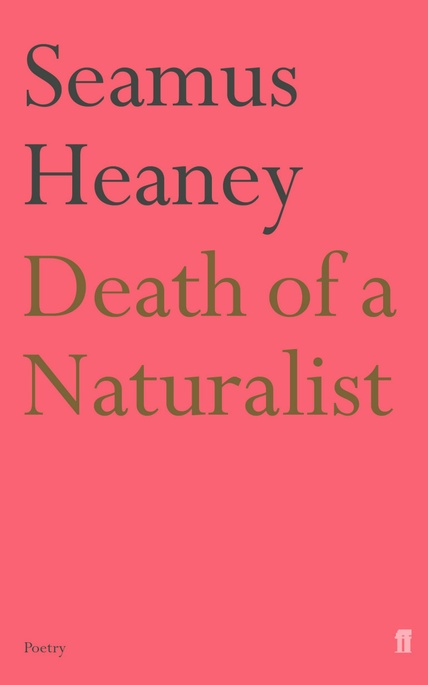
To learn more about Heaney, read Dennis O’Driscoll’s Stepping Stones: Interviews with Seamus Heaney [Faber], click here for the Amazon link.

death of a naturalist by seamus heaney 19-6-14


‘Death of a Naturalist’ by Seamus Heaney [Faber]

Book review: The Art of Baking Blind

The Art of Baking Blind by Sarah Vaughan 9-6-14If you like making cakes, you’ll enjoy this book. It’s full of recipes, ingredients, mixing, kneading, weighing and baking. The Art of Baking Blind by Sarah Vaughan is a two tier story. In the 1960s, Kathleen Eaden’s husband owns a supermarket and she becomes an overnight marketing sensation. Now, a baking competition is announced in Eaden’s Monthly, the supermarket’s own magazine. Four women and one man reach the final.

The book reminded me of the Julia Child film, Julie & Julia, starring Amy Adams and Meryl Streep. In an attempt to emulate Julia Child, played by Streep, Adams cooks her way through Child’s cookbook. In a similar way, this story is told with Kathleen Eaden as its spine. Her diary entries and excerpts from her books feature heavily. Baking is at the centre of the story. It is a lightweight, enjoyable, holiday read.

Two confessions from me. One, I kept getting the women muddled – the only one I was clear about was Jenny. Two, I was slightly niggled that we didn’t get the point of view of the male competitor, Mike, until quite a way in. I missed his voice. Disappointingly, Mike remains a mystery, lightly-drawn, unsatisfying. Sarah Vaughan [below] writes with confidence about baking, I just know she baked the cakes and pies she writes about.

[photo: hodder]

[photo: hodder]

There are lots of innuendos about kneading dough and rising temperatures. All five competitors seem to lack love and sex, leading me to the rather simplistic assumption that baking replaces sex, which seems a little unfair. So which question made me turn the page – who will win the competition, what is Karen’s secret, or who will shag who? Rather contrarily, the sections I enjoyed reading belonged to Kathleen Eaden because it was obvious that all was not as the supermarket marketing image suggested.

By the end I could have done with less cake description. I was left with a feeling of irony that there were competitors seeking to be the new Mrs Eaden, when the real Mrs Eaden was a marketing invention. All four women – and Mike – must re-examine who they are and what they want.

If you want to watch a video about how to make perfect pie crust, something which features heavily in the book, watch Nana’s video at You Tube here.
Follow Sarah Vaughan on Facebook here.
To read how Sarah Vaughan got published, click here.

‘The Art of Baking Blind’ by Sarah Vaughan [pub. in the UK on July 3, 2014 by Hodder & Stoughton]

A poem to read in the bath… ‘Lost Acres’

I often read poetry, often in the bath, so this is the first of an occasional series sharing with you my discoveries. I often read them aloud, which for some reason seems to aid my understanding and stress the rhythm of the language.

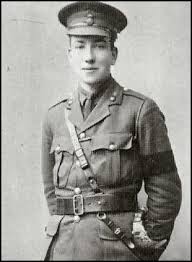
My first poem is by Robert Graves [1895-1985] a writer known in the UK for his First World War poems and his war memoir Goodbye to All That. His novel I, Claudius won literary prizes and has been turned into numerous television series and films. Graves [below] was Professor of Poetry at Oxford from 1961-1966. robert graves 13-6-14My favourite is ‘Lost Acres’. Because of copyright restrictions I am unable to reproduce the poem in full, but please search it out in an anthology or at your local library.

‘Lost Acres’
These acres, always again lost
By every new ordnance-survey
And searched for at exhausting cost
Of time and thought, are still away.

This makes me think of rural Yorkshire where I grew up in The Sixties, roaming the fields free to explore, never thinking about lines on a map or county boundaries.

For more about this collection of Graves’ poems, click here.

selected poems by robert graves 13-6-14


‘Selected Poems’ by Robert Graves [faber and faber]