“Muriel Donnelly, an old girl in her seventies, was left in a hospital cubicle for forty-eight hours. She had taken a tumble in Peckham High Street and was admitted with cuts, bruises and suspected concussion. Two days she lay in A&E, untended, the blood stiffening on her clothes.”
‘These Foolish Things by Deborah Moggach
Tag Archives: Sandra Danby
Great Opening Paragraph… 49
“It began to rain as he entered the park, but not hard enough to make him look round for a taxi. Emerging from the station, he had been tempted by a pale gleam of sunshine, sufficient to convince him of the physical benefits of walking. He needed exercise, he had decided, just as he needed fewer cigarettes and less alcohol: it was pathetic how the habits of sloth and self-indulgence crept up unnoticed, along with middle age, that unbecoming state which you did not even recognize until events brought it sharply and unkindly home to you. And now the fine spring rain, for her first day back. He pictured her with painful tenderness, suntanned and shivering, getting ready for college in the unfamiliar flat. Was he too late? Would she still be there by the time he was able to phone? He had left home an hour ahead, under Cassie’s indulgent eyes, to catch an earlier train, feeling he could only telephone properly from the office, yet not knowing what he could possibly find to say that would be sufficiently casual when he finally heard her voice.”
‘A Bouquet of Barbed Wire’ by Andrea Newman
Great Opening Paragraph… 48
“Master was a little crazy; he had spent too many years reading books overseas, talked to himself in his office, did not always return greetings, and had too much hair. Ugwu’s aunty said this in a low voice as they walked on the path. ‘But he is a good man,’ she added. ‘And as long as you work well, you will eat well. You will even eat meat every day.’ She stopped to spit; the saliva left her mouth with a sucking sound and landed on the grass.”
‘Half of a Yellow Sun’ by Chimamanda Ngozi Adiche
Great Opening Paragraph… 47
“The beginning is simple to mark. We were in sunlight under a turkey oak, partly protected from a strong, gusty wind. I was kneeling on the grass with a corkscrew in my hand, and Clarissa was passing me the bottle – a 1987 Daumas Gassac. This was the moment, this was the pinprick on the time map: I was stretching out my hand, and as the cool neck and the black foil touched my palm, we heard a man’s shout. We turned to look across the field and saw the danger. Next thing, I was running towards it. The transformation was absolute: I don’t recall dropping the corkscrew, or getting to my feet, or making a decision, or hearing the caution Clarissa called after me. What idiocy, to be racing into this story and its labyrinths, sprinting away from our happiness among the fresh spring grasses by the oak. There was the shout again, and a child’s cry, enfeebled by the wind that roared in the tall trees along the hedgerows. I ran faster. And there, suddenly, from different points around the field, four other men were converging on the scene, running like me.”
‘Enduring Love’ by Ian McEwan
Great opening paragraph…45

“Mr Verloc, going out in the morning, left his shop nominally in charge of his brother-in-law. It could be done, because there was very little business at any time, and practically none at all before the evening. Mr Verloc cared but little about his ostensible business. And moreover, his wife was in charge of his brother-in-law.”
‘The Secret Agent’ by Joseph Conrad
Great Opening Paragraph… 43
“One summer afternoon Mrs Oedipa Maas came home from a Tupperware party whose hostess had put perhaps too much kirsch in the fondue to find that she, Oedipa, had been named executor, or she supposed, executrix, of the estate of one Pierce Inverarity, a California real estate mogul who had once lost two million dollars in his spare time but still had assets numerous and tangled enough to make the job of sorting it all out more than honorary. Oedipa stood in the living-room, stared at by the greenish dead eye of the TV tube, spoke the name of God, tried to feel as drunk as possible. But this did not work. She thought of a hotel room in Mazatlán whose door had just been slammed, it seemed forever, waking up two hundred birds down in the lobby, a sunrise over the library slope at Cornell University that nobody out on it had seen because the slope faces west; a dry, disconsolate tune from the fourth movement of the Bartók Concerto for Orchestra; a whitewashed bust of Jay Gould that Pierce kept over the bed on a shelf so narrow for it she’d always had the hovering fear it would someday topple on them. Was that how he’d died, she wondered, among dreams, crushed by the only icon in the house? That only made her laugh, out loud and helpless: You’re so sick, Oedipa, she told herself, or the room, which knew.”
‘The Crying of Lot 49’ by Thomas Pynchon
Great Opening Paragraph… 42
“She stands up in the garden where she has been working and looks into the distance. She has sensed a shift in the weather. There is another gust of wind, a buckle of noise in the air, and the tall cypresses sway. She turns and moves uphill towards the house, climbing over a low wall, feeling the first drops of rain on her bare arms. She crosses the loggia and quickly enters the house.
In the kitchen she doesn’t pause but goes through it and climbs the stairs which are in darkness and then continues along the long hall, at the end of which is a wedge of light from an open door.
She turns into the room which is another garden – this one made up of trees and bowers painted over its walls and ceiling. The man lies on the bed, his body exposed to the breeze, and he turns his head slowly towards her as she enters.”
‘The English Patient’ by Michael Ondaatje
My top 5… novels in an English setting
Some of our best-loved novels have a strong sense of place. Setting can be an additional character. These are the books which, for me, create immediately for me the landscape in which they are set. 
‘Waterland’ by Graham Swift

“For, flood or no flood, the Leem brought down its unceasing booty of debris. Willow branches; alder branches; sedge; fencing; crates; old clothes; dead sheep; bottles; potato sacks; straw bales; fruit boxes; fertiliser bags. All floated down on the westerly current, lodged against the sluice-gate and had to be cleared away with boat-hooks and weed-rakes.”
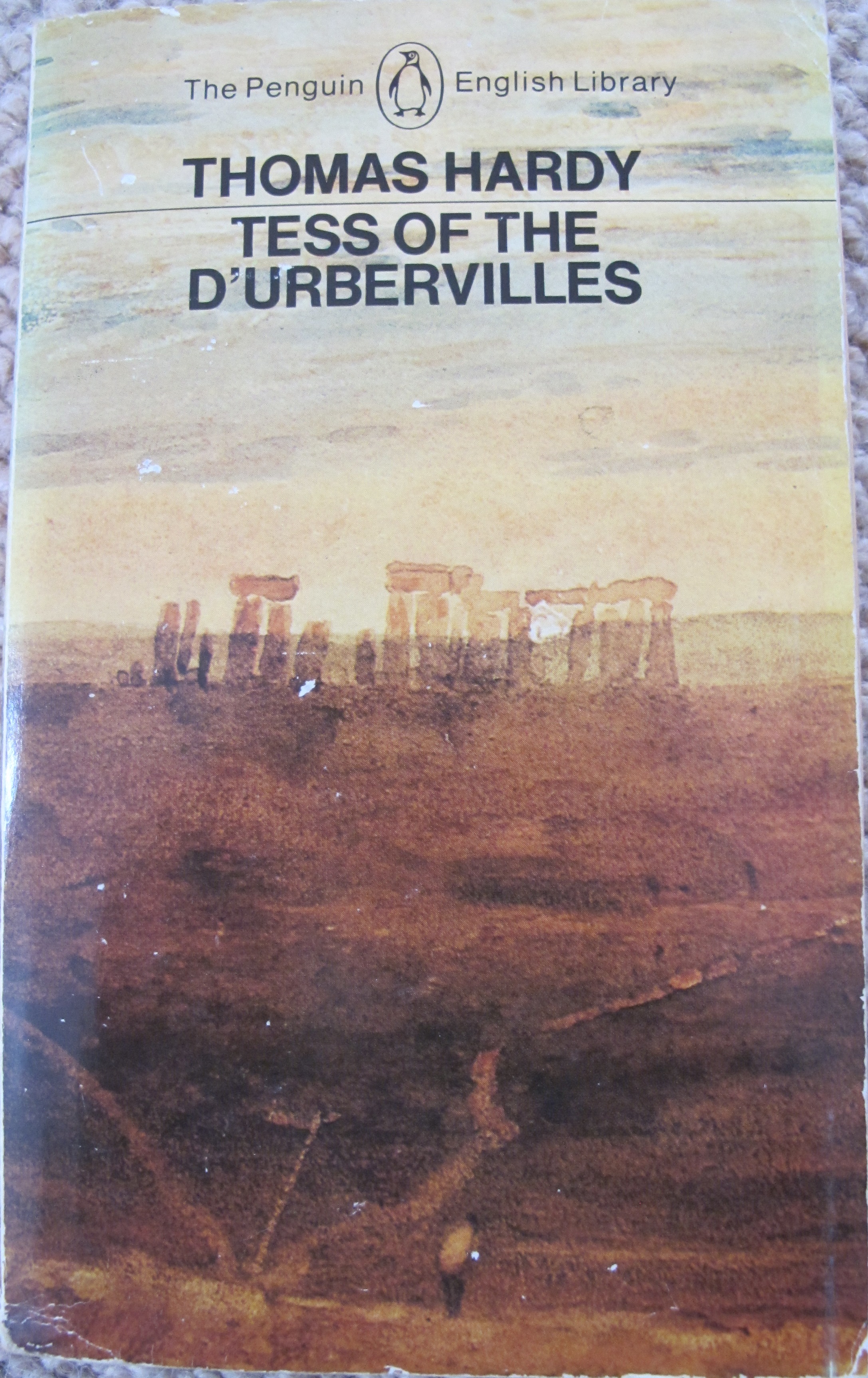
‘Tess of the d’Urbervilles’ by Thomas Hardy
“The river had stolen from the higher tracts and brought in particles to the vale all this horizontal land; and now, exhausted, aged, and attenuated, lay serpentining along through the midst of its former spoils.
Not quite sure of her direction Tess stood still upon the hemmed expanse of verdant flatness, like a fly on a billiard-table of indefinite length, and of no more consequence to the surroundings than that fly. The sole effect of her presence upon the placid valley so far had bee to excite the mind of a solitary heron, which, after descending to the ground not far from her path, stood with neck erect, looking at her.”
“They were out of the tourist danger zone now, leaving the last of the Stourhead lakes behind as the narrow road took them through the stone cottages of Gasper on a long detour north, climbing up the side of the ridge. The cedars above them supported their high green copy of the hill’s contour on trunks that offered inviting summer shade, broken here and there by logging tracks and the timber corpse piles awaiting collection. Gally looked at the logs as they passed, at the sawcut cross-section of their ringed history, and momentarily envied them the certainty of that physical record.”
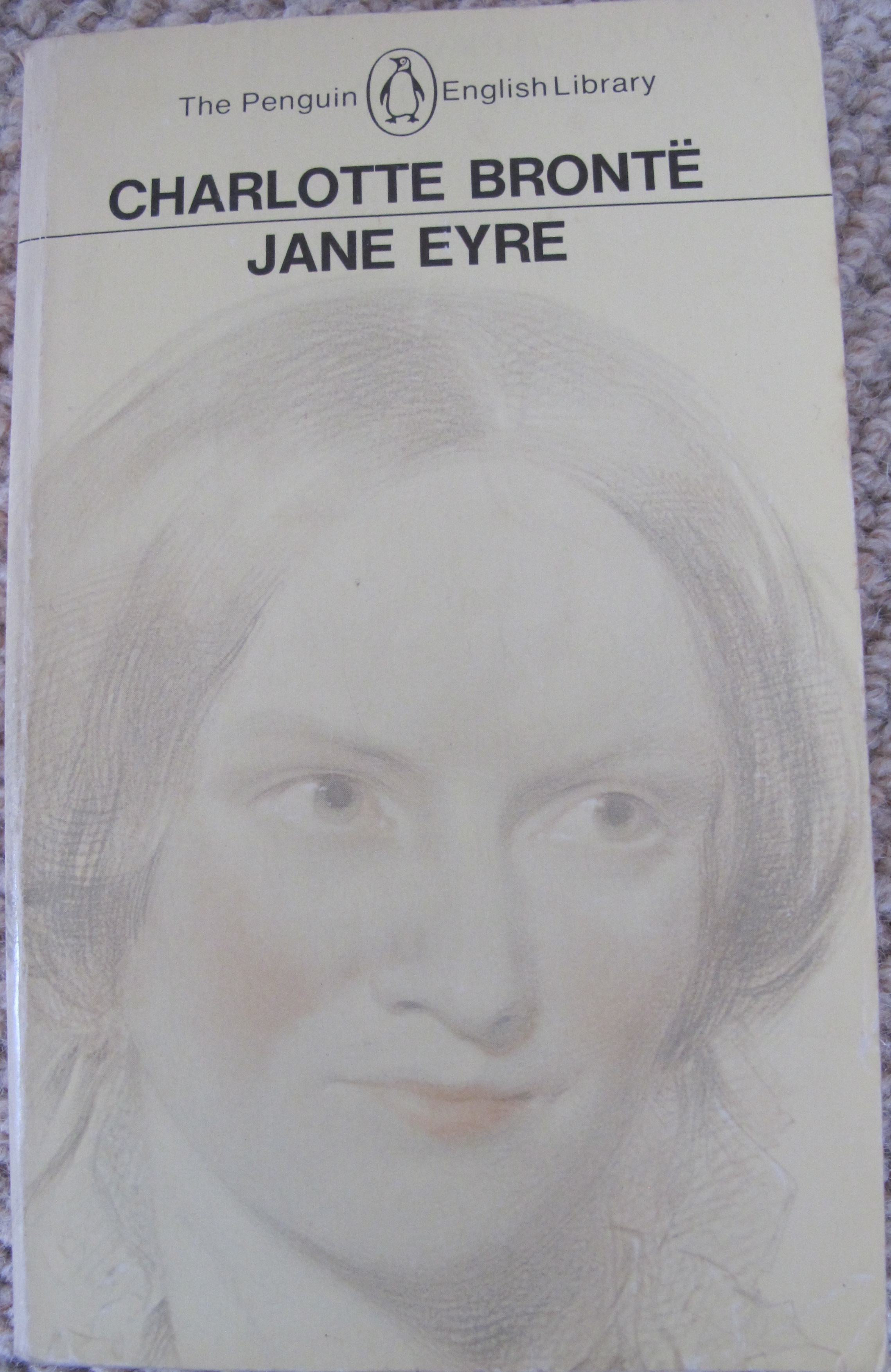
‘Jane Eyre’ by Charlotte Bronte
“On the hilltop above me sat the rising moon; pale yet as a cloud, but brightening momently; she looked over Hay, which, half lost in trees, sent up a blue smoke from its few chimneys; it was yet a mile distant, but in the absolute hush I could hear plainly its thin murmurs of life. My ear, too, felt the flow of currents; in what dales and depths I could not tell: but there were many hills beyond Hay, and doubtless many becks threading their passes. That evening calm betrayed alike the tinkle of the nearest streams, the sough of the most remote.”
‘Rebecca’ by Daphne du Maurier

“We topped the hill before us and saw Lanyon lying in a hollow at our feet. There to the left of us was the silver streak of the river, widening to the estuary at Kerrith six miles away. The road to Manderley lay ahead. There was no moon. The sky above our heads was inky black. But the sky on the horizon was not dark at all. It was shot with crimson, like a splash of blood. And the ashes blew towards us with the salt wind from the sea.”
Honourable mentions to:- Dracula by Bram Stoker [Whitby], The Poldark Series by Winston Graham [Cornwall], Melvyn Bragg’s A Time to Dance [Lake District], Death in Holy Orders by PD James [the Fens, again]
I can only judge My Top 5 based on what I’ve read. If you think I’ve missed a novel with an electrifying English setting, I’d love to hear your recommendations.
Great opening paragraph… 40
“I was 37 then, strapped in my seat as the huge 747 plunged through dense cloud cover on approach to Hamburg airport. Cold November rains drenched the earth, lending everything the gloomy air of a Flemish landscape: the ground crew in waterproofs, a flag atop a squat airport building, a BMW billboard. So – Germany again.”
‘Norwegian Wood’ by Haruki Murakami [translated from the Japanese by Jay Rubin]
Great Opening Paragraph… 39
“May in Ayemenem is a hot, brooding month. The days are long and humid. The river shrinks and black crows gorge on bright mangoes in still, dustgreen trees. Red bananas ripen. Jackfruits burst. Dissolute bluebottles hum vacuously in the fruity air. Then they stun themselves against clear windowpanes and die, fatly baffled in the sun.”
‘The God of Small Things’ by Arundhati Roy