Tag Archives: William Boyd

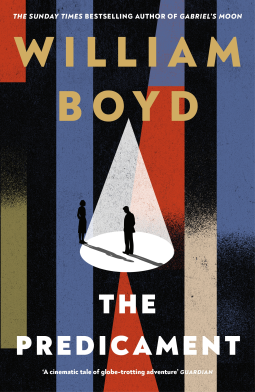
#BookReview ‘The Predicament’ by William Boyd #thriller

In The Predicament by William Boyd, Gabriel Dax, writer and occasional British spy, gets involved in more suspect shenanigans, this time involving the CIA and the Americans. This book takes up his story in 1963, two years after the end of the first Dax book, Gabriel’s Moon. William BoydIn Guatemala, an election is looming. After a brief lesson in how to kill using the contents of his pockets [a notebook, wallet and keys], Gabriel is sent to South America by his MI6-handler and occasional lover Faith Green. An interview is arranged with Padre Tiago the secretive, charismatic left-wing leader who is predicted to win the forthcoming election. Tiago’s views are not universally popular. When his meeting is disappointing, Gabriel fears the trip is a waste of time. Then Padre Tiago is assassinated and Gabriel flees the ensuing riots. With his journalist’s sixth sense for the dodgy, Gabriel knows the real story is being hidden. The people he meets in Guatemala City and what happens there are important to the developing plot which later leads him to Berlin and the visit of President John F Kennedy.
Gabriel’s spy adventures are alternated with sessions with his psychoanalyst Dr Haas, meetings with his Russian handler Varvara [Dax is still posing as the secretive London contact of an English traitor now in Moscow], and scenes as he settles into his new life in a country cottage in Sussex. These storylines are continued from Gabriel’s Moon so it is helpful to read that book first. Boyd wastes nothing, all of these slower sub-plots add to the narrative. They bring new perspective on Gabriel’s personality, his past spy missions, his longing to return full-time to travel writing, and his feelings for Faith.
When Faith sends him to Berlin to shadow a suspect, Gabriel wants to refuse but knows he can’t. Dean Furlan is one of the men he met in Guatemala, who he instinctively knew was up to no good. The second half of the book is a page-turning race through the Berlin streets, working with the CIA and Berlin police to prepare for Kennedy’s arrival, identify a possible assassin and stop an attack. Gabriel is growing in confidence, his spycraft is improving and he has an instinct for trouble. He is at the centre of the action.
Boyd writes an addictive spy novel set at a time of global insecurity. Gabriel is a likeable character with his complicated love life. He attempts to live a normal life as a writer, planning and researching chapters for his next book, but is unwittingly pulled into more spying by the women who has bewitched him. All told in Boyd’s masterful style, combining simple details with lush descriptions and gentle humour.
Excellent.

Here’s my review of GABRIELS MOON, first in the Gabriel Dax trilogy.

And my reviews of other books by William Boyd:-
ANY HUMAN HEART
LOVE IS BLIND
NAT TATE: AN AMERICAN ARTIST 1928-1960
ORDINARY THUNDERSTORMS
SWEET CARESS
THE BLUE AFTERNOON
THE DREAMS OF BETHANY MELLMOTH
TRIO
WAITING FOR SUNRISE

… and try the first paragraph of ARMADILLO.

If you like this, try these:-
Munich Wolf’ by Rory Clements #1SEBASTIANWOLFF
The Ways of the World’ by Robert Goddard #1WIDEWORLD
The Second Midnight’ by Andrew Taylor

And if you’d like to tweet a link to THIS post, here’s my suggested tweet:
#BookReview THE PREDICAMENT by William Boyd https://wp.me/p2ZHJe-8oZ via @SandraDanby

COMING SOON… THE NEXT BOOK I REVIEW WILL BE:- Helena Dixon
#BookReview ‘Gabriel’s Moon’ by William Boyd #spy #thriller

Gabriel’s Moon by William Boyd could actually be titled ‘The Accidental Spy’ because that’s what Gabriel Dax is. What a wonderful spy novel this is, it plays with the idea of mistaken memory, mistaken perceptions and dangerous obsession. A Sixties Cold War thriller wrapped up in stellar writing. I raced through it. William BoydTravel writer Gabriel Dax has a dream singleton’s life. A flat in Chelsea, journalistic assignments taking him around the world, he is the author of three books and has an occasional girlfriend, Lorraine, who provides fun without committment. On location in the Congo, Dax is sent by his editor to do a political interview with the country’s new prime minister. This is unfamiliar territory for Gabriel but he takes the opportunity, hoping it may lead to more work. On the flight home he is surprised, and delighted, to see a fellow passenger reading one of his books. What follows next are a series of events he later realises are not coincidences.
In London he is surprised to see the woman from the plane near his house, but she disappears before he can speak to her. Then on a cold January day he is eating a lonely plate of spaghetti in the Café Matisse when the same woman approaches his table. She introduces herself as Faith Green and says she recognises him as the author of the book she was reading on the plane from Léopoldville. Then she drops two bombshells, that Patrice Lumumba, the prime minister who Gabriel interviewed, is dead. And that she would like him to do ‘us’ a ‘small favour’ as he has done in the past for his brother Sefton, mostly delivering packages. But when Faith says ‘us,’ she means MI6.
The favours that Gabriel undertakes for Faith are always mysterious, taking him to Spain and Poland. Operating on sparse information and cryptic instructions, Gabriel quickly learns to look over his shoulder and to trust his instincts. After each job he pockets the cash and vows never to work for Faith Green again, until the next time she asks. He becomes unable to say no to her, his attraction evolves into obsession.
Woven through Gabriel’s adventures as a reluctant spy are matters closer to home. The death of his mother when he was six in a house fire, from which he escaped, has left him with insomnia and nightmares. So Gabriel starts to see Dr Katerina Haas who recommends anamnesis, the search of facts that aid the return of memory. The family strand of the story encompasses Gabriel’s relationship with his two remaining relatives. His uncle Aldous Dax, who raised Gabriel when he was orphaned, is an art dealer. Older brother Sefton does something unspecified in the Foreign Office. Boyd handles his intricate plotting with a light hand, Gabriel never really knows what is happening and neither does the reader; but it is fun guessing.
William Boyd never disappoints, from cradle to the grave stories such as Any Human Heart, the story of a young pianist in Love is Blind, and a mix of sex and spies in Waiting for Sunrise, he reliably takes you away from the modern world as you sink into the world of his story.
Excellent.

Gabriel’s Moon is first in the Gabriel Dax trilogy. Here’s my review of THE PREDICAMENT, second in the Gabriel Dax trilogy.

Here are my reviews of other books by William Boyd:-
ANY HUMAN HEART
LOVE IS BLIND
NAT TATE: AN AMERICAN ARTIST 1928-1960
ORDINARY THUNDERSTORMS
SWEET CARESS
THE BLUE AFTERNOON
THE DREAMS OF BETHANY MELLMOTH
TRIO
WAITING FOR SUNRISE

… and try the first paragraph of ARMADILLO.

If you like this, try these:-
Nucleus’ by Rory Clements #2TOMWILDE
Wolf Winter’ by Cecilia Ekback
The Traitor’ by Ava Glass #2ALIASEMMA

And if you’d like to tweet a link to THIS post, here’s my suggested tweet:
#BookReview GABRIEL’S MOON by William Boyd https://wp.me/p2ZHJe-8n5 via @SandraDanby

COMING SOON… THE NEXT BOOK I REVIEW WILL BE:- William Boyd

#BookReview ‘Ordinary Thunderstorms’ by William Boyd #contemporary #mystery

Ordinary Thunderstorms by William Boyd is a pacy mystery story in the mould of John Buchan’s The 39 Steps and the Will Smith film Enemy of the State. Innocent man in the wrong place at the wrong time. Cloud scientist Adam Kindred is eating a meal alone in a quiet West London restaurant when his instinct to help a fellow diner sends him on the run, accused of a crime he didn’t commit. William BoydThis is a fast-paced story that takes suspected murderer Kindred from a forgotten triangle of wasteland near Chelsea Bridge to the East End of London. As his name and face become media headlines, he finds a new identity at the Church of John Christ. As ‘John 1603’ he meets fellow dropouts, all with their own reasons for leaving behind a previous identity, all willing to sit through a two-hour sermon for the hearty meal that follows. Adam’s first priority, with his stash of cash running out, is to make money. Second, he sets out to discover the truth of the crime he witnessed and is accused of doing; the murder of Dr Philip Wang, head of research and development at pharmaceutical company Calenture-Deutz.
This is Kindred’s story and 70% of the action is told from his viewpoint. But Boyd adds pace to the story by adding the narrative of Ingram Fryzer, CEO of Calenture-Deutz, river police officer Rita Nashe and ex-soldier JonJo Case. Essentially this is a story of corporate greed and pharmaceutical fraud lightened by dark humour and the touching relationship of Kindred, Mhouse and her son Ly-on.
There are a few sticky coincidences but, forgiving these, this is an entertaining ‘what would I do if it happened to me’ tale. An average thriller elevated by the quality of Boyd’s writing.

Here are my reviews of other books by William Boyd:-
ANY HUMAN HEART
LOVE IS BLIND
NAT TATE: AN AMERICAN ARTIST 1928-1960
SWEET CARESS
THE BLUE AFTERNOON
THE DREAMS OF BETHANY MELLMOTH
TRIO
WAITING FOR SUNRISE

… and try the first paragraph of ARMADILLO.

If you like this, try these:-
‘Reservoir 13’ by Jon McGregor
‘Thornyhold’ by Mary Stewart
‘Brat Farrar’ by Josephine Tey

And if you’d like to tweet a link to THIS post, here’s my suggested tweet:
#BookReview ORDINARY THUNDERSTORMS by William Boydhttps://wp.me/p2ZHJe-6zO via @SandraDanby

COMING SOON… THE NEXT BOOK I REVIEW WILL BE:- Rachel Rhys

#BookReview ‘Nat Tate: An American Artist 1928-1960’ by William Boyd #historical #art

A fictitious biography of a non-existent artist, this is an entertaining novella which I read in one sitting. Nat Tate: an American Artist 1928-1960 by William Boyd‪ has been on my to-read list forever. William Boyd‪What a stir it caused when it was published in 1998. The New York art world soon realised it had been set-up. The first edition appeared with endorsements from Gore Vidal and David Bowie but with hindsight the clues are there. Logan Mountstuart features as a friend of Tate and regular Boyd readers will recognise the protagonist of Boyd’s novel Any Human Heart published in 2002. So, a piece of mischief.
If you’ve read any art biography, or one of those weighty ‘exhibition books’ that accompany major art shows, the tone of this story will be familiar to you. Lots of references to famous artists, the process, the tortured creativity, the successes and setbacks – shown here by Tate’s reverence for American poet Hart Crane – the mentors, financial backers and agents. But there never was an artist called Nat Tate. The book features Tate’s art and photographs from his life but which originate for Boyd whose satire asks questions about the morals and values of the art world, as topical today as in 1998.
An enjoyable novella, beautifully-written in the style of the ‘art biography,’ a confirmation of Boyd’s flexibility and skill as a writer. A convincing hoax. Something different.

Here are my reviews of other books by William Boyd:-
ANY HUMAN HEART
LOVE IS BLIND
ORDINARY THUNDERSTORMS
SWEET CARESS
THE BLUE AFTERNOON
THE DREAMS OF BETHANY MELLMOTH
TRIO
WAITING FOR SUNRISE

… and try the first paragraph of ARMADILLO.

If you like this, try these:-
How to be Both’ by Ali Smith
The Girl in the Painting’ by Renita d’Silva
Life Class’ by Pat Barker

And if you’d like to tweet a link to THIS post, here’s my suggested tweet:
#BookReview NAT TATE: AN AMERICAN ARTIST 1928-1960 by William Boydhttps://wp.me/p2ZHJe-6tQ via @SandraDanby

COMING SOON… THE NEXT BOOK I REVIEW WILL BE:- Suzanne Collins
#BookReview ‘The Blue Afternoon’ by William Boyd #historical

Having recently read and enjoyed Waiting for Sunrise by William Boyd, I checked to see how many of his books I have read. I’ve been a fan from the beginning and have read everything from the first, A Good Man in Africa in 1981 to Brazzaville Beach in 1990. Then there’s a gap between Brazzaville Beach and Any Human Heart in 2002. So, this year I plan to read the books in the intervening years. William Boyd First up is The Blue Afternoon. Published in 1993 and winner of the ‘Sunday Express Book of the Year’ and the ‘Los Angeles Book Prize for Fiction’, I had no idea of its subject. Boyd is like Rose Tremain, no book is like any other. Every one is an adventure.
The first part, set in Los Angeles in 1936,‪ suggests this is the story of a battle between two arguing architects. But it turns into something rather different. When Kay Fischer visits the site of her latest project, a perfectly proportioned house on a sloping site at 2265 Micheltorino, she notices an elderly man. Later at home, the same man pays her a visit and announces that he is her father. He asks for her help, to track down a person called Paton Bobby. He doesn’t explain why.
This is the story of Dr Salvador Carriscant’s life as a surgeon in Manila at the turn of the 20th century, a story also of murder, love, friendship and the building of an early flying machine. In 1902, Carriscant is a celebrated surgeon at the San Jeronimo hospital, a pioneer of the antiseptic methods of Joseph Lister. Meanwhile his anaesthetist, Pantaleon Quiroga, is building a flying machine in his nipa barn. Both are obsessives. When Carriscant falls in love, his obsession turns from surgery to Delphine Sieverance, the married object of his fantasies. This atmosphere of contentment and positivity is shattered when Paton Bobby, the local chief of police, asks Carriscant to attend the body of a murder victim. When the victim is identified as an American soldier, the case becomes political. The country is now ruled by the US after the recent Philippine-American war but guerrilla groups are active in rural areas. There is prejudice against the locals, suspicion of the Americans, poverty, ex-pat aristocracy and exploitation, but this is also a time of dynamic advances at the beginning of a new century.
Not Boyd’s best book but enjoyable none the less. There are slow passages where Boyd’s enthusiasm for the description of tiny details goes too far. In places I could have done with less technical information about architecture, surgery and the aerodynamics of flying. The story really gets going in the second, and largest section, set in Manila. The first and third parts in 1936 are almost irrelevant bookends and some of the final explanations stretch credibility.
But my, Boyd does write beautifully. ‘Inland, continents of dark plum-grey clouds were building, threatening the rain that João had promised, while out west, over the Atlantic, the afternoon sun shone with that silvery flinty brilliance you find over big oceans, light reflecting back from the huge expanse of shifting waters.’ And in an instant, I was sitting there too, a glass of cold, yellow wine in my hand.

My copy of The Blue Afternoon is a used, signed hardback, the Sinclair-Stevenson edition, with a rather lovely cover. William Boyd Here are my reviews of other books by William Boyd:-
ANY HUMAN HEART
LOVE IS BLIND
NAT TATE: AN AMERICAN ARTIST 1928-1960
ORDINARY THUNDERSTORMS
SWEET CARESS
THE DREAMS OF BETHANY MELLMOTH
TRIO
WAITING FOR SUNRISE
… and try the first paragraph of ARMADILLO.

If you like this, try these:-
Islands of Mercy’ by Rose Tremain
Barkskins’ by Annie Proulx
The Gustav Sonata’ by Rose Tremain

And if you’d like to tweet a link to THIS post, here’s my suggested tweet:
#BookReview THE BLUE AFTERNOON by William Boydhttps://wp.me/p5gEM4-5rC via @SandraDanby

#BookReview ‘Waiting for Sunrise’ by William Boyd #WW1 #spy

Determined to deal with my overflowing to-read shelf, I picked up Waiting for Sunrise by William Boyd. Thoughtful with a twisty plot, we follow actor Lysander Rief from Vienna to the trenches as he tries to identify a traitor passing war secrets to the enemy. William BoydIt is Vienna 1913. Actor Lysander Rief has gone to Vienna seeking help for an intimate problem. In the waiting room he encounters two people who will determine the course of Rief’s life in the forthcoming Great War. Rief falls head over heels in lust with Hettie Bull but when Rief is thrown into prison charged with rape, he feels abandoned. He is extricated from Austria thanks to the help of a shadowy British government officer and Rief’s own ingenuity. But he owes a debt and is drawn into the shadowy world of wartime spies. Someone is sending coded messages about essential infrastructure, supply and troop movements to the enemy, and Rief is charged with hunting down the traitor.
Boyd is one of my favourite writers, his writing flows and there are multiple layers to consider long after finishing the book. All concocted with a skilful touch of humour in the right place. It all starts in the consulting room of Dr Bensimon who suggests that Rief’s delicate problem, based on an unfortunate but funny episode in his youth, can be solved not by drugs or hypnosis but by his own theory of Parallelism. Rief must revisit his memory of the incident and reconstruct the story of what happened so that today his dreams are about the changed story and his little problem stops happening. Smoke and mirrors. Rief, as an actor, is adept at pretending to be what he is not and there are countless characters he meets who do the same. He is good at spotting some people who are acting, but misses others. But unlike on stage, missing the clues can lead to hurt, separation and death. And at stake in the bigger picture of the war are the lives of allied soldiers.
This is a book about deception; lies to others, lies told to oneself. Small lies told for convenience. Big lies told to disguise treason. Along the way, people get hurt.
So much more than a conventional spy thriller from a master author. 4* for me rather than 5* because of the slow beginning. It pays to be patient.

Here are my reviews of other books by William Boyd:-
ANY HUMAN HEART
LOVE IS BLIND
NAT TATE: AN AMERICAN ARTIST 1928-1960
ORDINARY THUNDERSTORMS
SWEET CARESS
THE BLUE AFTERNOON
THE DREAMS OF BETHANY MELLMOTH
TRIO
… and try the first paragraph of ARMADILLO.

If you like this, try:-
Wake’ by Anna Hope
The Lie’ by Helen Dunmore
Corpus’ by Rory Clements #1TOMWILDE

And if you’d like to tweet a link to THIS post, here’s my suggested tweet:
#BookReview WAITING FOR SUNRISE by William Boyd https://wp.me/p5gEM4-5hB via @SandraDanby

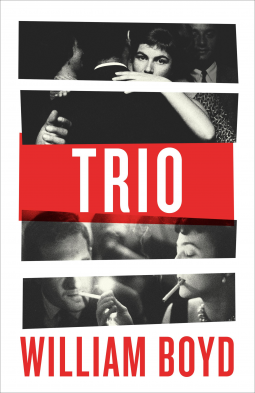
#BookReview ‘Trio’ by William Boyd #humour #Brighton

It is 1968. In Paris, students are rioting. The Vietnam war continues while in America, Robert Kennedy and Martin Luther King have been assassinated. This is the timeframe of Trio, the very readable latest novel from William Boyd. William Boyd.Set in Brighton where a film crew is shooting Emily Bracegirdle’s Extremely Useful Ladder to the Moon, the leading lady, Anny Viklund, is in bed with her co-star, pop singer Troy Blaze. The director’s wife, Elfrida Wing, is partaking of vodka from her secret stash in a Sarsons white vinegar bottle, rather than getting on with writing her next novel. The producer, Talbot Kydd, lays in his bath and tries to remember the dream he was having about a young man, pale and limber.
The story follows these three characters, each of which is living a life of pretence. Talbot has a wife in Chiswick and a secret apartment in Primrose Hill. Elfrida, once lauded as ‘the next Virginia Woolf’, writes lists of book titles but no more. Anny has an unfortunate taste in older men and when her ex-husband goes on the run, she finds herself questioned by the FBI. Day by day, Boyd weaves together the twists and turns of these three people, set against the filming of Ladder, the title of which incidentally no one understands. Sub-plots abound. When the film’s accountant warns Talbot that someone is stealing film stock, he employs an eccentric local detective. Meanwhile Elfrida, in search of the real Virginia, traces Woolf’s footsteps on the last day of her life. Anny, who cushions herself from the real world with a succession of uppers and downers, seems impossibly young. The film is the motif which unites the three but we see their individual character arcs develop in unexpected ways.
An entertaining quick read from a master of characterisation and humour who draws a recognisable picture of Brighton’s contradictions, style and sleaziness by the sea. Boyd has been a favourite of mine since A Good Man in Africa in 1981 and Trio reminds me of his early novels which showed the ability to combine a light comic touch with a darker, deeper emotional storyline.

Here are my reviews of other William Boyd books:-
ANY HUMAN HEART
LOVE IS BLIND
NAT TATE: AN AMERICAN ARTIST 1928-1960
ORDINARY THUNDERSTORMS
SWEET CARESS
THE BLUE AFTERNOON
THE DREAMS OF BETHANY MELLMOTH
WAITING FOR SUNRISE
… and try the first paragraph of ARMADILLO

If you like this, try these:-
How to Stop Time’ by Matt Haig
Wigs on the Green’ by Nancy Mitford
The Only Story’ by Julian Barnes

And if you’d like to tweet a link to THIS post, here’s my suggested tweet:
#BookReview TRIO by William Boydhttps://wp.me/p5gEM4-4XP via @SandraDanby

Great Opening Paragraph 113… ‘A Good Man in Africa’ #amreading #FirstPara

“‘Good man,’ said Dalmire, gratefully accepting the gin Morgan Leafy offered him. ‘Oh good man.’ He presents his eager male friendship like a gift, thought Morgan; he’s like a dog who wants me to throw him a stick for him to chase. If he had a tail he’d be wagging it.”
William BoydFrom ‘A Good Man in Africa’ by William Boyd

Try this #FirstPara from ARMADILLO … and read my reviews of these other books by William Boyd:-
ANY HUMAN HEART
LOVE IS BLIND
NAT TATE: AN AMERICAN ARTIST 1928-1960
ORDINARY THUNDERSTORMS
SWEET CARESS
THE BLUE AFTERNOON
THE DREAMS OF BETHANY MELLMOTH
TRIO
WAITING FOR SUNRISE

Try one of these #FirstParas & discover a new author:-
‘Bridget Jones’s Diary’ by Helen Fielding
‘Super-Cannes’ by JG Ballard
‘Middlesex’ by Jeffrey Eugenides

And if you’d like to tweet a link to THIS post, here’s my suggested tweet:
#Books #FirstPara A GOOD MAN IN AFRICA by William Boyd http://wp.me/p5gEM4-2si via @SandraDanby

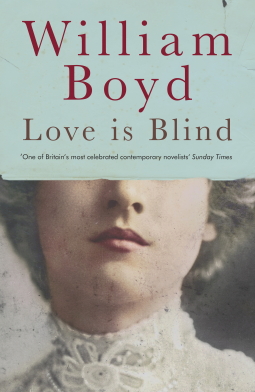
#BookReview ‘Love is Blind’ by William Boyd #historical

When a new novel by William Boyd features a male protagonist, my first thought ‘is it another Logan Mountstuart’ with a feeling of anticipation. But Love is Blind is not another version of Any Human Heart. It tells the story of Brodie Moncur, a young Scottish piano tuner who travels Europe as he seeks warmer climes and the love of his life. William BoydBoyd is on good form and I raced through Love is Blind, enveloped in Brodie’s end of 19thcentury/early 20thcentury story. Told almost exclusively from Brodie’s viewpoint, plus some of the letters he writes and receives, we see the world and the people he meets through his eyes so, as he falls in with thieves the sense of impending doom increases. He is a likeable, believeable character, son of a fire-and-brimstone alcoholic preacher, living in a time of great change as motor cars appear on the road and the signs of war increase but when consumption kills. The details of Brodie’s piano tuning are fascinating, these skills are the passport to his travels, getting him into and out of trouble, enabling him to earn money wherever he finds himself.
When the story starts in 1894 Brodie is a piano tuner for Channon & Co in Edinburgh. Offered a job at the Channon shop in Paris, he takes the opportunity to escape his oppressive father and so falls in with John Kilbarron, a fading Irish concert pianist who comes to rely on Brodie’s magical skills with his tuning tools. The major difficulties of Brodie’s story are established in Paris. He falls in love with Lika Blum, would-be Russian opera singer, who may or may not be in a relationship with Kilbarron. And he starts to cough up blood.
Consumption is diagnosed and Brodie travels to Nice in search of a warmer climate, unable to work, leaving Lika behind. From the beginning, Brodie pursues Lika rather than the other way round, she insists on secrecy and is enigmatic when pressed for details of her earlier life. Warning signs that are obvious to the reader but to which Brodie is blind, the blindness of the title, are everywhere. Lika does not share many secrets and there is no authorial voice to fill in her backstory. He is a young man in love/lust and cannot see what seems to be staring him in the face. He writes a succession of letters which, given the need for secrecy, are foolhardy. So when trouble finds him, in the shape of Kilbarron’s thuggish brother Malachi, it is not a surprise.
The character of Lika is lightly drawn but that is perhaps because Brodie knows so little about her. They arrange assignations in hotel rooms and on riverbanks, passing notes to each other and sharing significant glances. The affair continues as the Kilbarron party moves to St Petersburg, Russia, to perform a programme for a new wealthy benefactor. It is here that the cracks start to appear in the Kilbarron/Moncur relationship.
The final part of the book was less satisfactory for me. The Prologue to the story is a short letter written in 1906 by a woman called Page from an address in the Andaman Islands, Indian Empire, in which Brodie Moncur is briefly mentioned. In Part VII, Brodie is living at Deemer’s Hotel, Port Blair, the Andamans. I found his encounter with ethnologist Page Arbogast and their research trip to the Nicobar Islands superfluous.

Read my reviews of:
ANY HUMAN HEART
NAT TATE: AN AMERICAN ARTIST 1928-1960
ORDINARY THUNDERSTORMS
SWEET CARESS
THE BLUE AFTERNOON
THE DREAMS OF BETHANY MELLMOTH
TRIO
WAITING FOR SUNRISE
… and try the first paragraph of ARMADILLO

If you like this, try these:-
‘After the Bombing’ by Clare Morrall
‘The Translation of Love’ by Lynne Kutsukake
‘Exposure’ by Helen Dunmore

And if you’d like to tweet a link to THIS post, here’s my suggested tweet:
#BookReview LOVE IS BLIND by William Boydhttps://wp.me/p5gEM4-3we via @SandraDanby

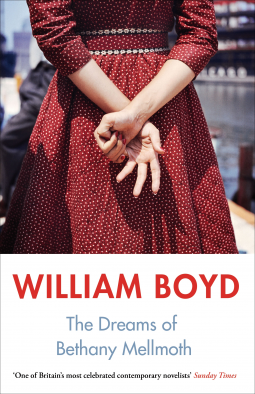
#BookReview ‘The Dreams of Bethany Mellmoth’ by William Boyd #shortstories

Partly good and partly disappointing: The Dreams of Bethany Mellmoth, the latest collection of short stories by William Boyd, is a bit of a curate’s egg. The shorter the stories, the more satisfying. William BoydOrganised in three parts, the first comprises seven short stories. If asked for my favourite from Part 1, I would say the first, ‘The Man Who Liked Kissing Women’. Ludo Abernathy is an art dealer who has foresworn affairs, his previous dalliances having finished three marriages. Now, he sticks to kissing women. Except when he can’t resist the temptation of making a killing on a Lucien Freud painting.
The title story, the longest in the anthology, makes up Part 2. It is more novella than short story, and I almost wish Boyd had developed it as such with a full plotline rather than letting Bethany Mellmoth drift from scene to scene. Bethany is a naïve twenty-something who drifts from boyfriend to boyfriend, dreaming of what she can do with her life but failing to make it happen. Each time it goes wrong, she gives up and moves back with her mother. It was a pleasant read but I’m unclear of Boyd’s central message – perhaps, the over-reliance of young drifters on parents rather than being truly independent – which meant I felt no urgency to read to the end. Of course I did. Bethany’s drifting started to annoy me; perhaps that was Boyd’s point?
Part 3 comprised one story, ‘The Vanishing Game: An Adventure’ which stopped abruptly. It starts off well: Alec Dunbar is an actor who keeps being called to auditions, mistakenly for Alexa Dunbar. His bad day improves when an actress who is waiting for an audition for the same film, offers him £1000 to deliver a package for her to Scotland. Dunbar’s road journey is peppered with references to the various films he has appeared in, and this is humorous. But the action becomes increasingly oddball, and the ending was disappointing. I prefer stories and novels that don’t tie up all the loose ends, but this one finished with too much remaining unexplained.

Read my reviews of:
ANY HUMAN HEART
LOVE IS BLIND
NAT TATE: AN AMERICAN ARTIST 1928-1960
ORDINARY THUNDERSTORMS
SWEET CARESS
THE BLUE AFTERNOON
TRIO
WAITING FOR SUNRISE
… and try the first paragraph of ARMADILLO

If you like this, try:-
‘All the Rage’ by AL Kennedy
‘The Story’ ed. Victoria Hislop
‘The Milk of Female Kindness’ ed. Kasia James

‘The Dreams of Bethany Mellmoth’ by William Boyd [UK: Viking]

And if you’d like to tweet a link to THIS post, here’s my suggested tweet:
#BookReview THE DREAMS OF BETHANY MELLMOTH by William Boydhttps://wp.me/p5gEM4-3jD via @SandraDanby

SaveSave

SaveSave

SaveSave

SaveSave