Tag Archives: writing

A poem to read in the bath… ‘Digging’

Today’s poem is about the gulf between two generations, father and son. In our upwardly-mobile society today, we should all take a moment to consider our origins and those of our parents and grandparents: what were they doing when they were the age we are now, where were they living, what was their daily routine?

[photo: thepoetryfoundation.org]

[photo: thepoetryfoundation.org]

Because of copyright restrictions I am unable to reproduce the poem in full, but please search it out in an anthology or at your local library.

‘Digging’
Between my finger and my thumb
The squat pen rests; snug as a gun.

Under my window, a clean rasping sound
When the spade sinks into the gravelly ground:
My father, digging…

I am an author, my father was a farmer, his father was a farmer. They milked cows, I write stories.

Click here to hear Seamus Heaney read the poem in full.
Read Heaney’s biography here at The Poetry Foundation. If you don’t know this website, it is a wonderful resource about poetry.
To learn more about Heaney, read Dennis O’Driscoll’s Stepping Stones: Interviews with Seamus Heaney [Faber], click here for the Amazon link.

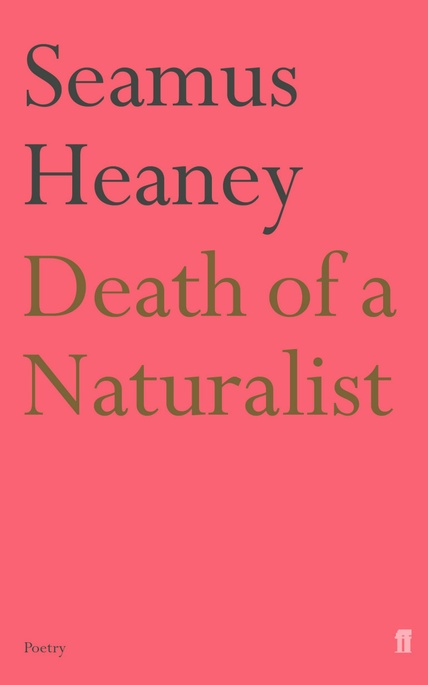
death of a naturalist by seamus heaney 19-6-14


‘Death of a Naturalist’ by Seamus Heaney [Faber]

Book review: The Art of Baking Blind

The Art of Baking Blind by Sarah Vaughan 9-6-14If you like making cakes, you’ll enjoy this book. It’s full of recipes, ingredients, mixing, kneading, weighing and baking. The Art of Baking Blind by Sarah Vaughan is a two tier story. In the 1960s, Kathleen Eaden’s husband owns a supermarket and she becomes an overnight marketing sensation. Now, a baking competition is announced in Eaden’s Monthly, the supermarket’s own magazine. Four women and one man reach the final.

The book reminded me of the Julia Child film, Julie & Julia, starring Amy Adams and Meryl Streep. In an attempt to emulate Julia Child, played by Streep, Adams cooks her way through Child’s cookbook. In a similar way, this story is told with Kathleen Eaden as its spine. Her diary entries and excerpts from her books feature heavily. Baking is at the centre of the story. It is a lightweight, enjoyable, holiday read.

Two confessions from me. One, I kept getting the women muddled – the only one I was clear about was Jenny. Two, I was slightly niggled that we didn’t get the point of view of the male competitor, Mike, until quite a way in. I missed his voice. Disappointingly, Mike remains a mystery, lightly-drawn, unsatisfying. Sarah Vaughan [below] writes with confidence about baking, I just know she baked the cakes and pies she writes about.

[photo: hodder]

[photo: hodder]

There are lots of innuendos about kneading dough and rising temperatures. All five competitors seem to lack love and sex, leading me to the rather simplistic assumption that baking replaces sex, which seems a little unfair. So which question made me turn the page – who will win the competition, what is Karen’s secret, or who will shag who? Rather contrarily, the sections I enjoyed reading belonged to Kathleen Eaden because it was obvious that all was not as the supermarket marketing image suggested.

By the end I could have done with less cake description. I was left with a feeling of irony that there were competitors seeking to be the new Mrs Eaden, when the real Mrs Eaden was a marketing invention. All four women – and Mike – must re-examine who they are and what they want.

If you want to watch a video about how to make perfect pie crust, something which features heavily in the book, watch Nana’s video at You Tube here.
Follow Sarah Vaughan on Facebook here.
To read how Sarah Vaughan got published, click here.

‘The Art of Baking Blind’ by Sarah Vaughan [pub. in the UK on July 3, 2014 by Hodder & Stoughton]

A poem to read in the bath… ‘Lost Acres’

I often read poetry, often in the bath, so this is the first of an occasional series sharing with you my discoveries. I often read them aloud, which for some reason seems to aid my understanding and stress the rhythm of the language.

My first poem is by Robert Graves [1895-1985] a writer known in the UK for his First World War poems and his war memoir Goodbye to All That. His novel I, Claudius won literary prizes and has been turned into numerous television series and films. Graves [below] was Professor of Poetry at Oxford from 1961-1966. robert graves 13-6-14My favourite is ‘Lost Acres’. Because of copyright restrictions I am unable to reproduce the poem in full, but please search it out in an anthology or at your local library.

‘Lost Acres’
These acres, always again lost
By every new ordnance-survey
And searched for at exhausting cost
Of time and thought, are still away.

This makes me think of rural Yorkshire where I grew up in The Sixties, roaming the fields free to explore, never thinking about lines on a map or county boundaries.

For more about this collection of Graves’ poems, click here.

selected poems by robert graves 13-6-14


‘Selected Poems’ by Robert Graves [faber and faber]

Great opening paragraph…56

Lord of the Flies“The boy with the fair hair lowered himself down the last few feet of rock and began to pick his way towards the lagoon. Though he had taken off his school sweater and trailed it now from one hand, his grey shirt stuck to him and his hair was plastered to his forehead. All round him the long scar smashed into the jungle was a bath of heat. He was clambering heavily among the creepers and the broken trunks when a bird, a vision of red and yellow, flashed upwards with a witch-like cry; and this cry was echoed by another.”

‘Lord of the Flies’ by William Golding

Great opening paragraph… 52

clare morrall - astonishing splashes of colour 10-6-13“At 3.15 every weekday afternoon, I become anonymous in a crowd of parents and child-minders congregating outside the school gates. To me, waiting for children to come out of school is a quintessential act of motherhood. I see the mums – and the occasional dads – as yellow people. Yellow as the sun, a daffodil, the submarine. But why do we teach children to paint the sun yellow? It’s a deception. The sun is white-hot, brilliant, impossible to see with the naked eye, so why do we confuse brightness with yellow?”
‘Astonishing Splashes of Colour’ by Clare Morrall

To read an interview in The Independent with Clare Morrall about her latest book, After the Bombing, click here.

COMING SOON: my review of After the Bombing.

Great opening paragraph… 51

iris murdoch - the sea, the sea 10-6-13“The sea which lies before me as I write glows rather than sparkles in the bland May sunshine. With the tide turning, it leans quietly against the land, almost unflecked by ripples or by foam. Near to the horizon it is a luxurious purple, spotted with regular lines of emerald green. AT the horizon it is indigo. Near to the shore, where my view is framed by rising heaps of humpy yellow rock, there is a band of lighter green, icy and pure, less radiant, opaque however, not transparent. We are in the north, and the bright sunshine cannot penetrate the sea. Where the gentle water taps the rocks there is still a surface skin of colour. The cloudless sky is very pale at the indigo horizon which it lightly pencils in with silver. Its blue gains towards the zenith and vibrates there. But the sky looks cold, even the sun looks cold.”
‘The Sea, The Sea’ by Iris Murdoch

Great Opening Paragraph… 50

deborah moggach - these foolish things 10-6-13 [1 pic]“Muriel Donnelly, an old girl in her seventies, was left in a hospital cubicle for forty-eight hours. She had taken a tumble in Peckham High Street and was admitted with cuts, bruises and suspected concussion. Two days she lay in A&E, untended, the blood stiffening on her clothes.”
‘These Foolish Things by Deborah Moggach

Great Opening Paragraph… 49

andrea newman - a bouquet of barbed wire 10-6-13“It began to rain as he entered the park, but not hard enough to make him look round for a taxi. Emerging from the station, he had been tempted by a pale gleam of sunshine, sufficient to convince him of the physical benefits of walking. He needed exercise, he had decided, just as he needed fewer cigarettes and less alcohol: it was pathetic how the habits of sloth and self-indulgence crept up unnoticed, along with middle age, that unbecoming state which you did not even recognize until events brought it sharply and unkindly home to you. And now the fine spring rain, for her first day back. He pictured her with painful tenderness, suntanned and shivering, getting ready for college in the unfamiliar flat. Was he too late? Would she still be there by the time he was able to phone? He had left home an hour ahead, under Cassie’s indulgent eyes, to catch an earlier train, feeling he could only telephone properly from the office, yet not knowing what he could possibly find to say that would be sufficiently casual when he finally heard her voice.”
‘A Bouquet of Barbed Wire’ by Andrea Newman

Great Opening Paragraph… 48

Chimamanda Ngozi Adiche - half of a yellow sun 10-6-13“Master was a little crazy; he had spent too many years reading books overseas, talked to himself in his office, did not always return greetings, and had too much hair. Ugwu’s aunty said this in a low voice as they walked on the path. ‘But he is a good man,’ she added. ‘And as long as you work well, you will eat well. You will even eat meat every day.’ She stopped to spit; the saliva left her mouth with a sucking sound and landed on the grass.”
‘Half of a Yellow Sun’ by Chimamanda Ngozi Adiche

Great Opening Paragraph… 47

ian McEwan - enduring love 10-6-13“The beginning is simple to mark. We were in sunlight under a turkey oak, partly protected from a strong, gusty wind. I was kneeling on the grass with a corkscrew in my hand, and Clarissa was passing me the bottle – a 1987 Daumas Gassac. This was the moment, this was the pinprick on the time map: I was stretching out my hand, and as the cool neck and the black foil touched my palm, we heard a man’s shout. We turned to look across the field and saw the danger. Next thing, I was running towards it. The transformation was absolute: I don’t recall dropping the corkscrew, or getting to my feet, or making a decision, or hearing the caution Clarissa called after me. What idiocy, to be racing into this story and its labyrinths, sprinting away from our happiness among the fresh spring grasses by the oak. There was the shout again, and a child’s cry, enfeebled by the wind that roared in the tall trees along the hedgerows. I ran faster. And there, suddenly, from different points around the field, four other men were converging on the scene, running like me.”
‘Enduring Love’ by Ian McEwan