“The sea which lies before me as I write glows rather than sparkles in the bland May sunshine. With the tide turning, it leans quietly against the land, almost unflecked by ripples or by foam. Near to the horizon it is a luxurious purple, spotted with regular lines of emerald green. AT the horizon it is indigo. Near to the shore, where my view is framed by rising heaps of humpy yellow rock, there is a band of lighter green, icy and pure, less radiant, opaque however, not transparent. We are in the north, and the bright sunshine cannot penetrate the sea. Where the gentle water taps the rocks there is still a surface skin of colour. The cloudless sky is very pale at the indigo horizon which it lightly pencils in with silver. Its blue gains towards the zenith and vibrates there. But the sky looks cold, even the sun looks cold.”
‘The Sea, The Sea’ by Iris Murdoch
Yearly Archives: 2014
#BookReview ‘The Accident’ by Chris Pavone #thriller
The Accident by Chris Pavone is a fast-moving thriller with so many questions. To start with, we have the Prologue about an unidentified man writing a book. This is his third draft of a manuscript called ‘The Accident.’ An excerpt from his m/s finishes: “…if what you are reading is a finished book, printed and bound and distributed into the world, I am, almost certainly, dead.” I was hooked. The Accident is Pavone’s second novel, his favourite thriller writer is John Le Carré and he certainly paces his storytelling the same way.
The second person we meet is Isabel Reed, a New York literary agent. It is dawn and she has just finished reading a manuscript: ‘The Accident by Anonymous.’ She is astounded at the enormity of the story, the revelations and accusations. As well as being a page-turning thriller, this novel is also an insight of the publishing world in New York and how the connections of power function in the USA: media, publishing, Government, CIA, black-ops. Isabel was once a top literary agent, now she is desperate for the last big m/s. Is this it? She stands under the shower: “It all beats down on her, the shower stream and the manuscript and the boy and the past, and the old guilt plus the new guilt, and the new earth-shattering truths, and fear for her career and maybe, now, fear for her life.” There is a lot we don’t know about Isabel: how come she has this m/s; she thinks about a husband, where is he; she thinks about a child, Tommy, also absent. But the story moves so quickly, I put those questions aside and continued reading.
I admit that at the beginning, I lost track of who was where; so many characters are introduced with anonymous snapshots that I got a bit irritated. Which ‘he’ was this? But I stuck with it and the characters assumed names. The thing that kept me reading was the excerpts from the m/s – as Anonymous tells the story, bit-by-bit we learn more about the secret, the bombshell. So when the murders start to happen, I was expecting death. I was soon picking up my Kindle to grab two minutes reading on the run. Who is doing the killing? Who is the author? Is the m/s true, or revenge?
CLICK HERE TO READ MORE ABOUT THIS BOOK
And here’s my review of another thriller by Chris Pavone:-
THE TRAVELERS
If you like this, try:-
‘Purity’ by Jonathan Franzen
‘A Hero in France’ by Alan Furst
‘Wolf’ by Mo Hayder
And if you’d like to tweet a link to THIS post, here’s my suggested tweet:
#BookReview THE ACCIDENT by Chris Pavone via @SandraDanby http://wp.me/p5gEM4-QO
#BookReview ‘Insurgent’ by Veronica Roth #YA #fantasy
Insurgent, second in the fantasy trilogy by Veronica Roth, is action-led and the pace fairly trips along. Everyone living in the post-dystopian city of Chicago belongs to one of five factions, each represents a human virtue. When the factions disagree, there is a struggle for power.
Heroine Tris is a complex mixture of two factions: her upbringing in Abnegation [considerate, selfless] and her adopted faction Dauntless [brave, daring, reckless]. This dangerous mixture gets her into trouble and that drives the story along. She is confrontational, brave, but often makes questionable decisions. She distrusts Four’s father and believes he is misleading them: ‘…sometimes, if you want the truth, you have to demand it.’ Demand, not ask: this tells me more about Tris than about Four’s father Marcus.
As this is the second novel of the trilogy there is more time for characterisation, we see more of Tris’s inner world in Insurgent compared with Divergent. She is maturing into her divergent personality, ‘I drift off to sleep, carried by the sound of distant conversations. These days its easier for me to fall asleep when there is noise around me. I can focus on the sound instead of whatever thoughts would crawl into my head in silence. Noise and activity are the refuges of the bereaved and guilty.’ And she is both.
I had difficulty keeping track of the huge list of characters and longed for a cast list. But more importantly is the lack of clarity about the main enemy: who is it? There’s lots of infighting to keep track of too, petty squabbles some of which have carried forward from the first book and which I had forgotten. I made the mistake of not reading the books back-to-back which would have really helped.
Tris’s confusion reminded me of my teenage years, confusion is universal: ‘Sometimes I feel like I am collecting the lessons each faction has to teach me, and storing them in my mind like a guidebook for moving through the world. There is always something to learn, always something that’s important to understand.’ Like all young people, Tris must learn there is no cut-off date by which she will have learned everything, adults continue to learn until they die.
CLICK HERE TO READ MORE ABOUT THIS BOOK AT AMAZON
Click the title to read my reviews of the other books in this series:-
DIVERGENT #1DIVERGENT
ALLEGIANT #3DIVERGENT
If you like this, try:-
‘Beneath the Keep’ by Erika Johansen #prequelTearling
‘Children of Blood and Bone’ by Tomi Adeyemi #1LegacyofOrisha
‘La Belle Sauvage’ by Philip Pullman #1TheBookOfDust
And if you’d like to tweet a link to THIS post, here’s my suggested tweet:
#BookReview INSURGENT by Veronica Roth via @SandraDanby http://wp.me/p5gEM4-Po
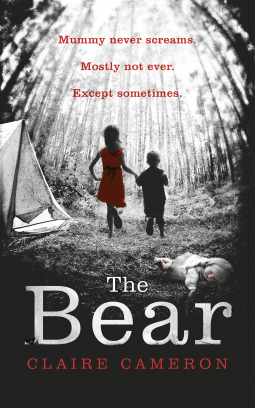
#BookReview ‘The Bear’ by Claire Cameron #mystery #suspense
Claire Cameron knows the forest where The Bear is set, and it shows. I could not put this book down. From page one I was hooked.
It is important to say that although the point-of-view of The Bear is a five-year old girl, Anna, the voice is not like Emma Donoghue’s Jack in Room. The two books are completely different in tone, the children are very different. The tension in The Bear comes from the dual vision of the story – Anna’s perspective, seeing but not understanding; and the reader’s imagination filling in the reality of the scene as Anna describes it, worrying about the consequences.
Anna is almost six, her brother Stick is almost three. Anna is pre-occupied with trying to behave as her mother and father have schooled her; despite the horror of the situation, she worries about doing what her mother tells her to do, being polite, remembering that Stick is too young to understand. The threat is always there: when the two children are trapped in Coleman, the family’s metal anti-bear food store, and Anna is wishing her mother would let her have a Barbie, I was worrying about what was outside Coleman.
It is a harrowing tale, and the writing made me catch my breath at times. Anna tries to be the grown-up sister, a babysitter for Stick, to have fun, to make him laugh, to distract him from the horror. “And Stick laughs and laughs like when it’s really funny and he starts to walk around and his head rolls because it is so funny and his eyes are tearing but not tears like he is sad. They look like the same tears but they aren’t when you laugh and they come from a different place, like they drip out from your throat and through your eyes. Tears when you are sad drip up from your heart.”
I learned to see the world through Anna’s eyes. The dirty water they drink from a pool is ‘chocolate milk’. The story is interlaced with Anna’s memories of ‘being four’, of trying to do as her mother has taught her. “Manners!”
She waits for her parents to come, as they always have. “Mummy said to me, ‘Daddy and I will be there.’ I am a good girl and our family is four. I don’t want to wait here because I don’t like it but I am supposed to watch Stick when Mummy is not here. I am not old enough to be a babysitter because that is a girl who has long hair and her jeans go loose around her shoe and nail polish that is pink like a pink popsicle except dark. I want nail polish but Mummy says no and I can’t babysit yet so I just have to watch Stick. I don’t know how long until Mummy and Daddy come.” But the reader knows they can’t come.
I read this in one sitting on holiday.
If you like this, try:-
‘Barkskins’ by Annie Proulx
‘A Sudden Light’ by Garth Stein
‘At the Edge of the Orchard’ by Tracy Chevalier
And if you’d like to tweet a link to THIS post, here’s my suggested tweet:
#BookReview THE BEAR by Claire Cameron http://wp.me/p5gEM4-P5 via @SandraDanby
#BookReview ‘All the Rage’ by AL Kennedy #shortstories
What a treat is All the Rage. Twelve stories about love by the inimitable AL Kennedy. Love: looking for it, losing it, exploring what love is. Instead of describing the stories, I want to celebrate her writing. The way she tells us so much in just one or two sentences.
‘Late in Life’ features an older couple waiting. They are waiting in a queue at the building society, waiting for him to pay off her mortgage, in a coming-together of two lives. She provocatively eats a fig, being sexy for him “to pass the time.” Despite his hatred of public show, he watches her, “he is now-and-then watching.” He gives her “the quiet rise of what would be a smile if he allowed it. She knows this because she knows him and his habits and the way the colour in his eyes can deepen when he’s glad, can be nearly purple with feeling glad when nothing else about him shows a heat of any kind.”
In ‘The Practice of Mercy’, Dorothy is lost, alone and approaching old age and contemplating her relationship. “She realised once more, kept realising, as if the information wouldn’t stick, realised again how likely it was that someone you’d given the opening of leaving, someone you’d said was free to go, that someone might not discover a way to come back.”
‘All the Rage’ is set on a train platform. A couple are delayed, travelling home from Wales, stuck waiting for a train that never comes. Kennedy tells us everything about their relationship by describing their suitcase. “Inside it, their belongings didn’t mix – his shirts and underpants in a tangle, Pauline’s laundry compressed into subsidiary containments. They had separate sponge bags too. Got to keep those toothbrushes apart.”
Simon, the narrator of ‘Run Catch Run’, considers his unnamed dog, he is at once a child teaching his puppy and also an adult with a mature awareness of inevitability. “His dad had suggested she could be called Pat, which was a joke: Pat the dog. Simon didn’t want to make his dog a joke.”
She shows us so much, in so few sentences.
And click the title to read my reviews of these other AL Kennedy books:-
DAY
SERIOUS SWEET
If you like this, try:-
‘The Story’ ed. Victoria Hislop
‘An Unfamiliar Landscape’ by Amanda Huggins
‘Last Stories’ by William Trevor
And if you’d like to tweet a link to THIS post, here’s my suggested tweet:
#BookReview ALL THE RAGE by AL Kennedy http://wp.me/p5gEM4-NL via @SandraDanby
#BookReview ‘The Returned’ by @JasonMott #suspense #mystery
When Harold opens the door to a strange man and boy, he sees someone he knew he would never see again. “Synapses kicked on in the recesses of his brain. They crackled to life and told him who the boy was standing next to the dark-skinned stranger. But Harold was sure his brain was wrong.” On that day, the lives of Harold and his wife Lucille change as they become involved in the whirlwind which is the return of people from the dead. This is the beginning of The Returned by Jason Mott.
There is a sense of brooding throughout this novel, starting small with the uncomfortable disbelief the elderly couple feel as their dead 8-year old son walks in the door. How can it be Jacob who died more than 40 years earlier? Is he/it an imposter? All over the world, the dead are returning. Soon the numbers become threatening, new phrases are coined: The Returned, the True Living. Communities cannot cope with the new arrivals who need feeding and housing, who bring with them old resentments, unfinished business. Not all reunions are happy. For some Returned there are no reunions. There is a dark sense of inevitability that it is all going to go wrong, as Connie Wilson says: “Everything was moving toward the coming terror. She felt it. It was inevitable now, like when the earth is dry and barren, the trees gray and brittle, the grass brown and parched – something must change.”
People look for an explanation: the Church has none. They look for a plan: the Government has none. The slow slide of disintegration is told through the eyes of the elderly couple, Harold and Lucille Hargreave, as they grapple with deep questions: what are the Returned, are they real, are they ghosts, what rights do they have? This book is at the same time a glimpse of a dystopian society, and at the same time an examination of death and grieving, of our attitudes to honour and betrayal.
The wish of a grieving person is to see the dead person just once more, but Jason Mott has created a world where people achieve that dying wish and then don’t want it. This book asks a lot of difficult questions, ones we would rather not hear.
If you like this, try:-
‘The Quick’ by Lauren Owen
‘The Threshold’ by Anita Kovacevic
‘A Sudden Light’ by Garth Stein
And if you’d like to tweet a link to THIS post, here’s my suggested tweet:
#BookReview THE RETURNED by @JasonMott via @SandraDanby http://wp.me/p5gEM4-Om
Great opening paragraph 50… ‘These Foolish Things’ #amreading #FirstPara
“Muriel Donnelly, an old girl in her seventies, was left in a hospital cubicle for forty-eight hours. She had taken a tumble in Peckham High Street and was admitted with cuts, bruises and suspected concussion. Two days she lay in A&E, untended, the blood stiffening on her clothes.”
From ‘These Foolish Things’ by Deborah Moggach [now published as ‘The Best Exotic Marigold Hotel’]
Read my review of these other novels by Deborah Moggach:-
SOMETHING TO HIDE
THE BLACK DRESS
THE CARER
TULIP FEVER
Try one of these #FirstParas & discover a new author:-
‘A Farewell to Arms’ by Ernest Hemingway
‘Back When We Were Grown Ups’ by Anne Tyler
‘Time Will Darken It’ by William Maxwell
And if you’d like to tweet a link to THIS post, here’s my suggested tweet:
#Books #FirstPara THESE FOOLISH THINGS by Deborah Moggach http://wp.me/p5gEM4-mA via @SandraDanby
Great Opening Paragraph… 50
“Muriel Donnelly, an old girl in her seventies, was left in a hospital cubicle for forty-eight hours. She had taken a tumble in Peckham High Street and was admitted with cuts, bruises and suspected concussion. Two days she lay in A&E, untended, the blood stiffening on her clothes.”
‘These Foolish Things by Deborah Moggach
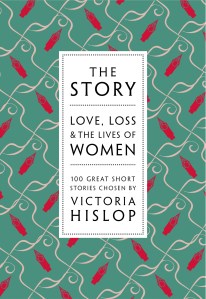
#BookReview ‘The Story’ by Victoria Hislop @VicHislop #shortstories
I read The Story: Love, Loss & the Lives of Women, edited by novelist Victoria Hislop, on my Kindle, without really appreciating just how much reading was involved for 100 stories. It’s not like holding a hefty book. But I enjoyed every single one of them. Some of the authors were well-known, others were new to me. Some made me laugh out loud (I’m thinking of Dorothy Parker here), others stopped my breath with sadness. I discovered authors I want to explore further: one of the reasons I have always loved short stories.
The short story form is fascinating. As a reader I am very demanding, like anthology editor Victoria Hislop I want to be instantly grabbed by a story. “Readers are allowed to be impatient with short stories,” she writes. “My own patience limit for a novel which I am not hugely enjoying may be three or four chapters. If it has not engaged me by then, it has lost me and is returned to the library or taken to a charity shop. With a short story, three or four pages are the maximum I allow (sometimes they are only five or six pages long in any case). A short story can entice us in without preamble or background information, and for that reason it had no excuse. It must not bore us even for a second.”
So, my favourite stories? Hislop has divided her selection into three sections so I have chosen three from each.
LOVE:
Jeanette Winterson’s ‘Atlantic Crossing’ – the gentle story of love and longing at a distance. My favourite story of all, I think.
Dorothy Parker’s ‘A Telephone Call’ – the stream of consciousness dialogue of waiting for a telephone call is an everywoman story.
‘The Artist’ by Maggie Gee is about Emma, an unfulfilled wife who employs an East European, Boris, as an odd-job man/builder. He says he is an artist, she doesn’t believe him.
LOSS:
‘The First Year of My Life’ by Muriel Spark. It starts, “I was born on the first day of the second month of the last year of the First World War, a Friday.” An account of war seen through the innocent but at the same time all-knowing eyes of an infant.
‘The Pill Box‘ by Penelope Lively is about the flexibility of imagination. A male teacher and writer is haunted by the past, remembering, wondering how the world would be now if things had happened differently when he was young.
‘The Merry Widow’ by Margaret Drabble tells the story of Elsa Palmer who, after the death of her husband Philip, goes on the summer holiday they had planned together. Grief overcomes her, but in an unconventional way.
THE LIVES OF WOMEN:
‘G-String’ by Nicola Barker is about the triumph of the modern knicker. This made me laugh out loud.
‘Betty’ is the woman who captivates the teenage narrator of Margaret Atwood’s tale. “From time to time I would like to have Betty back, if only for an hour’s conversation.”
‘A Society’ by Virginia Woolf, about a group of young women on the verge of the Great War who make themselves into a “society for asking questions. One of us was to visit a man-of-war; another was to hide herself in a scholar’s study; another was to attend a meeting of business men; while all wee to read books, look at pictures, go to concerts, keep our eyes open on the streets, and ask questions perpetually.”
Read my reviews of other these books by Victoria Hislop:-
THE FIGURINE
THE SUNRISE
THOSE WHO ARE LOVED
If you like this, try:-
‘The Duchess’ by Wendy Holden
‘Anderby Wold’ by Winifred Holtby
‘All the Rage’ by AL Kennedy
And if you’d like to tweet a link to THIS post, here’s my suggested tweet:
#BookReview THE STORY by Victoria Hislop @VicHislop http://wp.me/p5gEM4-N5 via @SandraDanby
#BookReview ‘Mrs Sinclair’s Suitcase’ by @Louisewalters12 #romance #WW2
rs Sinclair’s Suitcase by Louise Walters is a gentle mystery of a love affair during war and its consequences for the following generations.
We follow the stories of two women: Dorothy Sinclair in 1940, and today Roberta who works at The Old and New Bookshop. Roberta is particularly fond of the secondhand stock, treasuring the notes and letters she finds hidden within their pages, wondering about the stories of the writer and the addressee. Each chapter starts with an excerpt from such a note.
The letter which starts Chapter One is dated 1941 and addressed to “My dear Dorothea” from Jan Pietrykowski in which he writes he “cannot forgive” her for “what you do, to this child, to this child’s mother, it is wrong.” The letter makes no sense to Roberta as it was written by her grandfather to her grandmother, and dated 1941 when Jan died in 1940. This is the puzzle which Roberta must unravel. What woman does Jan refer to, and what child?
Dorothy’s story starts with a plane crash. She lives on the edge of an airfield deep in the quiet Lincolnshire countryside, alone in her cottage [her husband is away at war] which she shares with two land girls. The plane crash brings the Polish pilot to her door. Nervous, Dorothy serves afternoon tea. She “watched Jan take a bite from a sandwich. His teeth were small, even and white. She noticed the way his fingers curved lightly around the sandwich. He was an elegant man… She watched him eat and he seemed unabashed, eating under her scrutiny. She, for her part, always ate guardedly. She hated the way eating contorted her face, and it made her feel exposed.” From their first meeting, he unsettles her. She is so buttoned-up; he is open, curious and confident.
There is a lot of sensuality in this tale. Despite herself, Dorothy wonders about the pilot. She does not miss her husband. When Jan visits the cottage again, she notices his “brown, lean, strong forearms and realizes how she feels… His arms were poetry.” But there is grief too, as this is wartime and what happened in the 1940s knocks on down the decades to affect Roberta, her father and her grandmother Babunia.
Here’s my review of A LIFE BETWEEN US, also by Louise Walters.
If you like this, try:-
‘At Mrs Lippincote’s’ by Elizabeth Taylor
‘The Paying Guests’ by Sarah Waters
‘After the Bombing’ by Clare Morrall
And if you’d like to tweet a link to THIS post, here’s my suggested tweet:
#BookReview MRS SINCLAIR’S SUITCASE by @Louisewalters12 http://wp.me/p5gEM4-Na via @SandraDanby