Tag Archives: romance novels

#BookReview ‘You’ll Never See Me Again’ Lesley Pearse@LesleyPearse #WW1 #romance

When a character in a film says ‘never’ it’s a sign that the impossible thing will definitely happen before the end. Such is the title of the new novel from Lesley Pearse,You’ll Never See Me Again. Lesley PearseIt is 1917 and a storm is thrashing the Devon coast at Hallsands. Betty Wellows is with her shell-shocked husband Martin at his mother’s home, safely up the cliffs. Martin no longer recognises Betty, he is a different man from the fisherman who went to war. Betty is working all hours to support her husband and his mother, putting up with insults, petty grievances, grief for the loss of her husband. As the storm becomes wild and dangerous, Agnes instructs her daughter-in-law to go to her own house beside the beach to rescue her belongings from the flood. Afraid, Betty escapes the older woman’s abuse and runs into the storm. As the waves crash into her home, Betty realises this is her chance to escape Hallsands, Agnes and Martin.
The dramatic opening grabbed my attention and my emotions. Betty is trapped in a life of poverty with a husband who no longer recognises her and a mother-in-law who takes her money and treats her like a skivvy. When she has the chance to escape, Betty takes it. I spent the whole novel chewing over Betty’s dilemma; was she right to run, should she have stayed. Pearse maintains this dilemma throughout the book as Betty goes to Bristol where she changes her name to Mrs Mabel Brook, a widow. You’ll Never See Me Again is the story of how a lone woman in the middle of the Great War is able to strive to improve her lot in life. Mabel suffers setbacks, encounters thieves and frauds, and sheds copious tears. There are moments where her life seems to have reached a settled, easier place; but, of course, more trauma lies ahead.
This is a cleverly plotted book that kept me guessing to the end. Mabel at times is her own worst enemy, and she finds it difficult to accept help. Then she accidentally discovers a talent she never knew she had. When she moves to Dorchester, Dorset, to be a live-in servant/housekeeper for illustrator Miss Clara May, Mabel’s life takes a new turn. Nearby is a prisoner of war camp and one of the inmates, Carsten, looks after Clara’s garden. Carsten and Mabel fall into a state of mutual liking when Spanish flu strikes at the camp; afraid for Carsten’s health, Mabel volunteers as a nurse.
Mabel ran away from Hallsands to be free, but her past travels with her. Finally she must confront her origins in order to move on with her life. Mabel has a strong sense of honesty and justice, which sounds odd given the way she ran away in chapter one. But she is unselfish, never turning away from difficult decisions and transforming herself in a short space of time into a beautiful, assured woman that her neighbours at Hallsands would not recognise.

Here’s my review of THE HOUSE ACROSS THE STREET, also by Lesley Pearse.

If you like this, try:-
One Step Too Far’ by Tina Seskis
Sometimes I Lie’ by Alice Feeney
The Girls’ by Lisa Jewell

And if you’d like to tweet a link to THIS post, here’s my suggested tweet:
#BookReview YOU’LL NEVER SEE ME AGAIN by Lesley Pearse @LesleyPearse https://wp.me/p5gEM4-3ZO via @Sandra Danby
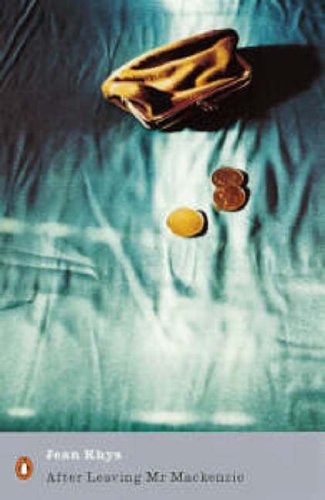
#BookReview ‘After Leaving Mr Mackenzie’ by Jean Rhys #historicalfiction

A slim novel, After Leaving Mr Mackenzie is the second novel by Jean Rhys, published in 1931. Semi-autobiographical, it tells the story of a young woman [if a woman in her mid-thirties can be called young] who faces up to the realities of life after a love affair ends. The title is not strictly true because Julia did not leave Mr Mackenzie, he left her. Jean Rhys She moves to a cheap hotel room where the furnishings are faded and the only decoration is a poor painting which she assumes must have been left in lieu of debt by a previous tenant. Where Rhys excels is her description of the small details, drawing a picture of Julia’s surroundings and her moods. ‘She found pleasure in memories, as an old woman might have done. Her mind was a confusion of memory and imagination. It was always places that she thought of, not people. She would like thinking of the dark shadows of houses in a street white with sunshine; or of trees with slender black branches and young green leaves, like the trees of a London square in spring; or of a dark-purple sea, the sea of a chromo or of some tropical country that she had never seen.’ Like the title of the novel, it is not always clear what is true and what is imagination.
After the death of her baby and the breakdown of her marriage, which is not really explained, Julia survives in Paris thanks to the men she dates. They give her cash, buy her clothes, pay for her lodging; in this, Julia is similar to Marya in Rhys’ first novel Quartet. This novel takes a step further in that when her maintenance payments stop, Julia takes action to help her situation. After unsuccessfully asking Mr Mackenzie for cash, she is helped by a stranger, Mr Horsfield. Julia buys new clothes and a train ticket to London where she visits her sister who cares for their dying mother.
This is a study of one woman’s desperate situation and her dependency on others. Julia is a sad woman with a past, shabby, as if wearing a sign around her neck saying ‘trouble’. The delight in reading this book is how Rhys tells Julia’s story, as much as the story itself.

Here’s my review of another novel by Jean Rhys:-
QUARTET

If you like this, try:-
Orphans of the Carnival’ by Carol Birch
Birdcage Walk’ by Helen Dunmore
‘The Duchess’ by Wendy Holden

And if you’d like to tweet a link to THIS post, here’s my suggested tweet:
#BookReview AFTER LEAVING MR MACKENZIE by Jean Rhys via @SandraDanby http://wp.me/p5gEM4-2d7 

#BookReview ‘Mrs Sinclair’s Suitcase’ by Louise Walters #romance #WW2

rs Sinclair’s Suitcase by Louise Walters is a gentle mystery of a love affair during war and its consequences for the following generations. Louise Walters We follow the stories of two women: Dorothy Sinclair in 1940, and today Roberta who works at The Old and New Bookshop. Roberta is particularly fond of the secondhand stock, treasuring the notes and letters she finds hidden within their pages, wondering about the stories of the writer and the addressee. Each chapter starts with an excerpt from such a note.
The letter which starts Chapter One is dated 1941 and addressed to “My dear Dorothea” from Jan Pietrykowski in which he writes he “cannot forgive” her for “what you do, to this child, to this child’s mother, it is wrong.” The letter makes no sense to Roberta as it was written by her grandfather to her grandmother, and dated 1941 when Jan died in 1940. This is the puzzle which Roberta must unravel. What woman does Jan refer to, and what child?
Dorothy’s story starts with a plane crash. She lives on the edge of an airfield deep in the quiet Lincolnshire countryside, alone in her cottage [her husband is away at war] which she shares with two land girls. The plane crash brings the Polish pilot to her door. Nervous, Dorothy serves afternoon tea. She “watched Jan take a bite from a sandwich. His teeth were small, even and white. She noticed the way his fingers curved lightly around the sandwich. He was an elegant man… She watched him eat and he seemed unabashed, eating under her scrutiny. She, for her part, always ate guardedly. She hated the way eating contorted her face, and it made her feel exposed.” From their first meeting, he unsettles her. She is so buttoned-up; he is open, curious and confident.
There is a lot of sensuality in this tale. Despite herself, Dorothy wonders about the pilot. She does not miss her husband. When Jan visits the cottage again, she notices his “brown, lean, strong forearms and realizes how she feels… His arms were poetry.” But there is grief too, as this is wartime and what happened in the 1940s knocks on down the decades to affect Roberta, her father and her grandmother Babunia.

Here’s my review of A LIFE BETWEEN US, also by Louise Walters.

If you like this, try:-
At Mrs Lippincote’s’ by Elizabeth Taylor
The Paying Guests’ by Sarah Waters
After the Bombing’ by Clare Morrall

And if you’d like to tweet a link to THIS post, here’s my suggested tweet:
#BookReview MRS SINCLAIR’S SUITCASE by Louise Walters http://wp.me/p5gEM4-Na via @SandraDanby