Monthly Archives: January 2015

#BookReview ‘Midnight in Europe’ by Alan Furst #thriller #WW2

1938. Spain at war, Europe on the brink of war. Midnight in Europe by Alan Furst is the first World War Two novel I have read about the overlap of the two wars, the impact of one on the other, and the approaching shadow of fascism. Nothing happens in isolation. The Spanish Civil War is notoriously difficult to understand: so many factions, changing names etc. Sensibly, Furst concentrates on one aspect: the supply of weapons to the Republicans fighting the fascist army of Franco. Alan FurstA secret Spanish agency in Paris sources arms and ammunition for the Republicans. Cristián Ferrar, a Spanish lawyer living in Paris and working for a French law firm, is asked to help. Unsure what he is getting into, but resigned to help his mother country, he is soon looking over his shoulder to see if he is being followed – he doesn’t know who by, it could be the Spanish fascists, the Gestapo, the Russians. Inter-cut with Ferrar’s story are excerpts from the front line in Spain where preparations are being made to fight the Battle of the Ebro. The need for the weapons is desperate, as bullets are counted out for each soldier.
Working with an odd mixture of diplomats, gangsters and generally shady characters, Ferrar first travels to Berlin where there is a glimpse of the pre-war country which with hindsight gives us a chill. The Gestapo follows them at every step. Then there is a nail-biting train journey to Gdansk, as an arms shipment goes missing. The climax is a thrilling boat journey from Odessa to Valencia. Ferrar, is a lawyer not a spy, he is simply an ordinary man doing what he can to help. An ordinary man who is, meanwhile, having a sprinkling of love affairs which may or may not be authentic.
If you have been put off before at reading novels about the Spanish Civil War because the politics is confusing, you will enjoy this novel. The shadow of war in Europe is cast over every page, the sense of approaching doom however does not seem to affect the nightclubs of Paris, or the shops of New York where the cheerful atmosphere seems unreal. Ferrar faces moving his family from Louveciennes on the outskirts of Paris, the picturesque country west of the capital which was painted by the Impressionists, to the safety of New York.
This is the first novel by Alan Furst I have read, picked up at random in an airport bookshop. I will read many more.

Read my review of A HERO IN FRANCE, also by Alan Furst.

If you like this, try:-
‘Citadel’ by Kate Mosse
‘A Hero in France’ by Alan Furst
‘Dominion’ by CJ Sansom

And if you’d like to tweet a link to THIS post, here’s my suggested tweet:
#BookReview MIDNIGHT IN EUROPE by Alan Furst http://wp.me/p5gEM4-1ct via @SandraDanby

Great Opening Paragraph 66… ‘Animal Farm’ #amreading #FirstPara

“Mr Jones, of the Manor Farm, had locked the hen-houses for the night, but was too drunk to remember to shut the pop-holes. With the ring of light from his lantern dancing from side to side, he lurched across the yard, kicking off his boots at the back door, drew himself a last glass of beer from the barrel in the scullery, and made his way up to bed, where Mrs Jones was already snoring.”
George OrwellFrom ‘Animal Farm’ by George Orwell

Read this #FirstPara from 1984, also by George Orwell.

Try one of these #FirstParas & discover a new author:-
‘Queen Camilla’ by Sue Townsend
‘Middlesex’ by Jeffrey Eugenides
‘Herzog’ by Saul Bellow

And if you’d like to tweet a link to THIS post, here’s my suggested tweet:
#Books #FirstPara ANIMAL FARM by George Orwell via @SandraDanby http://wp.me/p5gEM4-kL

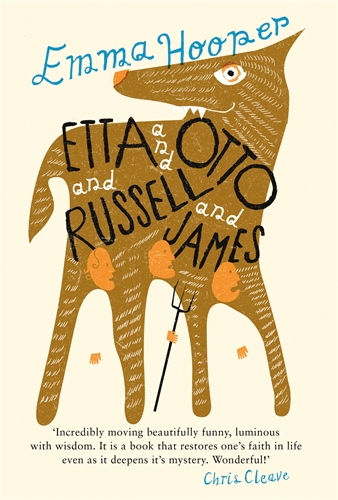
#BookReview ‘Etta and Otto and Russell and James’ by Emma Hooper #contemporary

This was a ‘sort of’ book for me. I ‘sort of’ enjoyed it but… I was ‘sort of’ irritated with it too. The story premise for Etta and Otto and Russell and James by Emma Hooper grabbed me straightaway, and the excellent first paragraph. Emma Hooper

Otto,
The letter began, in blue ink.
I’ve gone. I’ve never seen the water, so I’ve gone there. Don’t worry…”

Etta and Otto are in their eighties. The setting is Canada. Etta sets out one day to walk towards the water, which means either east to the Atlantic or west to the Pacific. She goes east. Otto stays at home, working his way through Etta’s index cards, trying hard to make cinnamon buns like hers. Gradually we learn their back stories: Otto’s childhood on the farm then as a soldier in France during the Second World War; of Etta’s teaching days and then a munitions worker. The Russell in the title is their childhood neighbour and friend. The James of the title is a coyote.
I was unclear why Etta was walking, unclear why Otto seemed philosophical and Russell concerned by her adventure. The relationships are enigmatic, the memories are fluid, which I found confusing. And what precisely happened at the end, I re-read and still do not understand. Enigmatic again, perhaps too much smoke and mirrors. Partly, also I think the problem was insufficient editing combined with the layout of the text [in the Kindle edition]. The viewpoint shifts from paragraph to paragraph, something I hate as it means a minute mental re-adjustment each time which interrupts the flow of the story. Also there is no punctuation to show dialogue, another pet hate of mine, and it is often difficult to know who is talking when. Anything which takes you ‘out’ of the story has to be a bad thing.
Some of the writing is beautiful though. My favourite passages were when Etta is walking with James; their relationship, their dialogue, and the description of the places they walk through are wonderful. When they come to their final river to cross, she takes the bridge and he swims, and we never see James again. I was sorry for that loss.

If you like this, try:-
‘In Another Life’ by Julie Christine Johnson
‘The Love Song of Miss Queenie Hennessey’ by Rachel Joyce
‘Ferney’ by James Long

And if you’d like to tweet a link to THIS post, here’s my suggested tweet:
#BookReview ETTA + OTTO + RUSSELL + JAMES by Emma Hooper http://wp.me/p5gEM4-1wo via @SandraDanby

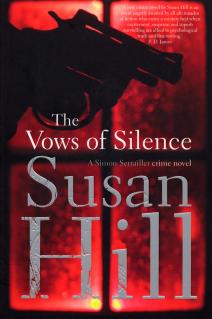
#BookReview ‘The Vows of Silence’ by @susanhillwriter #crime

Young women are being shot, but by the same person? In The Vows of Silence by Susan Hill, the first killer uses a rifle and shoots from distance, the other shoots face-to-face. Different modus operandi, different killer? Susan HillOne serial killer in a small town is rare, two serial killers in a small town at the same time is beyond apprehension. The thing that sets Susan Hill’s crime novels apart from the rest, for me, is the way she deals with the violence. It is there in the storyline but not on the page, we feel it through the reaction of Detective Chief Superintendent Simon Serrailler. Susan Hill writes page-turning crime novels about ordinary people, people we can identify with, but people that extraordinary things happen to.
Cathedral town Lafferton is the setting, and Prince Charles and Camilla are due to attend the wedding of the Lord Lieutenant’s daughter, not a great idea when a shooter is on the loose. A shooter who no-one sees, who plans meticulously, and who leaves no clues behind. As women keep being killed, Serrailler’s brother-in-law is diagnosed with cancer and his widowed father suddenly has a girlfriend. Elsewhere in Lafferton, widow Helen meets widower Phil, but her newly-religious son Tom disapproves. Quite how much he disapproves, Helen doesn’t appreciate. As the murders continue, the police focus on the forthcoming high profile wedding and the town’s Jug Fair. Both are ideal settings for another shooting.
This was the first of the Simon Serrailler books that I read, and I was immediately hooked in the way that finding a new detective series hooks you. I re-read it recently in one sitting.

Read my reviews of the other novels in the series:-
THE VARIOUS HAUNTS OF MEN #1SIMONSERRAILLER
THE PURE IN HEART #2SIMONSERRAILLER
THE RISK OF DARKNESS #3SIMONSERRAILLER
THE SHADOWS IN THE STREET #5SIMONSERRAILLER
THE BETRAYAL OF TRUST #6SIMONSERRAILLER
A QUESTION OF IDENTITY #7SIMONSERRAILLER
THE SOUL OF DISCRETION #8SIMONSERRAILLER
THE COMFORTS OF HOME #9SIMONSERRAILLER
THE BENEFIT OF HINDSIGHT #10SIMONSERRAILLER
A CHANGE OF CIRCUMSTANCE #11SIMONSERRAILLER

And also by Susan Hill, HOWARD’S END IS ON THE LANDING

If you like this, try:-
‘Death at the Sign of the Rook’ by Kate Atkinson #6JACKSONBRODIE
‘Magpie Murders’ by Anthony Horowitz #1SUSANRYELAND
‘Dead Simple’ by Peter James

And if you’d like to tweet a link to THIS post, here’s my suggested tweet:
#BookReview THE VOWS OF SILENCE by @susanhillwriter http://wp.me/p5gEM4-1dJ via @SandraDanby 

#BookReview ‘Mobile Library’ by @d_whitehouse #contemporary

Stuffed with book and movie references – from The Lion, The Witch and the Wardrobe to The Terminator – if Mobile Library by David Whitehouse was a film it would be described as a ‘road movie’. Really, it’s a book about running away to find yourself. David WhitehouseChapter One, titled ‘The End’ is reminiscent of Thelma and Louise and The Italian Job. A mobile library van stands at the edge of cliffs, surrounded by police. Inside are Bobby, Rosa and Val. We don’t know who they are or why they are there: such an incentive to keep reading.
Twelve year-old Bobby lives with his father and his father’s girlfriend Cindy, a mobile hairdresser who paints a look of suspicion onto her face every morning with her foundation. Bobby misses his mother and saves anything of hers he can find: hairs from her hairbrush, scraps of paper.
When his schoolfriend, Sunny, offers to protect Bobby from the bullies by turning into a cyborg like The Terminator, neither of them realize what that really entails. Bones are broken, blood is spilled, until Phase Three when Sunny ends up in hospital and disappears. Bobby, alone, passes the time by peeling wallpaper off his bedroom walls. When he meets Rosa and her mother, he finds a place that feels more like a home should be.
When things go wrong, the trio run away in the library van and have adventures along the way [as is the way of road movies]. Lessons are learned about love, life and family. They have an objective: to find Sonny. Bobby reads books from the library – Tom Sawyer, Of Mice and Men – takes a lesson from the story and applies it to his situation. This is a funny, touching story, its message is that family is where you make it. Anyone who loves books will love this story, it is a book with heart.

If you like this, try:-
Paper Cup’ by Karen Campbell
The Funny Thing About Norman Foreman’ by Julietta Henderson
Etta and Otto and Russell and James’ by Emma Hooper

And if you’d like to tweet a link to THIS post, here’s my suggested tweet:
#BookReview MOBILE LIBRARY by @d_whitehouse http://wp.me/p5gEM4-1sF via @SandraDanby

#BookReview ‘The Magician’s Land’ by Lev Grossman @leverus #fantasy #magic

Thrown out of Fillory and back in the non-magical world, Quentin Coldwater retreats to his former magical university in Brooklyn. Brakebills. He becomes a professor where he teaches his discipline, described as ‘mending small things.’ Remember this, it will be important later. The Magician’s Land is the final book of the magical trilogy by Lev Grossman and like book two, The Magician King, this final instalment is action-packed. Lev Grossman The story moves between present and past, Fillory and earth, above ground, in the air and underground. Seeking adventure, and money, Quentin meets a new group of underground magicians and accepts a task for payment of $2m. On the team is Plum, who admits she once attended Brakebills too.
In parallel we get the stories of Quentin, Eliot [still in Fillory] and Plum. In order to understand the threat in the present, we have to go back in time to fill in the real story of what happened to the Chatwin children [whose true adventures inspired the novels of Fillory]. And it becomes plain that the Fillory known by Quentin from his childhood love of those novels, is incorrect. The novels were fictional and Fillory is not what it seems.
Depending on them all, is the very existence of Fillory.
A cracking finale.

Click the title below to read my reviews of the first two novels in the trilogy:-
THE MAGICIANS #1THEMAGICIANS
THE MAGICIAN KING #2THEMAGICIANS

If you like this, try:-
‘The Queen of the Tearling’ by Erika Johansen #1TEARLING
‘The Invasion of the Tearling’ by Erika Johansen #2TEARLING
‘The Lost Girl’ by Sangu Mandanna

And if you’d like to tweet a link to THIS post, here’s my suggested tweet:
#BookReview THE MAGICIAN’S LAND by Lev Grossman @leverus http://wp.me/p5gEM4-1rD via @SandraDanby

#BookReview ‘Summertime’ by Vanessa Lafaye #Florida #historical

From the first chapter, Summertime by Vanessa Lafaye is steeped in its setting. Florida, 1935. Racial divides, love [extra-marital and long lost], the US mistreatment of its Great War veterans, and the threat of the elements dominate this tale of Heron Key. Vanessa LafayeLafaye is a debut novelist but she handles her explosive material with assurance, taking time to build the story as the town prepares for the annual beach barbeque on Independence Day. With the weather reports showing a hurricane approaching, tensions build between the townsfolk and the war veterans camped nearby in cockroach-infested mouldy conditions.
Lafaye took her inspiration from two real events, the Labor Day Hurricane in 1935, and the appalling way the US Government treated its war veterans. Heron Key is fictional as are the characters, but some of the things which happen during the hurricane are based on real-life reports. This is a wonderful meld of fiction and fact, handled by skilled storyteller. Lafaye handles the suspense as if she has been telling stories like this all her life.

And here’s my review of AT FIRST LIGHT, also by Vanessa Lafaye.

If you like this, try:-
‘The Knife with the Ivory Handle’ by Cynthia Bruchman
‘The Last Runaway’ by Tracy Chevalier
‘The Other Eden’ by Sarah Bryant

And if you’d like to tweet a link to THIS post, here’s my suggested tweet:
#BookReview SUMMERTIME by Vanessa Lafaye‪ via @SandraDanby http://wp.me/p5gEM4-1v2

#BookReview ‘The Girl on the Train’ by Paula Hawkins #mystery #suspense

This book has been hyped much in the pre-publicity and I can understand why. After a slowish start, I finished it at a sprint and rarely put it down. The girl on the train in The Girl on the Train, by Paula Hawkins, is a voyeur, she watches people in their houses. On her morning commute, her train regularly stops at a red light and she looks at a house and ponders the perfect life of the people who live there. She is fantasising, you think, and then you realise she isn’t. She knows the people. Or does she? Paula HawkinsYou never know where you are with Rachel’s account of what happens, she is the ultimate unreliable narrator. The problem is she is a drunk, a falling-over, hungover woman who swigs alcohol on the train and suffers memory blackouts. At no point do you know whether to believe her version of the truth. She says, “I wonder where it started, my decline; I wonder at what point I could have halted it.”
In contrast to Rachel, there is Megan, the woman who lives in the house by the railway. She seems a more reliable source of information, or is she? She is unhappy too and we are uncertain why. Dissatisfied – with her marriage, her life? – she goes to see a counsellor. She hints about ‘betrayals’.
For the first half of the book I got the two women slightly confused, not their current life but their back stories. Then a third female voice is added, Anna. Anna was clear to me from the beginning, and her viewpoint adds clarity to the wider picture.
This is a thriller about men, as seen by women; about relationships, as seen by women; about truth and lies, and our ability to recognise one from the other.
A great debut.

If you like this, try:-
‘The Girls’ by Lisa Jewell
‘Foxlowe’ by Eleanor Wasserberg
‘All the Birds, Singing’ by Evie Wyld

And if you’d like to tweet a link to THIS post, here’s my suggested tweet:
#BookReview THE GIRL ON THE TRAIN by Paula Hawkins http://wp.me/p5gEM4-1rA via @SandraDanby

Great opening paragraph 65… ‘A Passage to India’ #amreading #FirstPara

“Except for the Marabar Caves – and they are twenty miles off – the city of Chandrapore presents nothing extraordinary. Edged rather than washed by the River Ganges, it trails for a couple of miles along the bank, scarcely distinguishable from the rubbish it deposits so freely. There are no bathing-steps on the river front, as the Ganges happens not to be holy here; indeed there is no river front, and bazaars shut out the wide and shifting panorama of the stream. The streets are mean, the temples ineffective, and though a few fine houses exist they are hidden away in gardens or down alleys whose filth deters all but the invited guest. Chandrapore was never large or beautiful, but two hundred years ago it lay on the road between Upper India, then imperial, and the sea, and the fine houses date from that period. The zest for decoration stopped in the eighteenth century, nor was it ever democratic. In the bazaars there is no painting and scarcely any carving. The very wood seems made of mud, the inhabitants of mud moving. So abased, so monotonous is everything that meets the eye, that when the Ganges comes down it might be expected to wash the excrescence back into the soil. Houses do fall, people are drowned and left rotting, but the general outline of the town persists, swelling here, shrinking there, like some low but indestructible form of life.”
EM Forster From ‘A Passage to India’ by EM Forster 

Try one of these #FirstParas & discover a new author:-
‘Perfume’ by Patrick Suskind
‘The Children Act’ by Ian McEwan
‘Time Will Darken It’ by William Maxwell

And if you’d like to tweet a link to THIS post, here’s my suggested tweet:
#Books #FirstPara A PASSAGE TO INDIA by EM Forster via @SandraDanby http://wp.me/p5gEM4-7p


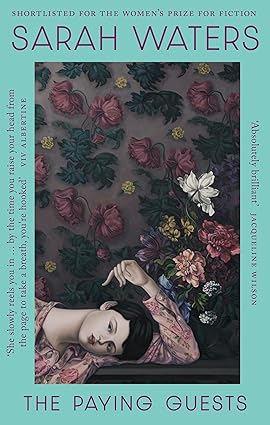
#BookReview ‘The Paying Guests’ by Sarah Waters #historical

Sarah Waters is one of my favourite authors, I await each new book with delicious anticipation. I waited a while for this one, The Paying Guests was a Christmas present and I started reading it about an hour after unwrapping it. Sarah WatersI wasn’t disappointed. Waters has written a ‘closed room’ mystery with a bit of romance and crime thrown in, all in the post-Great War context of women’s rights, abandoned soldiers and the corset of social manners. Mrs Wray and her daughter Frances have fallen on hard times, in order to pay off debts left after the death of Frances’ father, they rent out the upstairs of their house to lodgers. Except they don’t call Mr and Mrs Barber their lodgers, they are ‘paying guests’. Waters puts these four strangers together and mixes it a little, waiting to see what happens. They bump into each other on the landing, on the stairs, in the kitchen on the way to the outside lavatory, in their dressing gowns, first thing in the morning and last thing at night. They circle around each other according to the parameters of social behaviour. And all the time, Waters turns the screw slowly, tightening, until the buttoned-down feelings break free. Then all hell breaks loose.
I loved this book, the characters are drawn with such care and I could see this divided house as if looking at a photograph.

Read the first paragraph of THE PAYING GUESTS.

If you like this, try:-
‘After the Bombing’ by Clare Morrall
‘Freya’ by Anthony Quinn
‘At Mrs Lippincote’s’ by Elizabeth Taylor

And if you’d like to tweet a link to THIS post, here’s my suggested tweet:
#BookReview THE PAYING GUESTS by Sarah Waters http://wp.me/p5gEM4-1s3 via @Sandra Danby