Monthly Archives: September 2017

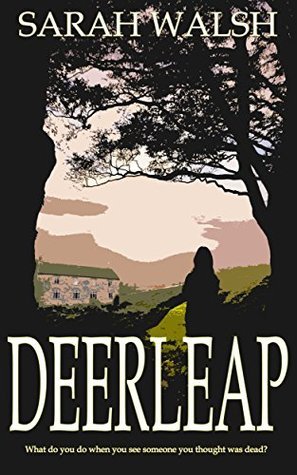
Great Opening Paragraph 101… ‘A Farewell to Arms’ #amreading #FirstPara

“In the late summer of that year we lived in a house in a village that looked across the river and the plain to the mountains. In the bed of the river there were pebbles and boulders, dry and white in the sun, and the water was clear and swiftly moving and blue in the channels. Troops went by the house and down the road and the dust they raised powdered the leaves of the trees. The trunks of the trees too were dusty and the leaves fell early that year and we saw the troops marching along the road and the dust rising and leaves, stirred by the breeze, falling and the soldiers marching and afterwards the road bare and white except for the leaves.”
Ernest Hemingway From ‘A Farewell to Arms’ by Ernest Hemingway 

And here are the #FirstParas from other novels by Hemingway:-
FOR WHOM THE BELL TOLLS
THE OLD MAN AND THE SEA
TO HAVE AND HAVE NOT

Try one of these #FirstParas & discover a new author:-
‘Jamrach’s Menagerie’ by Carol Birch
‘Slaughterhouse 5’ by Kurt Vonnegut Jr
‘Sacred Hearts’ by Sarah Dunant

And if you’d like to tweet a link to THIS post, here’s my suggested tweet:
#Books #FirstPara A FAREWELL TO ARMS by Ernest Hemingway http://wp.me/p5gEM4-2s3 via @SandraDanby

#BookReview ‘Shelter’ by Sarah Franklin #WW2

This book is full of trees. The Forest of Dean to be exact. Shelter by Sarah Franklin is the story of two outsiders who find themselves in the forest during World War Two. As they struggle to survive, to learn about their surroundings, how to get by from day to day, each finds a way to live the rest of their lives. Sarah FranklinEarly in 1944 in Coventry, Connie Granger’s life is changed in the course of one night. Escaping the bombing, city-girl Connie takes a job with the Women’s Timber Corps. Unable to follow her dreams, she resents the change of direction.  Sent to the Forest of Dean for her training, she turns out to be so good the manager keeps her on. Meanwhile, in the forest, a prisoner-of-war camp is built for Italian soldiers captured during fighting in Africa. Neither prisoner Seppe, nor Connie, know one tree from another but together they learn to fell trees and work timber. And they get to know each other.
The themes of nature, change and new birth are strong throughout Shelter, symbolised not just by the trees but by the growth of Joe, Connie’s baby, and the increasingly fluency of Seppe’s English. Both are odd-ones-out. Both feel they don’t ‘fit’. Except in the forest. Connie lodges in the cottage of farmer Amos, who worries for the life of his absent soldier son Billy. Seppe, though he lives in the camp, exploits the lax guards and spends more time amongst the trees. These three, with timber manager Frank and his wife Joyce, completes the cast of characters.
The story of the wartime lumberjills was fascinating. This is a well-written debut novel by a writer brave enough to allow Connie to be determined and selfish, unsure, selfish again, before working out what she wants. There is something honest in Connie’s selfishness which makes her seem real. The switching around of the timeline at the beginning was unnecessarily confusing, but after that the story swung along as Connie transforms from someone who doesn’t recognise bluebells as she walks through a wood, to a woman who stops to watch a hawk swoop in for the kill.

Read my review of HOW TO BELONG also by Sarah Franklin.

If you like this, try:-
‘Homeland’ by Clare Francis
‘Another You’ by Jane Cable
‘After the Bombing’ by Clare Morrall

And if you’d like to tweet a link to THIS post, here’s my suggested tweet:
#BookReview SHELTER by Sarah Franklin http://wp.me/p5gEM4-2MI via @SandraDanby 

#BookReview ‘I Found You’ by Lisa Jewell @lisajewelluk #thriller

Alice Lake sees a man sitting alone on a beach in the rain and invites him into her home. He has lost his memory. When Lily’s new husband doesn’t come home from work, she goes to the police for help and discovers he has a false name. A family from Croydon take a traditional English holiday by the sea. These are the three storylines in I Found You by Lisa Jewell. The common denominator is location: a northern seaside town called Ridinghouse Bay. Lisa JewellTwo inter-connected themes run throughout I Found You. Memory – the fugue of the man on the beach, and the dementia suffered by Alice’s parents – and identity, disguised, mistaken, forgotten. Jewell is so good at writing believable characters, good at exploring human nature in a simple, accessible way. And though there is evil in this story, there is also good, kindness, humanity, heart.
The menace is subtle, building slowly from the beginning even when the connections are unclear. It’s just a feeling. Gray watches his younger sister being chatted up by Mark, an older teenager, and feels uneasy: ‘There was something just off about him. Something shadowy and cruel. There were too many angles in his face. Too much thought behind each gesture, each word, each action. Even his hair colour was too uniform, Gray felt, as though he could tug at it and mark’s whole face would come off to reveal his true identity, like a Scooby Doo villain.’
Alice is too easy to trust, it has got her into trouble before. But her least-trusting dog likes the man from the beach, who her youngest daughter names ‘Frank’. But even Frank doesn’t know if he is trustworthy. How much do you need to know about someone before you trust them? Is it dangerous to rely on instinct? Or is that the most reliable test?
Two things in the story rang untrue for me – the police today use mobile phone records and CCTV to quickly trace missing people; and the behaviour of some characters in the intervening years seems far-fetched. But that aside, this is a satisfying puzzle to solve.

And here are my review of two other thrillers by Lisa Jewell:-
THE GIRLS
THEN SHE WAS GONE

If you like this, try:-
‘The House on Cold Hill’ by Peter James
‘The Good People’ by Hannah Kent
‘Summer House with Swimming Pool’ by Herman Koch

And if you’d like to tweet a link to THIS post, here’s my suggested tweet:
#BookReview I FOUND YOU by Lisa Jewell @lisajewelluk via @SandraDanby http://wp.me/p5gEM4-2Lg

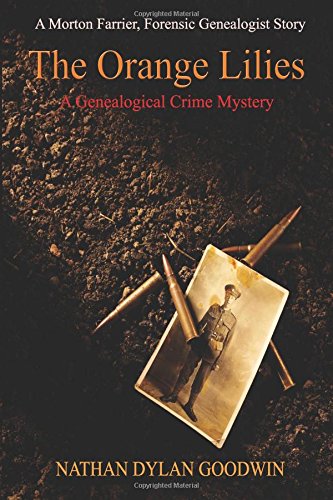
#BookReview ‘The Orange Lilies’ by Nathan Dylan Goodwin #familyhistory #crime #genealogy

The Orange Lilies by Nathan Dylan Goodwin is a novella, a short book which I wanted to be longer. Set at Christmas 2014 it revisits Christmas 100 years earlier, the first year of the Great War, and follows the story of one man in the trenches with the Royal Sussex Regiment. Third in the series about forensic genealogist Morton Farrier, it is a little different from its predecessors in that it focusses on Morton’s own story rather than that of a client. Nathan Dylan GoodwinMorton knows he is adopted but has recently discovered a complicated family secret. So in an effort to build bridges and learn more about his ancestors, he and girlfriend Juliette travel to Cornwall to visit his Aunty Margaret and Uncle Jim. Over the festive break, Morton and Margaret trace official documents telling the story of Morton’s great-grandfather Charles Farrier, who fought with the Second Battalion, the Royal Sussex Regiment. However as records are uncovered, more questions appear. At the same time we are told Charles’s story in 1914, with its own mysteries, contradictions and secrets. Unknown to Morton, old and modern mysteries are inter-linked.
I love the formula of the Morton Farrier books, the combination of present and past, secrets and lies, the hunt for truth and puzzles solved. This book is a little different, I think for two reasons. First, I longed in the first half for more dynamic detail of Charles’s story rather than dry factual reporting. At the front of the book, the author explains that two of his own relatives fought with this regiment. At the end of the book, the author explains that the movements of the Second Battalion are recorded as faithfully and accurately as possible. It feels as if the history bound the creative hands of the author. The second difference is that Morton is researching his own family and so the emotional attachment is different. Unlike when he is searching for clients, there is no immediate danger to his life, property or loved ones.
I raced through this book, intrigued by the mystery of Charles and his young wife Nellie. If you are new to the Morton Farrier books, you will appreciate this novella better if you have already read the first two in the series.

Read my reviews of the next books in the Morton Farrier series:-
HIDING THE PAST #1MORTONFARRIER
THE LOST ANCESTOR #2MORTONFARRIER
THE AMERICA GROUND #4MORTONFARRIER

If you like this, try:-
‘Pale as the Dead’ by Fiona Mountain
‘Blood Atonement’ by Dan Waddell
‘The Quarry’ by Iain Banks

And if you’d like to tweet a link to THIS post, here’s my suggested tweet:
#BookReview THE ORANGE LILIES by Nathan Dylan Goodwin http://wp.me/p5gEM4-2j2 via @SandraDanby

My Porridge & Cream read: Lev D Lewis

Today I’m delighted to welcome debut crime novelist Lev D Lewis. His ‘Porridge & Cream’ read is Rogue Male by Geoffrey Household.

“Confession, at the risk of being branded an imposter and ritually kicked off your blog: I don’t really have a Porridge & Cream read; the last thing I feel like doing when I’m ‘tired, ill, or out-of-sorts’ is staring at words. If anything, I find those states more creative than consuming; I just want to bury myself under the duvet and let my mind take over.
Lev D LewisI do have a long list of books I want to re-read, headed by Donna Tartt’s The Secret History (I’ve studied Classical Civilization since I first read it, and it would be interesting to reread with that extra bit of knowledge) but my TBR pile tends to win out.

There’s only one book I’ve read more than once for pure pleasure, Rogue Male by Geoffrey Household, so I present that as my Porridge & Cream book.

It about an unnamed British huntsman who aims his rifle at an unnamed foreign dictator, just for laughs (apparently). He’s chased back to England, retreats into an underground lair and is trapped there by his pursuer.

I can’t remember the exact year I first read it: I was a young teenager, and I found it on my dad’s bookshelf. I don’t know what drew me to it (perhaps the striking cover: the macho title in bold, pink font) but remember being totally gripped. Rather than returning it, I kept it to be re-read (which is why I still have the same copy today). But it was some thirty years later before I finally went back to it, prompted by hearing part of a reading on, I think, the now defunct BBC Radio 7 – I wasn’t disappointed. It’s slim, only 192 pages, so I’ve really no excuse for not rereading it more often which I now vow to do!”

Lev D Lewis’s Bio
Lev was born and raised in South Norwood: the wrong side of Croydon. If you’re unfamiliar with London-speak, Croydon is shorthand for ‘the armpit of the capital’. This maybe so – but he is still living there. After various false starts, he qualified as a solicitor. His legal career was cut short, not because of any disreputable deeds à la his hero/antihero, Frank Bale, but through ill-health. That’s when he started writing, basically as occupational therapy, but it’s led (after quite a few years and creative writing courses) to his debut novel, Jellyfish.

Lev D Lewis’s links
Website
Twitter
Amazon.co.uk
Amazon.com
Goodreads

Lev D Lewis’s books

Lev D LewisWhen Frank Bale was a lawyer, he wore Savile Row suits. Now he has holes in his trousers and serves papers for other, successful, lawyers. Life is bleak but he is kept going by a Philip Marlowe obsession and a longing to prove himself. When a student winds up dead, he gets the chance to investigate a real crime, relying on advice found in an old Tradecraft Manual and the sayings of his nan. But neither the manual nor his nan nor Marlowe prepare him for handling the slimiest of London’s underbelly, jellyfish, who hit back first with fists, then with golf clubs and finally with guns. Can Frank stay alive long enough to find the killer – and get the girl?

Lev is now working on the next instalment of the Frank Bale story. Read my review of Jellyfish.
‘Jellyfish’ by Lev D Lewis [UK: Alleyway Press] 

Lev D Lewis

What is a ‘Porridge & Cream’ book? It’s the book you turn to when you need a familiar read, when you are tired, ill, or out-of-sorts, where you know the story and love it. Where reading it is like slipping on your oldest, scruffiest slippers after walking for miles. Where does the name ‘Porridge & Cream’ come from? Cat Deerborn is a character in Susan Hill’s ‘Simon Serrailler’ detective series. Cat is a hard-worked GP, a widow with two children and she struggles from day-to-day. One night, after a particularly difficult day, she needs something familiar to read. From her bookshelf she selects ‘Love in A Cold Climate’ by Nancy Mitford. Do you have a favourite read which you return to again and again? If so, please send me a message via the contact form here.

Lev D Lewis


‘Rogue Male’ by Geoffrey Household [UK: Orion]
Listen to Geoffrey Household on ‘Desert Island Discs’, broadcast on BBC Radio 4 in 1980.

Discover the ‘Porridge & Cream’ books of these authors:-
Judith Field
Rachel Dove
Lisa Devaney

And if you’d like to tweet a link to THIS post, here’s my suggested tweet:
Why does @levdlewis love ROGUE MALE by Geoffrey Household? http://wp.me/p5gEM4-2Cy via @SandraDanby #reading

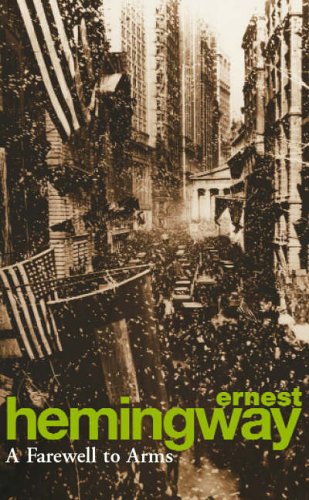
#BookReview ‘Deerleap’ by Sarah Walsh #familyhistory #mystery

One day Grace Chalk sees her boyfriend standing at the other side of the street. Except Alex is dead. And so starts Deerleap by Sarah Walsh, a combination of love story [Grace and Alex], detective story [is Alex really alive, if so where is he?] and the nature of blame [marriage breakdown] and grief. Sarah WalshWalsh has written an assured story, handling the emotional complexities with a gentle touch making the twists and turns even more surprising when they arrive.
When the story opens, seven years have passed since the car accident in which Grace’s father and her stepmother Polly were killed, her sister Rita seriously injured, and her boyfriend Alex disappeared. Alex’s body was never found. Rita has never talked about what happened, she is emotionally vulnerable, spiky and prone to hitting her sister. Grace’s mother still resents being deserted by her husband and Grace worries that her anger will turn into depression and suicide. At the centre of the story stands Deerleap, the remote country house where Alex grew up and where Grace visits her father as he sets up his new home with Polly. It all sounds idyllic, except seven years later, Deerleap stands empty awaiting the legal deadline when Alex can be declared legally dead and the house sold. This is the catalyst which sparks this chain of events.
The emotional vulnerability in Grace’s family made me at times question her own reporting of events, we are told the story entirely through her eyes. She is an artist, painting portraits of from her studio in Bristol. She looks into people’s faces and sees the truth. Can she find out the truth of what happened to Alex?
The Somerset countryside sounds marvellous, a stark contrast to the streets of Bristol where Grace’s troubled mother and sister live. The family ties, responsibilities and lies create a web of mystery through which you glimpse the answer. And then there is a twist at the end which I didn’t expect. This is a quiet book which really grew on me. A psychological mystery, rather than a psychological thriller, it explores the nature of grief, depression, guilt and love.

If you like this:-
‘A Sudden Light’ by Garth Stein
‘The Distant Hours’ by Kate Morton
‘Foxlowe’ by Eleanor Wasserberg

And if you’d like to tweet a link to THIS post, here’s my suggested tweet:
#BookReview DEERLEAP by Sarah Walsh via @SandraDanby http://wp.me/p5gEM4-2cm

First Edition: A Passage to India

EM Forster was born in 1879 and was the author of a number of hugely successful novels. Many were turned into films including Where Angels Fear to Tread [1991], Room with a View [1985] and Howards End [1992]. A Passage to India was his last, and most successful novel, but he was to live on. He died in 1970 at the age of 91. This portrait [below] of Forster by Dora Carrington is dated 1924.

This hardback first edition [above] is one of the rare examples which still has its dust jacket. Published in 1924 by London Edward Arnold & Co, it is now worth £9,750 at rare bookseller Peter Harrington.

The story
Set in the context of India during the British Raj of the 1920s, with the growing Indian independence movement, A Passage to India tells the story of four key characters: Dr Aziz, Cyril Fielding, Mrs Moore and Miss Adela Quested. Aziz is garrulous and naive, Adela something of a prig. During a trip to the Malabar Caves, Adela finds herself alone in a cave with Mr Aziz. She panics and flees. The assumption is made that Aziz assaulted her. The story of his subsequent trial examines the racial tensions and prejudices between the Indians and the British rulers.

The film EM ForsterThe 1984 film, directed by David Lean, featured Alec Guinness, Dame Peggy Ashcroft and Victor Banerjee. It won two Oscars: Dame Peggy Ashcroft [Mrs Moore], Best Actress in a Supporting Role; and Maurice Jarre for Best Music, Original Score.

Watch the official film trailer here.


The current UK edition EM ForsterThe current Penguin edition features a detail from ‘English Women visiting caves near Bangalore’ [c. 1880s]. Photograph courtesy of The British Library.

Other editions
My own copy [below] is a Penguin Modern Classics edition, which I have dated 1979. The cover shows Indore in Central India, where a stone bridge spans the river Soor. It is a detail from a drawing by William Simpson in India, Ancient and ModernEM ForsterAs a classic, A Passage to India has been published in many editions and languages. Here is a selection of some of the covers. The Italian cover is particularly dashing.

‘A Passage to India’ by EM Forster [UK: Penguin] Buy at Amazon

If you like old books, check out these:-
‘The Moonstone’ by Wilkie Collins
‘An Ice Cream War’ by William Boyd
‘The Sea The Sea’ by Iris Murdoch

And if you’d like to tweet a link to THIS post, here’s my suggested tweet:
First Edition: A PASSAGE TO INDIA by EM Forster #oldbooks via @SandraDanby http://wp.me/p5gEM4-2vK