Monthly Archives: January 2019

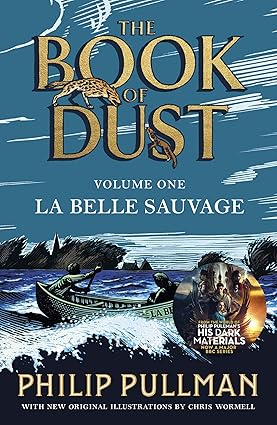
#BookReview ‘La Belle Sauvage’ by Philip Pullman @PhilipPullman #BookofDust #Lyra #fantasy

I’m a great Philip Pullman fan so when word of his new series The Book of Dust was first announced, I was excited. La Belle Sauvage is volume one in the series and tells the story of eleven-year old Malcolm who lives beside the River Thames at The Trout pub at Godstow, near Oxford. One day, a baby arrives at the priory on the other side of the river. Called Lyra, mystery surrounds the child, her parentage, and why she is cared for by the nuns. Philip Pullman This of course is Lyra Belacqua, so familiar and beloved of Pullman’s His Dark Materials trilogy. La Belle Sauvage is the story of Malcolm’s fascination with the baby Lyra, his relationship with scholar Hannah Relf and his suspicions about a mysterious stranger who visits The Trout. Everyone dislikes this man, despite his ready smiles and chat, because of his daemon, a three-legged hyena. Common with the first book of every series, there is a certain amount of scene setting, the laying-down of foundations for the forthcoming books. Pullman takes time and care to develop the character of Malcolm, the love he has for his canoe La Belle Sauvage, his relationships with his parents, the nuns, and Alice who works in the kitchen. Every reader of His Dark Materials knows the story of the fight between Lyra’s parents and how she was hidden in a cupboard with a gyptian boatwoman. La Belle Sauvage starts after this, when Lyra is placed in the nunnery for her safety. Lurking threat is there on every page – a light mist at first, developing into a heavy presence which will not go away – as Pullman constructs a world in which research into Dust is in its early stages; a resistance group, Oakley Street, is formed to fight The Magisterium; and the League of St Alexander radicalises schoolchildren to inform on unbelievers.
I became very fond of Malcolm. Pullman has a way of writing child characters who stand at the edge of things; they are not the most popular, the high achievers or the butterflies; but they have potential, as all children do. Pullman creates thoughtful character arcs for his child characters so we see them change and grow, facing difficulties, making mistakes, learning and maturing. In Malcolm, more than with Lyra and Will in His Dark Materials, I was conscious of Pullman’s background as a teacher. I was cheering for Malcolm, for his ingenuity, his bravery, his kind heart, his sense of fairness and justice.
If you haven’t read Pullman because he ‘writes for children’, you are missing out. He creates characters you care about, he expertly drip-feeds mysterious information and lays a factual base which seems irrelevant at first reading but will be revealed as essential at moments of crisis, he manages the ebbs and flows of tension, and creates a mystical world that is believable. Every fact included has a significance. He is a writer of tremendous detail, patience and care.
Just read him.

Read my review of THE SECRET COMMONWEALTH, second in The Book of Dust’ trilogy.

If you like this, try:-
‘Gregor the Overlander’ by Suzanne Collins #1UNDERLANDCHRONICLES
‘The Magicians’ by Lev Grossman #1THEMAGICIANS
‘Dark Earth’ by Rebecca Stott

And if you’d like to tweet a link to THIS post, here’s my suggested tweet:
#BookReview LA BELLE SAUVAGE by Philip Pullman @PhilipPullman https://wp.me/p5gEM4-3k9 via @SandraDanby

#BookReview ‘All Among the Barley’ by Melissa Harrison #nature

All Among the Barley by Melissa Harrison is set in a small world, the world of Wych Farm and the village of Elmbourne, in the inter-war years. The story is introduced by Edith June Mather, now an old lady, and transitions into the story of one summer when she was a teenager. Hanging over the first few pages is an unspoken warning that events so long in the past can be forgotten or recalled in error and that Edith may not be a reliable storyteller. Melissa HarrisonBut All Among the Barley  is more than a coming-of-age tale; it is a story of society adapting to change, a story which resonates today. It is 1933 in East Anglia and Edie Mather is thirteen years old, a clever well-read child who longs to fit in. She lives on the family farm where hardship is an everyday fact. Edie, balancing between childhood and womanhood, is unsure of what she should do with her life, unaware she has choices and at times overwhelmed by her seeming lack of power. Superstitions become real to her. This is a book combining the pragmatic facts of daily farm life, the looming presence of anti-semitism and fascism, with teenage volatility, fantasy and a little witchery. Into this tight-knit rural world walks city reporter Connie FitzAllen who is writing about the loss of the old rural ways. Connie becomes a catalyst for change for the whole community, not just Edie, and in ways not at first obvious. Despite initial distrust of strangers, the locals and Edie’s family become used to Connie’s presence and she becomes a stand-in older sister for Edie, dispensing advice and pushing behavioural boundaries.
Writing about nature with as light a hand as the flight of the birds she describes, Harrison combines agricultural change, rural poverty, the rise of anti-semitism, and the changing role of women. The role models available to Edie are her mother, who worked the land in place of men during the Great War but reverted to being a housewife afterwards; her sister Mary, married young and with a baby she is not sure she loves; and Connie, who tells Edie there is life outside Elmbourne. Harvest time approaches and decisions must be made; Edie’s father must sell his crop at the right time to get the best price while Edie, uncertain whose advice to listen to, receives a job offer based in the nearby town. In the heat of summer, reality merges with imagination and Edie loses the ability to judge what is real.
A beautiful and tragic novel flawed only by its slow descriptive pace and a rather sudden ending. I was left with the feeling that perhaps the author tackled too many issues for such a calm, contemplative novel.

If you like this, try:-
‘Ghost Wall’ by Sarah Moss
‘The Call of the Curlew’ by Elizabeth Brooks
‘Elmet’ by Fiona Mozley

And if you’d like to tweet a link to THIS post, here’s my suggested tweet:
#BookReview ALL AMONG THE BARLEY by Melissa Harrison https://wp.me/p5gEM4-3IW via @SandraDanby

Great Opening Paragraph 113… ‘A Good Man in Africa’ #amreading #FirstPara

“‘Good man,’ said Dalmire, gratefully accepting the gin Morgan Leafy offered him. ‘Oh good man.’ He presents his eager male friendship like a gift, thought Morgan; he’s like a dog who wants me to throw him a stick for him to chase. If he had a tail he’d be wagging it.”
William BoydFrom ‘A Good Man in Africa’ by William Boyd

Try this #FirstPara from ARMADILLO … and read my reviews of these other books by William Boyd:-
ANY HUMAN HEART
LOVE IS BLIND
NAT TATE: AN AMERICAN ARTIST 1928-1960
ORDINARY THUNDERSTORMS
SWEET CARESS
THE BLUE AFTERNOON
THE DREAMS OF BETHANY MELLMOTH
TRIO
WAITING FOR SUNRISE

Try one of these #FirstParas & discover a new author:-
‘Bridget Jones’s Diary’ by Helen Fielding
‘Super-Cannes’ by JG Ballard
‘Middlesex’ by Jeffrey Eugenides

And if you’d like to tweet a link to THIS post, here’s my suggested tweet:
#Books #FirstPara A GOOD MAN IN AFRICA by William Boyd http://wp.me/p5gEM4-2si via @SandraDanby

#Bookreview ‘Call of the Curlew’ by Elizabeth Brooks #historical #WW2

Call of the Curlew by Elizabeth Brooks has the most fantastic sense of place. It is a haunting, atmospheric read that I didn’t want to put down. Tollbury Marsh is an ever-present character in the story too, quiet, empty, natural and ‘where a body could sink under that earth, slowly and inexorably, like an insect in a pot of glue.’ Elizabeth BrooksAn elderly woman sees a sign she has been awaiting and prepares to take her last walk, across the snowy marshes and into the sea. She imagines the freezing water creeping up her legs, planning how she will use her walking stick, loading her pockets with stones from the garden wall. And then she realises she has the wrong day, it is New Year’s Eve tomorrow, not today and she is a day too early. When a stranger appears, her plans are disrupted and the past must be faced.
Virginia Wrathmell arrives at Salt Winds, a house on the edge of the marshes, as a newly adopted orphan when she is ten. It is New Year’s Eve 1939. Her new parents, Clem and Lorna, seem ill at ease together and Virginia watches them from the banisters, trying to understand the adult tension which dominates the house. When a neighbour visits, Virginia takes an instant dislike to the way Max Deering’s eyes linger on her and this first impression of him does not improve as the weeks pass. The catalyst for change comes when a German fighter plane crashes on the marshes and Clem sets out with rope and torch to help. The wartime story is spliced with Virginia in 2015, her plans to wade into the marshes on hold. Slowly the mystery is unveiled; of what happened in the war that left such a lasting mark on Virginia so many decades later.
This is the first novel by Brooks that I have read. She writes with a poetic description that is engaging, particularly when describing the marshes and the natural world. ‘The stars were starting to poke through the sky, like silver pins through lilac silk.’ But she also writes with an eye to mystery and is adept at tantalising the reader. This is not a thriller, I hesitate to call it a mystery because the pacing is not intense. Rather this is an elegiac read about a delicate new family in wartime facing situations that would split apart the strongest of people.
Excellent.

If you like this, try:-
Shelter’ by Sarah Franklin
Life After Life’ by Kate Atkinson
The Good People’ by Hannah Kent

And if you’d like to tweet a link to THIS post, here’s my suggested tweet:
#BookReview CALL OF THE CURLEW by Elizabeth Brooks https://wp.me/p5gEM4-3y2 via @SandraDanby

My Porridge & Cream read: Chantelle Atkins @Chanatkins #books #YA

Today I’m delighted to welcome young adult author Chantelle Atkins. Her ‘Porridge & Cream’ read is The Catcher In The Rye by JD Salinger.

“I first read this novel when I was fifteen years old, so around 1993/94. I discovered it when I was flat and cat sitting for my oldest sister for a weekend. Every now and then my sister and her boyfriend would have a weekend away and she would ask me to flat sit from Friday to Sunday. Of course, at this age, I absolutely jumped at the chance. I was allowed to have a friend if I wanted, but on the occasion, I started reading The Catcher In The Rye, I was alone for the entire weekend. My sister, who back then was obsessed with 1950s music and memorabilia had the coolest flat in the world. It was crammed full of retro and vintage furniture, clothes, records and books. It was a treasure chest full of goodies. Chantelle Atkins“That weekend, browsing her bookshelves, I discovered so many intriguing old books. I started reading The Catcher In The Rye [above] and could not put it down. It’s fair to say I fell completely and utterly in love. I have been in love with it ever since and have read it countless times at various stages in my life. I get something new from it every time I read it. I would say I re-read it every couple of years, mostly out of love, but also familiarity and curiosity. What else will I get from it, if I read it again? The one thing that draws me to it is the character, and I have always been drawn to character-driven books. I think this was the first one I ever really came across, where not much happened in terms of plot, but it had a character I would never forget and always feel a connection to.

“If I was to describe it as an elevator pitch, I think I would say: This classic coming-of-age story follows the exploits of a teenage runaway trying to find some meaning in life and some authenticity in the people he meets.”
Chantelle AtkinsAmazon

Chantelle Atkins’ Bio
Chantelle Atkins was born and raised in Dorset, England and still resides there now with her husband, four children and multiple pets. She is addicted to reading, writing and music and writes for both the young adult and adult genres. Her fiction is described as gritty, edgy and compelling. Her debut young adult novel The Mess Of Me deals with eating disorders, self-harm, fractured families and first love. Her second novel, The Boy With The Thorn In His Side, follows the musical journey of a young boy attempting to escape his brutal home life and has now been developed into a 6 book series. She is also the author of This Is Nowhere and award-winning dystopian, The Tree Of Rebels, plus a collection of short stories related to her novels called Bird People and Other Stories. Her next book Elliot Pie’s Guide To Human Nature was released through Pict Publishing in October 2018. She writes for Author’s Publish magazine.

Chantelle Atkins’ links
Website/blog
Facebook
Twitter
Pinterest
Instagram
Amazon

Chantelle Atkins’ latest book
Chantelle AtkinsOne boy’s mission to find the good in people. Twelve-year-old Elliot Pie lives a solitary life with his agoraphobic mother. He is desperate to help her and he also wants to find out what happened to his Uncle Liam, who walked out one night leaving his dog and his car in the back garden. While his mother sinks further into the darkness, Elliot finds comfort in people-watching. He is determined to prove to her that good people still exist and when a stranger is kind to him one day, a plan is hatched. A plan to save his mother. A plan that might help him find Uncle Liam. Elliot’s collection of strangers all have stories to tell about human nature, but is he placing his trust in the wrong people? Or is the real danger closer to home?
Amazon


What is a ‘Porridge & Cream’ book? It’s the book you turn to when you need a familiar read, when you are tired, ill, or out-of-sorts, where you know the story and love it. Where reading it is like slipping on your oldest, scruffiest slippers after walking for miles. Where does the name ‘Porridge & Cream’ come from? Cat Deerborn is a character in Susan Hill’s ‘Simon Serrailler’ detective series. Cat is a hard-worked GP, a widow with two children and she struggles from day-to-day. One night, after a particularly difficult day, she needs something familiar to read. From her bookshelf she selects ‘Love in A Cold Climate’ by Nancy Mitford. Do you have a favourite read which you return to again and again? If so, please send me a message.

Discover the ‘Porridge & Cream’ books of these authors:-
Helen J Christmas chooses ‘Camellia’ by Lesley Pearse
Rosie Dean’s choice is ‘Prudence’by Jilly Cooper
‘Do Androids Dream of Electric Sheep’ by Philip K Dick is chosen by Lisa Devaney

 And if you’d like to tweet a link to THIS post, here’s my suggested tweet:
Why does #YA author @Chanatkins re-read THE CATCHER IN THE RYE by JD Salinger? #books https://wp.me/p5gEM4-3KQ via @SandraDanby

#BookReview ‘The Seven Sisters’ by Lucinda Riley #romance

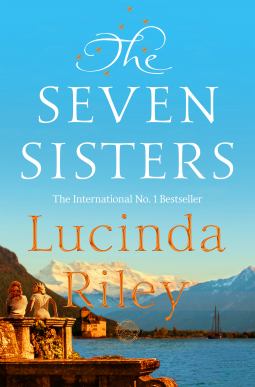
In its scope, The Seven Sisters by Lucinda Riley reminds me of Eighties family mega-stories, paperbacks as thick as doorstops. This is the first in a series; the first five are already published. I recommend suspending your ‘instinct for the literal’ and throwing yourself into the world of the book. Some of the story set-up seems unrealistic – unbelievable wealth, mysterious father, beautiful adopted sisters – this is not a normal world. But I quickly became caught up in the historical story. Lucinda RileyPa Salt has died suddenly; he is the fabulously wealthy, secretive, reclusive adoptive father to six sisters whose origins are a mystery. Only when he has gone do they realise they should have asked him for information. Each of the sisters is given a clue and a letter. Also in the envelope is a triangular-shaped tile. The Seven Sisters is the story of the eldest D’Aplièse sister. Maia’s clue is a map reference that takes her to a crumbling mansion in Rio de Janeiro in Brazil where she meets an enigmatic elderly woman.
The book came alive for me with the story, eighty years earlier, of Izabela Rosa Bonifacio. Izabela, daughter of a nouveau riche coffee merchant in Rio, is facing an arranged marriage. Desperate to see more of the world before she settles down to a stifling life of marriage to a husband she doesn’t love, she persuades her father and fiancé to allow her to travel to Paris with her friend, Maria Elisa, daughter of architect Heitor da Silva Costa. This section of the novel enthralled me; the design and sculpting of the Cristo sculpture for the top of the Corvocado mountain, all based on historical fact.
I connected with Izabela in a way I didn’t with Maia. Maia uncovers the story of Izabela with the help of Brazilian author Floriano Quintelas, whose latest novel Maia has translated into French. In the course of her research, Maia must face the shadows of her own past, her regrets and shame, in order to move on. I enjoyed Izabela’s story but at the back of my mind I queried its relevance to Maia; Izabela was too old be her mother. I missed a direct connection to Maia and this frequently took me out of the world of the story.
That connection does come but as the story finished I was left with almost as many questions as at the beginning. The last chapter is devoted to the second sister, Ally, with new mysteries for the second book in the series.

Read my reviews of some of the other novels in Lucinda Riley’s ‘Seven Sisters’ series:-
THE STORM SISTER #2SEVENSISTERS
THE SHADOW SISTER #3SEVENSISTERS
THE PEARL SISTER #4SEVENSISTERS
THE MOON SISTER #5SEVENSISTERS
THE SUN SISTER #6SEVENSISTERS
THE MISSING SISTER #7SEVENSISTERS

… plus my reviews of these standalone novels, also by Lucinda Riley:-
THE BUTTERFLY ROOM
THE GIRL ON THE CLIFF
THE LOVE LETTER

If you like this, try:-
‘The Ship’ by Antonia Honeywell
‘Yuki Chan in Bronte Country’ by Mick Jackson
‘The Sapphire Widow’ by Dinah Jefferies 

And if you’d like to tweet a link to THIS post, here’s my suggested tweet:
#BookReview THE SEVEN SISTERS by Lucinda Riley https://wp.me/p5gEM4-3IB via @SandraDanby

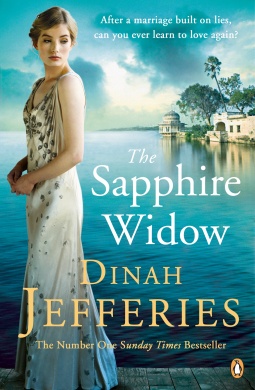
#Bookreview ‘The Sapphire Widow’ by @DinahJefferies #historical #romance

When Dinah Jefferies writes about Ceylon, you can smell it and sense it. The blossom, the flowers, the birds, she is excellent at evoking setting. The Sapphire Widow is not her strongest book, but it is nevertheless an enjoyable read. Whatever it may lack in plot – a weakness I think because the main character is the wronged one, rather than with a secret of her own to hide – it is a fascinating glimpse of mid-Thirties Ceylon and a beautiful seaside town. Dinah JefferiesIt is 1936 in Galle on the southernmost tip of Ceylon. Louisa Reeve and her husband Elliot seem to have it all except, after a series of miscarriages, a child. Louisa, who wonders if she will ever be a mother, is often alone as Elliot spends his spare time sailing with friends and on a cinnamon plantation in which he is an investor. But when tragedy hits Louisa discovers Elliot’s life, investments and hobbies were not as he told her. As she deals with one lie after another, Louisa continues to develop Sapphire, the retail emporium originally planned with Elliot and which provides the novel’s title.
Given the title I expected the gemstone business of Louisa’s father, and where Elliot worked, to be prominent in the plot. It is however lightly sketched and I felt rather short-changed. The description of the cinnamon plantation is fascinating though, as is the Galle setting, though at times it felt as if local history was being shoehorned in. Towards the end the plot went a little haywire, not what I was expecting. Frustrating, I was left feeling there was a deeper, more emotional story to be told.
An interesting read but not her finest.
CLICK HERE TO READ MORE ABOUT THIS BOOK

And here are my reviews of some of Dinah Jefferies’ other novels:-
DAUGHTERS OF WAR [#1 DaughtersOfWar]
THE HIDDEN PALACE [#2 DaughtersOfWar]

And these standalone novels:-
THE TEA PLANTER’S WIFE
THE TUSCAN CONTESSA

If you like this, try these:-
‘Beneath an Indian Sky’ by Renita d’Silva
The Gift of Rain’ by Tan Twan Eng
Quartet’ by Jean Rhys

And if you’d like to tweet a link to THIS post, here’s my suggested tweet:
#BookReview THE SAPPHIRE WIDOW by @DinahJefferies https://wp.me/p5gEM4-3xX via @SandraDanby

#BookReview ’Ghost Wall’ by Sarah Moss #contemporary #mystery

Ghost Wall by Sarah Moss is a beautifully written short novel, more a novella at 160 pages. Set in the Nineties it is the story of a re-enactment conducted by a family and a university professor and his students who live in the woods in Northumberland to recreate the lifestyle of Iron Age man. Class issues run throughout; accent, education, north/south, but it is also a time of changes embodied in the character and changing sensibilities of seventeen year old Silvie. Sarah MossTold completely through the viewpoint of Silvie it juxtaposes the harsh Iron Age life with her own upbringing by authoritarian self-taught father Bill and bland mother Alison who has surrendered to her husband’s will, with the life of the Iron Age bog people. In almost a closed room setting more familiar from crime fiction, the group is thrown into close proximity living in difficult conditions with minimal food. As the story progresses the group becomes divided. The two adult men disappear to work on their ‘projects’ while Silvie’s mum stays in camp to cook and sit around. This leaves the students to their own devices to forage, harvest mussels and skinny dip. It is a haunting story as Silvie tries to mollify her father, who demands exacting behaviour and manners, while student Molly struggles to understand Silvie’s subservience. Tensions grow as Molly encourages Silvie to defy her father. Bill is a traditionalist, he admires Britain’s distant past as a preferred alternative to the modern world.
Ghost Wall is a creeping tale as your nerves tauten waiting for Silvie to be in trouble again, at times I wished for more about her parallel Bog girl. There are clever moments of relief such as the girls’ visit to the local Spar shop for cake and ice cream to relieve the tedium of gruel and rabbit. I was left with the feeling that Moss tried to shoehorn too many issues into a small space – class, male chauvinism, racism, idealism, sexuality, even Brexit, so I was left feeling she had a list of things to mention.
This is an unusual novel, beautifully written. A chilling read. Tense, but not a thriller. The climax when it happens is over quickly and I was left wanting more; the last page came as a surprise and I felt rather disappointed.
CLICK HERE TO READ MORE ABOUT THIS BOOK AT AMAZON

And here’s my review of another novel by Sarah Moss:-
SUMMERWATER

If you like this, try:-
‘Elmet’ by Fiona Mozley
‘The Good People’ by Hannah Kent
‘The Western Wind’ by Samantha Harvey

And if you’d like to tweet a link to THIS post, here’s my suggested tweet:
#BookReview GHOST WALL by Sarah Moss https://wp.me/p5gEM4-3As via @SandraDanby

A poem to read in the bath… ‘My Mother’

I was hooked from the first line here, I think because of the familiarity of the cornflake cake. So what came next was a surprise, not something my mother said to me when I made her a cake! This is My Mother by Ruby Robinson [below] from Every Little Sound. Published in 2016, Robinson’s first collection of poems was shortlisted for the Felix Dennis Forward Prize for ‘Best First Collection’, and the TS Eliot Prize for ‘Best Collection’. Ruby Robinson

Here is the first stanza of My Mother. Because of copyright restrictions I am unable to reproduce the poem in full, but please search it out in an anthology or at your local library.

She said the cornflake cake made her day,
she said a man cannot be blamed for being
unfaithful: his heart is not in tune with his
extremities and it’s just the way his body
chemistry is. She said all sorts of things.’
Source: Poetry (October 2014)

Read more about Ruby Robinson here.

Ruby Robinson


‘Every Little Sound’ by Ruby Robinson [UK: Pavilion Poetry]

Read these other excerpts, and perhaps find a new poet to love:-
‘Runaways’ by Daniela Nunnari
‘Tulips’ by Wendy Cope
‘Cloughton Wyke I’ by John Wedgwood Clarke

And if you’d like to tweet a link to THIS post, here’s my suggested tweet:
A #poem to read in the bath: ‘My Mother’ by Ruby Robinson https://wp.me/p5gEM4-3eq via @SandraDanby