Author Archives: sandradan1

Unknown's avatar

About sandradan1

Novelist. I blog about writing, reading and everything to do with books and writing them at http://www.sandradanby.com/. Come and visit me!

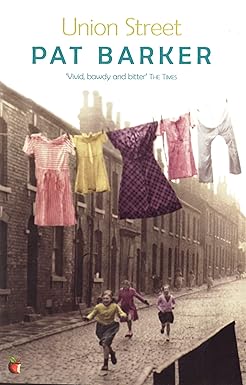
#BookReview ‘Union Street’ by Pat Barker #motherhood #women

Uncompromising, unbelievably sad and harsh, Union Street by Pat Barker does not hide the uncomfortable truths of poverty in North-East industrial England. This is the story of eight women who live on Union Street from teenager Kelly Brown to Alice Bell in her eighties and though each story is told individually, like the lives of the women, the stories interweave. An honest book about women struggling to hold life, family and home together, while retaining pride and some of their own individuality. Some succeed in this, others don’t. Pat Barker This is not a book about idealised motherhood. It is about putting bread on the table for your children no matter how you do it; including beating your husband to get his pay packet before he spends it on booze. These women are tough because they have to be; the choices are the cake factory, charring, and prostitution. Many marry young to feckless husbands because they are pregnant. This is not a light read; it features scenes of rape and backstreet abortion that somehow make the prostitution a lighter route. The language is often strong and some of the descriptions are difficult to read; but it is an honest book, bleak and realistic.
The spine throughout the book is Iris King, she appears in each story and is the one most aware of other women’s lives and offers support and a word of kindness when needed. But Iris is the toughest woman in the street. Three weeks after marrying Ted, he knocks her around because she is ironing his shirts when he gets home from work when he was expecting his supper. “After he’d gone, she sat down and took stock… When he came back she was waiting for him behind the door with the meat chopper in her hand. The blow glanced off him, though there was enough blood around to scare the pair of them stiff. It didn’t stop him hitting her again, but it did free her from the fear. She never lost her self-respect.” It is that self-respect which separates Iris from the other women.
This is the first novel by Booker Prize winner Barker, but such is the excellence of the prose

For my reviews of other Pat Barker novels, click the title below:-
ANOTHER WORLD
BLOW YOUR HOUSE DOWN
DOUBLE VISION
LIFE CLASS #1LIFECLASS
TOBY’S ROOM #2LIFECLASS
NOONDAY #3LIFECLASS
THE SILENCE OF THE GIRLS #1WOMENOFTROY
THE WOMEN OF TROY #2WOMENOFTROY
If you like this, try:-
‘Orphans of the Carnival’ by Carol Birch
‘In the Midst of Winter’ by Isabel Allende
‘These Dividing Walls’ by Fran Cooper

And if you’d like to tweet a link to THIS post, here’s my suggested tweet:
#BookReview UNION STREET by Pat Barker https://wp.me/p5gEM4-3rH via @SandraDanby

#BookReview ‘Smash All the Windows’ by @janedavisauthor #contemporary

Thought-provoking, sometimes difficult, always moving, Smash All The Windows by Jane Davis starts at a run as we are pitched straight into emotional turmoil, grief, anger and betrayal. Jane DavisAn inquest investigates an accident thirteen years earlier, it is the undoing of a miscarriage of justice. In turn we meet the survivors, and the relatives of the victims. Davis follows the paths of each person to their own resolution; there is no self-help book to follow, they must each must work it out for themselves. We see flashbacks to the days and hours before the accident as Davis unravels the real truth of what happened.
This is a complex story with legal twists and turns, misunderstandings and minute step-by-step detail of what happened on that day, thirteen years ago, when over-crowding at St Botolph and Old Billingsgate tube stations in London ended in death. For thirteen years, blame has been thrown around, scapegoats have been targeted, the media has dug for dirt. This is an imaginary accident but with echoes of so many disasters – Hillsborough, Grenfell, Kings Cross – that it can’t help but be affecting.
There are a lot of victims and survivors, a lot of relatives. The high number of characters causes initial confusion: who is who, who is alive and who is dead, what was the actual accident. As I read the first quarter of the book, I longed for a short summary of what happened. But as the story progressed I understood that my confusion mirrors the confusion of an accident as it happens, the disorientation of victims, the powerlessness of the loved ones who are waiting. It is a purposeful obfuscation by the author to reflect the opacity of what happens, the difficulty of finding the truth in any inquest or public enquiry, and ultimately the slippery nature of memory.
The survivors and relatives of victims are now living fractured lives. Gina lost her son. Her daughter Tamsin has grown into a young woman, still living at home to support her mother after Gina’s husband left, as husband and wife dealt with grief in different ways. Gina often forgets in the bottom of a glass. Donovan lost his pregnant daughter, her partner and his unborn grandchild; grief has caused his wife to withdraw into her own world, agoraphobic she stays at home. Maggie lost her daughter, newly-promoted station supervisor Rosie; Rosie is the scapegoat and Maggie receives hate mail. She understands the need of people to blame someone, and tries to deal with the anger and bitterness thrown her way, but is unable to ‘move on’ as her husband can. Jules lost his wife and is raising his young son alone. None of these people were there on the day but they are also victims. Add to this mix the two lawyers, Eric and Sorrel. It is Eric’s cussedness, his determination to unravel the truth, to read obscure documents about operating procedures and identify the failings, that makes the new inquest possible. He proves that accidents happen because of an unpredictable collision of small things.  I found Eric’s sections about the minutae of the accident, the legal arguments, the leaden language of official documents, to be a slow read that interupts the flow of emotions as Gina, Tamsin, Donovan, Maggie and Jules process their grief.
Ultimately, Jules is the catalyst for resolution. Transformed from plumber to artist, his reputation has gradually grown. Now a commission from the Tate Modern to produce a collection of art about the disaster allows ‘the 59’ to achieve a form of public resolution to their grief. The story came alive for me with Jules and his art. He takes the story of each survivor or relative and uses small items to tell a huge story, about their grief, their anger, the need to hit out, the need to be recognised.
Davis writes well about the powerful emotion unleashed by the accident, and its lasting effects. This book is about the nature of victimhood and how it is possible to shake it off if you have the will to do so. But that does not mean forgetting. Davis shows the transition of remembering; at the beginning, the second inquest has refreshed the trauma anew; but at the end, memories are welcomed in.

If you like this, try:-
In the Midst of Winter’ by Isabel Allende
The Bone Church’ by Victoria Dougherty
The Little Red Chairs’ by Edna O’Brien

And if you’d like to tweet a link to THIS post, here’s my suggested tweet:
#BookReview SMASH ALL THE WINDOWS by @janedavisauthor https://wp.me/p5gEM4-3TP via @SandraDanby

A poem to read in the bath… ‘Serious’ by James Fenton #poetry

I picked up Selected Poems by James Fenton [below] in 2015] in my local library, drawn by the cover illustration; the colours, the corn cobs. I flicked through, and this was the poem that caught my eye. It is about love and hope and the fear of future regret. James Fenton

Because of copyright restrictions I am unable to reproduce the poem in full, but please search it out in an anthology or at your local library.

‘Awake, alert,
Suddenly serious in love,
You’re a surprise.
I’ve known you long enough –
Now I can hardly meet your eyes.

It’s not that I’m
Embarrassed or ashamed.
You’ve changed the rules
The way I’d hoped they’d change
Before I thought: hopes are for fools.’

James Fenton

BUY

Read these other excerpts, and perhaps find a new poet to love:-
‘Because I could not stop for Death’ by Emily Dickinson
‘Name’ by Carol Ann Duffy
‘Not Waving but Drowning’ by Stevie Smith

And if you’d like to tweet a link to THIS post, here’s my suggested tweet:
A #poem to read in the bath: ‘Serious’ by James Fenton https://wp.me/p5gEM4-3g2 via @SandraDanby

#BookReview ‘The Girl in the Painting’ by @RenitaDSilva #historical #India

When Renita D’Silva writes about India, it comes alive on the page. Her books are dual timeline family mysteries combining a modern day narrator with historical events set in India. With her latest, The Girl in the Painting, D’Silva tackles guilt, forgiveness and sati – when a husband dies, his widow burns with his body on the funeral pyre. It is her emotionally toughest novel yet and handled with sensitivity and balance. Renita D’SilvaThis is the story of three women – Margaret, Archana and Emma – pre-Great War in England, India in 1918 and England 2000. At the beginning, each woman is introduced in short chapters which made me long to dwell a while with each in turn, rather than jumping around. I was puzzled at how these three women, so different from each other, could be connected. Each has a deep sense of duty that, despite a longing to make her own decisions, is an anchor to a sometimes unwelcome, difficult, reality. Yet being impulsive and taking decisions without consideration for others often has far-reaching consequences. The early 20thcentury was a pivotal time in world history and a period of rapid change in the lives of women. Margaret’s family is separated tragically by war, Archana’s by impulsive love; both separations deeply affect these two young girls and reverberate throughout their whole lives. It is Emma in modern-day England who faces a moral and emotional decision of her own, who travels to India with her daughter to cast light on the story.
The emotional connection really kicked in for me when Margaret and Archana meet at the halfway point in the book. From that point, I didn’t want to put the book down. The parallel struggles in Margaret and Archana’s early lives, even though thousands of miles apart, demonstrate the commonality of being human. Tragedy does not strike the undeserving, the old, the unlikeable, the lazy; it strikes everyone without selection. But D’Silva’s story is not about tragedy; it is about what comes next, about taking a deep breath and moving forward.
There is an evocative portrayal of Archana’s village life, the daily grind of poverty juxtaposed with the fertility of flowers and fruits, exotic colours and birds; and the picture of slum children in Bombay who live beside the railway tracks. Neither is romanticised. I also enjoyed Margaret’s time as an artist and her transition to India, using her art as a promotional tool in the fight for Independence. The story covers a lot of history and there were times when I would have liked to immerse myself in a period, but the characters move onwards.
Given the title, The Girl in the Painting, I assumed the front cover design was of the specific painting. In fact there are a number of portraits in the novel and in my imagination none looks like the cover. So I prefer to think it is a portrait of Margaret in the garden at Charleston, welcomed by the Bloomsbury Group, free to allow her art to flourish, free to

Read my reviews of these other novels by Renita D’Silva:-
A DAUGHTER’S COURAGE
A MOTHER’S SECRET
BENEATH AN INDIAN SKY
THE ORPHAN’S GIFT
THE SPICE MAKER’S SECRET
THE WAR CHILD

If you like this, try:-
The Sapphire Widow’ by Dinah Jeffries
The Photographer’s Wife’ by Suzanne Joinson
Somewhere Inside of Happy’ by Anna McPartlin

And if you’d like to tweet a link to THIS post, here’s my suggested tweet:
#BookReview THE GIRL IN THE PAINTING by @RenitaDSilva https://wp.me/p5gEM4-3Tk via @SandraDanby

#BookReview ‘Clock Dance’ by Anne Tyler #contemporary #family

Every novel by Anne Tyler is a treat, I save them up, anticipate them. For me as a reader, she tells stories that seem ordinary but have exceptional depth, gentle stories which make me want to continue reading on into the night. For me as a writer, it is her I aim to emulate; her economy of word and scene, achieving depth without unnecessary diversion. So, to Clock Dance. Anne Tyler Told in three parts – 1967, 1977 and 2017 – this is the story of an ordinary woman, Willa Drake, to whom things outside normal life don’t happen. The three key events in her life – the disappearance of her mother, a marriage proposal, being widowed at 41 – are passive acts. Willa is not a proactive person. We meet her first as an eleven year-old, at home with her family; her emotionally-erratic mother, her passive, lovely father, her awkward younger sister Elaine. Willa takes on the motherly role, making a chocolate pudding, observing the ups and downs of her parents’ relationship with acute asides. At college, her boyfriend proposes to her and expects her to give up college and move across the country. In 2017, a confused phone call from the neighbour of her son’s ex-girlfriend sets in motion a chain of events that sees Willa gain a substitute grand-daughter but endanger her own marriage. Each time, Willa reacts to other people.
In Baltimore Willa and her second husband Peter move in with Denise who has been shot, and Denise’s nine-year-old daughter Cheryl and dog Airplane. It is an everyday story of a household, hospital visits, neighbours and community. Tyler’s observations of daily life are so spot-on, she tells the story in a way that makes it seem real, not a literary invention involving toil, plotting and rewriting. Without you noticing, time passes and people change so subtly it is impossible to put a finger on the point when the change started. Simple, complex, hugely perceptive.
This is a novel about meekly accepting your place in the world until the day arrives that you realise life is passing you by. Does Willa have the courage to find a new life? I was urging her on all the way. A 5* book for me.

Read my reviews of these other books by Anne Tyler:-
A SPOOL OF BLUE THREAD
FRENCH BRAID
LADDER OF YEARS
REDHEAD BY THE SIDE OF THE ROAD
VINEGAR GIRL

And read the first paragraphs of:-
DINNER AT THE HOMESICK RESTAURANT 
BACK WHEN WE WERE GROWN UPS

If you like this, try:-
‘Autumn’ by Ali Smith
‘The Stars are Fire’ by Anita Shreve
‘The Gustav Sonata’ by Rose Tremain

And if you’d like to tweet a link to THIS post, here’s my suggested tweet:
#BookReview CLOCK DANCE by Anne Tyler https://wp.me/p5gEM4-3J9 via @SandraDanby

#BookReview ‘The Rich Pay Late’ by Simon Raven #historical

It is the eve of the Suez crisis in the Fifties. Written in the Sixties with the benefit of hindsight of this political crisis, The Rich Pay Late by Simon Raven has a modern tone applicable to today’s culture. Greed, disloyalty, snobbishness are common. First of the ten novels in Raven’s ‘Alms for Oblivion’ series, in which a Dickensian cast of characters overlap with each other’s lives, each book is a self-contained story from the end of the Second World War to 1973.Simon RavenThe Rich Pay Late opens as Donald Salinger and Jude Holbrook, co-owners of an advertising agency, discuss the purchase of a financial magazine, Strix. Jude is ambitious but without money, Donald has the cash but is cautious. And so starts the combined theme of gambling/business/love in which everyone is for himself and taking calculated risks is a way of life. Structurally, it is an ensemble story rather than concentrating on one central character; Raven introduces characters with short glimpses, some of one paragraph, of people who start off separate from Donald and Jude until their entwined lives are revealed. Not one character is superfluous.
This is a short novel of 250 pages, but intense. Slow, rich, satirical, it portrays a depressing and bleak take on human nature. The blurred story builds and builds as the appalling characters become real; at times a little dry, I persevered and am pleased I did as the pace of the final third was quicker.
The narrative centres around the sale of Strix and subsequently on a political scandal about Strix’s new board member, Peter Morrison MP. When the magazine’s owner receives the offer to buy his company, Morrison’s vote takes on additional importance. But is he a benefit or a liability?
A tale of politics, media, love affairs and betrayal between a network of upper and upper-middle class men and women with names like Vanessa, Somerset and Jude. In places, the dark humour reminds me of Nancy Mitford’s later novels. There is some discussion amongst reviewers about the correct order in which to read the series, I’m sticking with Raven’s order. Written fourth, he placed this first in his series.

And here’s my review of the next book in the same series:-
FRIENDS IN LOW PLACES #2ALMSFOROBLIVION

If you like this, try:-
Freya’ by Anthony Quinn
Wigs on the Green’ by Nancy Mitford
Hangover Square’ by Patrick Hamilton

And if you’d like to tweet a link to THIS post, here’s my suggested tweet:
#BookReview THE RICH PAY LATE by Simon Raven via @SandraDanby https://wp.me/p5gEM4-3SY

#BookReview ‘The Girl on the Cliff’ by Lucinda Riley #mystery #romance

This is a tale of complicated choices, tragedy and mental instability combined with all the bad luck life can throw at you. Told simply at the beginning, the emotional intensity of The Girl on the Cliff by Lucinda Riley tightens and tightens like an old screw turned so hard it can’t be loosened. Until finally it gives way. Lucinda RileyVisiting her family in Ireland, Grania Ryan is running from pain. She has just miscarried and is upset with her boyfriend, Matt, for an unexplained reason. At home she sees a young girl walking on the cliffs and is curious about her. Aurora Devonshire is eight years old, she lives in the big house beside the sea, raised by an accumulation of governesses, nannies and household staff during the absence of her father Alexander. Grania is transfixed by the child, but her mother Kathleen is worried by any contact made with ‘that family.’ The Girl of the Cliff is the story of three generations of women in the two families, their loves, losses, sacrifices, cruelties and grudges. And throughout it all runs the mystery of why Grania cannot return to New York to her grieving and confused boyfriend.
Does history repeat itself? Can bad luck be passed genetically from generation to generation? Are some people just unlucky? And are some families destined to be intertwined across the centuries? This story of the Ryan and the Lisle families includes troubled love, ballet, wealth, poverty and orphaned children. Will the worldly-wise Aurora figure out the connections? Riley keeps the secrets of her characters, revealing each titbit carefully so you want to read ‘just one more page.’

Read my reviews of the first seven novels in Lucinda Riley’s ‘Seven Sisters’ series:-
THE SEVEN SISTERS #1SEVENSISTERS
THE STORM SISTER #2SEVENSISTERS
THE SHADOW SISTER #3SEVENSISTERS
THE PEARL SISTER #4SEVENSISTERS
THE MOON SISTER #5SEVENSISTERS
THE SUN SISTER #6SEVENSISTERS
THE MISSING SISTER #7SEVENSISTERS

… plus my reviews of these standalone novels, also by Lucinda Riley:-
THE BUTTERFLY ROOM
THE LOVE LETTER

If you like this, try:-
‘Butterfly Barn’ by Karen Power
‘The Crows of Beara’ by Julie Christine Johnson
‘Please Release Me’ by Rhoda Baxter

And if you’d like to tweet a link to THIS post, here’s my suggested tweet:
#BookReview THE GIRL ON THE CLIFF by Lucinda Riley http://wp.me/p5gEM4-2P4 via @SandraDanby

My Porridge & Cream read… Sue Featherstone @SueF_Writer #books #humour #chicklit

Today I’m delighted to welcome chick lit novelist Sue Featherstone. Her ‘Porridge & Cream’ read is Sad Cypress by Agatha Christie.

“It’s hard to pin down a single Porridge & Cream read because there are a number of old favourites that fit into my comfort-read category. Georgette Heyer’s Regency novels, for instance, Noel Streatfield’s children’s stories and Josephine Tey’s whodunits. But I’m going to choose Sad Cypress by Agatha Christie, which I first read in my early teens in the late 1960s when I sneaked it off my dad’s bookcase.

Sue Featherstone

Sue’s copy

“What appealed to me then is what still appeals today – nostalgia for a bygone age, a murder mystery with lots of red herrings, and a gently unfolding love story. When it first appeared in 1933 Sad Cypress was considered ground-breaking. The murder takes place about a third of a way into the story – giving plenty of time to establish characters and plot – and Poirot doesn’t make an appearance until almost halfway through. Unusually, too, much of the drama takes place in the courtroom.

“The plot is classic Christie: wealthy heiress Elinor Carlisle is heartbroken when her fiancé Roddy breaks off their long-standing engagement to pursue Mary Gerrard, a protégé of Elinor’s recently deceased aunt. And when Mary is poisoned almost everyone, including Roddy who has known Elinor since childhood, believes she must be the murderer.

“When I grew up and left home, Sad Cypress was one of the first books on my new book shelves and my battered 1979 Pan edition is testament to multiple re-readings. Why? Because even though Poirot is a strange little fellow, Elinor’s story – a woman betrayed by the man she loved – has a timeless resonance. Will she forgive Roddy’s betrayal? Or will she find happiness with the local doctor, who has believed in her innocence throughout?

“Truly, Christie is the queen of crime fiction.”

Sue Featherstone

BUY

Sue Featherstone’s Bio

Sue Featherstone is a Midlander, who has spent most of her life living and working in Yorkshire. Her debut novel A Falling Friend, co-authored with Susan Pape, was published by Lakewater Press in 2016 and a sequel A Forsaken Friend followed in March 2018. The pair, who have also written two journalism text books together, are currently working on the final book in their Friends trilogy. Sue was a journalist and public relations practitioner before moving into academia 20 years ago to teach news and magazine journalism at Sheffield Hallam University. Married with two grown-up daughters, she recently welcomed her first granddaughter Iris who is ‘the most beautiful baby in the whole world’. 

Sue Featherstone’s links

Blog

Twitter @SueF_Writer

Sue Featherstone’s latest book

Sue Featherstone

A Forsaken Friend is the second instalment in a Yorkshire-based trilogy that follows best friends Teri Meyer and Lee Harper as they juggle men, careers and family. Their friendship is tested when Teri discovers her ex-husband is in love with Lee. And, to make things even worse, she’s just lost her job and is running out of money. Fast. It’s not all plain sailing for Lee either. Her love life might be looking up – not that she meant to fall for Teri’s ex – but her family life is a car crash. Her Catholic mother isn’t happy she’s dating a divorced man and her father has been given some bad news about his health…Described as a warm, funny and entertaining read, A Forsaken Friend is an intelligent and sassy look at the friendship between two women on the cusp of middle age.

BUY

What is a ‘Porridge & Cream’ book? It’s the book you turn to when you need a familiar read, when you are tired, ill, or out-of-sorts, where you know the story and love it. Where reading it is like slipping on your oldest, scruffiest slippers after walking for miles. Where does the name ‘Porridge & Cream’ come from? Cat Deerborn is a character in Susan Hill’s ‘Simon Serrailler’ detective series. Cat is a hard-worked GP, a widow with two children and she struggles from day-to-day. One night, after a particularly difficult day, she needs something familiar to read. From her bookshelf she selects ‘Love in A Cold Climate’ by Nancy Mitford. Do you have a favourite read which you return to again and again? If so, please send me a message.

Discover the ‘Porridge & Cream’ books of these authors:-

Rhoda Baxter’s choice is ‘The Nightwatch’ by Terry Pratchett

Jane Lambert chooses ‘Rebecca’ by Daphne du Maurier

‘Please Don’t Eat the Daisies’ by Jean Kerr is chosen by Carol Cooper

And if you’d like to tweet a link to THIS post, here’s my suggested tweet:

Why does chick lit novelist @SueF_Writerre-read SAD CYPRESS by Agatha Christie? #books via @SandraDanby 

Great Opening Paragraph 115… ‘The Garden of Evening Mists’ #amreading #FirstPara

“On a mountain above the clouds once lived a man who had been the gardener of the Emperor of Japan. Not many people would have known of him before the war, but I did. He had left his home on the rim of the sunrise to come to the central highlands of Malaya. I was seventeen years old when my sister first told me about him. A decade would pass before I travelled up to the mountains to see him.”
Tan Twan EngFrom ‘The Garden of Evening Mists’ by Tan Twan Eng

Read my reviews of these novels by Tan Twan Eng:-
THE GARDEN OF EVENING MISTS
THE GIFT OF RAIN
THE HOUSE OF DOORS

Try one of these #FirstParas & discover a new author:-
‘Armadillo’ by William Boyd
‘To Have and Have Not’ by Ernest Hemingway
‘Super-Cannes’ by JG Ballard

And if you’d like to tweet a link to THIS post, here’s my suggested tweet:
#Books #First Para THE GARDEN OF EVENING MISTS by Tan Twan Eng via @SandraDanby http://wp.me/p5gEM4-2AL

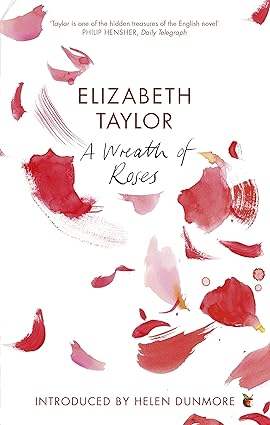
#BookReview ‘A Wreath of Roses’ by Elizabeth Taylor #historical

There are some novels that you want to start read again as soon as you’ve finished it. To appreciate the finer details, unravel sub-text, and simply to admire. A Wreath of Roses by Elizabeth Taylor had that effect on me. Elizabeth Taylor

It is described in reviews as ‘her darkest novel’. What fascinated me was the inter-play between the three key female characters, how they see each other, and themselves, how they behave individually and together. Multiple contradictions complicated by self-delusions and self-awareness. I don’t mean to seem cryptic. The story is simple, as is often the way with Taylor.
In that period after the Second World war when life begins to look normal, the undercurrents of the war experience are everywhere. Camilla and Liz are staying with Frances, Liz’s former governess, for their annual summer holiday. It is a habit forged by years with happy memories of podding peas and sharing stories. Except this year is different. Liz is now married and has brought her baby, Harry. Frances, an artist, is now painting dark tortured pictures rather than feminine florals and portraits. And Camilla has a shocking experience on her journey to stay with Frances; she witnesses a suicide at a train station that makes her melancholy, lonely and inadequate. She looks at herself in the dressing table mirror, ‘Her flesh was golden as an apricot; her hair, in contrast, looked tarnished and harshly bright.’
Taylor inserts three male characters as wedges into the cosiness of the three women. Camilla resents Arthur, Liz’s husband, for taking her friend away. Richard Elton, who with Camilla is there when the suicide happens, is staying at a pub in the village. Camilla feels sorry for him and at the same time attracted to him and will not listen to Liz’s instinctive uneasiness about him. Morland Beddoes is a collector of Frances’ work, he arrives in the village and stays at the same pub as Elton; he too feels uneasy about the man’s motivations. A friendly sort who finds himself the recipient of peoples’ woes, ‘Morland Beddoes was not in the last self-infatuated. He loved himself only as much as self-respect required, and the reason why he saw himself so clearly was that he looked not often, but suddenly, so catching himself unawares.’
This is a dark novel, but not in today’s meaning of psychological thriller. It is a study of ageing, friendship, the power of sexual tension, and it is sublimely written.

Read my reviews of other books by Elizabeth Taylor:-
A VIEW OF THE HARBOUR
ANGEL
AT MRS LIPPINCOTE’S
IN A SUMMER SEASON
THE SLEEPING BEAUTY

If you like this, try:-
‘All My Puny Sorrows’ by Miriam Toews
We Are Water’ by Wally Lamb
All the Birds, Singing’ by Evie Wyld

And if you’d like to tweet a link to THIS post, here’s my suggested tweet:
#BookReview A WREATH OF ROSES by Elizabeth Taylor https://wp.me/p5gEM4-3uV via @SandraDanby