Author Archives: sandradan1

Unknown's avatar

About sandradan1

Novelist. I blog about writing, reading and everything to do with books and writing them at http://www.sandradanby.com/. Come and visit me!

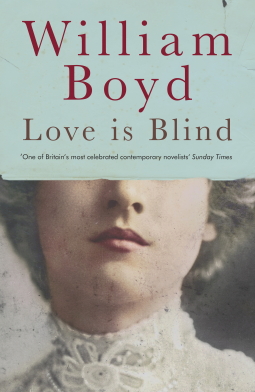
#BookReview ‘Love is Blind’ by William Boyd #historical

When a new novel by William Boyd features a male protagonist, my first thought ‘is it another Logan Mountstuart’ with a feeling of anticipation. But Love is Blind is not another version of Any Human Heart. It tells the story of Brodie Moncur, a young Scottish piano tuner who travels Europe as he seeks warmer climes and the love of his life. William BoydBoyd is on good form and I raced through Love is Blind, enveloped in Brodie’s end of 19thcentury/early 20thcentury story. Told almost exclusively from Brodie’s viewpoint, plus some of the letters he writes and receives, we see the world and the people he meets through his eyes so, as he falls in with thieves the sense of impending doom increases. He is a likeable, believeable character, son of a fire-and-brimstone alcoholic preacher, living in a time of great change as motor cars appear on the road and the signs of war increase but when consumption kills. The details of Brodie’s piano tuning are fascinating, these skills are the passport to his travels, getting him into and out of trouble, enabling him to earn money wherever he finds himself.
When the story starts in 1894 Brodie is a piano tuner for Channon & Co in Edinburgh. Offered a job at the Channon shop in Paris, he takes the opportunity to escape his oppressive father and so falls in with John Kilbarron, a fading Irish concert pianist who comes to rely on Brodie’s magical skills with his tuning tools. The major difficulties of Brodie’s story are established in Paris. He falls in love with Lika Blum, would-be Russian opera singer, who may or may not be in a relationship with Kilbarron. And he starts to cough up blood.
Consumption is diagnosed and Brodie travels to Nice in search of a warmer climate, unable to work, leaving Lika behind. From the beginning, Brodie pursues Lika rather than the other way round, she insists on secrecy and is enigmatic when pressed for details of her earlier life. Warning signs that are obvious to the reader but to which Brodie is blind, the blindness of the title, are everywhere. Lika does not share many secrets and there is no authorial voice to fill in her backstory. He is a young man in love/lust and cannot see what seems to be staring him in the face. He writes a succession of letters which, given the need for secrecy, are foolhardy. So when trouble finds him, in the shape of Kilbarron’s thuggish brother Malachi, it is not a surprise.
The character of Lika is lightly drawn but that is perhaps because Brodie knows so little about her. They arrange assignations in hotel rooms and on riverbanks, passing notes to each other and sharing significant glances. The affair continues as the Kilbarron party moves to St Petersburg, Russia, to perform a programme for a new wealthy benefactor. It is here that the cracks start to appear in the Kilbarron/Moncur relationship.
The final part of the book was less satisfactory for me. The Prologue to the story is a short letter written in 1906 by a woman called Page from an address in the Andaman Islands, Indian Empire, in which Brodie Moncur is briefly mentioned. In Part VII, Brodie is living at Deemer’s Hotel, Port Blair, the Andamans. I found his encounter with ethnologist Page Arbogast and their research trip to the Nicobar Islands superfluous.

Read my reviews of:
ANY HUMAN HEART
NAT TATE: AN AMERICAN ARTIST 1928-1960
ORDINARY THUNDERSTORMS
SWEET CARESS
THE BLUE AFTERNOON
THE DREAMS OF BETHANY MELLMOTH
TRIO
WAITING FOR SUNRISE
… and try the first paragraph of ARMADILLO

If you like this, try these:-
‘After the Bombing’ by Clare Morrall
‘The Translation of Love’ by Lynne Kutsukake
‘Exposure’ by Helen Dunmore

And if you’d like to tweet a link to THIS post, here’s my suggested tweet:
#BookReview LOVE IS BLIND by William Boydhttps://wp.me/p5gEM4-3we via @SandraDanby

#BookReview ‘The Ashes of London’ by @AndrewJRTaylor #Historical

1666 and a fire starts in London, soon to devastate the medieval City of London. Watching the flames, a young man notices a boy in a ragged shirt who is standing so close as to risk to his life. When he pulls the boy to safety, he finds it is not a boy but a young woman. She bites him and escapes, though he intends only to help. And so are introduced the two key characters in The Ashes of London by Andrew Taylor. Andrew TaylorThis is not a novel about the Fire of London, rather a political mystery involving murder in the turbulent years following the execution of King Charles I, the English Civil War, the Commonwealth and subsequent Restoration of King Charles II. In the ruins of St Paul’s a body is found, differing from other mortalities for its thumbs tied together behind the man’s back. This is the sign of those who committed Regicide by signing the death warrant of Charles I. Though in hiding, these traitors are still active, lurking in the shadows.
The account of London burning is written vividly, so vivid I could imagine myself there, smell the charred timber and smoke. We see it through the eyes of two people. James Marwood, clerk, son of a traitor, is required by his superiors to investigate on their behalf. Catherine Lovett, a wealthy young woman lodges with the family of her mother but secretly searches for her father, a Regicide. Her position becomes precarious when her uncle seeks to marry her to a suitable man, one she detests. She flees and, at risk of discovery, Cat hides her identity with a false name. She is a bright woman who adapts to her changing circumstances, has a great presence of mind and is not afraid to defend herself when threatened. I particularly enjoyed her interest in architecture, something which brings her into the wider circle of Master Hakesby and Dr (Christopher) Wren as the new design for St Paul’s takes shape. She has a skill of fine draughtsmanship, and helps Master Hakesby who suffers from the ague.
We learn the story as seen by Marwood and Cat; the author controls what we know and don’t know. As they are aware of other things happening outside their circle, but not of the detail – of surviving traitors helping each other, of powerful men borrowing and lending money, of the scientifically-minded Charles II and his circle of influencers – so the reader realizes more is going on behind the scenes than is written on the page. Which adds to the mystery. This was a complex political time. We watch Marwood tread a delicate path as he tries to protect his elderly weak-witted Regicide father from persecution whilst also obeying his employer, Master Williamson, editor of The London Gazette. It is a time of whispers, gossip in the coffee houses, of secret meetings and spies standing behind screens the better to eavesdrop.
The paths of Marwood and Cat almost cross a number of times and as neither knows the true identity or intentions of the other, the reader is in a privileged position. When they do meet, the outcome is unexpected.
This is not a page-turning thriller or a crime novel, more a historical mystery. Taylor takes time to develop his characters and to show his location, the Restoration context is fascinating. Though a slow-burn I read this book quickly, finishing it and wanting to read its sequel, The Fire Court. That is always a good sign.
CLICK HERE TO READ MORE ABOUT THIS BOOK AT AMAZON

Try the first paragraph of THE ASHES OF LONDON here.

Read my reviews of the next books in this series:
THE FIRE COURT #FIREOFLONDON2
THE KING’S EVIL #FIREOFLONDON3
THE LAST PROTECTOR #FIREOFLONDON4
THE ROYAL SECRET #FIREOFLONDON5
THE SHADOWS OF LONDON #FIREOFLONDON6

And a World War Two novel by the same author:-
THE SECOND MIDNIGHT

If you like this, try:-
‘The Witchfinder’s Sister’ by Beth Underdown
‘The Last Hours’ by Minette Walters
‘The Western Wind’ by Samantha Harvey

And if you’d like to tweet a link to THIS post, here’s my suggested tweet:
#BookReview THE ASHES OF LONDON by Andrew Taylor https://wp.me/p5gEM4-3p2 via @SandraDanby

#BookReview ‘Our Friends in Berlin’ by Anthony Quinn #WW2

Our Friends in Berlin by Anthony Quinn tells a story of London in World War Two seldom told. It is a spy novel but not a thriller. It focuses on the individuals concerned and has a deceptive pace which means the threats, when they come, are more startling. Jack Hoste is not who he seems to be. He is not a tax inspector; he is not looking for a wife. He is a special agent who tracks down Nazi spies. And at night he is an ARP warden. Anthony Quinn The juxtaposition of Hoste’s life of secrets is set nicely against that of Amy Strallen who works at the Quartermaine Marriage Bureau. Ordinary life does go on in London during the Luftwaffe bombing and Amy must match clients together, a matter of instinct rather than calculation. In order to be matched with the right person, clients are asked to tell the truth about what they are seeking, truths which may have been disguised or hidden until now. Client requests include ‘a lady with capital preferred’ and ‘not American’. Then one day she meets a new client who seems oddly reluctant to explain what he is looking for. The client is Jack Hoste and he doesn’t want a wife, he is searching for Marita Pardoe, a suspected Nazi sympathiser and friend of Amy in the Thirties. What unfolds is a story of spying, gentle romance, betrayal, fanaticism and the life of living in a bombed city.
Jack and Amy seem to run on parallel tracks, veering towards and then away from each other, both romantically unsure, both allow the real world to get in the way. And get in the way it does, in the shape of Marita. Quinn is excellent at building characters, he makes you care for them and that’s what keeps you reading. In a time of war, decisions are often made recklessly but Jack and Amy draw back from doing this. Both are people of honour, making the secrets they must keep and the lies they must tell all the more pertinent. The nature of truth is a theme wriggling its way through every page.
Anthony Quinn is a favourite author of mine, his novels are each quite different and I will read everything he writes. I read this one quickly.

Read my reviews of these other novels also by Anthony Quinn:-
CURTAIN CALL
FREYA
HALF OF THE HUMAN RACE
MOLLY & THE CAPTAIN
THE RESCUE MAN
THE STREETS

If you like this, try:-
‘Mrs Sinclair’s Suitcase’ by Louise Walters
‘The Paying Guests’ by Sarah Waters
‘The Heat of the Day’ by Elizabeth Bowen

And if you’d like to tweet a link to THIS post, here’s my suggested tweet:
#BookReview OUR FRIENDS IN BERLIN by Anthony Quinn https://wp.me/p5gEM4-3pl via @SandraDanby

My Porridge & Cream read: Paula Harmon

Today I’m delighted to welcome murder mystery author Paula Harmon. Her ‘Porridge & Cream’ read is Onions in the Stew by Betty MacDonald. This is the second Betty MacDonald book featured in the series following Anybody can do Anything which was chosen by Judith Field in 2015. Read what Judith said here.

“Dad handed me Onions in the Stew by Betty MacDonald when I was an adult saying, ‘you must read this’. Feeling rebellious, I left it on the shelf for a while. Besides, this copy is old and a bit musty, its paper cover long gone. But one day I came across it, remembered how funny (even when poignant) her other books were and took it down.

“Now I read it at least once a year. Why? Because although it covers a period of time I didn’t experience and a place I’ve never visited, it is one of those books that describes things that never change, finds humour in the most difficult of situations and makes me laugh. Also, it takes place on an island, and I have a soft spot for islands.

Onions in the Stew starts during WWII as Betty seeks a home in Seattle for herself, her new husband, two pre-teen daughters, a cat and a dog. Finally, the MacDonalds hear about a house with its own beach on Vashon Island. Who among us won’t have met schmoozing estate agents; started packing with such organisation and ending up stuffing things in anywhere; endured strange neighbours, guests who won’t leave, dubious handymen. Even more recognisable, despite the passing of over seventy years are Betty’s two daughters as they drag the whole family through the trauma of adolescence.

“When I first read the book my children were still small. Now they are seventeen and nineteen. I think reading Onions in the Stew was one of those things that helped me put some perspective on their teenage years and find the humour in them. I haven’t many books which make me chuckle but this is one of them. Old and musty as it is [below], it is definitely a keeper.”

Paula Harmon’s Bio
Paula Harmon, is a Chichester University graduate who has lived in Dorset since 2005. She is a civil servant, married with two children. Paula has several writing projects underway and wonders where the housework fairies are, because the house is a mess and she can’t think why.

Paula Harmon’s Latest Book
Paula HarmonIt’s AD 190. Romano-Briton Lucretia is determined that her get-rich-quick scheme will not be undermined by minor things like her husband’s death, dubious imposters or her married daughter’s fascination with a celebrity gladiator. But when the deaths start to mount up, wise-woman Tryssa starts to ask awkward questions.
‘Murder Britannica’ by Paula Harmon [UK: January Press]

Paula Harmon’s Links
Blog
Amazon Author page
Goodreads
Facebook
Twitter

What is a ‘Porridge & Cream’ book? It’s the book you turn to when you need a familiar read, when you are tired, ill, or out-of-sorts, where you know the story and love it. Where reading it is like slipping on your oldest, scruffiest slippers after walking for miles.

Cat Deerborn is a character in Susan Hill’s ‘Simon Serrailler’ detective series. Cat is a hard-worked GP, a widow with two children and she struggles from day-to-day. One night, after a particularly difficult day, she needs something familiar to read. From her bookshelf she selects ‘Love in A Cold Climate’ by Nancy Mitford. Do you have a favourite read which you return to again and again? If so, please send me a message.

Paula Harmon


Onions in the Stew’ by Betty MacDonald [UK: George Mann Books]

Discover the ‘Porridge & Cream’ books of these authors:-
Rachel Dove chooses ‘Dead Until Dark’ by Charlaine Harris
Claire Dyer chooses ‘The Guernsey Literary and Potato Peel Pie Society’ by Mary Ann Shaffer and Annie Burrows
Julie Christine Johnson chooses ‘Pride and Prejudice’ by Jane Austen

And if you’d like to tweet a link to THIS post, here’s my suggested tweet:
Why does murder mystery writer @PaulaHarmon789 re-read ONIONS IN THE STEW by Betty MacDonald each year#books https://wp.me/p5gEM4-3vK via @SandraDanby

Great Opening Paragraph 110… ‘Jane Eyre’ #amreading #FirstPara

“There was no possibility of taking a walk that day. We had been wandering, indeed, in the leafless shrubbery an hour in the morning; but since dinner (Mrs Reed, when there was no company, dined early) the cold winter wind had brought with it clouds so sombre, and a rain so penetrating, that further outdoor exercise was now out of the question.”
Charlotte BrontëFrom ‘Jane Eyre’ by Charlotte Brontë

Here’s the #FirstPara of AGNES GREY by Charlotte’s sister, Anne Brontë.

Try one of these #FirstParas & discover a new author:-
‘The Last Juror’ by John Grisham
‘A Change of Climate’ by Hilary Mantel
‘Astonishing Splashes of Colour’ by Clare Morrall

And if you’d like to tweet a link to THIS post, here’s my suggested tweet:
#Books #FirstPara JANE EYRE by Charlotte Brontë via @SandraDanby http://wp.me/p5gEM4-2xH

#BookReview ‘Tulip Fever’ by Deborah Moggach #historical

Amsterdam in the 17th century was a time when commerce was king and the sale of tulip bulbs made some people very rich and others bankrupt. This is the setting for Tulip Fever by Deborah Moggach, when Rembrandt and Vermeer painted some of the most-recognised art of our time. Sophia’s husband Cornelis is rich, thanks to tulips, and he celebrates his wealth by commissioning a joint portrait to be painted. It is a decision which changes their lives. Deborah MoggachThe deft switching of viewpoints – and each chapter is a single voice, Sophia, Cornelis, Jan [the painter], Maria [their servant] and Willem [Maria’s lover] – allows for a new take on each situation. The plot moves quickly, things are hinted at and passed over but relevant later. It is the sort of novel which seems simple but has hidden depths. The language can be so sensual. “Jacob van Loos is not painting the old man’s mouth. He is painting Sophia’s lips. He mixes pink on his palette – ochre, grey and carmine – and strokes the paint lovingly on the canvas. She is gazing at him. For a moment, when the old man was talking, her lips curved into a smile – a smile of complicity. He paints the ghost of this, though it is now gone.”
The reader must remain vigilant to catch everything. After four chapters I realised the significance of the quotation at the head of each chapter, and went back to the beginning again. They shed fresh light on the story being told. For example, “‘Trust not to appearances.’ Jacob Cats, Moral Emblems, 1632.” And, another chapter heading, by the same author, ‘Stolen waters are sweet, and bread eaten in secret places is pleasant.’
In places, Moggach’s description echoes Dutch paintings of the period: “Sophia stands at the window. She is reading the letter. Through the glass, sunlight streams on to her face. Her hair is pulled back from her brow. Tiny pearls nestle in her headband; they catch the light, winking at the severity of her coiffure. She wears a black bodice, shot with lines of velvet and silver. Her dress is violet silk; its pewtery sheen catches the light.” Certainly an understanding of art of the period will help a reader get more from the text.

Read my review of these other novels by Deborah Moggach:-
SOMETHING TO HIDE
THE BLACK DRESS
THE CARER

Read the first paragraph of THESE FOOLISH THINGS [now THE BEST EXOTIC MARIGOLD HOTEL] here.

If you like this, try:-
‘The Miniaturist’ by Jessie Burton
An Appetite for Violets’ by Martine Bailey
‘Girl in Hyacinth Blue’ by Susan Vreeland

And if you’d like to tweet a link to THIS post, here’s my suggested tweet:
#BookReview TULIP FEVER by Deborah Moggach via @SandraDanby http://wp.me/p5gEM4-2sv

A poem to read in the bath… ‘Because I could not stop for Death’

This lyrical poem by Emily Dickinson sees the poet meet Death who, as a gentleman caller, takes a leisurely carriage drive with her. It was first published posthumously under the title ‘The Chariot’ in Poems: Series 1 in 1890, the edition assembled and edited by her friends Mabel Loomis Todd and Thomas Wentworth Higginson.

Here are the first two verses.
‘Because I could not stop for Death –
He kindly stopped for me –
The Carriage held but just Ourselves –
And Immortality.

We slowly drove – He knew no haste
And I had put away
My labor and my leisure too,
For His Civility.’

The poem has since been set to music by Aaron Copland as the twelfth song of his cycle The Twelve Poems of Emily DickinsonEmily Dickinson

Emily Dickinson


‘The Picador Book of Funeral Poems’ ed. by Don Paterson [UK: Picador]

Read these other excerpts, and perhaps find a new poet to love:-
‘Happiness’ by Stephen Dunn
‘Lost Acres’ by Robert Graves
‘The Roses’ by Katherine Tempest

And if you’d like to tweet a link to THIS post, here’s my suggested tweet:
A #poem to read in the bath: ‘Because I could not stop for Death’ by Emily Dickinson https://wp.me/p5gEM4-3dG via @SandraDanby

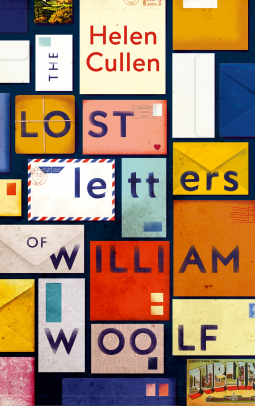
#BookReview ‘The Lost Letters of William Woolf’ by Helen Cullen @wordsofhelen #romance

I admit to loving the premise of this book when I first heard about it. A Dead Letter Depot where researchers reunite lost letters with senders and recipients. The Lost Letters of William Woolf by Helen Cullen left me wishing for more. It promised to be a novel about letters and mystery and turned into one focussed on a struggling marriage, which was not what I expected. Helen CullenWilliam’s marriage to Clare has gone stale and to avoid confronting what must change, he becomes obsessed by his work at the Dead Letter Depot and in particular the letters from someone called Winter addressed to ‘My Great Love’. In his vulnerable state, William begins to imagine that he may be that person and sets out to find her. Interspersed with this task we see William correctly fulfil his role, taking a lost fossil to the correct museum for example.
I switched between liking the character of William with being frustrated at his unrealistic romanticism, and could understand Clare’s frustrations. Ditto, she seemed impatient and too inclined to throw stones in a glasshouse. Clearly they were not communicating, ironic in a book about writing letters, and neither completely held my sympathy.
So what kept me reading? The lost letters, the mystery of Winter’s identity and to whom she was writing. And there lies one disappointment: the solution to Winter’s was such an anti-climax I had to flick back through the book to find an earlier reference in order to appreciate the revelation. I had two other disappointments. As much as I loved the concept of the Dead Letter Depot, a small voice in my head kept saying: it isn’t real, it wouldn’t get funding, it should be one man at a desk not a department with enough staff or budget for a Fancy Dress Fundraiser, and shouldn’t the lost letters be old not recently posted. I was also unclear of the timeline of the story. William and Clare feel like a 21st century couple living in the 1980s, pre-mobiles, pre-tablets. Something jarred and it would not go away.
This novel could have been so much more if there was less about the fragile relationship between William and Clare and more about the Dead Letter Depot, William’s fellow workers and the cases they worked on. But it is nicely written and if you are looking for an easy-to-read romance for your holiday, you will probably love it.

If you like this, try:-
‘Butterfly Barn’ by Karen Power
‘Forever Fredless’ by Suzy Turner
‘Girl in Trouble’ by Rhoda Baxter

And if you’d like to tweet a link to THIS post, here’s my suggested tweet:
#BookReview THE LOST LETTERS OF WILLIAM WOOLF by Helen Cullen @wordsofhelen https://wp.me/p5gEM4-3oH via @SandraDanby

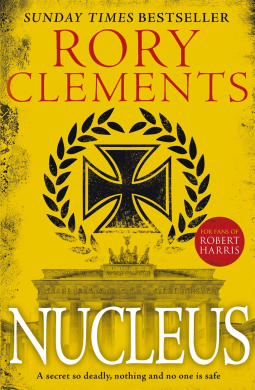
#BookReview ‘Nucleus’ by Rory Clements #thriller #WW2

Summer 1939. Germany has invaded Czechoslovakia. Jews desperate to flee Nazi persecution queue outside embassies in Berlin in the hope of getting a visa, while sending their children on Kindertransport to Britain. In the UK, the IRA’s bombing campaign continues. Scientists in Europe and America are researching atomic fission, and also at the Cavendish Laboratory in Cambridge. It is a vulnerable, combustible time. This is the setting for Nucleus by Rory Clements, second in his trilogy of history professor and amateur spy, Tom Wilde. Rory ClementsIn the first book in the series, Corpus, Tom Wilde was more amateur detective than spy. In Nucleus, the stakes are higher, war is imminent, spies are everywhere and so are traitors. The problem is, they look like friends. Asked by none other than the US president Franklin D Roosevelt to be a ‘clear and unbiased voice’ for him on research at the Cavendish, Wilde is drawn into a world of American millionaires, a Hollywood actress, champagne, tennis parties and horseracing. And then one of the Cavendish physicists, a withdrawn, complicated genius due to move to the USA to work with Oppenheimer, is found drowned in the River Cam. Was he killed because he had unlocked the answer to converting atomic fission into a bomb capable of destroying a city?
Meanwhile, Wilde’s girlfriend and neighbour, Lydia Morris, goes to Berlin on a mercy mission to search for the disappeared eight-year old son of Jewish scientist, Eva Haas, now in England. Could Albert have been kidnapped by the Gestapo to put pressure on his mother? And who is the mysterious German, Baumgarten, who helps Eva and her uncle, physicist Arnold Lindberg, escape to Austria. Tom Wilde, a specialist on Francis Walsingham, spymaster to Queen Elizabeth I, is an interesting protagonist; at times reckless but capable of analysis and leaps of faith.
Corpus was a slow read, at times lightly plotted, but Nucleus an emotional rollercoaster that continues until the last page. Clements avidly recreates the atmosphere of Britain on the brink of war; a summer where parties abound, people approach life with a reckless abandonment, where fear and paranoia combine with a ‘let’s get on with it’ attitude. I enjoyed Corpus but Nucleus is better. The plot twists and turns with all disparate elements connected together by the end. This is a compelling read which I devoured on a plane, sitting up to read it while others slept around me.

Click the title to read my reviews of the other books in the Tom Wilde series:-
CORPUS #1TOMWILDE
NEMESIS #3TOMWILDE
HITLER’S SECRET #4TOMWILDE

A PRINCE AND A SPY #5TOMWILDE
THE MAN IN THE BUNKER #6TOMWILDE
THE ENGLISH FUHRER #7TOMWILDE

And from the Sebastian Wolff series:-
MUNICH WOLF #1SEBASTIANWOLFF

If you like this, try:-
‘The Farm’ by Tom Rob Smith
‘Last Light’ by Alex Scarrow
‘Dominion’ by CJ Sansom

And if you’d like to tweet a link to THIS post, here’s my suggested tweet:
#BookReview NUCLEUS by Rory Clements https://wp.me/p5gEM4-3iZ via @SandraDanby

SaveSave

SaveSave

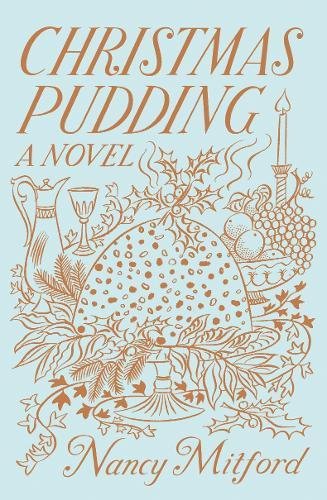
#BookReview ‘Christmas Pudding’ by Nancy Mitford #satire #historical

Christmas Pudding is another between-the-wars comedy of manners by Nancy Mitford. With scathing observation at times as sharp as Jane Austen, Mitford introduces a new character, Lord Lewes: ‘He was tall, very correctly dressed in a style indicating the presence of money rather than of imagination, and had a mournful, thin, eighteenth-century face.’ This is her second novel and features some of the personalities featured in her first, Highland Fling, though familiarity with the first is not essential for enjoyment. Nancy MitfordThe action takes place over one month around Christmas, the pudding of the title refers to Mitford’s mixture of personalities in two house parties in the Cotswold countryside. Paul Fotheringay, whose debut literary novel has been heralded as a comic farce, is desperate to escape London and find inspiration for his next book. Wanting to be taken seriously as an author, he settles on a biography of Victorian poet, Lady Maria Bobbin. When he is refused access to the diaries by the current Lady Bobbin he conjures a plot with her teenage son Bobby to masquerade as Bobby’s tutor over the Christmas holidays and so gain secret access to the diaries. And so Paul becomes part of a love triangle at the Bobbin’s home Compton Bobbin, involving Bobby’s sister Philadelphia and the honest, boring but reliable Lord Michael Lewes. The second house party, at the rather kitsch over-furnished Mulberrie Farm, is held by former prostitute and now society lady Amabelle Fortescue. Mitford’s characters move in the same overlapping social circles so it is inevitable that Amabelle and her guests Sally and Walter Monteath will socialize with some of the guests at Compton Bobbin.
Love is the central theme, true love, idealised love, upper-class arranged marriage and marriage for pragmatic facing-old-age reasons. As has always occurred in aristocratic circles, marriage is approached with a healthy dose of pragmatism making romantic love seem frothier and more idealised than ever.
This is light-hearted fiction and limited in its observation of characters; there is no upstairs/downstairs contrast here, which would enrich the social commentary. But the old and young are perfectly capable of condemning themselves out of their own mouths. Reading this novel will not change your life, but it will amuse you and the ending is not the easy way-out you may expect. My one criticism is that there are slightly too many peripheral characters with their own strings of plot.

Read my reviews of these other novels by Nancy Mitford:-
HIGHLAND FLING
LOVE IN A COLD CLIMATE
PIGEON PIE
THE BLESSING
THE PURSUIT OF LOVE
WIGS ON THE GREEN

Read the first paragraph of THE PURSUIT OF LOVE here.

If you like this, try these:-
‘Sweet Caress’ by William Boyd
‘A Death in the Dales’ by Frances Brody
‘Mothering Sunday’ by Graham Swift

And if you’d like to tweet a link to THIS post, here’s my suggested tweet:
#BookReview CHRISTMAS PUDDING by Nancy Mitford http://wp.me/p5gEM4-2UO via @SandraDanby