

One day Grace Chalk sees her boyfriend standing at the other side of the street. Except Alex is dead. And so starts Deerleap by Sarah Walsh, a combination of love story [Grace and Alex], detective story [is Alex really alive, if so where is he?] and the nature of blame [marriage breakdown] and grief. 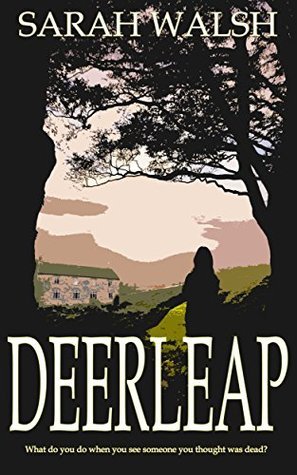 Walsh has written an assured story, handling the emotional complexities with a gentle touch making the twists and turns even more surprising when they arrive.
When the story opens, seven years have passed since the car accident in which Grace’s father and her stepmother Polly were killed, her sister Rita seriously injured, and her boyfriend Alex disappeared. Alex’s body was never found. Rita has never talked about what happened, she is emotionally vulnerable, spiky and prone to hitting her sister. Grace’s mother still resents being deserted by her husband and Grace worries that her anger will turn into depression and suicide. At the centre of the story stands Deerleap, the remote country house where Alex grew up and where Grace visits her father as he sets up his new home with Polly. It all sounds idyllic, except seven years later, Deerleap stands empty awaiting the legal deadline when Alex can be declared legally dead and the house sold. This is the catalyst which sparks this chain of events.
The emotional vulnerability in Grace’s family made me at times question her own reporting of events, we are told the story entirely through her eyes. She is an artist, painting portraits of from her studio in Bristol. She looks into people’s faces and sees the truth. Can she find out the truth of what happened to Alex?
The Somerset countryside sounds marvellous, a stark contrast to the streets of Bristol where Grace’s troubled mother and sister live. The family ties, responsibilities and lies create a web of mystery through which you glimpse the answer. And then there is a twist at the end which I didn’t expect. This is a quiet book which really grew on me. A psychological mystery, rather than a psychological thriller, it explores the nature of grief, depression, guilt and love.
If you like this:-
‘A Sudden Light’ by Garth Stein
‘The Distant Hours’ by Kate Morton
‘Foxlowe’ by Eleanor Wasserberg
And if you’d like to tweet a link to THIS post, here’s my suggested tweet:
#BookReview DEERLEAP by Sarah Walsh via @SandraDanby http://wp.me/p5gEM4-2cm
 The 1984 film, directed by David Lean, featured Alec Guinness, Dame Peggy Ashcroft and Victor Banerjee. It won two Oscars: Dame Peggy Ashcroft [Mrs Moore], Best Actress in a Supporting Role; and Maurice Jarre for Best Music, Original Score.
 The current Penguin edition features a detail from ‘English Women visiting caves near Bangalore’ [c. 1880s]. Photograph courtesy of The British Library.
 As a classic, A Passage to India has been published in many editions and languages. Here is a selection of some of the covers. The Italian cover is particularly dashing.
 I do recall that my mother and I had recently arrived in the United States and were living in a studio apartment in Washington, DC, while she struggled to make ends meet. The book is a series of articles on Jean Kerr’s life as a playwright and parent, and each of the pieces made me roar with laughter at a time when real life wasn’t that funny. When I first read the book, I found it hugely entertaining on such subjects as diets, doctors, family, fashion, moving house, and the rest of everyday suburban life. It was only decades later that I could identify with Kerr’s situation as a writer working from home, and as the harassed mother of irrepressible boys.
 It’s the sweltering summer of 2013 and the lives of six Londoners get complicated. As the temperature soars, they’re grappling with money worries, whining children, ailing parents, panic attacks, relationship woes, and temptations along the way. Emotions rise to boiling point, forcing decisions they could regret.




 ‘
‘
 SANDRA DANBY'S BOOK REVIEWS