Tag Archives: novels set in Paris

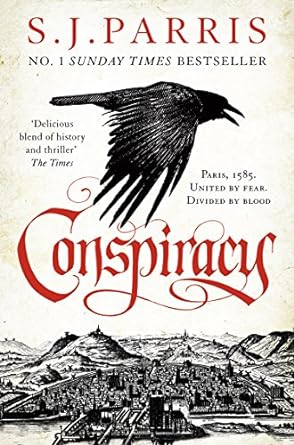
#BookReview ‘Conspiracy’ by SJ Parris @thestephmerritt #historical #crime

Paris 1585. In Conspiracy by SJ Parris, Italian philosopher spy Giordano Bruno is finding the French capital more difficult to negotiate than London. ‘God this city!… So many factions, so many plots; everyone an informer with two faces, playing one party off against the others.’ SJ ParrisFifth in this series, Bruno arrives in a Paris riven by religious fear and violence, when the reign of King Henri III is under threat from the Catholic League led by the Duke of Guise. Henri is ruled by his mother, Catherine de Medici, features regularly in scurrilous scandal sheets and seems unable to sire an heir. When a fellow priest is murdered, Bruno is drawn into the Parisian web of secrets, spies and court intrigue. Always balancing on a knife edge, Bruno must use his detecting skills to identify the murderer. He is ordered by two powerful men – neither knows of the other’s contract – to discover the truth of the murder. Bruno trusts neither and, though his knowledge of how the royal court functions is useful, he finds himself drawn deeper into danger.
A second most unexpected murder within the royal court itself threatens to reveal secrets about Henri, his wife Queen Louise, and his mother Catherine de Medici. This court is a world of courtesan spies where courtiers may be working for both sides, where everyone could be considered two-faced, their word untrustworthy. Bruno survives on his wit, bravery, and sheer damn luck. As Bruno is working for two bosses, he must also consider that everyone he meets is a spy, a double or triple agent, or may be lying to protect themselves, for ambition or for money. The plot ties itself in knots, at times the sheer number of suspects is bewildering.
I particularly enjoyed Bruno’s meetings with fellow spy Charles Paget whose wry remark that Bruno doesn’t look over his shoulder often enough would spoil some of the plot twists. The plot of Conspiracy continues some threads and recurring characters from earlier novels. Scandal and rumour combine in the echo chamber of the royal court as Bruno uncovers one conspiracy after another, or has he. Jumping to conclusions too early gets him into some scrapes and brings him into contact with a wide variety of personalities including an acting troupe I Gelosi.
These are long and complicated books and Bruno has enviable diplomatic and survival skills. The Parisian royal court is poisonous, the city is dirty and dangerous, there are sexy men, gorgeous women and gambling clerics.
A really good historical thriller. If you’re new to this series, please start with the first book to appreciate all the plot twists and themes.

Read my reviews of other books in this series:-
HERESY #1GIORDANOBRUNO
PROPHECY #2GIORDANOBRUNO
SACRILEGE #3GIORDANOBRUNO
TREACHERY #4GIORDANOBRUNO
EXECUTION #6GIORDANOBRUNO
ALCHEMY #7GIORDANOBRUNO

If you like this, try:-
‘The Burning Chambers’ by Kate Mosse #1JOUBERT
‘The Silver Wolf’ by JC Harvey #1FISKARDOSWAR
‘Winter Pilgrims’ by Toby Clements #1KINGMAKER

And if you’d like to share a link:
#BookReview CONSPIRACY by SJ Parris @thestephmerritt https://wp.me/p2ZHJe-7Hl via @SandraDanby

COMING SOON… THE NEXT BOOK I REVIEW WILL BE:- Helena Dixon

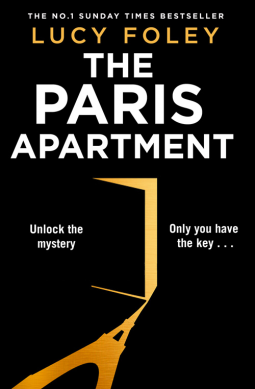
#BookReview ‘The Paris Apartment’ by Lucy Foley #thriller

I read The Paris Apartment, the latest thriller by Lucy Foley, in two sittings. It kept me guessing nearly to the end, with some unexpected twists along the way. Lucy FoleyWhen penniless Jess arrives in Paris to spend some time with her half-brother, he has disappeared. What follows is a page-turning story of the apartment block where Ben has been living, its inhabitants and the confusing discoveries Jess makes as she tries to find him. It makes her question if she really knows her brother and why he has been so distant from her. This is a book about secrets, small ones, shameful ones, old and new secrets. And one huge one. Jess, at times vulnerable at times recklessly brave, attempts to be pleasant to Ben’s neighbours in this surprisingly elegant old Parisian apartment block. The snobbish couple in the penthouse, the two young women sharing on the fourth floor, a thug and his wife, the silent concierge plus Ben’s old university friend, Nick. The viewpoint swaps quickly between Jess and the other residents as Foley pushes the action quickly from event to event. The chapters are short and snappy and this makes it easy to read just one more, and one more. As Jess struggles to make a connection with these neighbours, she doesn’t know who to trust; and neither did I. I didn’t like any of them and Jess herself is difficult to connect with. But the mystery led me on.
The apartment block offers a kind of ‘closed room’ setting, well-used in crime stories, and it does its job well. It is grand yet mysterious with hidden doors and stairs, spooky attic and cellar, a cranky old lift and a C-shaped construction around a courtyard allowing residents to observe each other. I had a clear picture of it in my head.
Where is Ben? Did someone see him leave? Why hasn’t he answered his phone? And why is he living in Paris anyway? Nick offered him the flatshare but the two men haven’t been in touch for years. Given we don’t see Ben’s viewpoint except a brief Prologue, some things are hidden until the very end. The lines between current time and flashbacks at times seemed blurred and I got a little irritated with Jess’s naivety. A couple of scenarios I thought might be possible turned out to be wrong, but it was fun guessing.
Lucy Foley uses glamorous Paris alongside the sinister apartment building, riots on the streets, juxtaposing Parisian elegance with the seedier side streets and alleys, clubs and bars. As Jess considers each of her neighbours, trying to work out who knows what, shuffling up and down stairs trying to eavesdrop, she inevitably lands in trouble.
A satisfying fast read, helped by short chapters in different viewpoints which gradually construct the mystery like layers of filo pastry.

Click the title to read my reviews of two other novels by Lucy Foley:-
MURDER AT THE GRAND ALPINE HOTEL #1POIROT
THE GUEST LIST
THE HUNTING PARTY
THE INVITATION
THE MIDNIGHT FEAST

If you like this, try:-
These Dividing Walls’ by Fran Cooper
Smash All the Windows’ by Jane Davis
The Quarry’ by Iain Banks

And if you’d like to share a link:
#BookReview THE PARIS APARTMENT by Lucy Foley https://wp.me/p5gEM4-5Pk via @SandraDanby

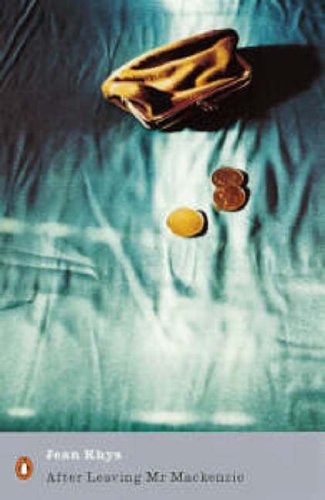
#BookReview ‘After Leaving Mr Mackenzie’ by Jean Rhys #historicalfiction

A slim novel, After Leaving Mr Mackenzie is the second novel by Jean Rhys, published in 1931. Semi-autobiographical, it tells the story of a young woman [if a woman in her mid-thirties can be called young] who faces up to the realities of life after a love affair ends. The title is not strictly true because Julia did not leave Mr Mackenzie, he left her. Jean Rhys She moves to a cheap hotel room where the furnishings are faded and the only decoration is a poor painting which she assumes must have been left in lieu of debt by a previous tenant. Where Rhys excels is her description of the small details, drawing a picture of Julia’s surroundings and her moods. ‘She found pleasure in memories, as an old woman might have done. Her mind was a confusion of memory and imagination. It was always places that she thought of, not people. She would like thinking of the dark shadows of houses in a street white with sunshine; or of trees with slender black branches and young green leaves, like the trees of a London square in spring; or of a dark-purple sea, the sea of a chromo or of some tropical country that she had never seen.’ Like the title of the novel, it is not always clear what is true and what is imagination.
After the death of her baby and the breakdown of her marriage, which is not really explained, Julia survives in Paris thanks to the men she dates. They give her cash, buy her clothes, pay for her lodging; in this, Julia is similar to Marya in Rhys’ first novel Quartet. This novel takes a step further in that when her maintenance payments stop, Julia takes action to help her situation. After unsuccessfully asking Mr Mackenzie for cash, she is helped by a stranger, Mr Horsfield. Julia buys new clothes and a train ticket to London where she visits her sister who cares for their dying mother.
This is a study of one woman’s desperate situation and her dependency on others. Julia is a sad woman with a past, shabby, as if wearing a sign around her neck saying ‘trouble’. The delight in reading this book is how Rhys tells Julia’s story, as much as the story itself.

Here’s my review of another novel by Jean Rhys:-
QUARTET

If you like this, try:-
Orphans of the Carnival’ by Carol Birch
Birdcage Walk’ by Helen Dunmore
‘The Duchess’ by Wendy Holden

And if you’d like to tweet a link to THIS post, here’s my suggested tweet:
#BookReview AFTER LEAVING MR MACKENZIE by Jean Rhys via @SandraDanby http://wp.me/p5gEM4-2d7 

#BookReview ‘These Dividing Walls’ by Fran Cooper @FranWhitCoop #historical

A young man arrives in Paris seeking respite from his grief, surrounding himself in the solitude of an attic flat loaned from a friend. Alongside him, his neighbours are happy and unhappy, they are getting by, they are lying to loved ones, lying to themselves. These Dividing Walls by Fran Cooper is a multi-layered story of microcosm and macrocosm, of an apartment block in Paris and its inhabitants, of city-wide anti-immigrant protests. Fran CooperA wave of racist violence enters the centre of Paris and the unfolding events are told through the lives of the residents at Number 37. Their lives converge and depart from each other, some are socially-minded, others watch from behind curtains. The young mother stretched so thin in the care of her three young children that she fears she will break. The banker who lost his job but is too ashamed to tell his wife. The homeless man who sleeps in a doorway on the street nearby. The silver-haired seller of art books who mourns her dead son. A young couple, new residents at Number 37, lock their door and turn off the television. The lives of all these people are affected by the xenophobic hatred which enters their street.
These Dividing Walls is at once a tender story and a violent one. Cooper writes with a love for Paris, a city she knows well, and this knowledge is in every sentence. A fond familiarity with Paris shines off every page, gently done, without shouting. The best book I have read this year.

If you like this, try:-
‘Quartet’ by Jean Rhys
‘An Officer and a Spy’ by Robert Harris
‘Fair Exchange’ by Michèle Roberts

And if you’d like to tweet a link to THIS post, here’s my suggested tweet:
#BookReview THESE DIVIDING WALLS by Fran Cooper @FranWhitCoop http://wp.me/p5gEM4-2KC via @SandraDanby

#BookReview ‘Quartet’ by Jean Rhys #historicalfiction #Paris

Quartet is the first, slim, novel by Wide Sargasso Sea author Jean Rhys. Published in 1928 it is its very different from its famous older sister which was not published until 1968. Semi-autobiographical, Quartet tells the story of Marya, marooned without money in Paris after her chancer husband Stephan is jailed for theft. It is a novel about loneliness and vulnerability and where that can lead. Jean RhysMarya is taken under the wing of the English couple, the Heidlers. They are spoken of as a unit, he is referred to as HJ, his wife is Lois. It is Lois who persuades Marya to move into the spare bedroom at their studio. HJ, she tells Marya, likes to ‘help people.’ But as days pass, Marya is drawn into their emotional and sexual influence. Not an accurate judge of character, Marya is let down but seems incapable of getting away. Visits to her husband in prison are fleeting and unsatisfactory, husband and wife face their own dilemmas and deal with them alone.
This is a melancholy story told beautifully. Marya is intelligent but weak, recognising she is trapped but unable, or unwilling, to extricate herself. ‘You see, I’m afraid the trouble with me is that I’m not hard enough. I’m a soft, thin-skinned sort of person and I’ve been frightened to death these last days.’ She tells her own story but there is often an observational feel almost as if she is standing to the side, commentating about someone playing herself. Some acute observations of other people are really just her transferring her own condition, her own sensibilities onto someone else.
I read the Penguin Modern Classics edition with an excellent introduction by Katie Owen, which sets this novel in the context of Rhys’ bibliography.

Here’s my review of another novel by Jean Rhys:-
AFTER LEAVING MR MACKENZIE

If you like this, try:-
A Wreath of Roses’ by Elizabeth Taylor
The French Lesson’ by Hallie Rubenhold
Islands of Mercy’ by Rose Tremain

And if you’d like to tweet a link to THIS post, here’s my suggested tweet:
#BookReview QUARTET by Jean Rhys via @SandraDanby http://wp.me/p5gEM4-2c1