Author Archives: sandradan1

Unknown's avatar

About sandradan1

Novelist. I blog about writing, reading and everything to do with books and writing them at http://www.sandradanby.com/. Come and visit me!

First Edition: The French Lieutenant’s Woman

I was a great John Fowles fan in the Eighties. This is my copy of The French Lieutenant’s Woman, dated 1981, a paperback edition by Triad Granada. It is well-thumbed, well-read, as are all my Fowles paperbacks including The Collector and The Magus. I remember being disappointed with the film, disliking the two-strand screenplay. I haven’t read the novel for years, but it remains on my shelf and I will re-read it soon. I find once the details of a story have been forgotten, the pleasure of re-reading increases exponentially. The French Lieutenant’s WomanThe story
Famous for its multiple endings, The French Lieutenant’s Woman received a mixed reception on publication. It explores the relationship of gentleman and amateur naturalist Charles Smithson, and Sarah Woodruff, former governess and independent woman, with whom he falls in love. Set in the mid-19th century, Woodruff is a ‘disgraced’ woman who lives in Lyme Regis where she spends hours walking The Cobb, a stone jetty where she stares out to sea. Smithson arrives in town and, seeing this lonely figure beside the sea, is curious about her.

The film 

Starring Meryl Streep and Jeremy Irons [above], this film was released in 1981 with a stellar cast, director [Karel Reisz], music by [Carl Davis] and a screenplay by Harold Pinter based on the Fowles novel. It was nominated for two Oscars – best actress [Streep] and best adapted screenplay. Streep won a BAFTA for her role. Actors considered for the role included Robert Redford and Richard Chamberlain, actresses up for the role included Francesca Annis, Charlotte Rampling, Gemma Jones and Helen Mirren.

The storyline differs from the novel in that there are two strands, the Victorian drama from the book featuring Woodruff and Smithson, and a modern-day strand about the filming of the story in which the two actors [played by Streep and Irons] fall in love. The French Lieutenant’s WomanWatch this clip on You Tube, the scene where Smithson first sees Woodruff standing on The Cobb [above] on a wild and windy day. Filmed on location in Dorset.

The first edition 

This hardback ticks the ‘first’ box – first edition, first impression – and is signed by the author. Although slightly faded, its sale price is £750 at Peter Harrington. Published in 1969 by Jonathan Cape.

If you like old books, check out these:-
‘Pride and Prejudice’ by Jane Austen
Watership Down’ by Richard Adams
‘Alice’s Adventures in Wonderland’ by Lewis Carroll

‘The French Lieutenant’s Woman’ by John Fowles Buy at Amazon

And if you’d like to tweet a link to THIS post, here’s my suggested tweet:
Still loved: THE FRENCH LIEUTENANT’S WOMAN by John Fowles #oldbooks via @SandraDanby http://wp.me/p5gEM4-2jK
#BookReview ‘Double Vision’ by Pat Barker #war #contemporary

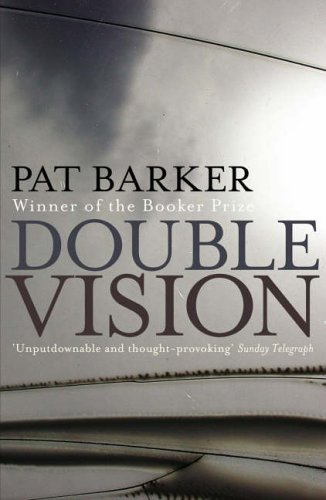
This is different from a lot of the war fiction by Pat Barker in that it deals with the aftermath of war rather than life during war. Double Vision is set in Barker’s NE England, with both countryside and city drawn clearly. Pat BarkerWar reporter Stephen Sharkey returns to the NE to stay in his brother’s isolated holiday cottage, he has resigned his job and plans to write a book. It seems idyllic, peaceful, but his dreams are full of war memories, particularly the body of a girl discovered in a Sarajevo ruin, raped and murdered. Kate Frobisher, widow of Sharkey’s war photographer colleague Ben, is a sculptor. She is struggling too, with being alone, and with injuries sustained in a car accident. Kate’s progress with the sculpture of a man, with the deadline looming, forms the spine of this novel.
This is not a love story in that there is no romance but it is a story about the love of family, of community, of responsibility. And it is also about the opposite of love: hate, as done to the girl in that Sarajevo ruin. The horrors that man does to man, in wartime and ordinary time, and whether forgiveness and love can redeem those horrors.
Barker populates her story with a tightly-drawn circle of characters, puts them into relationships, then mixes things up. Kate cannot physically cope with the work required to sculpt and so hires a man to do the heavy lifting, a man recommended by the local vicar Alec. Justine, the sister of the local vicar, is a part-time nanny for Sharkey’s nephew, she and Sharkey become lovers. Then there is Stephen’s brother Robert and his wife Beth, on the outside their life in a beautiful country house seems beautiful. But is it? And who is Peter, the gardener/labourer who becomes Kate’s assistant, who seems to lurk quietly in the background.
There is a tension underlying this story but it is not a thriller, there is not a murderer lurking in the shadows, but Barker makes you want to read on, to find out what happens to these people. I love Pat Barker’s writing, she has a minimal style which reminds me of Hemingway. She seems incapable of writing an unnecessary word. Here’s one small example: ‘His sleep was threadbare, like cheap curtains letting in too much light.’ I know just what she means.

For my reviews of other Pat Barker novels, click the title below:-
ANOTHER WORLD
BLOW YOUR HOUSE DOWN
LIFE CLASS #1LIFECLASS
TOBY’S ROOM #2LIFECLASS
NOONDAY #3LIFECLASS
UNION STREET
THE SILENCE OF THE GIRLS
THE WOMEN OF TROY

If you like this, try:-
‘Casting Off’ by Elizabeth Jane Howard
‘The Aftermath’ by Rhidian Brook
‘The Little Red Chairs’ by Edna O’Brien

And if you’d like to tweet a link to THIS post, here’s my suggested tweet:
#BookReview DOUBLE VISION by Pat Barker http://wp.me/p5gEM4-1VJ by @SandraDanby

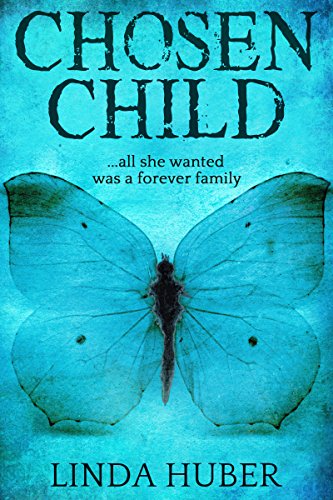
#BookReview ‘Chosen Child’ by Linda Huber @LindaHuber19 #suspense #thriller

This is a thriller which starts at a stroll and ends like a train. In Chosen Child by Linda Huber, the lives of two married women crash together. Linda HuberThe story starts starts with a childless couple who are part-way through the adoption procedure. Ella is desperate for a child, any child. Her husband Rick wants a baby boy. The first crack appears at an adoption party – where approved adoptive parents mingle with available children and their carers – when Ella makes an instant connection with a feisty six-year-old girl. Meanwhile Amanda’s pregnancy test shows the blue line but she doesn’t know if the father is her husband or her lover. I worked out the connection between the two women pretty quickly, but there is so much more to the story. The lies get more complicated, decisions are made then regretted, time cannot be turned back. And all the while six-year-old Soraya starts to wonder if Ella and Rick really are her forever family.
This is a thoughtful thriller about adoption, promises and the reasons for having children. This is Linda Huber’s fourth novel, now I want to read the others.

If you like this, try:-
‘Stolen Child’ by Laura Elliot
‘Pretty Baby’ by Mary Kubica
‘Before the Fall’ by Noah Hawley

And if you’d like to tweet a link to THIS post, here’s my suggested tweet:
#BookReview CHOSEN CHILD by Linda Huber @LindaHuber19 via @SandraDanby http://wp.me/p5gEM4-2bI

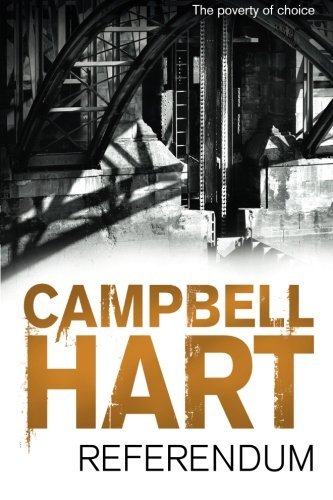
#BookReview ‘Referendum’ by Campbell Hart ‪@elharto #crime

Scottish politics and policing offer a fertile source for fictional plots, and former journalist Campbell Hart makes the most of it. Referendum is the third in his series about Glasgow Detective Inspector John Arbogast. Campbell HartThe heft of this series is developing nicely, as the characters and setting gain depth with each book and the plots are layered with threads from the previous books. Arbogast and his police colleagues are familiar now and Hart chooses his political setting, in the run-up to the Scottish Referendum for Independence, with care. Throw in a bent copper, an Irish thug, a BBC reporter, a family struggling with debt, and a nationalist determined to have his moment of propaganda, and there are many narrative threads to follow.
A man dies beneath a bridge, suicide or murder? But then a debt collector calls on his wife, which kickstarts a chain of events involving Arbogast. As well as chasing down a missing teenager, he takes a secret trip to Belfast to research the background of a fellow officer. What he finds there leads straight back to Glasgow and a deadly climax at the partly-constructed new police headquarters building, a sparkling transparent glass and steel building. Is Glasgow’s policing as transparent as its new HQ?

Read my reviews of other Arbogast novels by Campbell Hart:-
WILDERNESS #1ARBOGAST
THE NATIONALIST #2ARBOGAST

If you like this, try:-
‘Business as Usual’ by EL Lindley
‘The Silent Twin’ by Caroline Mitchell
‘Snow White Must Die’ by Nele Neuhaus

And if you’d like to tweet a link to THIS post, here’s my suggested tweet:
#BookReview REFERENDUM by Campbell Hart @elharto http://wp.me/p5gEM4-225 via @SandraDanby

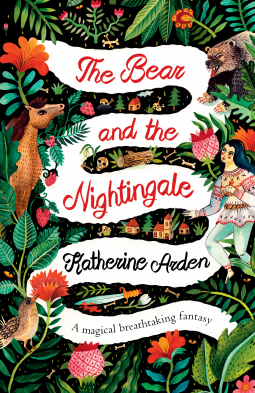
#BookReview ‘The Bear and the Nightingale’ by Katherine Arden @arden_katherine #folklore #fantasy

An entrancing, bewildering debut. The Bear and the Nightingale by Katherine Arden is heavily-influenced by Russian fairytales and steeped in winter. Snow, ice and frost are the everyday reality for the Vladimirovich family in medieval northern Russia where winter lasts many months of the year. It is a land of legend, folklore and fairytales where the people pay homage to the gods of the forest. Katherine ArdenThis is the story of Vasya, a wild child who sees the gods of the forests and the spirits of the house. Then one day a priest arrives from the city to challenge the superstitions and traditions of the country folk. It is a story of winter/summer, girl/boy, countryside/city but most of all, old magic versus the church. Is Vasya a free spirit, or is she a witch? Is her behaviour refreshing and engaging, or wicked? She alone can talk to the horses which teach her to ride like a Steppe boy, exhilarating and dashing but inappropriate for a young girl.
The only other person who can see the demons is Anna, Vasya’s stepmother, but whereas Vasya understands the demons, Anna fears them. She begs the priest, Father Konstantin, for prayers to banish them. But Konstantin becomes distracted as God starts speaking to him directly. Various attempts are made to tame Vasya. Her father wonders if a man will ever want to marry a girl who spends her time in the woods rather than sewing and cooking, her stepmother plots to get rid of her, her brothers protect her. Then a winter arrives which threatens to be the worst of all, many will die, and Pyotr Vladimirovich’s family will never be the same again.
In this book you will scarcely know where the fairy tales end and real life begins, indeed the book begins with the telling of a fairy tale. Arden has packed her novel with sumptuous description, colourful characters and layers on layers of myth, so many names and stories that you will struggle to keep track of them. It is a moody read, atmospheric, with beautiful description. But it is not a quick read, so relax into it and immerse yourself in Vasya’s life. You will be drawn into this unfamiliar world so you feel the hardships of the family, their fears, their dreams and dilemmas.
The Bear and the Nightingale is not an easy read, but it is rewarding. The Russian diminutives added to my confusion in the first few chapters when so many characters are introduced. Also the line between fairy tale and the story of Pyotr Vladimirovich’s family is often blurred. But stick with it, this book rewards perseverance.

Read my reviews of the other books in this trilogy:-
THE GIRL IN THE TOWER #2WINTERNIGHT
THE WINTER OF THE WITCH #3WINTERNIGHT

And also by Katherine Arden:
THE WARM HANDS OF GHOSTS

If you like this, try:-
‘The Queen of the Tearling’ by Erika Johansen #1TEARLING
‘The Seventh Miss Hatfield’ by Anna Caltabiano
‘The Magicians’ by Lev Grossman #1THEMAGICIANS

And if you’d like to tweet a link to THIS post, here’s my suggested tweet:
#BookReview THE BEAR AND THE NIGHTINGALE by Katherine Arden @arden_katherine via @SandraDanby http://wp.me/p5gEM4-2j9

My Porridge & Cream read: Tracey Sinclair

Today I’m delighted to welcome vampire novelist Tracey Sinclair.

“First, a disclaimer: my usual comfort read is generally Terry Pratchett, whose novels I regularly turn to if I’m feeling low or just want a bit of a ‘palette cleanse’ between reads – I’m a big fan of the humanity, humour and decency in his books and they invariably boost my mood. But Rhoda Baxter beat me to that! Tracey SinclairSo I’m going with another choice: Dangerous Liaisons by Choderlos de Laclos – a book I love so much I named one of my characters after the author. I studied it at university in the 90s (it’s one of the few books I’ve read in French and English, back when I was capable of reading more than a menu in French!). The edition I prefer is the Penguin Classic, translated by PWK Stone. I probably go back to it every couple of years, more if I’m prompted by seeing the film on TV. I usually give myself long enough to forget the intricacies of the plot (which is far more complicated and satisfying than the movie) so I can enjoy its richness again. It’s a book to read when I want to be amused and distracted but perhaps a little more stimulated than when I turn to Pratchett (as I’ve read his so many times they nourish me, but all blur into one another slightly!).

For a classical novel, it’s actually quite gossipy and fun – it is, after all, basically a catalogue of intrigue and romantic misadventures – and the epistolary format makes it a speedy read. It’s no surprise it was updated (the splendidly trashy teen flick Cruel Intentions) because the plot, based around the hypocrisy of the rich and the double standards faced by women, remains valid today. The characters behave terribly, but you can’t help admire them at least a little.

Dangerous Liaisons/Tracey’s elevator pitch: Two aristocratic ex-lovers amuse themselves and exploit the hypocrisy of ‘polite’ society with a series of romantic schemes before becoming undone when real love enters the equation.

Tracey Sinclair’s Bio
Tracey Sinclair is a freelance writer and editor, as well as a published author and performed playwright. Her books include the rom-com The Bridesmaid Blues and the Cassandra Bick/Dark Dates series, the most recent of which are Angel Falls and A Vampire in New York and Other Stories.

Tracey Sinclair’s links
Twitter
Facebook
Website

Tracey Sinclair’s books
Tracey SinclairIt isn’t easy to surprise Cassandra Bick. When you run a human-vampire dating agency, your colleague is a witch who is engaged to a shifter and your business partner is one of London’s most powerful (and sexiest) vampires, there’s no such thing as a normal day at the office. But when a mysterious Dark Dates client brings a dire warning of a new threat to the city’s supernatural community, Cass and her friends realise they are up against their deadliest foe yet – and that this time, the danger is far closer to home than they could ever have imagined.
Sexy, snarky and with more bite than a crypt full of vampires, Angel Falls is the latest in the ‘Dark Dates: Cassandra Bick’ series.

Porridge & Cream

What is a ‘Porridge & Cream’ book? It’s the book you turn to when you need a familiar read, when you are tired, ill, or out-of-sorts, where you know the story and love it. Where reading it is like slipping on your oldest, scruffiest slippers after walking for miles. Where does the name ‘Porridge & Cream’ come from? Cat Deerborn is a character in Susan Hill’s ‘Simon Serrailler’ detective series. Cat is a hard-worked GP, a widow with two children and she struggles from day-to-day. One night, after a particularly difficult day, she needs something familiar to read. From her bookshelf she selects ‘Love in A Cold Climate’ by Nancy Mitford. Do you have a favourite read which you return to again and again? If so, please send me a message via the contact form here.

Discover the ‘Porridge & Cream’ books of these authors:-
Jane Lambert
Lisa Devaney
Rosie Dean

Tracey Sinclair


‘Dangerous Liaisons’ by Choderlos de Laclos [UK: Penguin Classics]

And if you’d like to tweet a link to THIS post, here’s my suggested tweet:
Why does vampire author @thriftygal love DANGEROUS LIASIONS? http://wp.me/p5gEM4-250 via @SandraDanby #books

#BookReview ‘Little Deaths’ by Emma Flint #mystery #suspense

This is another of those novels which is an uncomfortable read. What kept me reading? The characters. I wanted to know what really happened. But of course this is fiction and characters don’t always tell the truth, only their version of the truth. Little Deaths by Emma Flint is an accomplished debut, as I read I could tell she had got under the skin of her characters. Emma FlintThere is an intriguing set-up, we first hear Ruth’s voice. She is in prison. We don’t know why, but she compares her life now with her life before. When she was a single mum with two small children. As I read, I felt a shiver down my back: where are her children now? Starting the story with Ruth in prison surely gives away the ending, doesn’t it? Not really. This is a nuanced tale of trial by jury in 1960s America [though until the Sixties were mentioned, it seemed to be set in a curiously non-time specific period] where prejudices about women could wrongly influence outcomes, where social pre-conceptions coloured witness statements, and hearsay evidence seemed admissible if the accused was disliked. It is a tale of presumed guilt, and it should make all readers stop and think.
Ruth, separated from her husband Frank, works as a cocktail waitress to support her children. It is a hard life when Frank’s support cheques bounce and the children don’t want to eat the only food she has to feed them. Ruth puts on a persona when she leaves the house, it is her way of coping. She is a proud woman, who doesn’t want to admit her struggles or to ask for help. She is attractive and uses make-up and tight clothes to attract boyfriends who give her cash, cash which helps her to survive. And then one morning when she goes to the children’s bedroom, Cindy and Frank Junior are not there. The police questioning starts, and the make-up, short skirts and lack of friendly neighbours come back to haunt her.
We are told Ruth’s story, first by Ruth herself, and also by Pete Wonicke, a young journalist who reports on the case. As the months go on and no-one is arrested we see Ruth’s anger and helplessness in the face of police who wait to convict her rather than investigate other clues. Meanwhile, Pete becomes obsessed with Ruth and with proving her innocence.
This novel stayed with me for days afterwards. It made me question how quick we are to judge others by what we see on the outside, how easy it is to allow our prejudices to dominate our views on life. Sometimes the guilty-looking person will be guilty. But sometimes they won’t.
You will have to read right to the end to find out if Ruth is guilty or not guilty.
The novel was inspired by a real life case, read more about this in The Alice Crimmins Case by Kenneth Gross.

If you this, try:-
‘Stolen Child’ by Laura Elliot
‘The Girls’ by Lisa Jewell
‘Disclaimer’ by Renee Knight

And if you’d like to tweet a link to THIS post, here’s my suggested tweet:
#BookReview LITTLE DEATHS by Emma Flint http://wp.me/p5gEM4-2iW via @SandraDanby 

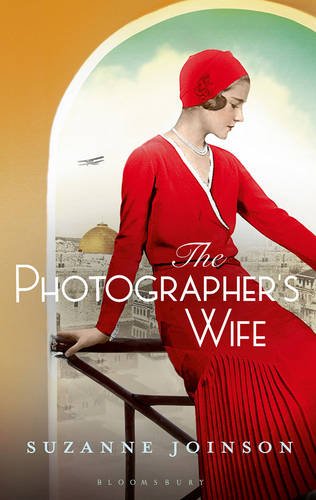
#BookReview ‘The Photographer’s Wife’ by Suzanne Joinson #historical

The smell and heat of Jerusalem rises off the page. Suzanne Joinson has travelled to, lived in and worked in a number of Middle East countries and this shows in The Photographer’s Wife. She creates a Jerusalem so vivid you can feel it on your skin. Suzanne JoinsonThis is the story of an eleven-year-old girl, Prue, as she grows up in 1920s Jerusalem with an absent mother and a father who lets her run wild, and the people she encounters. As a child she observes much, lurking in the shadows at her father’s parties. The political tensions swirl as the country recovers from the Great War and the next is anticipated.
Prue’s father, a city architect, employs a British pilot to overfly the area and provide him with reconnaissance photographs. In Jerusalem, the pilot Willie finds Eleanora, the girl he loved and lost in Britain before the Great War. Now his body bears the burn scars of his war, while she lives in Jerusalem and is married to an Arab photographer. So there are political tensions and romantic tensions, both underpinned by the use of photography to reveal or conceal the truth.
In the second strand of the story, Prue is an adult living in England, a sculptor and mother living in a beach hut at Shoreham. When an unexpected visitor arrives, what happened in Jerusalem is examined in detail. This novel is about truth, manipulation of the truth, and in particular the use of photography in the inter-war world of political influence and manipulation. It is not a spy novel, but it at its core is the rule of the British rule, the agitation of the nationalists, and the general exploitation of people for political ends.
What did Prue see and hear? What did she give her friend Ihsan? What is it that Willie wants when he visits Shoreham? And did everyone use eleven year old Prue for their own ends?
This novel demands patience and I think will reward re-reading, some subtle plot points passed me by and so I never fully bought-into the tension at the end. In places it seemed unnecessarily complicated with perhaps one or two characters too many. In particular, the title suggests the story is about Eleanora, but I wanted to read more about Prue. It is really her story so perhaps the title should be ‘The Architect’s Daughter.’

If you like this, try:-
Summertime’ by Vanessa Lafaye
The Dance Tree’ by Karen Millwood Hargrave
The Rose Garden’ by Tracy Rees

And if you’d like to tweet a link to THIS post, here’s my suggested tweet:
#BookReview THE PHOTOGRAPHER’S WIFE by Suzanne Joinson http://wp.me/p5gEM4-1Z3 via @SandraDanby

#FirstEdition ‘Pride and Prejudice’ by #JaneAusten #books #old books #classics

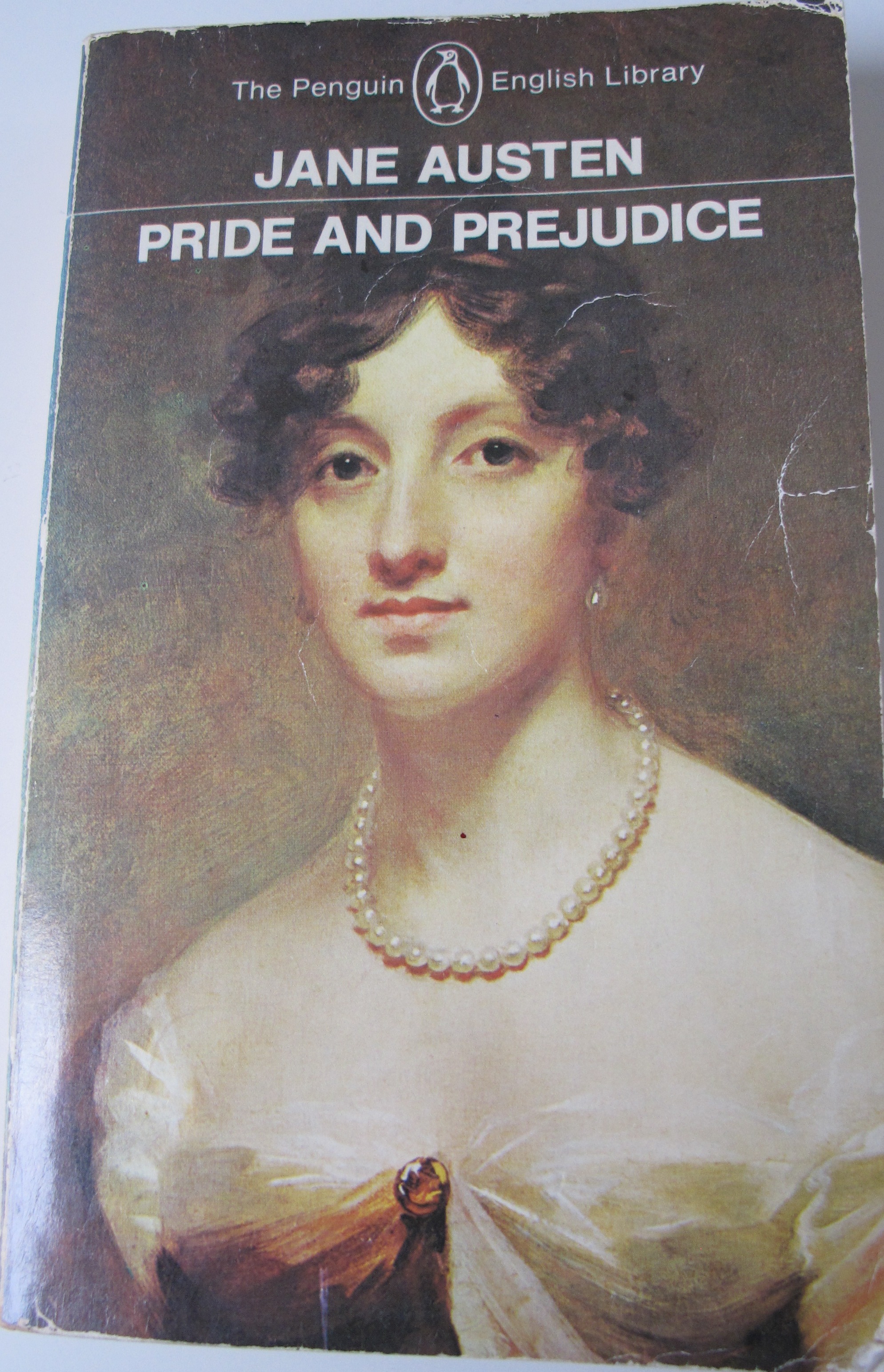
I can’t remember the first time I read Pride and Prejudice. I read Emma at the age of 17 as part of my English Literature syllabus, my battered copy is dated August 1977 when I was 16. My copy of Pride and Prejudice [below] is dated January 1980 and was bought in my first year at university. Jane Austen
The story
Is this the most well-known story? Young woman meets young man, each dislikes the other on sight and are therefore destined to fall in love. But along the way, Jane Austen offers us a study of manners, a humorous portrait of a family of girls who have no fortune of their own and therefore must make a fortunate match. The first sentence is one of the most quoted: ‘It is a truth universally acknowledged, that a single man in possession of a good fortune, must be in want of a wife.’ But this is so much more than a romance. And there are so many editions, see some below.

The film
For me, the best dramatic version of the book is the UK television series, broadcast in 1995 [below]. Featuring a young Colin Firth as Mr Darcy, it is famous for its ‘wet shirt’ scene. I prefer Jennifer Ehle as Lizzie Bennet, rather than Keira Knightly in the 2005 film version.

I also have a soft spot for the 1940 Hollywood version [below] featuring Laurence Olivier and Greer Garson. It starts on a cheerful note, ‘It happened in OLD ENGLAND… in the village of Meryton…’ The capitals are as featured in the credits of the film.

The first edition
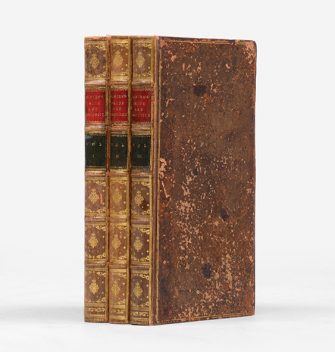
Jane AustenThe first editions cost a fortune. This one, in three volumes, is described by seller Peter Harrington as ‘By the author of Sense and Sensibility’ and is priced at £87,500. It was first offered by her father, then titled First Impressions, to Thomas Cadell in 1797 who declined it without seeing the manuscript. It was published in 1813 in London by T Egerton. Here’s the title page. Jane Austen

If you like old books, check out these:-
‘Watership Down’ by Richard Adams
‘Alice’s Adventures in Wonderland’ by Lewis Carroll
‘The Hobbit’ by JRR Tolkein

And if you’d like to tweet a link to THIS post, here’s my suggested tweet:
#FirstEdition #books PRIDE AND PREJUDICE by Jane Austen #oldbooks via @SandraDanby http://wp.me/p5gEM4-2gO

#BookReview ‘The Lost Ancestor’ by Nathan Dylan Goodwin #familyhistory #crime #genealogy

When forensic genealogist Morton Farrier is asked by a dying client to find out what happened to his great aunt, who disappeared in 1911, Morton doesn’t expect to find his own life threatened. The Lost Ancestor by Nathan Dylan Goodwin is a moreish combination of mystery, history about the pre-Great War period, and family history research. Nathan Dylan GoodwinIf you like Downton Abbey, you will identify with the 1911 sections about Morton’s great aunt Mary Mercer. In an effort to escape her rough, unemployed father and unpleasant mother, Mary takes a job as third housemaid at Blackfriars, a great house at Winchelsea in East Sussex. Little does she realize the love and heartache she finds there will shape her life. A dreamer who imagines she is the lady of the house, Mary has a rude awakening on her first day at work. She had no idea what the job of a chambermaid entailed. But the presence of her cousin Edward makes life easier to bear. When her parents fall ill, Mary gives them all her wages and so loses her chances of escaping to a better life.
Goodwin knows the Winchelsea and Rye area so well that I immediately felt I was there. His descriptions of Rye, where Morton lives and work, feel real: the streets, the old houses, and the Mermaid Inn are described with a light pen.
The story is told in two strands. Morton searches online and at local archives, and visits the real Blackfriars house, now open to the public. This story alternates with Mary’s in 1911. Goodwin weaves the two tales together so as we get nearer to the truth of Mary’s disappearance and why her mentions in all official records stop – did she die, was she killed, did she change her name and run away to Scotland, or emigrate – the threats on Morton’s life, and that of his partner Juliette, get serious. The mystery in both strands build as the family connections between past and present are revealed. I did not forsee the ingenious ending.
The Morton Farrier books are excellent. Although the cover designs are a little old-fashioned, don’t let this put you off reading them.

Read my reviews of the next books in the Morton Farrier series:-
HIDING THE PAST #1MORTONFARRIER
THE ORANGE LILIES #3MORTONFARRIER
THE AMERICA GROUND #4MORTONFARRIER

If you like this, try:-
Fred’s Funeral’ by Sandy Day
‘Deadly Descent’ by Charlotte Hinger
‘The Marriage Certificate’ by Stephen Molyneux

And if you’d like to tweet a link to THIS post, here’s my suggested tweet:
#BookReview THE LOST ANCESTOR by Nathan Dylan Goodwin http://wp.me/p5gEM4-2iM via @SandraDanby