Category Archives: book reviews

First Edition: Jane Eyre

Is there a more iconic novel than Jane Eyre by Charlotte Bronte? Beloved by generations of teenage girls who identify with the eponymous Jane, her suffering, her fortitude and generosity, Jane Eyre also plays a key role in the acceptance of female authors. Bronte famously submitted the novel to her publisher under the pseudonym Currer Bell.

First editions of Jane Eyre by Currer Bell are available rarely for sale. See [above] the title page of the first issue which did not include a preface by the author, something remedied in the second edition; you can read the preface here, the book is held by the British Library. The most recent sale of a first edition [above] was at Bonhams, London in 2013 for £39,650. Jane Eyre

A three-volume edition published by London, Smith Elder & Co [above], available at Peter Harrington, is for sale [at time of going to press] for £4,500. This is a third edition; given the popularity of the novel when it was first published, around October 19, 1847, it was quickly followed by second and third editions on January 22, 1848 and April 15, 1848 respectively. This particular edition attracts a high price as there are a number of typographical errors that make it unique.

Another example of how a printer’s error can boost the price of a book is the 2012 Penguin Classics edition [below] which is wrongly credited on the spine as being written by Emily Bronte. At the time of going to press, this hardcover edition was for sale at Amazon for £199.99.

The story
When the novel starts, Jane is 10 and living with her maternal uncle’s family. Her uncle has since died. Mistreated by her relatives, Jane’s only comfort is a doll and some books. She is sent to Lowood Institution, a charity school for girls. The life at Lowood is harsh but Jane makes a friend, Helen Burns. During an outbreak of tuberculosis, Helen dies and the director’s maltreatment of the girls is discovered; conditions subsequently improve. On leaving Lowood, Jane secures a position as governess at Thornfield Hall to the ward of the mysterious Mr Rochester.

The film
Many film and television versions of Jane Eyre have been made, starting in 1910 with a silent movie [below] produced by the Thanhouser Company and starring Marie Eline as Jane and Frank H Crane as Mr Rochester. Unfortunately the reel of this is presumed lost. Jane Eyre
The most recent adaptation in 2011 starred Michael Fassbender and Mia Wasikowska. Watch the trailer hereJane Eyre

Other editions

Jane Eyre
‘Jane Eyre’ by Charlotte Bronte [UK: Penguin Classics]

If you like old books, check out these:-
‘Jurassic Park’ by Michael Crichton
‘The Hobbit’ by JRR Tolkein
‘An Ice Cream War’ by William Boyd

And if you’d like to tweet a link to THIS post, here’s my suggested tweet:
First Edition: JANE EYRE by Charlotte Bronte #oldbooks https://wp.me/p5gEM4-37V via @SandraDanby
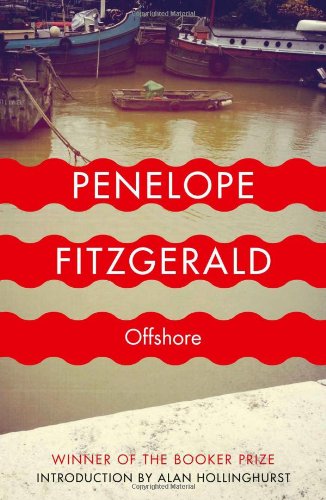
#BookReview ‘Offshore’ by Penelope Fitzgerald #contemporary

This is a slim, powerful novel about a small community of people living on houseboats on the River Thames at Battersea Reach in 1960s London. Anchored on the southern shore, next to the warehouses, brewery and rubbish disposal centre, they long to be positioned on the prosperous Chelsea shore opposite. In Offshore, Penelope Fitzgerald draws you into the world of Dreadnought, Grace, Maurice, Lord Jim and Rochester – those are the boats – and their occupants. Penelope FitzgeraldThey live in close, intimate proximity as the boats are tied to each other, only one is fastened to the wharf. Despite this, each person lives in an individual island of loneliness caused by marriage, poverty, sexuality, or just being different. Their lives are governed by tidal movement. ‘On every barge on the Reach a very faint ominous tap, no louder than the door of a cupboard shutting, would be followed by louder ones from every strake, timber and weatherboard, a fusillade of thunderous creaking, and even groans that seemed human. The crazy old vessels, riding high in the water without cargo, awaited their owner’s return.’
The people are inter-dependent but don’t know it until a crisis happens. The catalyst is Nenna, a young mother separated from her husband. She lives on Grace with her two children, Tilda and Martha, who run wild in the mud. One day, when they find antique painted tiles and sell them at an antiques shop on King’s Road, the two children seem more mature and capable than their mother. Nenna’s neighbours act as counsellors, offering marriage advice, boat help, and babysitting services. Richard, the de facto leader of the boat community, worries that his wife is bored and wants to retire to a house advertised in Country Life magazine. Meanwhile Willis, a struggling artist, who lives on Dreadnought, has a leak. This endangers his plan to sell the boat.
A beautifully-written thoughtful novel showing how very different people can rub along together.
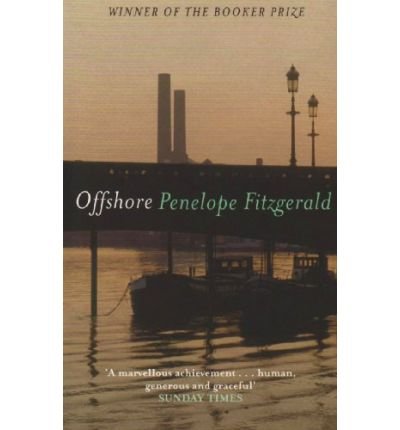
Offshore won the Booker Prize in 1979, a year sandwiched between Iris Murdoch in 1978 for The Sea The Sea, and Rites of Passage by William Golding in 1980. Fitzgerald had been shortlisted the previous year for The Bookshop and would be again in 1988 with The Beginning of Spring. What a golden time that was. Penelope FitzgeraldMy paperback copy of Offshore [above] is an old Fourth Estate edition with a moody photo of the River Thames at dusk.

Read my review of THE BLUE FLOWER, also by Penelope Fitzgerald.

If you like this, try these other Booker-winning novelists:-
Life Class’ by Pat Barker [won the Booker in 1995 with ‘The Ghost Road’]
Mothering Sunday’ by Graham Swift [won the Booker in 1996 for ‘Last Orders’]
The Children Act’ by Ian McEwan [won the Booker in 1998 with ‘Amsterdam’]

And if you’d like to tweet a link to THIS post, here’s my suggested tweet:
#BookReview OFFSHORE by Penelope Fitzgerald via @SandraDanby http://wp.me/p5gEM4-2n2

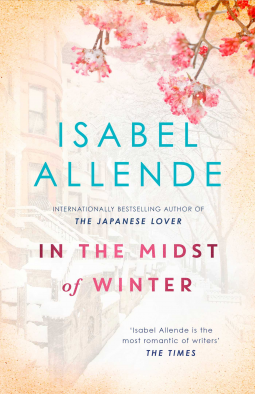
#BookReview ‘In the Midst of Winter’ by Isabel Allende #contemporary

In the Midst of Winter by Isabel Allende is the story of three ordinary-looking people, people you would not glance at if you passed by them in the street, and their extra-ordinary lives. Each has faced loss and trauma, each feels isolated, lonely. Isabel AllendeLaced throughout this deceptive novel are themes of dislocation, grief, human trafficking and the courage to free oneself of these bonds. Set in modern-day Brooklyn and Guatemala, and 1970s Chile and Brazil, it is the story of people relocated thousands of miles away from family to new countries with strange languages and customs where against the odds they must begin a new life.
Richard, Lucia and Evelyn are thrown together in Brooklyn, New York, during a momentous snowstorm. Evelyn, a young illegal immigrant from Guatemala, borrows her employer’s car and in the storm crashes into Richard. Richard is in his sixties, a loner, aesthete and reformed alcoholic, he lives his life according to routine. But when the car crash upsets his rigid ordered life, he is forced to halt his almost OCD existence and do unpredictable, often rash, things. When Evelyn turns up on his doorstep, hours after the crash, he is unable to understand her Spanish and asks Lucia, university colleague and tenant of the basement flat of his freezing cold Brooklyn brownstone, to come upstairs and help him with the hysterical girl.
The reason for Evelyn’s hysteria becomes clear the next morning. What they choose to do next constitutes In the Midst of Winter. It is a road trip with a difference as the trio set off in convoy in two cars, into a snowstorm, with a task to complete. Their choice dominates the book and, though I found it well-meaning, it seemed emotional and impractical. The journey is the technique by which Allende tells their stories; each is an unburdening, a confession of their guilt, shame, offences and regrets. I lost myself in each of these stories and came back to the modern day strand with a clunk, as I remembered the choice these three people made. It feels surrealistic, as if their horrific ‘problem’ [the reason for the road trip] doesn’t exist. The writing is beautiful, particularly the description of snow, though the stories of abuse are harrowing.
Essentially Allende tells two stories – the accident; and the historical stories of Richard, Lucia and Evelyn. They start as strangers and by the end of the trip they have shared more than a car, their experience bonds them together and shows them a life different from their own. The snowstorm has a double effect. It acts as a vacuum in which the outside world has zero presence, in which these three strangers must react to their discovery and decide what action to take. Perhaps this explains their out-of-the-real-world decision. It also focuses a magnifying glass on each individual as they confess their story, sometimes for the first time, offering themselves up to the other two strangers for rejection or redemption. In the first half I got the backstories of Lucia and Evelyn confused, but as the story went on this became clearer.
This is an unusual story exploring how ordinary people are affected by legal and illegal immigration from South America to the United States, of gang violence, trafficking and exploitation, of the American immigration rules, and of the perils of living outside the law. Which is a lot to handle in one novel. But most of all, it is the story of three people and how they struggle to overcome the challenges which life presents to them, finding friendship at the end.

If you like this, try:-
‘Crow Blue’ by Adriana Lisboa
‘Something to Hide’ by Deborah Moggach
‘Summer House with Swimming Pool’ by Herman Kock

And if you’d like to tweet a link to THIS post, here’s my suggested tweet:
#BookReview IN THE MIDST OF WINTER by Isabel Allende https://wp.me/p5gEM4-36C via @SandraDanby

My Porridge & Cream read: RV Biggs

Today I’m delighted to welcome mystery writer RV Biggs. His ‘Porridge & Cream’ read is Wind in the Willows by Kenneth Grahame.

“I first read the book as a child, which is a very long time ago, so would be in the 1960s. I’d hazard a guess at 1966 when I was nine or ten years old and probably as a book we were given to read at school. I recall having my own hardbound copy a little later, given to me as a present, but one of my uncles borrowed it to read to my cousin. After a while I never saw it again. Many, many years later my sister-in-law brought me a new hardbound copy as a birthday present and this is the copy I still have. RV Biggs

“I’ve read Wind in the Willows many times over the years and mostly when nothing else seems to appeal. It draws me in because of the childhood magic of it… animals having adventures… the Wild Wood… but also because of the setting and style. Kenneth Grahame describes the landscapes with exquisite perfection, setting the scenes of the seasons so that I’m there… inside his world. I believe that the description of Mole’s utter grief in chapter 5, Dulce Domum, when he rediscovers his home, and the ethereal magic within chapter 7, The Piper at the Gates of Dawn, when Mole and Ratty go in search of the baby Otter, may well be partly responsible for my own need to build description into my own writing when setting a scene.

“All in all Wind if the Willows is a magic childhood world into which I think I’ll lose myself once more very soon.”

Rob’s Elevator Pitch for Wind if the Willows: Along the margins of the river, and deep within the trackless woods, a hidden world of magic unfolds.

RV Biggs’ Bio
RV Biggs lives in the West Midlands, England. His heart however lies north of the border, where the world becomes wide and wild and less turbulent. Robert’s imagination was shaped in childhood by such stories as The Wind in the Willows and Lord of the Rings, but only turned to creativity decades later when in the quiet moments before sleep, song lyrics triggered an idea which turned into an obsession. The result was his first novel Song of the Robin, a tale of destiny and family. A sequel is scheduled to be released during 2018. Working within the telecommunications industry for thirty five years, Robert now works for a children’s hospital helping to provide Mental Health services.

RV Biggs’ links
Facebook
Twitter

RV Biggs’ latest book
RV BiggsSong of the Robin is a tale of destiny and love, tragedy and joy. The story of a young woman’s weeklong struggle for survival amidst whispered voices, unsettling dreams and disturbing visions.
‘Song of the Robin’ by RV Biggs [UK: RV Biggs]

What is a ‘Porridge & Cream’ book? It’s the book you turn to when you need a familiar read, when you are tired, ill, or out-of-sorts, where you know the story and love it. Where reading it is like slipping on your oldest, scruffiest slippers after walking for miles. Where does the name ‘Porridge & Cream’ come from? Cat Deerborn is a character in Susan Hill’s ‘Simon Serrailler’ detective series. Cat is a hard-worked GP, a widow with two children and she struggles from day-to-day. One night, after a particularly difficult day, she needs something familiar to read. From her bookshelf she selects ‘Love in A Cold Climate’ by Nancy Mitford. Do you have a favourite read which you return to again and again? If so, please send me a message here.

RV Biggs


‘Wind in the Willows’ by Kenneth Grahame [UK: Oxford Children’s Classics]

Discover the ‘Porridge & Cream’ books of these authors:-
Laura Wilkinson
JG Harlond
Shelley Weiner

And if you’d like to tweet a link to THIS post, here’s my suggested tweet:
Why does mystery writer @RVBiggs lose himself in WIND IN THE WILLOWS by Kenneth Grahame? #books https://wp.me/p5gEM4-3j8 via @SandraDanby

SaveSave

SaveSave

SaveSave

SaveSave

#BookReview ‘The Heart’s Invisible Furies’ by @JohnBoyneBooks #historical #Ireland

From the first sentence I was entranced. The Heart’s Invisible Furies by John Boyne starts with such an opening sentence, full of conflict, hypocrisy, resentment and hope, it made me want to gobble up the pages and not put the book down. I wasn’t disappointed. John BoyneThe Heart’s Invisible Furies is the life story of one man, Cyril Avery, but also of a country and its attitudes to sexuality. The story starts in Goleen, Ireland, in 1945; a country riven by loyalty to, and hatred of, the British, at the same time in thrall to its Catholic priests whose rules were hypocritical, illogical and cruel. Cyril narrates his story, starting with how his 16-year old mother was denounced in church by the family priest for being single and pregnant. She was thrown out of church and village by the priest and disowned by her family. On the train to Dublin she meets a teenager, Sean, also heading for the big city. Wanting to help someone so obviously alone, Sean offers to let Catherine stay at his digs until she finds lodging and a job. These first friends she make are some of the most important in her life, and re-appear at important times also in Cyril’s life. Catherine gives birth and, as she carefully arranged, her baby is taken by a nun and placed with a waiting adoptive family. We the readers therefore know the identity and story of Cyril’s birth mother from page one; he doesn’t. As he grows from quiet boy to quiet teenager, falling in love at the age of seven with Julian, Cyril begins to lead a life of lies and shame forced on him by Ireland’s attitude to homosexuality and his inability to be true to himself. Cyril negotiates the first 30 years of his life, trapped between lying in order to stay safe or being truthful and getting arrested. Then he finds himself at the marriage altar. What happens next changes his life in so many ways, ways in which don’t become fully apparent until the last third of the novel.
This could be a depressing novel. It isn’t. It is charming and funny, but can turn on a sixpence and make you gasp with anger, despair or sadness. The characterisation is masterful. I particularly enjoyed Cyril’s adoptive mother Maude Avery, a chain-smoking novelist who detests the growing popularity of her books; his adoptive father Charles Avery who starts off being an awful snob with a talent for unintentional insults; and Mrs Goggin, who runs the tearoom at the Irish parliament with a rod of iron.
I loved this book. Honest, sad, laugh-out-loud funny, touching, with paragraphs I just had to read out aloud to my husband. It is about being true to yourself, the need for honesty in relationships, and the power of love. My favourite book of the year so far.

Read the first paragraph of THE HEART’S INVISIBLE FURIES.

Read my reviews of these other novels by John Boyne:-
A HISTORY OF LONELINESS
A LADDER TO THE SKY
A TRAVELLER AT THE GATES OF WISDOM
ALL THE BROKEN PLACES
STAY WHERE YOU ARE & THEN LEAVE
WATER #1ELEMENTS
EARTH #2ELEMENTS

If you like this, try:-
‘A Little Life’ by Hanya Yanagihara
‘How to be Both’ by Ali Smith
‘Tipping the Velvet’ by Sarah Waters

And if you’d like to tweet a link to THIS post, here’s my suggested tweet:
#BookReview THE HEART’S INVISIBLE FURIES by @JohnBoyneBooks https://wp.me/p5gEM4-3iJ via @SandraDanby

#BookReview ‘Blow Your House Down’ by Pat Barker #thriller

The words that immediately come to mind after finishing Blow Your House Down by Pat Barker are negative: unflinching, bleak, dark and depressing. This is a dark story of the women preyed upon by a killer, women living on the edge, surviving by selling their bodies to men at a time when prostitutes are being murdered. But other words also came to mind as I dwelled on the book afterwards: friendship, community, solidarity, defiance, vulnerability, strength. Slim, I read it in one sitting on a rainy afternoon, this is a powerful, compelling read. It pulls you into the women’s stories, makes you feel at one with them. Pat BarkerBlow Your House Down is set in a Northern Town in the 1980s. The timing and setting draw inevitable links with the Yorkshire Ripper who preyed on prostitutes and lone women in the north and was arrested and convicted in 1981. Frightened but driven by the need for rent money or to feed their children, the women continue to walk the streets as the face of one of their own, Kath, the killer’s latest victim, looks down at them from a giant poster. The detail of their ordinary lives is described, starting with Brenda who settles her daughters in bed in preparation to going out with her friend Audrey. Their first call is the Palmerston, the pub where the women gather for a drink before going out onto the streets as a pair. There is a camaraderie, a spirit of just-get-on-with-it. We see some of Brenda’s back story, how she tried working at the nearby chicken factory where the women sing to cope with their grizzly job, how she has been let down by men and is trying to manage on her own.
Barker shows no sentimentality for the women, she describes their lives simply and allows the characters to elicit the reader’s sympathy. Like the chickens lined up on the production line, the women walk up and down the streets, trying to support each other by taking note of number plates. The police sit by, watching, using the women as bait to catch the killer. The men have no voice, they are portrayed as liars, weak and pathetic, except for one whose breath smells of the violet sweets he eats.
“You do a lot of walking in this job. More than you might think. In fact, when I get to the end of a busy Saturday night, it’s me feet that ache. There, that surprised you, didn’t it?” Part 3 starts with Jean, whose lover Carol, thought to have gone to London, has been identified as the latest victim. Jean sets out to entrap the killer. “I want to catch the bastard more than most.”
The language is unstinting and graphic, particularly of the sex scenes. The women’s dialogue is in the vernacular which makes them feel real. The tension rises as you wonder which woman will be killed next; each time a women gets into a car with a stranger you think ‘is it him?’ and this drives you to read on.
An accomplished novel published in 1984, it is difficult to appreciate this was only Barker’s second novel. Read it, you will not forget it.

For my reviews of other Pat Barker novels, click the title below:-
ANOTHER WORLD
DOUBLE VISION
LIFE CLASS #1LIFECLASS
TOBY’S ROOM #2LIFECLASS
NOONDAY #3LIFECLASS
THE SILENCE OF THE GIRLS
THE WOMEN OF TROY
UNION STREET

If you like this, try:-
‘The Fair Fight’ by Anna Freeman
‘The Taxidermist’s Daughter’ by Kate Mosse
‘The Killing Lessons’ by Saul Black

And if you’d like to tweet a link to THIS post, here’s my suggested tweet:
#BookReview BLOW YOUR HOUSE DOWN by Pat Barker https://wp.me/p5gEM4-3e6 via @SandraDanby

#BookReview ‘The Hoarder’ by Jess Kidd #mystery #contemporary

Part crime-mystery, part mystical ghost story, The Hoarder, the second novel by Jess Kidd, is difficult to define. Maud Drennan is an irreverent Irish carer who has been assigned the unholy task of bringing order to the life of Cathal Flood, a cantankerous old man who lives with his cats in a decrepit house surrounded by piles of rubbish. The previous carer who did Maud’s job, was run off the scene. Amongst the piles of junk, though, are ghosts of Cathal’s past, clues to the disappearance of one maybe two women, and traps for Maud to fall into. Jess KiddThis is at times a bewildering smorgasbord of imagery and description, there were times when I wanted to shout ‘give me a breather’ but the humour of Maud kept me reading. There are some giant character arcs to work through, both Maud and Cathal change and change again, not to mention Maud’s glorious cross-dressing neighbour Renata. To add to the merry-go-round of confusion, Maud is followed around in her daily life by a collection of ghosts, Irish saints that she learned about in a childhood book. Each saint passes comment on Maud’s actions adding a hilarious Greek Chorus effect to the story. Maud, egged on by the agoraphobic Renata, starts to look for ways of breaching the walls of rubbish which Cathal has built around himself and his private section of his old home, Bridlemere. When she does creep through, she encounters a dusty spooky world of collectibles, automata and gruesome collections which add to the feeling that secrets are hidden somewhere in the house.
The action steps up a gear when Maud’s predecessor Sam Hebden, the carer hounded off the property by Cathal, reappears. As well as flirting with Maud, he simultaneously encourages and discourages her from her detecting. Clues appear after dreams or apparitions, at times I was unclear, and Maud stumbles onwards unsure who to trust. Cathal may be old, but he is also cunning, clever and warm. When a man turns up claiming to be Gabriel Flood, Cathal’s son, the old man protests he is a villain. There is also a rather unpleasant case manager, Biba Morel. Quite a lot of the time, I didn’t know who to believe. The story is set in London but Maud’s strong Irish voice could lead you to think you are in Ireland.
So, this is a crime mystery that is not really about a crime, rather it is about Cathal and Maud and how their pasts cannot be ignored. Cathal, who tries to barricade himself in his house, away from modern life; and Maud, who is haunted by the childhood disappearance of her sister; are both characters adrift. I loved Kidd’s debut, Himself and enjoyed The Hoarder though I wish the frenetic storytelling could be toned down a notch or two.

And see my reviews of these two other novels by Jess Kidd:-
HIMSELF
THE NIGHT SHIP

If you like this, try:-
‘The Good People’ by Hannah Kent
‘Elizabeth is Missing’ by Emma Healey
‘The Ghost of Lily Painter’ by Caitlin Davies

And if you’d like to tweet a link to THIS post, here’s my suggested tweet:
#BookReview THE HOARDER by Jess Kidd https://wp.me/p5gEM4-36p via @SandraDanby

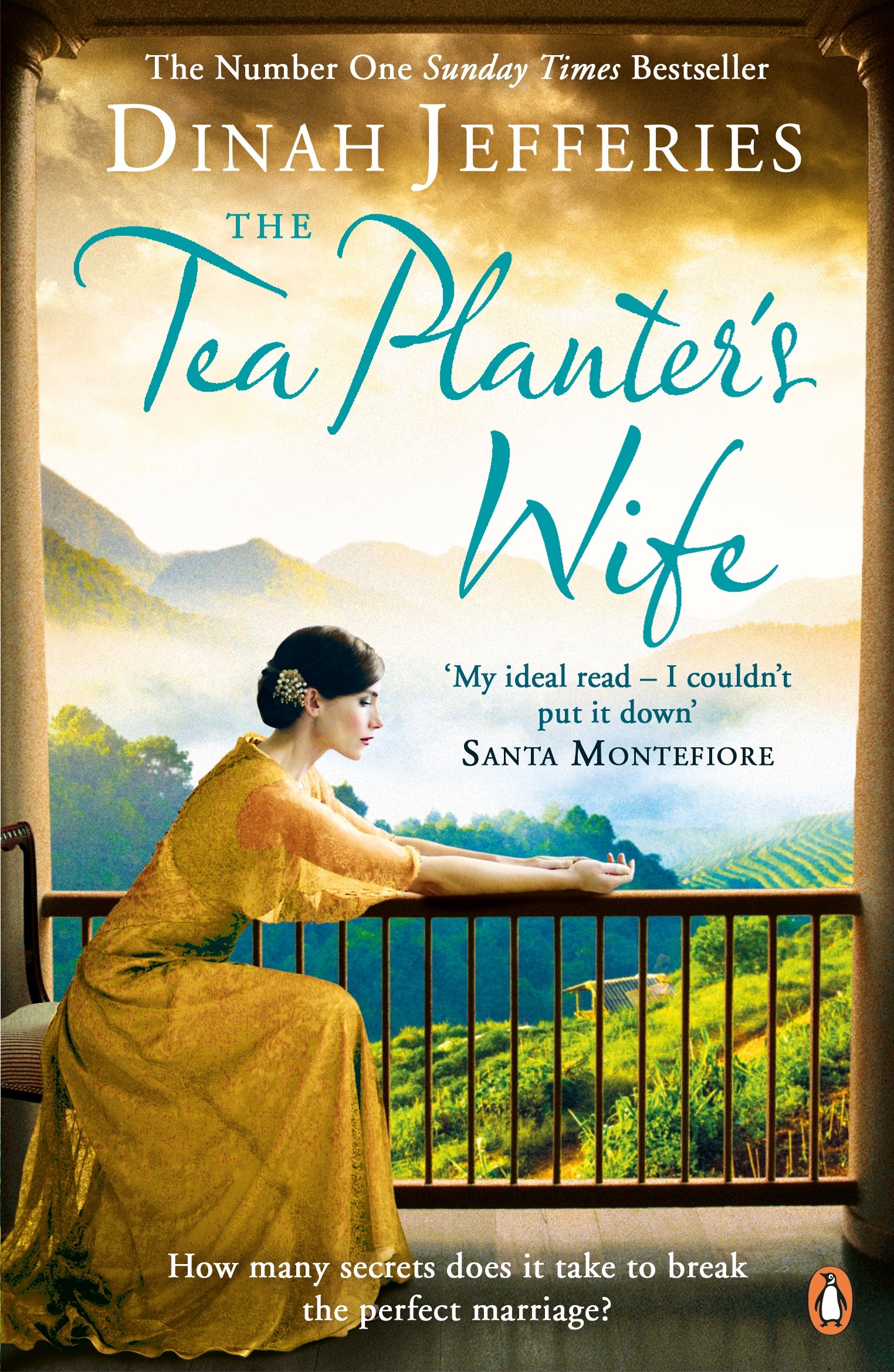
#BookReview ‘The Tea Planter’s Wife’ by Dinah Jefferies @DinahJefferies #romance

In Ceylon, between the First and Second World Wars, pre-Independence, a young wife arrives from England to join her new husband on his tea plantation. The Tea Planter’s Wife by Dinah Jefferies is a portrayal of an island riven by racial differences, a marriage riven by an inability to be honest, concluding that in the end skin colour should not matter. Dinah JefferiesAs her ship from England docks in Colombo, Gwen Hooper feels faint and is helped by a charming dark-skinned man. This is our introduction to Savi Ravasinghe, a pivotal character, a Sinhalese portrait painter who paints the rich in Ceylon, England and America. At this first meeting, Gwen demonstrates her naivety of racial tensions between Ceylon’s native Sinhalese population and the Tamil workers brought to the island by the British tea planters to work on the plantations. Soon after, trying to help an injured worker, she tramples over old sensitivities and the Raj way of doing things. I found Gwen both fascinating and a little irritating. The story is told totally from her viewpoint and, for me, her husband Laurence is rather remote. When Gwen gives birth to twins, the first, a boy, is christened Hugh. The second is a dark-skinned girl. In fear of accusations of infidelity with Savi, and rejection by her husband, Gwen panics. Her ayah Naveena takes the child to be cared for in a nearby village. Conveniently, the birth took place with only the ayah present so secrecy is assured. But Gwen lives on, haunted by her lies to her husband and her failings to her daughter.
This story hangs on the premise that Gwen feels unable to question her husband about the death of his first wife and child. When we finally get the answer in the last few pages, it seems obvious. Except of course the book is set in the late 1920s early 1930s so though obvious to a modern reader, it would not be widely known or understood at that time. To say more would give away the plot. This aside, I enjoyed this fragrant tale of the Hooper tea plantation, the difficulties faced after the Wall Street Crash, the changing times, the fashions and foods. There is a particularly unlikeable sister-in-law Verity, American vamp Christina, and bright and charming cousin-from-home Fran. The story felt alive in Ceylon. Jefferies cultivates a believable world from another time w ith the scents of cinnamon, sandalwood and jasmine combined with bullock dung, grease and rotting fish, servants dressed in white, and glamorous balls danced to the music of jazz. In contrast the short section in New York when Laurence and Gwen meet bankers and advertising men to launch the Hoopers Tea brand, seems remote and it was a relief to return to the lushness and complications of Ceylon.

And here are my reviews of some of Dinah Jefferies’ other novels:-
DAUGHTERS OF WAR #1DAUGHTERSOFWAR
THE HIDDEN PALACE #2DAUGHTERSOFWAR
NIGHT TRAIN TO MARRAKECH #3DAUGHTERSOFWAR

And these standalone novels:-
THE SAPPHIRE WIDOW
THE TUSCAN CONTESSA

If you like this, try these:-
‘The Gift of Rain’ by Tan Twan Eng
‘A Mother’s Secret’ by Renita d’Silva
‘The Garden of Evening Mists’ by Tan Twan Eng

And if you’d like to tweet a link to THIS post, here’s my suggested tweet:
#BookReviewTHE TEA PLANTER’S WIFE Dinah Jefferies @DinahJefferies http://wp.me/p5gEM4-2Rh via @SandraDanby

First Edition: Jurassic Park

First published in the USA on November 20, 1990, Jurassic Park by Michael Crichton would, like HG Wells and Jules Verne, bring science fiction to the masses and to the movie screen. The book actually started life as a screenplay written in 1983 in which a graduate student creates a dinosaur. Then, given the fact that genetic research is expensive and there was no need to create a dinosaur, Crichton changed the story so the dinosaurs were made to put into an entertaining wildlife park. Another thing changed from first to final draft was the point of view: originally it was told from a child’s viewpoint, but Crichton changed it when everyone who read the draft felt it would be better told by an adult.

A signed US 1st edition [above] is for sale [at time of going to press] on eBay for $225. Read more about the first edition of the 1991 UK hardback edition [below] published by Century at Biblio. Michael Crichton

The story
Following strange animal attacks in Costa Rica and nearby island Isla Nublar, one of the animals involved is identified as an extinct dinosaur. Palaeontologist Alan Grant and paleobotanist Ellie Satler are asked to confirm this, but are whisked away by billionaire John Hammond to visit his nature reserve on Isla Nublar and calm his investors. Hammond’s park contains not lions and tigers but cloned dinosaurs. Fellow consultant, mathematician and chaos theorist Ian Malcolm, predicts the park will collapse into chaos.

The film
Released on June 9, 1993, the film of Jurassic Park by Steven Spielberg was a monumental success and has taken well over $1bn worldwide.Michael Crichton

The film closely follows the storyline of the book, though there are slight differences in some of the characters. Nedry is much the same, but both children have stronger roles in the film while Alan Grant in the novel is considerably scruffier than the movie version as played by Sam Neill. Watch the original film trailer here.

Other editions

Michael Crichton


‘Jurassic Park’ by Michael Crichton [UK: Arrow]

If you like old books, check out these:-
‘The Moonstone’ by Wilkie Collins
‘A Passage to India’ by EM Forster
‘The Sea The Sea’ by Iris Murdoch

And if you’d like to tweet a link to THIS post, here’s my suggested tweet:
First Edition: JURASSIC PARK by Michael Crichton #oldbooks https://wp.me/p5gEM4-37x via @SandraDanby

My Porridge & Cream read: Julie Christine Johnson

Today I’m delighted to welcome novelist Julie Christine Johnson. Her ‘Porridge & Cream’ read is Pride and Prejudice by Jane Austen.

“Several years ago I created an annual tradition for myself: in December, as the light fades earlier each day and I retreat from the expectations and demands of modern commercial holidays, longing only for the renewal of Solstice, I soothe my tired and cold spirit with a reread of a work by one of my most treasured authors, Jane Austen. Her six completed novels — Sense and Sensibility, Pride and Prejudice, Mansfield Park, Emma, Northanger Abbey, Persuasion — form a canon of comfort and delight on my bookshelves.

Julie Christine Johnson

Julie’s copy of ‘Pride and Prejudice’

Among all these timeless treasures, it is that charming and soulful comedy of manners, Pride and Prejudice, I most anticipate. Truthfully, I rotate it in every couple of years. Each time I read the opening line, “It is a truth universally acknowledged, that a single man in possession of a good fortune, must be in want of a wife” my entire being relaxes into a smile of familiarity and joy.

Pride and Prejudice is the story of intelligent, independent Elizabeth Bennet, the eldest daughter of five in a family of modest means, and the inscrutable and cranky Fitzwilliam Darcy, an aristocrat newly arrived in their Hertfordshire neighbourhood. In Regency England, class and manners rule the day, but between these two remarkable young people, love could overcome pride and prejudice if they could just get out of their own ways.

It is these characters, their vivacity, strong wills, and fabulous repartee, which enthral me anew each time. Austen’s crisp and vivid writing charms on the surface, but also reveals a darker side of Georgian society: the devastating effects of class consciousness, the subjugation of women, the travesty of the slave trade. I remain ever in awe of Jane Austen’s ability to craft a flawless narrative, and ever in love with Elizabeth and Mr Darcy.”

Julie Christine Johnson’s Bio
Julie is the award-winning author of the novels In Another Life (Sourcebooks, 2016) and The Crows of Beara (Ashland Creek Press, 2017). Her short stories and essays have appeared in several journals, including Emerge Literary Journal; Mud Season Review; Cirque: A Literary Journal of the North Pacific Rim; Cobalt; River Poets Journal, in the print anthologies Stories for Sendai; Up, Do: Flash Fiction by Women Writers; and Three Minus One: Stories of Love and Loss; and featured on the flash fiction podcast No Extra Words. She holds undergraduate degrees in French and Psychology and a Master’s in International Affairs. Julie leads writing workshops and seminars and offers story/developmental editing and writer coaching services. A hiker, yogi, and wine geek, Julie makes her home on the Olympic Peninsula of northwest Washington state.

Julie Christine Johnson’s links
Website
Facebook
Twitter
Goodreads
Pinterest

Julie Christine Johnson’s latest book
Julie Christine JohnsonWhen Annie Crowe travels from Seattle to a small Irish village to promote a new copper mine, her public relations career is hanging in the balance. Struggling to overcome her troubled past and a failing marriage, Annie is eager for a chance to rebuild her life. Yet when she arrives on the remote Beara Peninsula, Annie learns that the mine would encroach on the nesting ground of an endangered bird, the Red-billed Chough, and many in the community are fiercely protective of this wild place. Guided by ancient mythology and challenged by modern problems, Annie must confront the half-truths she has been sent to spread and the lies she has been telling herself. Most of all, she must open her heart to the healing power of this rugged land and its people. Beautifully crafted with environmental themes, a lyrical Irish setting, and a touch of magical realism, The Crows of Beara is a breathtaking novel of how the nature of place encompasses everything that we are.
‘The Crows of Beara’ by Julie Christine Johnson [UK: Ashland Creek Press]

What is a ‘Porridge & Cream’ book? It’s the book you turn to when you need a familiar read, when you are tired, ill, or out-of-sorts, where you know the story and love it. Where reading it is like slipping on your oldest, scruffiest slippers after walking for miles. Where does the name ‘Porridge & Cream’ come from? Cat Deerborn is a character in Susan Hill’s ‘Simon Serrailler’ detective series. Cat is a hard-worked GP, a widow with two children and she struggles from day-to-day. One night, after a particularly difficult day, she needs something familiar to read. From her bookshelf she selects ‘Love in A Cold Climate’ by Nancy Mitford. Do you have a favourite read which you return to again and again? If so, please send me a message here.

Julie Christine Johnson


‘Pride and Prejudice’ by Jane Austen [UK: Penguin Classics]

Discover the ‘Porridge & Cream’ books of these authors:-
Rosie Dean
Laura Wilkinson
Graeme Cumming

Read about some valued first editions of Pride and Prejudice here.

And if you’d like to tweet a link to THIS post, here’s my suggested tweet:
Why does author @JulieChristineJ re-read PRIDE AND PREJUDICE by Jane Austen? #books https://wp.me/p5gEM4-3id via @SandraDanby

SaveSave

SaveSave

SaveSave

SaveSave

SaveSave

SaveSave

SaveSave

SaveSave

SaveSave