Category Archives: book reviews

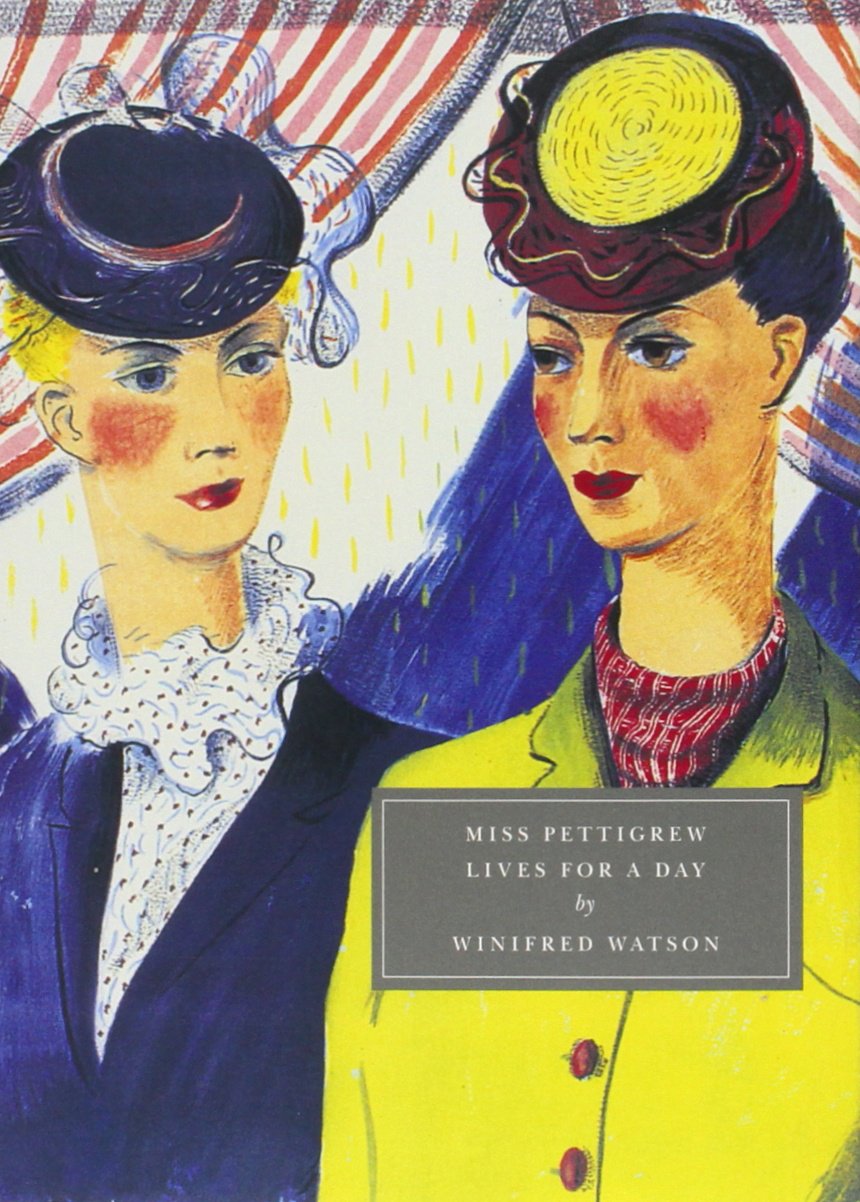
#BookReview ‘Miss Pettigrew Lives for a Day’ by Winifred Watson #historical

Why have I never heard of this book before? First published in 1938, Miss Pettigrew’s day starts when her employment agency sends her to the wrong address. What follows is twenty-four hours of epiphanies in which she learns about life, courtesy of a nightclub singer. Miss Pettigrew Lives for a Day by Winifred Watson was a revelation and has quickly claimed its place as one of my favourite novels. Winifred WatsonMiss Pettigrew is a governess, not a very good one, and finds herself forced to take jobs as a housemaid or looking after children she would rather not know. Then one day an error leads her to the apartment of Delysia LaFosse, a nightclub singer with a complicated love life. She tries to tell Miss LaFosse she has come about the job, but Miss LaFosse does not listen. As the story progresses, no children appear, but by now Miss Pettigrew is proving adept at solving Delysia’s small difficulties.
On the surface, this is a frothy story of gowns, flirting, lipstick, negligées and men, suitable and unsuitable. Beneath the surface, it is a novel about throwing away the bounds of class and venturing into the unknown. It is about taking a deep breath and being brave in order to change your life. I was rooting for Guinevere Pettigrew and was particularly pleased with the ending, as I am sure she was too.
My enjoyment of the novel was supplemented by gorgeous line drawings by Mary Thomsom in my Persephone edition.

If you like this, try:-
‘Angel’ by Elizabeth Taylor
‘Curtain Call’ by Anthony Quinn
‘A Death in the Dales’ by Frances Brody #7KateShackleton

And if you’d like to tweet a link to THIS post, here’s my suggested tweet:
#BookReview MISS PETTIGREW LIVES FOR A DAY by Winifred Watson http://wp.me/p5gEM4-2oe via @SandraDanby

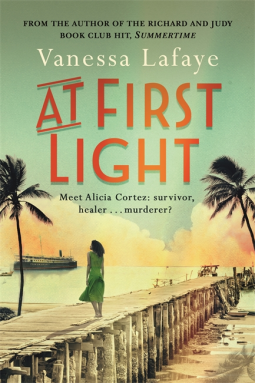
#BookReview ‘At First Light’ by Vanessa Lafaye #Florida #historical

Having loved Summertime, the debut novel of Florida-born Vanessa Lafaye, I was looking forward to reading At First Light. I was not disappointed. As with her first book, Florida in the period after the Great War is the setting. But the story starts with a bang in 1993 when an elderly Ku Klux Klan official is shot dead at a rally in Key West. The murderer is a 96-year old Cuban woman. At First Light is the story of Alicia Cortez. Vanessa LafayeThis is an intense story in many ways. Love, politics, racial hatred, prostitution and Prohibition. In 1919 Alicia arrives on a boat from Cuba, running from shame though for a while we don’t know the exact details. On the same day, John Morales disembarks from the troop ship which brought him from Europe where he fought with distinction in the Great War. Watching from the dock is fourteen-year-old Dwayne Campbell, who falls a little in love with Alicia, is in awe of John, and who becomes entangled in what is about to unfold. When John, a white man, a local man, is seen with a ‘brown’ stranger, Alicia, the newly established Klan of the Keys takes notice.
Although we know from page one that Alicia shoots someone, we do not know the identity of the victim. As she will not talk to the police, her motivation is unknown. So as the story of her arrival in Key West in 1919 unfolds, the guessing game begins as the Ku Klux Klan plans its attacks. This story segment takes place over a short few months and the speed at which events unfold is mesmerising. There are many thematic contrasts: the beauty of the location, the poverty and depravation; the global politics of war, the local politics run by corrupt men; the lack of women’s rights, the moral and emotional strength of women.
Inspired by a true story – the murder by the Ku Klux Klan of a white man in 1921 because he refused to end his relationship with a mixed-race woman – this is a novel about freedom. The freedoms fought for in war which are too often, and too rapidly, forgotten in daily life when hate is allowed to overcome tolerance and people become too quick to judge. And once a wrong is committed, who has the right to determine the nature of justice and how it should be implemented? Once the police cannot be trusted, the disintegration of society begins.
I read this book very quickly and didn’t want it to end. Second novels are often a disappointment, this one is not.

And here’s my review of SUMMERTIME, also by Vanessa Lafaye.

If you like this, try:-
‘The Ways of the World’ by Robert Goddard
‘Curtain Call’ by Anthony Quinn
‘Time Will Darken It’ by William Maxwell

And if you’d like to tweet a link to THIS post, here’s my suggested tweet:
#BookReview AT FIRST LIGHT by Vanessa Lafaye via @SandraDanby http://wp.me/p5gEM4-2zh

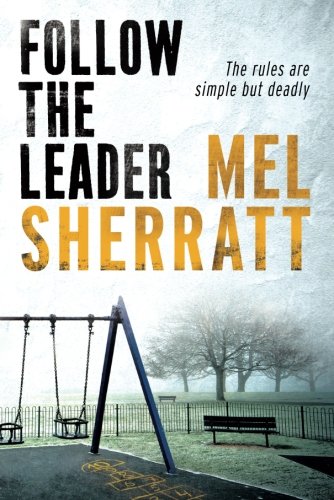
#BookReview ‘Follow the Leader’ by @writermels #crime

This police procedural is not about identifying the killer as the reader knows who it is from page one, but a chase against time. Will the police stop him before he completes his series of murders? Follow the Leader is the second in the DS Allie Shenton series by Mel Sherratt and, as well as being a story in its own right, it continues the thread of Allie’s story and of her sister Karen. So much so that the ending made me want to pick up book three and keep reading. Mel SherrattThe story is told in the present time from the viewpoint of the murderer, and Allie, plus flashbacks to schoolchildren in 1983. There is bullying, nastiness and violence at home. Patrick keeps his head down, hoping not to be noticed. Unfortunately for him, he has ‘victim’ written all over him. The schooldays segments are horribly realistic. The setting of Stoke-on-Trent is a critical part of this book and it is clear Sherratt is describing real places. The first body is found on the canal towpath. A man was walking his dog, in the same place, at the same time, as he always does. The next victim is a woman. Both have coloured magnetic letters left on the body.
The murders come thick and fast, the police are twisting and turning but the murderer has planned meticulously and remains one step ahead. There are many characters, most of which were at school in 1983, though the identities are muddled with the use of nicknames. As we see the former schoolfriends now, going about their daily life, we wonder who will be next.
Patrick is a difficult character to like or sympathize with despite his abusive childhood. Towards the end Sherratt does consider whether someone can change, can leave behind their violent past. Unfortunately the unthinking cruelty of teenagers to each other has consequences, but there is never an excuse for murder.
CLICK HERE TO READ MORE ABOUT THIS BOOK AT AMAZON

Read my reviews of more books in the Allie Shenton series:-
TAUNTING THE DEAD #1ALLIE SHENTON
ONLY THE BRAVE #3ALLIE SHENTON

If you like this, try:-
‘Good Me Bad Me’ by Ali Land
‘The Anarchist Detective’ by Jason Webster
‘Snow White Must Die’ by Nele Neuhaus

And if you’d like to tweet a link to THIS post, here’s my suggested tweet:
#BookReview FOLLOW THE LEADER by @writermels via @SandraDanby http://wp.me/p5gEM4-2v9

#BookReview ‘The Good People’ by @HannahFKent #historical #folklore

The Good People by Hannah Kent is a powerful second novel from a writer whose debut was outstanding. It is a tale of rural people in a poor community where superstition and folklore become entangled with one woman’s grief, with tragic results. Conflicting systems of thought come into play – folklore, religion, medicine and legal – and fail to make sense of what happens to Nóra Leahy. The power of the story lies not in black versus white, or logic and education versus peasant superstition, it lies in its characters. Hannah KentCounty Kerry, Ireland, 1826. An isolated village, where gossip goes around and around, where people survive on milk and potatoes and burn turf on the fire. A place where petty grievances are not forgotten, there is no money to pay the doctor, but there are still random acts of kindness. In such a poor community, what happens when the unthinkable happens, where the doctor and priest have no explanation or solution?
The Good People is based on true events, a court case which did happen. In the same year in which her daughter died, Nóra’s husband drops dead in the field leaving her alone to care for her four-year-old grandson Micheál. He cannot walk or speak and neither the doctor nor the priest can offer hope. So Nóra keeps him hidden from the village gossips in the fear that his deformities may be an indication of fairy interference. Unable to cope alone, Nóra employs 14-year-old Mary to milk the cow and fetch the water, and principally to care for Micheál. Soon Mary hears the whispers at the well, that the unnatural child of Nóra Leahy is to blame for the poor harvest, the hens not laying, the thin milk. So Nóra asks Nance Roche for help. Nance is the wise woman of the valley, she knows the plants, the cures, and she talks to the Good People… the fairies.
When Nance suggests the screaming, fitting, feeble child is not really Micheál but a changeling left in his place by the fairies, the three women become embroiled in cures to banish ‘the fairy’. The darkness of the cures attempted on a disabled and sick child is disturbing and, ultimately tragic. The events unfold slowly through the stories of Nóra, Mary and Nance. The writing is beautiful and every page is steeped in the folklore of rural Ireland, this bleak village where poor people live at the edge of survival. It is impossible not to connect with the three women, each so different, while at the time seeing the inevitability of what is to come.
A little historical context. In 1801 the Act of Union was enacted which ended a separate parliament in Dublin with government switching to Westminster. In 1823 in Ireland, Daniel O’Connell began to set up Catholic associations around the country, seeking a repeal of the Act of Union. In 1826 an ‘old woman of very advance age’ known as Anne/Nance Roche was indicted for the wilful murder of Michael Kelliher/Leahy at the summer Tralee assizes in Co. Kerry.
A compelling read.
CLICK HERE TO READ MORE ABOUT THIS BOOK

Read my reviews of Hannah Kent’s two other novels:-
BURIAL RITES
DEVOTION

If you like this, try:-
The Western Wind’ by Samantha Harvey
‘Master of Shadows’ by Neil Oliver
All the Birds, Singing’ by Evie Wyld

And if you’d like to tweet a link to THIS post, here’s my suggested tweet:
#BookReview THE GOOD PEOPLE by @HannahFKent via @SandraDanby http://wp.me/p5gEM4-2×7

#BookReview ‘The Stars are Fire’ by Anita Shreve #contemporary

I haven’t read anything by Anita Shreve for a very long time and I wonder why, because I thoroughly enjoyed The Stars are Fire. It is a fine example on how to write about someone experiencing difficult times, who is trapped and feels powerless, without being depressing. Anita Shreve It is 1947 and the summer heat is blazing. Then the heat turns to drought and the drought turns to wildfire. On the coast of Maine, Grace Holland, five months pregnant, without a car and at home with her two toddlers, must run as the fire threatens to engulf her village. Her husband Gene is with other men, making a fire break. Grace, with her best friend Rosie and her children, run from the fire, taking refuge overnight at the beach. The next morning, their houses are ash, their village is burned. They are homeless, penniless and, though Rosie’s husband returns, Gene doesn’t.
Grace must cope and in doing so she finds a new world opening up. A world which she had no idea existed. She becomes decisive and brave, she finds a home, a job and learns to drive. All of this validates her worth. With her mother, they fashion themselves a new life. But it is a life with a temporary feeling about it because Grace dare not think Gene is dead. Theirs was a difficult relationship, suffocating, Gene is an emotional bully. She revels in her new freedoms until one day everything she has built, the gains she have made, are lost. Her gamble backfires.
This is a woman’s story of its time, when men were the providers and expected their wives to fulfil their wifely duties. Grace and Gene married young because she was pregnant and this sets the tone for their marriage. His mother wanted better for Gene and has never welcomed Grace. Grace’s dissatisfaction with her claustrophobic life grows. Gene is a good provider but they have little emotional connection, and so Grace envies Rosie’s close and sensual relationship with her husband Tim.
Shreve’s writing style is simple and descriptive. Gene sometimes calls Grace ‘Dove’. “She has never been Gracie. Only Grace. And then Dove, with Gene. Grace doesn’t feel like a dove, and she’s sure she doesn’t look anything like a dove, but she knows there’s a sweetness in the nickname. She wonders if it means something that she doesn’t have a fond or funny name for her husband.” The story is told, however, from Grace’s viewpoint. Gene’s thoughts are left unsaid.

If you like this, try:-
‘We Are Water’ by Wally Lamb
‘The Photographer’s Wife’ by Suzanne Joinson
‘Did You Ever Have a Family’ by Bill Clegg

And if you’d like to tweet a link to THIS post, here’s my suggested tweet:
#BookReview THE STARS ARE FIRE by Anita Shreve via @SandraDanby http://wp.me/p5gEM4-2sq

A poem to read in the bath… ‘The Roses’

The Remedies is the second poetry collection by Katharine Towers. Such an economy of words, beautiful, never a superfluous thought. Concise, moving, piercingly beautiful. Katharine TowersMy favourite is ‘The Roses’. Because of copyright restrictions I am unable to reproduce the poem in full, but please search it out in an anthology or at your local library.

‘The Roses’

Because my father will not stand again
beneath these swags of Himalayan Mush
nor stare for hours to see which stems are safe…

This poem is about remembering, about loss, about family. And roses.

Read more about Katherine Towers’ poetry at her website.

Katharine Towers

The Remedies’ by Katharine Towers [UK: Picador] 

Read these other excerpts and find a new poet to love:-
‘Sometimes and After’ by Hilda Doolitte
‘Elegy of a Common Soldier’ by Dennis B Wilson
‘Lost Acres’ by Robert Graves

And if you’d like to tweet a link to THIS post, here’s my suggested tweet:
A #poem to read in the bath: ‘The Roses’ by Katharine Towers via @SandraDanby http://wp.me/p5gEM4-2rI

SaveSave

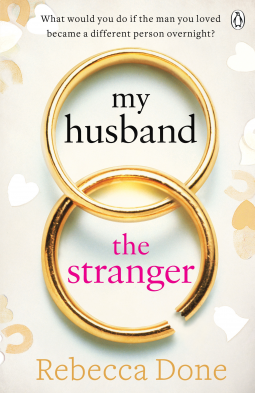
#BookReview ‘My Husband the Stranger’ by Rebecca Done #contemporary

My Husband the Stranger by Rebecca Done is a difficult, depressing story about how the life of a newly married couple is changed when Alex, the husband, has an accident which changes his behaviour. Rebecca DoneAlex’s wife Molly finds herself living with a stranger who looks like the man she loved. This is a study of the emotional aftermath of living with someone with a brain injury. It is not a romance [as the cover style suggests] or a psychological thriller [as the cover blurb hints].
The story is told in alternating sections, Molly and Alex, then and now, as the story is told of how they met, married, their plans for a life together, and then the accident. The first half is slow reading, sometimes repetitive and emotionally-charged. The only thing that kept me reading was the belief that something had to happen soon. The story follows their daily life as Molly deals with a bullying boss and an ex-girlfriend of Alex’s who flirts with him and sends him text messages. Molly feels isolated but is too proud to admit it.
When Alex sets fire to the kitchen he is rescued by a neighbour, an elderly lady who asks Molly how she is coping; she explains how she cared for her husband who had dementia and recognises the difficulties Molly is facing. As Molly mourns the man she fell in love with, she struggles to dutifully care for Alex. She wants to take care of him and brushes off well-meaning offers of help from friends and family. Alex’s twin brother Graeme is a little creepy, and Molly’s parents are too good to be true and crass in the way they pressure her to start a family. Meanwhile, her employer in London is offering her old job back. Should she move Alex away from Norfolk, away from the village where he grew up? Or should she leave him behind and go on her own?
A couple of things jarred with me: contradictions in the portrayal of what Alex is capable of on a day-to-day basis. He has a temper tantrum in an electrical store, but is okay going to a noisy pub or finding his way to the golf club on his own.
This is a tale about the realities of life and how romance can be lost in the most brutal way.

If you like this, try:-
‘Good Me Bad Me’ by Ali Land
‘Did You Ever Have a Family’ by Bill Clegg
Summerwater’ by Sarah Moss

And if you’d like to tweet a link to THIS post, here’s my suggested tweet:
#BookReview MY HUSBAND THE STRANGER by Rebecca Done via @SandraDanby http://wp.me/p5gEM4-2rE

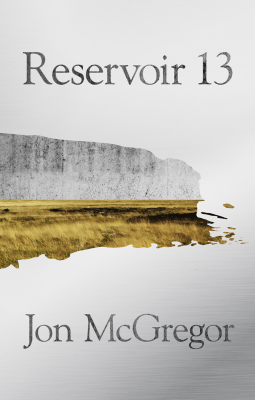
#BookReview ‘Reservoir 13’ by @jon_mcgregor #contemporary

Reservoir 13 by Jon McGregor is a thoughtful, intelligent telling of what happens to a village when a person goes missing. Told after the event, it brings a new angle of understanding to the post-event trauma of those on the outer circles of tragedy. Jon McGregorA girl goes missing in a village surrounded by moors, caves and reservoirs. ‘The girl’s name was Rebecca, or Becky, or Bex.’ At no point do we hear the viewpoint of the girl, her parents, or the investigating police. Slowly the story unfolds as we are told the life of the village through the years after it happened by an omniscient narrator, disconnected from the action.
I loved the way McGregor recounts the daily comings and goings of the village, the farmers, the vicar, the schoolchildren. The rhythm of life and nature is mesmeric, the message is ‘life goes on’. Love affairs start and end, babies are born as are lots of sheep, cows are milked, allotments tended. The village sits within the natural world of peaks, woods and rivers and, sometimes only in a single sentence, we are told of the hatching of butterflies, the unfurling of new leaves, the water running beneath the bridge. The writing style is sparse and all the more beautiful for that. The action switches from one person’s life to the next, sometimes in a simple factual sentence such as ‘this happened’. But as the action moves from one local to another, the story is slowly, painstakingly pieced together of a village which struggles to leave behind the mystery of what happened to Rebecca/Becky/Bex.
At the beginning I was unsure how the story would unfold: murder, missing person, runaway teenager, abduction? It is this not knowing which casts a shadow over everyone in the village.
CLICK HERE TO READ MORE ABOUT THIS BOOK AT AMAZON

Read my review of LEAN FALL STAND, also by Jon McGregor.

If you like this, try:-
Smash All the Windows’ by Jane Davis
‘Himself’ by Jess Kidd
‘The Museum of You’ by Carys Bray

And if you’d like to tweet a link to THIS post, here’s my suggested tweet:
#BookReview RESERVOIR 13 by @jon_mcgregor via @Sandra Danby http://wp.me/p5gEM4-2qa

My Porridge & Cream read: Renita D’Silva

Today I’m delighted to welcome Indian novelist Renita D’Silva. Her ‘Porridge & Cream’ read is the classic To Kill a Mockingbird by Harper Lee.

“The book I keep returning to time and again is To Kill A Mockingbird by Harper Lee. I love every character – Boo Radley, Jem, Atticus, and, especially, Scout: her innocence, her wonderful narrative voice through which she reveals more to the reader than she herself understands.
Renita D’Silva

I first read the condensed version as a teen. Being a voracious reader, I could never find enough to read in the village in India where I grew up. There was a small library – a couple of shelves of worn books with falling apart pages, woodlice ridden spines, crumbly to the touch and smelling yellow, of rot and stale lives. Having read each book multiple times, I was desperate for something different when I found this fat book wedged behind the shelves, forgotten and unloved.

I dusted it off, thrilled to have something new to read. I was ecstatic when I discovered that it was a Readers Digest anthology of four condensed books; one of them, To Kill a Mockingbird. I read the first line (they left that in), Scout’s sweet voice saying, ‘When he was nearly thirteen my brother Jem got his arm badly broken…’ – and I was hooked.

I read that version so many times that I knew sections by heart. I had a huge crush on Atticus – typical bookworm that I was, all my major crushes were from books. I graduated, in time, to nursing infatuations on Mr Darcy and others but my love for Atticus remained constant, made all the more steadfast when I finally watched the movie. Years later, I read the full version of the book and it was like discovering a new side to an old and trusted love. I have re-read the book countless times since then and each time, I find something – a word, a sentence – to cherish within its beloved pages.”

Renita D’Silva’s Bio
Renita D’Silva loves stories, both reading and creating them. Her short stories have been published in The View from Here, Bartleby Snopes, this zine, Platinum Page, Paragraph Planet among others and have been nominated for the ‘Pushcart’ prize and the ‘Best of the Net’ anthology. She is the author of Monsoon Memories, The Forgotten Daughter, The Stolen Girl, A Sister’s Promise and A Mother’s Secret.

Renita D’Silva’s links
Facebook
Twitter
Website

Renita D’Silva’s books
Renita D’SilvaWhat if you discovered that everything you knew about yourself was a lie?
When pregnant Jaya loses her mother, then her baby son Arun in a tragic cot death, her world crashes down. Overcome by grief and guilt, she begins to search for answers – to the enigma of her lonely, distant mother, and her mysterious past in India.
Looking through her mother’s belongings, she finds two diaries and old photographs, carrying the smoky aroma of fire. A young boy smiles out at Jaya from every photograph – and in one, a family stand proudly in front of a sprawling mansion. Who is this child? And why did her mother treasure this memento of a regal family lost to the past?
As Jaya starts to read the diaries, their secrets lead her back to India, to the ruin of a once grand house on a hill. There, Kali, a mad old lady, will unlock the story of a devastating lie and a fire that tore a family apart.
Nothing though will prepare Jaya for the house’s final revelation, which will change everything Jaya knew about herself.
Read my review of A Mother’s Secret.

‘A Mother’s Secret’ by Renita D’Silva [UK: Bookouture]

Porridge & Cream

What is a ‘Porridge & Cream’ book? It’s the book you turn to when you need a familiar read, when you are tired, ill, or out-of-sorts, where you know the story and love it. Where reading it is like slipping on your oldest, scruffiest slippers after walking for miles. Where does the name ‘Porridge & Cream’ come from? Cat Deerborn is a character in Susan Hill’s ‘Simon Serrailler’ detective series. Cat is a hard-worked GP, a widow with two children and she struggles from day-to-day. One night, after a particularly difficult day, she needs something familiar to read. From her bookshelf she selects ‘Love in A Cold Climate’ by Nancy Mitford. Do you have a favourite read which you return to again and again? If so, please send me a message via the contact form here.

Harper Lee


‘To Kill a Mockingbird’ by Harper Lee [UK: Arrow]

Discover the ‘Porridge & Cream’ books of these authors:-
Sue Moorcroft
Jane Cable
Claire Dyer

And if you’d like to tweet a link to THIS post, here’s my suggested tweet:
Why does @RenitaDSilva love TO KILL A MOCKINGBIRD by Harper Lee? http://wp.me/p5gEM4-2b5 via @SandraDanby #reading

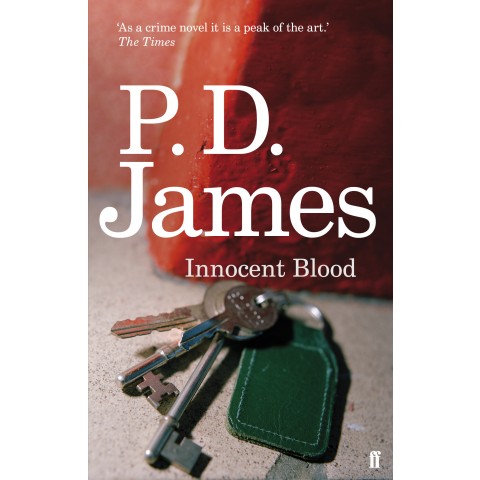
#BookReview ‘Innocent Blood’ by PD James #thriller #adoption

If you are a PD James fan, I should say up front that Innocent Blood is very different from the Adam Dalgliesh detective series. It is a psychological thriller, a slow-building mystery which starts with little steps then, as the odd details start to make sense, the tension builds. It is the story of a young woman who knows she is adopted, who exercises her right to know the names of her birth parents, and finds something she never in a million years expected. PD JamesPhilippa Palfrey is 18, about to go up to Cambridge, until she decides to find out the truth of her adoption. Her birth father is dead, her mother though is still alive. Philippa’s adoptive father warns caution, tells her to do her research and think carefully before contacting her mother but Philippa, driven by the need to know who she is and where she came from, goes ahead anyway. With the arrogance and naivety of youth, she embarks on a complicated path full of moral dilemma, tragedy and loss.
It is a novel of family blood and relationships, violence, redemption, revenge and acceptance. Is there a threat, real or imagined, and where/who does that threat come from? As the story progresses, that threat advances and retreats, reforming in another shape. Is Philippa right, or should she have listened to Maurice’s warnings?

Read my reviews of the Adam Dalgliesh mysteries:-
COVER HER FACE [#1 ADAM DALGLIESH]
A MIND TO MURDER [#2 ADAM DALGLIESH]
UNNATURAL CAUSES [#3 ADAM DALGLIESH]
SHROUD FOR A NIGHTINGALE [#4 ADAM DALGLIESH]
THE BLACK TOWER [#5 ADAM DALGLIESH]
DEATH OF AN EXPERT WITNESS [#6 ADAM DALGLIESH]
A TASTE FOR DEATH [#7 ADAM DALGLIESH]
DEVICES AND DESIRES [#8 ADAM DALGLIESH]
ORIGINAL SIN [#9 ADAM DALGLIESH] … read the first paragraph HERE
A CERTAIN JUSTICE [#10 ADAM DALGLIESH]
DEATH IN HOLY ORDERS [#11 ADAM DALGLIESH]
THE MURDER ROOM [#12 ADAM DALGLIESH] … read the first paragraph HERE
THE LIGHTHOUSE [#13 ADAM DALGLIESH]
THE PRIVATE PATIENT [#14 ADAM DALGLIESH]

Here are my reviews of the two Cordelia Gray mysteries:-
AN UNSUITABLE JOB FOR A WOMAN #CGRAY1
THE SKULL BENEATH THE SKIN #CGRAY2

And one other book by PD James:-
TIME TO BE IN EARNEST

If you like this, try:-
Shadow Baby’ by Margaret Forster
The Marriage Certificate’ by Stephen Molyneux
The Blood Detective’ by Dan Waddell

And if you’d like to tweet a link to THIS post, here’s my suggested tweet:
#BookReview INNOCENT BLOOD by PD James http://wp.me/p5gEM4-1Yi via @SandraDanby